
My first dose of old-time Texas religion came at six years old. Up until then, my sainted mother deemed me too young, fidgety, and stupid to grasp the complexity of the Southern Baptist philosophy. She was right, and I finally gave up when I became an Episcopalian.
The Polytechnic First Baptist Church in Fort Worth, Texas, was rumored to be the place to go if you wanted a direct line into Heaven. On Sundays, the pews were packed, and folks lined the walls while the children sat in the aisles. Christmas and Easter, the church opened its doors at daylight so the longest-standing members could claim seats. My father’s large extended family, around thirty members and their relatives by marriage and accidents, lived in Poly, and they all attended the PFBC, as it was called by the congregation. My two cousins and I, being the same age, were the newest lambs to enter the flock.
My first Sunday arrived in September of 1955, the week after my sixth birthday.
September weather in Texas is no different than August, July, or June: it’s miserable hot. Dressed in a heavily starched, long-sleeved white shirt, a kid-sized clip-on tie, black trousers, and shiny new Buster Brown shoes, I was a styling child and feeling pretty good about my debut. By the time my father skidded his Buick into the church’s gravel parking lot, my new duds were sweat-soaked, and I smelled like a beer-joint ashtray: our car had no air-conditioning, and my parents smoked Lucky Strikes two at a time. My sister was five months away from making her appearance, so my mother was chain-smoking for two.
Once in the church, my cousin Jock joined me, and we seated ourselves next to my mother so she could control our behavior with her patented one-eyed stare or a motherly, open-handed whack to the back of our flat-top-haircut-wearing little heads. She gave me a gentle swat before entering the church, just to let me know what awaited me if I acted like a fool.
Most of my father’s aunts and uncles took the first rows closest to the preacher. Their warped reasoning was that the closer to the pulpit and the preacher, the better the chance of forgiveness for last night’s debauched beer-fest and the slight chance of possibly slipping past the pearly entrance gate guarded by Saint Peter. They’ve all been gone for decades, so no one knows if their plan worked. The promised contact from beyond has yet to materialize.
My grandmother, her four sisters, and one brother were hard-drinking, two-stepping, championship-cussing Baptists and had no use for Presbyterians, Methodists, and especially Catholics. PFBC: Our church was so bright-white that you needed sunglasses to kill the glare.
The leader of our church, the exalted flamboyant Reverend Augustin Z. Bergeron, a transplant Cajun from Chigger Bayou, Louisiana, was a certified autograph-signing local celebrity. He wore expensive mohair suits from Leonard Brothers Department Store, retained a personal hair stylist who kept his wavy locks immaculate, and sported custom-made footwear from Larry’s Shoes. He was likely the inspiration for the outrageous 1950s ex-preacher turned comedian Brother Dave Gardner. The man commanded the pulpit and the stage like a Broadway entertainer. With a lighted cigarette in one hand and a Tupperware tumbler full of iced-sweet tea in the other, he paced and screamed like a detained mental patient, cursed the Devil and his minions, admonished the sinners in the congregation, strutted, shuffled, stomped, rolled on the floor, crawled on his hands and knees, and wept like a middle-aged housewife going through the change of life. The choir of big-haired ladies standing behind him punctuated every nuance with an “Amen, Hallelujahs, or Praise the Lord.” It was expected that two or three of the older singers would faint dead out during his sermon. It was cast in newsprint that if Reverend Bergeron’s bombastic sermons couldn’t bring a sinner to Jesus, no one could, not even J. Frank Norris or “By-Gosh” Billy Graham.
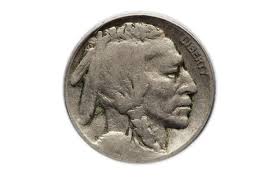
An hour into his fiery sermon, Reverend Bergeron took a potty break, and the ushers passed the silver plate down each row of pews. My mother gave Jock and me a nickel to contribute. I was reluctant to part with the change; a nickel was a lot of money, and by selling a few soda pop bottles, I would have enough for a Superman comic book. The plate came to me, and without hesitation, in went the prized coin: my first tithe. Jock dropped his nickel but pulled a sleight of hand and took a beautiful fifty-cent piece in exchange. Looking back, that might have been the start of his slide into petty crime that would find him, on his sixteenth birthday, a resident of the local detention facility known as “The Dope Farm.”
Our young lives took different paths: mine a bit boring but safe, and Jock’s loaded with excitement but long on trouble. I would like to believe that by giving up that coveted nickel, I was blessed with a thumbs-up from above.
 Notes From The Cactus Patch