Who says there’s no surf in Texas? Dude, we got plenty of waves to groove on, even in the Big Bend Chihuahuan Desert.
As Momo and me departed from Marfa, Texas, traversing the desert and mountains, an SUV with two long surfboards on its roof overtook us. I gestured the timeless sign of approval to the occupants, and they reciprocated in kind. Perhaps they were bound for the Gulf Coast or returning from a journey to California. The vehicle captured in the photograph belongs to Moon Doggy Dan, a seasoned Texas surfer who ventured to Marfa in pursuit of life’s purpose and all the contemporary spiritual nonsensicality.
My grandfather, John Henry, possessed a mastery of storytelling that filled the room with warmth. When the rain beat against the windowpanes, or the ice or snow kept me inside, I’d perch myself on the floor near his rocking chair, mesmerized by the tales of his youth in rural Texas, his days as a soldier in the US Army, and the harrowing battles in France. With each word, he painted vivid scenes of the struggle and resilience of his family during the tumultuous depression years in 1930s California. Pausing only to adjust his fiddle, John Henry would then draw the bow across the strings, filling the room with a lively jig that seemed to echo the resilience and spirit of those days and family members long ago passed on. When my grandfather passed, my father, as any good son would do, took the helm, recounting those years in California and beyond. A few drinks of good scotch whiskey for us both lit up his memory and released his vivid imagination. The more scotch we consumed, the more colorful his recounts, so parts of this story may be a bit grandiose.
Bringing Blind Jelly Roll Jackson and Le Petite Fromage into the string band’s musical circle infused the fellows with newfound assurance. John Henry found himself utterly taken aback by their musical prowess.
Johnny and the string band continued to improve with each passing week. After six months of playing front porch shows, birthday parties, a few illegal chicken fights, and one funeral, W6XAI Bakersfield, the most influential radio station in California, came calling. The station approached the band with an offer to perform a thirty-minute live show. Le Petite’s Daddy, Baby Boy Fromage, used his questionable connections to secure the band’s spot on the show, as his own band, The Chigger Bayou Boys, were regulars on the hillbilly program hosted by Colonel Bromide A. Seltzer. The esteemed Colonel was famous for featuring the latest talents on his popular daily show, always staying on the lookout for fresh and promising acts he could sign to a strangeling management contract that left him flush with cash and the talent with a pittance. Blind Faith fitted his bill.
Baby Boy Fromage arranged for transportation to and from Bakersfield. The radio station had agreed to pay the boys $75. 00 for the show, which included four commercials for Father Flannigan’s Holy Healing Tonic, Sister Aimee’s Blessed Miricle Face Cream, and Puffy Cloud Lard. In today’s world, that kind of money might buy you a mediocre supper at an Olive Garden, but in the Depression years, it was a small fortune. Of course, Baby Boy would require a chunk for providing the transportation and a meager finder’s fee for getting the band on the show. All said and done, Blind Faith would make $40.00 cash to split six ways. Le Petite had warned the boy that her father’s deals can sometimes border on nefarious, so don’t cry like a freshly born titty-baby if the whole thing flushes down the toilet.
Around noon on Saturday, the stagecoach to Bakersfield arrived at the Strawn residence. Le Petite’s daddy had promised luxury transportation for the haul to Bakersfield. Baby Boy’s idea of a luxury transport was a converted Tiajuna Taxi, complete with no less than a hundred bullet holes along each side of the vehicle. Two church pews nailed to the wooden floor served as seating, and the big stain on the floor was likely blood. The driver was a Mexican chap who didn’t speak English and drove with a bottle of Tequila planted in his lap. His GPS was a ratty map with the route colored in red crayon. Le Petite was furious with her daddy and planned to smack his big head with a *cajun blamofatchy.
Arriving at the station, the band was led into a large room where the broadcast would take place. A small stage covered with short nap rugs and a half dozen microphones placed where each musician would stand. Another band, The Light Crust Doughboys, from Fort Worth, Texas, was packing up, having completed their live show for their sponsor, Light Crust Flour. They were in Hollywood to be in a Western movie with Gene Autry, and this was their last commitment before heading back to Texas. Johnny spotted their fiddle player, made a bee-line over, and introduced himself. The man, Bob Wills, a fellow Texan, wanted to hear youngsters play, so he stuck around for the live show, which was due to start in twenty minutes. The radio technicians placed each member in front of a mic, giving Le Petite her own microphone for singing. The band played 16 bars of music so the man in the sound booth could adjust the volume. Bob Wills sat in a corner, smoking a cigarette and drinking what appeared to be a pint bottle of hooch hidden in a brown paper sack.
The two announcers, a heavy-set fellow wearing a black cowboy hat and his companion, a boney, skittish little gal, also wearing a matching cowgirl hat and white boots, took their positions in front of a microphone next to a nervous Le Petite. The man told the band that when that light on the wall turns from red to green, that means we are live, and you start your theme song while we announce you and our sponsors. Jelly said he couldn’t see the light, but Pancho Villa would give him the queue. The announcer asked Johnny if that man was blind? Johnny said, “Yep, blind as a bat but he’s a pretty good driver and got us here in one piece.”
The boys had no theme song, so Jelly told them to play Red River Valley: You can’t mess that one up. The man at the mic counted down, the light turned green, and the boys let loose on their new theme song. All the time, the two announcers were jabbering about their sponsors.
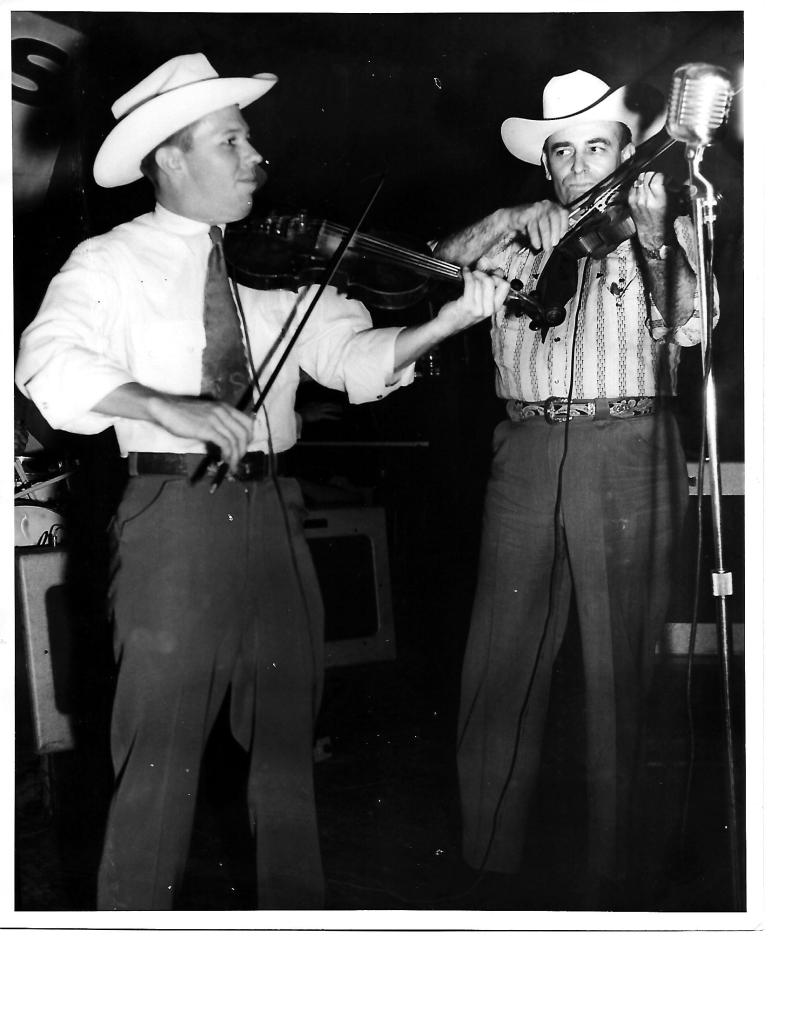
The announcers stepped back from the microphones and gave the boys a thumbs-up to start their show. Le Petite counted off a cajun song about a “Big Mamou” and went into “Will The Circle Be Unbroken” and then “Cold Beer and Calomine Lotion.” The band played every tune they knew, finishing up with Johnny playing a fiddle tune called “Lone Star Rag,” which caused Bob Wills, with a big grin on his face, to rise from his chair and clap along. When the show ended, Bob gave Johnny a few pointers, telling him he had a bright future in country music and to get in touch when and if he returned to Fort Worth. Fifteen years later, back home in Texas and playing country music for a living, Johnny got in touch with Bob Wills, who became his mentor and close friend, gifting Johnny with one of his fiddles, which he is playing in this photo. I have that fiddle as well as my grandfather’s fiddle.
My father, Johnny Strawn playing twin fiddles with Bob Wills. Forth Worth, around 1952.
Young Johnny and the rest of the string band joined the Strawn family for Sunday church attendance. John Henry warned the boys that they were about to witness a religious spectacle, so hang on to your britches. He also told the boys that If Jelly Roll was invited to join their group, all four of them would be standing before him, even though he is blind, for revering one’s elders was of the utmost importance.
Bertha and the boys walked with John Henry to the orchestra dressing room, where they found Jelly Roll and Pancho Villa seated on a red velvet settee, likely the same furniture that Sister Aimee used in the soul-saving of Jelly Roll, who now embraced his savior with religious zeal. Each of the boys introduced themselves, shook hands with Jelly, and gave a guarded pat to Pancho Villa; the banjo player was the only one to get a vicious bite from the foul-tempered canine. After a brief, casual conversation, young Johnny inquired if Jelly Roll would entertain the notion of joining the string band. Jelly Roll pondered the request for a few minutes, then gave them a yes, but a young female singer from the choir he had recently befriended would come with the package. The boys agreed, and a deal was struck.
Jelly Roll produced a tidbit of dried bacon from a pocket and gave it to Pancho Villa; he then directed the pooch to hurry down the hallway and fetch Miss Fromage. Pancho returned with a smallish girl in tow. Jelly Roll introduced the boys to *Miss Le Petite Fromage from Chigger Bayou, Louisiana. Her daddy is Baby Boy Fromage, the famous Cajun singer, so her vocal abilities come from good stock. Miss Le Petite was a diminutive gal, measuring less than five feet, yet possessing the curves and form of a fully grown woman, except for her hands and feet, which were the size of a small child’s: she had little baby feets and hands. When she spoke, her heavy cajun-accented voice was as smooth as honey on a warm biscuit. Jelly Roll and Miss Fromage agreed to rehearse with the boys on Saturday at John Henry’s home. The group left with the boys feeling like something big was about to happen.
On Saturday, John Henry gathered up Blind Jelly Roll and Miss Fromage and delivered them to his humble home. The boys perched themselves on the front porch. They were as nervous as a cat in a dog show, and who wouldn’t be: this was their first foray into professional music. John Henry kindly assisted Jelly Roll and Pancho Villa to a seat while Miss Fromage opted to stay standing.
After assisting the boys in tuning up, Jelly asked, “Are you all familiar with Mama Mabel Carter’s tune, Will The Circle Be Unbroken?”
The lads nodded knowingly. He then tapped his foot, “In the key of G, one ana two ana three ana four-ahh.”
After a lively eight-bar introduction with Jelly Roll bending his guitar strings into a torturous sound and Johnny joining him with his fiddle, Le Petite took a deep breath, stood up on her tiny toes, and belted out the song with such gusto that her boisterous vocals nearly blew the boards off the porch floor. By the song’s end, neighbors had gathered in the front yard, their feet tapping and hands clapping in rhythm to the spirited tune.
Turning to the band, Le Petite declared, “The next ditty is from my dear ole Daddy, Baby Boy. It’s a G-C-D progression with A minor thrown in for color. It’s called Party On The Bayou: Cold Beer And Calamine Lotion.” Step it up, boys; it’s a rapide quick-un”
The band played for two hours, covering Cajun music, Dallas blues, and some Bakersfield Okie-inspired country. It was clear that Jelly Roll and Le Petite were professionals and were teaching these lads a thing or two. The rehearsal was a rousing success. But now, if they were to play for money, they needed a good name for the band. Johnny threw a couple out, as did the banjo picker, but nothing stuck on the wall.
Le Petite said, ” Monsieur Jelly Roll, being a blind fellow, and now a born again unto sweet Baby Jesus with the strong, unshakable faith, why not call this outfit **”Blind Faith?” They liked it, and Le Petite announced, “So let it be written, so let it be done.”
*Le Petite Fromage is a type of French cheese popular in the bayou country of Louisiana.
**Blind Faith was a 1960s supergroup consisting of Steve Winwood, Eric Clapton, Ginger Baker, and Ric Grech. My father couldn’t remember the name of his string band, so Jelly Roll, being blind and embracing his newly found faith, seemed to fit.
My grandmother hailed from a sizable brood: four sisters and a solitary brother. Their formative years were spent in the sun-drenched fields of south Texas, toiling on the family produce farm. The patriarch, Grandfather Duncan, regarded his children as mere hired hands and didn’t pay them a dime. Every child born saved him from hiring a lazy field hand to pick his watermelons and oranges.
Upon the completion of their high school years, one by one, the siblings, usually in the dead of night and with assistance from the others, embarked on a journey, whether by bus, train, hitchhiking, or on foot, seeking their own version of freedom from the farm. Miraculously, within a few years, they and their new spouses found themselves settling in Fort Worth, Texas, mere blocks apart.
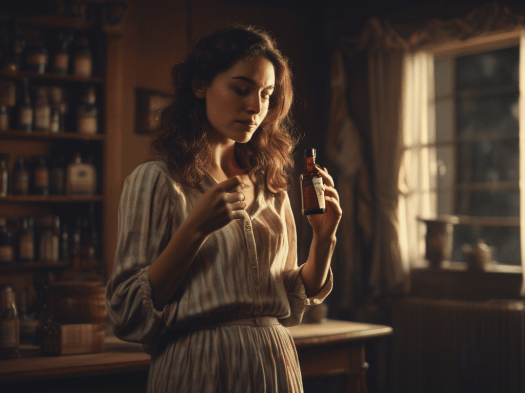
The transition from Texas to California proved to be arduous. My grandfather, possessing the toughness of weathered leather and an insensitivity to female emotions, saw the move as a blessing and a chance for a new beginning. However, for Bertha, it felt more like a forced abduction. John Henry appeared oblivious to her distress, or perhaps he believed it would pass in due time. Yet her sorrow lingered until she stumbled upon a seeming panacea: alcohol, fashioned into the magical healing elixirs hawked on the radio and in the newspapers. From anemia to tremors, from insomnia to weight loss, from night sweats to antisocial behavior, there existed a bottled pharmaceutical remedy for every affliction, no doctor’s visit required. Countless bottles of happy juice lined the shelves of the local drugstore, catering to the myriad conditions that afflicted my grandmother, a certified hypochondriac.
When not self-diagnosing herself that she harbored every disease known to man and convinced that her death was mere hours away, Bertha was quite the letter writer. Every day, seated at her kitchen table, her fountain pen full of blue ink, she’d churn out missives to her sisters in Texas. Fueled by her newfound self-assurance courtesy of those magic elixirs, she didn’t see any harm in embellishing the truth a bit about her new life out in California: alone in a strange land, who could blame her? It’s not as if her family would ever drop by for a visit. As time went by, her letters became creative works of fiction, painting the picture of a grand Beverly Hills home in place of her modest stucco house and a swanky Duesenberg convertible instead of their old Ford. According to Bertha, even the legendary Clark Gable was a neighbor, and Sister Aimee McPherson, the radio firebrand preacher gal, became a dear friend, and the two of them often enjoyed lunch at Musso and Franks Grill, mingling with the movie stars. Bertha was dead set on landing an audition with MGM or writing a grandiose screenplay, all thanks to that magical elixir of hers. Not thinking of how she would explain her fabricated world when they returned to Texas, she continued, and the more she wrote, the more she believed her own stories.
When Johnny turned thirteen, he approached his father with a request to pursue a professional career in music. John Henry, harboring doubts about the practicality of such a proposal, pondered the unlikelihood of anyone hiring a boy for such a venture, much less paying him with real money. Nonetheless, three of Johnny’s older schoolmates had extended an invitation to join their string band, which often performed at birthday parties and school events for a small fee, which was usually a coke and a plate of food. Their need for a fiddle player in the Bakersfield-style hillbilly tunes they favored aligned perfectly with Johnny’s musical talents. That evening, seated on the front porch after supper, Johnny revealed his decision to his father — he had embarked on a professional journey with his newfound band. Despite his initial surprise, John Henry offered his warm congratulations to the young boy venturing into this new vocation.
Their first official rehearsal was an epic disaster. The guitar player knew four, maybe five chords on his out-of-tune instrument, the bass player, using a beat-up dog house bass fiddle, couldn’t get the beast anywhere near in-tune, and the tenor banjo picker was worse than the other two. After massacering a dozen or so tunes, Johnny floated an option. He knows of a genuine black blues singer who burns up a guitar when he plays. The other three were wagging their tails like a hungry dog and voted to bring this fellow into the fold. Now, Johnny had to convince Blind Jelly Roll Jackson to play with a bunch of borderline musicians.
Church on Sunday was a rousing spectacle. Sister Aimee, after singing a handful of beautiful songs and just enough preaching to make sure the offering plates were full, called for souls that needed saving to approach the altar and receive Jesus. This was part of every service; a few folks would come down to be blessed and saved. With the orchestra playing, the choir singing, and a contingent of Hollywood-style dancers on stage, a hundred folks rushed the front in need of salvation. Sister Aimee, not knowing how to handle a worked-up mob that scared her out of her witts, retreated stage right and hid in her dressing room. Her assistant preacher and a few ushers administered to the flock while Sister Aimee gulped a handful of Carter’s nerve pills, washing them down with “Father Flannigan’s Holy Healing Tonic,” which was around 80% alcohol and claimed to be brewed from the holy waters of the River Jordan.
New friends, a fresh vocation, and a fine abode for an extended stay. The Strawns couldn’t reckon their good fortune. Were they in the midst of a reverie, or was it a heavenly intervention from on high? My grandmother continued casting glances over her shoulder, half-expecting to glimpse the Guardian Angel who was running this show. Sister Aimee and her mammoth church would require some acclimatization, at least on John Henry’s part.
After the church service, which was more of a Hollywood show than a religious sanctuary, John Henry ambled backstage in search of Blind Jelly Roll Jackson. He rapped on a door marked “orchestra,” but receiving no response, he turned the unlocked knob and proceeded inside. There sat Jelly Roll on a red velvet setee while Sister Aimee fervently laid her hands on his cotton-top head, offering a vigorous prayer of salvation. Pancho Villa stood behind her, firmly attached, growling like a small lion and tugging hard at the bottom of her satin robe. Upon catching sight of John Henry, Sister Aimee hollered,
“Clear out, sinner! Can’t you see I’m rescuing this wretched man’s soul?” John Henry promptly shut the door and made his way back to his family, wanting no part in the strange affairs of that place. This church wasn’t through with him quite yet.
Two weeks into his new job, John Henry felt comfortable enough to open the case of his fiddle. During his time in Texas, he had earned the reputation of a “campfire fiddler,” skilled enough to keep up with any string band in Fort Worth. Nevertheless, this was not the path he aimed to follow. For nearly two years, Young Johnny had shown a deep interest in mastering the art of playing the instrument. The time had come to pass on this skill to the eager young man.
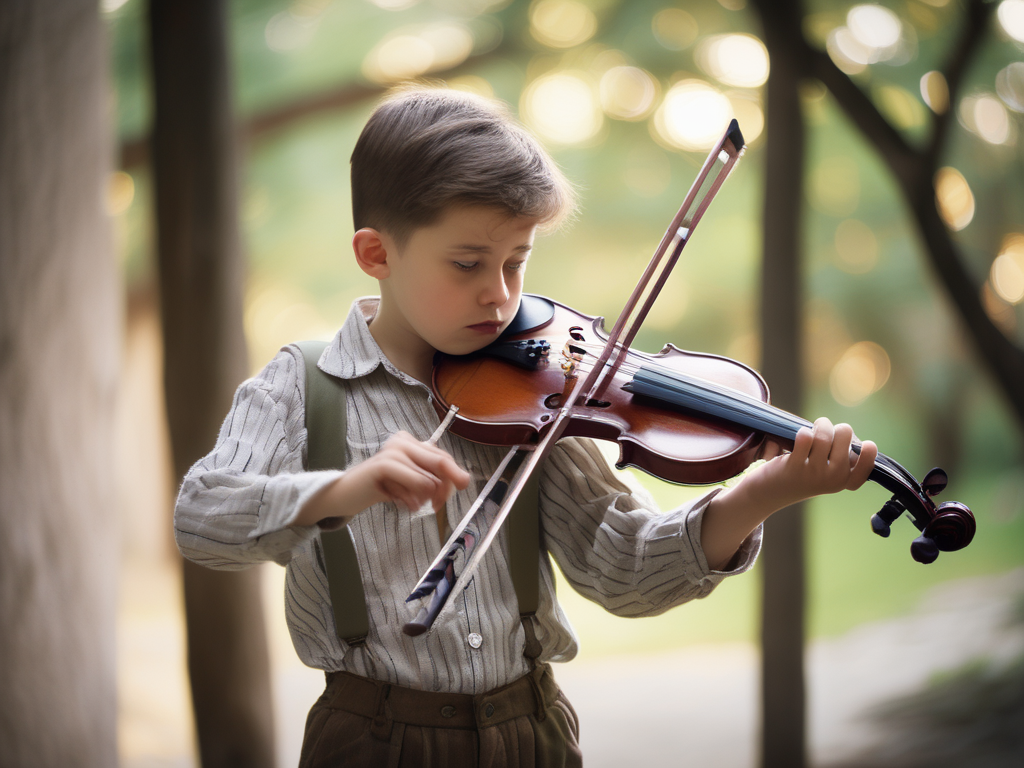
A visit to a local pawn shop produced a fifth-hand fiddle. It wasn’t much of an instrument, but for $5.00, case and bow included, it was good enough for the boy. Johnnie, when given the instrument, almost keeled over from joy. He took the fiddle to his back porch bedroom and began to torment every dog and cat in the neighborhood with his playing, which was more screeching than music.
Miss Angel Halo, a retired high school music teacher, resided a few houses away. She recognized that sound, having heard the screech of strings from her students for most of twenty years. Her Basset Hound, Baby Dog, cowered beneath the back porch while her feline companion, Miss Greta Garbo, made a hasty exit to escape the noise. Miss Halo made her way to the offending house and exchanged pleasantries with the Strawns. Over a cup of coffee, some neighborhood gossip, and a large slice of warm bundt cake, she offered her aid in schooling young Johnnie in the ways of musical notation and the art of the violin; she was a cello player herself. If the boy would mow her grass twice a week, and pull any pesky weeds in her flower beds, she would instruct him in learning the instrument.; no charge. The pact was sealed, and harmony was restored to the neighborhood.
Six weeks into his son’s tutoring, John Henry, not having heard the boy play, was curious if he had learned to play the fiddle. At his teacher’s insistence, Johnnie’s practice sessions were daytime only, and he was confined to the garage, door down, so as not to upset the neighbors.
Saturday evening found John Henry on the front porch, nursing a cold beer and coaxing a few tunes from his beloved fiddle. He asked Johnnie to fetch his instrument and join him, and in a swift instant, the boy returned, fiddle in hand, eager to display his skills to his father. To John Henry’s amazement, as he played an Irish jig, his son effortlessly intertwined harmonious notes with his own, giving the old man a partnership in the form of twin fiddles. A father’s pride has no bounds, and he played on, ignoring the tears on his cheek. In time, that instrument and the dreams of a child would take young Johnnie to the pinnacle of country music.


 Notes From The Cactus Patch