
The continuing story of Jesus Got A Mainline
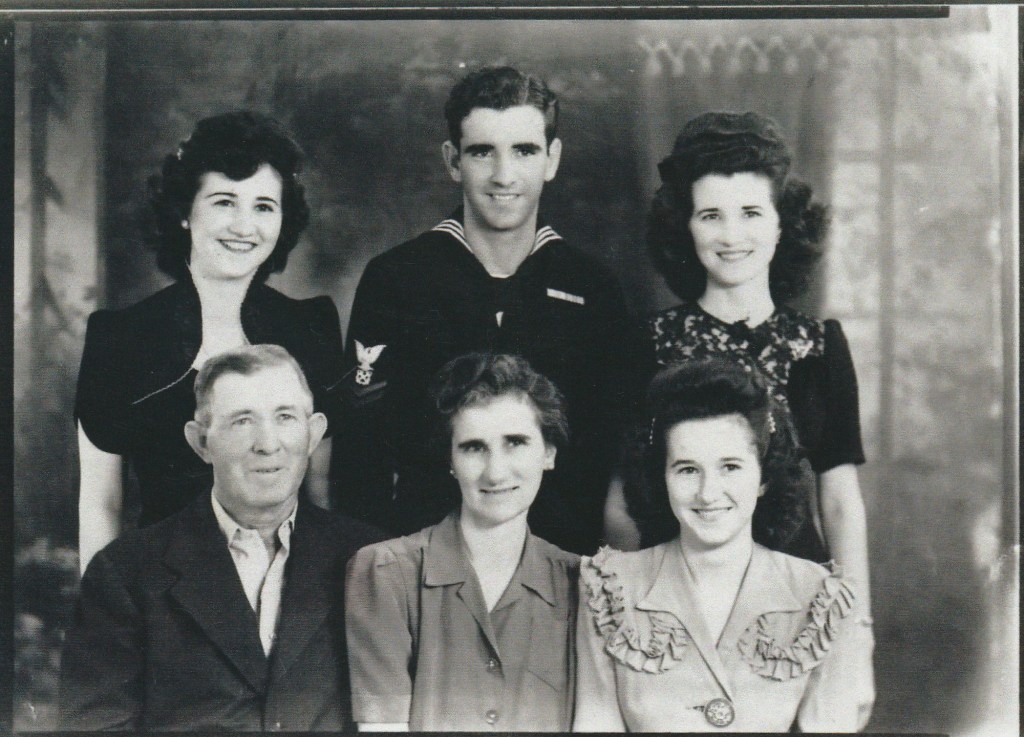
Leaving home to forge a new life can be an exhilarating journey or a regretful mistake, depending on the circumstances of the departure. My mother, Mozelle, saw it as a journey that must be made; there would be no regret or sadness. The days of laboring in the fields and chopping cotton were behind her now. She would never again grip the wooden handle of a hoe.
Her mother’s parting tears left a permanent stain on the shoulder of her best dress. Her father’s apathy and refusal to hold her pierced her heart.
The bus ride to Fort Worth stretched into the night, giving her time to reflect and to shed her tears in the dark.
Sharing an apartment with her sister, Lavelle, she found work at Consolidated Aircraft Corporation, where she built B-24 bombers as part of the war effort. She was now the girl on the famous poster, with her sleeve rolled up and a polka dot headscarf. Her life was all work with little time for a social life.
In a letter from home, her father demanded that she and her sister send him a percentage of their paychecks, as their departure from the farm had forced him to hire labor and change crops that yielded less money. They complied, albeit unwillingly, for the sake of their mother. They learned that the Preacher and his family had come one last time, and with no cotton to pick, returned to San Angelo, where he passed a few months later. His sons carried on the church. She never forgot Preacher and his mainline to Jesus.
Her brother, Jay, wrote frequently to his sisters from his ship in the Pacific theater. He was a gunner on a destroyer and participated in the invasion of Iwo Jima. He was one of my two uncles who were the best liars and spinners of yarns and tall tales, and he passed that treasure on to me.
The front porch of the family farm house was his stage, and I would sit for hours absorbing his tales, some true, some as tall as the oak tree growing in the front yard. Give the man a few Pearl Beers and he could orate as well as Will Rogers. I felt he missed his calling to be a writer or a stage personality. In later years, the stories had darker undertones, and he became a world-class alcoholic who, after two stays in a state hospital, beat the demon and lived a sober life until his passing in a car accident in 1968, a head-on collision caused by, of all things, a drunk driver. She believed the war affected him deeply and led to his drinking problem. Today, we call it PTSD. My mother loved him dearly, and she was the force that convinced and aided him to seek help. His death affected her deeply, and I believe she grieved him for the rest of her life.
As a young girl, my mother wrote poetry and was quite good; she won an award in grade school. Her handwriting was exquisite. She and a fountain pen became one, and a sheet of lined school paper became her canvas.
Reading the great poets of her time and writing her own poems was her idea of a proper education, and she dreamed of one day publishing her own book. There were hundreds of pages of poems, squirreled away in a drawer, for someday. The poems were lost, and so was the day with them.
After the war ended, she and her sister worked on drawing maps. There was more time for a social life, and the two enjoyed dancing, so that led them to nightclubs at Crystal Springs on Lake Worth, Belknap Street, and Jacksboro Highway. She wasn’t looking for a boyfriend or a husband, but was swept off her feet by a good-looking, dynamic young fiddle player in one of the bands. The attraction was immediate and intense, and both of their backs were chock-full of Cupid’s arrows. That nice young man, a native of Fort Worth, a veteran, and recently relocated from Hawaii, would become my father.
 Notes From The Cactus Patch