Fort Worth Christmas Stories: A Journey Back to Santa


Photo by: Head Elf No. 1

Keeping with the spirit of Christmas, I am posting a few tales of personal Holiday experiences growing up in the 1950s in Fort Worth, Texas.

The hundreds of hours I wasted thinking about Santa Claus, where he lived, and whether he was happy. Did Mrs. Claus make him hot cocoa and cookies? Does his reindeer live in a lovely barn? How do they fly? Is Rudolph the leader of the pack? Did he get my letters? Was I on the nice or naughty list? Is his spying Elves watching me? These were questions that required an answer. My parents were no help, they would smile and pat my little flat top haircut head.

Santa consumed my life from 4 years old until I turned 9. I was a true believer, a young pilgrim to the point of becoming a child Santa Evangelist. Anyone said something terrible about Santa; it was put up your dukes time or a come to Santa prayer meeting. My younger sister was also a firm believer, but then, she was brainwashed by me, and I was programmed by my parents, grandparents, and the rest of the family.

On Thanksgiving Day, the trickery commenced around our household. First, my mother, the master of deceit, would warn us about the naughty list and what would happen if we were on it. Then it was, ” The Elves are watching you through the windows to see if you’re good.” That’s the one that got to me the most. I had a plan to catch them.

After lights out, I slinked out of bed under the cover of my darkened room. Crawling on my belly like a soldier, I made my way to the nearest window. Back against the wall, I slid up and moved the blinds in a flash, hoping to catch the little guys. Failing to catch one spying on me didn’t deter my mission: I knew they were there and faster on the draw. Santa and his gang were tricky ones.

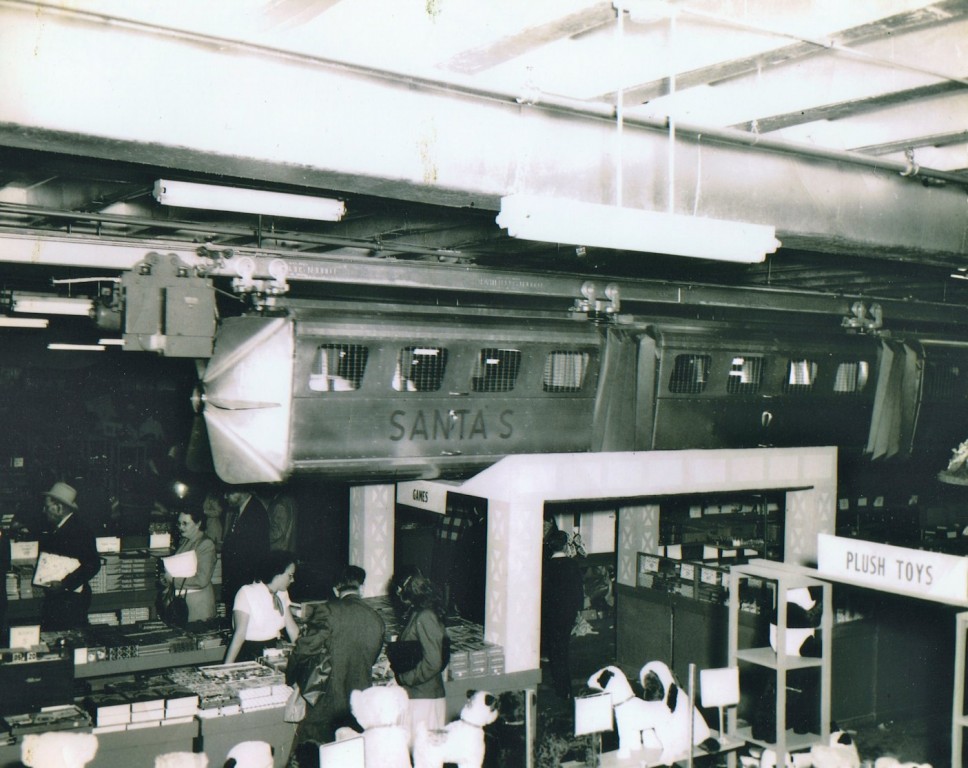
The annual Christmas visit to Leonard Brothers Department Store in downtown Fort Worth was the ultimate Santa experience. Toyland was akin to holiday Nirvana for us kids. A rocket ship monorail glided around the basement ceiling, kids packed in like sardines on a rocket train to nowhere. Parents rush to purchase presents while the kids are busy, hiding them under their coats or in bags and lying to their innocent children with straight faces.

Santa held his court in the middle of Toyland. His throne was 10 ft. off the ground, with stairs leading up and down. A majestic sight if there ever was one. Sitting in a velvet chair fit for a king while his Elfin helpers lifted the crumb crunchers on and off his lap, it was pure excellence. A line of snot-nosed kids snaked around the room, waiting for their chance to place their order, up the stairs, on the lap for 15 seconds, then off the lap, and down the stairs. The visit was over before you knew what had happened. It was the same routine for years, and I loved it. I could spit out my order in under 10 seconds. Santa and his helpers were impressed.

I asked Santa for a bicycle when I was 9 years old. A red and white machine with side mirrors, streamers, a headlight, and white-side-wall balloon tires. I also asked for a new BB Gun, a larger Cub Scout knife, and a Fanner 50 cap pistol with green stick-um caps. My sister asked him for a doll that was larger than she was and a dollhouse.

Christmas Eve arrived, bedtime rolled around, and we hit the sack. Hot Ovaltine and cookies put me out like a light. Then, sometime after midnight or later, I had to pee. I didn’t want to get up, but the Ovaltine was causing me some discomfort. Half asleep, shuffling down the hallway, I looked into the living room as I passed the doorway. With a Schlitz beer in his hand, my father sat by the tree, assembling a red bike like the one I expected from Santa. My mother was working on a cardboard dollhouse, and the giant doll my sister wanted was standing under the tree, looking creepy.

I convinced myself that Santa must have run out of time and had recruited my parents to complete his work. The reality of the sight escaped me.

My father looked up and saw me standing there; our eyes met, and he smiled like a raccoon caught in a trash can. The jig was up. The big lie was exposed, and my childhood imploded right there in the hallway. Daddy was Santa, and Mom was Mrs. Claus. I peed and made my way back to bed, not comprehending what I had witnessed.

I awakened at daybreak, our usual Christmas morning routine. I was thankful to be awake and away from the nightmare that had gripped me most of the night. I was relieved that it was all caused by the Ovaltine. The gifts were under the tree, and life was good. I loved the bike and the BB Gun, but my sister feared the enormous lifelike doll.

After breakfast, I was lying under the Christmas tree, building an army fort with my plastic soldiers. That’s when I found a Schlitz beer bottle, assembly instructions for a bike, and a few tools.

Meeting Tex Ritter: A Cherished Childhood Memory


Tex Ritter, photo courtesy of Roy Rogers

“Do not forsake me, oh my Darlin,” on this our wedding day,” who didn’t know the first verse of that song from the radio? A massive hit from the 1952 movie “High Noon,” performed by everybody’s favorite singing cowboy, Tex Ritter.

In 1957, I was eight years old, and on some Saturday nights, I got to tag along with my father to the “Cowtown Hoedown,” a popular live country music show performed at the Majestic Theater in downtown Fort Worth, Texas. My father was the fiddle player in the house stage band, so I was somewhat musical royalty, at least for a kid.

Most of the major and minor country stars played Fort Worth and Dallas as much as they did Nashville, and I was fortunate to have seen many of them at this show. One, in particular, made a lasting impression on my young self.

I was sitting on a stool backstage before the show, talking to a few kids; who, like me, got to attend the show with their fathers.

My father came over and asked me to follow him. We walked behind the back curtain and stopped at a stage-level dressing room. There in the doorway stood a big fellow in a sequined cowboy suit and a 30 gallon Stetson. I knew who he was; that is Tex Ritter, the movie star and cowboy singer. My father introduced me, and I shook hands with Tex. I was floored, shocked, and couldn’t speak for a few minutes. What kid gets to meet a singing cowboy movie star in Fort Worth, Texas? I guess that would be me.

Tex asked my name and then told me he had a son the same age as me. We talked baseball and cowboy movies for a bit, then he handed me a one-dollar bill and asked if I would go to the concession stand and buy him a package of Juicy Fruit chewing gum. So I took the buck and took off down the service hallway to the front of the theater. I knew all the shortcuts and hidey holes from my vast exploration of the old theater during the shows.

I knew nothing of the brands and flavors, not being a gum chewer, but the words Juicy Fruit made my mouth water. Not having much money, what change I did get from selling pop bottles went to Bubble Gum Baseball Cards, not fancy chewing gums.

I purchased the pack of gum for five cents. Then, gripping the change tightly in my sweating little hand, I skedaddled back to Tex’s dressing room. He was signing autographs but stopped and thanked me for the favor. He then gave me two quarters for my services and disappeared into his dressing room for a moment. He handed me an autographed 8×10 photograph of him playing the guitar and singing to the doggies when he returned. I was in country and western music heaven. He also gave me a piece of Juicy Fruit, which I popped into my mouth and began chewing, just like Tex.

Juicy Fruit became my favorite gum, and now, whenever I see a pack or smell that distinct aroma as someone is unwrapping a piece, I remember the night I shared a chew with Tex Ritter.

Nostalgic Christmas Memories from Fort Worth


A recount of my childhood Christmas memories in Fort Worth, Texas.

Photo by: Elf -O-Mat Studios

Riding a ceiling-mounted “Rocket Train” to nowhere around the basement of a department store doesn’t seem like a Christmas activity, but that’s what thousands of other Texas kids and I did every year in the 1950s.

Leonard Brothers Department Store occupied two square blocks of downtown Fort Worth real estate and was known as the Southwest’s Macy’s. They offered everything the big shot stores in the East carried and hundreds of items no retailer in their right mind would consider.

If you had a mind to, one could purchase a full-length mink coat with optional mink mittens, the latest women’s high-fashion clothing line from Paris, France, an Italian cut-crystal vile of Elizabeth Taylors spit, James Dean’s signature hair cream, Rock Hudson’s autographed wedding photos, a housebroken Llama, an aluminum fishing boat and motor, a new car, a pole barn, a lovely two-story craftsman home “build it yourself kit” delivered to your lot, chickens, barb wire, hay, horses and cows, a 30-30 Winchester rifle, a 40 caliber autographed General George Custer Colt pistol, a bottle of good hootch and a Ford tractor. That’s about as Texas as it gets.

The Christmas season in downtown Fort Worth was internationally recognized for its innovative and incredible decorations. The righteous and self absorbed city fathers figured the best way to outdo Dallas, a full-time effort, was to line every building with white lights from top to bottom and install large glowing decorations on every lamp pole, street light, and building façade available. If that didn’t make you “ooooh and ahhhh,” then you needed to take a BC Powder and head for the house.

A few days after Thanksgiving, my parents would take my sister and me downtown to see the decorations and visit the Leonard Brothers Department Store. Santa just happened to be in their basement, taking advanced verbal orders from every crumb cruncher who could climb the stairs and climb into his lap.

My sister always asked for the latest doll between screams and crying fits. She was scared senseless of “HO-HO,” but somehow managed to spit out her order. Like clockwork, every year, I asked for a Daisy BB Gun with a year’s supply of stainless silver ammo ( for killing werewolves), a full-size Elliot Ness operable Thompson Sub Machine Gun, or an Army surplus Bazooka with real rockets and a long, razor-sharp Bowie knife encased in a fringed leather holster. It was a 1950s boy thing; weapons were what we longed for. How else could we defeat Santa Anna at the Alamo or win World War II, again? Our neighborhood may have sported the best-supplied “kid army” on the planet, and jolly old Santa was our secret arms dealer; parents non-the wiser. I finally got the BB Gun, but Santa was wise enough to not bring the other request.

Walking down the stairs to the store’s basement was the thrill I had waited for all year. There, hanging above my head, was the beautiful red and silver tinseled sign, “Toy Land,” kid nirvana, and the Holy Grail all in one room. The smell of burned popcorn and stale chocolate candy wafted up the stairs, and I could hear the cheesy Christmas choir music and the sound the Rocket Train made as it glided along the ceiling-mounted rails. I almost wet my jeans.

Hundreds, if not thousands, of parents jostled down isles of toys, pushing, grabbing, and snarling like a pack of wild dogs fighting for that last toy; the holiday spirit and common courtesy were alive and well. The queue of kids for the Rocket Train snaked through the basement like a soup line.

Sitting on his mini-mountain top perch, sat old red-suited Santa Claus and his elfin apprentices, herding kids to his lap at break-neck speed. Each child got about fifteen seconds, a black and white photograph, and then it was off the lap and down the steps. Kids were fast in those days; we memorized and practiced our list weeks before our visit for maximum impact. “Ho-Ho” had better be writing this stuff down. Kids, don’t forget squat.

After two Santa visits, four Rocket Train rides, and three popcorn bags later, our family unit departed Leonard’s for the new and improved “Leonard’s Christmas Tree Land,” located across the street from the main building. Thanks to the demolition of several wino-infested abandoned buildings, the new lot was now the size of Rhode Island and held enough trees for every person and their dog in the state of Texas.

Thousands of fresh-cut trees awaited our choosing. Father, always the cheapskate, chose a sensible tree; not too big, not too small, yet full and fluffy with a lovely piney aroma. My sister and I pointed and danced like fools for the “pink flocked” tree in the tent, which cost the equivalent of a week’s salary. My parents enjoyed our cute antics. The sensible tree was secured to the top of our Nash Rambler station wagon, and we were homeward bound.

Pulling into our driveway, it was impossible to miss our neighbor’s extravagant holiday display. We had been away from home for 6 hours and returned to a full-blown holiday extravaganza that made our modest home look like a tobacco road sharecropper shack.

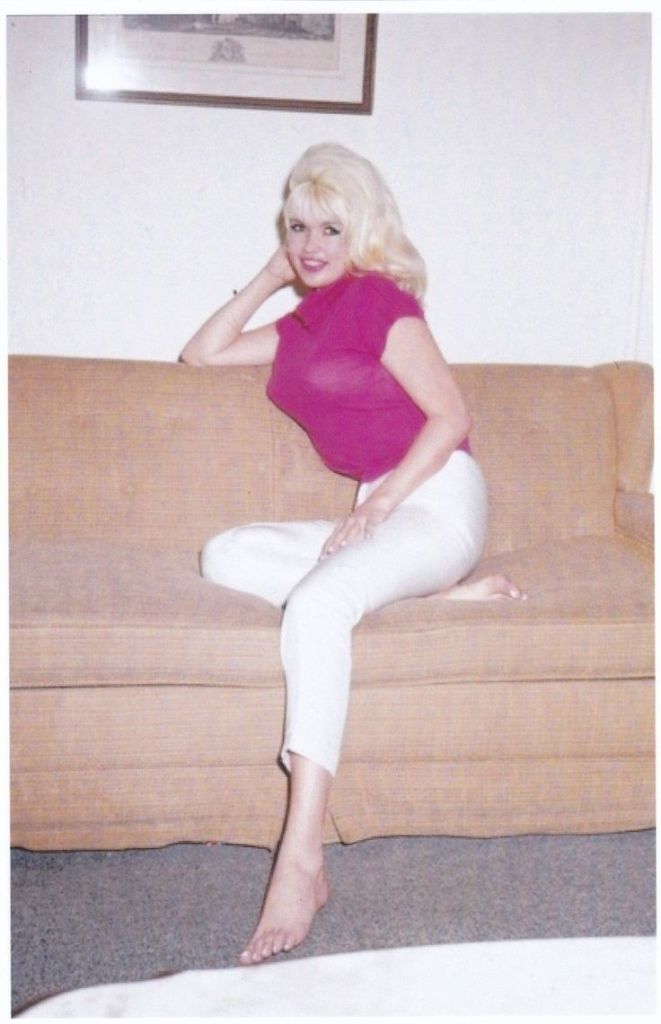
Our next-door neighbors, Mr. Mister and his lovely wife, Mrs. Mister, were the neighborhood gossip fodder. The couple moved from Southern California for his job. He, an aircraft design engineer, and she, a former gopher girl at Paramount Studios. The Misters reeked new-found money and didn’t mind flaunting it. They drove tiny Italian sports cars and hired a guy to mow their lawn. His wife, Mrs. Mister, always had a Pall Mall ciggie and a frosty cocktail in one hand. Father said she looked like a pretty Hollywood lady named Jane Mansfield, but Mother said she resembled a “gimlet-assed dime-store chippy.” I got the impression that the Misters were quite popular in the neighborhood.

Their Christmas display was pure Cecil B. DeMille. A life-size plywood sleigh, with Santa and his reindeer, covered the Mister’s roof, and 20 or more automated Elves and various holiday characters greeted passersby. Twinkling lights covered every bush and plant in the yard, and a large machine spat out thousands of bubbles that floated through the neighborhood. This was far more than Fort Worth was ready for.

The kill shot was their enormous picture window that showcased a ceiling-high blue flocked tree bathed in color-changing lights. There, framed in the glow of their yuletide decor, sat Mr. and Mrs. Mister with their two poodles, Fred and Ginger, perched on their expensive modern sofa, sipping vermouth martinis like Hollywood royalty. This display of pompacious decadence didn’t go unnoticed by my parents.

Father hauled our puny tree into the living room and began unpacking lights for tomorrow evening’s decorating. Mother hurried my sister and me off to bed. Visions of spying Elves, sugar plum pudding, and dangerous weapons danced in my head; Christmas was upon us like an itchy fungus.

Sometime after 10 PM, Father got hungry. Searching for sandwich fixings in the kitchen, he found a bottle of Jim Beam bourbon. Then he found a fresh half gallon of Eggnog, which he enjoyed with the bourbon. While searching for bread to make a ham sandwich, he found two boxes of “Lux Laundry Soap Flake” with a dish towel in each. Then, by chance, he discovered the food coloring. This gave him an idea for our sad little tree.

I awoke with a start. The sun was shining on my face, which meant I was late for school. I ran into the living room and was stopped in my tracks.

Our formally green tree was now flocked in thick pink snow, as were the curtains, the fireplace mantel, two chairs, the coffee table, and my father, who lay on the couch, passed out, with a half-eaten ham sandwich on his chest. My Mother sat a few feet away, sipping her coffee and smoking a Winston; my Louisville slugger lay on her lap. I was reluctant to approach her, but I had to know.

I timidly put my hand on her shoulder and asked, “Mom, is Dad going to be alright?” She took a sip of coffee and a drag from her ciggie and said, “Well, for right now, he will be, but after he wakes up, who knows.”

Henry’s Journey: Cattle, Family, A Cow Dog, and the Brazos River


The Brazos River winds its way through the stoic rock cliffs a mile east of the small village of Glenrose, Texas, its waters glinting like scattered stars as the sun throws its golden light upon the white limestone bedrock beneath the water. In the tranquil shallows and deeper pools, hues of emerald and azure spiral together, mirroring the darting fish that traverse the hidden world below. Eagles and Hawks prowl the sky above, capturing the fish that swim too close to the surface. Towering Oak, Pecan, and Elm trees stand as steadfast guardians along the banks, their roots deep in the fertile soil, while just beyond, the land erupts in a profusion of wildflowers, a testament to the beauty and resilience of this little patch of earth. This is the land that Henry’s family chose as their homestead.

In the shadows of the towering hills, wide stretches of grasslands unfold, a realm where cattle and deer roam free, finding solace in the abundance that the land offers. Here, the grass is plentiful, and competition is not considered. The earth yields enough to sustain all who seek its bounty. Mesquite trees stand in tight groves, their gnarled limbs ready to provide the firewood for warmth and light for the ranch house. Henry thanks God every day that his family chose this little slice of Heaven so many decades ago, when Texas was newly freed from Mexico and formed into a Republic. His family and the Comanches made friends early on, sharing the bounty of the land and feeding the tribe with a beef or two when needed. It was a choice of peace over bloodshed and battle.

Henry’s two boys left the ranch years ago. His youngest works as a deputy in Fort Worth, an honorable but dangerous profession. His oldest boy is a gambler and a scoundrel, and haunts the saloons and gambling halls of New Orleans and Houston, making a shady wage and living an abhorrent lifestyle. Abigail, his wife, pines for a reunion with her boys, but they have been without her loving touch for many years. She is old, sick, and frail, and Henry fears each day might be her last, so he doesn’t travel far from the house and checks on her often during the workday. Henry is older than her, and he’s no spring chicken. His days of ranching and sitting in a saddle will be ending soon.

Cattle are made for roaming; it’s their inherent nature. Cowboys are made for finding and securing the unruly bovines; it’s a circle game played out daily. Henry is missing twelve, maybe thirteen, and two calves, all Longhorns. He knows they are drawn to the river; they smell the wetness and know that the grass is sweetest near the banks, and the spreading Oaks offer a safe respite when night comes. He sent his ranch hand West to search, but he knew they likely headed East to the river.

Henry picks up the cattle tracks in the soft sandy soil, heading to the river. He follows for a few miles to the West bank of the Brazos. There, they crossed in water no more than a foot deep, but swift enough to take a man off his feet. Across the river, maybe thirty yards, he sees their exit up a steep incline next to a sharp cliff that drops off to the right, large rocks scattered along the bank below, and trapped broken tree trunks and limbs reside there among the stones. The trees are thick on the left, so there is no option but the one the cattle took. Henry gives them credit for being smart enough to figure it out. They cross with no effort. Witherspoon, his old horse, knows about as much as a ranch horse could learn. Henry considers him smarter than many of the men he knows. They start up the incline, which is steeper than it appeared from the other bank. Witherspoon struggles, slipping on the soft earth and gravel, and rolls to the right. Henry knows they are falling, and it won’t be a soft one. He grabs the saddle horn and braces for the impact as they fall backwards off the cliff.

When Henry opens his eyes, the sky looks a color of blue he is not familiar with. Deep Azure, not the familiar soft blue. He is flat on his back, lying atop stones. He doesn’t feel pain and figures he escaped injury. Witherspoon, his horse, grazes near the face of the cliff they fell from; he appears uninjured as well. He raises himself up on his elbows. From the left side, a dog approaches, tail wagging. Henry is shocked; it’s his cow dog, Buster, gone for three months now. Henry was sure a pack of coyotes got him, but here he is, now licking his face in between joyful whines. Abigail will be pleased as punch to see Buster back home. She mourned for weeks, assuming he had passed.

Witherspoon is in good shape, not a scratch on him, so he mounts, and Buster leads the way up the incline. This time, it’s an easy climb, and they continue down the path, Buster following the tracks and stopping ever so often to look back and bark to let Henry know the way.

The three come upon a man leaning on a broken gate. The wood of the gate is in poor shape. The man is dressed in city clothes, sharp and clean, boots shined and a snazzy derby perched on his head. Henry has been in these parts many times and doesn’t remember this place.

The man motions his hand and says, ” Howdy neighbor, what brings you to these parts?

” Looking for some strays that crossed the river maybe yesterday or the day before, you seen them” Henry says. Buster sits on his bollocks, ears low, hair on his back up: it’s clear this is not a nice fellow. Henry trusts his dog’s instincts, which are always right.

” Had some strays here a few days ago, just walked right in the gate and up to the main house, you’re welcome to come and see if they are yours. I’ve got some good corn liquor if you’d like a jolt, but the dog has to stay at the gate, no dogs allowed on this spread, they cause too much trouble,” says the man with a broad, fake smile. Buster lowers his body and snarls, emitting a low growl.

Henry looks at the entrance, the tracks must be at least a few weeks old, and the rain has almost vanished them. He says,” No thanks, my dog has picked up their scent and tracks, and they lead on up the road, so we’ll be moseying along.”

” Suit yourself, neighbor, if you don’t find them, you can come to the main house, but the dog isn’t welcome.” The man turns and leaves as Henry moves Witherspoon along the tracks that Buster has picked up.

A few miles down the road, Henry comes upon another gate. A young woman is replacing the hinges. She has a toolbox and has clearly been working hard. Her clothes are a bit dirty, her boots are worn, and her straw hat has seen better days. Without hesitation, Buster goes to her and she bends down and gives him a hug, he whines and licks her face.

She puts down her tool and says, ” Bet you’re looking for those Longhorns that came by this morning, twelve of them, with two calves. They walked right in the gate and up to the barn. I put them in a holding pen. I figured someone would come looking. Why don’t you and your cow dog follow me up to the barn, and I’ll give ya’ll a cool drink of water, and Cookie might have a biscuit or two left from breakfast if you’re hungry. Why don’t you dismount and walk with me up to the main house?”

Henry and Buster walk beside her, Witherspoon in tow. The road is well kept, the trees lining the road are healthy and green, and some are bursting with fruit, Apples, Pears, Peaches, Mulberries, and the wild flowers are as abundant and colorful as he has ever seen. In the distance he sees the main house. It’s a sprawling place, maybe three or four stories, painted white and trimmed in gold. There are dozens of folks sitting in chairs under the covered porch. Dogs and children play on the lawn. Buster takes off down the road to join in with them.

The young woman takes off her leather gloves, offers a hand to Henry, and says, ” Howdy, my name is Angela. This ain’t my place, it belongs to my Father. You must be Henry and your cow dog must be Buster, right?”

Henry shakes her hand. Her face is beaming, glowing in the afternoon light. Bright blue eyes, silky brown hair, and the whitest teeth he’s ever seen on a person. He says, ” Angela, how do you know my name? I don’t recall telling you yet. I can’t stay long. I’ll collect my strays and need to head back. My wife is sickly, and I’ve been gone too long as it is. I worry about her, and she doesn’t need the misery of thinking something happened to me.”

Angela moves closer to Henry and takes his hand in hers as they stroll down the road. She says, ” Henry, we’ve been expecting you, Witherspoon, and Buster for a while now, and don’t worry too much about Abigail, she’ll be along shortly. Ain’t this place just a slice of Heaven.”

Nostalgia for 50s Texas: Memories of Fort Worth


I’m a 50s kid. That means I was born in 1949 at Saint Josephs Hospital in Fort Worth, Texas, and grew up in the lean and mean Eisenhower years. My hometown was different back then, as most of our hometowns are today. But, change is inevitable, and it happens at the oddest times; while we sleep or mow our lawn. Progress is sneaky.

First, it’s a few new buildings downtown, then a slick freeway cutting through quiet neighborhoods, and maybe a landmark building demolished to make way for a new hospital. Then, out of nowhere, a train full of people from the West or the East is arriving, and the pilgrims try to make it “not so Texas.” It’s a gradual thing, and most of us are too occupied or young to notice until it bites us in the rear.

My grandfather was old-school Fort Worth from the late 1800s, a cow-puncher who rode the cattle drives and sang cowboy songs to the little doggies. He loved his city to a fault. The word “Dallas” was not to be spoken in his home or his presence. Violaters usually got punched or asked to leave. The old man was a tough Texan and a supporter of Amon Carter, the larger-than-life businessman that put Fort Worth on the map and started the rivalry between the two cities.

In the 1950s, if you asked Fort Worth residents what they thought of Dallas, they would most likely tell you it’s a high-on-the-hog East Coast wanna-be big-shot rich-bitch city. We didn’t sugarcoat it. That rivalry was always in your face and at times vicious. My father was a country musician, and when his band, The Light Crust Doughboys, had to play in Dallas, his extended family heaped misery upon him for weeks.

In October, Dallas has the “State Fair of Texas,” and Fort Worth has the “Fat Stock Show” in February. I didn’t attend the State Fair until I was ten years old, and even then, it was in disguise, after dark, to the fair and back home, hoping no one in our neighborhood noticed we had crossed enemy lines. Unfortunately, I let my secret visit slip around my buddies, and they banned me from playing Cowboys and Indians for a week. Even us kids were tough on each other.

Three things got us kids excited: Christmastime in downtown Fort Worth, Toyland at Leonard Brothers Department Store, and The Fat Stock Show. But, unfortunately for us, the rest of the year was uneventful and boring. Summer was pickup baseball games, old cartoons on television, and blowing up the neighborhood with cherry bombs, our pyrotechnics of choice.

60 years ago, the winters in Texas were colder and more miserable. February was the month we froze our little gimlet butts off, and of course, that is the Stock Show month. Wrapped up in our Roy Rogers flannel pajamas under our jeans, boots, and cowboy hats, we kids made the best of it as we visited the midway, the cattle barns, and animal competitions. The rodeo was for the real cowboys, and it was too expensive; the free ticket from our grade school only went so far. We were kids and had not a penny to our name. It wasn’t the flashy affair that Dallas put on, but it was ours, and we loved it. I still have a round metal pin I got at the Stock Show, a lovely picture of Aunt Jemimah promoting her flour, something that would get me canceled, or worse, in today’s clown world. I’ve often thought of wearing it to my local H.E.B. grocery store to see the reaction. Maybe not.

For those of us who were born and grew up there, Fort Worth, Texas, is where the west begins, and Dallas is where the East peters out. Nothing has changed.

A Performance to Remember.. Cookie Becomes A Beatnik


In the fall of 1958, the first Beatnik-style coffee house opened its doors in Fort Worth, Texas. Calling itself “The Cellar.”

Fort Worth did not welcome its presence or the inhabitants it attracted. Conservative city fathers asked, “Where did these people come from? Have they always been here?” It was a cowtown of shit-kicking cowboys, Cadillac-driving oil men, and country club debutants wearing Justin boots. My cousin Carmalita, who preferred the name Cookie, was a perfect fit for the coffee house and secured a job as a waitress at the new establishment.

Being seven- years younger than Cookie, the other cousins and I had limited interaction during her teenage years. Still, I know from the family stories and the “almost out of earshot whispers” that she was a real hellion of a girl. Her mother, a rosary-clutching Catholic, believed her daughter to be mentally disturbed and demon-possessed. She was neither, just a rebellious girl born twenty years too early who refused to fit into the conservative society of the 1950s.

Immersing herself in books by Kerouac and Ginsberg that glorified the new lifestyle of the “beat generation.” Cookie began dressing in the style of “the Beats.” She envisioned herself traveling west with Dean Moriarty and Sal Paradise as they motored their way to New Mexico in search of God and the meaning of life fueled by Marijuana sticks and two-dollar-a-bottle liquor. Jack Kerouac was her hero.

Waist-length black hair and a resemblance to a young Ava Gardner didn’t endear her to the Sandra Dee-loving girls’ club at school. She was labeled an outcast. She dropped out of Paschal High School at sixteen to live in sin with her next-to-worthless greaser-hoodlum boyfriend, a motorcycle-riding teenage hubcap-stealing thief from the north side of town. This decision resulted in her instant banishment from the family.

Polled by a phone-in family vote, she was christened the “little trollop.” Her name was not to be spoken at gatherings, and her mother requested all photographs containing images of Cookie be returned to her for proper disposal by fire in the backyard BBQ pit. Her father was brokenhearted by her rejection. Unable to watch her sweet sixteen birthday present, a Ford Fairlane convertible, sit abandoned in his driveway, he sold it. The rebellious type was not tolerated well in the 1950s, especially in Texas and our extended family.

“The Cellar” grew in popularity, and crowds of unwashed self-appointed poets and deep thinkers found their way to the dark, smokey den.

Cookie grew tired of the bland poetry readings from ancient books and tried her hand at writing. Her heart was full of self-induced resentment, and it didn’t take long for her to dish on everyone and everything she felt had “done her wrong.” Her parents were number one on her list. She asked the club owner to let her perform a personal poem about her life, and he agreed.

Saturday evening is reserved for the serious night-dwelling “hip beats.” They convene and hold literary court to anyone who will listen. Mixed groups gather around small tables, arguing about poetry, politics, religion and the meaning of life. Old Crow adds the extra kick to the strong coffee. An occasional strange cigarette might be passed around.

Sensing the time is right, Cookie takes the stage, cradling a cardboard box under her left arm and a large pair of sewing shears in her right hand. She sets the box on the floor next to a tall stool. Tears stream from her eyes, forming dark streams of watery mascara onto her peach-pale cheeks. A thin tinsel string of snot drips from her left nostril, resting on her upper lip, and glitters in the spotlight, bathing her face in an ethereal glow. She sniffs and gags a few times, composes herself, and begins her poem.

She retrieves her favorite childhood doll baby from the box and lays it on the stool top. She grabs a large meat cleaver from the box and beheads the poor toy. A gasp erupts from the crowd. Earlier, for maximum effect, she filled the doll’s plastic head with Heinz Ketchup and potted ham to simulate blood and brains. The ketchup-splattered patrons recoil in horror when the doll’s head is guillotined and bounces onto their table by the stage.

Next, she pulls a beautiful 8×10 glossy photo of her parents from the box and cuts it to shreds with the sewing shears. She pulls a Girl Scout uniform from the box and rips it to pieces, throwing the all-American remnants of the uniform into the audience.

Cookie leans into the microphone, takes a long drag from a Pall Mall, and in a low growl, says, ” I never liked dolls or toys, but you made me treat the little fakes like real people. I fed them imaginary food, bathed them in imaginary water, changed their tiny poopless diapers, and dressed them in stupid clothes, and for that, I hate you and cut my hair.” With that statement, she grabs a chunk of her beautiful lady Godiva’s length hair and removes a six-inch portion with the sewing shears.

She continues, ” I didn’t want to be a Bluebird, but no, I had to be like the other girls on our street, you know, I don’t like the color blue, and for that, I hate you, and I cut my hair.” Then, whack, another large section falls to the stage. ” you hate my boyfriend because he is a bad boy, and he is all that, but I love him and want to spend my life on the back of his ratty-ass motorcycle holding a nursing baby in each arm as we travel west to find the meaning of life.” She then whacks the left side of her hair to within inches of her scalp.

The audience is on the verge of bolting for the door, fearing her next move may sever an artery and expire in front of them. A voice from the back of the room yells, “This chick is crazy, man.”

Cookie ends her act and exits the stage, leaving a pile of black hair mixed with ketchup and photo paper. The crowd of poets and hip cats give her a lukewarm reception. This performance was too unhinged for the normally unshakable.

That performance at the Cellar that night was the debut of what would become known as “Performance Art.”

Cookie got her wish. Less than a year later, with a baby in her arms, she and her boyfriend made their way to California, and that’s another story.

Facing Cancer: My MRI Experience at UT Southwestern


Back in 2019, this Texan caught myself a case of cancer. It wasn’t contagious like the flu or a Norovirus, but it was a bad case. My first doctor wanted to do the standard treatment, but my wife, a dedicated nurse, did some digging and found a new treatment available only at UT Southwestern in Dallas. We live in Granbury, and I grew up in Fort Worth, so going to Dallas was painful; it’s something we Fort Worth’ians didn’t do back in the 1950s. Fort Worth is where the West begins, and Dallas is where the East peters out; it’s an actual historical fact. So, I had to swallow my family legacy of pride and prejudice and go to Dallas to save my life.

Round two of my cancer diagnosis commenced on May 13th, 2019 at 3:45 pm. Going to UT Southwestern Oncology for treatment was a no-brainer: it’s the best. Their staff radiates positive vibes, so naturally, I feel better. It is battling this evil little demon that has invaded my beloved earthly form with its sights set on the destruction of my body that keeps me focused. This course of action is my main goal and will receive my full attention for the near future.

Today is the ” oh so” specialized 3RDT MRI. I’m amused at the Star Wars comparison to R2D2. At least R2 would show me a hologram of Princess Lea for my entertainment. As with any procedure, it is inserting the word “specialized” into the mix that assures the method will be expensive and painful. I was right.

My bright eyed and bushy tailed MRI nurse accompanies me to my changing room, where I change into a scratchy blue hospital gown accented by yellow non-skid socks. After my wardrobe makeover, he inserts an IV pic into my arm and leaves.

A young woman, maybe twenty-one or so, also wearing the blue gown sits down next to me. She has two IV pics in one arm and appears scared. At this age, my shyness with strangers is minimal, so I ask her, ” first MRI?”.
Without looking over, she says, ” no sir, this is my sixth one, and there’s more to come. It’s Cancer.”
She looks at me and asks, ” how about you.” At this point, I feel like this young girl needs a laugh, even at my expense.
In a deadpan voice, I say, ” complications from the Racoon Flu. My entire body is pulsing with it. Never saw a garbage can I didn’t love. She knows this is total BS and laughs. I crack myself up.

Ten minutes later I lay on the MRI table, IV in place, earplugs inserted, headphones on, and the nurse/tech leans over and tells me “this might be a little uncomfortable.” He smiles and snickers as he says it.
I ask, ” how big is this thing you are inserting into my earthly temple.”
He laughs and says, ” not too big, just enough to get close to the subject and light you up with some good old Radiation.”
I plead, ” let me see it, and I’ll be the judge of that. What kind of Radiation are we talking here?”
Rather proudly he exclaims, ” this is the good old American stuff, came straight from Los Alamos Labs. The same material used to build “the nuke back in 1945. It’s so pure that Dr. Oppenhimer personally endorses it. Its the bomb.”

From behind his back, he produces a probe that looks like a 1/24th scale model of the Hindenburg Blimp. Attached to the business end is an evil pigtail coil that is glowing green. This contraption is right out of the Spanish Inquisition playbook of torture, and it’s going inside of me? Fortunately, for my mental stability, the relaxation drugs I took an hour ago have kicked in, so I am defenseless to attempt escape. I accept fate and brace for the assault.

When the nurse, Mr. Smiley inserts the “little Hindenburg” into my backside, I was convinced I was either in the throes of childbirth or expelling an alien creature from my abdomen. I will never again doubt the painful stories of Alien abductees or women birthing children as “no big deal. ” I am squirming like a brain-hungry zombie, begging for mercy, offering money to end the agony, anything to stop the immobilizing pain. Then, in an instant, the suffering was gone, and I was human again. Listening to some awful hillbilly music, I drifted into La-La land.

I drift back into consciousness hearing George Jones sing ” He Stopped Loving Her Today,” possibly the saddest damn country song ever written. I choke back a tear, then realize where I am and why I’m here. Nurse Smiley congratulates me on a job well done, helps me to my feet and back to the dressing room.

Heading for the waiting room, I realize that scenarios like this will be my life for months to come. I think of a song from The Grateful Dead: I will get by, I will survive. Catchy little tune. Everyone needs a theme song.

Ask A Texan: When Life Ain’t So Wonderful


Contemplative And Often Serious Advice For Non-Texans

The Texan

This Texan recieved a letter from a Mr. George Baily of Bedford Falls New York. It seems his oldest son, Tommy has become a Performitive Male.

Mr. Baily: Mr. Texan, I read your advice column in my uncle Billy’s copy of the Police Gazette, so you, being a wise old fellow, might be able to help me out.

My oldest son, Tommy, has been away at college in New York City. Mary and I haven’t seen him in about 6 months, or so. He came home a few days ago, and we almost lost our breakfast right there in the foyer when he walked in the door. He was dressed in checkered pajama pants, a see-through black tee-shirt, and a pink fuzzy sweater. He was carrying a tote bag from Macy’s, had a Nikon camera hanging from his neck, and was wearing some pink Phyllis Diller-looking glasses. And to make it even worse, he also had one of those man buns on his head. His younger sister Zuzu took one look at him and called him a little sissy-man.

Mary spent three hours in the kitchen making him his favorite supper of Pork Tenderloin, mashed potatoes, and steamed Broccoli-Tomato medley. When he came downstairs to eat, he threw a fit and said he no longer eats meat or nightshade vegetables because his sensitive digestive system makes him moody and melancholy if he eats the wrong food. He only eats Kale salad, Tibetan rice cakes, and drinks a Mocha Latte from Starbucks. Just looking at the supper made him whimper and cry. He told us he has embraced his sensitive feminine side, doing away with his male toxicity. He is now what is known as a Performative Male.

Zuzu, our stout, no-nonsense daughter, lost it and punched him out with a haymaker to the face, right there in the dining room. She then threw a handful of rose petals on him as he lay there on the rug with a dislocated jaw and bleeding from his nose. Mary is so upset, she pleaded with me to call my Angel buddy Clarence to see if he could talk some sense into our little Performative sissy man. Got any suggestions on how we can handle this predicament?

The Texan: Boy howdy, George, I can see that your life ain’t so wonderful right now. We don’t have many of those feminine men here in Fort Worth, Texas, they all stay in Dallas and Austin. Down here, men are real men. We wear manly footwear, Stetson hats, and Wrangler jeans from Cavender’s. If your son took a stroll in the Stock Yard district, he wouldn’t last five minutes before some cowboy put a large can of whoop-ass on him. Your daughter Zuzu sounds like a keeper. Let her handle her brother; a few more butt-whippings might do him good. There’s something about getting your butt kicked by a girl that gets the old male hormones going. I’m sending him a CD of George Strait’s greatest hits, a pair of Justin cowboy boots, some Wrangler jeans, and a box of Cherry Bombs so Zuzu can blow up all his girly stuff. Tell Clarence howdy for me, and stay away from bridges.

The Journey to Fort Worth: A Story of Hope and Sacrifice


The continuing story of Jesus Got A Mainline
the Manley Family: Front from left, Jasper, Marcy, Lavelle. Standing, from left, Mozelle, Jay, and Catharine

Leaving home to forge a new life can be an exhilarating journey or a regretful mistake, depending on the circumstances of the departure. My mother, Mozelle, saw it as a journey that must be made; there would be no regret or sadness. The days of laboring in the fields and chopping cotton were behind her now. She would never again grip the wooden handle of a hoe.

Her mother’s parting tears left a permanent stain on the shoulder of her best dress. Her father’s apathy and refusal to hold her pierced her heart.

The bus ride to Fort Worth stretched into the night, giving her time to reflect and to shed her tears in the dark.

Sharing an apartment with her sister, Lavelle, she found work at Consolidated Aircraft Corporation, where she built B-24 bombers as part of the war effort. She was now the girl on the famous poster, with her sleeve rolled up and a polka dot headscarf. Her life was all work with little time for a social life.

In a letter from home, her father demanded that she and her sister send him a percentage of their paychecks, as their departure from the farm had forced him to hire labor and change crops that yielded less money. They complied, albeit unwillingly, for the sake of their mother. They learned that the Preacher and his family had come one last time, and with no cotton to pick, returned to San Angelo, where he passed a few months later. His sons carried on the church. She never forgot Preacher and his mainline to Jesus.

Her brother, Jay, wrote frequently to his sisters from his ship in the Pacific theater. He was a gunner on a destroyer and participated in the invasion of Iwo Jima. He was one of my two uncles who were the best liars and spinners of yarns and tall tales, and he passed that treasure on to me.

The front porch of the family farm house was his stage, and I would sit for hours absorbing his tales, some true, some as tall as the oak tree growing in the front yard. Give the man a few Pearl Beers and he could orate as well as Will Rogers. I felt he missed his calling to be a writer or a stage personality. In later years, the stories had darker undertones, and he became a world-class alcoholic who, after two stays in a state hospital, beat the demon and lived a sober life until his passing in a car accident in 1968, a head-on collision caused by, of all things, a drunk driver. She believed the war affected him deeply and led to his drinking problem. Today, we call it PTSD. My mother loved him dearly, and she was the force that convinced and aided him to seek help. His death affected her deeply, and I believe she grieved him for the rest of her life.

As a young girl, my mother wrote poetry and was quite good; she won an award in grade school. Her handwriting was exquisite. She and a fountain pen became one, and a sheet of lined school paper became her canvas.

Reading the great poets of her time and writing her own poems was her idea of a proper education, and she dreamed of one day publishing her own book. There were hundreds of pages of poems, squirreled away in a drawer, for someday. The poems were lost, and so was the day with them.

After the war ended, she and her sister worked on drawing maps. There was more time for a social life, and the two enjoyed dancing, so that led them to nightclubs at Crystal Springs on Lake Worth, Belknap Street, and Jacksboro Highway. She wasn’t looking for a boyfriend or a husband, but was swept off her feet by a good-looking, dynamic young fiddle player in one of the bands. The attraction was immediate and intense, and both of their backs were chock-full of Cupid’s arrows. That nice young man, a native of Fort Worth, a veteran, and recently relocated from Hawaii, would become my father.

Why Every Writer Deserves to Call Themselves an Author


A while back, an obnoxious blogger that fancied herself a serious author said that writers are not authors, and real authors are those that have been published and cut their teeth in academia, meaning a teacher or a professor of sorts. The rest of the poor souls plodded on through pages of typos and third-rate editing. I know that Hemingway, Steinbeck, and Capote would likely not agree with her observation.

Being the smart-ass that my mother raised well, I challenged the blogger on her assessment of the current literary scene and its “wink-wink” secret membership.

I knew she was a teacher right away because the following lecture and browbeating reminded me of high school. Much high-handed rhetoric and pontification without explaining anything. Sound familiar?

My measured response was that you must first be a writer to become an author. A writer is anyone that puts to paper a story of fact or fiction. It matters not if anyone ever reads your effort; it’s done and sealed. If your writing makes it to a publishing house or a website, you may call yourself an author, but you are still a writer. Nothing changes but a definition and perhaps a fat check.

My first writing was around ten years old and was on a Big Chief tablet. I was working my way to being the second coming of my beloved Mark Twain.

My uplifting teacher at the time had no problem telling me I would likely become a writer. Of what, I asked? She said maybe a book or a novel or a newspaperman; she thought I had a knack for the genre. She did encourage me to learn typing, which I did on a 1930s-era Underwood that occupied my parent’s dining room table. I was the only kid in our neighborhood that knew typing. My friends were google-eyed envious as if I had broken the enigma code or figured out the Orphan Annie decoder ring. I did gloat a bit, but not too much.

At 76 years old, I consider myself a writer; with over 200 short stories and interviews to my name, they attest to my efforts.

I have, over the years, been published a few times; Interviews about the rock scene in the 60s and early country music, so even though I received little to no money, I could, if I wished to, call myself an author. But it’s all a wordplay around egos. So, until I can come up with something as serious as Thomas Wolfe, Harper Lee, Truman Capote, or my beloved Mark Twain, I will remain a humble writer.