
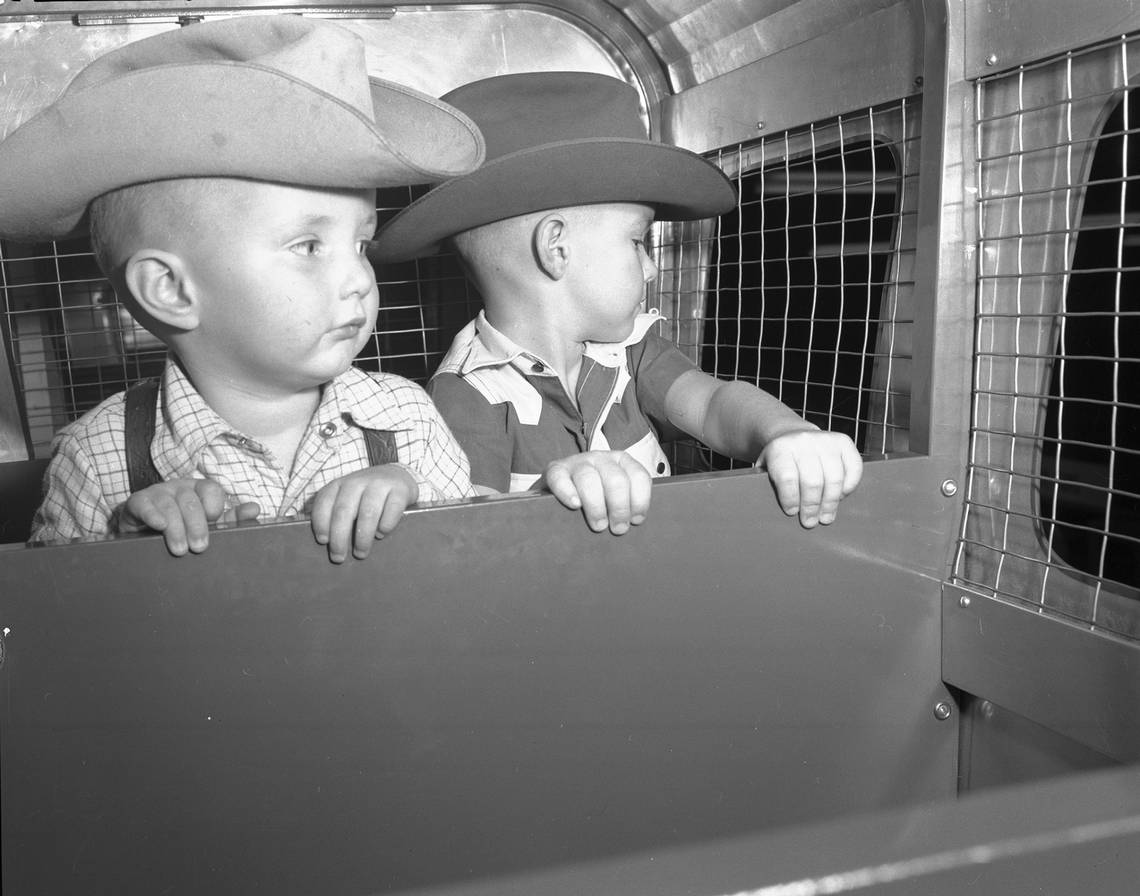
I’m a 50s kid. That means I was born in 1949 at Saint Josephs Hospital in Fort Worth, Texas, and grew up in the lean and mean Eisenhower years. My hometown was different back then, as most of our hometowns are today. But, change is inevitable, and it happens at the oddest times; while we sleep or mow our lawn. Progress is sneaky.
First, it’s a few new buildings downtown, then a slick freeway cutting through quiet neighborhoods, and maybe a landmark building demolished to make way for a new hospital. Then, out of nowhere, a train full of people from the West or the East is arriving, and the pilgrims try to make it “not so Texas.” It’s a gradual thing, and most of us are too occupied or young to notice until it bites us in the rear.
My grandfather was old-school Fort Worth from the late 1800s, a cow-puncher who rode the cattle drives and sang cowboy songs to the little doggies. He loved his city to a fault. The word “Dallas” was not to be spoken in his home or his presence. Violaters usually got punched or asked to leave. The old man was a tough Texan and a supporter of Amon Carter, the larger-than-life businessman that put Fort Worth on the map and started the rivalry between the two cities.
In the 1950s, if you asked Fort Worth residents what they thought of Dallas, they would most likely tell you it’s a high-on-the-hog East Coast wanna-be big-shot rich-bitch city. We didn’t sugarcoat it. That rivalry was always in your face and at times vicious. My father was a country musician, and when his band, The Light Crust Doughboys, had to play in Dallas, his extended family heaped misery upon him for weeks.
In October, Dallas has the “State Fair of Texas,” and Fort Worth has the “Fat Stock Show” in February. I didn’t attend the State Fair until I was ten years old, and even then, it was in disguise, after dark, to the fair and back home, hoping no one in our neighborhood noticed we had crossed enemy lines. Unfortunately, I let my secret visit slip around my buddies, and they banned me from playing Cowboys and Indians for a week. Even us kids were tough on each other.
Three things got us kids excited: Christmastime in downtown Fort Worth, Toyland at Leonard Brothers Department Store, and The Fat Stock Show. But, unfortunately for us, the rest of the year was uneventful and boring. Summer was pickup baseball games, old cartoons on television, and blowing up the neighborhood with cherry bombs, our pyrotechnics of choice.
60 years ago, the winters in Texas were colder and more miserable. February was the month we froze our little gimlet butts off, and of course, that is the Stock Show month. Wrapped up in our Roy Rogers flannel pajamas under our jeans, boots, and cowboy hats, we kids made the best of it as we visited the midway, the cattle barns, and animal competitions. The rodeo was for the real cowboys, and it was too expensive; the free ticket from our grade school only went so far. We were kids and had not a penny to our name. It wasn’t the flashy affair that Dallas put on, but it was ours, and we loved it. I still have a round metal pin I got at the Stock Show, a lovely picture of Aunt Jemimah promoting her flour, something that would get me canceled, or worse, in today’s clown world. I’ve often thought of wearing it to my local H.E.B. grocery store to see the reaction. Maybe not.
For those of us who were born and grew up there, Fort Worth, Texas, is where the west begins, and Dallas is where the East peters out. Nothing has changed.





 Notes From The Cactus Patch