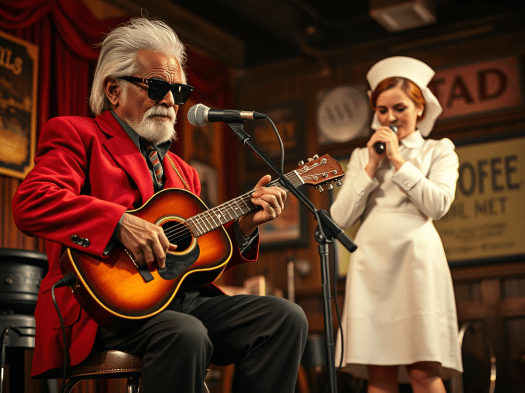
The Green Legacy of Mr. Greenjeans


If you were a kid in the 1950s, then you knew who Captain Kangaroo and his sidekick Mr. Greenjeans were. Their television show was broadcast five days a week in glorious black and white and viewed by millions of kids on tiny television screens. ” Don’t sit too close to that TV, you’ll go blind.” That was the stern warning from every mother, and here we are today, all wearing glasses or blind. How did you expect us to see the Captain and Greenjeans on an 8-inch screen?

The burning question we all had was, did Mr. Greenjeans wear “green jeans?” We were kids, with no color sets, it made us crazy. Was this man green?

A few months ago, I took a shortcut through a Fort Worth neighborhood to avoid road construction and noticed a weirdly dressed man using a hand pump sprayer to paint his yard a deep shade of Kelly green. I stopped and watched him walk from the curb to the house. Long, even strokes coat the brown grass to imitate spring’s favorite color. It was then I noticed his house was green, the cars in the driveway were green, his clothes and skin were green, and a small dog sitting on the porch was also green. What the hell? The man saw me staring and motioned me over.

I parked my car and walked up to the fellow, feeling a bit foolish for interrupting the work of a stranger. I introduced myself and complimented him on his handy work. He thanked me, extended his hand to shake, and said, “names Levi, Levi Greenjeans, nice to meet you.”

” That’s an unusual name, sir. The only time I’ve heard that last name was on Captain Kangaroo, and that was seventy years ago,” I said.

The green fellow laughed and said, ” That’s the family name. Mr. Greenjeans was my pop. My sister and I grew up in a green world, so this is pretty natural for us. Dad’s been fertilizer for a good many years now, so it’s up to me to carry on the family brand.” I agreed; he looked pretty good for an old green guy.

I didn’t want to pry or be too forward, but I asked, ” Sir, what might the family brand be?”

“Call me Levi,” he said. ” You know that song ” The Jolly Green Giant? I wrote it and collect mucho royalties. That Tom Jones song about the green-green grass of home wrote that one, too. The Green Giant food brand, that’s mine; also, copyright infringement made them pay up. Home Depot has a Green Jeans color named after Dad. I get change from that, and I get a shiny penny from YouTube for the Captain Kangaroo videos.” This dude has turned green into green cash.

I am impressed and honored to be in the presence of one of the famous Greenjeans family, but now is the chance to get the answers to my childhood questions. I am afraid of coming off like a six-year-old Duffus, but I asked, ” did your dad wear green jeans and did he have a green face, and was the captain a nice man, and why did he have a big mustache, and did your dad really have a farm? There, I spat it out, and I am an idiot.

Levi chuckled and said, “Dad wore green jeans, and his face was green from stage makeup. The captain, bless his dead heart, was not too friendly. He wore a mustache because, on the first live show, a little kid threw a Coke bottle at him and split his lip; the stash hid the scar, and that’s why he disliked kids. He carried a small cattle prod under his sleeve, and if the kids got too close, he would shock them. Pretty funny stuff to see them jump. And the final answer is yes, Dad had a farm and grew veggies and raised prize-winning Llamas. Recently, my sister Denim planted forty acres of butt-kicking pot that we will sell in our “Mr. Greenjeans Apothecary Co-op in Denver.”

I thanked Levi for his kindness and started to leave when he stopped me. Extracting a green Sharpie from his pocket, he signed his name on the front of my white Eddie Bauer Polo shirt. “Hang on to that shirt, brother. It’ll be worth some cash one day.”

Hey Kids, It’s Fun Being Sick!


How Kids Beat The Pandemic In The 1950s

Kids are an intelligent species. They know far more about human interaction and theatrical interpretation than their parents suspect. I can’t put a date on when this anomaly was discovered, but people with fancy degrees and a goatee first noticed this behavior in the early 1950s. My neighborhood may have been ground zero for their study.

As a bunch, the kids in my neighborhood were healthy. We ate mouthfuls of dirt, sucked on pebbles, and ingested every foodstuff imaginable without washing our grimy hands. This was perfectly acceptable to our mothers. Our young immune system was that of a caveman: we scoffed at germs, ” away with you foul vermin.” Like Superman on the TV, we were indestructible.

The only malady that affected us, was the dreaded Monday morning tummy-throat-aching body-virus. This malady usually broke-out in after a thirty or forty day incubation period. It spread like wildfire through our four-block coterie and most of the second and third grades, mostly affecting boys, but the girls were losing their immunity at an alarming rate.

The second week in November, close to Thanksgiving, most of our second-grade class was infected and missing in action. The symptoms were: headache, stomach ache, sore throat, and body aches, sometimes we developed a limp and had to crawl from the bathroom to our bed. When our mothers asked how we felt, we would point at the affected areas and groan, eliciting additional sympathy.

The first morning was the worst, then by noon we recovered enough to watch cartoons and eat some ice-cream, then after supper, the symptoms worsened, and mom made the call for us to stay home another day. Sleeping in was mandatory, and if we were recovered by lunchtime, we could go outside for some fresh air. This bug was known to not last more than three days, tops.

A seven year old can’t grasp the enormity of a situation the way their parents can. As a group, we were unaware that our symptoms matched those of the dreaded Polio Virus. Our kindly school nurse, fearing the worse, calls the health department for back-up.

Two blocks away at George C. Clark Elementary, our diligent principal cancels all classes and has the entire building sanitized by a nuclear cleanup team from Carswell Air Force Base. The newspapers are on this like a duck on a June Bug.

Lounging in bed eating Jell-O, and watching Bugs Bunny cartoons, my cohorts and I are unaware of our neighborhood pandemic.

Tuesday, mid-morning, a contingent of doctors and nurses from the Fort Worth health department, arrive to access the outbreak. They plan to visit every affected home around our school and test every sick child for the dreaded Polio Virus. Large syringes and foot-long throat swabs are required. A dozen ambulances stood by to transport the poor ill children to the hospital. The local newspaper was there, as well as the television news folks.

Skipper, my stalwart best buddy, and the elected grand Poo-Bah of our gang, was the first to break. With two syringes sucking blood from his skinny little kid arms, he sobbed and said he was faking it, we all were faking it. He gave us up like Benedict Arnold. Roger Glen ran screaming from his house when he saw the size of the needles, and the smartest girl in our class, Annie, gave a signed confession. The epidemic was over.

Most of us couldn’t comfortably sit for a few days, but we were all healthy until the next school year. That’s when the Asian bird, chicken, rat, and cat flue got us all.

Religion, Family, and a Baptism Gone Wrong


Swimming With Jesus In A Cement Pond

My first taste of religion came when I was six. A boy from Fort Worth, I was taken to the Polytechnic Baptist Church to witness the near-drowning of my young father. He was baptized by a man named Reverend Agustin Z Bergeron. The preacher was a legend, standing alongside only two others: Reverend J. Frank Norris and Billy Graham.

Someone in my family, an aunt or a cousin or all members thereof, thought that father’s soul needed saving to ensure his path to Heaven would be an honest one. I suspect it was his mother. She was a championship sinner with no way to redemption, so convincing her only son to Baptism might also gain her entry to God’s domain as a parental guest. I also suspect that the bottles of hooch and the 38 special in her traveling suitcase would also be overlooked as she accompanied him through the pearly gates. Looking back on my family history, I now realize that the entire bunch of my father’s family was street-Rat-crazy.

The Sunday of the Baptism was as hot as I can remember. The small church was surrounded by large shade trees, but there was not a whiff of a breeze inside the building. Religion and suffering are one and the same. July in Texas is considered a preview of the weather in Hell, and the good reverend used it well.

I sat beside my mother. My little sister was in her lap, not yet a year old. My clothes were soaked with sweat. I might have wet myself and not known it. The summer heat rose from the wooden floor beneath us. Hell lay just below, waiting for us to waver, to lose our faith. Satan would pull us down if we let go. It seemed so simple. I didn’t understand sin or what it meant to fall into Hell. Kids don’t think about such things.

Pacing the floor, Preacher Augustin moved from wall to wall. Behind him, the big-haired women added their Amen and Halleluiahs, their voices sharp and clear. The pulpit held the preacher’s Bible, unused, but not forgotten. He did not need its leather-bound wisdom. He knew all he needed to instill fear in the hearts of those gathered in that church. The stifling air was drenched in repentance.

The sermon concluded, and the Baptismal commenced. Father was the last on the list.

Mother had dressed him in a new white shirt and a black tie. With his new black horn-rim glasses, he looked like the television comedy star, Steve Allen. The shirt was stiff as cardboard, making it hard to move. One might expect that if someone were to be dunked in water, a swimsuit or at least a robe would be fitting. But no, Baptists preferred it genuine, fully dressed in their best clothes, shoes, watch, and wallet.

Father’s name was called. Entering the pulpit from behind a velvet curtain, he climbed into the Baptizing tank. I found it odd that a church would have a small swimming pool at the altar. A waist-deep concrete tub full of unpurified water. How would one know that the occupants hadn’t released a stream of urine into the sacred water in their moment of personal repentance and acceptance? It’s a natural response akin to peeing in a lake. Father stood in the holy waters awaiting his deliverance. He carried the look of a trapped man; no escape route was available, so his fate was sealed.

Preacher Augustin wasted no time. He asked Father if he was ready to accept Jesus and be bathed in the Holy waters. Father mumbled a few words, and the preacher pushed him back into the Holy water. Time passed, it seemed like minuets, and along with lovely words and passages, and still, Father was immersed under the Holy waters. A hand, then an arm reached up, flailing about. Finally, a leg broke the surface, and a shoe flew off. Still, Preacher Agustin continued the cleansing.

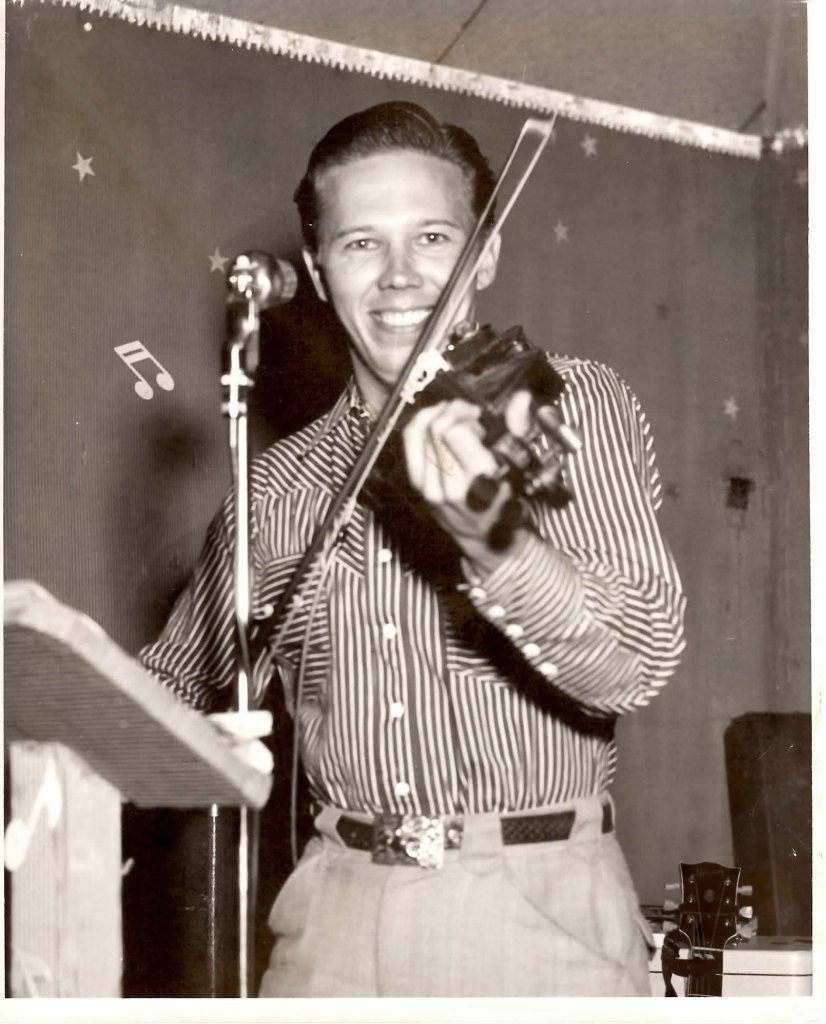
Looking back, it was common knowledge that father was a country musician and made his living playing in the beer joints along Jacksboro Highway. Preacher Augustin figured since my father was a fully certified sinner, an extra dose of saving was needed.

Father made it to the surface with seconds to spare. Sputtering and coughing, on the verge of death, he rolled over the side of the cement pond and lurched toward the side door of the church. Holding my baby sister, my mother grabbed me by my bony arm, and we made a hasty beeline to the car. Father was there waiting, dripping wet, looking like a bad meal on a china plate, but he was a saved man.

Hipster Dogs Are Among Us


I wrote this story in 2020 after an encounter at a hipster restaurant in the trendy section of Fort Worth. I wish my stash looked as good as his.

A sweet little dog with a strange name is pictured for your educational pleasure. “Graphon Chardonnay” is what’s known in 2020 as a “Hipster Companion Service Dog.” I’m sure little Graphon would rather be out pissing on trees and digging holes in flower beds than wearing a beard and leather jacket. Dogs look odd in human clothing and look alien when they sport the same beard as their owner.

While strolling the “hot new neighborhood” on West 7th Street a few weeks ago, my wife and I stopped at a small outdoor café for lunch. It was one of those sunny February days where it wants to be pleasant, but you still need a coat if you dine outside. A teaser day, we Texans call it.

A nice-looking couple sat down next to us with their small dog. They were dressed in expensive “Fort Worth Hip” to the tee. The young man had a formidable beard, a ” Stallone” pork pie hat, Ray-Ban sunglasses, and skinny jeans. The woman was dressed similarly but without facial hair. These aren’t your poor retro-hippies; these Kats have dough, good jobs in IT, and live in an expensive high-rise overlooking the Trinity River. They most likely drive a Tesla or a hybrid Beemer.

The two diners immediately immersed themselves in their Apple I iPhones. Hipsters must only use Apple products: Sorry, Samsung, and HTC.

I felt sorry for the little pooch; he didn’t have a phone of his own or even a bowl of water, so I asked a kind waitstaff to bring the wee fellow a dog bowl of H2O. When his water bowl arrived, the man gasped and removed the water dish before the parched dog could catch a drink.

” Graphon does not drink regular water,” he shrieked. ” He’s chlorine intolerant.”

Of course, I apologized for not knowing the dog was allergic to water, so I asked his father, what does Graphon drink?

The young woman looked up from her iPhone and smugly replied, “Graphon Chardonnay drinks only Starbucks decaffeinated coffee, “Chateau La Pew” white wine and natural spring water from Tibet. He is also vegan and has an IQ of 165.” Well, holy hot shit, I am impressed that this furball with two names is smarter than most of us humans; myself included.

I had already figured out these two were vegans, so when our juicy hamburgers arrived, we made a big deal of our meal, loudly commenting on every greasy bite we took. The two gave us the ” hope you die” look.

I accidentally knocked a French fry off my plate in my meat-eating frenzy. The little genius, Graphon, caught it before it hit the ground and gobbled it down. His father screamed, grabbed the dog, and began the “Heimlich maneuver ” until the dog coughed up the slimy fry.

” That fry is cooked in animal fats, are you trying to murder my dog! Graphon could die if he ingests anything other than his special veggies,” he shouted. The woman was crying and having a small breakdown after witnessing her vegan dog eating the evil French fry.

The young couple was so traumatized they took little Graphon Chardonnay and departed the patio. I got the last laugh. I slipped the pooch a nice bite of my burger while they weren’t looking. I’m pretty sure he is going to have some righteous gas.

Coffee Culture: Encountering Hipster Baristas


Is It Hip To Be Square?

Photo courtesy of Mrs. Folgers, “Coffee Shop Hipsters”

My wife and I visited the new and improved Fort Worth landmark, Sundance Square, a while back. Beautiful place, well planned and functional architecture; good job, Bass boys.
After a few loops, we hankered for a cup of coffee and maybe a pastry.
We found a coffee house cafe with little sidewalk tables. Not our style to sit on a busy sidewalk, so we went inside.


Passing through the door, I caught the name on the storefront window, “The Door to Perception.” The famous beat author Aldous Huxley wrote that book. He and Jack Kerouac birthed the beat generation with their unconventional literature; this might be a cool place.


We queued in line at the counter. The young man in front of me smelled of Petiole oil, an odd scent for a man; it didn’t mix well with my Old Spice. Hippie chick perfume is what we called it back in the day.

My wife nudges me and whispers, “What kind of place is this? These kids all look alike.”


Her observation was spot on. Every male in the room had a similar symmetrical haircut, facial hair, garage-sale chic mismatched clothing, and skin-tight jeans. Birkenstock sandals and Doc Martens seemed to be the shoe of choice. The girls were ditto but without facial hair. Stepford children they were. I knew immediately that we had stumbled into a Hipster coffee house. I told my wife to please be calm. This is no more dangerous than wading into a gob of old hippies at a Steppenwolf reunion concert. She wasn’t amused.


The Petiole boy in front of me was ordering his coffee. I caught the conversation between him and the barista.
“I’ll have a Trenta in a recycled rain forest cup, free-range, green label, fair trade grown, Andean, but not from the higher region but the lower valley, harvested by virgins no older than 16, aged in a cave on the coast to a bold bean, roasted on a log fire made from non-endangered rain forest trees, lightly pressed, and kissed with a serious pour of steamed spotted Syrian goats milk, then ever so slowly, pour two Cuban sugars at the same time on opposite sides of the cup. Oh yeah, and Kale sprinklers. Don’t stir it, I need to experience the aura.”

“Ahhhh… that’s my favorite. An educated choice, sir,” cooed the barista.


We are stunned. What in the hell did that kid just say?

I stepped up to the counter. “Two coffees with two creams and sugars each, please,” I say.


“And what region will your coffee be from, sir,” says the young barista.


“How about from Columbia, you know Juan Valdez and his little burro,” asked I.

“Don’t know that one, sir, don’t know a Mr. Juan Valdez,” she replied.


“Got something from Mrs. Olsen or Mrs. Folgers ?” I asked.


“No, sir, don’t know them either,” she replied.


“Got anything that comes in a vacuum-packed can?” I say.


“No, sir, our beans come in hand-sewn organic burlap bags from India,” she smugly replies.


“Do you have any coffee grown in the United States?” asked I.


She perks up and replies, “Yes sir, grown in California, Big Sur area by the Wavy Gravy Mystical Coffee Co-op. I hear it’s harvested every third quarter when Jupiter aligns with Mars, and the moon is in the seventh house. You know, sir, this is the age of Aquarius.”


“Yes, I know the song,” I say.

“Is there a song, sir?” she replies.

At this point, my head was about to explode, and I needed to wrap it in duct tape to contain the splatter. My wife saved me by stepping up to the counter and addressing the barista.


“Look, Moonbeam, just give us two cups of that Gravy Wavey coffee, and you pick out the sugar and cream, deal?”


“Names, not Moonbeam’ mam, it’s Hillary,” says the barista.


“Of course it is, sweetheart; I should have guessed that. I suppose you have a brother named Bill too? “No, mam, just a little sister, Chelsea.”


My wife shot me her “get me out of here before someone dies” look.
The barista sensed where this was heading and promptly pushed the coffee across the counter. I paid, and we left.
We stood on the sidewalk, took a sip of the gruel, and poured it into the gutter.


On the way home, we went through the Mcdonald’s drive-through for a red, white, and blue cup of coffee. Can’t go wrong with good old Mickey D’s. None of that Hipster crap.


“I’ll have two coffees with cream and sugar, please,” I said to the voice.


“Sir, will that be a Latte, a breakfast blend, a dinner blend, a dessert blend, an anniversary blend, an I love you blend, a save the children blend in a reusable cup, or an expresso, chilled or topped with sprinkles,” the speaker’s voice asked?


I pulled out of line, and we headed home to our old and tragically un-hip, Mr. Coffee.

The Truth About Ambiance in Tex-Mex Restaurants


After a trip to Frisco Texas for a doctors visit today, Momo and me stopped off at a local Fort Worth Mexican restaurant for an early supper before taking the cattle trail back to Granbury.

Seated, beers in hand, decompressing from two hours of hell on earth Dallas traffic, our Senorita waitress stopped by to drop a bowl of chips and salsa at our table; the usual fare for Tex-Mex food.

Over the years I have told my readers that my social filters have left on the last train to Clarksville, so I’m apt to blurt out any number of insults to no one in particular. The damn music was so loud I couldn’t understand a word the young miss was saying.

“Miss, can you turn down the music, or maybe give me a tablet and a pen so I can write out my order?” I say.

She was well indoctrinated. “Sir, the music is here to add to the ambiance and to make the food more tasty. We want our customers to think they are in old Mexico enjoying a meal while gazing at the Pacific ocean or the Gulf of America.”

Momo is giving me that ” you had better not say it” look, but I did anyway.

In my best old man I mean business voice I say, ” lookey here, Senorita, your food ain’t that good, and the music sucks, I can’t speak Spanish so why do you think I can understand a word that girl is singing? As far as ambiance, I’m looking out the window at the traffic whizzing by on Hulen Street and there is not a palm tree or a beach, or a dude leading a burro with a margarita machine strapped to its back. It’s Fort Worth Texas, not Cancun.”

Thoroughly insulted, she turns and stomps away. A few minuets later, Dire Straits is playing Money For Nothing. I notice all the folks our age are tapping their feet and digging the music. A few words of wisdom: music doesn’t make the food taste better.

Traumatized By Puppets!


A Childhood Tragedy

The asphalt parking lot is so hot it’s melting the rubber soles of my PF Flyer “tinny” shoes to the pavement. It’s July of 1957, and there are at least one hundred kids, including our neighborhood coterie of twenty-five, standing on that lot, waiting to see our television idols, Mickey Mud Turtle and Amanda Opossum.

Piggly Wiggly Food hired the puppet duo from Channel 11 for the grand opening of their newest grocery store on Berry Street. With the show’s growing following, the folks at Piggly are betting on a full house because every kid in Fort Worth, Texas, wanted to meet Mickey and Amanda up close and in person.

Without an introduction, the puppets popped up onto the stage of their television theater and launched into their shtick. The jokes are age-appropriate and corny. Birthdays are shouted out, and then more jokes, but with no cartoons to kill time, the felt and cardboard critters are out of material and are bombing like the Hiroshima fat boy.

The Mud Turtle launched into a commercial for Piggly Wiggly, and the Opossum began her’s for Buster Brown Shoes, over-riding Mickey, which in turn made him mad, and he grabbed a small bat with his mouth and popped Amanda Opossum a good one. The kids loved it. Watching the two puppets fight is better than cartoons, any day, hands down.

I feel a tug on my shirt and realize my mother is dragging me into the grocery store. As we pass the back of the puppet theater, the side curtain is halfway open, and there, in living color, are two adults sitting on low stools with their hands stuffed up the butts of our beloved stars. Kids are good at fooling themselves into believing things that aren’t real. I know they are cheesy cardboard and fabric puppets, but destroying my imagination is serious stuff.

Mortified and traumatized from the scene I witnessed, my mother drags me through the air-conditioned store as she completes her shopping. There is no sympathy or coddling from this tough-as-nails woman. She mumbles something about puppets being stupid, and I feel tears forming on my cheeks. I may never recover from this destruction of my childhood.

Leaving the store, we pass the stage, and a man and woman are putting the puppets into their wooden boxes and autographing glossy postcards of the critters. I still have mine.

Back Home In Texas: Looking For That Marble Angel


Chapter 18

“A young man is so strong, so mad, so certain, and so lost. He has everything and he is able to use nothing.” Thomas Wolfe

There is no winter like one in Texas. The cold comes with a Blue Norther. It roars down from Canada into the panhandle, gathering tumbleweeds and dust as it goes. It marches south across the flat plains to the Gulf of Mexico. The wet cold cuts deep, biting like the sharp edges of a frozen North Pole. Eskimos would take the first train back home. It is a harsh welcome for a man with tropical-thinned blood.

Johnny’s train pulled into Fort Worth as an ice storm blanketed the city. He had intended to walk two miles from the station. But then he saw a man slip and fall on the ice, and he called for a cab. The ride was rough. It had been over a decade since he faced winter, and now he recalled why he had chosen warmer places to call home.

The house appeared forlorn in winter’s cold, pale light, smaller than he remembered. It was worn out, resembling a sharecropper’s shanty more than his childhood home. He scanned the front porch; no marble angel welcomed him home. Thomas Wolfe was right.

Johnny and his parents left Fort Worth twelve years ago. They set out for California in search of work, to rebuild their lives and forge a future for their children. He was a boy cast into the vast unknown, adrift on the winds of a long journey. This adventure would shape the man he would become. His parents were like ship’s captains, guiding their small crew. He and his dog were the sailors. Their Ford was a proud schooner, and California was the mythical land where treasures lay hidden. They never discovered the chest, yet the treasures came to them in ways they had not anticipated.

Standing on the ice-covered sidewalk, Johnny saw a light in the kitchen window. His father, John Henry, sat at the table. A mug of coffee in his hand. A cigarette slowly burned in an ashtray. His bowl of oatmeal was there too. His mother was absent. She never woke early. Johnny stepped onto the porch and knocked. His father opened the door, and warmth rushed out. After briefly embracing, Johnny settled at the worn table with a steaming mug. The table had seen much—his parents’ fights, their choices, celebrations of childhood, and now his reluctant return. His mother was not sleeping; she had gone to an aunt’s house months ago.

John Henry, sipping his coffee, gave Johnny a brief rundown. Norma, his elder sister, married a schoolmate and now lives in Albuquerque. A second baby was coming soon, or maybe it had already come. John Henry couldn’t remember. His words were hard, filled with the bitterness of a man worn down. Bertha fought with the drinks. The magical elixirs had returned. She wrote letters to their friends in California, a compulsion. Sister Aimee was the one she favored. Norma had taken all she could shoulder and left with her husband. Johnny did not expect a joyful reunion, but this was a sorry state of affairs.

Link to the earlier chapter.

Reflecting on the Luanne Platter at Luby’s…It’s A Texas Thing, Ya’ll


Miss Luanne Platter

Maureen and I visited Luby’s Cafeteria last week for lunch. The smell of the food brought back memories from my childhood.

Back in the 1950s, in Fort Worth, there were Wyatt’s and Luby’s cafeterias. It was always a hard choice for the family. Luby’s had the best deserts, while Wyatt’s always served larger portions. My Dad usually chose Wyatt’s—more bang for the buck. It was the Eisenhower years, and things were tight. That’s back when he was still a Democrat. I was just a hungry kid.

We took our place in line, trays aligned on the metal rail. I scanned the extra-large menu board for my favorite dish but couldn’t find it. I panicked. The platter I came for and have always ordered for decades is “The Luanne Platter,” and they damn well better have it. My blood sugar was low, and I could feel a rant coming on. Maureen rubbed a few drops of “Peace of Mind” lotion under my nose to calm me. Then, in the lower corner of the board, I spotted it. ” The Luann Platter, half portions with a roll – $8.99.” What the hell! It used to be $4.99 with a roll, a drink, and a slice of pie? Retired folk can’t afford those prices.

I approached the smiling lady server and, using my best old man-controlled voice, said,

” I’m not paying $8.99 for a half portion that was $4.99 with a piece of pie the last time I ate at Luby’s,” and I slammed my fist on my tray for effect.

Still smiling, she replied,

” Well,, sir, then you can choose the children’s plate if you are over 65 and/or acting like a child, as of which you appear to be. You have a choice of chicken strips, a hot dog, or spaghetti with 2% milk and a fruit cup. That will set you back $4.99 plus tax. And by the way, The Luanne Platter has been $8.99 since 2001.”

Oh man, the little Pop-Tart was really messing with me now. Her smile had turned to a slight sneer, and her eyes got beady. I leaned over the glass barrier.

” Do you know who Luann Platter is, young lady?” I demanded.

” No, sir. Was she a famous cook or employee of the month or something?” she said. Good Lord, this girl is clueless.

By this point, two other line servers had flanked the young miss in case I went postal. I faced them and, with conviction, said,

” Luanne Platter is the most famous character on the television show, ” King of the Hill.” An animated series set in Garland, Texas, and this dish you serve is named for her. Don’t you know who Hank, Bobby, and Peggy Hill are?”

The three servers’ young faces showed social ignorance. It was useless to explain. I collected my platter, and we proceeded to the checkout.

We sat in our booth, eating our lunch in silence. The food wasn’t as good as it used to be. The good old days are gone for good. My turnip greens were Kale, the most evil weed ever cooked. Maureen’s chicken was rubber faux, and my corn muffin was doughy and awful. We can scratch this one off of our list.

Leaving the cafeteria, a fortyish blond woman in the Luby’s uniform held the door open for us. In a girlish voice, she said,

” Ya’ll come back now.” I noticed her name tag read “Luanne.”

Growing Up With Mexican Food in 1950s Fort Worth,Texas..My First Visit To Trashy Juanita’s


Childhood memories are like teeth; we all have good and rotten ones. If you grew up in Texas in the 1950s, you will identify with some of mine, or maybe not.

I was nine years old before I dined in a Mexican restaurant. I knew they existed because my father and mother enjoyed them, bringing home little mints and matchbooks touting the restaurant’s name. I got the mints, and my parents put the matchbooks in a jar in the kitchen. I dreamed that one day, I might visit one.

In Texas, Mexican food is part of life. It’s one of the major food groups; a boy cannot grow into a man of substance without it. Not having real Mexican food at that young age affected my evolution into a healthy young specimen. I harbored a nervous tick, stuttered sometimes, and had one leg shorter than the other. All those maladies were cured once I ate the real stuff. The medicinal qualities of Mexican food are exceptional.

For many years, I had eaten tacos at my cousin’s house, believing them to be authentic Mexican food. Sadly, they were nowhere near the real deal. Several times over the summer, my cousin Jok’s mother, Berel, would cook tacos and invite the families for a feast. Cold Beer and tongue-scorching Tacos. Pure Texas.

Berel would stand at her massive gas range, a large pot of ground beef, and a cauldron of boiling Crisco, heating the room to cooking temperature. She would drop a tortilla stuffed with meat into the witch’s cauldron, pull it out, and toss it to the pack of wild African dogs sitting around her kitchen table. The dogs, of course, were my cousins and me. My poor mother would leave the room. She could not bear to see her son eat like a feral child: growling, biting, snarling as we consumed the tacos like they were a cooked Wildebeest. That is what I consider Mexican food and proper behavior when consuming it.

Driving Northwest of downtown Fort Worth on Jacksboro Highway, right before you come to the first honkey tonk, you would find “Trashy Juanita’s” Mexican restaurant. Legendary for its tacos, frijoles, and cold Pearl Beer. It was also legendary for things my father would not mention until I was older. Gambling, shooting dice, and generally questionable behavior were part of the after-hours entertainment. It wasn’t on Jacksboro Highway for the view.

The owner of Juanita Batista, Carlita Rosanna Esposito, was not a trashy woman but a middle-aged Latin beauty with a bawdy laugh and sharp wit. The restaurant’s front yard adornments earned the name. Offended at first, she finally accepted her crown and wore it proudly.

Two rust-eaten pick-up trucks, one painted blue and the other yellow, sat abandoned in the front yard behind a cyclone fence. Pots of flowers decorated the fenders while the beds overflowed with vines and small flowering trees. Fifty or more chickens strutted and pecked around the yard, giving the place a barnyard atmosphere. Some saw a work of art, while others called it a junkyard that happened to serve great food.
In an interview in the Fort Worth Star-Telegram, Juanita claimed to be related to General Santa Anna, Pancho Villa, and the Cisco Kid, making her royalty in Mexico. The people of Fort Worth loved her, and she was considered a local character of some importance. She often dined with Ben Hogan and the Leonard brothers at Colonial Country Club.

Trashy Juanita’s was my first introduction to authentic Mexican food and all that comes with it.

My father sold one of his many fiddles to a buddy, and with the profit, he took the whole family to dine at Trashy Juanita’s on the Fourth of July, 1958.

Juanita had gone “whole hog” on this holiday. American flags hung from the front porch and draped the cyclone fence. Two small children sat in the front yard shooting bottle rockets at the cars driving on Jacksboro Highway, and the chickens were wrapped in red-white-and-blue crepe paper streamers. Very patriotic and also very redneck Texas.

A jovial Juanita escorted us to a large table beside the kitchen doorway. A waiter delivered tortillas, chips, salsa, and two Pearl beers for my father and grandfather along with large, frosty glasses of sweet iced tea for the rest of us. There was no menu; it was Tacos or nothing at all.

The unfamiliar aroma of exotic food floated on a misty cloud from the kitchen, filling my young nostrils and activating my developing saliva glands. A torrent of spit dripped from my mouth onto the front of my new sear-sucker shirt. My mother cleaned me up and wrapped a napkin around my neck. I was ready: I had my eating clothes on.
We decided the family would dine on a medley of beef and chicken Tacos, frijoles and rice, and guacamole ala Juanita. The waiter rushed our order to the kitchen.

The evening was turning out great. My father was telling jokes, the cold beer flowed, and a waiter walked past our table into the kitchen. Under each arm was one of the patriotically wrapped chickens from the front yard. My grandfather must have forgotten that two young children were at the table and remarked, “There goes our Tacos, can’t get any fresher than that.”

His remark went unnoticed until I asked my father, ” Dad, are we going to eat the pet chickens from the front yard?” He didn’t offer an answer.
I got a big lump in my throat, and my eyes got misty. My sister whimpered and cried like a baby, and my grandmother, seeing her grandchildren in such distress, shed tears in support. Mother gave the two adult men the worst evil eye ever. The mood at the table went from happy to crappy in a minute or less. So much for a joyous family celebration. We might as well be eating Old Yeller for supper.

There was a ruckus in the kitchen, yelling, pots and pans clashing, and the two chickens, still wearing their streamers, half-flew, and half-ran through the dining room and out the front door. The cook was right behind them but tripped over a man’s foot, knocking himself out as he hit the floor.

Standing in the middle of the dining room, Juanita announced that there would only be beef Tacos tonight. The two doomed birds had escaped the pan, and my sister and I were happy again. My father breathed a sigh of relief that the night was saved, and my grandfather bent down and polished the new scuff on his size 10 wingtip.