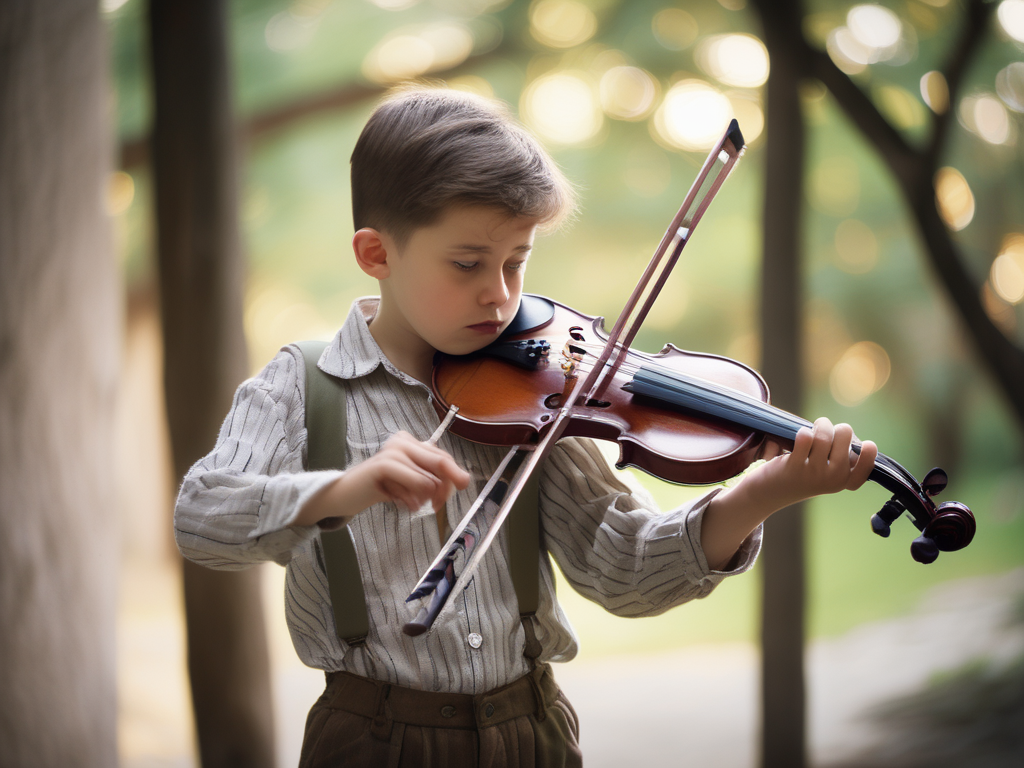
Chapter 16. The Weight of Goodbye: Johnny’s Regretful Return Home


Having made the painful choice to journey back to Texas, Johnny found himself in a heart-wrenching struggle, surrendering the opportunities that lay before him—holdings that promised riches within a decade. With a heavy heart and resolute spirit, he cast aside dreams of wealth, fully aware that the path behind him had irrevocably vanished, leaving only the words of “what have been.”

The lots on the edge of downtown Honolulu vanished in a few days to a dodgy speculator, who offered a fire sale price. The used car lot was sold to a former commanding officer with a firm handshake and a promise that money would follow when the last existing vehicles found new homes. Now, he was left with nothing but the relic of a pawn shop fiddle, a token of better days. He returned the instrument to the old Korean man, who was less than friendly, still smarting from the failed romance between his granddaughter and Johnny. He offered a few dollars, which was silently rebuked. Confident that his father had cared for his prized violin, it would be waiting for the bow’s stroke across the strings.

Johnny made his rounds to bid farewell. The Royal Hawaiian staff had treated him kindly despite his being a Haole. The folks at the Pearl City News and the companions of his musical venture each received a heartfelt goodbye.

On his last night in paradise, Johnny dined alone. Over the years, The Brass Monkey Tavern and its delicious seafood had comforted him. Pika, the native Hawaiian bartender, produced a special bottle from the top shelf. Tonight, there would be no cheap hooch for his valued Haole friend.

The bitterness of his embattled relationship with his mother touched every part of his soul. He knew full well that forgiveness, if it ever came, would be a long, winding road marred by the shadows of contrived intent. Knowing that his father was faltering added to his haste in his departure.

The troop ship to California was packed with weary yet hopeful servicemen returning from their duties. A loud hum of excitement hung thick in the air. For many, it was a moment to rekindle the flame of old lives or to carve out new paths. Yet Johnny was lost to his sadness and felt no thrill. His thoughts drifted to Blind Jelly Roll, Sister Aimee, and Le Petite Fromage, now back in Chigger Bayou. Their presence in his life had brought him great joy. He felt obliged to give them one final visit, knowing it would be the last in his lifetime.

Blind Jelly Roll, aware that his days were numbered, was grateful for the visit. His humor was intact, and he asked Johnny if he would like to ride in his new sedan, touting that his driving skills had improved since their last visit. Pancho Villa, the tiny demon dog, had only taken a soft nip on Johnny’s hand, but his lack of front teeth made the nip more of a gumming affair. Sister Aimee, angelic as ever, had transformed into a maternal figure for Jelly and promised Johnny that the old bluesman would find a nurturing and loving home until his final hour. Even that cantankerous dog would be cared for. Johnny saw something in her eyes; the looks she cast on the old man were more than motherly; he detected an inner fire that fueled her commitment. Farewells were exchanged. There were strong hugs, a few tears, and some laughs. The final, out-the-door goodbye was punctuated by promises to write.

That evening, Johnny boarded the Super Chief bound for Chicago, with a stop in Fort Worth. The journey would take three days and arrive in the morning light. He kept his arrival a secret from his family, anticipating the thrill of surprise. He sat cradling a cup of coffee on a wooden bench in the train station. He had gotten it from the diner. The lady behind the counter, dressed in a waitress uniform, reminded him of his sister. He missed Norma and was troubled by her not writing in almost two years. He knew something was wrong and would make it all right today. The night stretched long. He had come to find peace in books. He thought of Thomas Wolfe’s words, “You can’t go home again.” But could he? Would he be met by a marble angel on the porch or find only a locked door at the end of his journey?

The Quirky Side of Christmas Shopping at Walmart


I was in Walmart a few days ago. The Christmas season is the best time to observe humanity at its finest and lowest and street-rat-crazy humans.

All the usual suspects were there. People dressed in bathrobes, onesie pajamas, and rabbit-eared bedroom slippers. One lady squeezed herself into an Elf costume four or five sizes too small. Her husband looked like Edger Alan Poe; all that was missing was the stuffed Raven on his shoulder. Another old lady had her grocery basket full of Mountain Dew and Pork Rinds, which is considered a food group in Appalachia and now in Granbury, Texas. Two little girls absconded bicycles from the toy department and were speeding down the isles terrorizing shoppers: their mother watched with an adoring smile as her little angels wreaked havoc: they likely received a small trophy when they got home. A crazed woman was ripping into the poor Pharmacist because he wouldn’t fill her prescription for Oxycodone; she clearly needed her medication; pulling her hair out in fistfuls didn’t help her cause.

One family, mom, pop, and the three kids pushed baskets with a flat-screen television for each member. What is the fascination with large televisions? Are we the only society that is addicted to electronics? The kids looked undernourished but had to have that TV instead of healthy food.

A lady and her young daughter, maybe five, passed by. They were both on their cell phones. Mama was engrossed in a personal conversation that should have been private, and the little girl was jabbering into her pink Barbie smartphone. I assumed the kid on the other end was about the same age since I couldn’t understand her words. Five-year-olds appear to have a unique language used to communicate with other children. When did giving a child barely out of diapers a smartphone become acceptable? As the song says, ” Only In America.”

Exiting the store, I looked for the Salvation Army and their red kettle. None to be found. The greeter lady said they should be showing up any day. I have childhood memories of my mother dropping change into that kettle as the kindly lady stood ringing her bell. In some years, it was a quarter; in better years, it might have been a dollar. She always had a change in her coin purse to help the less fortunate. I’ve continued that tradition every year of my adult life, stuffing a few dollars into that slot and hearing a “Merry Christmas and God bless you.” That’s when I knew it was Christmas time.

Moving To A Place Where No One Knows My Name


Not Momo or Me or a celebrity

Don’t misunderstand me; Momo and I are happy with the election result. I feel bad for all the self-serving celebrities who publically promised to move from this country because of the election. Where will they go? Canada or Europe may be their only hope for survival. If they were smart, and there are plenty of them that are not, they would seek to find the magical land of Nirvana. You know, the elusive country hidden in the Tibetan Mountains, a stone’s throw from Xanadu, which would also offer a safe harbor.

Of course, there would be drawbacks. The Monks who run these places don’t care much for Hollywood folks. There wouldn’t be movie studios, movie houses, fancy restaurants, Mercedes dealerships, or elections. In fact, there would be no work for them at all except for pruning the bushes and flowers. They might find true inner peace and illumination by spending the rest of their days there, wearing a flowing white robe as they stroll the mystical gardens accompanied by a mystical grasshopper.

Momo and I gave it some serious thought. Moving to Nirvana or Xanadu sounds warm and fuzzy, like new Christmas pajamas. After many nights of kicking the idea around, she announced that there is no way she can move to a place that doesn’t show “The Wheel of Fortune” and doesn’t have her H-E-B.

Taking A Knee For The Right Reason


I’ve always believed in the raw strength of prayer. A small child kneels by the bed. A grown man kneels beside a dying parent. God listens. He may not grant all our prayers. There are reasons for this. A dying parent approaches the end, no cure in sight. It is time. We all have our moment.

Momo and I found ourselves at a prayer gathering in the park a week ago. The turnout was sparse, the heat oppressive, the air thick with discomfort. Yet, amid it all, the holy spirit lingered among us. Men, women, and children knelt, some on one knee, others prostrated on the pine needles, indifferent to the thoughts of strangers. The older ones were weighed down by age, needing to rise again; I understood. What struck me was the number of young folks present: teens and those in their twenties, engulfed in faith. I thought, why should I be surprised? This faith is not merely for the old; it is for the young, from the cradle to the grave and beyond. It filled me with a quiet hope against the dark forces that assail our nation—a small, emerging army ready to stand, bolstered by the strength of Michael, the Archangel. Change is coming; stay tuned.

“Dreams Will Keep You In Line.” Recollections From A Scared Baptist Kid


This is an oldie but a goody. If any of you knew who Brother Dave Garner was, you’d appreciate my bringing him back for an earthly bow.

This morning, I shuffled into the kitchen at 4 am, chastising myself for not getting enough sleep, which I will pay later in the day. I figure a nap will take me down around noon. But, when my country and our laws are under assault from evil men, I take it seriously, even though there is little I can do except pray for divine intervention or a selective lightning bolt from Heaven. My dreams were filled with political discourse, and sleep was fitful at best. I awakened sweaty and fearful of what lay ahead. “Our ship is foundering in seas of discontent, and the ominous rocks are within sight. The sails are in tatters, our rigging is failing, and we are destined to be dashed to pieces on the jagged rocks of an unknown land.” I paraphrase that description; it came from someone important, maybe Mark Twain or Confusious.

Last night, Mrs. MoMo and I watched the final seasonal episode of “The Chosen,” the story of Jesus and his disciples. The program is filmed in North Texas and Montana, and the cast is exceptional as well, as the writing takes the scripture and uses it as real folks would have heard and spoken it in those times, making it realistic and not words printed in the Holy Bible. We are fans. It’s as if I am attending a church service without the peripheral distractions of bad music and wailing children. I assure MoMo that I am not a heathen knuckle-dragging Neanderthal chewing on a Brontisaures leg bone, but a bonafide Christian who seeks Biblical truths and inspirations differently. She understands.

I spent too many hours on the hard wooden pulpits the Baptists prefer to be anything else. I knew that just below my pew, Hell awaited, and raging demons could pull me down through the wooden floorboards by my small legs if I faltered in faith. I equated faith with fear. Folks today are not fearful of God. Doing good deeds is commendable, but they won’t buy you a stairway to Heaven. Maybe Led Zepplin was onto something?

My zealous preacher, resembling a frothing-mouthed Bulldog pacing the stage, arms waving, and holding a large silver microphone to his dripping lips, advanced the service to a dramatic interpretation featuring hysterical heights that made the congregation swoon with the vapors. He reminded me of Brother Dave Gardner, the preacher turned comedian. I heard a few soft chuckles from my father occasionally; he was a fan of Brother Dave. Lofty condemnations, browbeating, and blanket accusations kept the flock in line; Amens were as plentiful as the women’s Beehive hair du’s, and the basket, when passed, was always overflowing with dollar bills and personal bank checks. I proudly gave my dime, which my mother pressed into my hand at the last moment. I was a kid and had no currency of my own to tithe. The little money I got from selling soda pop bottles went to candy bars, comic books, and Dr Peppers, the staples of child sustenance. Those unsettling experiences are burned into my conscience and come to me in dreams when I least expect them. Perhaps our country needs some of that “old-time religion” to scare the hell out of us.

Chapter 10. Wagons Ho To California: Grandmother Is Healed By Sister Aimee McPherson, And Carman Miranda Stops By


Sister Aimee McPherson

As the months stretched into years, the Strawn family flourished financially, finding their footing in California’s golden land. The prospect of permanence hung in the air, and the pull of Texas grew less each year. Johnny’s elder sister, Norma, had begged to remain with one of her aunts to complete her schooling, but destiny had other plans. Completing her education in Fort Worth, she succumbed to the barrage of pleading letters from her mother, who was convinced that her death was only weeks or hours away, but she would try to hold on until her daughter made it to California. Knowing Bertha’s love for drama, her aunts consoled Norma and thought it best that she travel to California and could return if needed. With a small amount of currency in her purse, she embarked on a westward journey with a family bound for Los Angeles, paying for a seat in their car.

After two years of absence from the fold, Norma returned to find her family ensnared in a web of not-so-well-hidden disillusionment. The initial euphoria of their reunion faded, exposing the harsh light of reality. Her father, now a manager, toiled away long hours with little time left for living, while Johnny when not in school, devoted all his time to the members of his string band, Blind Faith. Her mother’s dependence on medicinal elixirs was the worst of it.

Bertha, a dedicated aficionado of her restorative elixirs, consumed multiple weekly bottles. She has a friendly rapport with the local pharmacist, who considers her his best customer and gives her a discount. She would often be found at the kitchen table for most of the day, dosing her tonics and composing lengthy, nonsensical letters to her sisters. By this time, her siblings had come to understand that the words emanated from the pen of a medicinal lunatic. Norma and Johnny acknowledged the necessity of professional intervention for their mother, and, with assistance from Le Petite Fromage and Blind Jelly Roll, they formulated a plan for Bertha to undergo a holistic religious cure under the guidance of Sister Aimee McPherson.

On that Sunday, a vibrant sermon accompanied by half a dozen show tunes with a dazzling chorus line stirred the congregation as Sister Aimee made her return to the pulpit for three thunderous ovations. Following the service, Le Petite Fromage and Johnny, the fiddler, as he is now called, escorted Bertha to the orchestra dressing room, believing her holiness sought to personally meet her and perhaps bestow a signed copy of her latest literary work, “You Can’t Take It With You When You Go So Give It To Me.” Embracing Bertha warmly, Sister Aimee presented her with a signed book before guiding her to a crimson velvet settee that had previously served as Blind Jelly’s salvation vehicle. With hands upon Bertha’s head, she prayed for deliverance from the grip of elixirs and zealous missives to her siblings. Understanding she had been played by her blood kin, Bertha, teeth-gnashing and fist-squeezed white, surrendered and embraced the moment. The healing transpired in a mere ten minutes as Sister Aimee proudly proclaimed the departure of the demons, assuring that all would be splendid by supper time. As she departed the dressing room, a divine fragrance lingered in the air. Blind Jelly Roll spoke up, ” I smells me some Channel No. 1. ” Leave it to a blind bluesman with the senses of nine cats to figure it out.

With the spoke mended in the family wheel, taut and ready for the road, John Henry indulged the family, comprising of Le Petite and Blind Jelly Roll, to a Sunday supper at a restaurant. Their choice fell upon Treasure Island, a pseudo-swanky seafood establishment under the ownership of the actor Wallace Beery. The best restaurants were on the Sunset Boulevard, known as the Strip. The entrance was the front hull of a sailing schooner, complete with a mast and sail. Johnny noticed the address above the door: 77 Sunset Strip: that address would come up again a bit later. Bertha and Le Petite were giddy, anticipating the prospect of encountering Hollywood movie stars savoring fish and chips washed down with a dirty Martini.

While awaiting their meal, James Cagney and his raucous family were seated a few tables away. Clark Gable and Carman Miranda snuggled in a cozy booth, where they indulged in sips of Martini and beer. Le Petite and Bertha were in a state of apoplexy. Carman Miranda made her way to the lady’s room, passing their table. Pancho Villa sat upon Blind Jelly’s lap, nibbling on a saltine. As the movie star strolled by, she took notice of Pancho and remarked on the adorable little doggie. When she reached out to pet Pancho, she received a vicious bite that tore off the long middle fingernail from her left hand’s digit. Stunned by the sudden attack, she yelled, “Get that little demon dog out of here!” Pancho and Blind Jelly concluded their meal in the comfort of Strawn’s car.

If you missed Chapter 9, click the link below for more amusement.

Chapter 7. California And The Magical Elixirs


My grandmother hailed from a sizable brood: four sisters and a solitary brother. Their formative years were spent in the sun-drenched fields of south Texas, toiling on the family produce farm. The patriarch, Grandfather Duncan, regarded his children as mere hired hands and didn’t pay them a dime. Every child born saved him from hiring a lazy field hand to pick his watermelons and oranges.

Upon the completion of their high school years, one by one, the siblings, usually in the dead of night and with assistance from the others, embarked on a journey, whether by bus, train, hitchhiking, or on foot, seeking their own version of freedom from the farm. Miraculously, within a few years, they and their new spouses found themselves settling in Fort Worth, Texas, mere blocks apart.

The transition from Texas to California proved to be arduous. My grandfather, possessing the toughness of weathered leather and an insensitivity to female emotions, saw the move as a blessing and a chance for a new beginning. However, for Bertha, it felt more like a forced abduction. John Henry appeared oblivious to her distress, or perhaps he believed it would pass in due time. Yet her sorrow lingered until she stumbled upon a seeming panacea: alcohol, fashioned into the magical healing elixirs hawked on the radio and in the newspapers. From anemia to tremors, from insomnia to weight loss, from night sweats to antisocial behavior, there existed a bottled pharmaceutical remedy for every affliction, no doctor’s visit required. Countless bottles of happy juice lined the shelves of the local drugstore, catering to the myriad conditions that afflicted my grandmother, a certified hypochondriac.

When not self-diagnosing herself that she harbored every disease known to man and convinced that her death was mere hours away, Bertha was quite the letter writer. Every day, seated at her kitchen table, her fountain pen full of blue ink, she’d churn out missives to her sisters in Texas. Fueled by her newfound self-assurance courtesy of those magic elixirs, she didn’t see any harm in embellishing the truth a bit about her new life out in California: alone in a strange land, who could blame her? It’s not as if her family would ever drop by for a visit. As time went by, her letters became creative works of fiction, painting the picture of a grand Beverly Hills home in place of her modest stucco house and a swanky Duesenberg convertible instead of their old Ford. According to Bertha, even the legendary Clark Gable was a neighbor, and Sister Aimee McPherson, the radio firebrand preacher gal, became a dear friend, and the two of them often enjoyed lunch at Musso and Franks Grill, mingling with the movie stars. Bertha was dead set on landing an audition with MGM or writing a grandiose screenplay, all thanks to that magical elixir of hers. Not thinking of how she would explain her fabricated world when they returned to Texas, she continued, and the more she wrote, the more she believed her own stories.

When Johnny turned thirteen, he approached his father with a request to pursue a professional career in music. John Henry, harboring doubts about the practicality of such a proposal, pondered the unlikelihood of anyone hiring a boy for such a venture, much less paying him with real money. Nonetheless, three of Johnny’s older schoolmates had extended an invitation to join their string band, which often performed at birthday parties and school events for a small fee, which was usually a coke and a plate of food. Their need for a fiddle player in the Bakersfield-style hillbilly tunes they favored aligned perfectly with Johnny’s musical talents. That evening, seated on the front porch after supper, Johnny revealed his decision to his father — he had embarked on a professional journey with his newfound band. Despite his initial surprise, John Henry offered his warm congratulations to the young boy venturing into this new vocation.

Their first official rehearsal was an epic disaster. The guitar player knew four, maybe five chords on his out-of-tune instrument, the bass player, using a beat-up dog house bass fiddle, couldn’t get the beast anywhere near in-tune, and the tenor banjo picker was worse than the other two. After massacering a dozen or so tunes, Johnny floated an option. He knows of a genuine black blues singer who burns up a guitar when he plays. The other three were wagging their tails like a hungry dog and voted to bring this fellow into the fold. Now, Johnny had to convince Blind Jelly Roll Jackson to play with a bunch of borderline musicians.

Church on Sunday was a rousing spectacle. Sister Aimee, after singing a handful of beautiful songs and just enough preaching to make sure the offering plates were full, called for souls that needed saving to approach the altar and receive Jesus. This was part of every service; a few folks would come down to be blessed and saved. With the orchestra playing, the choir singing, and a contingent of Hollywood-style dancers on stage, a hundred folks rushed the front in need of salvation. Sister Aimee, not knowing how to handle a worked-up mob that scared her out of her witts, retreated stage right and hid in her dressing room. Her assistant preacher and a few ushers administered to the flock while Sister Aimee gulped a handful of Carter’s nerve pills, washing them down with “Father Flannigan’s Holy Healing Tonic,” which was around 80% alcohol and claimed to be brewed from the holy waters of the River Jordan.

Chapter 6. California Dreamin’


New friends, a fresh vocation, and a fine abode for an extended stay. The Strawns couldn’t reckon their good fortune. Were they in the midst of a reverie, or was it a heavenly intervention from on high? My grandmother continued casting glances over her shoulder, half-expecting to glimpse the Guardian Angel who was running this show. Sister Aimee and her mammoth church would require some acclimatization, at least on John Henry’s part.

After the church service, which was more of a Hollywood show than a religious sanctuary, John Henry ambled backstage in search of Blind Jelly Roll Jackson. He rapped on a door marked “orchestra,” but receiving no response, he turned the unlocked knob and proceeded inside. There sat Jelly Roll on a red velvet setee while Sister Aimee fervently laid her hands on his cotton-top head, offering a vigorous prayer of salvation. Pancho Villa stood behind her, firmly attached, growling like a small lion and tugging hard at the bottom of her satin robe. Upon catching sight of John Henry, Sister Aimee hollered,

“Clear out, sinner! Can’t you see I’m rescuing this wretched man’s soul?” John Henry promptly shut the door and made his way back to his family, wanting no part in the strange affairs of that place. This church wasn’t through with him quite yet.

Two weeks into his new job, John Henry felt comfortable enough to open the case of his fiddle. During his time in Texas, he had earned the reputation of a “campfire fiddler,” skilled enough to keep up with any string band in Fort Worth. Nevertheless, this was not the path he aimed to follow. For nearly two years, Young Johnny had shown a deep interest in mastering the art of playing the instrument. The time had come to pass on this skill to the eager young man.

A visit to a local pawn shop produced a fifth-hand fiddle. It wasn’t much of an instrument, but for $5.00, case and bow included, it was good enough for the boy. Johnnie, when given the instrument, almost keeled over from joy. He took the fiddle to his back porch bedroom and began to torment every dog and cat in the neighborhood with his playing, which was more screeching than music.

Miss Angel Halo, a retired high school music teacher, resided a few houses away. She recognized that sound, having heard the screech of strings from her students for most of twenty years. Her Basset Hound, Baby Dog, cowered beneath the back porch while her feline companion, Miss Greta Garbo, made a hasty exit to escape the noise. Miss Halo made her way to the offending house and exchanged pleasantries with the Strawns. Over a cup of coffee, some neighborhood gossip, and a large slice of warm bundt cake, she offered her aid in schooling young Johnnie in the ways of musical notation and the art of the violin; she was a cello player herself. If the boy would mow her grass twice a week, and pull any pesky weeds in her flower beds, she would instruct him in learning the instrument.; no charge. The pact was sealed, and harmony was restored to the neighborhood.

Six weeks into his son’s tutoring, John Henry, not having heard the boy play, was curious if he had learned to play the fiddle. At his teacher’s insistence, Johnnie’s practice sessions were daytime only, and he was confined to the garage, door down, so as not to upset the neighbors.

Saturday evening found John Henry on the front porch, nursing a cold beer and coaxing a few tunes from his beloved fiddle. He asked Johnnie to fetch his instrument and join him, and in a swift instant, the boy returned, fiddle in hand, eager to display his skills to his father. To John Henry’s amazement, as he played an Irish jig, his son effortlessly intertwined harmonious notes with his own, giving the old man a partnership in the form of twin fiddles. A father’s pride has no bounds, and he played on, ignoring the tears on his cheek. In time, that instrument and the dreams of a child would take young Johnnie to the pinnacle of country music.

More to come in Chapter 7

Chapter 5. Life In California And Jelly Roll


Moving day from the migrant camp fell on a Saturday. There wasn’t much to transport apart from the car and the personal belongings they had brought from Texas. Knowing that John Henry had very little, the landlord had left behind some furniture: a kitchen table, an icebox, two beds, and a well-worn couch. The screened-in back porch extended across the entire width of the house. In one corner, a roll-away bed and a standing lamp stood, and it was there that Johnny made his claim to the porch as his bedroom. Meanwhile, Lady ventured out to explore the expansive backyard, complete with an Eucalyptus tree that was home to a resident squirrel.

My grandmother Bertha had come across newspaper stories about the firebrand woman preacher, ‘Sister Aimee, ‘ holding court at her downtown church. She aimed to grace the Sunday service, eager to unravel the mysteries that had stirred up such a commotion among the camp folks. Ever the agreeable sort, John Henry consented to accompany her and young Johnny, perhaps harboring a hope to cross paths with Blind Jelly Roll Jackson and Pancho Villa.

The faithful congregations formed a line that stretched down the block, twisted around, and continued for another block. It seemed this preacher lady possessed a special magnetism to draw such a crowd. As they reached the doors, they discovered the church was once a theater with a plush red carpet and a winding stairway leading to the balcony. Climbing the stairs, they found seats near the balcony’s edge. With an eagerness to feel the Holy Ghost passing through her, Bertha was in stark contrast to John Henry, who simply yearned for a cup of black coffee and a nap.

The house lights dimmed, and the red velvet stage curtains slowly drew back to reveal an orchestra and a singing choir, all adorned in purple velvet robes. The orchestra boasted horns, a piano, violins, and a drummer, and right up front sat Blind Jelly Roll holding a shiny black guitar. His seeing-eye dog, Pancho Villa, was seated on a chair next to him, wearing a small matching robe. In a moment of confusion, Johnny, unaware of his surroundings, called out Pancho’s name, causing the dog to excitedly tumble off the chair. Jelly, recognizing the voice, offered a warm smile and a friendly wave as he reseated Pancho.

A slender woman with short blonde hair stepped into the center of the stage, enveloped by the spotlight’s glow. She was draped in a white silk robe, and a sizable golden cross hung at her breast, casting a mesmerizing reflection across the congregation. In that divine light, she took on an ethereal quality, almost angelic, as if transported from the pages of a biblical tale.

The singer, whom everyone now recognized as ‘Sister Aimee,’ suddenly turned into a musical whirlwind, belting out a heartfelt religious hymn that could make even the angels jealous. How did this powerful voice project from such a small woman? The orchestra performed as if they were on a mission from above, and the choir sounded so otherworldly that even the congregation wondered if they were in the presence of celestial beings. As tears flowed freely and some brave souls rose to join her in song, Bertha found herself on the verge of a melodramatic meltdown; young Johnny was bored and on the verge of sleeping, while poor John Henry remained steadfast in his pursuit of a good nap. It seemed like the lengthy two hours ahead were shaping into a divine comedy of sorts.

After two more songs just as rousing as the first one, Sister Aimee spoke.

” Dear Hearts, recently, a lost soul came to our church. He had wandered in the wilderness for years. Blind since birth and led by his small seeing-eye dog, he came to me seeking repentance and personal guidance. He is now walking the straight and holy path of our Lord. A formidable blues guitarist and singer, he has agreed to share one of his songs of atonement. Please welcome Blind Jelly Roll Jackson.” The crowd applauded.

A stagehand stationed a large silver microphone before Jelly. The spotlight shone on his hair, white as an East Texas cotton field. He tugged and twisted his guitar through eighteen bars of mournful blues without a moment’s pause. The audience was spellbound, the majority never having encountered a blind black bluesman. Leaning towards the mic, he growled deeply as he sang,

” I gots me a woman, haw-haw-haw-haw, she don’t mean a thang, squeezes my lemon picks my peaches from my trees, gonna go see that gal and get my hambone greased, haw-haw-haw-haw.”

Sister Aimee lunged for the microphone, but a stagehand beat her to it. He grabbed the microphone and carried it away. Jelly Roll was still singing and playing when the stage curtain closed. Blind Jelly Roll Jackson’s official California debut was history.

Don’t touch that dial or turn that computer off; there is more to come in Chapter 6

5.12.24 Dispatches From The Cactus Patch


Say It Ain’t So Willie…

Now, I know that the world is off its axis: Willie Nelson is moving his famous 4th of July Picnic from Texas to somewhere in the Northeast to beat the heat. Look, Willie, the brutal life ending heat, Lone Star longnecks beer, no restroom facilities, drugged crazed hippies and cowboys are what your picnic is about. If Waylon was here, he would kick your scrawny old butt for even considering a relocation to of all places…Yankee land. Kris is still around, so he might just step in and do it. I attended one of his picnics back in the late 70s at Palo Duro Canyon and damn near expired from the hellish heat, no water and very little food. I survived by crawling under a car for shade, which at that point, it didn’t matter, my skin was roasted, and my dark hair bleached white. Around dark, ole Willie steps up to the mic and belts out Whisky River. Trigger, his beat-up Martin guitar was out of tune, his singing was off meter and he was likely higher than a California Redwood, but it was Willie, our Patron Saint of Texas Country Music. We sat transfixed on the hard dirt and rock, fire ants chewing on our legs, Rattle Snakes crawling about begging for a beer, and hundreds of poor passed out folks missing the show they came for. Please, Willie, keep it in Texas. I have confirmation from a good and mostly reliable source that your Saint Hood is imminent. This might screw it up.

Jewish Students Revolt Against Federal Protected Students

There is now a movement on most of the elite university campuses to oust and delete the fake Palestinian protesters. Two groups calling themselves “Jews For Jesus” and “Frat Boys Revenge” are now in place at most of the major universities. Maya Sharona, field correspondent for NPR interviewed a protestor at MIT.

MS: Excuse me, are you a woman or a man, It’s hard to tell with all the scarfs wrapped around your head?

Student: I am neither of those words, call me a new servant of Allah, willing to die for whatever Allah and that woman with the megaphone tells me too. Please film my left side, that’s my best profile. Should I show my molitove cocktail for the camera?

MS: Sorry, there is no camera, this is radio. What exactly are you protesting?

Student: I am not really sure, wait a moment, I must check TikTok and Facebook, all of our information and instructions comes from them. Ahh yes, here we are, (screaming)” Death to Israel, Death to all Jews, and Death to America” we demand Starbucks Latte’s and vegan pizzas, student loan forgiveness, and a free diploma in the curriculum of our choice. That’s a bummer about the no camera, got all dressed up for nothing.

MS: There is a group of frat boys over there by that police car. They look menacing and most of them are twice the size of your comrades. I believe they may be about to kick your butts.

Student: Allah and Papa Biden will protect us, we are the chosen people of Palestine, or maybe it’s Gaza, or Syria. It doesn’t matter, we are protected by the Federal Government, like the tiny fish and the lady-boys with fake boobies.