Ask A Texan: Finding Joe Bee’s Father


Pretty Stable Advice For Folks That Don’t Live In Texas And Can’t Get Here

The Texan

This Texan received a letter from Miss Sparkle, a business owner in Chattooga, Georgia. She runs the Papa Gus River Rafting and Fish Camp, which was made famous in the movie Deliverance.

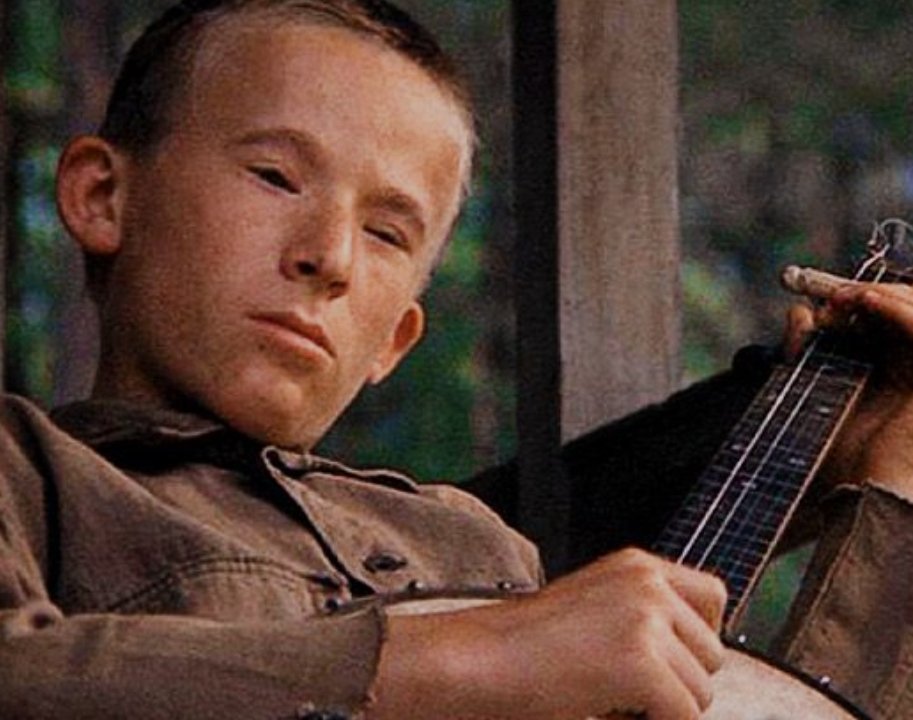
My little boy, Joe Bee before he grew up into a man

Mr. Texan: I can’t get no help around here from nobody: it’s just a bunch toothless hillbillies sitting around drinking moonshine, so maybe you can shine a light on my predicament. I enclosed an old picture of my boy, he’s real shy and won’t let me take a picture now that he’s older.

Back in 1972, a group of Hollywood boys filmed a movie here on the river. It was all fun, and my family got to be in the movie. I enjoyed many an evening drinking shine with some of the actors and got to know one of them really well. Bless his heart, he’s passed on now, but I’ll always remember his funny laugh and how good he was with that bow and arrows. Now, in 1984, a bunch of rich big-shots from Washington, DC came down to ride the Chattooga like in that famous movie that was filmed here. They were nice men and treated me with respect, even though I was just a river rat. Daddy hadn’t been gone long, and I was really sad, so it was nice to have some company at the camp. One night, the bunch of us were sitting around the campfire drinking daddy’s famous shine, and this one fellow they called Joe B started sniffing my hair. I didn’t mind cause I had just washed it with lye soap, and it smelled pretty good. He was a nice man, in a creepy sort of way. Too much shine always gets you in trouble, and I’ve had plenty of it since then. Well, about a year later, the old stork shows up with this bundle of joy. I call him Joe Bee. He ain’t no kid no more and doesn’t want to do anything but sit in his porch swing all day long playing the same song on his damn-ole’ banjo. I’ll tell ya, it’s driving us all to drink more than we normally do, and that’s a bunch. We tried hiding it, but he always finds the darn thing. Little Joe Bee just wants to know who his daddy is. My two other boys, the twins, Smokey and Bandit, their daddy never comes to see them either, but that’s cause he’s dead as a shot squirrel. I’ll give him a pat on the back; at least he gave them each a black Pontiac Trans Am for their sixteenth birthday. At least Joe Bee’s daddy could send him a monster truck or something. He just wants to meet his daddy and have something with big wheels to drive.

The Texan: Miss Sparkle, I’m sorry to hear of your problem and Joe Bee’s fatherless miserable life. Like you, I couldn’t stand to hear a banjo picking all day long. At least you have some good moonshine to knock the edge off. Looks like your boy’s Pop might be found in Washington, DC, and shouldn’t be too hard to track down; the family resemblance to a former big-shot should help find his daddy. We folks down here in Texas believe that every boy deserves a big truck to drive. Keep in touch, and tell your son I’m sending him a DVD of the Smokey And The Bandit movie along with a month’s supply of Ben and Jerry’s Ice Cream.

Ask A Texan 5.9.25


Plenty Good And Often Accurate Advice For Folks who don’t Live In Texas, But Wishing They Did

The Texan

This Texan received a letter from The Land O’ Lakes Fishing Camp and Vacation Cottages, Lake Minnetonka, Minnesota. Thanks to their rebellious daughter, Sassy, Mr. Franklin Kettle and his wife, Phoebe, affectionately known as Ma and Pa, are on their good Lutheran last nerve.

Pa Kettle: Mr. Texan, I’m not much on asking for or taking any kinda advice from anyone other than our Minister at the Shakopee Lutheran Church, but seeing that the root cause of me and the missus distress started in Texas, I thought to myself, by-golly-gosh, maybe this wise old Texan can save the farm, doncha know. Our daughter, Sassy, and her husband, Tiberius, and their brood of kiddos live here at the fishing camp and help run the place; it’s a family business passed down from my grandpappy. We have twenty nice and tidy cabins with kitchens and screened-in sleeping porches, and Ma and I run the tackle and bait shop at the main dock: there’s not a prettier slice of Heaven on the lake. We Minnesotans are nice and tidy folks, and we run a polite camp with no hard hooch allowed and only beer after five in the afternoon. A while back, Sassy comes to me and says, “Daddy, me and Tiberius are taking the kiddos and the dogs and are going camping out in the desert in far West Texas. We need to reconnect with God and we hear that the Big Bend area around Marfa is the preferred place. Besides, Tiberius likes the way my earrings lay against my skin so brown, and I want to sleep with him in the desert at night, with a million stars all around.”

I say, ” Golly-Geez, Sassy, we have millions of stars right over the lake here and you don’t need to go travel’n to Texas to see-um; that trips gonna be spendy.”

She said, ” It’s not the same, Daddy; the stars here don’t give us that peaceful, easy feeling, doncha know. ”

Next morning, they loaded up my 1965 Ford Fairlane 500 station wagon, with 25K original miles, and hit the road. I tried to give her some emergency money, but she said it was covered. Tiberius sold a kidney to the University hospital and has the option to sell both testicles and both pinky toes in the future. After three weeks, Ma and me are getting kinda worried. I’m pacing the dock, and she’s spending most of her time in the sleeping loft with a worry headache. Then, one sunny afternoon, they roared up to the main dock. My Fairlane looks like it got trampled by Old Babe The Blue Ox. The brood walks into the tackle store, and the missus and me have a conniption fit. The kiddos have long, dirty hair and are wearing nothing but JCPenney boxers and the two boys have fishing lures hanging in their hair. Tiberius is wearing a beat-up straw cowboy hat and has God Bless Texas tattooed on his bare chest. Sassy is wearing old cut-off dungaree shorts and one of her old nursing brassiere she dyed red. I’m thinking, Geez-Louise, what has happened to these folks in the name of Joseph and Mary?

Nowadays, the grandkiddos are going around the dock spitting on the floor, breaking wind and saying things like, “fixing to, Hide and watch, hold my Pop and watch this, and the worst one is, ” Let’s not get into a pissing contest about it.” When the granddaughter, Little Pebble, said that, that’s when I by-golly drew the line and said, ” Nobodies a going to be urinating in the tackle shop or on the dock for cripes-sakes.This is Minnesota.” My grandkiddos have turned into heathen children, possibly possessed by Demons from the Texas desert. Sassy and Tiberius are no help, they set up house in a Yurt down near the fish cleaning shack and the kiddos are scrounging meals from the dumpster. Ma wants the priest in Saint Paul to come over and exorcise the whole big bunch. Sassy wants us to move to the Texas desert with them and run a campground they can buy with the money from Tiberius selling his body parts. Looking for some help here, doncha know.

The Texan: Well, Mr. Kettle, I’ve never had such a lengthy or disturbing request, but sometimes when a polite culture of folks, like you have in Minnesota, intermingles with a less than couth culture, scenarios like yours happen. It’s common in Texas. I suspect the family may have wandered into El Cosmico, a big pile of old Airstream trailers, Yurts, teepee’s and tents. The place is a hotbed of young hipster hippie types that migrated from Austin and haven’t left Marfa in a good way. The kiddo’s are testing you old folks with their new-founded freedom of expression. Most of those sayings are harmless, except for then pissing contest one: those challenges can get really nasty real quick if there are weapons around. Trust me, The Texan has been in a few. Give it a few months, and if your brood is not back to Minnesota standards, pack them up in the Fairlane and send them back to Marfa. Better them than you, for, after all, that part of Texas is “No country for old men.” Keep in touch, and I sent the kiddos a box of cherry bombs, I hope they enjoy.

Ask A Texan 4.23.25


A brand-spankin-new series for folks that want to know what a Texan thinks

The Texan

Mr. Bromide S. Eltzer from Arizona sent me an email.

Q: Mr. Texan, my wife and little girl have taken over my stereo Hi-Fi setup. They play the same Taylor Swift album all day long and it’s driving me to drink, and I’m losing my faith in humanity. Do you have any thoughts on how to handle this situation?

Texan: First off, Mr. Bromide, Taylor Swift’s music is not real music; it’s a cartoon soundtrack. I can see your little one getting hooked on this nonsense, but your wife is another can of fishing worms. Are you drinking beer or whiskey? The quality of hooch does make a difference in how this stuff effects you. I prefer Redneck Riviera Whiskey out of Nashville, give that a try. Go find some good vinyl records by Creedence, Patsy Cline, Merle Haggard or Johnny Cash, and when they’re not hogging your turntable, tie them up with some good rope from the Home Depot, and make them listen to some real music. If that don’t work, invest in a nice Bass boat and start spending time on the lake or river. If that doesn’t restore your faith, say a prayer to Saint Willie, and eat three Whataburgers, my son.

Dispatches From The Cactus Patch..Showing Some Love For Marfa, Texas


Momo and I are gearing up for our yearly trip to the Texas Bermuda Triangle: Marfa, Fort Davis, and Alpine. Strange lights, strange people, and a weird town full of characters out of a 1950s sci-fi western movie. We love the place. So in honor of our love for this quirky village, I’m revisiting a post about our last journey into the Chihuahuan Desert, the twilight zone of Big Bend, Texas.

In the days of COVID-19, when darkness, despair, and lemming-like stupidity seemed to envelop the world, every soul, human and animal alike, found themselves confined to their homes, forbidden to roam: even the wandering Buffalo was home-bound. It was then that Momo and I made a pact to evade the restrictions and set out on a clandestine journey to the remote Chihuahuan Desert, with our sights set on the enigmatic and quirky town of Marfa, nestled in the vast expanses of big sky West Texas. We had no idea that a small blurb of a village in the middle of the desert would be so ghosted. It was eerie in an Alfred Hitchcock movie way. We did find a small burrito hut, grabbed a few, and returned to Granbury. The trip was an utterly bummerited loss.

I wrote an unkind, snarky post about our Marfa visit in my hour of exasperated, irritated, and agitated gloom. The older I get, the more the little things in life send me into a combat zone of petulant whining and unforgiveness. So we were both surprised that, having a cocktail on our patio one evening, we decided to give little ole’ Marfa a second chance. We plotted a trip that would take us into the Chihuahuan Triangle, which, from what I have read, is a dry land version of the one-off of Bermuda. Marfa, Alpine, and Fort Davis make up the Texas twilight zone. Ghostly lights in the mountains, shooting stars that stop and change directions, and strange-looking young people wearing Keep Austin Weird tee-shirts that wander the streets at night searching for live music: it’s all there.

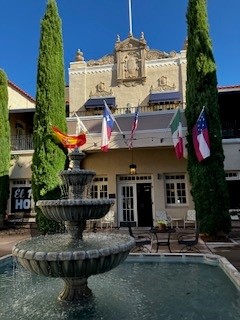
Hotel Piasano

Being a fan of the great Texas movie “Giant,” the Hotel Piasano, where the cast stayed during the 1955-56 filming, was our only historical option. Arriving in the afternoon, the lady at the check-in desk was gracious and friendly. She gave us the “classic” room, which in the hotel language means one that had not been renovated since the 1930s. That’s fine with us; we are interested in the historical value and feel of the place. I noticed some of the rooms were the star suites, so I asked about those. The concierge told us that the Rock Hudson room is available for around half a grand a night and includes a lighted display cabinet featuring the original book of wedding photos from his make-believe marriage. We passed. The Liz Taylor suite was priced the same and included a small lighted curio cabinet showcasing a dainty Italian crystal decanter filled with her spit. Momo said no. The James Dean suite showcased his favorite toiletry in a glass cabinet, his comb, and a half-used tube of Brylcream. No, on that one, too. The concierge did say that our room is rumored to have been the one that Chill Wills occupied, so we gave it a go. She added that the entire hotel is extremely haunted, so beware of ghostly appearances and personal items being relocated.

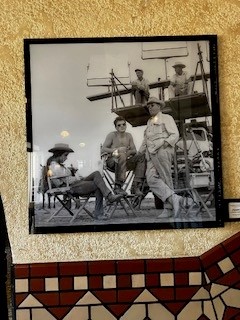
Liz, Rock, and Houston in Marfa 1955

Considering all the warnings about ectoplasmic phenomena, we unpacked in our classic room, which includes a 1930s-style bathroom with a corner shower and a drain in the sloped tile floor. I know damn well that Chill Wills could not have got his big ole Texas boy butt into this shower. French doors opened to a private walled patio with an outside stucco fireplace. How nice is that? I could picture Chill and Dennis Hopper sharing a whiskey by the fire. We enjoyed a cocktail while observing a thunderstorm roll over the mysterious mountains.

Our dinner at Jett’s Grill was nothing to text back home: My pork chop was too pink, and Momo’s chicken surprise lived up to its name; she was surprised it tasted like cardboard and cost thirty dollars. I enjoyed a Jameson Irish Whiskey on the rocks for almost twenty dollars, and Momo had a whiskey with ginger ale for twenty-one dollars; they charged her for the ginger ale. After paying the check, we felt a bit violated. We spent the rest of our evening in the classic room, waiting for another distant thunderstorm from over the mysterious mountains.

Planet Marfa
Local Marfites at Planet Marfa enjoy a brew, and Sagebrush Sonny is seated far left.

Planet Marfa became our next foray into the Big Bend Twilight Zone. The place took up half a city block. Inside was a genuine transcendental Indian meditation TePee, a full-size school bus dedicated to dogs, a modest kitchen offering the renowned Red Barron Pizza, and a bar bustling with locals partaking in their afternoon meet-and-greet. I found myself at the bar’s edge, ready to place an order, when I noticed an elderly gentleman perched on a stool beside me. Out of a sense of camaraderie, I motioned to the bartender to pour the old man another beer, my treat. He acknowledged the gesture gratefully, and we exchanged pleasantries as we shook hands and introduced ourselves. Resembling a character straight out of a Gabby Hayes movie, he embodied the quintessential oddity one might encounter in Marfa. Sagebrush Sonny Toluse, as he called himself, had called Marfa home for nigh on sixty years, having relocated from Presidio, Texas, a town situated right on the Mexico border and reputed to be the hottest spot in Texas.

I noticed Sagebrush Sonny had a wooden peg leg where his right-side human leg would normally be. He noticed me staring and felt compelled to explain his missing appendage. He asked if we were planning to visit the desert and view the famous Marfa lights. I said yes, we intend to do that tonight. He said they were quite a sight, but he warned me not to get caught out there after midnight: bad things happen in the desert.

He said he got caught out there after midnight about thirty years ago after his truck broke down. He decided to walk to town since he was close enough to see the glow of town lights, and that’s when a large pack of mongrels set upon him. He asked me if I had ever wondered why the desert was called the Chihuahuan Desert. I had no idea, so he explained. After the atomic bomb was built, the Army needed a place to dump the nuclear waste, so they chose a spot way out there, stashed some drums of goop, and left them to the elements. Over in Mexico, a fella was breeding Chihuahua dogs, and two of them got lost in the desert; of course, they found the nuclear waste site and lapped up some of the contaminated oozes, which did some crazy things to their DNA. Doing what dogs do, they had some pups, and then the pups met up with some Coyotes and had some more pups. The dogs kept on breeding until there were three or four thousand of the critters, except they weren’t regular dogs. They were all muscled up with shark-like teeth, and some had a fifth leg that allowed them to run like a greyhound dog. The mutts were still small, like a Chihuahua, but they were mutants and mean as hell. That’s how I lost my leg. A pack of them set upon me out there in the dark. I was trying to run, dragging some of them that had hold of my dungeree’s and then they started chewing my right leg. Since they were small, they could only reach up to my knee, and that’s where they stopped eating on me. A highway patrol came along and shot a few of the stragglers and took me to the hospital over in Presidio, where the doctor amputated what was left. That’s why I have the peg leg, and they are the reason it’s called the Chihuahuan Desert. The story alone made the trip a success.

From Nehi Soda to Napping Camps: A Journey of Texan Creativity


I read an article in my local paper a few days back. It was about a youngster from Louisiana who fed his pet earthworms small amounts of nuclear waste. This made them glow in the dark and grow to the size of a state-fair Corndog. 

He is now raking in cash and hawking them on his own late-night infomercials and online. Every fisherman in the South wants a giant wiggling glowing worm. Every bass needs one. It seems the folks below the Mason-Dixon line will fall for anything.

My family tree in the “old country” was chock full of these sorts. Dreamers, schemers, and medicine show hucksters. All died poor except one.

Take my Great-Great-Great Uncle Nehi, a puny Scott with a sweet tooth. He spent his spare time in search of sugary delights. One night, while experimenting with various potions of colored water, fruit, and healthy doses of sugar, he invented “Nehi Soda.” It wouldn’t be summer without a grape Nehi and a Moon Pie, would it? His tinkering resulted in the all-American soda. Soda pop made him wealthy. He died young from a roaring case of Diabetes. Still, he died prosperous and happy. 

I always preferred Dr. Pepper, but my parents made us drink Nehi every year on the anniversary of his passing.

If it wasn’t for dreamers and hucksters, a beloved section of our economy would not exist. There would be no infomercials on television and no online pop-ups. Drug stores would have fewer aisles for valuable little as seen on TV products. People would wonder how to make fresh juice. They would also wonder how to cover that bald spot. How would they puff their hair out to look like a jelly roll? How do they do this while roaming around town in a snuggie blanket with armholes? Hanging upside-down tomatoes would not exist. How would the astronauts write upside down without that nice ballpoint pen? I get a little scared thinking about what life would be like without these gadgets.

This past summer, my wife and I enjoyed lunch on a Saturday. We dined at a quaint restaurant alongside the Guadalupe River in Gruene, Texas. It was hot—a real sizzler—100 degrees in the shade. We sat outside on their covered deck. We enjoyed the river’s tranquility and were cooled by the misters. 

My wife, Momo, full of food and a cold beer, drowsily commented,

“A nap would be nice right now.” I agreed, but there was nowhere to have a nappy except the hot car, so that idea was out.

I summoned our bill and sat staring at the beautiful river. I watched the tubers drift by and listened to the lull of bubbling water. Nature’s respite entranced and hypnotized me.

 When my bill arrived, the server placed an ice-cold Nehi Grape Soda on the plate, bound for another’s enjoyment. I hadn’t seen a Nehi soda in decades. 

This boy and the girls slapped me hard. The Nehi, the river, the need for a nap, and nature hit me simultaneously. I couldn’t speak and only croak out, “Nap camp…Nehi…nappy.” 

Momo thought I was having a stroke. She whipped out her cell phone and started to dial 911. She stopped when I finally said,

“Uncle Nehi’s Nap Camp.”

She knows that stupid look. It was something akin to holding my beer and watching this. She waited for the spiel, which I was overly anxious to deliver.

Grabbing her reluctant hand, I dragged her down to the river bank. She was scared, but I was excited—invigorated and drunk on the elixir of my vision.

“Why didn’t I think of this years ago” I yelled,

“It’s like the boy and his nuclear fishing worms. It’s not too late, seize the minute, mark your territory, piss into the wind for a change. People need to sleep, they need a good nap, it’s our right!”

I was so excited that I waved my arms and spun around like a tent revival preacher. I was on a roll. 

I yelled with the excitement of a five-year-old on a sugar high,

“Over there, we can build cedar posts and metal roof pole barns by those trees along the river. We can add ceiling fans and misters. Let’s put up some comfy hammocks. We’ll have an outside bar selling Nehi sodas, cold Lone Star beer and baloney, and rat cheese sandwiches. There is a small barn with little hanging beds for the kids and dogs. Also, there should be a separate napping barn for in-laws and people you don’t care for. Imagine napping in a hammock beside the calm river, life doesn’t get any better. Right?”

A grizzled old fisherman was sitting by a tree with his cane pole, listening to this opera of fools. He said,

“That’s not a bad idea, sonny boy. But Old Blind Mable tried that back in 1959. She lost her butt, You can’t put a business in a flood plain. This river flooded pretty well every year back then, just as it does now. Old Blind Mable had a mess of hammocks and people sleeping in them. The river floods and washes everyone down to New Braunfels. This happens whether they want to go there or not. If you got some money to piss away, go ahead. I’ll have a nap here until it rains. Then I’m heading to high ground.”

Momo looked at me and said,

“let’s go home and have a nap, Einstein.”

I was crushed, a broken man. My vision was a pile of raccoon crap. A crusty old river rat shot it down. My wife agreed with him. No Nehi sodas, ice-cold Lone Star in a hammock, or nap camp. Another lost vision.

As we returned to the car, a large dog came strutting down the street, pulling a kid on a skateboard. I watched them cruise by and thought, a big skateboard for two. Add seats and get some big dogs. Rent them to pull people around town. Now, that’s a moneymaker.

The Weight of Goodbye: Johnny’s Regretful Return Home


Chapter 17

Having made the painful choice to journey back to Texas, Johnny found himself in a heart-wrenching struggle, surrendering the opportunities that lay before him—holdings that promised riches within a decade. With a heavy heart and resolute spirit, he cast aside dreams of wealth, fully aware that the path behind him had irrevocably vanished, leaving only the words of “what have been.”

The lots on the edge of downtown Honolulu vanished in a few days to a dodgy speculator, who offered a fire sale price. The used car lot was sold to a former commanding officer with a firm handshake and a promise that money would follow when the last existing vehicles found new homes. Now, he was left with nothing but the relic of a pawn shop fiddle, a token of better days. He returned the instrument to the old Korean man, who was less than friendly, still smarting from the failed romance between his granddaughter and Johnny. He offered a few dollars, which was silently rebuked. Confident that his father had cared for his prized violin, it would be waiting for the bow’s stroke across the strings.

Johnny made his rounds to bid farewell. The Royal Hawaiian staff had treated him kindly despite his being a Haole. The folks at the Pearl City News and the companions of his musical venture each received a heartfelt goodbye.

On his last night in paradise, Johnny dined alone. Over the years, The Brass Monkey Tavern and its delicious seafood had comforted him. Pika, the native Hawaiian bartender, produced a special bottle from the top shelf. Tonight, there would be no cheap hooch for his valued Haole friend.

The bitterness of his embattled relationship with his mother touched every part of his soul. He knew full well that forgiveness, if it ever came, would be a long, winding road marred by the shadows of contrived intent. Knowing that his father was faltering added to his haste in his departure.

The troop ship to California was packed with weary yet hopeful servicemen returning from their duties. A loud hum of excitement hung thick in the air. For many, it was a moment to rekindle the flame of old lives or to carve out new paths. Yet Johnny was lost to his sadness and felt no thrill. His thoughts drifted to Blind Jelly Roll, Sister Aimee, and Le Petite Fromage, now back in Chigger Bayou. Their presence in his life had brought him great joy. He felt obliged to give them one final visit, knowing it would be the last in his lifetime.

Blind Jelly Roll, aware that his days were numbered, was grateful for the visit. His humor was intact, and he asked Johnny if he would like to ride in his new sedan, touting that his driving skills had improved since their last visit. Pancho Villa, the tiny demon dog, had only taken a soft nip on Johnny’s hand, but his lack of front teeth made the nip more of a gumming affair. Sister Aimee, angelic as ever, had transformed into a maternal figure for Jelly and promised Johnny that the old bluesman would find a nurturing and loving home until his final hour. Even that cantankerous dog would be cared for. Johnny saw something in her eyes; the looks she cast on the old man were more than motherly; he detected an inner fire that fueled her commitment. Farewells were exchanged. There were strong hugs, a few tears, and some laughs. The final, out-the-door goodbye was punctuated by promises to write.

That evening, Johnny boarded the Super Chief bound for Chicago, with a stop in Fort Worth. The journey would take three days and arrive in the morning light. He kept his arrival a secret from his family, anticipating the thrill of surprise. He sat cradling a cup of coffee on a wooden bench in the train station. He had gotten it from the diner. The lady behind the counter, dressed in a waitress uniform, reminded him of his sister. He missed Norma and was troubled by her not writing in almost two years. He knew something was wrong and would make it all right today. The night stretched long. He had come to find peace in books. He thought of Thomas Wolfe’s words, “You can’t go home again.” But could he? Would he be met by a marble angel on the porch or find only a locked door at the end of his journey?

Unraveling the Vanishing Girl of Marfa


Marfa, Texas, is one leg of the infamous Texas Triangle. Alpine, Fort Davis, and Marfa make up the redneck Bermuda Triangle and all the oddities that spring from its lands.

Momo and I have visited the quirky town a few times and plan another trip, perhaps in December. On our last trip, sitting in Planet Marfa, sipping a Lone Star beer and listening to the locals spin yarns and tall tales about the goings-on around the Chihuahuan Desert. We learned of nuclear-crazed killer Chihuahua dogs, strange lights in the mountains, the ghosts of James Dean and Liz Taylor at the Piasano Hotel, and enchanted horned toads that grant wishes. The young’uns that have relocated from Austin only add to the weirdness of the place.

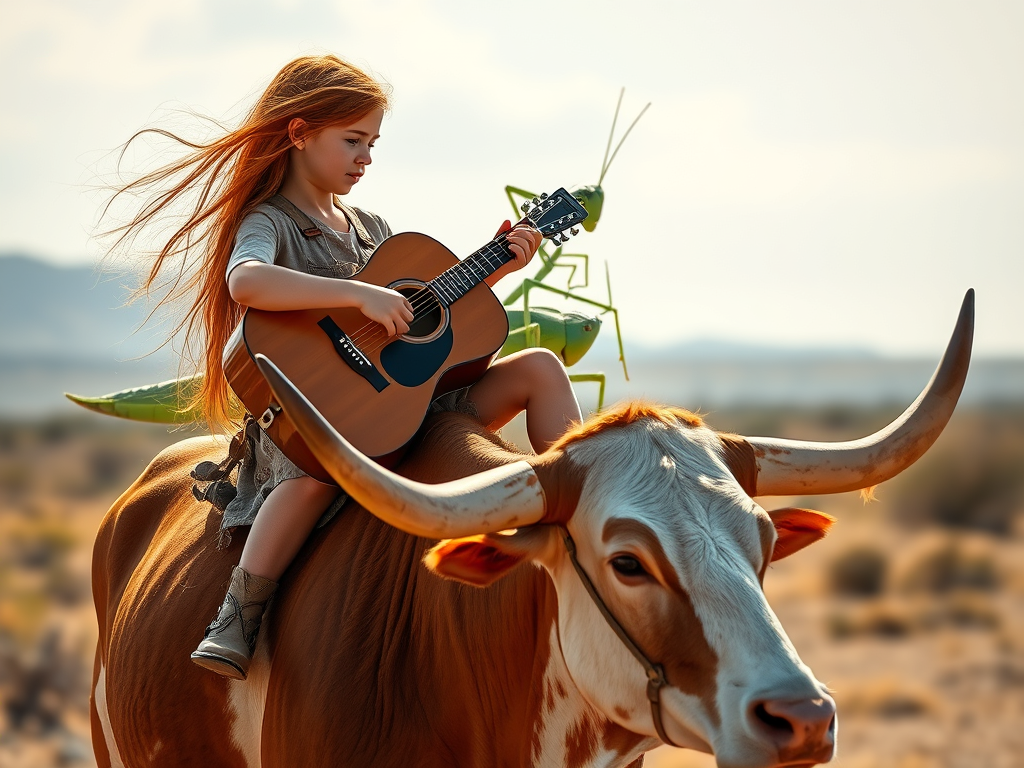
The one story that folks were reluctant to rattle about was the young girl who vanished from her family’s desert home in 1965. She strolled into the desert behind their home to collect grasshoppers and other insects for a science project and never returned, and not a smidgen of evidence was ever found. A few days later, the parents noticed her prized acoustic guitar was missing from her bedroom, and their pet Longhorn steer, Little Bill, was missing from his stall. The girl often led him out into the desert to graze on the clumps of tasty grasses and plants. Lawman worked to solve the case for two decades, but no leads or culprits were found. Word around town was that space aliens had abducted her and the steer for scientific purposes or worse. No one thought much about the theory since Marfa loved that nonsense.

Sagebrush Sonny Toluse, the Grand Pooh-Bah of all things Marfa, tells the best version of the story. He said to a group around the bar,

I was walking my old doggy for his nighttime constitution. I live just outside of town, nearly in the desert, and that’s how I like it. The moon was full, so Rufus and I walked a little farther than usual. I hear guitar music from somewhere. It’s not a loud electric guitar but a soft one, like a Mexican guitar. It’s getting closer, and now I hear singing, the floating voice of a young girl. I stop, turn around, and passing by me; no more than ten feet is this little girl riding a Longhorn steer, playing the guitar, and singing an odd song I didn’t know, something about a Kay Serra or something like that. Behind her, sitting on the steer, is a giant grasshopper about half the size of the girl. I know we have big bugs here in Texas, but this critter was massive, about the size of old Rufus, my dog. The trio rode past me into the fading desert, never paying any attention to us. I was troubled by the encounter, so I went and asked the older sister, who is now an old woman, about the young girl who vanished so long ago. I told her about the ghostly encounter in the desert. She said her sister often rode the Longhorn steer like a horse and would play her favorite tune while sitting atop the beast. It was a Doris Day song, and she sang a bit. “Que Sera Sera, whatever will be, the future’s not ours to see, Que Sera Sera. “

Moving To A Place Where No One Knows My Name


Not Momo or Me or a celebrity

Don’t misunderstand me; Momo and I are happy with the election result. I feel bad for all the self-serving celebrities who publically promised to move from this country because of the election. Where will they go? Canada or Europe may be their only hope for survival. If they were smart, and there are plenty of them that are not, they would seek to find the magical land of Nirvana. You know, the elusive country hidden in the Tibetan Mountains, a stone’s throw from Xanadu, which would also offer a safe harbor.

Of course, there would be drawbacks. The Monks who run these places don’t care much for Hollywood folks. There wouldn’t be movie studios, movie houses, fancy restaurants, Mercedes dealerships, or elections. In fact, there would be no work for them at all except for pruning the bushes and flowers. They might find true inner peace and illumination by spending the rest of their days there, wearing a flowing white robe as they stroll the mystical gardens accompanied by a mystical grasshopper.

Momo and I gave it some serious thought. Moving to Nirvana or Xanadu sounds warm and fuzzy, like new Christmas pajamas. After many nights of kicking the idea around, she announced that there is no way she can move to a place that doesn’t show “The Wheel of Fortune” and doesn’t have her H-E-B.

Chapter 4, Wagons-Ho, Leaving Texas Far Behind


Divine lightning has been known to strike twice, but only if it is directed by a Guardian Angel.

With a job in his pocket, the few loose coins that jingled in his khakis sounded like a hundred dollars.

John Henry made it a point to stop by, to offer up his thanks to Sargent and Sunny for their helping hand. Their kindness was the kind that stuck with a man, went deeper than any he’d known before.

Sargent asked John Henry to join him for a stroll down the sidewalk, just the two of ’em. They walked and smoked on their Lucky Strikes, talking about this new job that was waiting for John Henry like an open road.

They trudged along the sidewalk, the setting sun beating down on their gray fedoras, until they came to a halt in front of a small, weathered, stucco bungalow. A faded ‘For Rent’ sign hung crookedly from the porch railing, creaking lazily in the faint breeze. An older woman, around Sargent’s age, sat in a creaking swing, sipping listlessly at a glass of iced tea; she gave them a slight wave as friends do. The only sounds were the rhythmic groan of the swing chains and the growing buzz of cicadas, their evening song a mournful hum that seemed to vibrate through the very air itself as dusk drew near.

Sargent took one last drag on his cigarette, the ember flaring orange in the dusk. With a practiced motion, born of countless battlefields, he field-stripped the butt and sent it swirling into the breeze. Beside him, John Henry echoed the gesture, the ritual of it a comforting reminder of days past and the unbreakable bonds of soldiers forged in blood and fire.

Sargent spoke up.

“I’ve already gotten the okay from the owners; they’re fixin’ to move up to San Francisco for a spell, maybe a long one, five or six years they say. The house is yours for the taking if you’re so inclined. I put in a good word for you, figured my vouchin’ would mean something to them. Hope our bond of friendship will be the thing that seals this deal tighter than a jug of moonshine on a hot summer day.”

John Henry let out a hearty laugh, the easy kind that comes from deep in the belly, at the mention of moonshine.

“I ain’t touched the white lightning in near 10 years, Sargent,” he said, a twinkle in his eye. “But I’ll take the house, and you can bet your Justin boots our friendship is stronger than any gold or jug of ‘shine you can find.”

That evening, after John Henry shook on the deal for the house, he stopped at a butcher shop around the corner from Sergeant’s house. He counted out what little change he had left, just enough for three thick pork chops, a couple of fat red potatoes, and a sweet onion. Tonight, he’d throw the chops on the campfire, watch ’em sizzle till they were good and done, and bake the spuds in the coals. Bertha and Johnny, they’d eat like King Farouk. And Lady, she’d get her a big chunk, too, because this was a night for celebration if there ever was one. One thing he had learned in life is to take your blessings as they come and give thanks because they may never come again.

Click the link below for Chapter 5.

https://notesfromthecactuspatch.com/2024/07/06/life-in-california-chapter-5/

Wagons Ho to California ! Chapter 2. The Arrival


Ten or so miles past the Needles California border station, my grandfather, John Henry Strawn, encountered a stooped, raggedy-dressed black man and a small dog walking along the side of the road. The man’s attire resembled that of a poorly dressed scarecrow. Without hesitation, he slowed the Ford, performed a swift turnaround, and approached the traveler. After stopping the car, he offered the old fellow a ride. Without hesitation, the traveler gratefully accepted, ensuring that his dog was settled in first, followed by his knapsack, a guitar case, and then himself.

A few miles down the road, the man broke the silence, introducing himself as *Blind Jelly Roll Jackson from the Deep Ellum Dallas, Texas, and his seeing-eye dog, a Chihuahua named Pancho Villa, who is blinded in one eye. The result of a dog fight with a Coyote, so he wears tiny sunshades because the bright sunlight hurts his good eyeball. Jelly says he is a blues man and is headed to Los Angeles to stay with a cousin and find work in a juke joint, and he, by accident, shot a fella in Dallas four times over a pay dispute. He said it was all Pancho’s fault because the dog said the man had a knife, so what else is a body to do. He pulled a leather Bolla from his knapsack, took a jolt, poured a little liquid into his palm, and let Pancho Villa lick it up. John Henry was sure it was whiskey, and after the dog drank it, he fell over and started snoring. Jelly’s chin found his chest, and he slept the sleep of the weary.

On the eastern outskirts of Los Angeles, they saw the first billboard, “No Jobs in California, Keep Out.” John Henry paid no attention to the sign; he was certain he could find a job on the docks in Long Beach. He was an artisan, not an Okie fruit picker. The next sign was for a migrant campground, $.25 per day, running water, showers, and clean grounds; John Henry took the turn off Route 66, drove a few miles, took two more turns, and found himself at a tidy campground guard shack. Unlike the border boys, the guard wore a clean, crisp uniform and was pleasant. The three-day fee was paid with small change from the small stash in grandmother’s purse. Their assigned camping slot was shaded by a tall Eucalyptus tree. This would do until a job was found. Jelly and Pancho Villa wandered down the main lane, stopping to let the children pet and scratch Pancho, who nipped a few fingers and chased the local feral cat.

Travel to the eastern outskirts of Los Angeles, past the city limit sign. This is where a well-manufactured fantasy meets reality. Families living in tents or shanties of plywood and canvas. The city fathers, embarrassed to call them shanty towns, label them “migrant campgrounds.” Men walk the roadways for miles into the city looking for day labor or something better. These are hardworking, proud people who have been dealt a hand of misfortune. Los Angeles is becoming a city of “haves and have-nots.”

The Los Angeles of 1934 is a city unlike any other in the country.  The motion picture industry paints it as larger than life.  Hollywood, where dreams are made and shattered, is the engine that powers this city.  Oil and shipping will defend their role, but Hollywood fuels the beast.

At first glance, commerce appears untouched by the depression.  Polished cars parade on Santa Monica Boulevard.  People fill the sidewalks as if on holiday, smiles on their faces, knowing they are fortunate to live in this unique land of opportunity.  The manufactured facade so completely obscures the reality that, in fact, California suffers, but not quite as much as the rest of the country.  It’s hidden so well that thousands of hopeful migrants genuinely believe this is the “Promised Land.”
   
At dawn, John Henry, with Blind Jellyroll, drove into Los Angeles to search for work. He and a few thousand others had the same idea. A long line of men and women walked in unison as if Moses were leading the Jews from Egypt along the dusty highway.      
Men wearing patched overalls, sewn-up khaki pants, and shirts as white as a wash tub could get them. A few wore a dirty Fedora or a worn sweat-stained Stetson. Some real Okies wore frayed straw hats and cracked work boots. Their clothes hadn’t seen a wash tub of water in months. It was an army made of misery. The cloud of roadside dust told the folks in town they were coming—”NO WORK HERE” signs went up in every window along their route.

John Henry drops Jellyroll and Pancho Villa at the downtown mission run by Sister Aimee McPherson, the celebrated firebrand radio preacher. Jelly’s cousin works for the preacher and has assured him that the good sister has a place for him. John Henry wonders how a blind man and a one-eyed dog made it from Texas to here. Perseverance and Moxy, some folks have it, but most don’t.

  Lost and asking directions to Long Beach every mile or so, John Henry made a wrong turn and found himself on a residential street. Tidy bungalows with mowed green yards and colorful landscaping lifted his spirits. Back in Fort Worth, you only saw streets like this where the rich folks lived. He could tell by the cars in the driveways and houses that needed paint that these folks were plain working people, getting by better than most.  

 Half a block up, he sees an older man and woman losing the battle to unload a large chifforobe from the back of a pickup truck that should have been in a scrap yard. The rear end of the old truck sat on the concrete, and both leaf springs shot to hell. They are struggling and on the verge of dropping the piece of furniture when John Henry stops and, without asking, jumps in and grabs the end the woman is about to lose. The man thanked him for his help as they carried the furniture into their house. The home smelled like the fragrant gardenias growing around the front porch.

More in Chapter 3. * Note; My father couldn’t remember the name of the fellow or his dog, so I used the name of a character from an earlier story. A dog named Pancho could be nothing else but a Chihuahua.

Open the link below for Chapter 3

Chapter 3- Wagons Ho, and Settling In California

Being in the right place at the right time can lead to life-changing events. A bit of prayer added to the mix produces wonderful things.

From what I was told, my grandfather was willing to lend a helping hand to anyone who needed one. He was kind to a fault and was often taken advantage of by family members and close friends. I can’t use them in this chapter because their families are still alive, they know where I live, and everyone is so touchy. I was ten when my grandfather passed on. He made sure I learned numerous lessons from his mistakes. Being the great poohbah recounter in the family, he left me with enough oral history to fill a book. I remember most of it from his stories and yarns, of which he could spin some tall ones. No one thought to write anything down, so for now, I’ve been blessed with a good memory, but only for a while.

John Henry helps the man carry the heavy piece of furniture into the house and places it in a small bedroom that appears to be that of a girl. Pink ruffles and stuffed animals is a sure sign.

With the furniture all squared away, the two men stood on the front porch, taking a break to enjoy a smoke. John Henry offered one of his Lucky Strikes to the other fellow, and they both lit up with a flick of the Zippo John Henry still carried from the war. The man introduced himself as Sargent James, said that was his real name, and he never rose higher than corporal in the Army. That got a good laugh out of them both. He told John Henry about his wife, Sunny, and their daughter Cloudy, away at school in Sacramento on some kind of scholarship, studying’ to be a doctor no less.

  After lunch, the two men traded stories and discovered they served in France at about the same time, 1917-1918, in the big war against the Germans.

Veterans become fast, tight friends; the probability of dying from a bullet or an exploding shell bonds them in a way only they understand. It’s a brotherhood for life, formed on the battlefield.

     They had both been wounded in battle; John Henry having but half a left buttock, compliments of shrapnel and had been gassed twice while fighting in the muddy trenches. His new friend was shot in the leg and the arm but recovered enough to continue fighting until some shrapnel sent him to a hospital in England and then home for good. Both showed their scars like kids on a school playground trying to outdo the other.

     John Henry is no saint; he will own up to killing men in battle, some with his rifle, a few with a bayonet, one with a large rock to the head, and one stabbed through the heart with his side knife. He regrets them all, especially the young German boy, no more than a teenager he stabbed during hand-to-hand fighting before the soldier got the better of him with his sidearm. His face is the one in his worst dreams. The boy’s face looks as if he knows he is a dead man, as he is within seconds. It took years for the brutality to catch up to him, and now, late at night, when the ticking clock is the only sound in the house, his demons come for him.  

      Both men dance around the worst battle stories but share memories of their friends, living and dead. It’s easier that way. John Henry’s half-a-buttock won the competition. The prize was a large slice of apple pie with melted cheese topping.   He feels comfortable enough to ask his host if he might know of any work a man could find. Sargent mulls the question a few moments, then says,

“I’ve got a cousin that works at the docks building shipping crates, I’ll give him a call and see if he can get you an interview. Swing by here in the morning around seven and I’ll have you an answer. I can’t promise anything, but he has the ear of the owner. ”

Good on his word, Sargent had John Henry an answer, and it was the one he had hoped for, an interview for a job. He thanked Sargent and gladly took the biscuit sandwich that Sunny insisted he eat before his interview.

Six-thirty finds John Henry standing on the sidewalk in front of the business, 808 Shipping Row. The docks are half-block away, and the noise of men and equipment moving heavy crates onto ships carries in the cool morning breeze.

Two doors are marked “Entry,” so he takes the one on the left. Down a short hallway into a large office, he finds a man sitting at a desk drinking coffee and writing in a journal. The man invites him to sit and have a cup. John Henry thinks this must be the shop foreman or the interview man. After drinking coffee for a few minutes, the man asked him about family, church, drinking, accountability, and his time in the service. After a thirty-minute visit, with a few laughs, the fellow stands, shakes John Henry’s hand, and tells him to start tomorrow morning at seven am sharp, and by the way, he is the company’s owner. Augustus Petrillo, and welcome aboard.

More to come in Chapter 4.

Chapter 4, Wagons-Ho, Leaving Texas Far Behind

July 23, 2024, 3:03 pm 0 boosts 0 favorites