Henry’s Journey: Cattle, Family, A Cow Dog, and the Brazos River


The Brazos River winds its way through the stoic rock cliffs a mile east of the small village of Glenrose, Texas, its waters glinting like scattered stars as the sun throws its golden light upon the white limestone bedrock beneath the water. In the tranquil shallows and deeper pools, hues of emerald and azure spiral together, mirroring the darting fish that traverse the hidden world below. Eagles and Hawks prowl the sky above, capturing the fish that swim too close to the surface. Towering Oak, Pecan, and Elm trees stand as steadfast guardians along the banks, their roots deep in the fertile soil, while just beyond, the land erupts in a profusion of wildflowers, a testament to the beauty and resilience of this little patch of earth. This is the land that Henry’s family chose as their homestead.

In the shadows of the towering hills, wide stretches of grasslands unfold, a realm where cattle and deer roam free, finding solace in the abundance that the land offers. Here, the grass is plentiful, and competition is not considered. The earth yields enough to sustain all who seek its bounty. Mesquite trees stand in tight groves, their gnarled limbs ready to provide the firewood for warmth and light for the ranch house. Henry thanks God every day that his family chose this little slice of Heaven so many decades ago, when Texas was newly freed from Mexico and formed into a Republic. His family and the Comanches made friends early on, sharing the bounty of the land and feeding the tribe with a beef or two when needed. It was a choice of peace over bloodshed and battle.

Henry’s two boys left the ranch years ago. His youngest works as a deputy in Fort Worth, an honorable but dangerous profession. His oldest boy is a gambler and a scoundrel, and haunts the saloons and gambling halls of New Orleans and Houston, making a shady wage and living an abhorrent lifestyle. Abigail, his wife, pines for a reunion with her boys, but they have been without her loving touch for many years. She is old, sick, and frail, and Henry fears each day might be her last, so he doesn’t travel far from the house and checks on her often during the workday. Henry is older than her, and he’s no spring chicken. His days of ranching and sitting in a saddle will be ending soon.

Cattle are made for roaming; it’s their inherent nature. Cowboys are made for finding and securing the unruly bovines; it’s a circle game played out daily. Henry is missing twelve, maybe thirteen, and two calves, all Longhorns. He knows they are drawn to the river; they smell the wetness and know that the grass is sweetest near the banks, and the spreading Oaks offer a safe respite when night comes. He sent his ranch hand West to search, but he knew they likely headed East to the river.

Henry picks up the cattle tracks in the soft sandy soil, heading to the river. He follows for a few miles to the West bank of the Brazos. There, they crossed in water no more than a foot deep, but swift enough to take a man off his feet. Across the river, maybe thirty yards, he sees their exit up a steep incline next to a sharp cliff that drops off to the right, large rocks scattered along the bank below, and trapped broken tree trunks and limbs reside there among the stones. The trees are thick on the left, so there is no option but the one the cattle took. Henry gives them credit for being smart enough to figure it out. They cross with no effort. Witherspoon, his old horse, knows about as much as a ranch horse could learn. Henry considers him smarter than many of the men he knows. They start up the incline, which is steeper than it appeared from the other bank. Witherspoon struggles, slipping on the soft earth and gravel, and rolls to the right. Henry knows they are falling, and it won’t be a soft one. He grabs the saddle horn and braces for the impact as they fall backwards off the cliff.

When Henry opens his eyes, the sky looks a color of blue he is not familiar with. Deep Azure, not the familiar soft blue. He is flat on his back, lying atop stones. He doesn’t feel pain and figures he escaped injury. Witherspoon, his horse, grazes near the face of the cliff they fell from; he appears uninjured as well. He raises himself up on his elbows. From the left side, a dog approaches, tail wagging. Henry is shocked; it’s his cow dog, Buster, gone for three months now. Henry was sure a pack of coyotes got him, but here he is, now licking his face in between joyful whines. Abigail will be pleased as punch to see Buster back home. She mourned for weeks, assuming he had passed.

Witherspoon is in good shape, not a scratch on him, so he mounts, and Buster leads the way up the incline. This time, it’s an easy climb, and they continue down the path, Buster following the tracks and stopping ever so often to look back and bark to let Henry know the way.

The three come upon a man leaning on a broken gate. The wood of the gate is in poor shape. The man is dressed in city clothes, sharp and clean, boots shined and a snazzy derby perched on his head. Henry has been in these parts many times and doesn’t remember this place.

The man motions his hand and says, ” Howdy neighbor, what brings you to these parts?

” Looking for some strays that crossed the river maybe yesterday or the day before, you seen them” Henry says. Buster sits on his bollocks, ears low, hair on his back up: it’s clear this is not a nice fellow. Henry trusts his dog’s instincts, which are always right.

” Had some strays here a few days ago, just walked right in the gate and up to the main house, you’re welcome to come and see if they are yours. I’ve got some good corn liquor if you’d like a jolt, but the dog has to stay at the gate, no dogs allowed on this spread, they cause too much trouble,” says the man with a broad, fake smile. Buster lowers his body and snarls, emitting a low growl.

Henry looks at the entrance, the tracks must be at least a few weeks old, and the rain has almost vanished them. He says,” No thanks, my dog has picked up their scent and tracks, and they lead on up the road, so we’ll be moseying along.”

” Suit yourself, neighbor, if you don’t find them, you can come to the main house, but the dog isn’t welcome.” The man turns and leaves as Henry moves Witherspoon along the tracks that Buster has picked up.

A few miles down the road, Henry comes upon another gate. A young woman is replacing the hinges. She has a toolbox and has clearly been working hard. Her clothes are a bit dirty, her boots are worn, and her straw hat has seen better days. Without hesitation, Buster goes to her and she bends down and gives him a hug, he whines and licks her face.

She puts down her tool and says, ” Bet you’re looking for those Longhorns that came by this morning, twelve of them, with two calves. They walked right in the gate and up to the barn. I put them in a holding pen. I figured someone would come looking. Why don’t you and your cow dog follow me up to the barn, and I’ll give ya’ll a cool drink of water, and Cookie might have a biscuit or two left from breakfast if you’re hungry. Why don’t you dismount and walk with me up to the main house?”

Henry and Buster walk beside her, Witherspoon in tow. The road is well kept, the trees lining the road are healthy and green, and some are bursting with fruit, Apples, Pears, Peaches, Mulberries, and the wild flowers are as abundant and colorful as he has ever seen. In the distance he sees the main house. It’s a sprawling place, maybe three or four stories, painted white and trimmed in gold. There are dozens of folks sitting in chairs under the covered porch. Dogs and children play on the lawn. Buster takes off down the road to join in with them.

The young woman takes off her leather gloves, offers a hand to Henry, and says, ” Howdy, my name is Angela. This ain’t my place, it belongs to my Father. You must be Henry and your cow dog must be Buster, right?”

Henry shakes her hand. Her face is beaming, glowing in the afternoon light. Bright blue eyes, silky brown hair, and the whitest teeth he’s ever seen on a person. He says, ” Angela, how do you know my name? I don’t recall telling you yet. I can’t stay long. I’ll collect my strays and need to head back. My wife is sickly, and I’ve been gone too long as it is. I worry about her, and she doesn’t need the misery of thinking something happened to me.”

Angela moves closer to Henry and takes his hand in hers as they stroll down the road. She says, ” Henry, we’ve been expecting you, Witherspoon, and Buster for a while now, and don’t worry too much about Abigail, she’ll be along shortly. Ain’t this place just a slice of Heaven.”


Ask A Texan: Dealing With Those Pesky Californians


Good Downhome And Often Practical Advice For Those Folks That Think They Know Everything..

The Texan

This Texan received a letter written on the back of a Braum’s paper grocery bag. Braums has the second-best ice cream ( Bluebell is the top dog) and A2 milk in Texas, and a lot of folks shop there just to collect the sturdy, no-nonsense retro brown paper bags with sturdy handles, me included. It seems that a Mr. Oliver Douglas of Waco, Texas, has a problem with his new neighbors, who moved from California after purchasing the ranchette next to his farm, Green Acres.

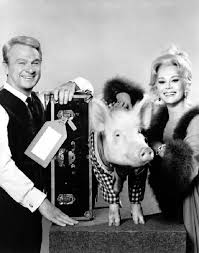
Mr. Douglas: I saw your advice column advertised at the local H.E.B. in the grilling section next to the charcoal bags. The full-size cardboard cutout of you looked really nice, and I thought if you use and endorse that brand of local charcoal nuggets, then I’ll try them too. Anyhow, that’s not why I’m writing to you. My new neighbors, Chip and Brie Romero, moved in next door about two months ago. Chip, the husband, is the great-grandson of Ceaser Romero, the famous dead actor. They, like thousands of others, fled that third-world commie country of California and came to our blessed state of Texas to start a new life, and who could blame them? I mean, that governor with the Clint Eastwood hair and the Robert Redford smile has ruined what was once a pretty good place to take a vacation and stare at the movie stars. My wife, Lisa, and her friend Lisa Ziffel spent a week of vacation out there in L.A. a few years back, trying to see Paul Newman and get his autograph. She was plum bummed out when she found out he had been dead for quite a while. But she did get to see two of those big butted Kardashian women on Rodeo Drive. She asked the most famous Kardashian woman how much she paid for those big butt cheek implants, and the bodyguard sprayed her with paparazzi pepper spray. Anyway, enough of that small talk.

Our neighbors want to be Texans in the worst way, but they are annoying Californians and will never be able to assimilate into our Texas culture. They drive a Tesla Cyber truck instead of a King Ranch pickup and have a fancy electric tractor for mowing their lawn.

They asked us over for supper: they called it a dinner party, but I call it supper. They served us white wine, some sushi(which is really catfish bait to me), some ugly, undercooked organic vegetables, tofu meatless patties, and almond milk ice cream on top of a gluten-free rice and kale shortcake. I tried to feed most of it to Verdell, their little weird-looking designer dog that hung out under their custom-made Himalayan wormwood outdoor kitchen table, but he took a few bites and puked it up on my new Justin boots. I gave the little pecker-wood a little kick with my boot for doing that, and Chip lost his crap and threw his glass of expensive white wine on my new Lucase pearl snap button shirt and was shrieking like a little girl, accusing me of trying to kill Verdell. His wife, Cheese Girl, is filming it all on her iPhone and calling their attorney back in La La land. My wife, Alma, doesn’t take crap from anybody, so she grabs Cheese Girl and throws her into their fancy Tibetan Monk-inspired meditation pond full of these big-assed Japanese meat-eating goldfish, and the fish start chewing on Cheese Girl. Eb, our farm hand, hears her screaming and comes to the rescue, throwing her a rope and pulling her out of the pond with his John Deere tractor. He had to drive it through their fancy bamboo fence to save her, and that sent Chip over the top. The meat-eating gold fish were still hanging onto her legs and torso and chomping on her, so Eb shoots them to pieces with his Colt pistol, and she’s screaming that those darn fish cost ten grand each and now he’s gonna have to pay for them, even though they were eating her like a rack of pork ribs. Things got worse. With the big hole in the bamboo fence, their herd of midget horses got out and took off into the woods, and haven’t been found yet. Arnold Ziffel, our intelligent farm pig, picked up their scent and tried to find them, but no luck yet. They have some of these exotic little Watusi Cows from Africa, and when they get scared or excited, they stand on their hind legs and dance the Watusi, which they did and danced right into the fancy meditation pond. The meat-eating goldfish got hold of them and left nothing but some bones and horns. Now we’re being sued by their fancy lawyer for replacing the cows, the horses, and the goldfish. Mr. Haney, our friend, is acting as our lawyer. Got any suggestions on how to handle these two morons?

The Texan: Well, Mr. Douglas, it appears that Green Acres is the place to be, and those Californians with all their valley speak and weird ways couldn’t resist moving to Texas and bringing their genetic baggage with them. A good friend of mine lived in a little town called Petticoat Junction, not too far from where you live. A family of Californians moved in by him, and the lecherous husband kept trying to get my cousins’ three gorgeous daughters out of that water tank and into his hot tub for some bubbly California fun fun fun. His cousin, Jethro Bodine, finally had to shoot the sucker, and the rest of the family got the hint and moved back to Beverley Hills. Californians are akin to folks from the Middle East: they just can’t assimilate and don’t get how we Texans live and the code of the West. I’ll send you Jethro’s cell phone number, and he might be able to help you out. I’m also sending you a CD of one of my favorite movies, ” High Noon,” and two large boxes of cherry bombs so you can use them to make those Californians scat back to La La Land. God Bless Texas and Davy Crockett.

Tall Tales From Texas: The Legend of The Mountain Boomers of The Santa Anna Mountain


At seven years old, I learned of my first, but far from the last, Texas legend. The best storytellers and liars I ever knew were my two uncles on my mother’s side of the family, Uncles Bill and Jay Manley. They are the ones who told my cousins and me about Santa Anna’s “Mountain Boomers.” My mother believed the two ruined me and turned me into a liar and teller of tall tales, which is not such a bad thing.

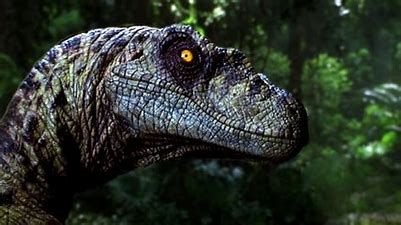
The Mountain Boomers were giant lizards that ran on two legs and came down from their lair on Santa Anna Mountain in search of food. Anything would do, but they were partial to goats, wild pigs, small cows, chickens, and tiny humans. If you were caught outside in the wee morning hours, it was a sure bet a Mountain Boomer would get you. We, kids, were scared shitless of even going out of the farmhouse after dark. Now we had giant lizards and the dreaded Woolly Boogers to deal with.

With no air conditioning in the farmhouse, we were forced to sleep with the windows open and would lay in our beds shaking all night, waiting for the monsters to break through the window screen and carry us away. Our Granny was no help; her standard goodnight to us was ” sleep tight and don’t let the Mountain Boomers bite.”

Summer evenings on the farm were made for sitting on my grandparents’ covered porch, watching lightning bugs dance, listening to the crickets chirp, and catching the faraway howls of an occasional Coyote pack running the creek that passed through the pastures.

The sky was black as pitch, the Milky Way as white as talcum powder, and heat lighting in the West added to the drama of the evening. We kids were ripe for a big one, and my uncles never disappointed. First, homemade ice cream was eaten, then the cooler of Pearl Beer came out, and the stories commenced.

Already that June, my cousin Jerry and I had been to see the hero pig and the three-legged chickens and had learned of the dreaded Woolly Boogers. Hence, we needed a new adventure: our summer was losing air like a punctured tire: we were tiring of shooting chickens with our Daisy BB Guns, then getting our butts switched by Granny.

“Did you kids see that over there in the trees across the road? I think that might have been one of them Mountain Boomers,” says Uncle Bill, in between swigs of Pearl. Then, of course, we strained our eyes to see what he said he saw, but nothing. Then, a few moments later, “There it goes again, I tell you kids, that was one of them sumbitches running on two legs carrying a wild pig in its teeth.”

He had us firmly hooked and reeled in. Then he starts in on the story. Uncle Bill took a swig of Pearl and said,

” Right down this road here, about twenty years ago, a family’s car broke down, ran out of gas, I think. The daddy, a man I knew well, walked into town to find some help. He left his wife and small son in the car. It was late at night, so he figured they would sleep until he returned with some gas. The little boy got out of the car to pee alongside the road. His Momma heard him scream and came out of the car in a hurry: a 7-foot-tall Mountain Boomer was standing there with the little kid in its mouth. The poor boy was already almost chewed in half. His guts were hanging out and dragging on the ground. The big lizard took off running with the Momma chasing it. Another of them, Boomers, was hiding in the scrub brush and got her, too. A few days later, the sheriff found their bloody remains up on the mountain. They knew a Mountain Boomer had gotten them because they found their tracks. That’s why we never go outside after midnight around here.” My other cousins and I were almost pissing our pants.

When we stayed at the farm, I don’t believe any of us ever slept well again after that night. But, even after we were adults, my uncles swore the legend and the story were true. I still dream of them.

Nostalgia for 50s Texas: Memories of Fort Worth


I’m a 50s kid. That means I was born in 1949 at Saint Josephs Hospital in Fort Worth, Texas, and grew up in the lean and mean Eisenhower years. My hometown was different back then, as most of our hometowns are today. But, change is inevitable, and it happens at the oddest times; while we sleep or mow our lawn. Progress is sneaky.

First, it’s a few new buildings downtown, then a slick freeway cutting through quiet neighborhoods, and maybe a landmark building demolished to make way for a new hospital. Then, out of nowhere, a train full of people from the West or the East is arriving, and the pilgrims try to make it “not so Texas.” It’s a gradual thing, and most of us are too occupied or young to notice until it bites us in the rear.

My grandfather was old-school Fort Worth from the late 1800s, a cow-puncher who rode the cattle drives and sang cowboy songs to the little doggies. He loved his city to a fault. The word “Dallas” was not to be spoken in his home or his presence. Violaters usually got punched or asked to leave. The old man was a tough Texan and a supporter of Amon Carter, the larger-than-life businessman that put Fort Worth on the map and started the rivalry between the two cities.

In the 1950s, if you asked Fort Worth residents what they thought of Dallas, they would most likely tell you it’s a high-on-the-hog East Coast wanna-be big-shot rich-bitch city. We didn’t sugarcoat it. That rivalry was always in your face and at times vicious. My father was a country musician, and when his band, The Light Crust Doughboys, had to play in Dallas, his extended family heaped misery upon him for weeks.

In October, Dallas has the “State Fair of Texas,” and Fort Worth has the “Fat Stock Show” in February. I didn’t attend the State Fair until I was ten years old, and even then, it was in disguise, after dark, to the fair and back home, hoping no one in our neighborhood noticed we had crossed enemy lines. Unfortunately, I let my secret visit slip around my buddies, and they banned me from playing Cowboys and Indians for a week. Even us kids were tough on each other.

Three things got us kids excited: Christmastime in downtown Fort Worth, Toyland at Leonard Brothers Department Store, and The Fat Stock Show. But, unfortunately for us, the rest of the year was uneventful and boring. Summer was pickup baseball games, old cartoons on television, and blowing up the neighborhood with cherry bombs, our pyrotechnics of choice.

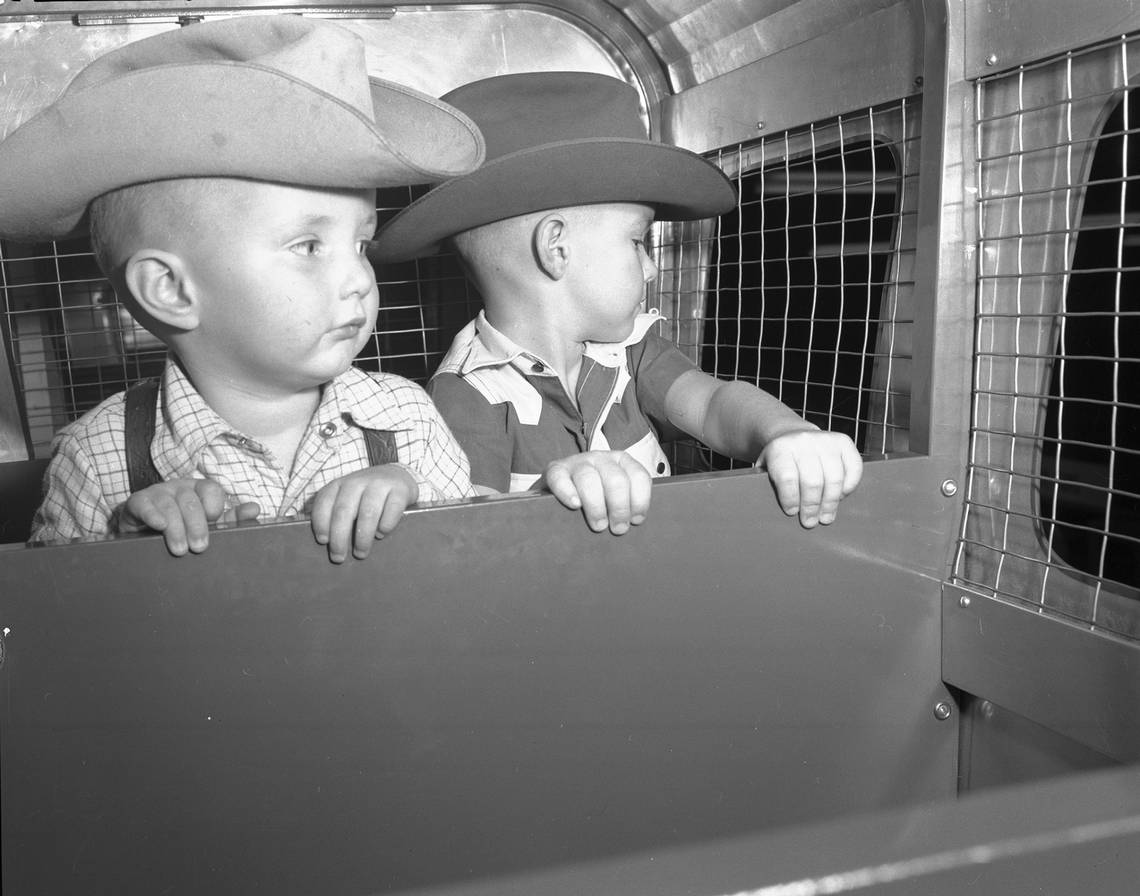
60 years ago, the winters in Texas were colder and more miserable. February was the month we froze our little gimlet butts off, and of course, that is the Stock Show month. Wrapped up in our Roy Rogers flannel pajamas under our jeans, boots, and cowboy hats, we kids made the best of it as we visited the midway, the cattle barns, and animal competitions. The rodeo was for the real cowboys, and it was too expensive; the free ticket from our grade school only went so far. We were kids and had not a penny to our name. It wasn’t the flashy affair that Dallas put on, but it was ours, and we loved it. I still have a round metal pin I got at the Stock Show, a lovely picture of Aunt Jemimah promoting her flour, something that would get me canceled, or worse, in today’s clown world. I’ve often thought of wearing it to my local H.E.B. grocery store to see the reaction. Maybe not.

For those of us who were born and grew up there, Fort Worth, Texas, is where the west begins, and Dallas is where the East peters out. Nothing has changed.

Ask A Texan: The Craze for Dubai Chocolates Is Taking Over The Country


The Texan

This Texan received a letter from a Mr. Atticus Finch from Greenbow, Alabama. Seems his wife, Maudie, has discovered Dubai Chocolates and has gone off the deep end.

Mr. Finch: Mr. Texan, I saw your article in the back pages of Flower of the Month Magazine at the hardware store that Miss Mayella runs. My wife of forty years, Maudie, went to The Walmart, bought some of these new Dubai Chocolates, fell in love with them, and now that’s all she eats. She’s bought about fifty boxes of them, and won’t eat anything that Calpurnia, our cook, made, so she quit. Now I’m down to eating supper from Chicken Express. Not only is she gaining a bunch of weight, but the doctor also said she now has type 3 Diabetes, a fatty liver, and a big brain worm. But that’s not the worst of it. Since these candies come from Dubai, one of them Arab countries, she now thinks she’s a Muslim. She loves her Walmart, so she buys a Pioneer Woman bathrobe, dyes it black, then some Martha Stewart scarves, wraps them around her head, pokes holes in them for eyes, and goes around town dressed like a Muslim woman. We were driving to church down Maycomb Blvd the other day, which is the busiest street in town, and she jumped out of the truck at the stoplight, threw her new Pioneer Woman bath mat onto the street, knelt down, and started chanting all this gibberish while eating a box of those Dubai candies. I’m afraid she might do something rash and become a terrorist woman. Our two grown children, Jean Louise and Jem, won’t bring the grandkids over anymore, and our two neighbors, Dill and Boo, won’t come out of their house because they’re scared of her. Needing some help here in Alabama.

The Texan: Well, Mr. Finch, you’re in a “dill pickle” of a mess there in Maycomb. I’ve heard those chocolates are causing some scary behavior among folks. I called a psychoanalyst friend of mine, Dr. Harper Gump, and she says that these new candies contain a concentration of a special nut oil that’s engineered to make folks want to be Muslims. I think it might be a plot by Al Qaeda to take over the country, one candy-loving woman at a time. My late father’s late, late uncle Orem, back in the prohibition days, drank a whole case of moonshine, and it affected him so bad that it turned him into a Baptist. So I guess sustenance and libations can affect folks adversely, turning them into something else. I would find a Priest to perform an exorcism and get that pesky brain worm demon out of her, and get rid of those candies. Buy her some of those Lady Godiva Chocolates. I’m sending ya’ll a CD of my favorite movie, “To Kill A Mockingbird,” and a box of cherry bombs so you can blow those Dubai candies up. Keep in touch.

Ask A Texan: Wife Moves To New York City To Be A Social Worker


Advice For Non-Texan Husbands Who Are Hearing Impaired

This Texan received a letter from Mr. Bobby Joe Boudreaux from Chigger Bayou, Louisiana. Seems his wife is determined to go to New York City and work as a social worker for the new communist mayor, Mamdani.

Mr. Boudreaux: My wife of thirty years, Lolita Belle, says she is moving to New York City to work for that commie whack job, Mamdani. Since he is replacing the police force with social workers who will talk to the criminals instead of arresting them. Lolita Belle is a world champion talker. She starts in around 7 am and goes until after bedtime. She even talks in her sleep, so I have to wear earplugs or turn my hearing aids off. She’s worn our four iPhones in the last year, talking to her relatives over in Shreveport. She stops folks in the grocery store and starts telling them about the nutritional values of the food they are buying. The poor folks are cornered and can’t escape. Our preacher at the Chigger Bayou Fourth Baptist let her lead communion one Sunday, and she got carried away, talking for an hour about why the church should be using real wine and Ritz crackers instead of Welch’s grape juice and crunchy bread. Now the church won’t let us in the door. She got stopped by a policeman for speeding, and she gave the poor cop a thirty-minute explanation on speed limits and why his uniform didn’t fit properly, and he needed to get his teeth whitened. The poor policeman finally gave her twenty dollars just to stop, and he got on his motorcycle and took off. She thinks if she can talk a policeman out of a ticket, then she can speak a criminal into being a good guy, just like that socialist street rat, Mamadami, who isn’t even an American, thinks will work. She read that all his new staff will be women, so she can have some sisters to talk to. I need some help down here.

The Texan: I hear your pain. ( pun intended ). Some folks are born with a genetic predisposition to constantly orate. My late, late, late, aunt, Beulah, from Santa Anna, Texas, ran off three husbands and at least a dozen dogs and cats for the same reason. When her priest was giving her the last rites before she passed away, she wouldn’t stop telling him what to say, so he just left. Short of using a shock collar like folks do with those noisy Beagles, I would let her go on up to New York and work for that commie pinko rat. If she can talk a cop out of a ticket, the poor criminal will probably give up and beg to be arrested just to shut her up. I’m sending her a CD language course on how to talk like a New Yorker, and to help a brother out, I’ll cover the cost of the airfare. I’m also sending you a box of Cherry Bombs to help relieve your anxiety. There’s nothing like blowing up Fire Ant mounds to calm a man down. Keep in touch.

Why Every Writer Deserves to Call Themselves an Author


A while back, an obnoxious blogger that fancied herself a serious author said that writers are not authors, and real authors are those that have been published and cut their teeth in academia, meaning a teacher or a professor of sorts. The rest of the poor souls plodded on through pages of typos and third-rate editing. I know that Hemingway, Steinbeck, and Capote would likely not agree with her observation.

Being the smart-ass that my mother raised well, I challenged the blogger on her assessment of the current literary scene and its “wink-wink” secret membership.

I knew she was a teacher right away because the following lecture and browbeating reminded me of high school. Much high-handed rhetoric and pontification without explaining anything. Sound familiar?

My measured response was that you must first be a writer to become an author. A writer is anyone that puts to paper a story of fact or fiction. It matters not if anyone ever reads your effort; it’s done and sealed. If your writing makes it to a publishing house or a website, you may call yourself an author, but you are still a writer. Nothing changes but a definition and perhaps a fat check.

My first writing was around ten years old and was on a Big Chief tablet. I was working my way to being the second coming of my beloved Mark Twain.

My uplifting teacher at the time had no problem telling me I would likely become a writer. Of what, I asked? She said maybe a book or a novel or a newspaperman; she thought I had a knack for the genre. She did encourage me to learn typing, which I did on a 1930s-era Underwood that occupied my parent’s dining room table. I was the only kid in our neighborhood that knew typing. My friends were google-eyed envious as if I had broken the enigma code or figured out the Orphan Annie decoder ring. I did gloat a bit, but not too much.

At 76 years old, I consider myself a writer; with over 200 short stories and interviews to my name, they attest to my efforts.

I have, over the years, been published a few times; Interviews about the rock scene in the 60s and early country music, so even though I received little to no money, I could, if I wished to, call myself an author. But it’s all a wordplay around egos. So, until I can come up with something as serious as Thomas Wolfe, Harper Lee, Truman Capote, or my beloved Mark Twain, I will remain a humble writer.

Ask A Texan: All Taped Out…


The Texan

Somewhat Intellectual Advice For Folks That Don’t Have An Intellect Or Can’t Spell The Word…

I received a letter written on the back of a missing cat poster. I called the number, and the owner confirmed that the cat had come home, which is a good thing. The man who wrote the letter on the absconded poster, A Mr. Thurston Howell, claims his wife has lost her mind and is attempting a home remedy facelift.

Mr. Howell: Mr. Texan, I saw your article in the Wall Street Journal and thought you might be able to offer some sound advice. I ran out of printing paper, so I used a missing cat poster that I found stapled to my mailbox to print this letter. I hope you don’t mind. Besides, the lady put the posters everywhere in our upscale neighborhood, which is against our HOA rules here in Beverly Hills. It seems her cat goes missing at least once a month, and Elly Mae Clampett, the sweet girl down the street, searches and finds the missing furball. The crazy cat lady has around fifty cats, so missing one would be no big deal. I found three of them eating a mouse on the Cordovan leather backseat of my Bentley last week and had to trade the car in for a new one. Anyway, that’s not the issue I’m addressing.

My wife, Lovey, has been begging for a face lift. She says all the women at the country club are getting them. I told her no way because, since our banker, Mr. Drysdale, made some bad investments with our money, we are on a strict budget. She’s a big fan of that TikTok thing on her phone. She saw that an influencer in Hawaii has invented a do-it-yourself at-home facelift using Gorilla Duct Tape. I’m familiar with the benefits of duct tape. When Lovey and I were stuck on a deserted island a few decades ago when a tour boat we were on hit a reef and marooned us with a group of idiots, one of the smart guys used a roll of duct tape and some Palm Tree bark to fix the hole in the boat, and we were able to get back to Waikiki a few years later, just in time to see Elvis on the beach filming a movie.

Lovey came to breakfast this morning with her face wrapped up in Gorilla Duct tape. It frightened me so badly that I spat out my coffee and ruined my Lobster Pâté breakfast roll. Rosie Jetson, our robotic chef and maid, had to stop cleaning the pool and clean up our deck-side breakfast table. She had applied makeup and lipstick to her tape-face, and now she looks like the Bride of Frankenstein. Our little dog, Gilligan, was so scared that he hid in the pool house and won’t come out. Lovey claims that after six weeks, when she removes the tape, she will be as beautiful as her best friend, Ginger, the hot red-headed unemployed actress she hangs out with. I think she’s lost her coconuts. Do you have any recommendations on how I can put an end to this madness? I attached a picture of Lovey so you can see for yourself.

Lovey Howell

The Texan: Well, Mr. Howell, forgive me for being forward, but you can probably afford a good plastic surgeon for Lovey if you live in Beverly Hills, belong to the country club and drive Bentley cars. It sounds like you’re being a bit stingy. TikTok has messed up a lot of folks. My daughter-in-law followed an influencer’s advice and used Super Glue to style her hair, only to wind up in the ER, where the surgeon, with the help of a beautician, had to remove all her”Rapunzel-esque” mane. As a result, she is now as bald as Kojak. So, if your wife is stupid enough to do what some moron on TikTok advises, she may well need to see an expensive Beverly Hills shrink. I would first take away her smartphone and have Rosie, your robot maid, destroy it. Then, I would have Rosie hold Lovey down and rip off the duct tape. Tell Ginger to lie like a garage sale rug and tell your wife she is as pretty as that other girl, Mary Ann. Call Elly Mae Clampett to come down and style Lovie’s hair and loan her a tight pair of American Eagle jeans to accentuate her figure and make her look like Sydney Sweeney. If that doesn’t do the trick, it’s likely that Granny Clampett, Elly’s grandmother, will have some sort of possum belly-based cream to fix the damage from the duct tape. I’m sending Lovey a CD of a great TV series to watch while she recovers. “Petticoat Junction,” I’m also enclosing a box of cherry bombs so you can blow up the cats before they ruin the leather seats in your newest Bentley. Let me know how this all turns out.

Why I Missed My Calling as a Writer


I was born too late to meet my calling as a writer. Instead of being birthed in 1949, I should have appeared in 1931, no later than 1933, then I may have had a fighting chance. By the time I began writing about serious topics, I was in high school, in the mid-1960s. We had the Vietnam War, Hippies, rock music, and pot to contend with. Writing about Hippies held no interest for me, but the war, music, and politics did, and so I wrote a few things for my high school paper and journalism class that brought instant grief my way. My mentor and writing coach, Mrs. Mischen, chastised me for the language I used, which, in retrospect, was a bit crude and too hip for a high school paper. However, she also gave me an “atta-boy” for having the courage to put myself out there. I wasn’t anti-establishment, anti-war, or anti-Hippie; I wasn’t anti-anything: only a rock musician playing in a popular band, and that’s about all I had to offer the world at that point. That’s why I should have been a writer in the 1950s, hanging out in the Village with Kerouac and Boroughs, and even Hemingway and Steinbeck in late-night bars, smoking unfiltered cigarettes, drinking whiskey, and arguing about the fate of America after the two recent wars that had led to a drastic shift in our country. I would have been a perfect cohort. Instead, I spent my childhood years writing in a Big Chief Tablet about neighborhood shenanigans and mailing my articles to the Fort Worth Press, hoping for a spot in the Sunday news, all the time, believing I was the incarnation of Mark Twain. Now, I’m too damn old to be the incarnation of anyone, and can’t remember what to write, and can’t find my notebooks full of ideas.

Is This The Real Life? Is This Just Fantasy? Caught In A Landslide, No Escape From Reality


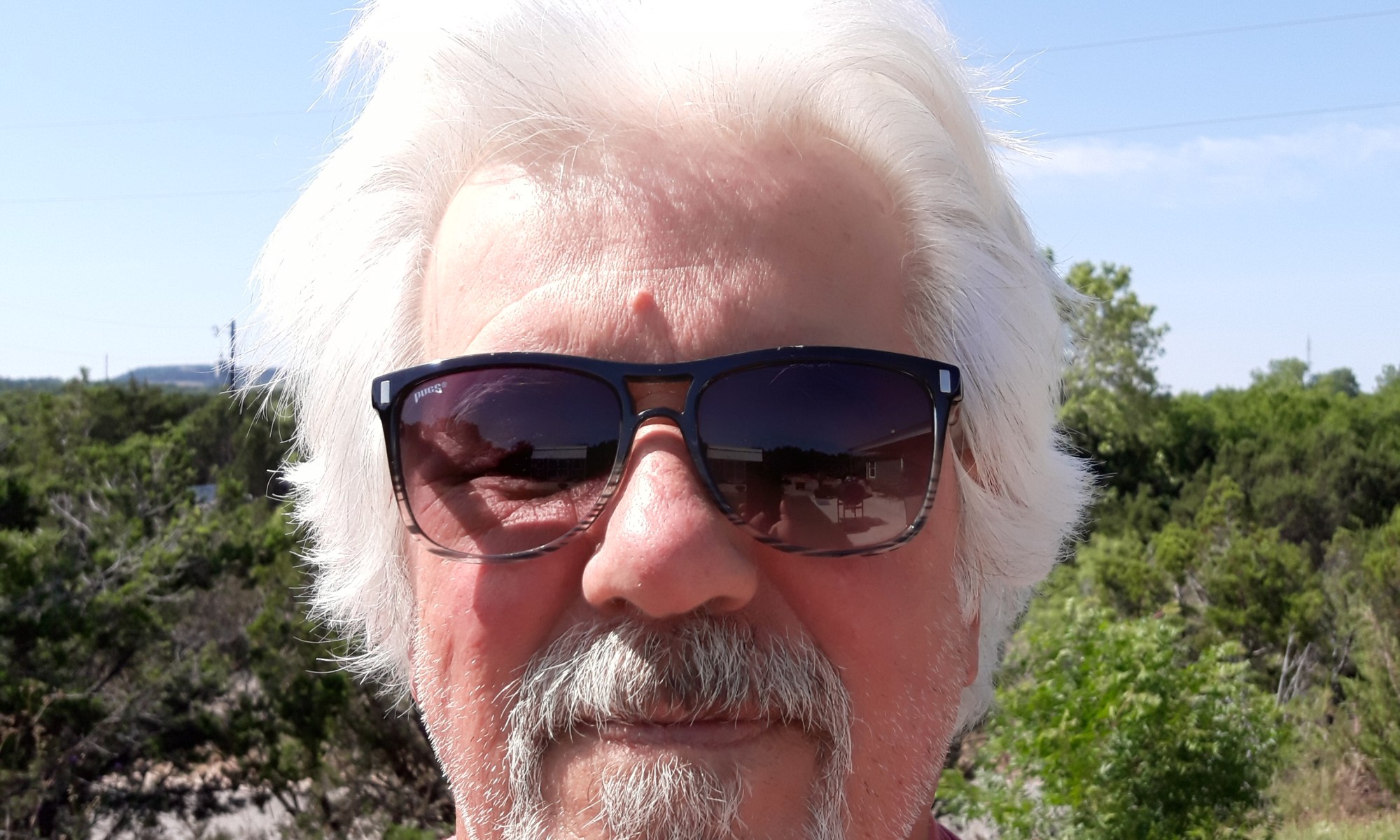
Me Before I Quit Smoking

Perhaps Sal Paradise and Dean Moriarty had it right? Drive a beat-up car across the country, searching for the real America; find that touchable and believable reality. The young Marylou is along for the ride; she adds the angst to their search: a real woman, one to drive the two of them mad. Three is a tangled mess. Two recovering Catholic boys question their upbringing. Harsh realisms, self-flagellating, pot smoking, cheap liquor guzzling, teetering on becoming a criminal or a saint.

Roughians, hooligans, hipsters, Bohemians, and rapscallions. These were the self-educated beast shaped by the great depression that taught us that America isn’t perfect and never can be as long as flawed and greedy people make decisions for the masses. Lords and Cerfs; Alms for the poor, sir?

The late 1940s was a time of realism. Fantasy was for the dreams of children. The recent brutal world war ended the tragic depression years, and sacrifices and loss of human life in far-off lands all played out in real-time, not on a roll of film. There was no “escape from reality.”

The coterie of Bohemian writers and artists was forming. Jackson Pollock was dripping paint, Picasso was mutilating women on canvas, and Papa Hemingway, John Steinbeck, Alan Ginsberg, William Burroughs, Neal Cassady, and Jack Kerouac sat around small tables in dingy cafes and bars slamming down hooch, and writing the real stuff that made us smile, think, cry, or recoil in disgust. They took the American reality from the 1930s and 1940s and gave it to us with a backhanded slap to the face. It awakened some of us, the ones that paid attention.

Jack Kerouac and the rest of his group weren’t meant for literary sainthood; they were too stained, too fallible, and over-baptized. America was real; life was not always the astringed family of mom and pop, two kids, and a cocker spaniel. Sometimes it hurt. More often than not, it was damned good. Men were riddled with imperfections but still knew how to be male, and women were as perfect as they were created to be.

Somewhere on this trip, along the road, America lost its reality, and people turned to fantasy. Now, we are lost in a landslide, with no escape from a warped reality. The road goes on.