Ask A Texan: Dealing With Those Pesky Californians


Good Downhome And Often Practical Advice For Those Folks That Think They Know Everything..

The Texan

This Texan received a letter written on the back of a Braum’s paper grocery bag. Braums has the second-best ice cream ( Bluebell is the top dog) and A2 milk in Texas, and a lot of folks shop there just to collect the sturdy, no-nonsense retro brown paper bags with sturdy handles, me included. It seems that a Mr. Oliver Douglas of Waco, Texas, has a problem with his new neighbors, who moved from California after purchasing the ranchette next to his farm, Green Acres.

Mr. Douglas: I saw your advice column advertised at the local H.E.B. in the grilling section next to the charcoal bags. The full-size cardboard cutout of you looked really nice, and I thought if you use and endorse that brand of local charcoal nuggets, then I’ll try them too. Anyhow, that’s not why I’m writing to you. My new neighbors, Chip and Brie Romero, moved in next door about two months ago. Chip, the husband, is the great-grandson of Ceaser Romero, the famous dead actor. They, like thousands of others, fled that third-world commie country of California and came to our blessed state of Texas to start a new life, and who could blame them? I mean, that governor with the Clint Eastwood hair and the Robert Redford smile has ruined what was once a pretty good place to take a vacation and stare at the movie stars. My wife, Lisa, and her friend Lisa Ziffel spent a week of vacation out there in L.A. a few years back, trying to see Paul Newman and get his autograph. She was plum bummed out when she found out he had been dead for quite a while. But she did get to see two of those big butted Kardashian women on Rodeo Drive. She asked the most famous Kardashian woman how much she paid for those big butt cheek implants, and the bodyguard sprayed her with paparazzi pepper spray. Anyway, enough of that small talk.

Our neighbors want to be Texans in the worst way, but they are annoying Californians and will never be able to assimilate into our Texas culture. They drive a Tesla Cyber truck instead of a King Ranch pickup and have a fancy electric tractor for mowing their lawn.

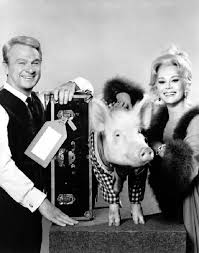
They asked us over for supper: they called it a dinner party, but I call it supper. They served us white wine, some sushi(which is really catfish bait to me), some ugly, undercooked organic vegetables, tofu meatless patties, and almond milk ice cream on top of a gluten-free rice and kale shortcake. I tried to feed most of it to Verdell, their little weird-looking designer dog that hung out under their custom-made Himalayan wormwood outdoor kitchen table, but he took a few bites and puked it up on my new Justin boots. I gave the little pecker-wood a little kick with my boot for doing that, and Chip lost his crap and threw his glass of expensive white wine on my new Lucase pearl snap button shirt and was shrieking like a little girl, accusing me of trying to kill Verdell. His wife, Cheese Girl, is filming it all on her iPhone and calling their attorney back in La La land. My wife, Alma, doesn’t take crap from anybody, so she grabs Cheese Girl and throws her into their fancy Tibetan Monk-inspired meditation pond full of these big-assed Japanese meat-eating goldfish, and the fish start chewing on Cheese Girl. Eb, our farm hand, hears her screaming and comes to the rescue, throwing her a rope and pulling her out of the pond with his John Deere tractor. He had to drive it through their fancy bamboo fence to save her, and that sent Chip over the top. The meat-eating gold fish were still hanging onto her legs and torso and chomping on her, so Eb shoots them to pieces with his Colt pistol, and she’s screaming that those darn fish cost ten grand each and now he’s gonna have to pay for them, even though they were eating her like a rack of pork ribs. Things got worse. With the big hole in the bamboo fence, their herd of midget horses got out and took off into the woods, and haven’t been found yet. Arnold Ziffel, our intelligent farm pig, picked up their scent and tried to find them, but no luck yet. They have some of these exotic little Watusi Cows from Africa, and when they get scared or excited, they stand on their hind legs and dance the Watusi, which they did and danced right into the fancy meditation pond. The meat-eating goldfish got hold of them and left nothing but some bones and horns. Now we’re being sued by their fancy lawyer for replacing the cows, the horses, and the goldfish. Mr. Haney, our friend, is acting as our lawyer. Got any suggestions on how to handle these two morons?

The Texan: Well, Mr. Douglas, it appears that Green Acres is the place to be, and those Californians with all their valley speak and weird ways couldn’t resist moving to Texas and bringing their genetic baggage with them. A good friend of mine lived in a little town called Petticoat Junction, not too far from where you live. A family of Californians moved in by him, and the lecherous husband kept trying to get my cousins’ three gorgeous daughters out of that water tank and into his hot tub for some bubbly California fun fun fun. His cousin, Jethro Bodine, finally had to shoot the sucker, and the rest of the family got the hint and moved back to Beverley Hills. Californians are akin to folks from the Middle East: they just can’t assimilate and don’t get how we Texans live and the code of the West. I’ll send you Jethro’s cell phone number, and he might be able to help you out. I’m also sending you a CD of one of my favorite movies, ” High Noon,” and two large boxes of cherry bombs so you can use them to make those Californians scat back to La La Land. God Bless Texas and Davy Crockett.
Ask A Texan: How Bucc-ee’s Changed Our Culture


Sometimes Accurate Advice For Folks That Wish They Had Been Born In Texas

The Texan

This Texan received an email from Mrs. Her/She Cleaver of San Bernadino, California. She and He/Him husband traveled from California to Dallas for a relative’s non-binary wedding and made the mistake of stopping at a Bucc-ee’s in Amarillo, Texas.

Mrs. Her/She Cleaver: Mr. Texan, if that is your real name, or do you prefer to be called a misogynistic red-neck knuckle-dragging Neanderthal cowboy? I wasn’t sure. All of my troubles started when I accepted a wedding invitation to my non-binary relative’s wedding. Although she is formally female and will be wearing a dress, she prefers to be known as “it”, or “a human.” We quietly cruised into your backward state and needed a charge for our Tesla, which we recently disguised as a non-binary automobile. The only charging station in Amarillo, Texas, was located at a redneck gas station called Bucc-ee’s: who would name a business that? Pulling into the lot on our last few volts, we were amazed at all the carbon-burning autos and trucks purchasing gasoline and polluting our planet; there must have been a hundred gas pumps. I was so rattled; I needed my safe room, but I had to settle for my heavy blanket and a Valium. The two of us needed a restroom, so we swallowed our beliefs and entered. I must say, the cold air was refreshing, and my-oh-my, what a layout. Clothing, toys, jewelry, hats, all with a little Beaver wearing a baseball cap sewn onto everything in the store. The food, oh my creator from above, we have never seen so much of it—fudge, candy, jerky, BBQ, ice cream, every kind of sandwich known to exist. Personally, I was repulsed by all that wasted nutrition that could be feeding those poor, hungry illegals, and not one Vegan option available. How could they do that? We college-educated women have rights, too. While I was in the female’s restroom, a work of technology and cleanliness, my husband discovered the BBQ caveman meat section. Hot sliced brisket, ribs, sausage, and side fixings, he was gorging himself into a coma. I made a scene when I screamed, ” How could you do this to me? We are Vegan; think of that poor animal that died so you can stuff your jaws like a deranged Chipmunk.” He looked at me and said, “Kiss it, Karen, get in that toy car and get your happy vegan ass to Dallas; I’m never leaving Bucc-ee’s.” All covered in BBQ sauce and Banana Pudding, he ran to a big tub of little Bucc-ee’s stuffed animals and dived in. He then ran across the parking lot and rented a room at a motel and steak house called The Big Texan. I’m afraid our marriage is kaput, all because of Bucc-ee’s. Any ideas on how to fix this mess since your redneck backward state caused it?

The Texan: Well, Mrs. She/Her, or whatever you identify as It appears you picked the wrong state to visit. Bucc-ee’s is a national treasure, right up there with the old Alamo and Davy Crockett, and one thing for sure is, you “Don’t Tread On Us.” It appears you may be suffering from a culture shock known as “reality,” which no one in California can identify with. You should have just mailed a gift or made a donation in “it’s” name and stayed in your safe place. Your husband will be much happier and healthier living at the Big Texan Steak House and Motel; I’ve been there many times. You should fit right in with those man-bun-wearing, skinny-jeaned, purse-carrying little pansy-asses in Dallas; they are your kind of folks. Don’t bother writing back, and for once, you’ll get nothing and like it. God Bless Texas and Bucc-ee’s.

California Ho!-Blind Jelly Roll Jackson Brings Home The Le’ Petite Fromage – Chapter 8


Young Johnny and the rest of the string band joined the Strawn family for Sunday church attendance. John Henry warned the boys that they were about to witness a religious spectacle, so hang on to your britches. He also told the boys that If Jelly Roll was invited to join their group, all four of them would be standing before him, even though he is blind, for revering one’s elders was of the utmost importance.

Bertha and the boys walked with John Henry to the orchestra dressing room, where they found Jelly Roll and Pancho Villa seated on a red velvet settee, likely the same furniture that Sister Aimee used in the soul-saving of Jelly Roll, who now embraced his savior with religious zeal. Each of the boys introduced themselves, shook hands with Jelly, and gave a guarded pat to Pancho Villa; the banjo player was the only one to get a vicious bite from the foul-tempered canine. After a brief, casual conversation, young Johnny inquired if Jelly Roll would entertain the notion of joining the string band. Jelly Roll pondered the request for a few minutes, then gave them a yes, but a young female singer from the choir he had recently befriended would come with the package. The boys agreed, and a deal was struck.

Jelly Roll produced a tidbit of dried bacon from a pocket and gave it to Pancho Villa; he then directed the pooch to hurry down the hallway and fetch Miss Fromage. Pancho returned with a smallish girl in tow. Jelly Roll introduced the boys to *Miss Le Petite Fromage from Chigger Bayou, Louisiana. Her daddy is Baby Boy Fromage, the famous Cajun singer, so her vocal abilities come from good stock. Miss Le Petite was a diminutive gal, measuring less than five feet, yet possessing the curves and form of a fully grown woman, except for her hands and feet, which were the size of a small child’s: she had little baby feets and hands. When she spoke, her heavy cajun-accented voice was as smooth as honey on a warm biscuit. Jelly Roll and Miss Fromage agreed to rehearse with the boys on Saturday at John Henry’s home. The group left with the boys feeling like something big was about to happen.

On Saturday, John Henry gathered up Blind Jelly Roll and Miss Fromage and delivered them to his humble home. The boys perched themselves on the front porch. They were as nervous as a cat in a dog show, and who wouldn’t be: this was their first foray into professional music. John Henry kindly assisted Jelly Roll and Pancho Villa to a seat while Miss Fromage opted to stay standing.

After assisting the boys in tuning up, Jelly asked, “Are you all familiar with Mama Mabel Carter’s tune, Will The Circle Be Unbroken?”

The lads nodded knowingly. He then tapped his foot, “In the key of G, one ana two ana three ana four-ahh.”

After a lively eight-bar introduction with Jelly Roll bending his guitar strings into a torturous sound and Johnny joining him with his fiddle, Le Petite took a deep breath, stood up on her tiny toes, and belted out the song with such gusto that her boisterous vocals nearly blew the boards off the porch floor. By the song’s end, neighbors had gathered in the front yard, their feet tapping and hands clapping in rhythm to the spirited tune.

Turning to the band, Le Petite declared, “The next ditty is from my dear ole Daddy, Baby Boy. It’s a G-C-D progression with A minor thrown in for color. It’s called Party On The Bayou: Cold Beer And Calamine Lotion.” Step it up, boys; it’s a rapide quick-un”

The band played for two hours, covering Cajun music, Dallas blues, and some Bakersfield Okie-inspired country. It was clear that Jelly Roll and Le Petite were professionals and were teaching these lads a thing or two. The rehearsal was a rousing success. But now, if they were to play for money, they needed a good name for the band. Johnny threw a couple out, as did the banjo picker, but nothing stuck on the wall.

Le Petite said, ” Monsieur Jelly Roll, being a blind fellow, and now a born again unto sweet Baby Jesus with the strong, unshakable faith, why not call this outfit **”Blind Faith?” They liked it, and Le Petite announced, “So let it be written, so let it be done.”

  • *Le Petite Fromage is a type of French cheese popular in the bayou country of Louisiana.
  • **Blind Faith was a 1960s supergroup consisting of Steve Winwood, Eric Clapton, Ginger Baker, and Ric Grech. My father couldn’t remember the name of his string band, so Jelly Roll, being blind and embracing his newly found faith, seemed to fit.

California Dreamin’ Chapter 6


New friends, a fresh vocation, and a fine abode for an extended stay. The Strawns couldn’t reckon their good fortune. Were they in the midst of a reverie, or was it a heavenly intervention from on high? My grandmother continued casting glances over her shoulder, half-expecting to glimpse the Guardian Angel who was running this show. Sister Aimee and her mammoth church would require some acclimatization, at least on John Henry’s part.

After the church service, which was more of a Hollywood show than a religious sanctuary, John Henry ambled backstage in search of Blind Jelly Roll Jackson. He rapped on a door marked “orchestra,” but receiving no response, he turned the unlocked knob and proceeded inside. There sat Jelly Roll on a red velvet setee while Sister Aimee fervently laid her hands on his cotton-top head, offering a vigorous prayer of salvation. Pancho Villa stood behind her, firmly attached, growling like a small lion and tugging hard at the bottom of her satin robe. Upon catching sight of John Henry, Sister Aimee hollered,

“Clear out, sinner! Can’t you see I’m rescuing this wretched man’s soul?” John Henry promptly shut the door and made his way back to his family, wanting no part in the strange affairs of that place. This church wasn’t through with him quite yet.

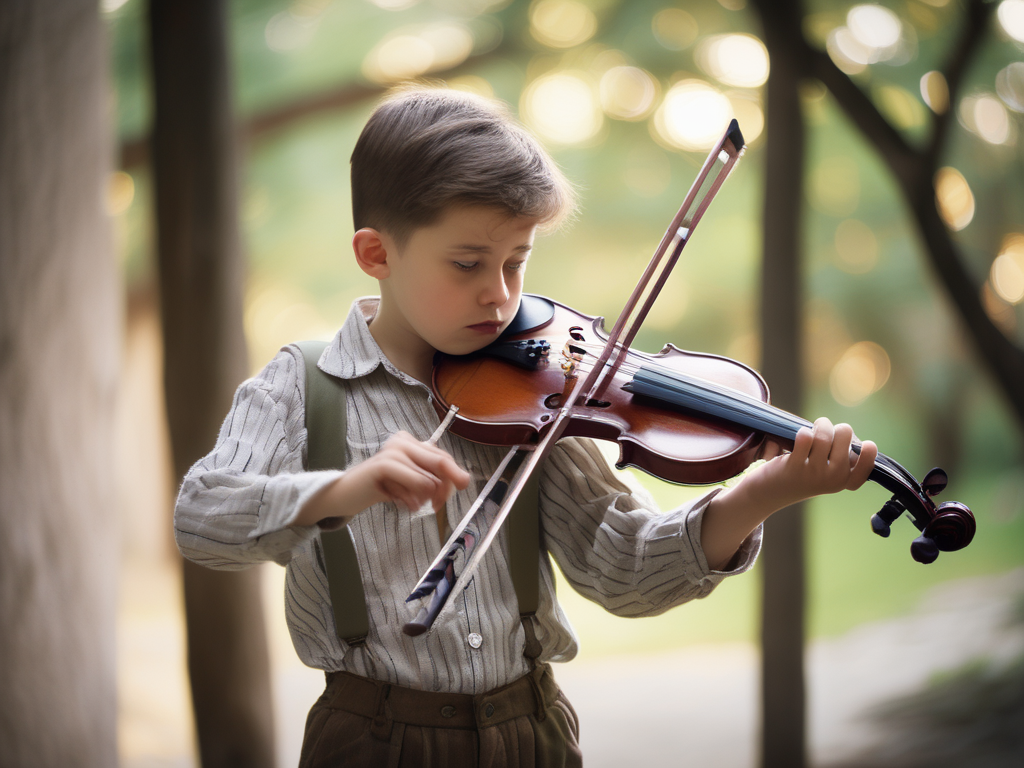
Two weeks into his new job, John Henry felt comfortable enough to open the case of his fiddle. During his time in Texas, he had earned the reputation of a “campfire fiddler,” skilled enough to keep up with any string band in Fort Worth. Nevertheless, this was not the path he aimed to follow. For nearly two years, Young Johnny had shown a deep interest in mastering the art of playing the instrument. The time had come to pass on this skill to the eager young man.

A visit to a local pawn shop produced a fifth-hand fiddle. It wasn’t much of an instrument, but for $5.00, case and bow included, it was good enough for the boy. Johnnie, when given the instrument, almost keeled over from joy. He took the fiddle to his back porch bedroom and began to torment every dog and cat in the neighborhood with his playing, which was more screeching than music.

Miss Angel Halo, a retired high school music teacher, resided a few houses away. She recognized that sound, having heard the screech of strings from her students for most of twenty years. Her Basset Hound, Baby Dog, cowered beneath the back porch while her feline companion, Miss Greta Garbo, made a hasty exit to escape the noise. Miss Halo made her way to the offending house and exchanged pleasantries with the Strawns. Over a cup of coffee, some neighborhood gossip, and a large slice of warm bundt cake, she offered her aid in schooling young Johnnie in the ways of musical notation and the art of the violin; she was a cello player herself. If the boy would mow her grass twice a week, and pull any pesky weeds in her flower beds, she would instruct him in learning the instrument.; no charge. The pact was sealed, and harmony was restored to the neighborhood.

Six weeks into his son’s tutoring, John Henry, not having heard the boy play, was curious if he had learned to play the fiddle. At his teacher’s insistence, Johnnie’s practice sessions were daytime only, and he was confined to the garage, door down, so as not to upset the neighbors.

Saturday evening found John Henry on the front porch, nursing a cold beer and coaxing a few tunes from his beloved fiddle. He asked Johnnie to fetch his instrument and join him, and in a swift instant, the boy returned, fiddle in hand, eager to display his skills to his father. To John Henry’s amazement, as he played an Irish jig, his son effortlessly intertwined harmonious notes with his own, giving the old man a partnership in the form of twin fiddles. A father’s pride has no bounds, and he played on, ignoring the tears on his cheek. In time, that instrument and the dreams of a child would take young Johnnie to the pinnacle of country music.

More to come in Chapter 7

https://notesfromthecactuspatch.com/2024/07/28/california-and-the-magical-elixers-chapter-7/

Chapter 4, Wagons-Ho, Leaving Texas Far Behind


Divine lightning has been known to strike twice, but only if it is directed by a Guardian Angel.

With a job in his pocket, the few loose coins that jingled in his khakis sounded like a hundred dollars.

John Henry made it a point to stop by, to offer up his thanks to Sargent and Sunny for their helping hand. Their kindness was the kind that stuck with a man, went deeper than any he’d known before.

Sargent asked John Henry to join him for a stroll down the sidewalk, just the two of ’em. They walked and smoked on their Lucky Strikes, talking about this new job that was waiting for John Henry like an open road.

They trudged along the sidewalk, the setting sun beating down on their gray fedoras, until they came to a halt in front of a small, weathered, stucco bungalow. A faded ‘For Rent’ sign hung crookedly from the porch railing, creaking lazily in the faint breeze. An older woman, around Sargent’s age, sat in a creaking swing, sipping listlessly at a glass of iced tea; she gave them a slight wave as friends do. The only sounds were the rhythmic groan of the swing chains and the growing buzz of cicadas, their evening song a mournful hum that seemed to vibrate through the very air itself as dusk drew near.

Sargent took one last drag on his cigarette, the ember flaring orange in the dusk. With a practiced motion, born of countless battlefields, he field-stripped the butt and sent it swirling into the breeze. Beside him, John Henry echoed the gesture, the ritual of it a comforting reminder of days past and the unbreakable bonds of soldiers forged in blood and fire.

Sargent spoke up.

“I’ve already gotten the okay from the owners; they’re fixin’ to move up to San Francisco for a spell, maybe a long one, five or six years they say. The house is yours for the taking if you’re so inclined. I put in a good word for you, figured my vouchin’ would mean something to them. Hope our bond of friendship will be the thing that seals this deal tighter than a jug of moonshine on a hot summer day.”

John Henry let out a hearty laugh, the easy kind that comes from deep in the belly, at the mention of moonshine.

“I ain’t touched the white lightning in near 10 years, Sargent,” he said, a twinkle in his eye. “But I’ll take the house, and you can bet your Justin boots our friendship is stronger than any gold or jug of ‘shine you can find.”

That evening, after John Henry shook on the deal for the house, he stopped at a butcher shop around the corner from Sergeant’s house. He counted out what little change he had left, just enough for three thick pork chops, a couple of fat red potatoes, and a sweet onion. Tonight, he’d throw the chops on the campfire, watch ’em sizzle till they were good and done, and bake the spuds in the coals. Bertha and Johnny, they’d eat like King Farouk. And Lady, she’d get her a big chunk, too, because this was a night for celebration if there ever was one. One thing he had learned in life is to take your blessings as they come and give thanks because they may never come again.

Click the link below for Chapter 5.

https://notesfromthecactuspatch.com/2024/07/06/life-in-california-chapter-5/

Wagons Ho to California ! Chapter 2. The Arrival


Ten or so miles past the Needles California border station, my grandfather, John Henry Strawn, encountered a stooped, raggedy-dressed black man and a small dog walking along the side of the road. The man’s attire resembled that of a poorly dressed scarecrow. Without hesitation, he slowed the Ford, performed a swift turnaround, and approached the traveler. After stopping the car, he offered the old fellow a ride. Without hesitation, the traveler gratefully accepted, ensuring that his dog was settled in first, followed by his knapsack, a guitar case, and then himself.

A few miles down the road, the man broke the silence, introducing himself as *Blind Jelly Roll Jackson from the Deep Ellum Dallas, Texas, and his seeing-eye dog, a Chihuahua named Pancho Villa, who is blinded in one eye. The result of a dog fight with a Coyote, so he wears tiny sunshades because the bright sunlight hurts his good eyeball. Jelly says he is a blues man and is headed to Los Angeles to stay with a cousin and find work in a juke joint, and he, by accident, shot a fella in Dallas four times over a pay dispute. He said it was all Pancho’s fault because the dog said the man had a knife, so what else is a body to do. He pulled a leather Bolla from his knapsack, took a jolt, poured a little liquid into his palm, and let Pancho Villa lick it up. John Henry was sure it was whiskey, and after the dog drank it, he fell over and started snoring. Jelly’s chin found his chest, and he slept the sleep of the weary.

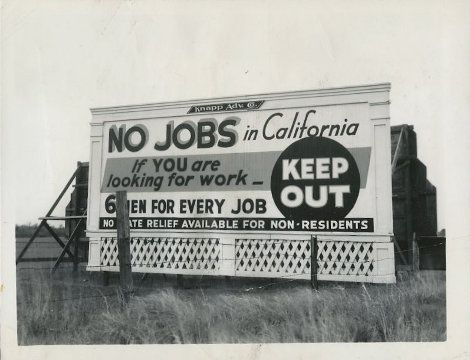
On the eastern outskirts of Los Angeles, they saw the first billboard, “No Jobs in California, Keep Out.” John Henry paid no attention to the sign; he was certain he could find a job on the docks in Long Beach. He was an artisan, not an Okie fruit picker. The next sign was for a migrant campground, $.25 per day, running water, showers, and clean grounds; John Henry took the turn off Route 66, drove a few miles, took two more turns, and found himself at a tidy campground guard shack. Unlike the border boys, the guard wore a clean, crisp uniform and was pleasant. The three-day fee was paid with small change from the small stash in grandmother’s purse. Their assigned camping slot was shaded by a tall Eucalyptus tree. This would do until a job was found. Jelly and Pancho Villa wandered down the main lane, stopping to let the children pet and scratch Pancho, who nipped a few fingers and chased the local feral cat.

Travel to the eastern outskirts of Los Angeles, past the city limit sign. This is where a well-manufactured fantasy meets reality. Families living in tents or shanties of plywood and canvas. The city fathers, embarrassed to call them shanty towns, label them “migrant campgrounds.” Men walk the roadways for miles into the city looking for day labor or something better. These are hardworking, proud people who have been dealt a hand of misfortune. Los Angeles is becoming a city of “haves and have-nots.”

The Los Angeles of 1934 is a city unlike any other in the country.  The motion picture industry paints it as larger than life.  Hollywood, where dreams are made and shattered, is the engine that powers this city.  Oil and shipping will defend their role, but Hollywood fuels the beast.

At first glance, commerce appears untouched by the depression.  Polished cars parade on Santa Monica Boulevard.  People fill the sidewalks as if on holiday, smiles on their faces, knowing they are fortunate to live in this unique land of opportunity.  The manufactured facade so completely obscures the reality that, in fact, California suffers, but not quite as much as the rest of the country.  It’s hidden so well that thousands of hopeful migrants genuinely believe this is the “Promised Land.”
   
At dawn, John Henry, with Blind Jellyroll, drove into Los Angeles to search for work. He and a few thousand others had the same idea. A long line of men and women walked in unison as if Moses were leading the Jews from Egypt along the dusty highway.      
Men wearing patched overalls, sewn-up khaki pants, and shirts as white as a wash tub could get them. A few wore a dirty Fedora or a worn sweat-stained Stetson. Some real Okies wore frayed straw hats and cracked work boots. Their clothes hadn’t seen a wash tub of water in months. It was an army made of misery. The cloud of roadside dust told the folks in town they were coming—”NO WORK HERE” signs went up in every window along their route.

John Henry drops Jellyroll and Pancho Villa at the downtown mission run by Sister Aimee McPherson, the celebrated firebrand radio preacher. Jelly’s cousin works for the preacher and has assured him that the good sister has a place for him. John Henry wonders how a blind man and a one-eyed dog made it from Texas to here. Perseverance and Moxy, some folks have it, but most don’t.

  Lost and asking directions to Long Beach every mile or so, John Henry made a wrong turn and found himself on a residential street. Tidy bungalows with mowed green yards and colorful landscaping lifted his spirits. Back in Fort Worth, you only saw streets like this where the rich folks lived. He could tell by the cars in the driveways and houses that needed paint that these folks were plain working people, getting by better than most.  

 Half a block up, he sees an older man and woman losing the battle to unload a large chifforobe from the back of a pickup truck that should have been in a scrap yard. The rear end of the old truck sat on the concrete, and both leaf springs shot to hell. They are struggling and on the verge of dropping the piece of furniture when John Henry stops and, without asking, jumps in and grabs the end the woman is about to lose. The man thanked him for his help as they carried the furniture into their house. The home smelled like the fragrant gardenias growing around the front porch.

More in Chapter 3. * Note; My father couldn’t remember the name of the fellow or his dog, so I used the name of a character from an earlier story. A dog named Pancho could be nothing else but a Chihuahua.

Open the link below for Chapter 3

Chapter 3- Wagons Ho, and Settling In California

Being in the right place at the right time can lead to life-changing events. A bit of prayer added to the mix produces wonderful things.

From what I was told, my grandfather was willing to lend a helping hand to anyone who needed one. He was kind to a fault and was often taken advantage of by family members and close friends. I can’t use them in this chapter because their families are still alive, they know where I live, and everyone is so touchy. I was ten when my grandfather passed on. He made sure I learned numerous lessons from his mistakes. Being the great poohbah recounter in the family, he left me with enough oral history to fill a book. I remember most of it from his stories and yarns, of which he could spin some tall ones. No one thought to write anything down, so for now, I’ve been blessed with a good memory, but only for a while.

John Henry helps the man carry the heavy piece of furniture into the house and places it in a small bedroom that appears to be that of a girl. Pink ruffles and stuffed animals is a sure sign.

With the furniture all squared away, the two men stood on the front porch, taking a break to enjoy a smoke. John Henry offered one of his Lucky Strikes to the other fellow, and they both lit up with a flick of the Zippo John Henry still carried from the war. The man introduced himself as Sargent James, said that was his real name, and he never rose higher than corporal in the Army. That got a good laugh out of them both. He told John Henry about his wife, Sunny, and their daughter Cloudy, away at school in Sacramento on some kind of scholarship, studying’ to be a doctor no less.

  After lunch, the two men traded stories and discovered they served in France at about the same time, 1917-1918, in the big war against the Germans.

Veterans become fast, tight friends; the probability of dying from a bullet or an exploding shell bonds them in a way only they understand. It’s a brotherhood for life, formed on the battlefield.

     They had both been wounded in battle; John Henry having but half a left buttock, compliments of shrapnel and had been gassed twice while fighting in the muddy trenches. His new friend was shot in the leg and the arm but recovered enough to continue fighting until some shrapnel sent him to a hospital in England and then home for good. Both showed their scars like kids on a school playground trying to outdo the other.

     John Henry is no saint; he will own up to killing men in battle, some with his rifle, a few with a bayonet, one with a large rock to the head, and one stabbed through the heart with his side knife. He regrets them all, especially the young German boy, no more than a teenager he stabbed during hand-to-hand fighting before the soldier got the better of him with his sidearm. His face is the one in his worst dreams. The boy’s face looks as if he knows he is a dead man, as he is within seconds. It took years for the brutality to catch up to him, and now, late at night, when the ticking clock is the only sound in the house, his demons come for him.  

      Both men dance around the worst battle stories but share memories of their friends, living and dead. It’s easier that way. John Henry’s half-a-buttock won the competition. The prize was a large slice of apple pie with melted cheese topping.   He feels comfortable enough to ask his host if he might know of any work a man could find. Sargent mulls the question a few moments, then says,

“I’ve got a cousin that works at the docks building shipping crates, I’ll give him a call and see if he can get you an interview. Swing by here in the morning around seven and I’ll have you an answer. I can’t promise anything, but he has the ear of the owner. ”

Good on his word, Sargent had John Henry an answer, and it was the one he had hoped for, an interview for a job. He thanked Sargent and gladly took the biscuit sandwich that Sunny insisted he eat before his interview.

Six-thirty finds John Henry standing on the sidewalk in front of the business, 808 Shipping Row. The docks are half-block away, and the noise of men and equipment moving heavy crates onto ships carries in the cool morning breeze.

Two doors are marked “Entry,” so he takes the one on the left. Down a short hallway into a large office, he finds a man sitting at a desk drinking coffee and writing in a journal. The man invites him to sit and have a cup. John Henry thinks this must be the shop foreman or the interview man. After drinking coffee for a few minutes, the man asked him about family, church, drinking, accountability, and his time in the service. After a thirty-minute visit, with a few laughs, the fellow stands, shakes John Henry’s hand, and tells him to start tomorrow morning at seven am sharp, and by the way, he is the company’s owner. Augustus Petrillo, and welcome aboard.

More to come in Chapter 4.

Chapter 4, Wagons-Ho, Leaving Texas Far Behind

July 23, 2024, 3:03 pm 0 boosts 0 favorites

Wagons Ho-To California ! Chapter 1


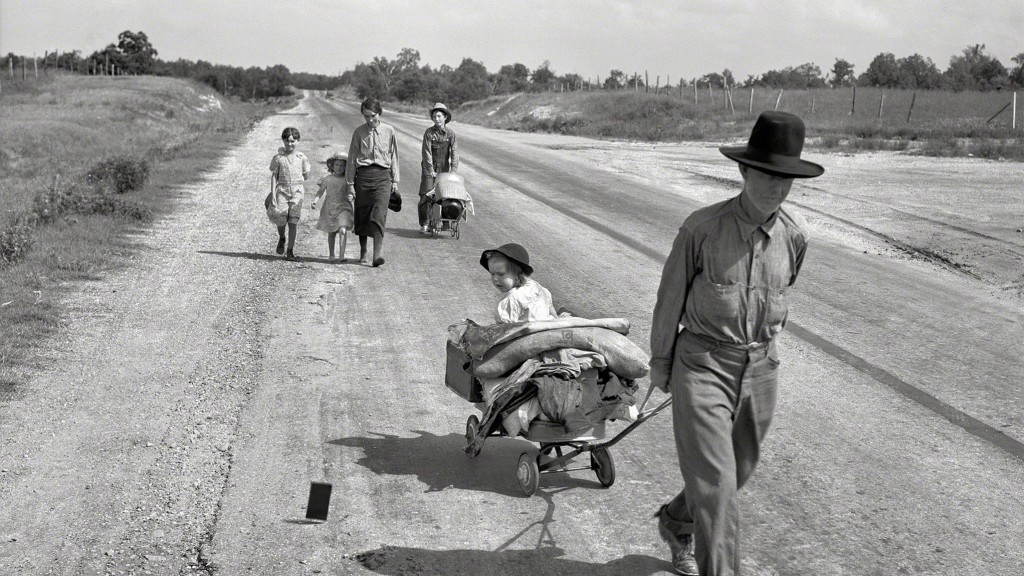
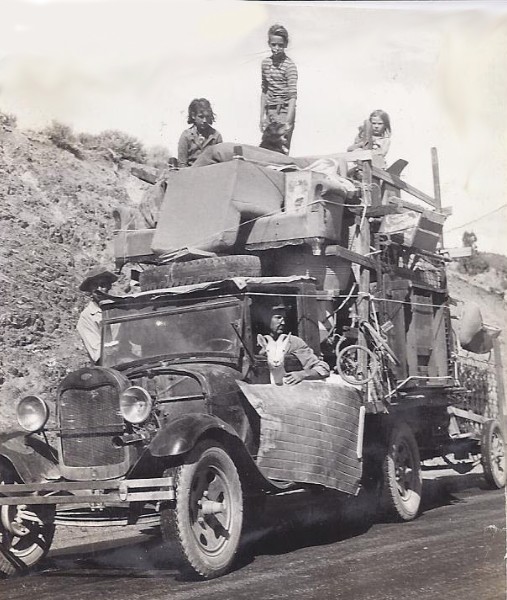
June arrived with a dreaded heat wave forming in the southwestern desert and creeping into Texas. The Mexican province, formally known as the state of California, is experiencing the hottest weather in history, and that adds to the folks getting out of Los Angeles and Sacramento and moving to my state, which has done nothing to stop the influx of unwanted refugees. U haul and Ryder are out of trucks, so folks are building their own trailers or tying furniture to the tops of their cars. Yesterday, I saw a Tesla with luggage and home decor tied to the roof of the poor EV. Of course, the car had California plates, and the occupants were likely looking for a home to buy in my little town. All that was missing was Granny and Eli Mae sitting on the roof.

My grandparents, my father, and my aunt migrated from Texas to California in 1934 because there were no jobs available in Fort Worth or Dallas. When reaching the desert town of Needles, CA, they were immediately labeled “Okie’s” by the border guards. My grandfather, a man of few but choice words, mostly curse ones, did his best to convince the guards that he was a Texan and had visited Oklahoma once for a funeral, which made the situation worse because the guards then labeled them Texas Okie’s, which was a double insult, and to boot, they weren’t welcome in the land of pleasant weather and movie stars. Grandfather turned himself into a poor man’s Will Rogers, with plenty of aw-shucks, dirt-kicking, and head-scratching, which made the guards laugh, so the family was admitted. He forgot to mention the three pistols, the sawed-off shotgun, and his pet Rattle Snake, Bubba, stashed under the front seat of his Ford.

Click the link below for Chapter 2

Chapter 2- Wagons Ho to California !

The Arrival

Ten or so miles past the Needles California border station, my grandfather, John Henry Strawn, encountered a stooped, raggedy-dressed black man and a small dog walking along the side of the road. The man’s attire resembled that of a poorly dressed scarecrow. Without hesitation, he slowed the Ford, performed a swift turnaround, and approached the traveler. After stopping the car, he offered the old fellow a ride. Without hesitation, the traveler gratefully accepted, ensuring that his dog was settled in first, followed by his knapsack, a guitar case, and then himself.

A few miles down the road, the man broke the silence, introducing himself as *Blind Jelly Roll Jackson from the Deep Ellum Dallas, Texas, and his seeing-eye dog, a Chihuahua named Pancho Villa, who is blinded in one eye. The result of a dog fight with a Coyote, so he wears tiny sunshades because the bright sunlight hurts his good eyeball. Jelly says he is a blues man and is headed to Los Angeles to stay with a cousin and find work in a juke joint, and he, by accident, shot a fella in Dallas four times over a pay dispute. He said it was all Pancho’s fault because the dog said the man had a knife, so what else is a body to do. He pulled a leather Bolla from his knapsack, took a jolt, poured a little liquid into his palm, and let Pancho Villa lick it up. John Henry was sure it was whiskey, and after the dog drank it, he fell over and started snoring. Jelly’s chin found his chest, and he slept the sleep of the weary.

On the eastern outskirts of Los Angeles, they saw the first billboard, “No Jobs in California, Keep Out.” John Henry paid no attention to the sign; he was certain he could find a job on the docks in Long Beach. He was an artisan, not an Okie fruit picker. The next sign was for a migrant campground, $.25 per day, running water, showers, and clean grounds; John Henry took the turn off Route 66, drove a few miles, took two more turns, and found himself at a tidy campground guard shack. Unlike the border boys, the guard wore a clean, crisp uniform and was pleasant. The three-day fee was paid with small change from the small stash in grandmother’s purse. Their assigned camping slot was shaded by a tall Eucalyptus tree. This would do until a job was found. Jelly and Pancho Villa wandered down the main lane, stopping to let the children pet and scratch Pancho, who immediately bit a couple of them.

Travel to the eastern outskirts of Los Angeles, past the city limit sign. This is where a well-manufactured fantasy meets reality. Families living in tents or shanties of plywood and canvas. The city fathers, embarrassed to call them shanty towns, label them “migrant campgrounds.” Men walk the roadways for miles into the city looking for day labor or something better. These are hard-working, proud people who have been dealt the cards of misfortune. Los Angeles is becoming a city of “haves and have-nots.”

The Los Angeles of 1934 is a city like no other in this country.  The motion picture industry paints it as larger than life.  Hollywood, where dreams are made and shattered, is the engine that powers this city.  Oil and shipping will defend their role, but Hollywood fuels the beast.

At first glance, commerce appears untouched by the depression.  Polished cars parade on Santa Monica Boulevard.  People fill the sidewalks as if on holiday, smiles on their faces, knowing they are fortunate to live in this unique land of opportunity.  The manufactured facade so completely obscures the reality that, in fact, California suffers, but not quite as much as the rest of the country.  It’s hidden so well that thousands of hopeful migrants genuinely believe this is the “Promised Land.”
   
At dawn, John Henry, with Blind Jellyroll, drove into Los Angeles to search for work. He and a few thousand others had the same idea. A long line of men and women walked in unison as if Moses were leading the Jews from Egypt along the dusty highway.      
Men wearing patched overalls, sewn-up khaki pants, and shirts as white as a wash tub could get them. A few wore a dirty Fedora or a worn sweat-stained Stetson. Some real Okies wore frayed straw hats and cracked work boots. Their clothes hadn’t seen a wash tub of water in months. It was an army made of misery. The cloud of roadside dust told the folks in town they were coming—”NO WORK HERE” signs went up in every window along their route.

John Henry drops Jellyroll and Pancho Villa at the downtown mission run by Sister Aimee McPherson, the celebrated firebrand radio preacher. Jelly’s cousin works for the preacher and has assured him that the good sister has a place for him. John Henry wonders how a blind man and a one-eyed dog made it from Texas to here. Perseverance and Moxy, some folks have it, but most don’t.

  Lost and asking directions to Long Beach every mile or so, John Henry made a wrong turn and found himself on a residential street. Tidy bungalows with mowed green yards and colorful landscaping lifted his spirits. Back in Fort Worth, you only saw streets like this where the rich folks lived. He could tell by the cars in the driveways and houses that needed paint that these folks were plain working people, getting by better than most.  

 Half a block up, he sees an older man and woman losing the battle to unload a large chifforobe from the back of a pickup truck that should have been in a scrap yard. The rear end of the old truck sat on the concrete, and both leaf springs shot to hell. They are struggling and on the verge of dropping the piece of furniture when John Henry stops and, without asking, jumps in and grabs the end the woman is about to lose. The man thanked him for his help as they carried the furniture into their house. The home smelled like the fragrant gardenias growing around the front porch.

More in Chapter 3. * Note; My father couldn’t remember the name of the fellow or his dog, so I used the name of a character from an earlier story. A dog named Pancho could be nothing else but a Chihuahua.

Open the link below for Chapter 3

Chapter 3- Wagons Ho, and Settling In California

July 23, 2024, 2:04 pm 0 boosts 0 favorites