Meeting Tex Ritter: A Cherished Childhood Memory


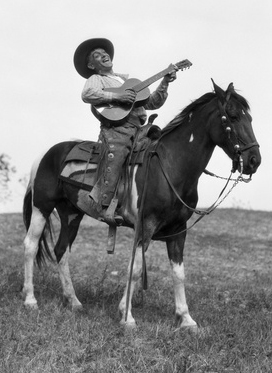
Tex Ritter, photo courtesy of Roy Rogers

“Do not forsake me, oh my Darlin,” on this our wedding day,” who didn’t know the first verse of that song from the radio? A massive hit from the 1952 movie “High Noon,” performed by everybody’s favorite singing cowboy, Tex Ritter.

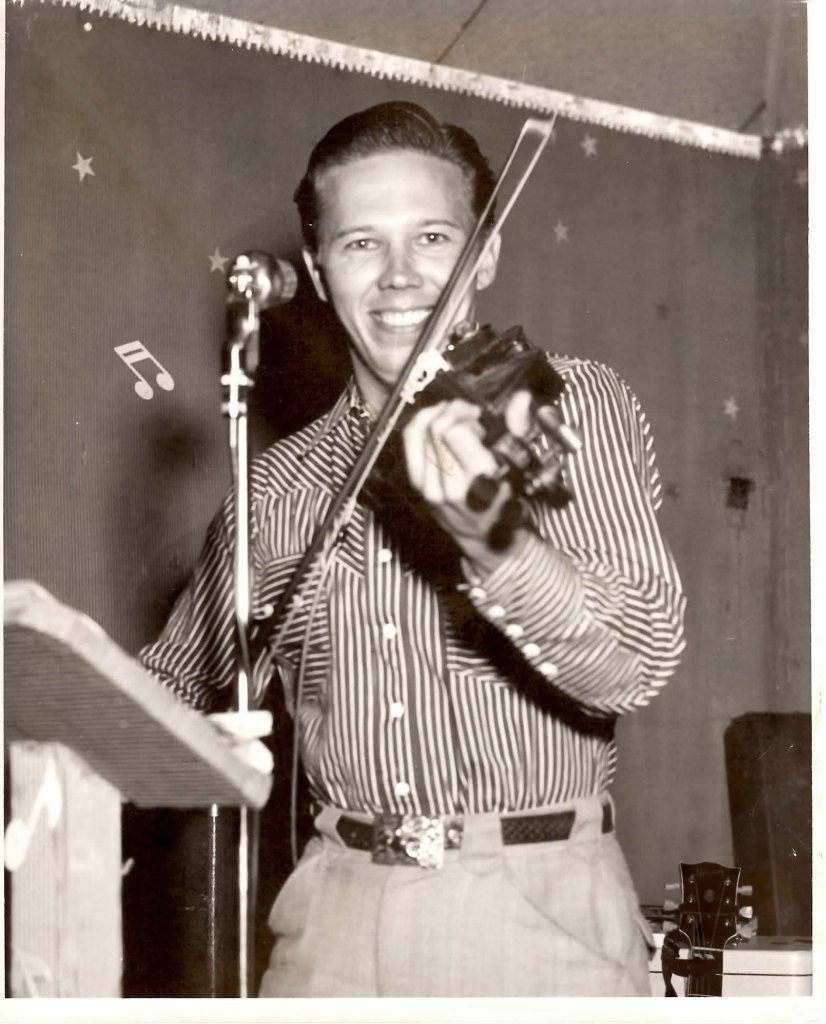
In 1957, I was eight years old, and on some Saturday nights, I got to tag along with my father to the “Cowtown Hoedown,” a popular live country music show performed at the Majestic Theater in downtown Fort Worth, Texas. My father was the fiddle player in the house stage band, so I was somewhat musical royalty, at least for a kid.

Most of the major and minor country stars played Fort Worth and Dallas as much as they did Nashville, and I was fortunate to have seen many of them at this show. One, in particular, made a lasting impression on my young self.

I was sitting on a stool backstage before the show, talking to a few kids; who, like me, got to attend the show with their fathers.

My father came over and asked me to follow him. We walked behind the back curtain and stopped at a stage-level dressing room. There in the doorway stood a big fellow in a sequined cowboy suit and a 30 gallon Stetson. I knew who he was; that is Tex Ritter, the movie star and cowboy singer. My father introduced me, and I shook hands with Tex. I was floored, shocked, and couldn’t speak for a few minutes. What kid gets to meet a singing cowboy movie star in Fort Worth, Texas? I guess that would be me.

Tex asked my name and then told me he had a son the same age as me. We talked baseball and cowboy movies for a bit, then he handed me a one-dollar bill and asked if I would go to the concession stand and buy him a package of Juicy Fruit chewing gum. So I took the buck and took off down the service hallway to the front of the theater. I knew all the shortcuts and hidey holes from my vast exploration of the old theater during the shows.

I knew nothing of the brands and flavors, not being a gum chewer, but the words Juicy Fruit made my mouth water. Not having much money, what change I did get from selling pop bottles went to Bubble Gum Baseball Cards, not fancy chewing gums.

I purchased the pack of gum for five cents. Then, gripping the change tightly in my sweating little hand, I skedaddled back to Tex’s dressing room. He was signing autographs but stopped and thanked me for the favor. He then gave me two quarters for my services and disappeared into his dressing room for a moment. He handed me an autographed 8×10 photograph of him playing the guitar and singing to the doggies when he returned. I was in country and western music heaven. He also gave me a piece of Juicy Fruit, which I popped into my mouth and began chewing, just like Tex.

Juicy Fruit became my favorite gum, and now, whenever I see a pack or smell that distinct aroma as someone is unwrapping a piece, I remember the night I shared a chew with Tex Ritter.
The Journey to Fort Worth: A Story of Hope and Sacrifice


The continuing story of Jesus Got A Mainline
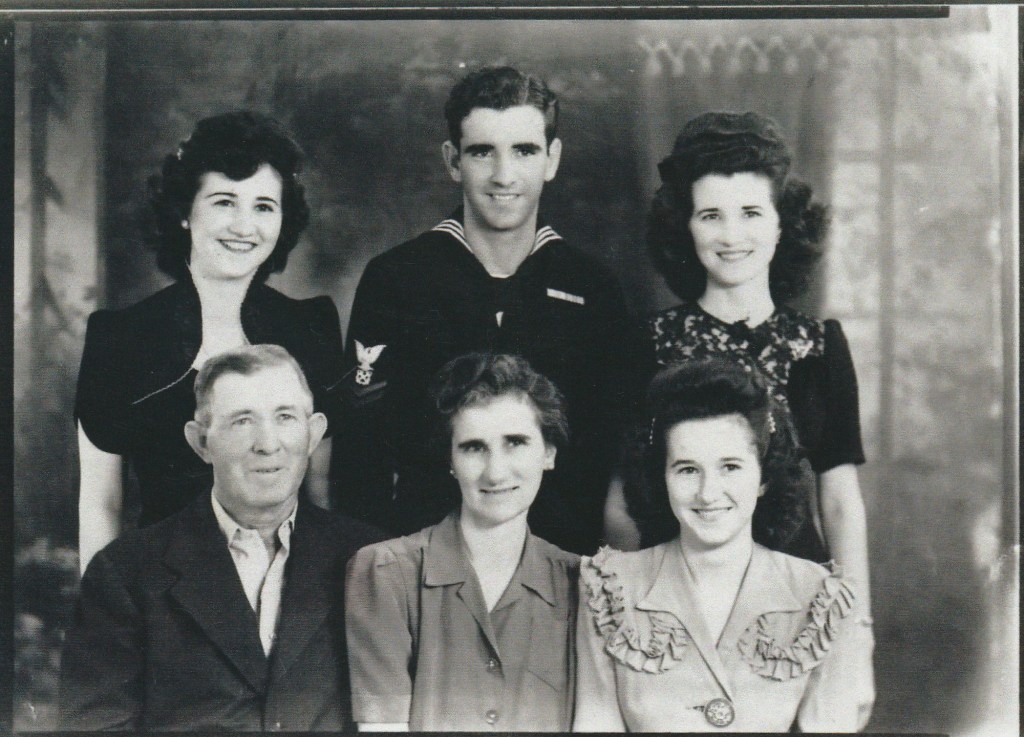
the Manley Family: Front from left, Jasper, Marcy, Lavelle. Standing, from left, Mozelle, Jay, and Catharine

Leaving home to forge a new life can be an exhilarating journey or a regretful mistake, depending on the circumstances of the departure. My mother, Mozelle, saw it as a journey that must be made; there would be no regret or sadness. The days of laboring in the fields and chopping cotton were behind her now. She would never again grip the wooden handle of a hoe.

Her mother’s parting tears left a permanent stain on the shoulder of her best dress. Her father’s apathy and refusal to hold her pierced her heart.

The bus ride to Fort Worth stretched into the night, giving her time to reflect and to shed her tears in the dark.

Sharing an apartment with her sister, Lavelle, she found work at Consolidated Aircraft Corporation, where she built B-24 bombers as part of the war effort. She was now the girl on the famous poster, with her sleeve rolled up and a polka dot headscarf. Her life was all work with little time for a social life.

In a letter from home, her father demanded that she and her sister send him a percentage of their paychecks, as their departure from the farm had forced him to hire labor and change crops that yielded less money. They complied, albeit unwillingly, for the sake of their mother. They learned that the Preacher and his family had come one last time, and with no cotton to pick, returned to San Angelo, where he passed a few months later. His sons carried on the church. She never forgot Preacher and his mainline to Jesus.

Her brother, Jay, wrote frequently to his sisters from his ship in the Pacific theater. He was a gunner on a destroyer and participated in the invasion of Iwo Jima. He was one of my two uncles who were the best liars and spinners of yarns and tall tales, and he passed that treasure on to me.

The front porch of the family farm house was his stage, and I would sit for hours absorbing his tales, some true, some as tall as the oak tree growing in the front yard. Give the man a few Pearl Beers and he could orate as well as Will Rogers. I felt he missed his calling to be a writer or a stage personality. In later years, the stories had darker undertones, and he became a world-class alcoholic who, after two stays in a state hospital, beat the demon and lived a sober life until his passing in a car accident in 1968, a head-on collision caused by, of all things, a drunk driver. She believed the war affected him deeply and led to his drinking problem. Today, we call it PTSD. My mother loved him dearly, and she was the force that convinced and aided him to seek help. His death affected her deeply, and I believe she grieved him for the rest of her life.

As a young girl, my mother wrote poetry and was quite good; she won an award in grade school. Her handwriting was exquisite. She and a fountain pen became one, and a sheet of lined school paper became her canvas.

Reading the great poets of her time and writing her own poems was her idea of a proper education, and she dreamed of one day publishing her own book. There were hundreds of pages of poems, squirreled away in a drawer, for someday. The poems were lost, and so was the day with them.

After the war ended, she and her sister worked on drawing maps. There was more time for a social life, and the two enjoyed dancing, so that led them to nightclubs at Crystal Springs on Lake Worth, Belknap Street, and Jacksboro Highway. She wasn’t looking for a boyfriend or a husband, but was swept off her feet by a good-looking, dynamic young fiddle player in one of the bands. The attraction was immediate and intense, and both of their backs were chock-full of Cupid’s arrows. That nice young man, a native of Fort Worth, a veteran, and recently relocated from Hawaii, would become my father.

Ask A Texan: Wife Tries to Sing Like Willie Nelson


Pretty Good Advice For Folks That Don’t Live In Texas, But Wishing They Did

The Texan

Mr. ET ( Ernest Tom ) Home from Roswell New Mexico sent this Texan a long letter written on a McDonald’s takeout food bag. His wife is attempting to become a country singer and has gone to extremes, and he’s hoping I can help.

ET Home: Mr. Texan, about a month ago, the wife, Willowmina, decided she was going to become a country songstress. Well, that’s all fine and dandy, but the poor gal, bless her heart, sounds like Phyllis Diller when she sings. Both cats have left home and the neighbors are knocking on our door, a lot. She see’s old Willy Nelson on the View and he’s bragging about how he gave Beyonce some of his strongest weed and it turned her into a country singer. Well, that’s all it took. Next day, we drive to Ruidoso and visit the Miss Dolly’s Weed Emporium and Desert Shop. The wife asked the young lady manager what is the best and strongest stuff she has from old Willy. She leads us into a back room, then into a closet and down some secret stairs into another little room. She hands her a small box and says this is the best stuff on planet earth: Willy’s “Hide And Watch” secret stuff. I hear it can be a life changer, and not always in a good way. Well, we take the stuff and go back to Alien city.

She’s been puffing away on that stuff for a while now, and I hear her singing in the shower, and will admit, she is getting better. Then about a week ago, she put her long gray hair in braids, put a bandanna on her head and starts playing songs on our granddaughters Taylor Swift plastic Ukulele. She’s starting to look like old Willy, face stubble and all, and I think I must be losing my marbles. So’s, I calls the daughter, Little Tator, and she drives down from Raton Pass, walks in the house looks at her mother and says, “You ain’t crazy Daddy, that’s Willy Nelson in a Pioneer Woman house robe and Pokemon slippers.” Looking for an answer here.

The Texan: Well, Mr. ET I was at a loss on this one so I called a friend of mine, Dr. Scaramouche at the Fred Mercury Hospital For The Deranged in Queens, NY. He says this derangement is new and becoming more common thanks to entertainers like Taylor Swift and the Kardashian clan. Folks think that by eating, drinking, ingesting things, or dressing like their idols, they can glam off their talent and become a version of them. Willy was right, Beyonce is about as country as Martha Stewart. I would start out by taking away the weed. If that doesn’t change things, you might consider buying a used tour bus and going “On The Road Again.” I hear it can be a lot of fun. Keep in touch, and I am sending her a box of Little Debbie snack cakes.

Fort Worth Legends: A Young Musician’s Rise Under Bob Wills


Chapter 19: The continuing saga of the Strawn family and the challenges of living in Texas during the 1930s and 1940s.
Johnny Strawn around 1948, Fort Wort,h Texas

My grandfather, John Henry, walked to his job at the furniture shop. Years ago, the same place had closed down, driven by the Depression, forcing him to move his family to California for work. Now, twelve years later, he has taken giant steps back, from a good job in Los Angeles to once more building furniture for an hour’s wage. Defeat weighs heavily in his heart. Middle age has come, and the future is murky. So, doing what men do, he keeps walking, counting his steps to nowhere. There are many to blame, but he alone bears the burden of his failures.

The iced ground crunches under his shoes. The cold goes to his bones. His jacket is no match for this weather. He favors the feel of the ground beneath his feet over the Ford sedan in the garage, which is idle most of the time and now a home for mice and other wandering critters.

After the upsetting homecoming with his father, Johnny walked a few blocks to the small neighborhood grocery store to call his best friend, Dick Hickman. His father remained firm in his decision about the telephone, vowing to never have one in the house. The old man viewed the contraption as a rattlesnake in a bag. Lousy news reached him in time enough; no reason to expedite misery.

Two sisters from Germany ran the store, always open, even when the ice storm howled outside. They preferred work to idleness; a dollar was worth more than knitting by the stove. They missed their homeland, but not the darkness that had settled under Hitler’s shadow. Johnny walked in and felt the warmth; they had known him since he was a boy. Following a few hearty hugs and cheek kisses, he was offered a mug of coffee, hot and strong with bourbon and a hint of cinnamon, a taste of what once was.

Dick and Johnny had forged a bond on the playground one morning; Dick was trapped by older boys, their intentions were dark, and Dick knew he was in for a ruckus. Johnny, a full head smaller than Dick, added his small fist for ammunition. A few busted lips and a bloody nose ended the altercation, and the boys would be bound for life by bloody noses and skint knuckles.

Dicks mother, a woman of stern Christian resolve, lived simply, her heart full of faith. Father Hickman was a ghost of a man, suddenly appearing from nowhere, then off again to somewhere. Mother Hickman, as she was called, gave what little extra money they had to Preacher J. Frank Norris, the charismatic leader of the First Baptist Church of Fort Worth. Nice clothes were a luxury during the Depression, and most children at R. Vickery’s school wore hand-me-downs or worse. Dick wore the yellow welfare pants distributed by the Salvation Army, a sign that his folks were poor. Mother Hickman saw nice clothing as a sign of waste, except when it came to her Sunday fashions. Johnny had a pair of those detestable canvas pants but refused to wear them; the old dungarees with patches did just fine.

Both boys felt the weight of loss when the Strawn family left for the promised land. They exchanged a few postcards during the years in California. Nevertheless, they adhered to the unspoken rule that young men did not write to one another. This was a relic of manly notions of the time. A line or two every six months was enough. Both joined the Navy around the same time, meeting briefly in Pearl Harbor. Then came the seriousness of war. Young sailors, they carried on.

Dick arrived at the two sisters’ store to fetch Johnny. His transportation was a rattle-trap Cushman motor scooter. It refused to stop on the icy street. The scooter slid on its side into the curb and threw Dick off of the beast. The ride to Dick’s apartment was a jolt, far worse than the taxi. Johnny vowed to buy a car when the weather cleared, maybe one for his buddy, too. He held a tidy wad of cash from Hawaii.

A brotherly deal was struck. Johnny would share Dick’s large apartment on Galveston Street, splitting the rent and bills evenly. They were friends again, but now men, and they had different thoughts, dreams, and needs. Dick was courting a young woman from Oklahoma and doing a miserable job of it. Still, marriage lingered in the air, heavy like the rich aroma of brewing coffee, the kind they both drank too much of. Dick took his poison with cream and sugar; Johnny preferred his black and strong.

Johnny’s goal was to play music for a living, and this was the right city to make that happen. He joined the musicians’ union and sent a message to Bob Wills that he was back in Fort Worth.

Wills was now the celebrated band leader of the western swing band, The Texas Playboys. He remembered that meeting at the radio show in Bakersfield, California, long ago. The boy stood out. It was no small feat because Wills was the finest fiddle player in country music.

Bob Wills was not a man known for kindness. He could be brash and indifferent to fans and bandmates alike. Yet, for Johnny, he made an exception. Bob took the young man under his wing, becoming a mentor to my father. A few calls were made, and the boot was in the door. Johnny secured auditions at some of Fort Worth’s best clubs, and each went well. Bob invited him to rehearse with the Playboys. It was there he met men who would soon be legends in country music. A few years later, he would find himself in that circle.

Chapter 14: From Homesickness to Harmony


After two months in Hawaii, homesickness crept in. Johnny missed his music and his string band, Blind Faith. His prized fiddle stayed behind, locked away in the hall closet. His father assured him that it would be well cared for.

Norma, his sister, wrote each week; her letters were either sharp with bitterness, primarily toward their mother, or filled with hilarity about life at home. His dog, Lady, lingered in his thoughts, her absence a weight; she is old and might not be alive when he returns.

Once again, in the clutch of her elixirs and perhaps something more potent, his mother continued her assault by missives. Johnny read a few, sensing something wrong. She sounded unsteady, lost. Her words were jagged, and he promised himself no more. He would not carry the burden of the guilt she heaped upon him. Her pen was poison.

A music store sold him a fiddle for ten dollars. The owner was an old Korean man who made a few adjustments, adding new strings and setting the bridge and sound post just right. It did not sound as sweet as his own, but now he had a fiddle, giving him a spring in his step. He needed musicians. His commanding officer, walking by the barrack, heard Johnny practicing. Whenever he had spare time, he sat on a wooden crate under the shade of a Koa tree behind the barracks, entertaining the birds perched in the tree. The officer from the South Texas town of Corpus Christi offered to connect him with musicians he knew. True to his word, two sailors came to Johnny’s Quonset Hut the next day. One was a guitar player named Jerry Elliot, a fellow Texan, and the other was Buzz Burnam, who played the doghouse bass fiddle. Buzz, a Western Swing musician from Albuquerque, knew a few other musicians who might be interested in jamming. They set a practice day and time to meet under the Koa tree. Johnny’s homesickness eased a bit.

A letter from Le’Petite Fromage gave Johnny another lift. She and her husband, Montrose, the trumpet player from Sister Aimee’s orchestra, had a baby child named Savon, an old Cajun family name. They planned to stay in Chigger Bayou, and she would sing in her father’s band if and when he returned from California. Her mother, Big Mamu, said life was better without him underfoot. She had told Johnny many times that girls in the Bayou are expected to be married with a child on each hip by the age of eighteen. Tradition got the best of her. Blind Faith was finished. It was a good run while it lasted.

Sunday was a day for rest, even amid the chaos of war. The sailors moved through the day with light duty on the Sabbath, their shoulders eased, and their spirits lifted after a good dose of religion found in the island’s many churches. After lunch, the two musicians arrived, bringing two more as promised, one bearing a saxophone, the other a snare drum with one cymbal. They played, and the music flowed—Western swing, big band, island tunes. It went on for hours. They were asked to play at the Officers Club in the Royal Hawaiian Hotel a few days later. The pay was meager, but they were musicians, and they knew the worth of their work was in the joy it brought, not the currency it earned.

A letter came from Sister Aimee McPherson. It told Johnny about Blind Jelly Roll. He had been hit by a car. The new seeing-eye dog, following barking directions from the nearly blind Pancho Villa, led them across a busy street. They walked straight into the path of a vehicle. Everyone survived, but Blind Jelly Roll broke his left arm. His hand was crushed under the tires. It seemed unlikely he would ever play the blues again. She would keep him on as the music director and spiritual advisor. She loved that old black man and his ill-tempered Chihuahua deeply.

Sometimes, good luck strikes like lightning hitting the same ground. Johnny felt it. His C.O. asked him to help with the weekly base paper. This led him to work at the Pearl City News when off duty. He became the leading writer. Two sailors he knew were on staff, too. The pay was little, but he saved every cent until he had a decent stack of bills. He rented a lot in downtown. Then, he bought two used cars from an officer. They sat there for sale. The drugstore next door took names for those who inquired, and Johnny made appointments to sell. Two cars turned to three, then five, then ten. Two young Hawaiian boys washed them twice a week. Johnny sat beneath a small canopy that served as his office. He sold cars, saved money, bought more, and eventually acquired the lot and four more on that block. In a year, he owned a few small buildings and all remaining vacant lots—almost an entire city block in east downtown Honolulu. After his Navy discharge, he rented a room in a house owned by the old Korean man who owned the music store. He was taken aback when he met the man’s young granddaughter, who was the same age as him. They both sported arrows in their backs, shot by the mythical fairy, Cupid. Returning to Los Angeles was now out of the question.

California Dreamin’ Chapter 6


New friends, a fresh vocation, and a fine abode for an extended stay. The Strawns couldn’t reckon their good fortune. Were they in the midst of a reverie, or was it a heavenly intervention from on high? My grandmother continued casting glances over her shoulder, half-expecting to glimpse the Guardian Angel who was running this show. Sister Aimee and her mammoth church would require some acclimatization, at least on John Henry’s part.

After the church service, which was more of a Hollywood show than a religious sanctuary, John Henry ambled backstage in search of Blind Jelly Roll Jackson. He rapped on a door marked “orchestra,” but receiving no response, he turned the unlocked knob and proceeded inside. There sat Jelly Roll on a red velvet setee while Sister Aimee fervently laid her hands on his cotton-top head, offering a vigorous prayer of salvation. Pancho Villa stood behind her, firmly attached, growling like a small lion and tugging hard at the bottom of her satin robe. Upon catching sight of John Henry, Sister Aimee hollered,

“Clear out, sinner! Can’t you see I’m rescuing this wretched man’s soul?” John Henry promptly shut the door and made his way back to his family, wanting no part in the strange affairs of that place. This church wasn’t through with him quite yet.

Two weeks into his new job, John Henry felt comfortable enough to open the case of his fiddle. During his time in Texas, he had earned the reputation of a “campfire fiddler,” skilled enough to keep up with any string band in Fort Worth. Nevertheless, this was not the path he aimed to follow. For nearly two years, Young Johnny had shown a deep interest in mastering the art of playing the instrument. The time had come to pass on this skill to the eager young man.

A visit to a local pawn shop produced a fifth-hand fiddle. It wasn’t much of an instrument, but for $5.00, case and bow included, it was good enough for the boy. Johnnie, when given the instrument, almost keeled over from joy. He took the fiddle to his back porch bedroom and began to torment every dog and cat in the neighborhood with his playing, which was more screeching than music.

Miss Angel Halo, a retired high school music teacher, resided a few houses away. She recognized that sound, having heard the screech of strings from her students for most of twenty years. Her Basset Hound, Baby Dog, cowered beneath the back porch while her feline companion, Miss Greta Garbo, made a hasty exit to escape the noise. Miss Halo made her way to the offending house and exchanged pleasantries with the Strawns. Over a cup of coffee, some neighborhood gossip, and a large slice of warm bundt cake, she offered her aid in schooling young Johnnie in the ways of musical notation and the art of the violin; she was a cello player herself. If the boy would mow her grass twice a week, and pull any pesky weeds in her flower beds, she would instruct him in learning the instrument.; no charge. The pact was sealed, and harmony was restored to the neighborhood.

Six weeks into his son’s tutoring, John Henry, not having heard the boy play, was curious if he had learned to play the fiddle. At his teacher’s insistence, Johnnie’s practice sessions were daytime only, and he was confined to the garage, door down, so as not to upset the neighbors.

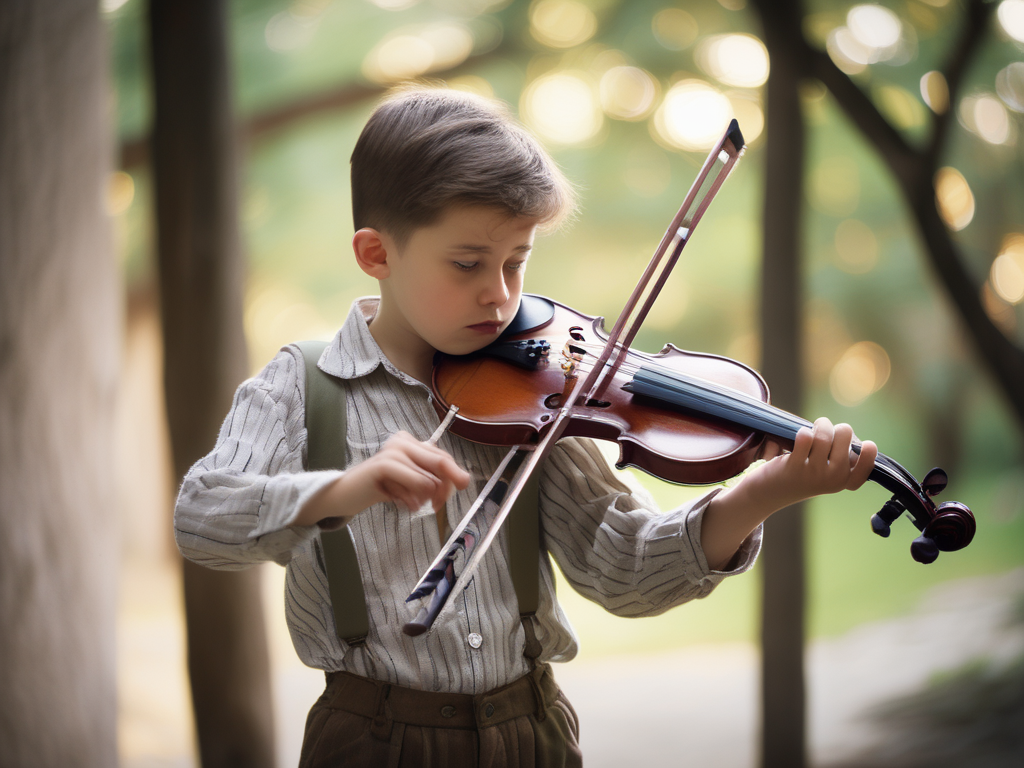
Saturday evening found John Henry on the front porch, nursing a cold beer and coaxing a few tunes from his beloved fiddle. He asked Johnnie to fetch his instrument and join him, and in a swift instant, the boy returned, fiddle in hand, eager to display his skills to his father. To John Henry’s amazement, as he played an Irish jig, his son effortlessly intertwined harmonious notes with his own, giving the old man a partnership in the form of twin fiddles. A father’s pride has no bounds, and he played on, ignoring the tears on his cheek. In time, that instrument and the dreams of a child would take young Johnnie to the pinnacle of country music.

More to come in Chapter 7

https://notesfromthecactuspatch.com/2024/07/28/california-and-the-magical-elixers-chapter-7/

Life In California, Chapter 5


Moving day from the migrant camp fell on a Saturday. There wasn’t much to transport apart from the car and the personal belongings they had brought from Texas. Knowing that John Henry had very little, the landlord had left behind some furniture: a kitchen table, an icebox, two beds, and a well-worn couch. The screened-in back porch extended across the entire width of the house. In one corner, a roll-away bed and a standing lamp stood, and it was there that Johnny made his claim to the porch as his bedroom. Meanwhile, Lady ventured out to explore the expansive backyard, complete with an Eucalyptus tree that was home to a resident squirrel.

My grandmother Bertha had come across newspaper stories about the firebrand woman preacher, ‘Sister Aimee, ‘ holding court at her downtown church. She aimed to grace the Sunday service, eager to unravel the mysteries that had stirred up such a commotion among the camp folks. Ever the agreeable sort, John Henry consented to accompany her and young Johnny, perhaps harboring a hope to cross paths with Blind Jelly Roll Jackson and Pancho Villa.

The faithful congregations formed a line that stretched down the block, twisted around, and continued for another block. It seemed this preacher lady possessed a special magnetism to draw such a crowd. As they reached the doors, they discovered the church was once a theater with a plush red carpet and a winding stairway leading to the balcony. Climbing the stairs, they found seats near the balcony’s edge. With an eagerness to feel the Holy Ghost passing through her, Bertha was in stark contrast to John Henry, who simply yearned for a cup of black coffee and a nap.

The house lights dimmed, and the red velvet stage curtains slowly drew back to reveal an orchestra and a singing choir, all adorned in purple velvet robes. The orchestra boasted horns, a piano, violins, and a drummer, and right up front sat Blind Jelly Roll holding a shiny black guitar. His seeing-eye dog, Pancho Villa, was seated on a chair next to him, wearing a small matching robe. In a moment of confusion, Johnny, unaware of his surroundings, called out Pancho’s name, causing the dog to excitedly tumble off the chair. Jelly, recognizing the voice, offered a warm smile and a friendly wave as he reseated Pancho.

A slender woman with short blonde hair stepped into the center of the stage, enveloped by the spotlight’s glow. She was draped in a white silk robe, and a sizable golden cross hung at her breast, casting a mesmerizing reflection across the congregation. In that divine light, she took on an ethereal quality, almost angelic, as if transported from the pages of a biblical tale.

The singer, whom everyone now recognized as ‘Sister Aimee,’ suddenly turned into a musical whirlwind, belting out a heartfelt religious hymn that could make even the angels jealous. How did this powerful voice project from such a small woman? The orchestra performed as if they were on a mission from above, and the choir sounded so otherworldly that even the congregation wondered if they were in the presence of celestial beings. As tears flowed freely and some brave souls rose to join her in song, Bertha found herself on the verge of a melodramatic meltdown; young Johnny was bored and on the verge of sleeping, while poor John Henry remained steadfast in his pursuit of a good nap. It seemed like the lengthy two hours ahead were shaping into a divine comedy of sorts.

After two more songs just as rousing as the first one, Sister Aimee spoke.

” Dear Hearts, recently, a lost soul came to our church. He had wandered in the wilderness for years. Blind since birth and led by his small seeing-eye dog, he came to me seeking repentance and personal guidance. He is now walking the straight and holy path of our Lord. A formidable blues guitarist and singer, he has agreed to share one of his songs of atonement. Please welcome Blind Jelly Roll Jackson.” The crowd applauded.

A stagehand stationed a large silver microphone before Jelly. The spotlight shone on his hair, white as an East Texas cotton field. He tugged and twisted his guitar through eighteen bars of mournful blues without a moment’s pause. The audience was spellbound, the majority never having encountered a blind black bluesman. Leaning towards the mic, he growled deeply as he sang,

” I gots me a woman, haw-haw-haw-haw, she don’t mean a thang, squeezes my lemon picks my peaches from my trees, gonna go see that gal and get my hambone greased, haw-haw-haw-haw.”

Sister Aimee lunged for the microphone, but a stagehand beat her to it. He grabbed the microphone and carried it away. Jelly Roll was still singing and playing when the stage curtain closed. Blind Jelly Roll Jackson’s official California debut was history.

Don’t touch that dial or turn that computer off; there is more to come in Chapter 6

California Dreamin’ Chapter 6

Back In The Saddle Again


My good friend John Payne was raised in West Texas, and I have, with his permission, used his antics as a teenager to inspire my favorite character, Ferris Ferrier. This story was inspired by John.

Ferris Ferrier lives in Happy Texas. It’s 1958, and he is as happy as a resident can be. He reads an article in the Amarillo newspaper about a movie soon to be filming in Fort Worth, and the company is auditioning for cowboys who can sing and play guitar while riding a horse.

Ferris plays guitar a bit and has some fancy cowboy duds, and his father has Ole’ Rip, the family ranch cutting horse, so he’s convinced he could give this a shot. His parents give him their blessing, and it’s arranged that his cousins Jimmy Jam and Mary Meredith will take him and Ole Rip to the casting call.


Ferris isn’t nervous about the singing and playing but more about Ole’ Rip getting spooked and bucking him off. Ole’ Rip is a working horse used to cattle and his pen, and he’s pretty unpredictable, but he’s the only horse on the farm, so Ole Rip it is.
Jimmy Jam suggests that Ferris and Ole Rip give a practice performance in the upcoming Christmas Parade next week. “Give the folks in Happy a preview of their soon-to-be movie star,” says Jimmy. Ferris agrees, and plans are made for his debut.


On the day of the parade, Mimi Jo Musson, the coordinator, moves Ferris and Ole’ Rip to the front of the show, right behind the baton twirlers.

“Might as well give our new movie star a plug, right?” she said. Ferris is nervous as hell.

Why right in front of the high school band? Ole’ Rip is bound to have a meltdown once that loud music starts. He explains to Mimi Jo the scenario that will likely happen.

Mimi Jo says, “It will be fine; all horses love music.”


At noon, the parade is lined up in the alley between the Prairie Bank and the Big Biscuit Café. Baton twirlers, Ferris and Rip, the drum major and high school band, and six floats, followed by a stagecoach driven by Gabby Roy Parnell, where Santa Claus rides and throws candy to the children.


Ferris is freaking out. His throat is dry as sand, he has to pee, and Ole’ Rip cuts one fart after the other, a sure sign he is unhappy. As the parade turns the corner from the alley onto the main street, Ferris starts to play and sing, and Ole’ Rip is doing fine. Then, the drums start, the band kicks into Jingle Bells, and Ole Rip loses it. It is the first time Ferris has seen him rear up on his back legs like Trigger, and is, for a moment, impressed…until the horse makes a hard right turn and runs into Miss Honey’s Beauty Parlor.

As Ferris and Rip enter the business, Ferris hits his forehead on the top door jamb and spews blood like a fountain. Ole Rip manages to demolish half the parlor before turning around and heading out the front door. They travel a few stores down, running parade watchers off the sidewalk.

The next stop, Western Auto and Rip, is doing a similar demo job on the best store in town. Ferris is bleeding, his guitar is smashed, and the saddle is beginning to slide sideways. As they exit Western Auto, there are three vacant lots until you reach Bramwell’s Feed Store. Ole’ Rip, smelling horse feed, picks up speed and heads for the feed store lot.

As they enter the lot, Rip is smelling oats and makes a beeline for the warehouse, where he abruptly stops in front of an open bin and proceeds to chow down.

The saddle slips sideways, and Ferris is on the ground.

He is a sorry sight, with a bloody face, torn clothes, and his precious Harmony acoustic guitar smashed to kindling, and then Margie Lou, his secret crush, shows up. She is so excited she can barely speak.

” Good God, Ferris, I have never seen a demonstration of horsemanship like that in my whole life, and I’m a rodeo queen. That was fabulous and sensational,” she screams. Ferris picks himself up and thanks Margie Lou.


She adds, ” and next week you are going to audition for that movie, you should be so excited.”

Ferris says, “You know Margie Lou, I think I’ll do my guitar playing on the ground from now on. Who knows, in a few years, I might start a band. By the way, that’s a good idea for a name, The Fabulous Sensations, and I’ll keep that in mind.”

It’s 2009, And We Are In The Studio, Again!


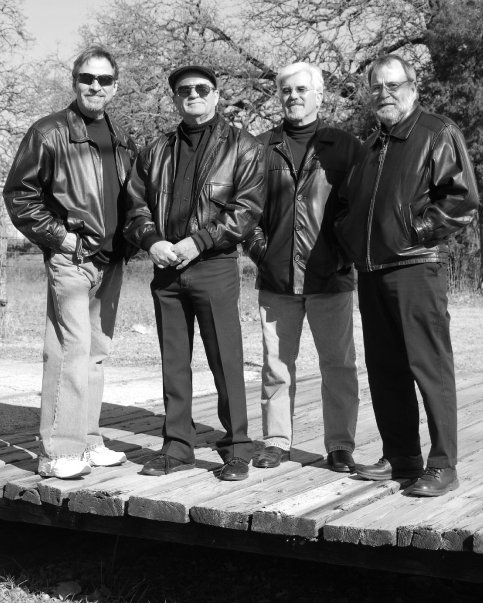
The American Classics Band, 2009

The American Classics Band

Track 4 covers Jerry Jeff Walker’s “Navajo Rug.” I’m new to SoundCloud, so I cut off our heads in the pictures. Why do these apps make it so darn hard to move anything over? WordPress won’t allow WMV files, so I had to upload the tunes to SoundCloud, which converted it to an MP3.

Track 1, “For What It’s Worth,” is our cover of Buffalo Springfield’s song about the riots on the Sunset Strip in 1967. The CD was cut at Wavelight Studios in Haltom City, north of Fort Worth. Larry Dylan was the sound engineer and owner of the studio.

Danny and I, back in 67-69, played together in “The Orphans” and “The A.T.N.T.,” which I posted our record a few weeks ago. John Payne played with the “Fabulous Sensations” out of Lubbock, Texas. He also got to sit down and visit with Buddy Holley’s parents in Buddy’s childhood home, so he has been close to musical royalty. Jordan Welch played with The Coachmen, another great popular band in the DFW area, back in the 1960s.

If you haven’t noticed, I discovered background colors today, so bear with the experimentation. It doesn’t take much to entertain me these days.

Sharing A Piece Of Juicy Fruit With Tex Ritter


Tex Ritter, photo courtesy of Roy Rogers

“Do not forsake me, oh my Darlin,” on this our wedding day,” who didn’t know the first verse of that song from the radio? A massive hit from the 1952 movie “High Noon,” performed by everybody’s favorite singing cowboy, Tex Ritter.

In 1957, I was eight years old, and on some Saturday nights, I got to tag along with my father to the “Cowtown Hoedown,” a popular live country music show performed at the Majestic Theater in downtown Fort Worth, Texas. My father was the fiddle player in the house stage band, so I was somewhat musical royalty, at least for a kid.

Most of the major and minor country stars played Fort Worth and Dallas as much as they did Nashville, and I was fortunate to have seen many of them at this show. One, in particular, made a lasting impression on my young self.

I was sitting on a stool backstage before the show, talking to a few kids; who, like me, got to attend the show with their fathers.

My father came over and asked me to follow him. We walked behind the back curtain and stopped at a stage-level dressing room. There in the doorway stood a big fellow in a sequined cowboy suit and a 30 gallon Stetson. I knew who he was; that is Tex Ritter, the movie star and cowboy singer. My father introduced me, and I shook hands with Tex. I was floored, shocked, and couldn’t speak for a few minutes. What kid gets to meet a singing cowboy movie star in Fort Worth, Texas? I guess that would be me.

Tex asked my name and then told me he had a son the same age as me. We talked baseball and cowboy movies for a bit, then he handed me a one-dollar bill and asked if I would go to the concession stand and buy him a package of Juicy Fruit chewing gum. So I took the buck and took off down the service hallway to the front of the theater. I knew all the shortcuts and hidey holes from my vast exploration of the old theater during the shows.

I knew nothing of the brands and flavors, not being a gum chewer, but the words Juicy Fruit made my mouth water. Not having much money, what change I did get from selling pop bottles went to Bubble Gum Baseball Cards, not fancy chewing gums.

I purchased the pack of gum for five cents. Then, gripping the change tightly in my sweating little hand, I skedaddled back to Tex’s dressing room. He was signing autographs but stopped and thanked me for the favor. He then gave me two quarters for my services and disappeared into his dressing room for a moment. He handed me an autographed 8×10 photograph of him playing the guitar and singing to the doggies when he returned. I was in country and western music heaven. He also gave me a piece of Juicy Fruit, which I popped into my mouth and began chewing, just like Tex.

Juicy Fruit became my favorite gum, and now, whenever I see a pack or smell that distinct aroma as someone is unwrapping a piece, I remember the night I shared a chew with Tex Ritter.