Repost From PowerPop…An Eclectic Collection of Pop Culture


The A.T.N.T. Cobblestone Street

A friend of mine in the blogverse is a music historian. Max Gower has a blog on WordPress called PowerPop An Eclectic Collection of Pop Culture. Max and me have been trading emails and post for over two years and I greatly enjoy his side trips into the 60s music scene covering bands that maybe weren’t all that well known. Max has been writing about Texas rock music for a while now and found a few old interviews I gave many moons ago. I appreciate the shout out and hope you all enjoy his post as much as I do. Thanks again, Max.

A few weeks ago I posted about Mouse and the Traps, a Texas band formed in the 1960s. I thought my fellow blogger friend Phil from Notes from the Cactus Patch may have known them. He did…. so I thought…I would like to write about Phil’s 1960s band. I first heard of Phil from Hanspostcard… he sent me THIS link to Phil’s post about meeting John Sebastian in Texas in the sixties along with the other Lovin Spoonful. He also briefly met Janis Joplin when she cut the food line at the Texas International Pop Festival.  ” I survived one-hundred-degree temperatures for three days and got to meet Janis Joplin one late night when this nice gal with a Texas twang asked me if she could cut in line as I was waiting to buy a hot dog. It took a minute for me to realize it was her, but I was cool; it was the sixties, man. That night, ole Janis “took a little piece of my heart, now baby.”

I’m get most of the info from this post. I urge you to read that because he tells a more complete story.  Phil’s Dad, Johnny Strawn played with the Light Crust Doughboys so Phil was surrounded by music when he grew up. He went through a few bands on the way. He formed his first band in 1964 and they were called The Dolphins and in late 65 they became The Orphans. The Orphans lasted until 1967 and the members were Johnny Strawn, vocals and lead guitar –  Jarry Davis, vocals and rhythm guitar-  Danny Goode, lead vocals and bass –  Marshall Sartain, vocals and keyboards- Barry Corbett, drums and vocals.

The music they played was all over the place and everything that kept people on the dance floor.  The music they played was Soul Music, Beatles, Bee Gees, Rascals, Hendrix, Doors, Steppenwolf, Cream, Stones, Vanilla Fudge, and Jefferson Airplane.  They played all over Texas and parts of Oklahoma…and some of the clubs he mentioned were The Studio Club, LuAnn’s, Strawberry Fields, Phantasmagoria, The Cellar, The Box, and more. This was when three of the band were still in high school. 

Phil Strawn:  We used to do a lot of double bills at The Studio Club and LuAnn’s; that was a big thing back then. I remember playing a lot of them with Southwest F.O.B. We were playing at LuAnn’s one weekend when during the Jimi Hendrix song Fire, our drummer put lighter fluid on his cymbals, lit his drum sticks, then hit the cymbals and ignited them. It got a little out of hand and it burned up his drums. That kind of stuff wouldn’t fly nowadays, but back then, we didn’t think of the repercussions. The crowd loved it, sort of like The Who, only with real fire and smoke. Miss Lou Ann was not pleased and banned us from the club for about six months. We eventually worked our way back into her good graces. Ron Chapman the famous DJ on KLIF and KVIL remembered us as the band that nearly burned down LuAnn’s. Some legacy.

They met a guy named Mark Lee who became their manager. After they signed with him their gigs increased. They even opened up for Iron Butterfly at a place called Strawberry Fields. The Orphans committed a cardinal sin by learning an Iron Butterfly song called Possession and nailed it while opening for Iron Butterfly. Lee put them up to it because he knew it would get under Iron Butterfly’s skin…and it did! They ended up swiping Phil’s Vox Wah Wah pedal and a velvet Nehru suit from their drummer. 

In 1968 they had to change their name. The drummer, Barry Corbett, had a friend, Jerry Deaton who wanted to manage them but they were happy with Mark Lee. The guy went out and had “The Orphans” copyrighted and told the band he would sue them if they continued so they changed their name. Phil said: “We liked ATNT {Alice talks “n” talks} and Jerry’s mother was the inspiration for that name. Later, we found out that he had managed another band called the Orphans for a while, so that was the reason for all the drama. He copyrighted the name so we had to change.”

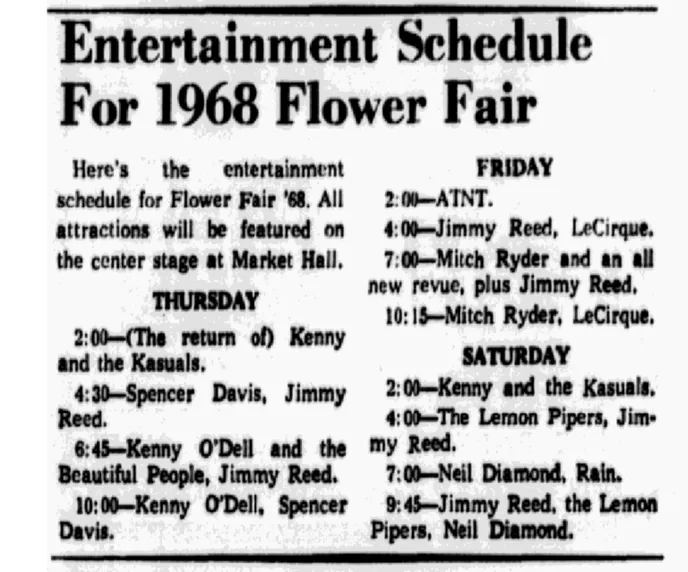
Check out this 1968 Flower Fair entertainment. ATNT played and look at the other artists as well. Spencer Davis, Jimmy Reed, Mitch Ryder, The Lemon Pipers, and Neil Diamond. The Doors were going to play but they had scheduling conflicts. 

ATNT Scedule

In 1966 they recorded a song that Phil wrote called “Leader of My Mind” which was a Byrds-type song with harmonica but no one can find any copies. In 1968 they recorded two songs called “No One Told Me About Her” with the flipside Cobblestone Street. 

They also did a couple of appearances on Mark Stevens TV Show which they lipsynced to their songs. Phil quit in the late sixties because of a disagreement with the rhythm guitar player. He had to make a choice and his final exams were coming up and Phil decided to study rather than just practice with the band. 

After that, Phil said he didn’t play much until around 1974 when he started to play in the progressive country music scene in Austin and Dallas. I played with various people around town and some in south Texas and did some pick-up and studio work. I joined the Trinity River Band in late ’79 and played with them until ’85. I also played with The Light Crust Doughboys from time to time and did some studio work on the five-string banjo. I was fortunate to play on the Light Crust Doughboys album, ” One Hundred-Fifty Years of Texas Music.” 

The A.T.N.T. Discogs page. 

Phil StrawnThe A side is “Cobblestone Street,” written and sung by myself and our drummer Barry Corbett. The B side is ” No One Told Me About Her,” written and sung by our lead singer and bass player, Danny Goode. The two producers, Marvin Montgomery and Artie Glenn, suggested we add horns to get a Chicago Transit Authority sound. Before the brass was added, Cobblestone Street was loud and raw with loud guitars and organs. After adding the horns, we returned to the studio and tweaked the cuts. I purposely untuned my Gibson 335 a bit to give the guitar break a bit of an out-of-tune carnival sound. Marvin, who went by the name of Smokey, was a member of the Light Crust Doughboys since the 1930s and played with Bob Wills. He produced Paul and Paula and Delbert McClinton. Artie Glenn wrote the famous Elvis hit “Crying In The Chapel” and many others; he was also a Light Crust Doughboy western swing musician. These two men were top-shelf record producers, so we listened when they suggested

Phil Strawn: It was absolutely the best time of my life. How could you not enjoy being a teenager in the ’60s and playing in a popular rock band? The people we met and played with, the experience that we will all carry with us the rest of our lives. It was just a part of life that helped shape us into what we are now – being part of that change in our country, that decade. It was a time of turmoil, but it was also the last year of the innocence we grew up with. Teenagers these days are so hardened. The music then was happy and said a lot. It would move you, whether you played it or danced to it. The music now has a meaner, harder edge, and reflects the times we live in.

Phil Strawn: I am a project manager in commercial construction, and do a lot of painting and artwork – mostly Texas art. After 35 years, Danny Goode, who I played with in ATNT and the Orphans, called me and asked me to be part of their group, The American Classics. I joined them about two years ago and that’s what we do nowadays. The band consists of Danny Goode, bass and lead vocals; John Payne, lead guitar and keyboards; Jordan Welch, drums; and me on rhythm guitar and vocals. We play about once a month or so around Dallas Fort Worth, mostly private parties. We recently played in Deep Ellum, and will probably be back down there soon. We stick to mostly ’60s music – it’s what we know well. It’s good to still be playing rock music at this age. You really never outgrow it.

I love the horns in this song but I would also love to hear what it sounded like with loud guitars as well. 

Advertisements

Report this ad

Share this:

Related

Janis Joplin…The First Female Rock StarMarch 25, 2023In “Music”

Janis JoplinMay 2, 2018In “Bands”

Janis Joplin – Ball and ChainMarch 31, 2022In “1960s”

Author: Badfinger (Max)

Power Pop fan, Baseball, Beatles, old movies, and tv show fan. Also anything to do with pop culture in the 60s and 70s… I’m also a songwriter, bass and guitar player. View all posts by Badfinger (Max)AuthorBadfinger (Max)Posted onCategories1960sBandsGarageMusicSinglesTagsA.T.N.T.Cobblestone StreetPhil Strawn

39 thoughts on “A.T.N.T. – Cobblestone Street”

  1. Pingback: A.T.N.T. – Cobblestone Street – MobsterTiger
  2. Carl Benson, Jr.says:What a ‘bill’ that was! I would’ve gone to see Mitch Ryder & his band & Neil Diamond.Liked by 2 peopleReply
    1. Badfinger (Max)says:It does sound like a great one. That was the time to grow up for music…LikeReply
      1. Carl Benson, Jr.says:Ya’, I was 4 years old then or going on 4 but I have always loved that era of ‘Pop’ music. I love that debate on what decade was the best & the 60’s are up there…I think the 80’s myself, but I’m biased lol.Liked by 1 person
      2. Badfinger (Max)says:I was weird Carl…I grew up in the 80s….turned 13 in 1980…I didn’t like the synth stuff and the fake drums….they still drive me up the wall… I was mostly listening to the 60s during the 80s….Now…thats not to say that I don’t like many songs from the 80s….I liked the Heartland Rockers like Mellencamp, Springsteen, Petty, and others…along with The Replacements, REM and Prince….in other words…bands and artists with guitars!Liked by 1 person
      3. Carl Benson, Jr.says:Awesome…I think that I mentioned before that when I was a kid my Dad was in the music business when after we moved to Ft. Wayne in ’67 & my little brother was born later in that year. Both of my parents were college graduates from ’63 & ’64 so they were hip parents. They put a radio & a television in my brother & I’s room (bunk beds) so we could chose what we wanted to watch & hear. He had a television show on what became the PBS station which was a 1-hour music show (R&B) & he & a fraternity brother owned a nightclub & were managing groups. So I got to hear a lot of R&B as a young kid & meet some of those folks who did his show. But, I always had an earl for ‘Pop’ music & when we moved to Idaho in ’74 my buddies were into the other side of ‘Pop’ & of course guitar based ‘Rock & Roll’. I graduated from high school in ’82 & had been listening to a lot of 60’s music (& funk) my jr. & sr. years & then I got the bug for synthetic dance ‘New Wave’ music. Thompson Twins, The Human League, The Talking Heads, The Tom Tom Club, The B-52’s etc., I was always a ‘Minneapolis Sound’ dude. I always heard from my musician friends that they hated ‘Tech’ back then with the electronic drums & stuff & I can appreciate that Max. I generally loved the ‘Moog’ sound then…I was into dancing back then.Liked by 1 person
      4. Badfinger (Max)says:See I liked The Talking Heads and The B-52s…so there were a few I liked…yea the Minnesota sound was huge…Prince, The Replacements and others came out of there.
        Also Carl…it’s normal for teens to like the era they grow up in….so like I said…I was wierd…I liked the timeless sound.
        You grew up in the perfect time Carl! You got to experience the best of the 60s – 80s in real time! Plus your parents sound great dude.Liked by 1 person
      5. Carl Benson, Jr.says:Ya’, I remember that they had ‘hippie’ friends that were white folks before we moved to Idaho when I was 10 in ’74. My little brother & I had an unusual childhood for a couple of black kids in our era Max. That’s why my musical tastes are so eclectic Max.Liked by 2 people
      6. Badfinger (Max)says:And that is a great thing Carl! I think it’s rewarding to be eclectic.Liked by 2 people
      7. Carl Benson, Jr.says:Dig it Max…you too…sometimes it is…lol.Liked by 1 person
  3. newepicauthorsays:One of your longer posts Max and I thought it was interesting learning about this obscure group.Liked by 1 personReply
    1. Badfinger (Max)says:Yes I usually don’t go this long but Phil was in some interesting spots and bands. He knew a lot of those Texas bands that did have some hits…plus I was in one of those local bands two decades later…heck…may do mine one day!Liked by 1 personReply
  4. glyn40wiltonsays:Light Crust Doughboys was a great name for a band. I liked the list of the groups they played songs of in their set.Liked by 1 personReply
    1. Badfinger (Max)says:Thanks Glyn…they were a country band legend.Liked by 1 personReply
  5. Davesays:Great post Max! It’s so cool that one of our online friends has such a great musical history. I’ve heard that ‘Cobblestone Street’ before…it’s very ’60s but very agreeable. Sounds very British Invasion to me, I wouldn’t have pegged it as being from Texas. Phil makes a good point about how rock, and teens, then were so much more optimistic than nowadays.
    Phil, good job and if you have the b-side, hope you let us hear it!Liked by 2 peopleReply
    1. Badfinger (Max)says:I loved when they opened for Iron Butterfly and then played one of their songs! LOL. That takes guts and I’m glad they did it.LikeReply
    2. obbversesays:Agree with all you say here Dave. And I really do believe for a lot of the kids teen years (these days) are more a journey of joy and learning than a rite of passage.Liked by 1 personReply
    3. obbversesays:Sorry Dave, less joy, more passage! Doh! (Note to self; Proof read, O.)Liked by 1 personReply
  6. randydafoesays:Well I knew a bit of Phil’s musical past and this post is a great enhancement. I agree with Dave on that British Invasion sound for sure.Liked by 1 personReply
    1. Badfinger (Max)says:I played 2 decades later but I can relate to this…I mean every successful band usually starts out like this…sometimes it just works out but most of the time it doesn’t as far as the big time….but it keeps music alive in communities across the globe with local bands….yes it’s very sixties.Liked by 1 personReply
      1. randydafoesays:Yes I am sure this is very close to home for you. I probably mentioned by oldest brother is a bass player and while he did play with some recording artists he never ended up on one himself. He has played in bands for over 50 years and still does, but he does it for himself, because he loves it. So these stories are in some ways a vicarious look that scene.Liked by 1 person
      2. Badfinger (Max)says:I tell people…once you learn music you keep it for the rest of your life. You don’t have to be famous…but no one can take it away from you. The only recording artist I played on the same bill with? The Royal Guardsman in the late 80s early 90s…lol…but hey it still counts! Our claim to fame was outdrawing Richard Sterban (singer for the Oak Ridge Boys) at a theater….we played a week later….lol.Liked by 2 people
      3. randydafoesays:Hey you take what you can get Max!Liked by 2 people
      4. obbversesays:Max mentioning the Royal Guardsmen- Christmas and ‘Snoopy’s Christmas’ must be on the horizon!Liked by 1 person
      5. Badfinger (Max)says:It’s gotta be! I never thought of posting that one…but I must now.Liked by 1 person
  7. obbversesays:Love these ‘I was there’ bits of history. Phil sure got around, and what a great decade to grow up in. And as for Phil- letting Janis grab what should have been his hot dog, rubbing shoulders with John S, rubbing Mike Love the wrong way- great stories.Liked by 1 personReply
    1. Badfinger (Max)says:Yes they are… I can’t imagine meeting those people especially Janis…he said she was really tiny in person…
      Opening up for Iron Butterfly…pretty cool and having your wah wah pedal stolen by their crew…not cool!Liked by 1 personReply
      1. obbversesays:Well, with Iron Butterfly, they weren’t exactly your easy-going peace love and pass the reefer 60s band, or so I’d imagine, going by their sound. (PS, I’ll be mentioning ‘Snoopy’s Christmas’ in an upcoming musically related post soon. Music and Christmas carols based? Yes. Harmonious and in the best spirit of Christmas? Nooooo.)Liked by 1 person
      2. Badfinger (Max)says:Cool… I will soon echo Snoopy…
        I would not expect any other from you…I would be quite dissapointed if you showed too much cheer…obbverse sellout? Never.Liked by 1 person
  8. cincinnatibabyheadsays:I’ll echo Dave and say “Great post”. Phil covers a lot of territory (He’s from Texas. Makes sense). I’m sure I could spend an evening hanging with Phil and be entertained on a lot of levels. Lots I like, his sense of humor not the least. Enjoying the listen. Blue ribbon post Max and PhilLiked by 1 personReply
    1. Badfinger (Max)says:Thanks CB…it’s much longer than I wanted but to get everything in it had to be. Hanging out with Phil for a while would be really cool.Liked by 1 personReply
  9. Christian’s Music Musingssays:It sounds like Phil Strawn has met many interesting artists and has some intriguing stories to tell. “The Cobblestone Stone Street” is a great song. Perhaps not surprisingly, I had never heard of A.T.N.T. before.Liked by 1 personReply
    1. Badfinger (Max)says:Yea…Phil has some great stories… his story about meeting the Lovin Spoonful is great…and opening up for Iron Butterfly was really cool as well.Liked by 1 personReply
  10. Phil Strawnsays:Max, thank you for the great write up and kind words. It does my old heart good to hear from so many of your followers that dig the 60s sound. I happened to be in the right place at that time and it all fell into place. My friend, Danny Goode who I played with back in the 60s and again in the 2000s lives in Granbury too. We hung up the axes in 2019 after a 19-year run with The American Classics Band, doing much of the same music we played back in “the day.” Thanks again, Max.Liked by 2 peopleReply
    1. Badfinger (Max)says:Phil, I just hope I got it mostly right for you. I want to thank you for letting me do it. I had a good time writing it. We might not have been in huge bands that had a lot of hits, but we entertained a lot of people and that is what matters plus the the adventures we got out of it. Thanks again, Phil.Liked by you and 1 other personReply
      1. Phil Strawnsays:You are welcome kind sir. We all have to admit that after doing live shows for a while, it brings out the hambone in all of us. I can’t recall a time that I was nervous onstage except the time my Fender amp blew a fuse and I didn’t have a spare, now that was scary.Liked by 1 person
      2. Badfinger (Max)says:I wasn’t nervous either except for my first gig but it went away quickly. THAT would be scary. Our lead guitar player’s amp went out so I plugged him into mine and we shared…not a great sound…but the show went on.Like
  11. Nancy Homlitassays:Your music bio of Phil Strawn was a thoroughly enjoyable read, Max. Of course, I’m partial to 60’s music and can appreciate how good “Cobblestone Street” is compared to other songs in that genre. You did a good job making Phil appear to be a focused and serious musician. We both know he’s a crazy fun-loving hoot! 🙂LikeReply
  12. Aphoristicalsays:I like the Iron Butterfly story!Liked by 1 personReply

Leave a comment

Post navigation

PreviousPrevious post:Big Star – You Get What You Deserve

NextNext post:Art Bergmann – Bound for Vegas

Advertisements

Report this ad

All Posts

Search for:Search

Archives

Archives  Select Month   December 2024  (4)   November 2024  (41)   October 2024  (37)   September 2024  (17)   August 2024  (43)   July 2024  (37)   June 2024  (26)   May 2024  (43)   April 2024  (42)   March 2024  (34)   February 2024  (41)   January 2024  (45)   December 2023  (58)   November 2023  (34)   October 2023  (53)   September 2023  (45)   August 2023  (44)   July 2023  (46)   June 2023  (41)   May 2023  (40)   April 2023  (17)   March 2023  (44)   February 2023  (37)   January 2023  (41)   December 2022  (53)   November 2022  (44)   October 2022  (46)   September 2022  (38)   August 2022  (2)   July 2022  (33)   June 2022  (51)   May 2022  (56)   April 2022  (55)   March 2022  (45)   February 2022  (41)   January 2022  (45)   December 2021  (50)   November 2021  (42)   October 2021  (40)   September 2021  (41)   August 2021  (42)   July 2021  (44)   June 2021  (41)   May 2021  (44)   April 2021  (41)   March 2021  (42)   February 2021  (36)   January 2021  (44)   December 2020  (50)   November 2020  (47)   October 2020  (59)   September 2020  (52)   August 2020  (50)   July 2020  (59)   June 2020  (48)   May 2020  (76)   April 2020  (70)   March 2020  (60)   February 2020  (55)   January 2020  (58)   December 2019  (66)   November 2019  (61)   October 2019  (64)   September 2019  (62)   August 2019  (60)   July 2019  (44)   June 2019  (43)   May 2019  (43)   April 2019  (56)   March 2019  (73)   February 2019  (77)   January 2019  (81)   December 2018  (81)   November 2018  (65)   October 2018  (69)   September 2018  (43)   August 2018  (29)   July 2018  (27)   June 2018  (22)   May 2018  (22)   April 2018  (3)   March 2018  (1)   February 2018  (2)   January 2018  (9)   December 2017  (1)   November 2017  (3)   October 2017  (7)   September 2017  (4) 

Recent Posts

Advertisements

Report this ad

PowerPop… An Eclectic Collection of Pop Culture Blog at WordPress.com.
It’s 1968, And We Are In A Recording Studio


By request, I am again publishing this post, including my 1968 recording of the band I was part of, The A.T.N.T.; formally, we were the Orphans but changed our name at the suggestion of Mark Lee Productions, our manager. Enjoy.

The year was 1968, and the rock band I played in, The A.T.N.T., recorded a 45 at Summit Sounds in Dallas, Texas. The band had been called The Orphans, but a copywriting dispute resulted in a name change. Our then-manager, Mark Lee Productions, wasn’t keen on the idea because we had been under his management and promotion for a year.

The A side is “Cobblestone Street,” written and sung by myself and our drummer Barry Corbett. The B side is ” No One Told Me About Her,” written and sung by our lead singer and bass player, Danny Goode. The two producers, Marvin Montgomery and Artie Glenn, suggested we add horns to get a Chicago Transit Authority sound. Before the brass was added, Cobblestone Street was loud and raw with loud guitars and organs. After adding the horns, we returned to the studio and tweaked the cuts. I purposely untuned my Gibson 335 a bit to give the guitar break a bit of an out-of-tune carnival sound. Marvin, who went by the name of Smokey, was a member of the Light Crust Doughboys since the 1930s and played with Bob Wills. He produced Paul and Paula and Delbert McClinton. Artie Glenn wrote the famous Elvis hit “Crying In The Chapel” and many others; he was also a Light Crust Doughboy western swing musician. These two men were top-shelf record producers, so we listened when they suggested.

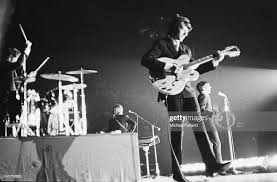
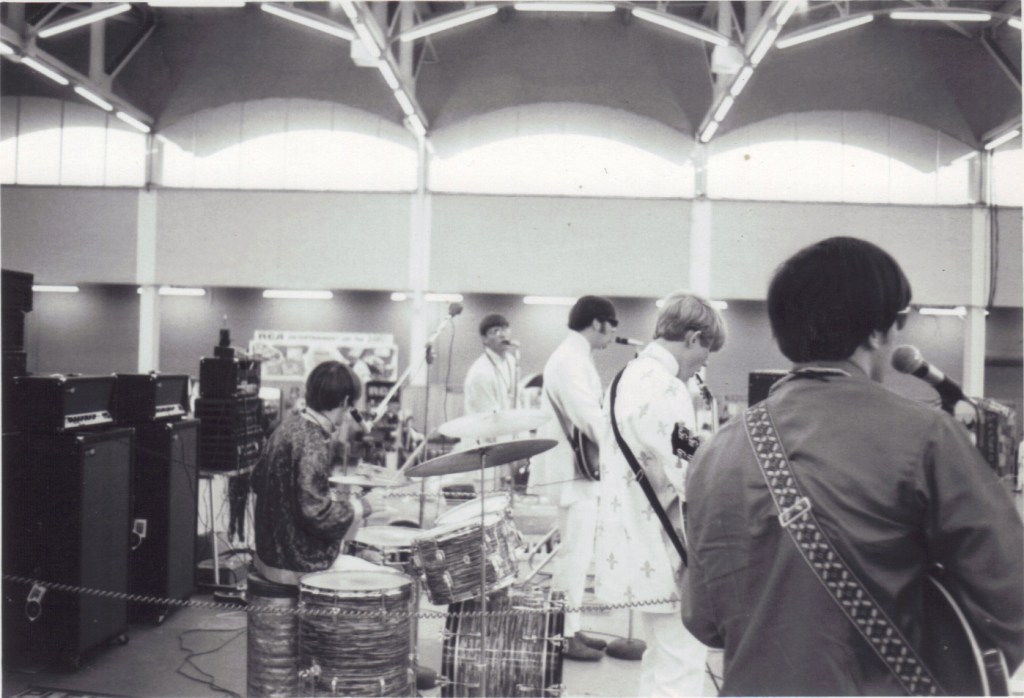
The A.T.N.T. at Flower Fair 1968

Our band members in the above picture are: foreground right John P. Strawn ( me ), then Jarry Davis on rhythm guitar, Barry Corbett on drums, Danny Goode on bass, and Marshall Sartin on keyboards. Barry and Marshall have passed on, but Danny, Jarry, myself, and our wives met for lunch a few weeks back in Fort Worth. It’s obvious why we all have severe hearing loss from the large amplifiers turned up to 11.

We introduced the songs at Flower Fair 1968 but without the horns. The Doors were supposed to play the event, but last-minute scheduling got sideways, and they couldn’t make it. This was the Spencer Davis Group without Steve Wynwood in the band. LeCirque ( The Smell Of Incense Fills The Air ) was formally known as The Southwest F.O.B. with members England Dan and John Ford Coley, who would later go on to fame as a duo, both local Texas boys. Kenny and the Kasuals were also a local group managed by Mark Lee.

The record received good airplay, but we never made much money. Distribution was the key, although the local radio personalities gave it positive chatter. Hope you enjoy the tunes.

Oddities In The Cactus Patch


Things That Can Only Happen In Texas

Pictured at the Larado Railway Station, circa 1958, is my father’s uncles, brothers 15th cousin seven times removed, Little Tex Twitter, with his good buddy from across the border, Teenie Lopez, not to be confused with his older brother, Trini ( If I Had A Hammer) Lopez, a famous pop musician out of Dallas, Texas. Before Tex took him under his armpit, Teenie had been a tire scrubber at the “La Bamba Car Wash And Strip Club” in Nuevo Laredo. Cheech Chong, owner of the business, said that Teenie never missed a day of work but was a “little” late occasionally. Tex, seeing a possible Hollywood connection and possibly a movie or two, convinced Teenie to hit the road with him and his pet Coyote, Wiley. Tex had been on the rodeo circuit for a decade doing rope tricks and wrestling doggies; he had a new act planned for Teenie.

A small saddle was made to fit Wiley, and Teenie would ride the Coyote around the arena wearing a mariachi suit, singing and playing a small guitar. The act lasted only a few weeks when Wiley, doing what Coyotes do best, spotted a Roadrunner darting across the rodeo arena and gave pursuit, which ended in tragedy when Wiley and Teenie, in the heat of the chase, ran into the bullpen and were “hammered flat as a tortilla. “

Tex sent Teenie’s older brother, Trini, the small mariachi hat and what was left of the suit for remembrance’s sake. Trini, in his few moments of grief, penned his first hit tune, ” If I Had A Hammer,” as a tribute to the passing of his little brother. Bet you didn’t know any of this, did you?

“Hey Hey I’m A Monkee”


It appears that Mike Nesmith, formerly of the Monkees, made a more significant impact on our culture than anyone imagined. It’s said that he invented the music video format and country-rock, two massive contributions to our video and audiophile obsessed society. He was a fellow Texan, so he gets a 10 in my book for that alone. Mickey Dolenz, the remaining Monkee, will most likely hang it up and enjoy the renewed interest in his former band and maybe make a few bucks. God Bless ole’ Mike Nesmith, and may he keep playing music in his heavenly venue.

I was a fan of the show; how could a teenager in 1966 not be? Rock music, comedy, and a groundbreaking video music format were the perfect show for that time. I played in a rock band, so I felt the show was made for us musicians. The public had no idea that the boys didn’t play their music. Super Beatle amplifiers, Gretsch guitars, and drums, a Vox Continental organ, top-of-the-line gear, and these guys were as famous as the Fabs or any of the English bands.

I don’t recall when I discovered the band was not a real band, but only four funny guys. It wasn’t a devastating blow, but it pissed me off that the television producers had put one over on young people. Don Kirshner likely leaked the truth when he was fired from the show as a music producer. Tommy Boyce and Bobby Hart wrote the tunes, and the famous Wrecking Crew provided great music. We were duped, but it was a good duping.

My younger sister was a huge fan, so she and I attended a Monkees live show in 1967. They were playing their own instruments and were rumored to be quite good by then. The show was at Memorial Auditorium in Dallas, Texas, the best venue for a large crowd but terrible acoustics for music. The crowd was teenage or younger boys and girls, their mothers, and guys like me bringing a sibling too young to drive.

The warm-up act, a local band, Kenny And the Kasuals, put on a solid show. The promoters and the Monkees were likely afraid of being outplayed. As it turns out, they were, but the crowd was there to see the Monkees, not a local act, so it went unnoticed.

When the Monkees took the stage, the screaming began. I could hardly hear their first two songs. Mike Nesmith was playing a 12 string Gretsch guitar and couldn’t keep the beast in tune, so like any good musician, he proceeded to tune up for ten minutes. All music stopped. The crowd grew restless, and folks started to leave. No music and three Monkees standing around smiling and waving at the attendees did not make a good show. He got his instrument tuned, and the music proceeded, but the excitement in the room was gone. The band did an encore, performing “Last Train To Clarksville,” and the show ended. It wasn’t the Beatles, but my sister saw the Monkees live, so it was a good night.

“Iron Butterfly’s Are Heavy”


In 1968, the rock band I was in signed a management contract with the top agency in Dallas, Texas; Mark Lee Productions. We had been together since 1967 and played all over Texas, but once we hitched on to Mark Lee, we entered another level. Friday and Saturday nights were booked for the next year, and we made more money than our fathers. Pretty good for a bunch of teenagers in Texas.

That was the year that rock music exploded in Dallas and Fort Worth. Forget Los Angeles and New York, we had more bands and better music right here in Texas. American Blues, which would soon be ZZ Top, Felicity that would become the Eagles, Delbert McClinton, Roy Orbison, B.W. Stevens, Michael Martin Murphy, Ray Wylie Hubbard, Jimmy Vaughn, Stevie Ray Vaughn, Doyle Bramhall, Southwest F.O.B that would birth England Dan and John Ford Coley, Kenny and The Kasuals, Kenny Rogers and the First Edition, Sly Stone, The Jackals, The Nova’s, and our band, The ATNT. We didn’t think much about the East or West coast; there was too much happening here.

A rock band out of San Diego, California, was making some noise with a 45 that was getting some airplay on KLIF AM radio in Dallas. The Iron Butterfly was unknown outside of California but was starting to make some noise in our neighborhood. With the release of their 45 and the following album, they hit the tour circuit playing smaller venues in the Southwest.

Mark Lee informed us that the band would be coming through Dallas in a month and if we would like to do a few dates with them at a local music club called “Strawberry Fields” and “The Phantasmagoria.” It was a go. We got their 45 and really dug their music, so we learned the two tunes and added them to our set-list. Folks liked them even though the songs were much heavier than what our local bands were playing.

The night of the first show at Strawberry Fields, we set up first then the Butterly arrived and added their gear to the stage, making it darn tight, so we agreed to let them use some of our equipment. In the dressing room, they were quiet, talking among themselves and not much to us. We were teenagers, 16 being the youngest and 19 the oldest. They were in their mid-twenties or older, hardcore and mysterious rock musicians from the west coast.

Before we went on, our manager, Mark Lee thought that it would be nice if we did one of The Iron Butterly’s songs; an adoring shout-out of sorts. We were young and stupid, so we agreed to do their song “Possession.” If we had massacred the song, it would probably have gone unnoticed, but we nailed it to the wall and plastered it with gold stars. We finished our set and were met by the pissed-off members of the Butterfly. The keyboardist and the elder leader, Doug Engle, tried his best to keep his band members from kicking our butts. He understood what we had done and didn’t take offense to our gaff. Our illustrious manager thought the entire event was hilarious and was laughing his ass off. Feelings were soothed, tempers lowered, and we finished the gig and on to the next club where, by the end of the evening, we were all buddies, exchanging phone numbers and promises to keep in touch after we all made the big time rock scene.

“Get It Right!”


As a guitar player of 50 plus years, and one that has played and heard others play this song hundreds of times, get it right, fool, it’s not that hard. Also, learn how to tune that damn instrument. Another thing while I’m thinking about it, stop watching YouTube; those guys making those guitar teaching videos aren’t any better than you are.

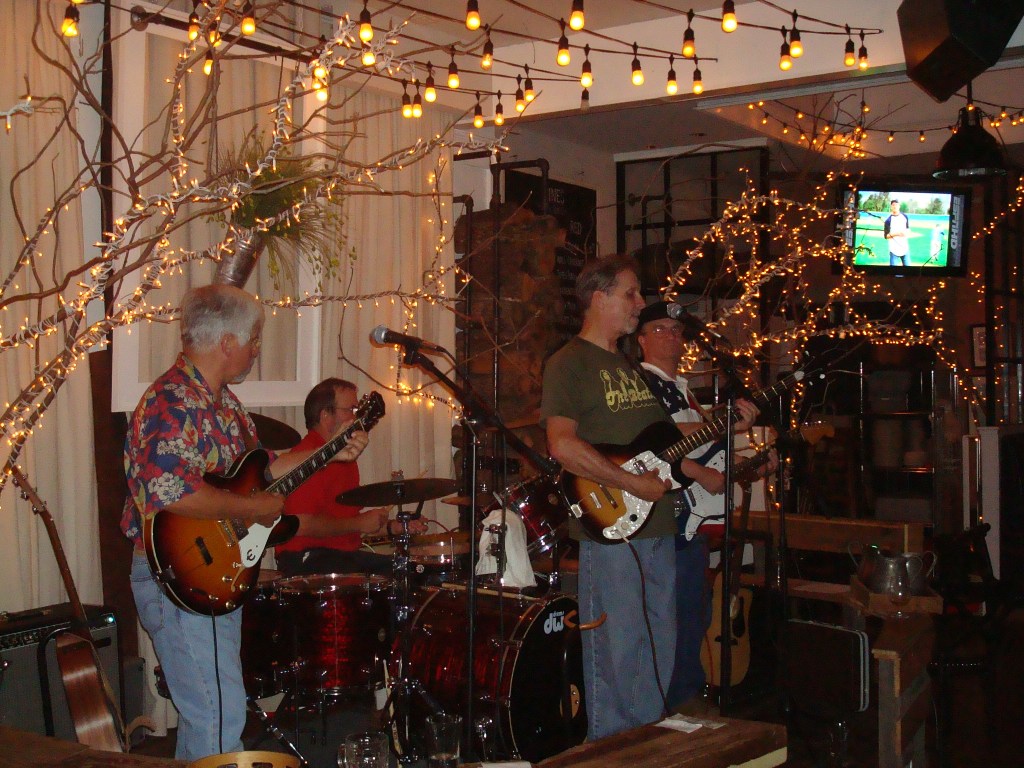
The American Classics at Eno’s in Bishop Arts District

Pictured above, The American Classics at Eno’s in Dallas’s Bishop Arts District. Yes, we are playing that song “Peaceful Easy Feeling,” and then went into “Take It Easy.” That’s me on the left with my 80s Epiphone Casino. It was so thoughtful and nice of the management to leave the televisions on while the band plays.

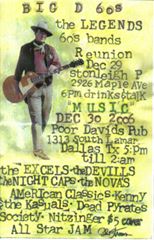
Old and Gray, But Still Rockin It!


A poster I came up with for our 2006 Big D 60s Legends concert in Dallas. The cream of the crop rock bands from the 60s came out to play one more time.

My Interview with Mike Dugo of the 60s Garage Band website


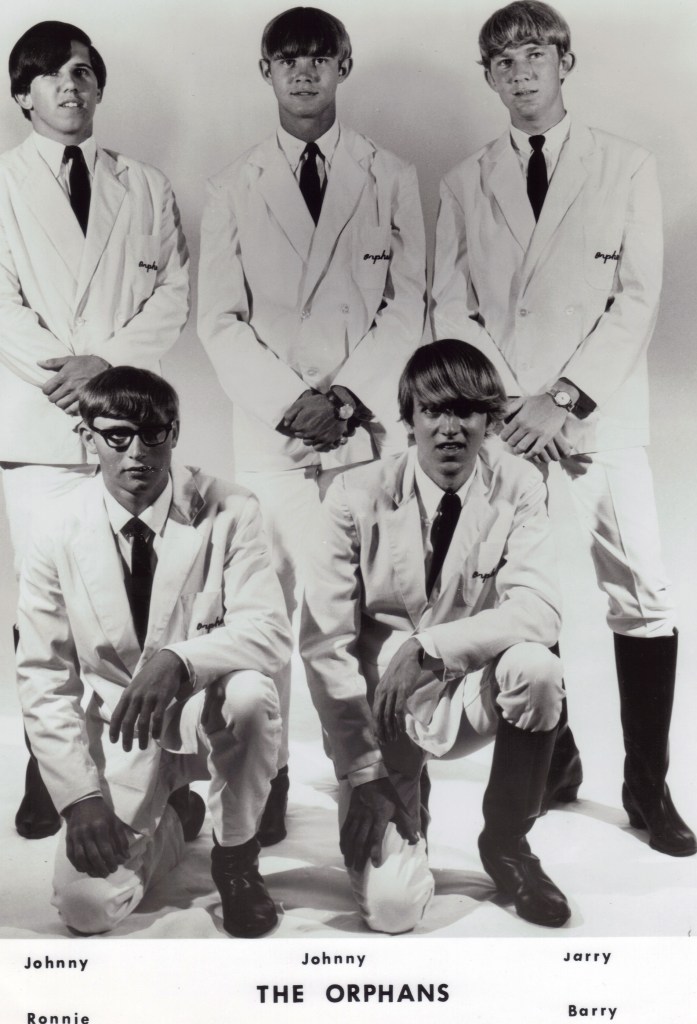
The Orphans 1967. L to R: front-Danny Goode, Jarry Davis, Marshall Sartain, rear-Barry Corbett, and Johnny Strawn

From the Dolphins to the Orphans and then ATNT, Johnny Strawn was a key player to the Dallas music scene in the 1960s. Though still currently performing, Johnny looks back at the time spent in his early bands as “absolutely the best time of my life.” Here are his recollections.

An Interview with Johnny “J.P.” Strawn A Key Contributor To the 60’s Garage Band Days in Dallas, Texas.

[Mike Dugo] How did you first get interested in music?

Johnny Strawn: My father played with the Light Crust Doughboys and Bob Wills in the late forties and through the fifties. I grew up with western swing, jazz and country music, as well as a good dose of the musicians that played it. My father tried his best to discourage me from playing an instrument, but when he realized I just wanted to have fun, and it was ingrained in me, he taught me a few chords on my Gibson J45, and I was hooked.

[Mike Dugo] Was the Orphans your first band?

Johnny Strawn: My first band was The Dolphins, formed around ’64 in Plano. We were together in different forms until we morphed into The Orphans in late ’65.

[Mike Dugo] How did that come about?

Johnny Strawn: Jarry Davis, Barry Corbett and myself formed the original band with a bass player and keyboard player from McKinney Texas – Ronny and Johnny; I can’t recall their last names. We were pretty good, did mainly the top 40 stuff you heard on KLIF and KBOX.

[Mike Dugo] What about the later line-up?

Johnny Strawn: The final version of the 1967 Orphans was Johnny Strawn, vocals and lead guitar –  Jarry Davis, vocals and rhythm guitar-  Danny Goode, lead vocals and bass –  Marshall Sartain, vocals and keyboards- Barry Corbett, vocals

[Mike Dugo] I’ve been in contact with James Goode, whose brother, Danny, was in The Excels with him. I assume this is the same, Danny?

Johnny Strawn: One and the same. Danny did play with the Excels in the early sixties. There was a whole group of musicians from McKinney that played in quite a few bands. Danny and James of course, Billy and Donny Cave, Don McCutchin,  Gary Crawford, Joe Copeland, Don Davis, Danny Haynes and others I can’t remember.  Plano and McKinney fed off of each other for talent. Whenever someone left a band in one town, the phones started ringing in the other looking for a replacement. We all played together at one time or another.

[Mike Dugo] Where did the band typically practice?

Johnny Strawn: We started out in a vacant storefront in old downtown Plano. Jarry’s mother was a real estate agent and had good connections with the city fathers. She got us a building where we could leave all of our gear and practice anytime we needed. Plano closed the sidewalks at dusk in those days, so evening practice sessions were undisturbed. Most nights in the summer when we did practice, the main street would fill up with kids, parked and listening or sometimes dancing. It was a lot of fun – kind of like a country beach party movie. The only thing missing was the beach. After a while, it got to be a bit much for the city fathers so we turnedJarry’s garage into a studio with soundproofing and carpet.

[Mike Dugo] What type of gigs did you initially land?

Johnny Strawn:We started out playing parties, then school functions, then skating rinks, sock hops, teen dances and then clubs … pretty much in that order.

[Mike Dugo] How would you describe the band’s sound?

Johnny Strawn: Our sound was all over the place. Remember back then, you played a lot of dances, so everything you did was meant to keep them on the dance floor: Soul music, Beatles, Bee Gees, Rascals, Hendrix, Doors, Steppenwolf, Cream, Stones, Vanilla Fudge, Jefferson Airplane. We did a pretty good mix of tunes. We used to change costumes in between sets to go with the music. Jeans and such, then Nehru shirts and beads, then it got a little complicated after a while, and we had to have as much room for wardrobe as equipment.

[Mike Dugo] Did you play any of the local teen clubs?

Johnny Strawn: Oh yeah, we played them all on a regular basis. The Studio Club, LuAnn’s, Strawberry Fields, Phantasmagoria, The Cellar, The Box and some more I can’t remember in Dallas and other cities. We used to do a lot of double bills at The Studio Club and LuAnn’s; that was a big thing back then. I remember playing a lot of them with Southwest F.O.B. We were playing at LuAnn’s one weekend when during the Jimi Hendrix song Fire, our drummer put lighter fluid on his cymbals, lit his drum sticks, then hit the cymbals and ignited them. It got a little out of hand and it burned up his drums. That kind of stuff wouldn’t fly nowadays, but back then, we didn’t think of the repercussions. The crowd loved it, sort of like The Who, only with real fire and smoke. Miss Lou Ann was not pleased and banned us from the club for about six months. We eventually worked our way back into her good graces. Ron Chapman the famous DJ on KLIF and KVIL remembered us as the band that nearly burned down LuAnn’s. Some legacy.

[Mike Dugo] How far was the band’s touring territory?

Johnny Strawn: All of Texas, some of Oklahoma. We didn’t go too far from home in those days. Three of us were still attending high school so traveling during the week was tough. 

[Mike Dugo]Did the Orphans participate in any Battle of the Bands?

Johnny Strawn: We did a few that I remember. One (was) at McCord’s Music, and one at the Arnold and Morgan music store. I remember The Dancing Bear, Us Four and maybe the Redwood Page (also competing). We won one of them but placed second at the other.

[Mike Dugo] How did you hook up with Mark Lee? I know he also managed Kenny and The Kasuals?

Johnny Strawn: Mark Lee heard us at the Studio Club and approached us. We signed a contract with him and, after that, we really started getting busy. We played every weekend and some weeknights I recall. He booked us to open for the Iron Butterfly at Strawberry Fields when they did their first tour. We were so stoked; we did one of their songs off the album. The song was Possession, I believe, and we really nailed it. They didn’t appreciate that, and to show us just how much (they didn’t), promptly relieved me of my Vox Wha-Wha peddle and our drummer’s velvet Nehru suit. A hard lesson learned by all. Mark put us up to it knowing it would torque the Iron Butterfly, and afterward, he just howled at the whole scene it created. He tried to see us perform as much as possible, usually at Studio Club or LuAnn’s. I’m not sure where Mark is these days or what he’s up to, but it would be nice to talk to him again. He wasn’t much older than we were – maybe mid-twenties or so.

[Mike Dugo] How popular locally did the Orphans become?

Johnny Strawn: Pretty popular. After signing with Mark Lee, we really took off. We were well known in Texas and Oklahoma.

[Mike Dugo] There was reportedly another local band named The Orphans. Did you ever come into contact with them?

Johnny Strawn:

No, we didn’t. 

[Mike Dugo] Did the Orphans ever record any singles?

Johnny Strawn: We recorded a single in 1966 at Summit Sounds on Greenville Ave. The title was “Leader of My Mind.”I wrote the tune – kind of a Byrds’ folk-rock thing with harmonica. It got a little airplay locally and was on the Fashion label. We recorded another single in 1968 after we had changed our names to The ATNT. The title was “No One Told Me About Her” with the flipside of “Cobblestone Street.” Danny Goode, Barry Corbett and I wrote the tunes. The second disk got good airplay locally and in south Texas, but never made much money. It was also on the Fashion label. Artie Glenn and Smokey Montgomery produced both records. They also produced Paul and Paula and Bruce Chanel at the time. 

[Mike Dugo]

Why did you change your name to The ATNT? What did it stand for?

Johnny Strawn: Jerry Deaton, a guy our drummer knew, wanted to manage us. We were happy with Mark Lee and turned him down numerous times. I guess he was a little sour about the deal and had the name “The Orphans” copyrighted, and then threatened to sue us if we used it. We liked ATNT {Alice talks “n” talks} and Jerry’s mother was the inspiration for that name. Later, we found out that he had managed another band called the Orphans for a while, so that was the reason for all the drama. He copyrighted the name so we had to change. 

[Mike Dugo] Are there any vintage live recordings or unreleased songs?

Johnny Strawn: I still have a few copies of our second

record, “Cobblestone Street”; the first one I assume is lost forever. Barry Corbett, our late drummer, had some 8mm films and some live tape recordings, but now that he’s gone, they may be lost forever.

[Mike Dugo] Did the band make any local TV appearances?

Johnny Strawn: We did the “Mark (Marky Baby) Stevens TV Show” a couple of times over at the WBAP studios. All the film went with Barry. There may be some of that program in a vault somewhere. It was all lip-sync to your record.

[Mike Dugo] Why did the band break up in the ’60s?

Johnny Strawn: I was forced to leave the band over a disagreement with our rhythm guitar player. It was either study to pass my final exams in my senior year or practice. I had to make a choice, so I did. Pretty petty stuff really, but what do you expect from teenagers? The band stayed together a few more months after that and then broke up. Some of the guys continued to play with other groups.

[Mike Dugo] What about you? Did you join or form any bands after ATNT?

Johnny Strawn: I didn’t play too much until about ’74 when I became involved with the progressive country music scene in Austin and Dallas. I played with various people around town and some in south Texas and did some pick-up and studio work. I joined the Trinity River Band in late ’79 and played with them until ’85. I also played with The Light Crust Doughboys from time to time and did some studio work on the five-string banjo. I was fortunate to play on the Light Crust Doughboys album, ” One Hundred-Fifty Years of Texas Music.” 

[Mike Dugo]What about today? How often, and where, do you perform?

Johnny Strawn: I am a project manager in commercial construction, and do a lot of painting and artwork – mostly Texas art. After 35 years, Danny Goode, who I played with in ATNT and the Orphans, called me and asked me to be part of their group, The American Classics. I joined them about two years ago and that’s what we do nowadays. The band consists of Danny Goode, bass and lead vocals; John Payne, lead guitar and keyboards; Jordan Welch, drums; and me on rhythm guitar and vocals. We play about once a month or so around Dallas Fort Worth, mostly private parties. We recently played in Deep Ellum, and will probably be back down there soon. We stick to mostly ’60s music – it’s what we know well. It’s good to still be playing rock music at this age. You really never outgrow it.

[Mike Dugo] How do you best summarize your experience with The Orphans?

Johnny Strawn: It was absolutely the best time of my life. How could you not enjoy being a teenager in the ’60s and playing in a popular rock band? The people we met and played with, the experience that we will all carry with us the rest of our lives. It was just a part of life that helped shape us into what we are now – being part of that change in our country, that decade. It was a time of turmoil, but it was also the last year of the innocence we grew up with. Teenagers these days are so hardened. The music then was happy and said a lot. It would move you, whether you played it or danced to it. The music now has a meaner, harder edge, and reflects the times we live in.

Interview with Phil Strawn for the Big D 60s website


The ATNT playing Flower Fair 1968, Dallas Texas. Foreground: Johnny (Phil) Strawn, Jarry Davis, Barry Corbett (drums) Danny Goode, and Marshall Sartin

Big D 60s musical humans: My friend William Williams has asked me to scribble some text for his website devoted to rock bands in Dallas during the 1960s. To gather information for the text, I am circulating the following questions (and a few random thoughts) in the hope that they might spark memories and inspire participation.

In my view, the 60s did not “end” until about 1973, and in some ways, the period has never ended. Our “generation,” of course, faces the recurring question: Did the 60s seem such a unique period because of the sweeping social and cultural change of the era? Or was it simply due to our youth? I.e., might every generation feel that the world underwent some sort of major transformation during that generation’s “coming of age” or struggle to find/create its own identity?  Or some combination of the two explanations?

On a separate sheet(s) of paper, answer as few or as many of the following questions as you wish. Email is okay, too, but printed on preferred. If you hate to type but want to respond, dictate your thoughts onto a cassette and send that. Also, feel free to provide answers to questions that I have not been alert enough to include here….

1. Q: Name.

A: Phil Strawn, but I went by Johnny Strawn back in the sixties.

2.Q: Instrument(s)

. A:  In those days, it was strictly guitar, but later on I picked up five- String Banjo and mandolin.

3.Q: In what part(s) of Dallas did you live?

A: I was born, and grew up in Fort Worth Texas, but spent my rebellious and formative teenage years in Plano Texas. My family moved there in 1964 when there was only one red light in the middle of town and the Dairy Queen was considered fine dining. It was the only restaurant in town where your family could enjoy a deep-fried dinner and your dad (or mom) could burn rubber on your way out of the parking lot (after circling three times of course) and no one cared. In the “1964 Plano”, it was a blood rule, If you didn’t live and die football, you better mosey on over to Richardson or Dallas, where all the “city folk lived”.

4. Q: What band(s) were you in?

A:  My first band was with a classmate, and friend, Jarry Davis, or “Jarry Boy” as his buddies liked to call him. We called ourselves, The Dolphins, or Blue Dolphins, or The Laughing Dolphins, depending on the mood of the band that particular week. It included myself, Jarry, Ron Miller on drums, and Warren Whitworth on bass. Warren really didn’t play bass; he borrowed one from a cousin and had the largest amplifier.

The only progressions he knew, were in “E”, so everything was in that key (early power chords).  We used cheap Silvertone, and worse amps, and these god-awful Japanese electric guitars with five pickups, and a cluster of switches that did nothing. It was impossible to keep them in-tune, so we went with something close. The equipment was crying pitiful, but we managed to sound decent. In late 64 and early 65, Jarry and I formed “The Orphans”, with Barry Corbett on drums. The original spelling was “Orfuns”, but our drummer was “on the outs” with his parents, (as usual) and never the ones to pass on “drama”, we became “The Orphans”, as in, “children without parents”. A few years later, there was another band in Dallas with the same name, and things got sticky with attorneys, copyrights and such, so went switched to “The ATNT”, But that’s another story.  We realized during our first practice, that Barry, was “Phil Spector’s twin from a different mother ”. He amazed us with his musical lunacy. This boy could hum notes on a perfect pitch from a dead sleep, and play any instrument or piece of machinery. He once played a song on a lawnmower, and it was pretty darn good! He also was equally versatile on keyboards and Indian Sitar (even had his own makeup tin for the dot on his forehead). On bass guitar, was Johnny Malone, and a keyboard player, Ronny “the frogman”, (can’t remember his last name), both, strong-boned “chicken fried” country boys from McKinney Texas. They were also darn good rockers.

Got to love those jackets and boots

Barry’s father, noticing the improvement in the band, helped us purchase some decent P.A. equipment and new drums for Barry. We begged  “Lil’ Spector” to get the gray Ludwigs that Ringo played, but instead, he purchased these “ LSD looking Slingerlands with a “swirl margarita” 3-D finish.” If you wore those cheesy 3-D glasses from 7-11 while looking at them, and the light was right, you could see the “summer of love” two years before it took place. The new drums were complimented with a 1950’s garage sale, rotating colored light, from an aluminum Christmas tree display. We were so impressed with the setup; it became our first light show.

We all had menial to worthless summer jobs of sorts, so we took our paltry wages, stored in tobacco bags, and visited Larry Morgan, at Arnold and Morgan Music in Garland. Larry, noticing our inexperience (as well as our little bags of gold) helped outfit us with new gear. We purchased huge Fender Showman, Custom and Vox amps and Rickenbacker, and Gibson guitars. We were afraid to look at the total, so we handed Larry the money, signed a note, took our spoils and left. We now had the “proper tools of the trade”, so it was time to make some money to pay the debt.

Along with the fall, came high school football in McKinney, and we lost our bassist and keyboards. We put the word on the street for replacements and were surprised when, two “older musicians”, (again from McKinney) auditioned for the spots.

Danny Goode (brother of James Goode) had recently played bass with The Excels, and Marshall Sartain, who was a classically trained pianist, caught in the “throes of musical and parental revolt”, had just purchased a new Farfisa organ. He was a mix of Van Cliburn and Jerry Lee Lewis, and we never knew who would show up at the gigs. He either came looking a little “too sharp”, or like he had been on a week’s bender in Shreveport with his second cousin. He was one hell of a keyboard player and gave “Lil Spector” some friendly but serious competition.

After Danny and Marshall joined, the sound of “The Orphans” was born. It had been a “stick chewing labor”, but the monster it produced was worth the waiting. The first song we played as a group was perfect! causing us all to take a step back to collect ourselves. It was as if we played and sang together for years.

Miss Alice, our manager(Jarry’s mother) was so astonished; she seated herself in an aluminum lawn chair and summoned a cardboard fan and a stiff drink of Jim Beam. Apparently, she suffered an attack of “rock n roll vapors”. Shortly after that, she discovered Valium and was better at dealing with us, and our music.

Armed with fresh talent, and newly seeded dedication, we committed to practicing three nights a week. First, using an old storefront in downtown Plano (until the merchants ran us out) and then, remodeling Jarry’s large garage into a studio complete with soundproofing and air conditioning. Our practices became a social gathering on summer nights. We would walk outside during a break, and find a full-blown street party in front of Jarry’s house. It was somewhat of a “countrified beach party”, complete with beer, muscle cars burning rubber, rock “n” roll and a trail of teenage broken hearts. We agreed life didn’t get any better than this, at least until later on.

5.   Q: Musical influences

A:  I was raised in a musical family.  My late father, Johnny Strawn played the fiddle (violin if you are from north of the Red River) with the Light Crust Doughboys for over 50 years, and with The Red Foley Show known as the Ozark Jubilee broadcast out of Springfield MO. and with Bob Wills and others.  We didn’t own a record player or a radio, or need one; we had the real musicians! It was common for; Willie Nelson, Roger Miller, Billy Hudson, Glen Campbell, Paul Blount, Carroll Hubbard, Bob Wills, Smokey Montgomery, Ralph Sanford, Ronnie Dawson, and others to be there playing or visiting when my father was home from the road. My musical influences were all over the map, starting with Country and Western, (or hillbilly) Fort Worth Western Swing, jazz and big band.  Later on, with inspiration from Ronnie Dawson and the Big D Jamboree, I latched on to rock n’ roll. I learned an early lesson from Ronnie. If you played guitar on a stage and could shake your ass and sing, you got any girl, any time. It was a simple equation; play guitar and sing, watch girls go “ga-ga”.That’s the real reason Ronnie had that big smile on his face, and any guy that says he didn’t take up guitar to “meet girls”, is a liar. I know.

My sister and I, being babes recently removed from mother’s arms, innocently assumed that everyone lived with a house full of “ goofball musicians” And if you didn’t play an instrument, you “weren’t quite right”. Later on, we learned it was definitely the other way around.

7. Q: What clubs and/or other venues did you play?

A:  Starting out, we played the lightweight gigs; school functions, the battle of the bands and private parties given by students, for students. Sometimes, we were lucky and made a few bucks. The times we didn’t were all right with us, because we always wound up with the cutest girls. We booked better-paying gigs, as we became well known; larger school proms, college fraternity parties, company parties, and street dances.

In later 65 into 66, we started playing clubs in Dallas and Fort Worth. The Phantasmagoria, Studio Club, LouAnn’s, The Box, The Cellar in Dallas, and later on Strawberry Fields, Panther Hall, Bronco Bowel, and some clubs in Houston, Oklahoma and Surfside Beach. We played all of the venues in the area, and now, I now wish I had kept better records of “where and when”, because all of those old venues are gone.

8. Q: Were you ever forced to quit playing early at a gig because you played too loud / played too many original songs / your appearance scared the audience?  A: “Turn it down!” Those were the first words spoken by the “adult in charge” of any function we played. They never asked us to stop, but I do remember a few high school principals diving for the power cords because we were making the chaperones (teachers) “writhe in agony”. It never failed, as soon as we struck the first chords of “Satisfaction” or “Gloria”, the old ladies (teachers who were sorry they were chaperones) grabbed their heads and began staggering around like “zombies” from “Night of the Living Dead”. The louder we played, the more they jumped and wailed. We had no idea that music could inflict such pain on anyone “over forty”. Although now, we have personally“ felt the pain.” We played a few original songs, but mainly the current tunes on the radio. No one gave much attention to the original music. If the songs were not on the radio, they didn’t exist. The kids wanted to dance to the tunes they recognized from KLIF or KVIL.  We were a polite bunch of clean-cut guys most of the time; we didn’t become “scary” until 1969.

9. Q: Describe any other unusual experiences you may have had while playing a public engagement. A:  Good Grief! That could take pages, but I’ll keep it short. Let’s see…playing with strippers at the Phantasmagoria, “musical arson” at Lou Ann’s (these are in the recent recollections on the BigD60’s site). The LouAnn’s weenie roast is my favorite. We were doing Hendrix songs (as were most of the bands in Dallas) and decided to use” real fire” during the song “Fire”. What a brilliant idea that was! Stanley Hall, our equipment manager (pre-roady days) squirted lighter fluid on our drummer’s cymbals so they would ignite when struck with a lighted drumstick. The fluid accidentally dripped onto his drum set, and when it ignited, the drums, as well as cymbals, flamed up. If you can imagine, the crowd, fueled by brown bag booze, whooping it up and urging us on, thinking it was part of our act. We were oblivious to the danger we had created, and kept right on playing, “basking in our moment of artistic adulation”. Lucky for Lou Ann’s, and us, we received a free pass that night. We didn’t burn the place down but learned a life lesson. The wise words of our parents hit us full force, “don’t play with matches, you’ll burn the house down”. The only thing left for us to do was “ shoot our eye out with a BB gun”, and we were working really hard on that one. It was a long time before LouAnn’s asked us back.  I think Mark Lee “paid them” to let us return, but they frisked us for matches and lighter fluid at the door.

Another memorable gig was a time we played the high school Christmas Dance in Ennis Texas. We had recently acquired a new ride in the form of a “ lumbering, black Cadillac Hearse”. To that visual, add this; a psychedelic painted equipment trailer, Nehru jackets, Beatle boots, beads, and peace symbol jewelry, semi-long or ratted up hair, and a newly found attitude. We were, (and very proud of it) a girl’s parent’s worst nightmare.

Upon arriving at Ennis High School for the gig, we were welcomed by the stoic social committee, also known as the “defensive line”. The colorful but “ rock n’ roll illiterate” students thought we were “dirty hippies” from Dallas, and gleefully proceeded to harass the band. It didn’t bother us too much. After all, when you wear paisley Nehru shirts and jewelry, you have to expect a little of that.

This warped adulation went on all evening, and after four hours of relentless name-calling, request for songs from Mars, and some rather amusing and inventive heckling, our rhythm guitar player “Jarry Boy”, (a kinder and more gentle guy you’ll never find), had reached his limit. You never know when someone will snap, one second he’s a normal guy, then with no warning, turns into Norman Bates. The band watched amusingly as Jarry stopped playing, and started to shake like a “Chihuahua dog passing a peach pit”.  He calmly walked to the front of the stage, gripped his beautiful new Cherry Red Gibson 335 guitar like a Louisville Slugger, and swung it like Roger Maris going for the strike zone. He smacked the main antagonist, a “plug” of a fellow, weighing in at around 250 lb. (and standing about five feet tall) up the side of his head, sending the poor boy staggering into the crowd. It was a mighty blow, and we heard the spine of the beautiful Gibson crack as it was delivered.

To our surprise, when the guitar bounced off of “ the plugs ” head, it produced a beautiful thread of feedback that was so sweet. The rest of the band, never ignoring a good dose of feedback, and being the insensitive dip-sticks we were, launched into a Vanilla Fudge song.

We played beautifully, and with such feeling, while the “butt whooping” was in progress at the edge of the stage. We figured it this way; “Jarry Boy “ needed some theme music while he was in the process of destroying his guitar, “the plugs” head, and our freshmen careers with Mark Lee as musicians.  We agreed it was a superior show to the one that The Who had delivered a few months back at Memorial Auditorium. We were positive, Pete Townsend had never assaulted his audience with his guitar. The end of the song signaled the end of the dance, and non-too soon. Ennis was in our rearview mirror in mere minutes with most of the defensive line escorting us out of town. I’m not sure we even picked up or check. We pointed that hearse south, and headed for Dallas, via Houston for more holiday gigs.

Our chaperone, Miss Alice, thought we were “heathen children and should be whooped”. We politely reminded her that it was “her son” who wielded the “Gibson Ball Bat” and administered the “whooping to Opie”. Miss Alice (and the rest of the band) got through that tour and with a lot of help from Jim Beam and branch water.

Arriving back in Dallas a few days later, we rolled up to the Fairmont Hotel, where we were to play a Christmas party for a group of nurses and interns from Methodist Hospital. The concierge tapped on the driver’s window and with a big smile told us to” pick up the body at the loading dock”. We got a lot of funeral jokes. The crowd looked really young, everyone appeared to be well under thirty, and being the “swinging sixties”; they proceeded to act like they were the poster children for “out of control adults gone wild”.

Next door, in a smaller ballroom, a group of Braniff Airline employees (mostly flight attendants and pilots) was having their Christmas shindig… but with no band. Once the music started, it didn’t take them long to crash the party. The tiny airline bottles of booze were everywhere. I had my pockets stuffed like a squirrel’s jaws in October, as did the rest of the band. Adults were dancing on tables, chairs, and even had a “conga line” going on the bar top. We were joined on stage by volunteer go-go dancers (flight attendants and nurses) sort of like the “Sumpin Else” show dancers, but with some moves, Ron Chapman would have censored, and some we hadn’t seen before. The nurses thought we should be more sociable and “have a better time”, so they got the band “commode hugging” drunk. I am sure we sounded awful, but the crowd was so blasted, it didn’t matter. Our drummer and keyboard man turned up missing for a few days. We assumed they were somewhere in Oak Cliff receiving an “intense checkup” or, flying around Texas on Braniff.

10. Q: Contrast the environment for rock bands in the 60s/early 70s with that of today. It appears that originality is encouraged today, whereas “back in the day” it was actually discouraged. Why the heck?  A:  In the sixties, the radio was Top 40 format only. It was AM stations blasting the area with 50,000 Watts of rock music and caffeine crazed DJ’s talking so fast you understood half of what they said. FM “underground rock radio” (as it was tagged) didn’t happen in Dallas until late 67, and then, it was only one station with DJ’s that talked very little and were “oh so cool”.

If a band wanted to work, you played the tunes that were on the radio, and throw in a few of yours in between. The music scene in Dallas was innocent. There wasn’t a “Deep Ellum” to feed and showcase the bands. It was strictly a handful of clubs, private parties, and shows sponsored by the radio stations. A few of the department stores had traveling shows with bands and dancers, sort of a “rock n roll medicine show”, with local DJ’s hawking the store’s products.  A lot of the local “disc jockey’s” like Ron Chapman, Ken Dowe, Johnny Dark, Jimmy Rabbit, Marky Baby, and others, did emcee spots at the local clubs and were helpful in getting the local bands known. We always enjoyed doing shows with them. They built you up with this over the top introduction, and by the time you reached the stage, the crowd thought you were The Beatles. It actually made you try a little harder.

Tom Hanks made a movie a few years ago,” That thing you Do”, an accurate film about a garage band in the sixties, that had a hit record and their fifteen minutes of fame. The scene when they heard their record on the radio for the first time is a classic. They stopped their car, jumped out and were dancing around, acting like the kids they were. All so very “sixties”. I know that our band acted just as goofy the first time we heard our song on the radio, and I’m sure that most guys that had a 45 on the radio identified with that scene in the movie.

11. Q: What popular songs of the 60s/early 70s made you want to puke?

A:  I couldn’t stand most of the girl groups and the bubble gum tunes, The Archies or “ Come on Down to My Boat Baby”, The Royal Guardsman and the Snoopy songs. They made you want to fall on a sword, or run your car into a wall. But, these bands had tunes on the radio, and most of us didn’t, so as much as we slammed them, we were quietly envious.

12. Q: Did you perform original songs or all covers?

A: The majority of the songs we played covered. In 1968, we started playing more original songs, after our record was getting airplay. For a band to carve out their own signature sound, when you were expected to sound like Sam and Dave on one tune and Jim Morrison and The Doors on the next, was tough. It was confusing, but it made us better musicians. We didn’t stop to think that it took “ real musicianship” to pull that off, unlike today’s musicians that depend entirely on distortion for every song. I feel today’s young artists lack the drive to develop their musical ability any more than a handful of power chords aided by the latest distortion effects units. There are exceptions, but not many.

13. Q: What artists/songs did you really like back then which/who you now cannot stand or just aren’t too crazy about? If any.  A: I liked the Beatles, Rick Nelson, Simon and Garfunkel, Tim Buckley, Phil Oachs, Eric Clapton, The Rascals, The Doors, they were just a few. I never could get into the “girl groups” like The Supremes, The Ronettes, etc. it was chick music, and the only reason we ever allowed it on our radios was to pacify our dates. To get to any of “the bases”, you had to suffer through it. Although I dug Dusty Springfield, she had a lot of soul for a blue-eyed blond English girl and great musical arrangements.

14. Q: What, if anything, about being in a rock band in Dallas in the 60s/early 70s was different from being in a rock band during that time in, say, Cleveland, Denver, Seattle, Miami, Baltimore, St. Louis, Atlanta, etc.?

A: We played in Texas and Oklahoma, so I can’t be sure of how different it was in other states. Jarry’s cousin, from Memphis TN, played with The Gentry’s for a while and after hearing us, he commented we were too “hard edge and needed more soul”. Understandable, since everyone in Memphis was rationed a few pounds of it at birth. We always thought our music to be Texas rock n roll. Where else could you hear bands with a singer that sounded like George Jones playing “ Sunshine of Your Love”.

15. Q: Ditto for Dallas compared to the rest of Texas.

A:  Dallas bands appeared to be more polished. When we played in south Texas, we were always well received because we played a different selection of music than the home town bands. I think it was more of a local thing that dictated what you played. Dallas was an “Alice inspired rabbit hole” for Texas rock music, look at all the good bands and players that escaped from here, and moved to Austin. Q: Today, of course, Texas music is widely understood as being a unique genre all its own. So many of our best artists are not easily pigeon-holed as rock or country, for instance, which is refreshing in light of the mind-numbing monotony of corporate radio.

16. As regards Dallas rock bands of the 60s/early 70s, do you feel that you/they contributed to that unique nature or mostly responded to trends originating overseas or in New York and California?

A: It all started in Texas. The roll call would take pages, but most of your rock historians have written, and will testify that Texas was ground zero. Those of us who grew up and played the music here already knew that. Buddy Holly, Ronnie Dawson, Bill Haley, Waylon Jennings, Joe Poovey, Bobby Fuller, they were all known as rockers, but they all grew up playing country and could wear either hat with comfort. It was the same for us in Dallas and Fort Worth. We played rock, but could also play a Buck Owens or Willie Nelson tune, and didn’t mind mixing the riffs and phrases together to create a hybrid that was labeled as the Texas sound. In San Antonio and Corpus, they were infusing the Latino border music and really coming up with some hot stuff. (pardon the pun)

Q: How have your own musical tastes changed, if they have, as you have logged more years on the planet?

A: My taste in music hasn’t changed much. I’m still playing classic rock music in a band. And, I have learned to appreciate the older music as I’ve aged. Since the turn of the century, American music has chronicled every decade with its own style that’s easily recognizable as being from that time.  I think the 60’s experienced the most drastic shift in music, if only because of the meteoric changes in our society. The Vietnam War fueled the protest songs that changed folk music from “ethereal sweet sing-alongs” to caustic social commentaries. Rock music cast aside the innocent “love songs” and became gritty social anthems that mirrored the displeasure of the youth and the growing anti-war sentiment. Our nation’s young were becoming “anti-everything”. The song lyrics changed from “ sweet Mary Lou I’m so in love with you”, to “ what a field day for the heat, a thousand people in the street”. It was heady stuff. Because of those changes, that decade produced many of the best songs and songwriters in the history of music. They set the musical bar for years to come. I have learned to appreciate those songs for what they are; well written, well-played tunes documenting the “ideals” of a generation that “got the changes they wanted…like them or not”.

17. Q: Is there any music from the old days you’ve heard recently that surprised you in some way?

A: I’m assuming the old days, meaning 50’s and 60’? Yes, the music of the Beach Boys has caught my interest again. We didn’t cover any of their songs because the vocals were so difficult. But today, I marvel at what they did on record. The vocal arrangements alone would drive today’s bands to drink, or back to the garage. And, today, when I listen to The Beatles music, it sounds so simple and at times, raw, but try and replicate their songs live, and you realize just how talented and crafty they were. They changed the way we wrote and played. Their work represents songwriting at it’s best, and they challenged a generation of rock musicians to play more than four chords.

18. Q: What factors influenced the breakup of your band(s)? And if you no longer play music, what led to that? Do you ever desire to start again?

A: Let’s just say this, to this day, I have hard feelings about the breakup of our band. My exit was not handled well considering these guys were my friends. The band stayed together a few more months and then our keyboardist left for a commune and the rest drifted away. It usually ends that way with most groups.

I kept my hand in music, playing progressive- country in the ’70s with different people. I played with The Trinity River Band for five years, but that became too demanding, so I quit and laid the guitar down to concentrate on my family and career. I played with the Light Crust Doughboys on occasion and did studio work on the banjo. I didn’t own a guitar and didn’t want one. When I decided to quit, I cut off the appendages. A severe move for a life long musician. But it was a cleansing of the soul is what I sought.

I started to miss music but didn’t have the heart to again commit to it. Then, two years ago, my old bandmate and friend, Danny Goode contacted me via email from ClassMates.com. After exchanging brief histories of our lives to that point, he asked me if I would like to set in with their band for practice. I didn’t own equipment and wasn’t sure I even wanted to re-visit that place. But, after a little encouragement from Danny, I decided to give it a shot. I borrowed one of John’s guitars and an amp. We played a few tunes, and once again, it was as if we had never stopped. Time stood still for a brief moment, and it felt great. So, I joined the band.

We call ourselves the “American Classics”, and we play 60’s and some early 70’s rock. We stay busy enough to make it fun, but not work. Danny and I played in “The Orphans” together in the ’60s, and John Payne (JP) played in “The Fabulous Sensations” out of Lubbock while Jordan Welch, our drummer played in a Dallas band “The Coachmen”. We played the same songs, so re-visiting them was easy.

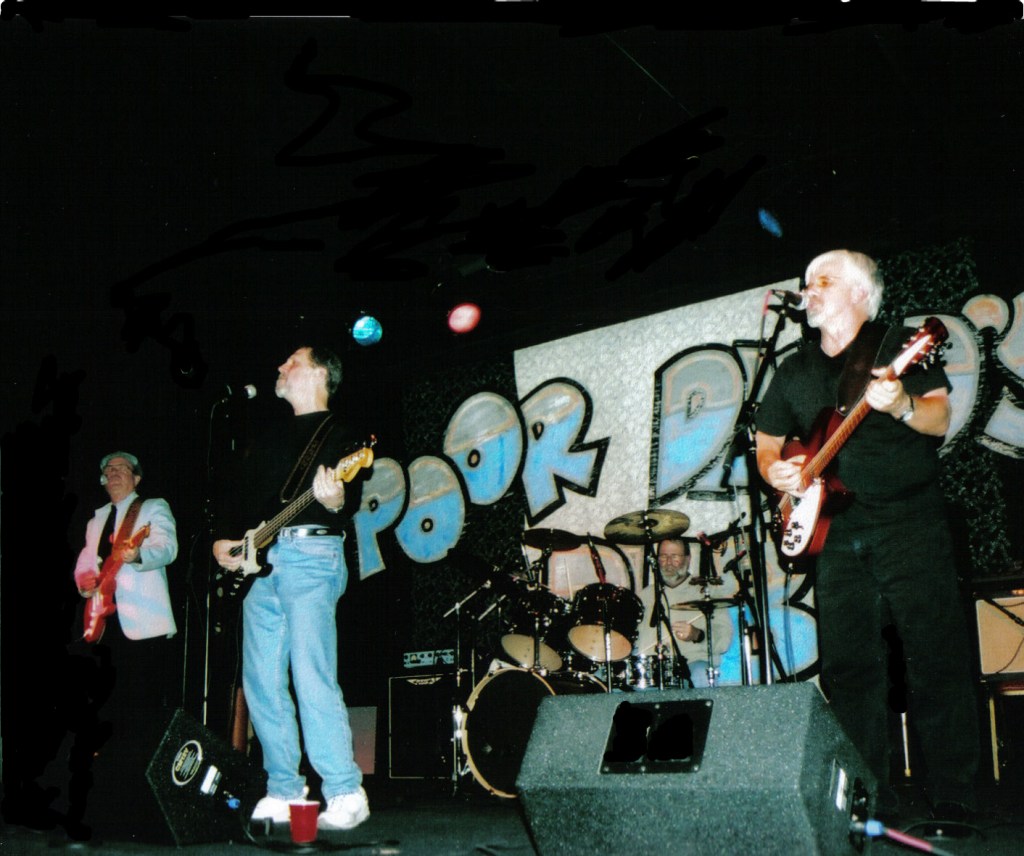
The American Classics today playing Poor Davids Pub, Dallas Texas. Right to left: Phil Strawn on guitar, Danny Goode on bass, John Payne on lead guitar and Jordan Welch on drums

19. Q: As a geezer-in-training, how do you maintain a rock-and-roll attitude?   (If that is something you aspire to do.) (Aside from wishing you had the dough to have a dietician and personal trainer follow you around like Mick does.)

A:  Poor Mick, someone needs to feed that boy a cheeseburger, or a chicken fried steak.  We don’t have a rock-and-roll attitude anymore. We’re having too much fun when we play. To a man, we feel fortunate to still be playing, and doing it well, if not better than back then. We know it won’t last forever so we enjoy every gig and every practice as if it were our last. We figure that we have about five more years before we start to embarrass ourselves. When we need to mount our guitars on our walkers, that’s when we’ll stop.

20. Q: As the years ground by, and punk and grunge and rap and who-knows-what-the-hell-else became popular in the underground and then got co-opted by Madison Avenue, did you ever find yourself wondering what the hell is wrong with kids today? If so, did you wanna slap yourself upside the head?

A: The American  “Pop Music” industry has been in the toilet for the last fifteen years, with the exception of country music and some of the smaller “indie” labels that still find talented musicians to record “real music”. To find “good old rock”, you listen to the country artist. It’s the same licks from the ’60s but they’ve added steel guitars and fiddles. I recently heard Cross Canadian Ragweed and was expecting a country band, but these guys rocked.  They threw out fantastic 60’s fueled licks with hot country lyrics. I swear the ghost of Jimi Hendrix was in them.  Another great band today,“ The Derailers” out of Austin, “rock a billy” with 60’s overtones.

What’s wrong with the music and the kids today?  The destruction of our educational system, also known as “ dumbing down”. “Giving in” to students that are not willing to put forth the effort to learn. Once the kids figured out it was socially acceptable to be stupid, the music naturally, fell to the same level.

Grunge rock, a depressing form of music where every band sounded the same, arrived. It was infused by pathetic, morose lyrics written by boys who couldn’t pass a fourth-grade spelling test. These were the “Pied Pipers” that the record industry crammed down the throats of our children, who, (was so addled by years of playing video games while their minds turned to oatmeal) mistakenly believed that “ life imitates art”. After Grunge got a stranglehold, someone in L.A or New York, opened a sewer cover, and out crawled “RAP”. Which is, in no way related to music in theory or sound.

The numbing beat and gutter- laced words, encourages these kids to embrace hatred for everything good and just. You have seven-year-old children going around talking about killing cops, and “ getting some hoe’s”. The Madison Avenue record machine is no different than Enron or others of their ilk. They go, with no moral regret, straight for the jugular to make the buck, and will walk on the bodies to get to the bank. There is little, if any accountability in the mainstream music industry today. Do I sound mad as hell about this? I’m completely disgusted.

21.Q: What was best about the Dallas music scene back then? What was the worst? Name some of your favorite Dallas bands from back then.

A:  The music scene in Dallas was young and full of excitement. The kids couldn’t wait for the weekends to pack into places like; The Studio Club or LouAnn’s. The Oaklawn area was full of boutiques and clubs. You could visit Lee Park on most weekends, sit on the grass and listen to free concerts by local bands. Oaklawn was re-inventing itself into the “Height Asbury” of Dallas. Most of the local bands that played the “circuit” knew each other. Dallas was a large city, but enjoyed and embraced a small, but sometimes-cliquish music community. I enjoyed the sounds of The Jackals, The Novas, The Southwest F.O.B., The Coachmen and The Chessmen; those were just a few of the many.

22. Q: Were your parents supportive of your musical endeavors? Conflicts?

A:  In our band, all of the parents eventually came around and supported our endeavors. We spent so much time playing that they finally accepted the fact that we were not going to stop. My parents came to our gigs a few times, but usually left doing the zombie head-grab and staggered out the door. They couldn’t take the decibels, and though we would never admit it, we couldn’t either. Everyone in our band now is partially deaf because of the loud music onstage. We play much quieter now.

23. Q: Did rednecks ever pound the dooky out of you for having long hair?

A: Yes they did but in their own inventive way.

I was on the pier one summer night in Port Aransas, 1969.  I was walking with this cute girl I had met earlier in the evening. We had been on the beach with friends, sitting around a campfire picking guitars and drinking beer. I wanted to walk on the pier, to check the waves for the next mornings surfing. I had my Gibson (1940’s) J-45 slung over my shoulder, and was looking really cool. As we ambled down the pier, two “big old boys” made a crude remark to the young lady. I should have let it go, but I couldn’t.

My parents had taught me that you didn’t speak that way to a lady. So, with the girl almost in tears, and me not being in my right mind, I approached the offenders. They were sitting on their bait buckets, drinking Lone Star Beer, and trying really hard to keep it from running out of their mouth from lack of teeth.

I volleyed back with a tirade of “eloquent put-downs” that would have made George Carlin proud. I figured after slick words like that, they couldn’t possibly say anything but “ we’re sorry”.  I stood there, waiting for the apology I knew wasn’t going to come. When those two boys raised up from their “bait bucket lounger’s”, I was staring into the face’s of “Bubba-Zilla” and his spawn. That’s the first time I was ever conscious of sucking air through my lower orifice.

It was “way too late” for apologies, and, I didn’t have anywhere to run, so I stood there smiling like a raccoon caught raiding the trash can. The girl sensed that she was sharing my last minutes on earth, so she hauled-ass down the pier. The smaller of the “Bubba-Zillas” grabbed me  (with my guitar still attached to my body) and did one of these “WWF” moves, spinning me above his head to build up momentum. When I reached launch speed, he sailed me out over the railings, and into the night. For a moment, I had a good form going; spreading out like “Rocky the flying squirrel”. I was hoping to glide toward the beach and lessen the impact into the Gulf of Mexico, thirty feet below.

I was all right with hitting the water; I could swim to the beach if the sharks didn’t get me first. But, In the instant, before I hit, I remembered my Gibson J-45 had taken the flight with me. I was immediately sick.  I hit the water like a cowpie dropped from Babe the Giant Blue Ox. It hurt like hell! After floundering around in the surf for a while, I washed up onto the beach, gripping my ruined guitar. Through the mist, I could see the “Bubba-Zillas” illuminated by the lights, whooping it up and stomping around the pier. For a brief moment, I thought about going back up there and “ kicking some butt”, but then my head cleared, and I figured it was time to get a haircut.

I agree that the sixties didn’t end until the early seventies. No one wanted to let go of the music and the feelings that were so much a part of that short ten years. I had a great time. Thanks for asking me to share my memories.

Thanks!

Gene Fowler

3101 Dancy

Austin, TX – 78722

Ph. 512-322-0602

genfo@email.com