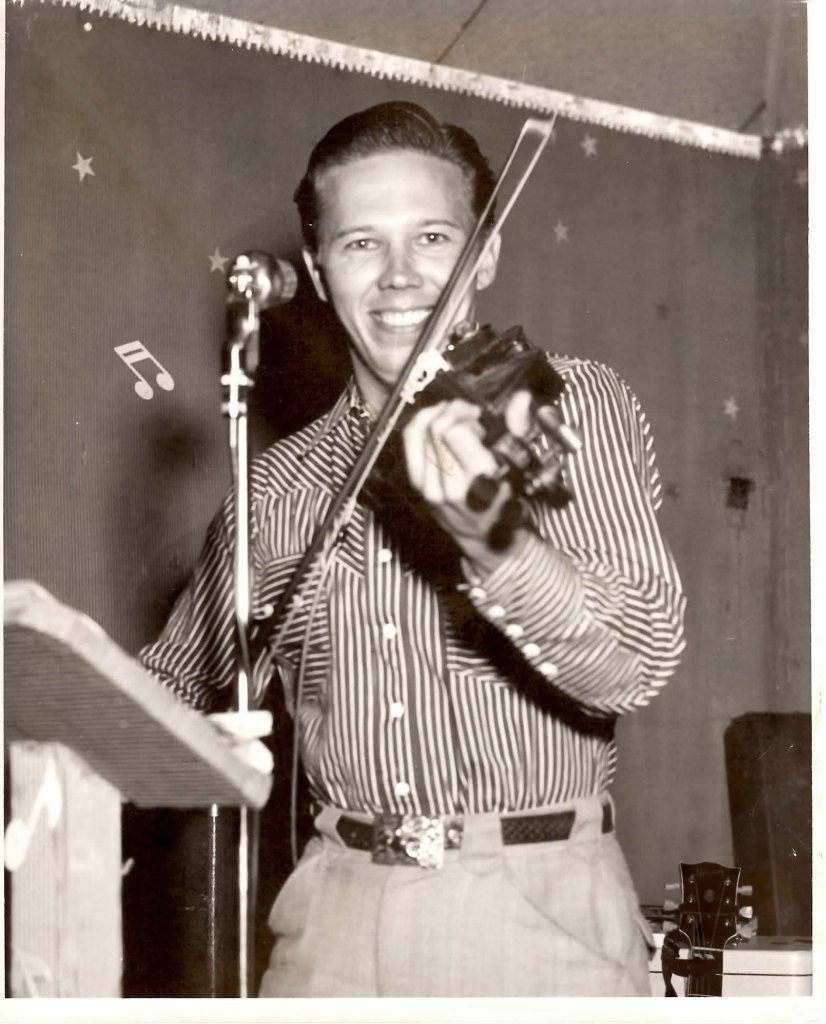
Johnny’s Journey: From War to Healing in Hawaii


Chapter 16: Johnny Didn’t Come Marching Home

Foreword: Usually by another writer or friend. Excuse the breaking of tradition. These chapters reveal my struggle with the truths of my family. As a child and later as an adult, I saw the darkness of alcoholism and how it grips every soul within a household. I wished for families like those in a Norman Rockwell painting, gathered at the table with Grandfather carving the turkey, but life shattered that image. AA was just beginning to rise, and the word “enabler” had not yet marked the shadow of alcoholism. Bleeding in a public arena is not pretty.

The island of Hawaii held its charm, still untouched by the war. A year after the conflict with Japan, a few tourists arrived by boat, drawn to its beaches and emerald water. The men and women in uniform returned home, demobilized from the military. Johnny chose differently. He stayed, nurturing the holdings he had acquired over two years. Luck had favored him; he owned land in downtown Honolulu, not the best area, but one that would grow over the years and be worth hundreds of times what he paid. California held no interest, Texas even less. He would again be under the veil of his mother’s demands and secrets. The more time away he had, the more he saw that the extended family of her sisters and cousins was more toxic than nurturing. The arrangement with the old Korean had soured; there would be no marriage to his granddaughter, a relief to Johnny. He would take his chances to either flourish or fail in Hawaii.

Near the end of his first year after leaving the Navy, once again, the missives from home arrived almost daily. They were often the same—repetitive and sharp. Nothing had changed; Sister Aimee’s cures were lost like smoke in the wind. His father did not write, making Johnny feel like he was not there or had no strength to fight. The family had returned to Fort Worth. He now knew that something dire had transpired.

A letter from his sister Norma came with bad news. His beloved dog, Lady, had passed peacefully in her sleep at the age of eighteen. John Henry was not doing well; a depression had set upon him soon after they returned to Texas from California. His leaving a prestigious job and salary and returning to the furniture shop, working for a pittance of his former wage, caused him great stress. He would go days without speaking to anyone, lost in his sadness, reluctantly accepting the fact that he was now an older man and he had left his best life out west. PTSD was not yet diagnosed, but his behavior had all the signs of the illness. Killing another human, even in the ugliness of war, will take a piece of a man, leaving him un-whole and susceptible to the whispers of the Demons that await. John Henry had many to fight.

Johnny’s mother had become a mean, spiteful woman full of hatred for anyone other than her precious sisters in arms; they were all swimming in alcohol for the better part of each day. The reality of life was a concept they didn’t grasp; the party came first, and to hell with the rest of it.

Norma was planning to leave and join her brother in Hawaii but was reluctant to leave their father in his fragile state. Guilt washed over Johnny for not being there for his dog, Lady; she had been his faithful companion for his entire life. He was ashamed that he was more broken up over her death than the tribulations of his parents; they were adults who occupied their own prison. They could deal with it themselves. He wanted nothing to do with any part of their perils. Still, the missives came daily, now more frantic and cruel than ever. He was teetering, trying to stay positive and not give in to the dark web woven by his mother’s disease. It was impossible to fight. In anguish, he gave into her cruelty, hating himself for his weakness. Arriving in Hawaii, a boy, then becoming his own man, now again, a boy dragged across the Pacific Ocean by a three thousand-mile umbilical cord.

Born Without Politics


I came into this world in 1949, a mere flicker of life amidst the portal to the West, Fort Worth. The good nuns who ran the hospital, those stern guardians of order, chose an unconventional method to usher me into my first cries, with a 12-inch wooden ruler upon my fragile backside rather than the customary spank from a soft hand. From that day forward, I held a quiet disdain for nuns, a sentiment my mother echoed with an understanding heart. I emerged into stark confusion—bright lights glaring above, towering figures in black robes scuttling about. A tiny stranger in a bewildering land devoid of any plan, I only wanted to know what the hell just happened and where I was.

I was a happy kid, or so I’m told. My routine was breakfast, playing until lunch, eating a baloney sandwich, washing it down with Kool-Aid, playing some more, eating fresh-baked cookies from Mrs. Mister’s kitchen, watching afternoon cartoons, taking a bath after supper, and going lights out—pretty mundane stuff.

My family rallied behind Roosevelt in the 1930s, their hearts giddy with hope for a better tomorrow. They believed with every fiber of their being that Franklin Delano Roosevelt pulled this nation from the dark abyss of despair during the Great Depression, and perhaps he did in many ways. Pushing the buttons that led the country into World War Two with the Nazis and giving the checkered flag to spank the Japs. The Works Progress Administration sprang forth from his dream, and thousands of men and women found temporary refuge in constructing parks and carving streets in Fort Worth; each brick laid a testament to earning a paycheck. My father had a lovely singing voice, so he filled our home with a constant tempest of musical disdain aimed at Dwight Eisenhower from the first light of dawn until the sun sank low and I was fast under my covers. Eisenhower was a gentle figure, a soft old soul cradling a golf club like a weary king holding his lost crown tightly. Later in life, when I took to the sport, I learned he was a 3 handicapped and was a certified bad-ass who commanded our troops on D-Day.

I was too young to grasp the significance then, but amidst the familiar shouts and wailing, I began carving my political identity. To belong to this raucous, somewhat heathen brood, I learned to hurl adult insults at Eisenhower and shake my tiny fist in solidarity with my kin. It is a truth held dear — a family that goes full bore batshit crazy together stays together. We were a close-knit brood, vowing to all enter the mental hospital together if need be to prop up the sickest of the clan. My father was the first. Politics and his alcoholic mother got the better of his mind, and he was tied down and shocked like Ready Killowwat. He came out of the procedure a Republican, which caused his extended family to shrink back in disgust and horror. The doctors had taken a witty lunatic Democrat and turned him into a pipe-smoking, tweed-jacketed professor of Ryan Street. His demeanor hadn’t changed much, but the burn marks on his temples never faded. I viewed him as a now sophisticated Frankenfather.

Thanks to my electrically converted Pop, I eventually forgot about old Dwight. I learned to read and write and took to my Big Cheif Tablet, hoping to make a mark, or at least a permanent stain, on this planet. Politics went by the wayside, and I lost interest in gnashing, wailing, and blaming fault. I was becoming a writer thanks to my favorite aunt, Norma, who diligently taught me to read and write before entering first grade. I was a bored child prone to fidgeting while daydreaming about Mark Twain and Micky Spillane while sitting at my tiny desk. I had no interest in the little people around me, uneducated booger eating feral children with no purpose.

When John Kennedy was elected president in 1961, I began reading Life Magazine, my mother’s favorite slick-paged rag. He was a nice-looking fellow with an elegant wife. My mother and her friends went limp, noodle-wobbly-legged when discussing Mr. and Mrs. Camalot. I didn’t get it until the Cuban missile crisis came about. He was willing to risk the population of America just to give Castro and Krushev a butt-whooping and the middle finger; “here Jackie, Hold my 80-year-old Scotch and soda and watch this shit”. JFK had some big ones, as attested by Marylin Monroe. All of us school kids knew we were about to be ashes to ashes and dust to dust. Teachers stepped up the nuclear drills, and we spent the better part of each school day hiding under our desks. Why? If the bomb incinerated our school building, then our tiny desk wasn’t going to protect us. That’s when I realized teachers were as stupid as the rest of us Neanderthal knuckle-dragging children.

When the lovely gentleman with the perfect hair took a headshot in downtown Dallas, Texas, I was like most of my kin and friends. We all felt terrible and mourned for a few days, but then it was “back to the basics of life;Luckenbach, Texas, didn’t exist then, so we made do with Fort Worth.

My cousins and I were heavily into Brother Dave Gardner, the preacher turned comic. His albums were a bulging bag of witty, logical, and borderline racist comedy. America hadn’t learned quite yet to be so easily offended. Brother Dave’s favorite targets were Lyndon Baines Johnson and James Lewis, a fictional black character from the Deep South. LBJ was perhaps the most excellent Politicasterd crook in history, and by damn, he just had to be from the great state of Texas. We agreed; the lumbering goon from the hill country was as slimy as they come.

Around 1965, I began to form my own political beliefs. I was neither a lib nor a conservative, But a white flag on a long stick, wafting in the breeze. Heavily into surfing and playing rock music on my cheap Japanese guitar, I began to listen to the Beatles. I was told that some songs held mysterious political messages. When Sargent Pepper‘s Lonely Hearts Club Band debuted, My bandmates and I recorded the album on a Reel Reel tape machine and played it backward. After that, I was sure the four lads from Liverpool had been sent by Beelzebub to corrupt our nation’s youth. That’s around the same time our drummer, Little Spector, bought into the Hindu religion and found solace in Ravi Shankar and his melodious Sitar. It seemed I was the only one in the band with enough political knowledge to hold a riveting conversation with an adult.

The 1960s found me non-committal to a political party. The long hair and playing in a band were my disguise. Most of my friends and bandmates were in the bag for the liberal side of life; I was a relic, an uncommitted poof in the wind, although I dug Robert Kennedy and was just getting into his mantra when he followed his older brother to the Spirit In the Sky. Now, there was no choice, but “Little Richard” Nixon and his “Five O’clock World” beard shadow and sweaty upper lip creeped me out.

In 1976, I took a direct hit to the head from the mast while sailing my Hobie Cat 16-foot catamaran sailboat in the Gulf of Mexico off the island of Port Aransas. I was sailing by myself, which is not recommended, and was jibing downwind, which is also a no-no, when the mast caught the wind and reversed position, knocking me off the boat. I was wearing a diaper rig attached to the main mast, and that saved my life. What I do remember after the initial shock from that experience was that, like my father and his electrical conversion, I was now a Republican and have been ever since. I wonder if there is voting in Heaven?

Aspirations, Expectations And Exasperation


75th Birthday Dinner with Momo

I’ve recently sprouted a beard, and much to my surprise, not a single dark hair dares to intrude upon my snowy facial wilderness: the scruffy testament to my frothy mirth matches the proud hue atop my head, a delicate white crown. As a son of Cherokee lineage, I stood astonished, finding myself transforming into an old man with pearly locks in my forties. This change, I suspect, is the handiwork of my father’s Scotch-Irish heritage—a rowdy clan of kilted revelers who seemed to navigate life with laughter and a touch of mischief. They must have commandeered a ship, setting sail for New York, then onto Pennsylvania, where the merry-making reached promising heights. My grandfather would neither confirm nor deny the wild tales of our kin. This speaks volumes about my love for Irish Whiskey, while the Cherokee blood in my veins draws me to large, sharp knives. Hand a drink to an Indian, and trouble isn’t far behind. History whispers of how Little Bighorn ended for Custer. Loose chatter suggests that Sitting Bull and Howling Wolf snagged a wagon load of drink the night before the fray, bestowing upon the braves a reckless spirit. Had they chosen an early night with a hearty breakfast of Buffalo tacos, perhaps the bloody disaster would have been averted.

As a boy of nine, I dreamt of writing like Twain. In my innocence, I thought I was his spirit reborn, dropped into a different time: September of 1949, the last year of the baby boomer generation. With a Big Chief Tablet and a number 2 pencil, I set out to capture the simple chaos of childhood mischief. There were four of us, bold and reckless, stealing cigarettes, hurling water balloons at police cars, and fighting with the tough kids across the tracks. The local papers laughed at my tales as if a child’s imagination could not hold weight. My aunt, wise and educated, introduced me to Spillane and Steinbeck. Spillane turned me into a wise-ass, insufferable child, resulting in numerous mouth cleansings with Lifeboy soap. Steinbeck felt right—my family had lived a life like Tom Joad’s, migrating to California during hard times of the Dust Bowl and the 1930s. I had stories in me, maybe even a book. A therapist dismissed it as a childish fantasy, saying it would fade. Yet here I am, much older, still tethered to that innocence. Now, I’m in my Hemingway phase, my looks echoing the rugged man who lived wild in Cuba, writing furiously while embracing the chaos of life.

There is more sand in the bottom of my hourglass than in the top. I feel the end approaching. I do not wish to know the day or hour. I can only pray it is a good one, resulting in a trip to Heaven, which is better than the alternative. I am not the writer Twain, Steinbeck, or Hemingway was. They had talent, and they had time from youth to hone their craft and find their voices. Yet, I will still give it a try.

My Political Scab Got Knocked Off…


It’s been a rough few months in the Cactus Patch. A pesky winter turned into a monsoon-like spring, and bandit Squirrels raided my bird feeders. Now, I have to contend with the sitcom on television known as politics. A demented, crooked old man holding off a bit younger old man, and one of them will wind up in the most expensive nursing home in our nation. My political wound was about healed, and now this indictment thing knocked the scab right on off, causing me extreme discomfort. Momo, my nurse wife, wants to stitch it up with sewing needles and thread. I rubbed some Whataburger ketchup on the wound and took a double shot of Irish Whiskey, and it’s healing nicely.

We took a trip to Colorado last week to visit Momo’s daughter and grandkids and sell Momo custom purses at a craft show, but that didn’t pan out. As most of you know, Colorado is one of the most liberal states in the union. California used to be, but folks moved from there to the rocky mountain high that old John Denver used to warble about. We saw plenty of trippy folks when we shopped at Sprouts for regular cereal and milk. Everyone in the store looked like models from an L.L. Bean catalog. Lots of flannel, leggings, facial hair, patchouli oil fragrance, and expensive hiking boots. We found some all-natural, gluten-free, free-range raisin brand and Tibetan goat’s milk, as well as some Mrs.Sasquatch gluten-free, sugar-free cookies. The girl at the checkout had so many piercings on her face that she looked like she took a head dive into a tackle box. She was very mountain trippiesque. The 6,588-foot altitude played hell with my breathing, so I figure most of the folks in Colorado Springs are perpetually high from oxygen deprivation, and you add weed on top of that.

Growing Up In The 1950s. Threats Used By Parents To Keep Kids In Line


Pictured is the infamous “Dope Farm” in Fort Worth, Texas. A facility built to house drug addicts and high-profile bad guys. If you grew up in Fort Worth in the 1950s, chances are good that your parents used this place as a threat to keep you in line.

My neighborhood buddies and I were a bit on the bad side; nothing severe, just minor kid things like blowing up mailboxes with cherry bombs, setting garages on fire, raiding the milkman’s truck while he was taking the bottles of milk to a doorstep, dropping firecrackers down rooftop vents, fun little things like that.

These minor infractions usually ended with one or all of us getting a butt whooping with a belt, flyswatter, Mimosa tree switch, a tennis shoe, or a Tupperware cake pan. The Tupperware hurt more than any of the other weapons our mothers could find. When our hijinx got to be too much, our mothers would pull out the dreaded threat of “Okay, that’s it, either straighten up or I’m sending you to the Dope Farm.” That’s all it took to turn us into practicing angels for a few days. All the kids knew about this place. The narcotics users, gangsters, and local children who misbehaved went there. None of us actually knew anyone who had been incarcerated within those walls, but the thought of going there scared the liver out of us.

In the late 1950s, a cousin of mine turned into a genuine hoodlum, robbing a grocery store dressed up like Mr. Greenjeans from the Captain Kangaroo show. Greased back hair, black work boots, dirty Levis, and a white tee-shirt with a pack of Camels rolled into the sleeve, and he rode a junked-out motorcycle. When my mother spoke of him, she crossed herself. My poor cousin was added to the ever-present threat because he spent a year of his teenage life at The Dope Farm, living in a small cell, eating Wonder Bread and Bologna samwithches, and watching the old movie “Boys Town” every Saturday night. There wasn’t a Father Flannigan on the premises, only guards with guns and a Baptist preacher.

I was pretty good for a year while my cousin was locked up. We received a Christmas card with a picture of him dressed in his striped pajamas, slicked-back hair, and a Camel dangling from his snarly mouth. All this while perched on Santa’s knee. It was a nice little card, similar to the ones we made in school from construction paper and paste. Some bad words and threats were written below the photo, but my mother wouldn’t let me read them. She cut the bad word part off and taped the card on the ice-box, so every time I opened it, the threat was there, and it worked.

The only kid, other than my hoodlum cousin, who was dragged off to the place was our baseball team center fielder, Billy Roy. Billy started hanging out with our nemesis across the track, The Hard Guys, and became a regular James Cagney by the fourth grade, robbing a local convenience store with a Mattel Fanner 50 cap pistol. You guessed it, he went to the Dope Farm for six months. He learned some good stuff there because when he came out, he went directly into a lucrative life of hoodlummanity and crime. Last I heard, he was in Sing Sing.

In Remembrance: My Rocket Ship To Mars


Back in the 1950s, before the internet and home shopping networks, us kids were convinced that anything sold in a comic book had to be the real deal. Tiny Sea Monkeys, X-Ray Specs, Space-Ray-Guns, Real Hand Grenades, and yes, like the one above, a real Rocket Ship. What a gullible bunch of schmucks we were.

It took me nearly a year to gather and cash in enough soft drink bottles to purchase my very own rocket ship. I was just a quarter short, and fortunately, my grandfather came to my rescue; he knew where I lived! I was beyond thrilled, trembling with excitement like a dog trying to pass a peach pit, as I sent the order form by mail. In six weeks, my ticket to Mars would be in my hands: a bona fide rocket ship complete with illuminated controls, atomic fuel, a disintegrator ray gun, and space for a buddy and me. When I proudly showed the advertisement to my neighborhood scientist and mentor, Mr. Mister, he tactfully agreed to help me assemble the contraption upon its arrival, not wanting to burst my small bubble. According to my mother’s calculations, my rocket ship should arrive just after Thanksgiving but before Christmas, allowing Mr. Mister to assist me in assembling my celestial chariot. My nights were filled with restless anticipation, I developed a rash, and my appetite vanished; I was a jittery, nervous wreck of a kid.

A week after stuffing my face with turkey, the postman dropped off a ginormous flat box at our doorstep. The moment of truth had arrived. With my mom’s assistance, we lugged the package into our living room, and I eagerly began unpacking my “spaceship.” Instead of finding an epic disintegrator gun or an atomic fuel cell, I only uncovered a pile of flat cardboard, a string of Christmas lights, and two measly C batteries. Oh, and to top it off, the instructions were in Japanese. Talk about a recipe for a miniature meltdown! In my time of need, my mother summoned Mr. Mister from next door. After assessing the comical catastrophe, he instructed me to head over to his place for some cookies with Mrs. Mister while he worked his magic on assembling the rocket ship. Now that’s what I call outsourcing! What a guy! All of us boys wanted to be like Mr. Mister.

Two hours later, I returned home to be greeted by the sight of a rocket ship chilling in the middle of our living room. It was a real looker, decked out in red, white, and silver, all prepped for a space adventure. So, I hopped in, ready to blast off into the great unknown. I couldn’t locate the blastoff switch. I turned to Mr. Mister for some wisdom, and what does he say? “Looks like they forgot to send the engine with the ship. Let’s see if we can piece one together out of spare aircraft parts I have in my garage.” Yeah, right. We both knew it was BS. As I climbed out of the rocket, I accidentally fell backward into the ship. We tried patching it up with tape, but nope, it was toast. There I stood in the dim alley, staring at the crumpled remains of my dream rocket ship to Mars. The things we do for adventure!