Dylan In One Paragraph: Going Electric And Country


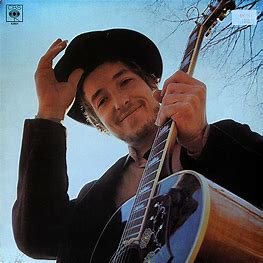
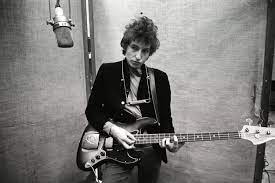
Bob was a restless cat. His hair was longer and wilder now. Minnesota was a dream or at best, a faded picture on a postcard from home. The Martin guitar didn’t do it for him anymore, nor did Pete, Woodie, or Joan. He hooked up with some Canadian boys with electric guitars and organs and traded the acoustic for a Fender Strat and a Super Reverb Amplifier. He was hip…he was in the scene…current and cool. He was tired of writing songs about nothing that seemed like something after a few bottles of wine and some grass. All these young hippie kids thought he was the Messiah of music..the second coming, he tried walking on water and almost drowned, all for believing the hype. He was done. Joan B. was clingy, handsy, folksy, and too natural for his taste. She didn’t shave her armpits or legs and he was sick of her traditional whiney folk music. He had been to Monterey and played grab-ass with Janis. New York can go to hell. He was going to Nashville and pick with them cats that played cool as country water. Chet Atkins invited him to dinner. Johnny Cash invited him into the fold. He was sold on country cooking and Gibson guitars. Nashville Skyline was his opus. Cash led him to the promised land. He found Baby Jesus in a snow globe at the Bluebird Cafe. He put the Menorah in his pantry and laid out the “Good Book” on his coffee table, next to the crystal ashtray and his roll-your-own cigarettes. Bob was a Christian now, his Jewish days behind him for a while, but he would revisit them often. Joanie wanted a rematch..said she would be less competitive and write even crappier songs, Bob said no way, he couldn’t take another round of her. He thought about buying another motorcycle, but just for a minute. Naw…I don’t need another broken neck and leg. He purchased a machine gun in case the Black Panthers came to Woodstock, he would be ready. He wrote ten thousand songs and won the Pulitzer Prize. He kept the money. His son, Jacob is too hip and hangs out with girls from Laurel Canyon that have no talent for anything except spending his money and wailing. Bob tells him to get a haircut and a real job, he is now his own father back in Minnesota. Bob sells his song catalog for a Billion dollars to a group of Japanese. He’s flush with cash. He calls Paul and Ringo and tells them to stick it, he’s richer than they are now. Paul writes a song about it. Ringo sends him some Kale cupcakes. He revisits the Village. All the old hangouts are now fast food joints and iPhone shops. He walks the street, but no one recognizes him..he’s good with that. His cell phone rings, it’s Joan B., and she wants to meet for a salad and mineral water lunch. He wants a burger, he tells her he loves meat, and she gags and pukes on her Samsung phone. Bob laughs and walks into McDonalds for a Big Mac. The girl behind the counter asks him if he’s that guy on that “Survivor.” TV show. He says “No, I am a survivor.”
California Dreamin’ Chapter 6


New friends, a fresh vocation, and a fine abode for an extended stay. The Strawns couldn’t reckon their good fortune. Were they in the midst of a reverie, or was it a heavenly intervention from on high? My grandmother continued casting glances over her shoulder, half-expecting to glimpse the Guardian Angel who was running this show. Sister Aimee and her mammoth church would require some acclimatization, at least on John Henry’s part.

After the church service, which was more of a Hollywood show than a religious sanctuary, John Henry ambled backstage in search of Blind Jelly Roll Jackson. He rapped on a door marked “orchestra,” but receiving no response, he turned the unlocked knob and proceeded inside. There sat Jelly Roll on a red velvet setee while Sister Aimee fervently laid her hands on his cotton-top head, offering a vigorous prayer of salvation. Pancho Villa stood behind her, firmly attached, growling like a small lion and tugging hard at the bottom of her satin robe. Upon catching sight of John Henry, Sister Aimee hollered,

“Clear out, sinner! Can’t you see I’m rescuing this wretched man’s soul?” John Henry promptly shut the door and made his way back to his family, wanting no part in the strange affairs of that place. This church wasn’t through with him quite yet.

Two weeks into his new job, John Henry felt comfortable enough to open the case of his fiddle. During his time in Texas, he had earned the reputation of a “campfire fiddler,” skilled enough to keep up with any string band in Fort Worth. Nevertheless, this was not the path he aimed to follow. For nearly two years, Young Johnny had shown a deep interest in mastering the art of playing the instrument. The time had come to pass on this skill to the eager young man.

A visit to a local pawn shop produced a fifth-hand fiddle. It wasn’t much of an instrument, but for $5.00, case and bow included, it was good enough for the boy. Johnnie, when given the instrument, almost keeled over from joy. He took the fiddle to his back porch bedroom and began to torment every dog and cat in the neighborhood with his playing, which was more screeching than music.

Miss Angel Halo, a retired high school music teacher, resided a few houses away. She recognized that sound, having heard the screech of strings from her students for most of twenty years. Her Basset Hound, Baby Dog, cowered beneath the back porch while her feline companion, Miss Greta Garbo, made a hasty exit to escape the noise. Miss Halo made her way to the offending house and exchanged pleasantries with the Strawns. Over a cup of coffee, some neighborhood gossip, and a large slice of warm bundt cake, she offered her aid in schooling young Johnnie in the ways of musical notation and the art of the violin; she was a cello player herself. If the boy would mow her grass twice a week, and pull any pesky weeds in her flower beds, she would instruct him in learning the instrument.; no charge. The pact was sealed, and harmony was restored to the neighborhood.

Six weeks into his son’s tutoring, John Henry, not having heard the boy play, was curious if he had learned to play the fiddle. At his teacher’s insistence, Johnnie’s practice sessions were daytime only, and he was confined to the garage, door down, so as not to upset the neighbors.

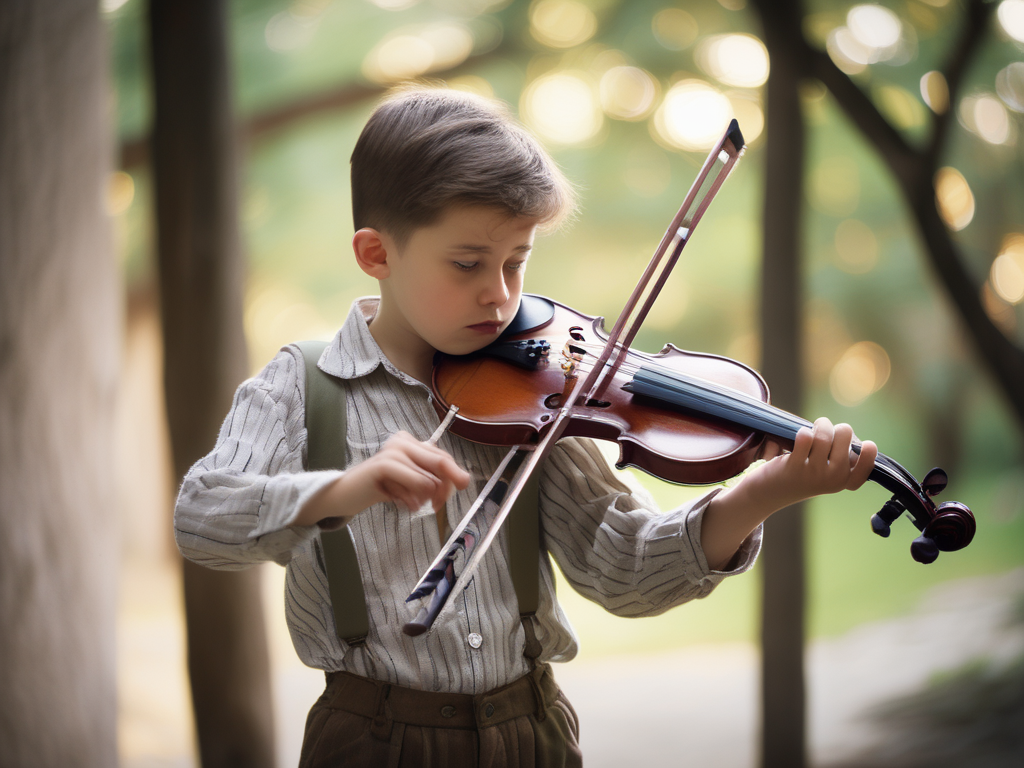
Saturday evening found John Henry on the front porch, nursing a cold beer and coaxing a few tunes from his beloved fiddle. He asked Johnnie to fetch his instrument and join him, and in a swift instant, the boy returned, fiddle in hand, eager to display his skills to his father. To John Henry’s amazement, as he played an Irish jig, his son effortlessly intertwined harmonious notes with his own, giving the old man a partnership in the form of twin fiddles. A father’s pride has no bounds, and he played on, ignoring the tears on his cheek. In time, that instrument and the dreams of a child would take young Johnnie to the pinnacle of country music.

More to come in Chapter 7

https://notesfromthecactuspatch.com/2024/07/28/california-and-the-magical-elixers-chapter-7/