
Ask A Texan: Hair Today, Gone Tomorrow


Words of Wisdom From A Wise-Assed Old Texan Taken At Your Own Risk

The Texan

A Mr. Rowdy Yates from Rawhide, Wyoming, writes that his wife is a fan of some young actress named Emma Stone and is convinced she has to emulate everything she does.

Mr. Yates: Mr. Texan, my wife Miss Dale was a champion barrel racer on the rodeo circuit up here in Wyoming for twenty years or so. She saw this young actress who looks a lot like her when she was a young’un in a movie called “The Help,” a story about a young southern girl who writes books about black maids and rich white plantation folks. Well, Miss Dale sort of looked like that young actress girl when she was younger, and she is in her fifties now. She has some identity issues, and I won’t fib, so do I. I’m losing my once Clint Eastwood-looking hair, and my teeth are falling out. I’m looking scary, but that’s another matter. Miss Dale still looks good in her Rocky Mountain jeans and Justin boots, and can still ride her old horse, Buttermilk. About a week ago, she read in a magazine that the Stone girls’ new movie is coming to town, and you could get in for a free screening if you shaved your head like the actress in the movie did. Bald women don’t look good. Miss Dale had the most beautiful head of grey hair in town. Long flowing tresses that any movie star would kill for. It was naturally piled high on her head, and she looked like a young Dolly Parton, but without the added additions. She went to the feed store, bought some horse shears, and shaved her head for a free ticket to that stupid movie. Now she looks like Yule Brenner and is going around thinking she is a female Pharaoh or something. I didn’t notice this for the forty years we’ve been married, because she had a lot of hair, but her head is shaped like a cone, and her left ear is about an inch lower than her right one, and two tiny horns are growing out of the top of her scalp. She’s gotten really testy and told me to buy her a new Dodge truck Chariot model to drive to the movie premiere. She says crap like ” So it shall be written, so it shall be done.” I wish she would go out and buy a Dolly Parton wig or something. Do you have any ideas for helping an old cowpoke out?

Miss Dale

The Texan: Boy, Mr. Yates, I feel your pain, all the way down here in Fort Worth. I can’t relate to your hair problem; I still have all of my teeth except for the alien implant in one of my molars, and my snow-white follicles are flowing like Robert Redford’s, although ole Sundance is a corpse now. Sounds like Miss Dale has been on TikTok too much; that’s where all this crap usually starts. My late aunt Beulah lost all her hair from bleaching it too much, so she had the Ten Commandments tattooed on her bald head; she was very religious and wound up in a bunch of B or C movies playing a nut-job nun. I checked up on this Emma Stone girl used AI in the movie; she didn’t really shave her head, so all these women going hairless like a Chihuahua just to get free tickets to a bad movie are morons. Go ahead and buy her the truck, but if she won’t put on a Dolly Parton wig, and go wander in the desert for forty days and nights, until her hair grows back out. Moses had a good time walking around in the wilderness. Who knows, you might find some stone tablets out there in the sand. I’m sending Miss Dale some new hair-growing gel and for you, a box of cherry bombs to blow things up in the desert. Send me a picture of Miss Dale.

Jesus Got A Mainline..Tell Him What You Want


Southwest Texas in the 1930s was its own special kind of hell. It wasn’t better or worse off than most of the state, but it was way out yonder and then some. Most Texas folks never ventured that far.

You could find a hundred preachers and ask them if God was punishing Texas farmers, and they would all praise the Lord and tell you times are hard, but we are blessed. Preachers back then were good at blowing smoke up folks’ backside, and then blessing them after the plate was passed.

One main highway, US 377 from Fort Worth, led to Stephenville, Dublin, Brownwood, Coleman, Santa Anna, and on to San Angelo, then farther out to desolate West Texas and the Chihuahuan Desert Big Bend. Small crop and cattle farms along the route, made up of God-fearing, gun-toting, worn-down, and dirt-poor families, faded into heat waves and obscurity as the fence post clicked by. The WPA was new to road and highway repair. Craftsmen and skilled labor were scarce, and what was available was assigned to building and repairing buildings, schools, bridges, and parks. The last place our government wanted to send its money was to the South to make living conditions better for poor southern white folk. Not much has changed in Washington, but we folks in Texas figured it out.

My grandparents, during those years, were cotton farmers in Santa Anna, Texas. A good crop of anything was a dream, a decent one, a miracle. Johnson Grass and Thistle Weed ruled the rows, and if a family could keep them at bay, a sellable crop of cotton might be picked: that’s if rain fell, and like miracles, there wasn’t much of either available.

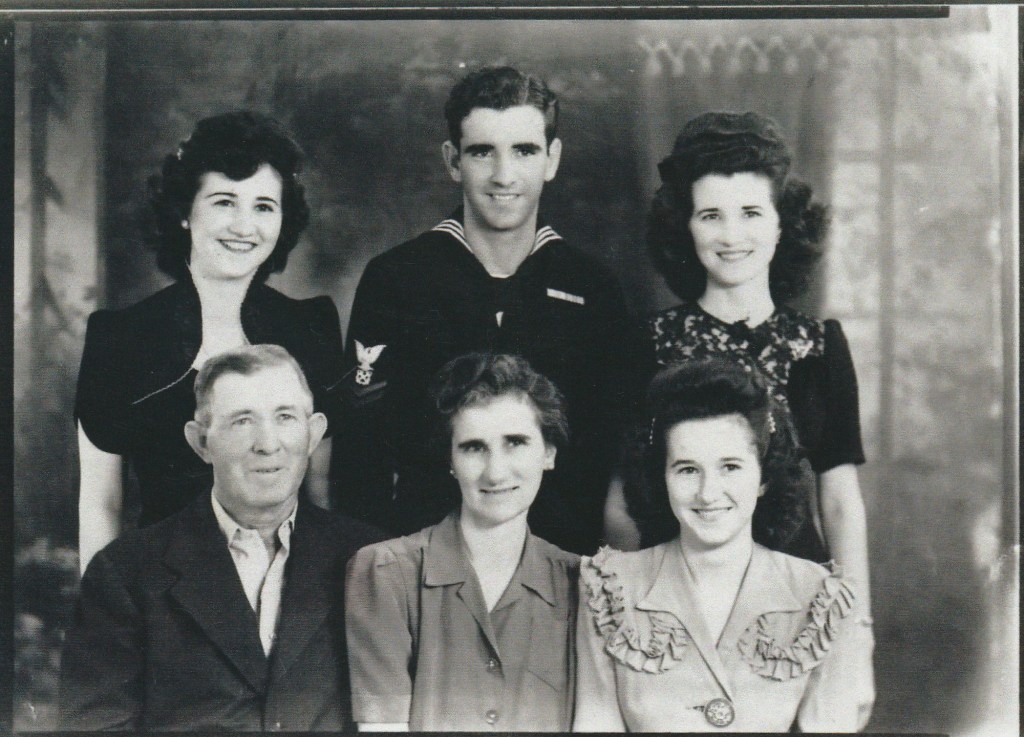
My mother, Mozelle Manley, one of four children, lived on her parents’ farm and suffered through those hard-scrabble times. These are her recollections as told to me over many years. Sometimes over a glass of wine, or a late-night conversation, or just a visit while she prepared dinner. She didn’t keep a diary or put her thoughts to paper, but she was exceptional in her oral history, and I, if nothing else, was a devoted son and an apt listener.

Around late September, the cotton was getting ripe for picking. My grandfather, a miserly old goat, used his children as unpaid farm labor, which was the custom back then: the more kids you had, the less labor you paid. My mother, a delicate young girl, wanted to write poetry and stories, but her pen was the wooden end of a hoe, chopping weeds in the cotton rows. I learned this after I was an adult in my forties, and she finally gathered the courage to tell me about her childhood years. I played the part of the good son, listener, and historian.

Pickers would come to their area around harvest time to pick the cotton for the families they knew needed the help. They mainly were black folk from around San Angelo, or farther west. They had their own farms, but could make a good buck picking sacks of white gold, enough to hold them over for the winter months and beyond.

One family would come to Santa Anna every year: a large black family from San Angelo. The patriarch was an old snow white haired man folks called “Preacher.” He was an actual certified man of God with his own small country church, but had a passel of kids that worked to keep the family afloat. My grandfather never knew much about the man, or the brood, but always paid them in cash money, and trusted him enough as to not quibble over the weight or his sacks of cotton weighed at the gin at the end of each day. Preacher always said he had a “mainline to God.” No one doubted that, ever. You could see it in his eyes, his face, his demeanor, and his spirit that traveled with him like a treasured handbag. Men of God have a discerning spirit and a glow about them, even in the dark of night.

Every summer, my mother and her siblings would chop weeds in the cotton rows. Pesky little growths that kept the poor soil’s nutrients from feeding the precious cotton bolls. By harvest time, the entire group of children was worn down to a nubbin and ready to catch the first hobo freight out of town for Fort Worth or Dallas. My grandfather was a hard-assed father who used his children as day labor and often treated them the same way. In his later years, he found Jesus and softened a bit, but only enough that you could spread his soul like hard butter on a two-day-old biscuit.

Preacher and his family would show up about the time grandfather was pacing the wood off of the back porch floor. They would pitch a few tarp tents, sleep in his barn and eat a few of granny’s five-hundred or so Chickens. The cotton was picked, weighed, and the Preacher and his clan got their cash and went home to San Angelo and their church. This went on for years, maybe a decade or more.

As my mother and her siblings aged and graduated high school, they knew what they must do: leave the farm to forge a life for themselves. My uncle joined the Navy, fighting in the Pacific theater against the Japs. My mother and her two sisters caught the train to Fort Worth and built bombers and fighters in the aircraft plants for World War II. The days of free labor were over, and grandfather switched from cotton to maze, corn, and Johnson grass for hay. Preacher came back once, but seeing that the end was there, never returned. He knew the things that could kill a family’s spirit, and he didn’t care to see this one end. He truly had a mainline to God. I found it amazing and yet amusing what a few glasses of wine and a few hours with my mother taught me about her family.

Having a mainline to God is a special gift. My mother knew this and always kept Preacher in her prayers and thoughts.

The Comedic Side of Childhood Baptisms: Learning To Swim In The Holy Waters


I was a Southern Baptist kid, not by choice of my own, but by my mother and father’s doing. I was a feral six-year-old, and my sister was a swaddled titty baby along for the ride. My father had not yet been dunked, but my mother had been many times at the First Baptist Church in Santa Anna, Texas. I was a captive, unable to escape, so I had no choice but to enter the holy tub of East Fort Worth’s unfluoridated river water.

The good Reverend Augustin Z. Bergeron, our illustrious chain-smoking, iced-tea-drinking preacher from the bayou of Louisiana, was a world champion baptizer. He could hold a body under the water for a good minute while orating the word of God to the congregation on why this sinner had found their way to his tub of holy water. I was a kid, I didn’t know sin, or lying, or anything, I was just a dumb little fart that was dragged to church every Sunday and fell asleep in my own sweat-covered pants sitting on oak wooden pews, holding my feet high so I wouldn’t be dragged to the depths of Hell through the hot wooden floor of the church. My sainted mother thought it was time for me to take the dunking, which marked the start of a once-a-year ritual that would last for half a decade. I was baptized so many times that’s how I learned to swim. It was that or drown. My skin was permanently wrinkled, my scalp was free of Brylcream and dandruff, my skin was soft, and I smelled of Trinity River holy water most of the school week after my Sunday dunking. I may have been the cleanest and holiest kid in school. My teacher, Mrs. Edwards, a strong Christian lady of faith, always knew on Monday morning that I had been cleansed; she treated me better than the other little heathens in our class. I got two towels to lie on at nap time. I rather liked my status.

I remember my first baptism. I was barely six years old. My mother cornered the good reverend and demanded I be cleansed. My cousins, all a few years older, were considered world-class professionals, having been dunked every Sunday for two years. Mother, not wanting to be outdone by her sister, needed me to catch up. Reverend Z was hesitant because I had not been a regular attendee at Sunday School, but that didn’t deter my mother; she was determined to pursue her mission. He finally agreed over a glass of iced tea while my mother smoked three Camel cigarettes while nursing my sister and making her point.

The big-haired church ladies sang the usual hymns, a few of the overly faithful fainted and were carried out of the church. Reverend Z preached his usual knock-down-drag-out sermon, complete with rolling on the floor, smoking a half-pack of Lucky Strikes, and drinking a gallon of iced sweet tea. Not a hair on his coiffed head was out of place, and his suit was creaseless. He was a holy mannequin of God, in a good way, of course. The good Lord appreciates a snappy dresser.

After the two-hour sermon with four or five cigarette breaks, the line of folks to be baptized was down to me. Dressed in my best pants and a starched white shirt, Snap-On tie, and my new Timex kids’ watch, I was somewhat stylish for a boy my age. The young girls in the congregation gave me their toothless grin of approval. I had no idea what awaited me when the good reverend called my name to approach the pulpit and the holy tub. It was a quick affair. Reverend Z lifted me into the water, shoes, watch and all, said a few words, held me under until my legs kicked, and then raised me up, gasping for air. I was terrified. If the holy ghost had entered my body or wrapped their arms around me, I was unaware. I gagged and couldn’t catch my breath. The good reverend, seeing I was in holy distress, slapped me on the back, causing my breakfast to hurl into the holy water, which in turn made the congregation gasp in horror. This dumb-assed kid puked into the baptismal water, blaspheming and ruining the whole experience. I had eaten biscuits and gravy that morning, so the volume and solidity of the puke were rather disgusting. Reverend Z literally threw me out of the tank, lit a cigarette, took a swig of tea, and continued with a remarkable recovery sermon, saying I had rebuked the devil. The mess in the tub was the demon I expelled. It was a brilliant recovery, a saving grace for both of us. I went on to participate in many more Baptisms over the years and improved with each one, learning to hold my breath and refrain from eating before church.

Getting Down With Reverend A.Z. Bergeron: My Time As A Southern Baptist


Brother Dave Gardner

After church service on Sunday, I was visiting with my Pastor. I had finished playing in the worship band, and we talked music for a minute or two, then he asked me about a recent post I had written about my uncle’s dog eating his false teeth. He wanted to know if the dog ate all the teeth and whether the story was true.

I am blessed with a colorful family on both my parents’ sides, so most of what I write is factual and as accurate as my old mind remembers. My cousins disown me, and the rest of the living family thinks I make everything up and have a mental disorder, which I may have, thanks to a bad fall and brain trauma I suffered a few years back that erased part of my memory. However, I didn’t need that part anyway; I still have plenty to tell. I will admit to embellishing the historical facts a bit, only to make the story more believable and easier on those who lack imagination. If I hadn’t witnessed the events firsthand, I wouldn’t believe them either.

The Pastor and I got to talking about my experience as a child attending the Polytechnic First Baptist Church back in the 1950s. I was young, only six years old, with no formal religious training or exposure, except for a few weeks of vacation Bible School in Santa Anna, Texas, taught by two of the meanest, vengeful old bags in town —old maid sisters who were as mean as a sun-stroked Rattlesnake. So my attending that church was a tiny miracle, because I was traumatized by the old battle-axes and should have been in professional counseling. My parents were always short on cash, so a cup of hot Ovaltine and some cookies were the cure for most everything, including childhood trauma.

The good Reverend Augustin Z. Bergeron, the preacher at Poly Baptist, was no mere mortal man. He came from the deep in the Louisiana bayou country, a small Parish named Chigger Bayou, which is also the home of Le Petite Fromage and her daddy, the famous Cajun musician Baby Boy Fromage. My father was good friends with Le Petite during his teenage years in Los Angeles, California.

Reverend Bergeron possessed magical, mystical, fantastical powers, or so the legend is told in Fort Worth. He could cure folks from almost any malady, and did so weekly during Sunday services. He possessed an uncanny resemblance to the famous preacher turned comic, Brother Dave Gardner, another southerner with a bombastic Beatnik style wit and a side wink at southern-style Christianity. Reverend Bergeron either copied Gardner or Gardner saw the good reverend in Chigger Bayou and stole his schtick, which was controversial for a preacher. My father always compared him to Brother Dave, saying his wit was just as sharp and funny. I was a kid, so I didn’t get any of it. I was two years away from discovering Gardner’s comedy records, but when I did, I wore them out and fancied myself a mini-Brother Dave: when I wasn’t pretending to be Mark Twain.

The congregation at Poly Baptist never knew what to expect when the service started at 9 AM. The chorus of big-haired gals in purple robes sang the traditional hymns, all boring and dry as a week-old biscuit. Reverend Bergeron would saunter in from stage left, grab the microphone off the pulpit, and start singing like Ray Charles. The organist followed suit, and the choir became Martha and the Vandellas. That’s when the place started rocking like a black church in the Mississippi low country, which was strange, because most white folk Baptist churches in Texas didn’t have music other than a choir, and no hot-shot keyboardist. The Reverend would dance across the stage, duck walking like Chuck Berry, spinning, falling to his knees, yelling “Thank you, sweet Jesus”, then crawling across the stage like a baby, and, all the time holding on to his lighted Camel cigarette and the microphone. Another blasphemous act, since smoking was deemed a sin by the church. He also had a large Tupperware tumbler of Ice-Cold sweet tea sitting on the pulpit and would constantly refill the tumbler from a pitcher just off stage. Some folks speculated it wasn’t tea, but hooch, and that was the reason for his antics. My parents loved the guy and would smoke as many cigarettes as he did during the service. Almost everyone in the church smoked and would drop their ashes on the wood floor, another sinful citation. An ethereal cloud of toxic blue smoke hung in the air of the un-airconditioned church. It was so thick that it hid the tops of the stylish ladies’ Bee-Hive hairdo. It gave the place a creepy feeling, as if we were suspended in the clouds or the fires of Hell were seeping through the cracks in the old wood floor. I believed it to be from below, and always kept my small legs propped on the Bible holder on the back of the pew. Satan wasn’t going to pull my young butt through those cracks in the floor.

Our family left the church a year or two later and attended an Episcopal Church, which was boring compared to Reverend Bergeron’s Baptist Church. I still dig Brother Dave Gardner.

Ask A Texan: A Life Without Fireworks? Not In My Lifetime


Unfiltered and Unfettered Advice From A Texan For Folks That For Some Reason Just Can’t Seem To Make It Here. Bless Their Hearts.

The Texan

The Texan: Recently, I’ve received numerous inquiries regarding my infatuation with Pyrotechnics, Fireworks, and things that explode. I won’t beat around the Prickly Cactus; the letters are talking about my love for that classic American invention: Cherry Bombs, the firework of my childhood. Inexpensive, well-made in the USA, it packed a powerful punch and was too dangerous for children. Sure, my cousins and I had Black Cats, Lady Fingers, Doodle Bugs, and other puny munitions that could barely destroy an Ant hill or a Dixie Cup, but nothing could top the vaporizing, nuclear power of a well-placed Cherry Bomb. My sister and her cousins and friends played with Sparklers: a stick of iron wire coated with magnesium nitrate and potassium chlorate that reaches 3000 degrees. What fun, and what could go wrong letting small children wave around a welding torch? This was well before parents found out that those things could disfigure or kill their child, and cigarettes gave you lung cancer. I’ve told many of my readers that dangerous fireworks and the 1950s go together like Forest and Jenny, and peas and carrots.

My fondest and fuzziest memories of 1950s summers involve fireworks. My cousin, Jok, and I always had a supply of them thanks to his older brothers and my neighbor, Mr. Mister. Jok’s youngest-older brother, Michael, our main supplier of fireworks, purchased an MG sports car, a beautiful piece of English engineering. There it sat, parked under a large Oak tree to protect its delicate paint job from the brutal Texas sun. We had just completed blowing up my father’s Aunt’s mailbox with a Cherry Bomb, and the lure of illicit excitement overrode our common sense. Jok placed the munition on top of the left front tire. He lit it, and, giddy with excitement, we dove under their covered porch, awaiting the blast. The fender muffled the initial explosion, but a cloud of smoke told us the test was successful. Creeping closer to the injured auto, we could see the fender had an upward pooch about six inches high, and the top of the tire was shredded. We knew instantly that retribution would be swift and painful, likely lasting for days, if not weeks. It was. First, there were the multiple butt whooping’s from Aunt Berel and Uncle Orem, followed by one or two from his brother, a few from my mother, and then one each from the other Aunts, culminating in the final one from my grandmother and grandfather. They never found our stash of Cherry Bombs.

This explains my fondness for gifting a box of Cherry Bombs to almost all my readers who write in for advice. Nothing relieves anxiety and tension like blowing something up with fireworks.

God Bless Texas and Davy Crockett.

The Neighborhood Wizard Strikes Again!


I wrote this story a while ago, but in recognition of the upcoming Colonial Golf Tournament, I find it fitting to republish it. Some, or most of my readers, think the Misters are a fictitious couple; I can assure you they were neighbors and as crazy as I portray them in writing. Most everyone recalled has passed, so I’m sure they won’t mind the praise.

Mister Mower 5000

I have written about my childhood neighbor and his wife before. Mr. Mister and Mrs. Mister of Ryan Ave, Fort Worth, Texas. Every kid should be so lucky to have known the original mad scientist.

Pictured above is Mr. Mister’s early prototype of “The Mister Mower 5000,” a self-propelled riding reel mower suitable for golf courses and yard snobs. This baby was something else.

Constructed from junk jet aircraft parts he pilfered from Carswell Air Force Base, his employer, this little hummer would reach a top speed of 20 miles per hour and cut the grass so low it would give an ant a flat top haircut. It was the first riding mower with a zero-turning radius, a drink holder, an ashtray, and an under-dash air conditioner taken from a wrecked Chevy Impala. The fathers in our neighborhood would gather and watch when Mr. or Mrs. Mister would mow their front lawn. Mrs. Mister was a Hollywood starlet type, so she usually drew the largest crowd because she always wore a bikini bathing suit for maximum tanning effect.

In 1956, sales of Toro lawnmowers were sagging. After learning of Mr. Misters’ new invention, the executives arranged a demonstration at the Colonial Country Club of Fort Worth, home to the prestigious Colonial Golf Tournament. Mr. Mister was ecstatic.

The demonstration was the day before the big golf tournament, so the Fort Worth bigwigs could attend and be handy for photo-ops. The Misters arrived with the “5000” strapped to its custom-made trailer towed behind their menstrual red Alfa Romeo sports car. Fred and Ginger, their poodles, were strapped into their car seats, wearing head scarfs and sunglasses like Mrs. Mister. Ben Hogan was almost as impressed with the invention as with Mrs. Mister, so he asked if he could be the first to drive the contraption. Of course, Mr. Mister, a slobbering Hogan fan, agreed and instructed Mr. Ben to operate the mower. Remember, this machine was experimental and could fail completely at any moment.

The mower was rolled into place on the 18th green, which was a bit shaggy and needed a buzz. Ben Hogan seated himself on the machine with his ever-present cigarette in his mouth. Mr. Mister set the required mowing height and gave Ben a few final instructions, but Mrs. Mister was standing next to Ben, who was transfixed on her copious appendages and didn’t hear a word of instruction.

Now, Ben Hogan was the world’s best golfer, but he didn’t know Jack-squat about driving or operating machinery. So Ben put the mower in gear and started around the green. “Ooohs and Ahhhs” from the crowd gave him a bit of encouragement; the newsboys were snapping some great shots, and folks were clapping and whistling, so he upped the speed a bit and pulled a lever underneath the seat, hoping to increase the efficiency of the “5000.”

At that moment, Mr. Mister realized that he had failed to warn Ben about that one lever that was hands-off. Too late. Ben engaged the “Scalp” mode, which increased the power and lowered the blades to the “Eve of Destruction” setting. At twenty-five miles per hour, the “5000” and Ben Hogan holding on for his life, dug up the 18th green deep enough to plant summer squash and Indian corn. Dirt and dwarf Bermuda was flying like a Texas twister. The Leonard Brothers, part owners of the club, fainted in unison. Mrs. Mister, a track star in her early years at Berkley University, and still in great shape, sprinted to the runaway mower and leaped onto Ben’s back, hoping to reach the kill switch, another part Mr. Mister had failed to show Ben.

Mrs. Mister

Mrs. Mister finally attempted to reach the switch by climbing over Mr. Hogan’s head and wrapping her track star legs around his neck. Finally, on her last effort, she got the toggle, and the mower abruptly stopped, throwing her and Mr. Ben off the machine and into the beautiful pond adjacent to the green.

Ben waded out first, bummed, lit a mooched Camel, and strode across the destroyed green to the bar, where he ordered two double Scotches. Mrs. Mister, wearing a promotional white tee shirt with ” The Mister Mower 5000″ printed on the front, waded out of the pond to a round of applause. The news photographers were popping flashbulbs like firecrackers.

Of course, Toro passed on the mower, and Mr. Mister was distraught until he started his next invention. The 18th green was re-sodded in a few hours, Ben Hogan won the Colonial Tournament, and Mrs. Mister inaugurated the first Wet T-shirt Contest in Texas.

Ask A Texan 4.25.25


Serious advice for those who don’t live in Texas but wish they did.

Mr. Cletus Snow sent me an email seeking advice.

Cletus: Mr. Texan, I’m a long-haul trucker for Walmart out of Arkansas. My route takes me to Chicago, then to Minneapolis, then to Yellowstone, then to Arizona, and I wind up in Fort Worth. My dog, Bandit, and I are trucking 3,000 miles a week hauling Coors beer. I’ve developed a fatal case of hemorrhoids, and so does Bandit. Any suggestions on how to deal with all this mess. East Bound and Down.

The Texan: Mr. Snow, you have my sympathies. I, too, drove a truck for a while, and the biggest complaint I heard at the truck stops was the scourge of the Hems. I suggest you remove the driver’s seat and drive while standing up, thus relieving pressure on the sensitive area. I’ve got a good buddy who developed a cure for hemorrhoids when he was killing Viet Congs over in the Nam. He got his hands on a Vietnamese Death Pepper, the hottest pepper on the planet. It took him a while, but he invented a hot sauce that can cure almost anything. Since he is a Texan, too, he calls it “Davy Crockett’s Ass Cannon.” Believe me, I’ve seen it cure the lame, make a blind man see, give an old woman the body of a Hooters girl, and, of course, burn off those pesky hemorrhoids. I’m sending you a bottle. Keep in touch.

The Magic of My Grandfather’s Watch


Port Aransas Fishing Pier, 1950s

The makeshift sunblock my father had fashioned from a tarp and four cane fishing poles wasn’t beautiful, but it worked fine. Sitting under the contraption was my little sister, mother, and grandmother. I was eight years old. He and my grandfather were not far away, holding their fishing rods after casting into the rough surf. Whatever they caught would be our supper that evening. I wasn’t invited to fish with them; I was too young, and the surf too dangerous. Besides, my small Zebco rod was only strong enough to catch a passing perch.


The visit was our annual summer fishing trip to Port Aransas, Texas, a small fishing village on the northern tip of Mustang Island. I don’t remember my first visit, but my mother said I was barely one year old. After that, the Gulf of Mexico, the beach, and that island became part of my DNA


I’m an old man now, but I can recall every street, building, and sand dune of that small village. Over the decades, it became a tourist mecca for the wealthy, destroying the innocent and unpretentious charm of the town. Gone are the clapboard rental cottages with crushed seashell paving and fish-cleaning shacks. Instead, rows of stores selling tee shirts made in China sit between the ostentatious condominiums, restaurants, and hotels. I prefer to remember it as it was in the 1950s when families came to fish, and the children explored the untamed beaches and sand dunes.


Born in 1891, my grandfather was an old man by the time I was eight years old. Tall and lanky, with white hair and skin like saddle leather. He was a proud veteran of World War 1 and as tough as the longhorn steers he herded as a boy. He lost part of his left butt cheek from shrapnel and was gassed twice while fighting in France. Nevertheless, he harbored no ill feelings toward the Germans, even though he killed and wounded many of them.


On the contrary, he disliked the French because they refused to show proper gratitude for the doughboys saving their butts from the Krauts. As a result, he wouldn’t allow French wine in his home. He preferred Kentucky bourbon with a splash of branch water or an ice-cold Pearl beer. He left his hard-drinking days in Fort Worth’s Hell’s Half Acre decades ago. He told a few stories about the infamous place, but he was careful to scrub them clean for us youngsters.

His one great joy in life was saltwater fishing with my father, playing his fiddle, and telling stories to whoever would listen. The recounting of his early childhood and life in Texas captivated my sister, cousins, and me for as long as the old man could keep talking. He told about being in France but never about the horrors of the war. He lived a colorful childhood and, for a while, was a true Texas cowboy. Half of it may have been ripping yarns, but he could tell some good ones. My mother said I inherited his talent for recounting and spinning yarns. If that’s true, I’m proud to have it.


He could have been in a Norman Rockwell painting while standing in the surf, a white t-shirt, a duck-billed cap, and khaki pants rolled to his knees. I was in awe of the old man, but I was too young to know how to tell him. My grandmother said he was crazy for wearing his gold watch while fishing.


The timepiece was a gift of gratitude from his employer when he worked in California during the Depression years. A simple gold-plated 1930s-style Bulova. It was an inexpensive watch, but he treated it like the king’s crown, having it cleaned yearly and the crystal replaced if scratched. He called that watch his good luck charm and wore it when fishing for good juju. It was a risk that the salt water might ruin it, but he took it. He caught five speckled sand trout and half a dozen Golden Croaker that day, so the charm worked. Add the three specs my father snagged, joined with the cornbread and pinto beans my mother and grandmother cooked, and we dined like the Rockefeller’s that night.


The next few days were a repeat of the same thing. I rode my blow-up air mattress in the shore break and caught myself a whopper of a sunburn on my back. The jellyfish sting added to my discomfort. I was miserable and well-toasted, but I kept going, determined to enjoy every second of beach time.
We returned to Fort Worth as a spent and happy bunch. The family would give it another go the following year.


Two years passed. One day, my father told me my grandfather was sick and would be in the veteran hospital in Dallas for a while. He mentioned cancer. I was young and didn’t understand this disease, so I looked it up in our encyclopedia and then understood its seriousness. One week, he seemed fine, sitting in his rocking chair playing his fiddle and telling stories, and the next week, he was in a hospital fighting for his life. His doctor said being gassed in the war was the cause of his cancer. It was not treatable and would be fatal.


Near a month later, he was not the same man when he came home. His face was gaunt; his body, which was always lean and wiry, was now skin and bone. The treatments the doctors ordered had ravaged him as much as the disease. My grandmother’s facial expressions told it all. There was no need to explain; I knew he would soon be gone. My father was stoic, if only for his mother’s benefit. His father, my grandfather, was fading away before our eyes, and we couldn’t do a thing to change the outcome.


A week after returning home, Grandfather found his strength, walked to their living room, and sat in his rocking chair. He asked me for his fiddle, which I fetched. He played half of one tune and handed it back to me. I cased it and returned it to the bedroom closet; he was too weak for a second tune. His voice was raspy and weak when he spoke, but he had something to say, so I took my position on my low stool, as I often did when he recounted his tales. I noticed his gold watch was loose and had moved close to his elbow. His attachment to the timepiece would not allow removal. It was a part of him. He spoke a few words, but continuing was a painful effort. My grandmother helped him to his bed. He removed his watch, placed it on the nightstand, and lay down. He was asleep within minutes. From that day on, he would sleep most of the time, waking only to be helped to the bathroom or to sip a few spoonfuls of hot soup. I would visit after school, sitting next to him while he slept, cleaning his watch with a soft cloth, winding it, and ensuring the time was correct. I felt he knew I was caring for this treasured talisman.


I came home from school on a Friday, and my grandfather was gone. I could see the imprint in the bed where he had laid, and his medication bottles and watch were missing from the nightstand. Mother said he took a turn for the worse, and my father took him back to the veteran’s hospital.


The following day, my father came home and told us my grandfather had passed away during the night. I noticed he was wearing his gold watch. I thought if the timepiece was such a lucky charm, as I had been told all these years, why had it not saved my grandfather?


Life continued on Jennings Street; for me, some of it was good, and a little of it was not. Father wore grandfather’s watch in remembrance and respect. He waited for the magic to come. He gave me his worn-out Timex, which was too big for my wrist, but I wore it proudly.


The magic of the watch began to work for my father. He acquired two four-unit apartment houses near downtown, fixed them up a bit, rented them out, and sold them. We then moved to Wichita Falls, where he started building new homes. A year later, we moved to Plano, Texas, where he continued to build houses. It appeared the good luck of the watch was working overtime. I became a believer in this talisman. The hard days in Fort Worth were well behind us now. The future held promise for our family.

On a day in 1968, riding with my father to lock his homes for the night, we had a long overdue father-to-son talk. I rarely saw him because of his work, so I welcomed the time. Had I thought about college? What was going on in my life? I played in a popular rock band, so that was a point we touched on. He didn’t want me to become a professional musician as he had been. I assured him this phase would end soon. He and my mother were worried I would be drafted and sent to Vietnam. We talked for two hours. He remarked that as long as he wore his father’s watch, everything he touched turned gold. My father was successful, so how could I doubt his beliefs?

In the summer of 1969, the band on the old watch broke while we were fishing for Kingfish in the gulf off Port Aransas. While gaffing a Kingfish, my father bumped his wrist against the side of our boat. The watch fell into the water, and in a flash, it was gone. He said that if he had to lose it, this was a fitting end, lost to the water his father loved so much.

Our Neighborhood Wizard


We got ourselves into so much trouble that our Mothers would take shifts whooping everyone’s butt just to give the other moms spanking arm a break.” It was 1956, and that’s how it was for my neighborhood pals and me.

Summer was our best and our worst season because there was more playtime outside, increasing the opportunity to get ourselves into predicaments that never ended well. Our moms didn’t buy into that “Dr. Spock crap.” I would bet that none of the moms in my neighborhood ever heard of that weirdo. There was no negotiating out of corporal punishment, and trophies were non-existent.

My neighbor, Mr. Mister, was the neighborhood scientist and inventor; our very own Mr. Wizard. Not the dweeb on television, but a real-life mad scientist with a movie star wife.

We kids would spend our weekends sitting underneath his Mimosa tree, watching him build his oddball inventions in his garage that doubled as his laboratory. Looking back, he was more a “mad scientist” than an inventor. The only thing missing was the Frankenstein monster lumbering out of his garage.

Mrs. Mister, his Hollywood-looking wife, would keep a steady supply of cold Kool-Aid and cookies flowing. She closely resembled the movie star Jane Mansfield but could bake a cookie-like Betty Crocker. Always with a frosty martini in one hand and a cigarette in the other, she was the dream Mom none of us had. No butt whooping’s around the Mister household, no matter what we said or did. So we were free to be our feral selves.

Some of Mr. Misters’ inventions were downright crazy. My two favorites were his motorized and drivable charcoal griller and the half-size rocket that took Fred and Ginger, his wife’s twin poodles, into the stratosphere, returning the two. “Dog-o-nauts” small space capsule safely to earth; via an Army surplus parachute.

After the spectacular launch, which also torched the Misters’ back yard and part of their garage, Mr. Mister was paid a visit by the F.B.I. and the Air Force. Who in the world knew it was a national security violation to build and launch a solid-fuel rocket from your backyard?

That incident caused Mrs. Mister to suffer a minor breakdown, so no more using the pooches.

As in most neighborhoods, there are disagreements with other groups of kids. A gang of mean and nasty punks lived across the railroad tracks from us. They were older, bigger, and made our lives miserable. We called them “The Hard Guy’s.” A few of them carried switch-blade knives that had been smuggled in from Mexico.
We all attended the same elementary school and suffered their daily attacks during the school year; now, they were sneaking into our neighborhood, cutting our bicycle tires with their switchblades, egging our houses, and stealing our goodies. So we devised a plan to get even, and of course, it involved our hero and mentor, Mr. Mister.

Mr. Mister said that he had experienced a similar gang of kids growing up in East Los Angeles. So he suggested a way to retaliate using every kid’s favorite firecracker, “Cherry Bombs,” delivered by an ancient invention called the catapult. Wow! what a guy. With his help, we built a small wagon-mounted catapult in a few hours. It was a beaut. He donated a shoebox full of the little bombs for the cause.

The first Cherry Bomb we launched from the weapon went 50 ft and exploded; not enough weight. So Georgie suggested putting a Cherry Bomb inside a sidewalk biscuit, like the ones his sister and her friends make.

For the folks that didn’t grow up in the 50s, the “sidewalk biscuit” is purely a kid invention native to Texas. It’s made by putting a large glob of dough on a red-hot 250-degree sidewalk and letting the heat do the rest.

We stuffed a Cherry Bomb into a fist-size glob of dough and placed it on my front sidewalk. Within an hour, we had our weapon of mass destruction. The hot concrete produced a biscuit-bomb the size of a grapefruit with a beautiful golden crust. Georgie tried to eat one and chipped a tooth.

The test shoot was a success; the biscuit bomb flew about 100 yards and exploded as it hit the ground; perfect. We were ready for revenge. Mr. Mister beamed like a proud Father.

Word in the neighborhood was that Chucky, the leader of the “Hard Guys,” was having a backyard birthday party, and his gang of hoodlums and their families would be attending. Unfortunately, we also learned that a few of our neighborhood girls would be there, which made them traitors to the cause. We tried to warn them without revealing our battle plan, but, oh well, they will be sorry when the crap hits the fan.

At dusk, our small group of commandos, wearing our best Army surplus helmets and packs, pushed the catapult to the edge of the railroad tracks. The party was in full gear, Elvis was on the record player, parents were dancing, kids were yelling, and a clown was making balloon animals; we could smell the hamburgers cooking, reminding us that it was supper time.

Skipper, our math wiz-kid, calculated the trajectory and distance with his father’s slide rule. Georgie loaded the “Biscuit Bomb” into the catapult pouch and then pulled a can of Ronson lighter fluid from his pack and doused the weapon. Countdown from five to one, I lit the fuse and the soaked bomb and pulled the release lever.

The “Flying Burning Biscuit Bomb” sailed high and long, leaving a trail of black smoke and flames as it soared toward its target. We gasped in awe at the beauty of our weapon.

The first biscuit bomb bounced once, landed on the charcoal grill, and exploded. The adults sitting nearby were coated in charcoal-broiled hamburger patties, weenies, and biscuit chunks. A piece of hot charcoal set Chucky’s mom’s beehive hair-do on fire, and his father wasted two cold Schlitz beers dousing the flaming mess.

The second “biscuit bomb” blew up “Squiggles The Clown’s” prize table, sending balloon animals, Captain Kangaroo penny-whistles, and birthday cupcakes in all directions. It was pure pandemonium at the party place.

The third bomb was a dud. We were in the process of loading a fourth when the “Hard Guys” came running towards us, followed by their fathers. We had no plan of retreat, no “plan B.” So we did what any commando would do; dropped our gear and ran like hell towards Mr. Mister’s back fence. Reaching the fence, we vaulted into the backyard and to safety.

Mr. Mister knew the attack was a bust, and he gathered us around the Mimosa tree. Mrs. Mister gave us a cold glass of Kool-Aid to calm us.

The “Hard Guys” and their fathers stood at the back fence yelling obscenities. Naturally, this didn’t go over well with Mr. Mister, so he walked to the back fence and addressed the lynch mob.

Mr. Mister didn’t sound like himself. His voice was deep and foreboding as he spoke to the group. ” Millard Mister here, Colonel, U.S. Air Force, this is my wife, Captain Jane Mister, U.S. Air Force, is there a problem here gentlemen?” The fathers jerked to attention, eyes forward. This sounded serious.

Chuckies father explained the scenario. Mr. Mister replied, ” I am aware of the operation and why it took place.” He then explained to the fathers all the havoc their sons were creating in our neighborhood. The gang of hoodlums realizing the jig was up, took off running for their homes, angry fathers right behind them. We had snatched victory from the jaws of defeat.

Mr. Mister turned, gave us a salute, and said, “job well done men.” Three kids stood as tall as nature would allow and returned his salute.

The rest of the summer was great for us, and Mr. Mister invented the first Air-conditioned Riding Lawnmower.


Finding My Voice Through Tall Tales and Truths


Over the years, I’ve spotlighted the storytelling skills of my two late Uncles, Jay and Bill. They remain in good standing and are the best liars and yarn spinners I have met. Each could have been as popular as Will Rogers, but they chose the farmhouse porch as their stage, shunning the spotlight and life as a celebrity.

Around the age of nine, I was convinced that the spirit of Mark Twain had somehow entered my body, and my destiny was one he had lived. My teacher, an older woman of little patience, was convinced that I was dropped on my head during infancy, which led to my outlandish literary behavior. She couldn’t see that I was destined to be a writer of some importance. Mathematics was a mystery I loathed, but I perked up when the curriculum came around to History and English. To me, everything became a story and originated from my grandparents’ farm, my extended street-rat crazy family, or neighborhood antics, and included made-up tales of ridiculous origins. Mrs. Badger, ever the suffering teacher, labeled me an insufferable pathological liar and called my mother in for the dreaded parental meeting, which included my school’s principal, who sat with a wicked wooden paddle in his lap, poised to administer punishment. Mother handled it well until we reached home. There was no butt whooping, but she did corner me in the kitchen, put her face nose to nose with mine and in a seething saliva spewing accusation said,

“You are one of them..my loathsome, worthless brothers have ruined you: I forbid you to associate with them, ever again.” She was right, they had, and I wore that tawdry badge proudly. All those nights sitting on the farmhouse front porch listening to their beer-infused tall tales, yarns, and lies formed me. I was spoiled, but happy goods. My family lacked the foresight needed to distinguish a liar from written fiction. My Aunt Norma, a tarnished angel, is the gal who taught me to read, write, and imagine. She understood my affliction.