Just Another Day Full Of Things


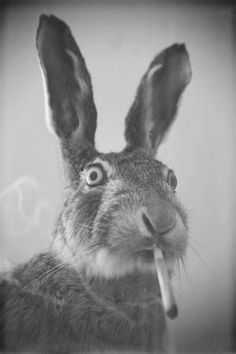
Before I kicked the smoking habit, I look better now

Old people do odd things: I know this firsthand. I’m good at it. A few months ago, the urge to gather and distribute my personal items to family and friends took hold. 2 am in the wee hours, wide awake, I wrote a list of my treasures and who might be the recipient when I assume room temperature. I found that over the years, I have accumulated more useless crap that no one would want.

My tool shed, art studio, storage shed, and junk pile will likely go to the nice folks at the local Goodwill store. The handicap shower chair and the two walkers will stay. The nice walker, the one with four wheels, a handbrake, and a seat, will likely be my new ride. Some guys get a Corvette; I get a souped-up walker. My friend Mooch says he can add a battery-powered motor to make the baby run 30 MPH.

A few weeks back, I bought back one of my acoustic guitars that I sold to Mooch when Momo and I moved to Georgetown, Texas in 2008. It’s a real beaut: a Gibson-made Epiphone E J160 e. Only fifty of them were made in Bozeman, Montana, likely by some of the Yellowstone Dutton family. Now, I have one guitar for each of my three grandchildren, of whom two play guitar.

Us’un humans collect things throughout our lives; it’s our nature. At the time, we might have needed them, but eventually, the things become useless “things” taking up space.

Momo and I are taking a road trip in mid-April. Back to Marfa and Fort Davis, Texas, the Big Bend Chihuahuan Desert. God’s country, big sky and brilliant stars. Marfa is our go-to escape. The town is full of eccentric street-rat crazy folks, and we enjoy interacting with them. I plan to interview a few while sitting at the bar in Planet Marfa, where most of them congregate nightly to swap lies and tell tall tales. I fit right in, my kind of folks, and I need fodder for my stories and yarns. I may fill my pickup full of “things” and give them to the characters I meet. Folks like free stuff and can give the things to their friends down the line.

From Nehi Soda to Napping Camps: A Journey of Texan Creativity


I read an article in my local paper a few days back. It was about a youngster from Louisiana who fed his pet earthworms small amounts of nuclear waste. This made them glow in the dark and grow to the size of a state-fair Corndog. 

He is now raking in cash and hawking them on his own late-night infomercials and online. Every fisherman in the South wants a giant wiggling glowing worm. Every bass needs one. It seems the folks below the Mason-Dixon line will fall for anything.

My family tree in the “old country” was chock full of these sorts. Dreamers, schemers, and medicine show hucksters. All died poor except one.

Take my Great-Great-Great Uncle Nehi, a puny Scott with a sweet tooth. He spent his spare time in search of sugary delights. One night, while experimenting with various potions of colored water, fruit, and healthy doses of sugar, he invented “Nehi Soda.” It wouldn’t be summer without a grape Nehi and a Moon Pie, would it? His tinkering resulted in the all-American soda. Soda pop made him wealthy. He died young from a roaring case of Diabetes. Still, he died prosperous and happy. 

I always preferred Dr. Pepper, but my parents made us drink Nehi every year on the anniversary of his passing.

If it wasn’t for dreamers and hucksters, a beloved section of our economy would not exist. There would be no infomercials on television and no online pop-ups. Drug stores would have fewer aisles for valuable little as seen on TV products. People would wonder how to make fresh juice. They would also wonder how to cover that bald spot. How would they puff their hair out to look like a jelly roll? How do they do this while roaming around town in a snuggie blanket with armholes? Hanging upside-down tomatoes would not exist. How would the astronauts write upside down without that nice ballpoint pen? I get a little scared thinking about what life would be like without these gadgets.

This past summer, my wife and I enjoyed lunch on a Saturday. We dined at a quaint restaurant alongside the Guadalupe River in Gruene, Texas. It was hot—a real sizzler—100 degrees in the shade. We sat outside on their covered deck. We enjoyed the river’s tranquility and were cooled by the misters. 

My wife, Momo, full of food and a cold beer, drowsily commented,

“A nap would be nice right now.” I agreed, but there was nowhere to have a nappy except the hot car, so that idea was out.

I summoned our bill and sat staring at the beautiful river. I watched the tubers drift by and listened to the lull of bubbling water. Nature’s respite entranced and hypnotized me.

 When my bill arrived, the server placed an ice-cold Nehi Grape Soda on the plate, bound for another’s enjoyment. I hadn’t seen a Nehi soda in decades. 

This boy and the girls slapped me hard. The Nehi, the river, the need for a nap, and nature hit me simultaneously. I couldn’t speak and only croak out, “Nap camp…Nehi…nappy.” 

Momo thought I was having a stroke. She whipped out her cell phone and started to dial 911. She stopped when I finally said,

“Uncle Nehi’s Nap Camp.”

She knows that stupid look. It was something akin to holding my beer and watching this. She waited for the spiel, which I was overly anxious to deliver.

Grabbing her reluctant hand, I dragged her down to the river bank. She was scared, but I was excited—invigorated and drunk on the elixir of my vision.

“Why didn’t I think of this years ago” I yelled,

“It’s like the boy and his nuclear fishing worms. It’s not too late, seize the minute, mark your territory, piss into the wind for a change. People need to sleep, they need a good nap, it’s our right!”

I was so excited that I waved my arms and spun around like a tent revival preacher. I was on a roll. 

I yelled with the excitement of a five-year-old on a sugar high,

“Over there, we can build cedar posts and metal roof pole barns by those trees along the river. We can add ceiling fans and misters. Let’s put up some comfy hammocks. We’ll have an outside bar selling Nehi sodas, cold Lone Star beer and baloney, and rat cheese sandwiches. There is a small barn with little hanging beds for the kids and dogs. Also, there should be a separate napping barn for in-laws and people you don’t care for. Imagine napping in a hammock beside the calm river, life doesn’t get any better. Right?”

A grizzled old fisherman was sitting by a tree with his cane pole, listening to this opera of fools. He said,

“That’s not a bad idea, sonny boy. But Old Blind Mable tried that back in 1959. She lost her butt, You can’t put a business in a flood plain. This river flooded pretty well every year back then, just as it does now. Old Blind Mable had a mess of hammocks and people sleeping in them. The river floods and washes everyone down to New Braunfels. This happens whether they want to go there or not. If you got some money to piss away, go ahead. I’ll have a nap here until it rains. Then I’m heading to high ground.”

Momo looked at me and said,

“let’s go home and have a nap, Einstein.”

I was crushed, a broken man. My vision was a pile of raccoon crap. A crusty old river rat shot it down. My wife agreed with him. No Nehi sodas, ice-cold Lone Star in a hammock, or nap camp. Another lost vision.

As we returned to the car, a large dog came strutting down the street, pulling a kid on a skateboard. I watched them cruise by and thought, a big skateboard for two. Add seats and get some big dogs. Rent them to pull people around town. Now, that’s a moneymaker.

Wagons Ho to California ! Chapter 2. The Arrival


Ten or so miles past the Needles California border station, my grandfather, John Henry Strawn, encountered a stooped, raggedy-dressed black man and a small dog walking along the side of the road. The man’s attire resembled that of a poorly dressed scarecrow. Without hesitation, he slowed the Ford, performed a swift turnaround, and approached the traveler. After stopping the car, he offered the old fellow a ride. Without hesitation, the traveler gratefully accepted, ensuring that his dog was settled in first, followed by his knapsack, a guitar case, and then himself.

A few miles down the road, the man broke the silence, introducing himself as *Blind Jelly Roll Jackson from the Deep Ellum Dallas, Texas, and his seeing-eye dog, a Chihuahua named Pancho Villa, who is blinded in one eye. The result of a dog fight with a Coyote, so he wears tiny sunshades because the bright sunlight hurts his good eyeball. Jelly says he is a blues man and is headed to Los Angeles to stay with a cousin and find work in a juke joint, and he, by accident, shot a fella in Dallas four times over a pay dispute. He said it was all Pancho’s fault because the dog said the man had a knife, so what else is a body to do. He pulled a leather Bolla from his knapsack, took a jolt, poured a little liquid into his palm, and let Pancho Villa lick it up. John Henry was sure it was whiskey, and after the dog drank it, he fell over and started snoring. Jelly’s chin found his chest, and he slept the sleep of the weary.

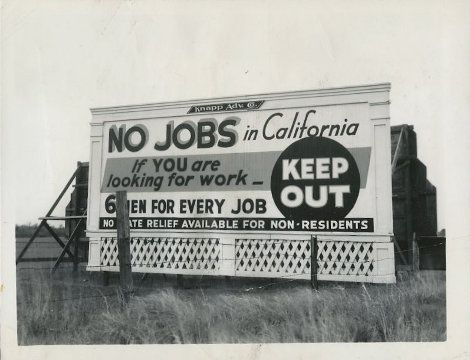
On the eastern outskirts of Los Angeles, they saw the first billboard, “No Jobs in California, Keep Out.” John Henry paid no attention to the sign; he was certain he could find a job on the docks in Long Beach. He was an artisan, not an Okie fruit picker. The next sign was for a migrant campground, $.25 per day, running water, showers, and clean grounds; John Henry took the turn off Route 66, drove a few miles, took two more turns, and found himself at a tidy campground guard shack. Unlike the border boys, the guard wore a clean, crisp uniform and was pleasant. The three-day fee was paid with small change from the small stash in grandmother’s purse. Their assigned camping slot was shaded by a tall Eucalyptus tree. This would do until a job was found. Jelly and Pancho Villa wandered down the main lane, stopping to let the children pet and scratch Pancho, who nipped a few fingers and chased the local feral cat.

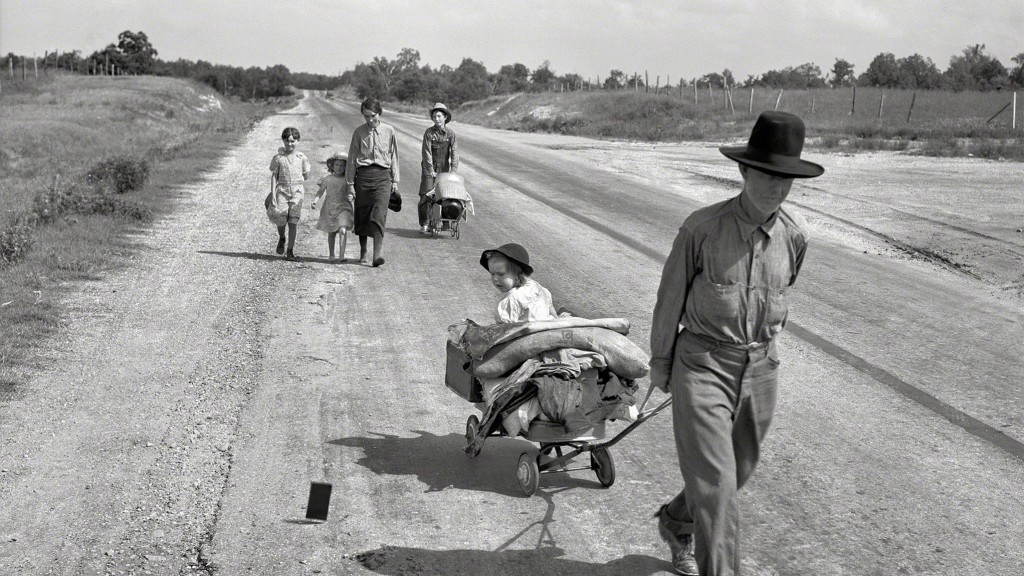
Travel to the eastern outskirts of Los Angeles, past the city limit sign. This is where a well-manufactured fantasy meets reality. Families living in tents or shanties of plywood and canvas. The city fathers, embarrassed to call them shanty towns, label them “migrant campgrounds.” Men walk the roadways for miles into the city looking for day labor or something better. These are hardworking, proud people who have been dealt a hand of misfortune. Los Angeles is becoming a city of “haves and have-nots.”

The Los Angeles of 1934 is a city unlike any other in the country.  The motion picture industry paints it as larger than life.  Hollywood, where dreams are made and shattered, is the engine that powers this city.  Oil and shipping will defend their role, but Hollywood fuels the beast.

At first glance, commerce appears untouched by the depression.  Polished cars parade on Santa Monica Boulevard.  People fill the sidewalks as if on holiday, smiles on their faces, knowing they are fortunate to live in this unique land of opportunity.  The manufactured facade so completely obscures the reality that, in fact, California suffers, but not quite as much as the rest of the country.  It’s hidden so well that thousands of hopeful migrants genuinely believe this is the “Promised Land.”
   
At dawn, John Henry, with Blind Jellyroll, drove into Los Angeles to search for work. He and a few thousand others had the same idea. A long line of men and women walked in unison as if Moses were leading the Jews from Egypt along the dusty highway.      
Men wearing patched overalls, sewn-up khaki pants, and shirts as white as a wash tub could get them. A few wore a dirty Fedora or a worn sweat-stained Stetson. Some real Okies wore frayed straw hats and cracked work boots. Their clothes hadn’t seen a wash tub of water in months. It was an army made of misery. The cloud of roadside dust told the folks in town they were coming—”NO WORK HERE” signs went up in every window along their route.

John Henry drops Jellyroll and Pancho Villa at the downtown mission run by Sister Aimee McPherson, the celebrated firebrand radio preacher. Jelly’s cousin works for the preacher and has assured him that the good sister has a place for him. John Henry wonders how a blind man and a one-eyed dog made it from Texas to here. Perseverance and Moxy, some folks have it, but most don’t.

  Lost and asking directions to Long Beach every mile or so, John Henry made a wrong turn and found himself on a residential street. Tidy bungalows with mowed green yards and colorful landscaping lifted his spirits. Back in Fort Worth, you only saw streets like this where the rich folks lived. He could tell by the cars in the driveways and houses that needed paint that these folks were plain working people, getting by better than most.  

 Half a block up, he sees an older man and woman losing the battle to unload a large chifforobe from the back of a pickup truck that should have been in a scrap yard. The rear end of the old truck sat on the concrete, and both leaf springs shot to hell. They are struggling and on the verge of dropping the piece of furniture when John Henry stops and, without asking, jumps in and grabs the end the woman is about to lose. The man thanked him for his help as they carried the furniture into their house. The home smelled like the fragrant gardenias growing around the front porch.

More in Chapter 3. * Note; My father couldn’t remember the name of the fellow or his dog, so I used the name of a character from an earlier story. A dog named Pancho could be nothing else but a Chihuahua.

Open the link below for Chapter 3

Chapter 3- Wagons Ho, and Settling In California

Being in the right place at the right time can lead to life-changing events. A bit of prayer added to the mix produces wonderful things.

From what I was told, my grandfather was willing to lend a helping hand to anyone who needed one. He was kind to a fault and was often taken advantage of by family members and close friends. I can’t use them in this chapter because their families are still alive, they know where I live, and everyone is so touchy. I was ten when my grandfather passed on. He made sure I learned numerous lessons from his mistakes. Being the great poohbah recounter in the family, he left me with enough oral history to fill a book. I remember most of it from his stories and yarns, of which he could spin some tall ones. No one thought to write anything down, so for now, I’ve been blessed with a good memory, but only for a while.

John Henry helps the man carry the heavy piece of furniture into the house and places it in a small bedroom that appears to be that of a girl. Pink ruffles and stuffed animals is a sure sign.

With the furniture all squared away, the two men stood on the front porch, taking a break to enjoy a smoke. John Henry offered one of his Lucky Strikes to the other fellow, and they both lit up with a flick of the Zippo John Henry still carried from the war. The man introduced himself as Sargent James, said that was his real name, and he never rose higher than corporal in the Army. That got a good laugh out of them both. He told John Henry about his wife, Sunny, and their daughter Cloudy, away at school in Sacramento on some kind of scholarship, studying’ to be a doctor no less.

  After lunch, the two men traded stories and discovered they served in France at about the same time, 1917-1918, in the big war against the Germans.

Veterans become fast, tight friends; the probability of dying from a bullet or an exploding shell bonds them in a way only they understand. It’s a brotherhood for life, formed on the battlefield.

     They had both been wounded in battle; John Henry having but half a left buttock, compliments of shrapnel and had been gassed twice while fighting in the muddy trenches. His new friend was shot in the leg and the arm but recovered enough to continue fighting until some shrapnel sent him to a hospital in England and then home for good. Both showed their scars like kids on a school playground trying to outdo the other.

     John Henry is no saint; he will own up to killing men in battle, some with his rifle, a few with a bayonet, one with a large rock to the head, and one stabbed through the heart with his side knife. He regrets them all, especially the young German boy, no more than a teenager he stabbed during hand-to-hand fighting before the soldier got the better of him with his sidearm. His face is the one in his worst dreams. The boy’s face looks as if he knows he is a dead man, as he is within seconds. It took years for the brutality to catch up to him, and now, late at night, when the ticking clock is the only sound in the house, his demons come for him.  

      Both men dance around the worst battle stories but share memories of their friends, living and dead. It’s easier that way. John Henry’s half-a-buttock won the competition. The prize was a large slice of apple pie with melted cheese topping.   He feels comfortable enough to ask his host if he might know of any work a man could find. Sargent mulls the question a few moments, then says,

“I’ve got a cousin that works at the docks building shipping crates, I’ll give him a call and see if he can get you an interview. Swing by here in the morning around seven and I’ll have you an answer. I can’t promise anything, but he has the ear of the owner. ”

Good on his word, Sargent had John Henry an answer, and it was the one he had hoped for, an interview for a job. He thanked Sargent and gladly took the biscuit sandwich that Sunny insisted he eat before his interview.

Six-thirty finds John Henry standing on the sidewalk in front of the business, 808 Shipping Row. The docks are half-block away, and the noise of men and equipment moving heavy crates onto ships carries in the cool morning breeze.

Two doors are marked “Entry,” so he takes the one on the left. Down a short hallway into a large office, he finds a man sitting at a desk drinking coffee and writing in a journal. The man invites him to sit and have a cup. John Henry thinks this must be the shop foreman or the interview man. After drinking coffee for a few minutes, the man asked him about family, church, drinking, accountability, and his time in the service. After a thirty-minute visit, with a few laughs, the fellow stands, shakes John Henry’s hand, and tells him to start tomorrow morning at seven am sharp, and by the way, he is the company’s owner. Augustus Petrillo, and welcome aboard.

More to come in Chapter 4.

Chapter 4, Wagons-Ho, Leaving Texas Far Behind

July 23, 2024, 3:03 pm 0 boosts 0 favorites