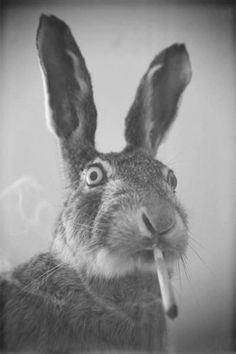
Upon Becoming Mark Twain: My Time As A Dead Author


Photo by: Ansel Adams

When I was young and started to read books, real books, not the comics my friends read, and I had no interest in, I discovered Mark Twain. I thank my late aunt Norma, my father’s older sister, for that. She gently guided me into a world of imagination through a masterful author. She taught me to read and write at the age of five. She was an avid reader of great literature: Mickey Spillane and Mike Hammer were her favorites, as was any trashy romance novel available. Armed with a book-smart, salty vocabulary, I was king of the neighborhood, and it didn’t take long for the mothers to come knocking on our door. My mother threw a world-class hissy fit and demanded Aunt Norma change my reading material. That’s how I discovered Mark Twain.

After reading The Adventures of Tom Sawyer and Huckleberry Finn, I knew what I wanted to be when I grew up. I was going to be Mark Twain. It didn’t matter to me that almost a hundred years earlier, he had already been Mark Twain; I was set on becoming him, me, a six-year-old with limited writing ability. However, I did have a colorful imagination, so that was a good start.

It wasn’t that I couldn’t write; by the age of eight, I wrote exceptionally well for my age, but I didn’t possess the mind of Mr. Twain. I hadn’t known Tom Sawyer, or Jim, or Huckleberry, or lived on the banks of the mighty Mississippi River. I was a landlocked kid stuck in Fort Worth, Texas, with a dozen Big Chief Tablets and a handful of No. 2 pencils.

I read other authors as well, but they weren’t Mr. Twain. Jack London was a bit scary, and there were too many wild animals that I imagined living under my bed. John Steinbeck was a masterful storyteller, and I did make it through most of The Grapes of Wrath, which mirrored what my grandparents and father had lived through. I continued to write on my tablet. I didn’t knowingly plagiarize any author, but they did give me good ideas and taught me to group words into a story.

I busied myself writing childish exploits of myself and my neighborhood gang of friends. I was certain that the Fort Worth Press would give me a column and perhaps a few bucks for my stories. I churned them out at a fevered pace, sending one a week to the publisher. A year passed, and I gave up. I still wrote, and my editor, my mother, filed them away in a drawer.

The day my class let out for Christmas vacation, my teacher asked the class to share what we wanted to be when we grew up. It wasn’t a serious exercise, only one to kill the last 30 minutes of the school day.

The usual vocations for our age group were doctors, firemen, policemen, and some girls who wanted to be teachers or nurses. When my turn came, I stood up and announced, with all seriousness, that I was Mark Twain. Mrs. Badger, my teacher, promptly informed me that there was already a Mark Twain, and that he had been dead for a while now.

I answered, “Yes, I know, but his spirit requires that I continue on with his writings and wit. So I am the reincarnation of Mark Twain.” I was in the principal’s office within a few minutes. The principal, a kindly old fellow, understood my affliction, and because I was earnest about it, he backed off a bit when administering the paddle. My teacher, bless her old-maid heart, never cared for me after that and treated me like a leper. To make myself feel better, I blew up her mailbox with a cherry bomb.

My aunt Norma was overjoyed when I told her of my plans and my new affliction. She went so far as to make me a tailored white linen suit and gave me one of my uncle’s large cigars to complete the ensemble. My parents weren’t thrilled; my mother blamed my father since his extended family was street rat crazy from drinking homemade hooch, and she was certain I inherited this malady from him. She seemed to have forgotten that her two brothers had turned me into a habitual liar and teller of tall tales. There were some whispered discussions about doctors and bad family genetics, but I paid no attention to that adult chatter.

After a few months, I discovered Earnest Hemingway. I never became Mark Twain, except in my daydreams or nightmares, but I did learn to appreciate good writing and stories.

Aspirations, Expectations And Exasperation


75th Birthday Dinner with Momo

I’ve recently sprouted a beard, and much to my surprise, not a single dark hair dares to intrude upon my snowy facial wilderness: the scruffy testament to my frothy mirth matches the proud hue atop my head, a delicate white crown. As a son of Cherokee lineage, I stood astonished, finding myself transforming into an old man with pearly locks in my forties. This change, I suspect, is the handiwork of my father’s Scotch-Irish heritage—a rowdy clan of kilted revelers who seemed to navigate life with laughter and a touch of mischief. They must have commandeered a ship, setting sail for New York, then onto Pennsylvania, where the merry-making reached promising heights. My grandfather would neither confirm nor deny the wild tales of our kin. This speaks volumes about my love for Irish Whiskey, while the Cherokee blood in my veins draws me to large, sharp knives. Hand a drink to an Indian, and trouble isn’t far behind. History whispers of how Little Bighorn ended for Custer. Loose chatter suggests that Sitting Bull and Howling Wolf snagged a wagon load of drink the night before the fray, bestowing upon the braves a reckless spirit. Had they chosen an early night with a hearty breakfast of Buffalo tacos, perhaps the bloody disaster would have been averted.

As a boy of nine, I dreamt of writing like Twain. In my innocence, I thought I was his spirit reborn, dropped into a different time: September of 1949, the last year of the baby boomer generation. With a Big Chief Tablet and a number 2 pencil, I set out to capture the simple chaos of childhood mischief. There were four of us, bold and reckless, stealing cigarettes, hurling water balloons at police cars, and fighting with the tough kids across the tracks. The local papers laughed at my tales as if a child’s imagination could not hold weight. My aunt, wise and educated, introduced me to Spillane and Steinbeck. Spillane turned me into a wise-ass, insufferable child, resulting in numerous mouth cleansings with Lifeboy soap. Steinbeck felt right—my family had lived a life like Tom Joad’s, migrating to California during hard times of the Dust Bowl and the 1930s. I had stories in me, maybe even a book. A therapist dismissed it as a childish fantasy, saying it would fade. Yet here I am, much older, still tethered to that innocence. Now, I’m in my Hemingway phase, my looks echoing the rugged man who lived wild in Cuba, writing furiously while embracing the chaos of life.

There is more sand in the bottom of my hourglass than in the top. I feel the end approaching. I do not wish to know the day or hour. I can only pray it is a good one, resulting in a trip to Heaven, which is better than the alternative. I am not the writer Twain, Steinbeck, or Hemingway was. They had talent, and they had time from youth to hone their craft and find their voices. Yet, I will still give it a try.

Comedy Gone A ‘Foul


I love Mark Twain. I revered him to the point that when I was a child of ten, becoming Mark Twain was my life’s ambition. Sadly for me, it didn’t work out, but he still inspires me to this day, not only with his witty writing but his keen eyes focused on the human race. Not much has changed since his days on the big river, or so I thought.

I attempted, and somewhat succeeded, to watch portions of a streaming salute to the black comedian Kevin Hart on Netflix. Filmed at the bastion of liberal theater, the elitist government-funded “The Kennedy Center.” He was being awarded with the Mark Twain Prize for American Humor.

I like Kevin Hart; he’s a funny guy who is not afraid to dig into squeamish subjects. But he is strictly adult comedy: crude, foul-mouthed, racist, and mean at times. He has his place in clubs, streaming specials, and R-rated movies, not on the stage of the “Sacred Cow Kennedy Center” in front of a mixed audience of wealthy Hollywood folks jiggling their jewelry and rich old ladies who were clearly put off by the humor he and his roasting guest comedians spat out. The F word seemed to be the most favored of the night, and they all used it for maximum value.

Jerry Seinfeld, the king of clean comedy, introduced the show and praised Kevin for his body of work. Kevin, in the king and queen box, yuked it up, kissed his kids and wife, and wiped away a few tears; it was a touching tribute until Seinfeld left the stage, and that is when the show went to comedic hell in a “Jackie O Handbasket.”

I know how to cuss, learning it from my father’s side of the family and from my sainted Cherokee mother, who could string some of the better words into a formidable tirade. The F word and a few more, are in my vocabulary, and lately, watching the maddening news on television, I find myself screaming adult language at my set. But that is in my home, in front of Momo, who can cuss as well as I can, sometimes better. We don’t dare say bad words in public or in mixed company or around our family, especially the grandkids. So why is filthy, foul-mouthed thuggish language acceptable for an audience at “Jack’s Palace?” You could see Jerry Seinfeld cringe when the camera panned to him. I’m certain he has used those words, especially dealing with Kramer, Newman, and maybe the Soup Nazi.

When Hart finally took the stage to thank everyone and show his stuff, it was a recitation of F you, F this, F that, and so on: all his comedy buds in the box seats roared with approval, showing me that you can be funny, make a butt-load of money and have folks idolize you, but you that doesn’t give you class.

Hollywood and its ilk have taken what was once a reverent, respected, cherished, and Homeric award and turned it into another cheap-assed participation trophy, like the Oscar. Mark Twain deserves so much better.

Remembering Late Night Television of the 1960s


Mark Twain’s Visits With Johnny Carson On The Tonight Show

Of Course it didn’t happen, but let’s assume it did.

Johnny Carson was as big as entertainers get in the 1960s and 1970s. I watched his show with my father many times a week, staying up past my bedtime, but hey, I was in high school, so it was allowed. He picked the best comedians as a guest and gave many their boot to fame by allowing them a few minutes on his revered stage. Just for fun, let’s assume he invited Mark Twain back from the dead as a guest. No, I haven’t been smoking hand-rolled ciggies, but wouldn’t it have been eye-opening.

Carson; “Please welcome to the show, Mr. Mark Twain.” Twain, wearing his trademark white Panama suit, enters from behind the multi-colored curtain with a lit cigar in his mouth, makes his way to the stage, shakes hands with Johnny and Ed, and then sits his lanky frame on the holy sofa.

Carson; ” So Mark, just how hard was it to get a pass to visit the earth and be a guest on my show? I assume you came from above and not from that other place?

Twian; ” Not hard at all Mr. Carson; Father God enjoys your humor and likes Doc and his band. I never watched your program until Clarence the Angel told me I was coming down for a night to guest on your stage. Is this in color or black and white? We don’t have many of these new televisions in Heaven, and I refuse to own one because they are too much of a distraction from my work. Did I mention I am writing another fifty novels, all in longhand, can’t stand those new-fangled typewriters. Huck and Tom are all grown up now and doing quite well in the riverboat business, so I am continuing their life’s story. We have rivers up there too, so pilots are in short demand. We don’t have many comedians. There’s this Lenny Bruce feller, he’s a hoot but a bit blue with his language, and he’s always in trouble with the council.”

Carson; ” So back when you were on earth, all those years ago, you were quite dour when it came to politics and outspoken about the men that ran the country, do you still hold those views?”

Twain; ” Hell, yes, I do. You show me a politician, and I’ll show you a scoundrel, a thief, and a liar. So, who is this Lyndon Johnson moron? Why are we over in Viet Nam helping folks who don’t like us? I see a lot of our young soldier boys in Heaven. They’re as confused as I am, and not happy to be dead. We got no dog in that hunt, and you all are pissing away good money and destroying our countries morals with all these Hippie people running around smoking plants and marching around carrying signs. I can’t pretend to understand you folks down here on earth.”

Carson: “Well, Mark, you certainly don’t hold back; why don’t you tell us how you really feel. (audience laughs), Ed looks uncomfortable, and Carson plays with his pencil.

Twain; ” I gotta go now, but let me give you some parting advice, in 2022, which is a good bit away, you idiots down here are going to be right back in a Viet Nam situation, but it’s going to be in a country called Ukraine, and you will be fighting Russia and the Chinese, it it ain’t going to be a pretty show. How do I know this? Well, fellas, God tells me everything when we play our chess game every Thursday over cigars and brandy. Oh yeah, Johnny, you’re going to get divorced real soon, and that gal is going to pick your bones clean as a whistle.” Twain blows a smoke ring with his Havana cigar and exits the stage. Doc and the band play “Dixie.”