Hipster Dogs Are Among Us


I wrote this story in 2020 after an encounter at a hipster restaurant in the trendy section of Fort Worth. I wish my stash looked as good as his.

A sweet little dog with a strange name is pictured for your educational pleasure. “Graphon Chardonnay” is what’s known in 2020 as a “Hipster Companion Service Dog.” I’m sure little Graphon would rather be out pissing on trees and digging holes in flower beds than wearing a beard and leather jacket. Dogs look odd in human clothing and look alien when they sport the same beard as their owner.

While strolling the “hot new neighborhood” on West 7th Street a few weeks ago, my wife and I stopped at a small outdoor café for lunch. It was one of those sunny February days where it wants to be pleasant, but you still need a coat if you dine outside. A teaser day, we Texans call it.

A nice-looking couple sat down next to us with their small dog. They were dressed in expensive “Fort Worth Hip” to the tee. The young man had a formidable beard, a ” Stallone” pork pie hat, Ray-Ban sunglasses, and skinny jeans. The woman was dressed similarly but without facial hair. These aren’t your poor retro-hippies; these Kats have dough, good jobs in IT, and live in an expensive high-rise overlooking the Trinity River. They most likely drive a Tesla or a hybrid Beemer.

The two diners immediately immersed themselves in their Apple I iPhones. Hipsters must only use Apple products: Sorry, Samsung, and HTC.

I felt sorry for the little pooch; he didn’t have a phone of his own or even a bowl of water, so I asked a kind waitstaff to bring the wee fellow a dog bowl of H2O. When his water bowl arrived, the man gasped and removed the water dish before the parched dog could catch a drink.

” Graphon does not drink regular water,” he shrieked. ” He’s chlorine intolerant.”

Of course, I apologized for not knowing the dog was allergic to water, so I asked his father, what does Graphon drink?

The young woman looked up from her iPhone and smugly replied, “Graphon Chardonnay drinks only Starbucks decaffeinated coffee, “Chateau La Pew” white wine and natural spring water from Tibet. He is also vegan and has an IQ of 165.” Well, holy hot shit, I am impressed that this furball with two names is smarter than most of us humans; myself included.

I had already figured out these two were vegans, so when our juicy hamburgers arrived, we made a big deal of our meal, loudly commenting on every greasy bite we took. The two gave us the ” hope you die” look.

I accidentally knocked a French fry off my plate in my meat-eating frenzy. The little genius, Graphon, caught it before it hit the ground and gobbled it down. His father screamed, grabbed the dog, and began the “Heimlich maneuver ” until the dog coughed up the slimy fry.

” That fry is cooked in animal fats, are you trying to murder my dog! Graphon could die if he ingests anything other than his special veggies,” he shouted. The woman was crying and having a small breakdown after witnessing her vegan dog eating the evil French fry.

The young couple was so traumatized they took little Graphon Chardonnay and departed the patio. I got the last laugh. I slipped the pooch a nice bite of my burger while they weren’t looking. I’m pretty sure he is going to have some righteous gas.

AI Is Up Everyones A_ _!


Greetings From Beijing.

China got us again. First, it was the China Virus. Now, it’s a spiffy little AI program. This tech wonderment was developed in a few hours with barely enough chips to run a flip-top phone. The nervous boys at the stock market panic, that’s what they do best. They start selling tech stocks and ruining millions of folks. Has anyone in our government checked to see if this CCP program works? I doubt it. We can be assured that the technology was handed over to China for a few million. Maybe it was passed in a brown envelope delivered by a devious first son. Or perhaps someone hacked it from a secure computer while the tech was napping in their safe room. It doesn’t much matter now: they got us good this time. We need Denzel Washington or Sylvester Stallone to take names and kick ass.

Is this the newest Sputnik moment?

“Surprise…you greedy capitalist dogs. We couldn’t finish you with our little viral bug, but this should do the trick. Check your fortune cookie for lottery numbers.”

End Times in Texas: Snow Chaos at H-E-B


Backyard Bird Cafe at Casa de Strawn

According to the news gals on TV, the end of the world is upon Texas: snow is coming on Thursday and Friday, maybe a foot or more of the lovely puffy winter blanket. The problem is that the folks in this part of Texas don’t know anything about snow or how to deal with it. Schools are closing, businesses are having “End of Times” sales and liquor stores are running out of stock. This is as serious as the chicken flu.

Like every other fool in town, I went to the H-E-B for a few supplies: pork rinds, wine, beer, Cheeto’s, Wolf Brand Chili, A2 milk, and Ovaltine. I live in a hilly area, and if Momo and I get snowed or iced in, we cannot get out. Exceptions would be made for the hospital or the liquor store for hootch supplies.

I walked into an “End Times” scenario. The H-E-B, that pure Texas grocer, was in full pandemonium mode. The local police were arresting a mother for stealing food from an old woman’s shopping cart, her two young baby childs holding onto their mother’s legs as she was dragged out of the store. The store manager tased an old guy for ramming other shoppers with the store’s personal scooter.

Women were fighting, pulling hair, punching, kicking, and biting each other over toilet paper. Children ran wild down the aisles, grabbing cookies and any sugary treat. One kid stood atop the frozen food kiosk, throwing Red Baron pizzas at the snarling crowd below. It was like a scene from The Walking Dead.

I ran into my old pal Mooch. He had a garbage bag full of Pork Rinds and five cases of Pabst Beer, enough to see him through the apocalypse.

I found what I needed and went to the cashier; she said,

“take it, no charge, the machines have cratered.”

Arriving home, I found Momo cleaning our pistols and checking our ammo supply. She’s a crack shot, so I pity the fool who comes onto our property with intentions to steal. She’s excited about the Snowmeggdon and wants to make snow angels in our backyard. I told her the only thing we could make would be old people’s angels when we fall down and can’t get up and have to crawl back to the patio.

The Quirky Side of Christmas Shopping at Walmart


I was in Walmart a few days ago. The Christmas season is the best time to observe humanity at its finest and lowest and street-rat-crazy humans.

All the usual suspects were there. People dressed in bathrobes, onesie pajamas, and rabbit-eared bedroom slippers. One lady squeezed herself into an Elf costume four or five sizes too small. Her husband looked like Edger Alan Poe; all that was missing was the stuffed Raven on his shoulder. Another old lady had her grocery basket full of Mountain Dew and Pork Rinds, which is considered a food group in Appalachia and now in Granbury, Texas. Two little girls absconded bicycles from the toy department and were speeding down the isles terrorizing shoppers: their mother watched with an adoring smile as her little angels wreaked havoc: they likely received a small trophy when they got home. A crazed woman was ripping into the poor Pharmacist because he wouldn’t fill her prescription for Oxycodone; she clearly needed her medication; pulling her hair out in fistfuls didn’t help her cause.

One family, mom, pop, and the three kids pushed baskets with a flat-screen television for each member. What is the fascination with large televisions? Are we the only society that is addicted to electronics? The kids looked undernourished but had to have that TV instead of healthy food.

A lady and her young daughter, maybe five, passed by. They were both on their cell phones. Mama was engrossed in a personal conversation that should have been private, and the little girl was jabbering into her pink Barbie smartphone. I assumed the kid on the other end was about the same age since I couldn’t understand her words. Five-year-olds appear to have a unique language used to communicate with other children. When did giving a child barely out of diapers a smartphone become acceptable? As the song says, ” Only In America.”

Exiting the store, I looked for the Salvation Army and their red kettle. None to be found. The greeter lady said they should be showing up any day. I have childhood memories of my mother dropping change into that kettle as the kindly lady stood ringing her bell. In some years, it was a quarter; in better years, it might have been a dollar. She always had a change in her coin purse to help the less fortunate. I’ve continued that tradition every year of my adult life, stuffing a few dollars into that slot and hearing a “Merry Christmas and God bless you.” That’s when I knew it was Christmas time.

Dreams of Europe: A Haunting War Reflection


Last night, I dreamed of Europe, teetering on the brink of war, reminiscent of those haunting days of the 1940s. It was not a nightmare but rather a sepia-toned memory, grainy like an old newsreel flickering in a rundown theater, the air thick with the scent of buttered popcorn and sticky sodas clinging to the soles of my worn Tom McCann wingtips. Beside me, my wife, Momo, sat elegantly in her gabardine dress, her silk scarf accentuating her perfect neck. A picture of quiet strength amidst the storm brewing outside. Somehow, as if a magical spell, we knew of war, maybe because our fathers had participated, not reluctantly like some, but dutiful, knowing their presence would make a difference in the outcome.

We found ourselves seated amid a crowd, the air thick with the scent of Old Spice, a memory of times past. Momo leaned forward; her senses caught Chanel No. 5 drifting languidly alongside us while cigarette smoke curled upwards, smothering the flickering images that danced on the screen. An army advanced in unyielding formation, each soldier a cog in an unfeeling machine ready to unleash mayhem upon a peaceful country. A lone figure stood poised for inspection; within his eyes, a cold emptiness lingered, reminiscent of a predator—those soulless eyes of a waiting shark. At first, I thought he might be Hitler, a returned demon from the depths of Hell. I was wrong. A Russian, short in stature, long on evil, intent on destruction. The shark now has legs and walks among us. I awakened, sweating and gasping. Momo sleeping peacefully, unaware of the dream we shared. We left without seeing the movie.

Unraveling the Vanishing Girl of Marfa


Marfa, Texas, is one leg of the infamous Texas Triangle. Alpine, Fort Davis, and Marfa make up the redneck Bermuda Triangle and all the oddities that spring from its lands.

Momo and I have visited the quirky town a few times and plan another trip, perhaps in December. On our last trip, sitting in Planet Marfa, sipping a Lone Star beer and listening to the locals spin yarns and tall tales about the goings-on around the Chihuahuan Desert. We learned of nuclear-crazed killer Chihuahua dogs, strange lights in the mountains, the ghosts of James Dean and Liz Taylor at the Piasano Hotel, and enchanted horned toads that grant wishes. The young’uns that have relocated from Austin only add to the weirdness of the place.

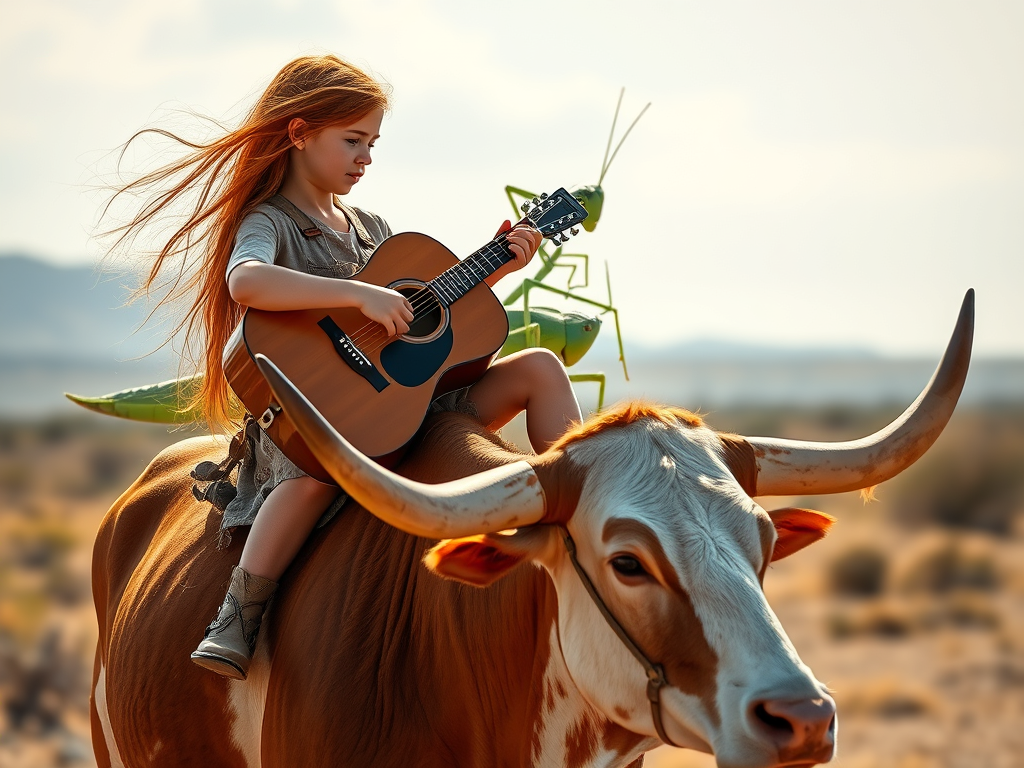
The one story that folks were reluctant to rattle about was the young girl who vanished from her family’s desert home in 1965. She strolled into the desert behind their home to collect grasshoppers and other insects for a science project and never returned, and not a smidgen of evidence was ever found. A few days later, the parents noticed her prized acoustic guitar was missing from her bedroom, and their pet Longhorn steer, Little Bill, was missing from his stall. The girl often led him out into the desert to graze on the clumps of tasty grasses and plants. Lawman worked to solve the case for two decades, but no leads or culprits were found. Word around town was that space aliens had abducted her and the steer for scientific purposes or worse. No one thought much about the theory since Marfa loved that nonsense.

Sagebrush Sonny Toluse, the Grand Pooh-Bah of all things Marfa, tells the best version of the story. He said to a group around the bar,

I was walking my old doggy for his nighttime constitution. I live just outside of town, nearly in the desert, and that’s how I like it. The moon was full, so Rufus and I walked a little farther than usual. I hear guitar music from somewhere. It’s not a loud electric guitar but a soft one, like a Mexican guitar. It’s getting closer, and now I hear singing, the floating voice of a young girl. I stop, turn around, and passing by me; no more than ten feet is this little girl riding a Longhorn steer, playing the guitar, and singing an odd song I didn’t know, something about a Kay Serra or something like that. Behind her, sitting on the steer, is a giant grasshopper about half the size of the girl. I know we have big bugs here in Texas, but this critter was massive, about the size of old Rufus, my dog. The trio rode past me into the fading desert, never paying any attention to us. I was troubled by the encounter, so I went and asked the older sister, who is now an old woman, about the young girl who vanished so long ago. I told her about the ghostly encounter in the desert. She said her sister often rode the Longhorn steer like a horse and would play her favorite tune while sitting atop the beast. It was a Doris Day song, and she sang a bit. “Que Sera Sera, whatever will be, the future’s not ours to see, Que Sera Sera. “

Needing Sleep, Not Finding The Right Reading Glasses And Where Did I Put My Surfboards?


Sleep is a sneaky little thing, often playing hide and seek; some nights, with the right concoction of pain medications, I drift off like a mighty oak, a tree that has finally decided to take a break from standing tall. Just the other night, however, the meds turned their backs on me, and there I was, half awake and befuddled, reaching for my trusty hot Ovaltine to lend a healing hand. With my vision askew from wearing the wrong pair of spectacles, I grabbed my Bible, thinking I’d find some solace in holy verses, only to stumble upon the most thrilling tales of storms, hurricanes, and the odd musings about planting under the October moons, eventually realizing that I’d accidentally opened the pages of the Farmers Almanac instead.

Many of my readers have been transfixed or shocked by the epic tale of the Strawn family, who, in a fit of brave lunacy, decided to traipse from Fort Worth, Texas, to Los Angeles, California, all during that notorious dust bowl of the 1930s. Now, as I wipe the dust from my fingers and finish this latest chapter, I find myself staring into the abyss of forgetfulness. Is my memory playing tricks—after all, reaching 75 isn’t exactly the golden age of recall—or did my father and aunt, long since departed, keep the family secrets tucked away like old socks full of silver coins? You see, I was but a wee lad, soaking up the stories like a dry sponge around the family campfire, spinning yarns until I waded into my twenties. I do recall reading the best of my grandmother’s missives to her siblings, which was the catalyst that started this literary campfire. So, onward, I go, armed with a mighty pen and a healthy dose of ancestral curiosity, ready to dig deeper into the sands of time! If I can locate my shovel.

Last week, Mrs. Momo and I set forth on a meandering journey to the sun-drenched sands of Padre Island, where we sought respite among the company of my son Wes, his wife Yolli, and my spirited grandson Jett, along with my oldest grandson, Johnathan, who had deftly forged a new life in Corpus after escaping the relentless grip of a desolate land rife with crime, situated just east of Fort Worth. Even after the passage of years, the name Dallas invokes within me the primal instinct to spit into the dirt or a sidewalk, a ritual harkening back to the deep-rooted traditions of Amon Carter’s Texas. My grandfather, a quintessential Texan in every sense, would erupt at the mere mention of that city, a sentiment that courses through the veins of my remaining kin. The few ventures I undertook into that sprawling metropolis during my youth were begrudgingly limited to solemn funerals or the obligatory excursions with my father, who charmed the patrons as part of the house band at The Big D Jamboree. But let us return to The Island, as the locals fondly refer to it. Our ambition was to embark on a fishing expedition in my son’s Gulf Coast fishing boat, cradled comfortably in the canal behind his home; yet, as fate would have it, life had scripted a different tale. The weather was hellishly hot, and now, knowing my limitations for physical abuse, the trip will happen another time. We did, however, find the opportunity to journey to Port Aransas, where we reveled in a banquet of seafood and marveled at the garish, towering temples—those three and four-story houses, not erected for the warmth of home but serving as mere rental coffins—sprouting up like unwanted weeds in a fishing village that had cradled myself and my sons childhood, now stripped of its charm and morphed into a pale imitation of Myrtle Beach. I remember driving every road in Port A during the late sixties with my surfboard secured atop my Korean War-era jeep, Captain America. That faithful jeep has since vanished, much like my surfboards, yet Wes has preserved a fine collection of vintage longboards. I will be embarking on these new wonder pharmaceutical supplements I catch glimpses of in commercials; perhaps I’ll summon the energy to paddle out and catch a wave, allowing me to once again sit atop the world. I can already hear the Beach Boys playing my tune.

Chapter 11 Westward Ho, The Movie Studio Comes Calling


With my grandmother, Bertha, now sober from her curious but legal elixirs, the Strawns greeted each day with the sun smiling through their kitchen window and robins launching into song like miniaturized opera stars: even Lady, the family Terrier, found a pal in the backyard squirrel named Little Nutbreath, a name that rolled off the tongue as easily as whiskey. Now, the one pesky habit Sister Aimee couldn’t shake was her ceaseless missives to the sisters and friends she’d left behind in Texas. Each innocent hello morphed into a screenplay or a short novella, bursting at the seams with bravado but lacking even a whisper of truth from her ink-stained fingers. That woman could ruin a nice Parker fountain pen faster than a sailor could down a rum, and her right arm took on the brawn of Popeye the Sailor Man, ready to box anyone who dared challenge her. Norma and Johnny intercepted as many as possible, but the lion’s share slipped out of California like a secret lover in the night.

John Henry gifted Bertha a well-used typewriter, cheaper than the dozens of fountain pens. One novella, typed out on that clunky machine, landed on the executive’s desk at RKO Studios like a drunken sailor falling off a barstool. Bertha, bless her heart, sent the same tale to every big studio and received naught but indifferent glances in return. But this executive, searching for a breath of fresh air amidst the stale smoke of Hollywood hype, passed her little novella around like it was a shot of low-quality whiskey, but it might be drinkable. They extended her a contract—five hundred dollars, cold and hard, American cash. The family thought it was a cruel prank, perhaps RKO was tipsy, or just mean to a poor soul like Bertha. John Henry, ever the practical one, sought his boss’s advice, and the wise man assured him the offer was the real deal. They signed their names, returned it, and waited like a fisherman with a line cast out on a lazy afternoon. Days shuffled by, and then a courier showed up at the door, handing Bertha a certified check—a blessing or a curse, it was hard to tell. Could lightning strike twice in the same spot? Her tale, a wild ride of a detective couple and their scrappy little terrier turned into a screenplay and a film, but my grandmother, wise yet weary, never pocketed a nickel more, caught in the trap of a contract filled with weasel words.

Wagons Ho-To California ! Chapter 1


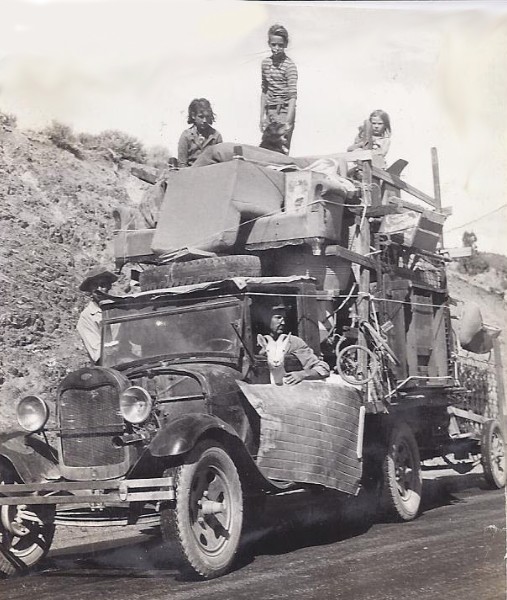
June arrived with a dreaded heat wave forming in the southwestern desert and creeping into Texas. The Mexican province, formally known as the state of California, is experiencing the hottest weather in history, and that adds to the folks getting out of Los Angeles and Sacramento and moving to my state, which has done nothing to stop the influx of unwanted refugees. U haul and Ryder are out of trucks, so folks are building their own trailers or tying furniture to the tops of their cars. Yesterday, I saw a Tesla with luggage and home decor tied to the roof of the poor EV. Of course, the car had California plates, and the occupants were likely looking for a home to buy in my little town. All that was missing was Granny and Eli Mae sitting on the roof.

My grandparents, my father, and my aunt migrated from Texas to California in 1934 because there were no jobs available in Fort Worth or Dallas. When reaching the desert town of Needles, CA, they were immediately labeled “Okie’s” by the border guards. My grandfather, a man of few but choice words, mostly curse ones, did his best to convince the guards that he was a Texan and had visited Oklahoma once for a funeral, which made the situation worse because the guards then labeled them Texas Okie’s, which was a double insult, and to boot, they weren’t welcome in the land of pleasant weather and movie stars. Grandfather turned himself into a poor man’s Will Rogers, with plenty of aw-shucks, dirt-kicking, and head-scratching, which made the guards laugh, so the family was admitted. He forgot to mention the three pistols, the sawed-off shotgun, and his pet Rattle Snake, Bubba, stashed under the front seat of his Ford.

Click the link below for Chapter 2

Chapter 2- Wagons Ho to California !

The Arrival

Ten or so miles past the Needles California border station, my grandfather, John Henry Strawn, encountered a stooped, raggedy-dressed black man and a small dog walking along the side of the road. The man’s attire resembled that of a poorly dressed scarecrow. Without hesitation, he slowed the Ford, performed a swift turnaround, and approached the traveler. After stopping the car, he offered the old fellow a ride. Without hesitation, the traveler gratefully accepted, ensuring that his dog was settled in first, followed by his knapsack, a guitar case, and then himself.

A few miles down the road, the man broke the silence, introducing himself as *Blind Jelly Roll Jackson from the Deep Ellum Dallas, Texas, and his seeing-eye dog, a Chihuahua named Pancho Villa, who is blinded in one eye. The result of a dog fight with a Coyote, so he wears tiny sunshades because the bright sunlight hurts his good eyeball. Jelly says he is a blues man and is headed to Los Angeles to stay with a cousin and find work in a juke joint, and he, by accident, shot a fella in Dallas four times over a pay dispute. He said it was all Pancho’s fault because the dog said the man had a knife, so what else is a body to do. He pulled a leather Bolla from his knapsack, took a jolt, poured a little liquid into his palm, and let Pancho Villa lick it up. John Henry was sure it was whiskey, and after the dog drank it, he fell over and started snoring. Jelly’s chin found his chest, and he slept the sleep of the weary.

On the eastern outskirts of Los Angeles, they saw the first billboard, “No Jobs in California, Keep Out.” John Henry paid no attention to the sign; he was certain he could find a job on the docks in Long Beach. He was an artisan, not an Okie fruit picker. The next sign was for a migrant campground, $.25 per day, running water, showers, and clean grounds; John Henry took the turn off Route 66, drove a few miles, took two more turns, and found himself at a tidy campground guard shack. Unlike the border boys, the guard wore a clean, crisp uniform and was pleasant. The three-day fee was paid with small change from the small stash in grandmother’s purse. Their assigned camping slot was shaded by a tall Eucalyptus tree. This would do until a job was found. Jelly and Pancho Villa wandered down the main lane, stopping to let the children pet and scratch Pancho, who immediately bit a couple of them.

Travel to the eastern outskirts of Los Angeles, past the city limit sign. This is where a well-manufactured fantasy meets reality. Families living in tents or shanties of plywood and canvas. The city fathers, embarrassed to call them shanty towns, label them “migrant campgrounds.” Men walk the roadways for miles into the city looking for day labor or something better. These are hard-working, proud people who have been dealt the cards of misfortune. Los Angeles is becoming a city of “haves and have-nots.”

The Los Angeles of 1934 is a city like no other in this country.  The motion picture industry paints it as larger than life.  Hollywood, where dreams are made and shattered, is the engine that powers this city.  Oil and shipping will defend their role, but Hollywood fuels the beast.

At first glance, commerce appears untouched by the depression.  Polished cars parade on Santa Monica Boulevard.  People fill the sidewalks as if on holiday, smiles on their faces, knowing they are fortunate to live in this unique land of opportunity.  The manufactured facade so completely obscures the reality that, in fact, California suffers, but not quite as much as the rest of the country.  It’s hidden so well that thousands of hopeful migrants genuinely believe this is the “Promised Land.”
   
At dawn, John Henry, with Blind Jellyroll, drove into Los Angeles to search for work. He and a few thousand others had the same idea. A long line of men and women walked in unison as if Moses were leading the Jews from Egypt along the dusty highway.      
Men wearing patched overalls, sewn-up khaki pants, and shirts as white as a wash tub could get them. A few wore a dirty Fedora or a worn sweat-stained Stetson. Some real Okies wore frayed straw hats and cracked work boots. Their clothes hadn’t seen a wash tub of water in months. It was an army made of misery. The cloud of roadside dust told the folks in town they were coming—”NO WORK HERE” signs went up in every window along their route.

John Henry drops Jellyroll and Pancho Villa at the downtown mission run by Sister Aimee McPherson, the celebrated firebrand radio preacher. Jelly’s cousin works for the preacher and has assured him that the good sister has a place for him. John Henry wonders how a blind man and a one-eyed dog made it from Texas to here. Perseverance and Moxy, some folks have it, but most don’t.

  Lost and asking directions to Long Beach every mile or so, John Henry made a wrong turn and found himself on a residential street. Tidy bungalows with mowed green yards and colorful landscaping lifted his spirits. Back in Fort Worth, you only saw streets like this where the rich folks lived. He could tell by the cars in the driveways and houses that needed paint that these folks were plain working people, getting by better than most.  

 Half a block up, he sees an older man and woman losing the battle to unload a large chifforobe from the back of a pickup truck that should have been in a scrap yard. The rear end of the old truck sat on the concrete, and both leaf springs shot to hell. They are struggling and on the verge of dropping the piece of furniture when John Henry stops and, without asking, jumps in and grabs the end the woman is about to lose. The man thanked him for his help as they carried the furniture into their house. The home smelled like the fragrant gardenias growing around the front porch.

More in Chapter 3. * Note; My father couldn’t remember the name of the fellow or his dog, so I used the name of a character from an earlier story. A dog named Pancho could be nothing else but a Chihuahua.

Open the link below for Chapter 3

Chapter 3- Wagons Ho, and Settling In California

July 23, 2024, 2:04 pm 0 boosts 0 favorites

A Young Scholar Among Jabbering Idiots


Thanks to my late favorite aunt, Norma Lavender, I became a scholar early in life.

Five-year-olds are stuck between that titty-baby stage and graduating to sandlot baseball and comic books. If life got tough, I could still console myself with a grimy thumb to my mouth, and a skinned knee sent me squalling to momma. I couldn’t tie my own sneakers or button a shirt.

My pushy aunt realized my floundering ways and rescued me with books. She got her hands on the first two years of Fun With Dick and Jane, the books the Fort Worth school system used to teach kids to read; comic books would have to wait; Micky Spillane and Mike Hammer were calling me.

Aunt Norma quizzed me like a Perry Mason for a year, teaching me to write and read. By my sixth birthday, I was a reading Jesse, a child phenom, and a leper to my neighborhood gang. They could barely write and couldn’t read a lick of anything. Here I was, a young Shakespeare among a crowd of jabbering idiots.

Having given her parenting rights to her sister-in-law for a year, my sainted mother has now stepped in to reacquaint herself with her young scholar. I still couldn’t tie my sneakers and applied too much Butch Wax to my flat-top haircut. My mother was a hard-core Southern Baptist, and I didn’t understand why when I colored outside of her parental lines, she would cross herself and say a prayer right before she administered a righteous butt whooping with her favorite weapon; a 9inch by 12-inch Tupperware cake holder. To this day, I won’t touch a piece of Tupperware.

I was assigned a weekly Micky Spillane paperback and expected to read the entire book. Looking back, those trashy, noir detective books were not fit for a child or an educated adult, but Aunt Norma would read a book in 24 hours and was quite an educated gal. I didn’t understand most of what I read, but a few phrases stuck with me: “Is that a pistol in your pocket, or are you just happy to see me?” “A hard man is good to find?” Mike Hammer was always in trouble with a trashy broad. I shared my new vocabulary with the gang, and they dug it.

Mother started receiving phone calls from the other moms, blaming me, her little boy, for teaching their uneducated idiots smutty language. The Tupperware storage pan came out of the cabinet, and my butt burned for a week. Aunt Norma gave me Mark Twain and Huckleberry Finn to reprogram me. I dreamed of someday becoming Mark Twain, a kid with a Big Cheif tablet and a handful of Number 2 yellow pencils stored in a Tupperware container.