Tall Tales From Texas: The Legend of The Mountain Boomers of The Santa Anna Mountain


At seven years old, I learned of my first, but far from the last, Texas legend. The best storytellers and liars I ever knew were my two uncles on my mother’s side of the family, Uncles Bill and Jay Manley. They are the ones who told my cousins and me about Santa Anna’s “Mountain Boomers.” My mother believed the two ruined me and turned me into a liar and teller of tall tales, which is not such a bad thing.

The Mountain Boomers were giant lizards that ran on two legs and came down from their lair on Santa Anna Mountain in search of food. Anything would do, but they were partial to goats, wild pigs, small cows, chickens, and tiny humans. If you were caught outside in the wee morning hours, it was a sure bet a Mountain Boomer would get you. We, kids, were scared shitless of even going out of the farmhouse after dark. Now we had giant lizards and the dreaded Woolly Boogers to deal with.

With no air conditioning in the farmhouse, we were forced to sleep with the windows open and would lay in our beds shaking all night, waiting for the monsters to break through the window screen and carry us away. Our Granny was no help; her standard goodnight to us was ” sleep tight and don’t let the Mountain Boomers bite.”

Summer evenings on the farm were made for sitting on my grandparents’ covered porch, watching lightning bugs dance, listening to the crickets chirp, and catching the faraway howls of an occasional Coyote pack running the creek that passed through the pastures.

The sky was black as pitch, the Milky Way as white as talcum powder, and heat lighting in the West added to the drama of the evening. We kids were ripe for a big one, and my uncles never disappointed. First, homemade ice cream was eaten, then the cooler of Pearl Beer came out, and the stories commenced.

Already that June, my cousin Jerry and I had been to see the hero pig and the three-legged chickens and had learned of the dreaded Woolly Boogers. Hence, we needed a new adventure: our summer was losing air like a punctured tire: we were tiring of shooting chickens with our Daisy BB Guns, then getting our butts switched by Granny.

“Did you kids see that over there in the trees across the road? I think that might have been one of them Mountain Boomers,” says Uncle Bill, in between swigs of Pearl. Then, of course, we strained our eyes to see what he said he saw, but nothing. Then, a few moments later, “There it goes again, I tell you kids, that was one of them sumbitches running on two legs carrying a wild pig in its teeth.”

He had us firmly hooked and reeled in. Then he starts in on the story. Uncle Bill took a swig of Pearl and said,

” Right down this road here, about twenty years ago, a family’s car broke down, ran out of gas, I think. The daddy, a man I knew well, walked into town to find some help. He left his wife and small son in the car. It was late at night, so he figured they would sleep until he returned with some gas. The little boy got out of the car to pee alongside the road. His Momma heard him scream and came out of the car in a hurry: a 7-foot-tall Mountain Boomer was standing there with the little kid in its mouth. The poor boy was already almost chewed in half. His guts were hanging out and dragging on the ground. The big lizard took off running with the Momma chasing it. Another of them, Boomers, was hiding in the scrub brush and got her, too. A few days later, the sheriff found their bloody remains up on the mountain. They knew a Mountain Boomer had gotten them because they found their tracks. That’s why we never go outside after midnight around here.” My other cousins and I were almost pissing our pants.

When we stayed at the farm, I don’t believe any of us ever slept well again after that night. But, even after we were adults, my uncles swore the legend and the story were true. I still dream of them.
The Journey to Fort Worth: A Story of Hope and Sacrifice


The continuing story of Jesus Got A Mainline
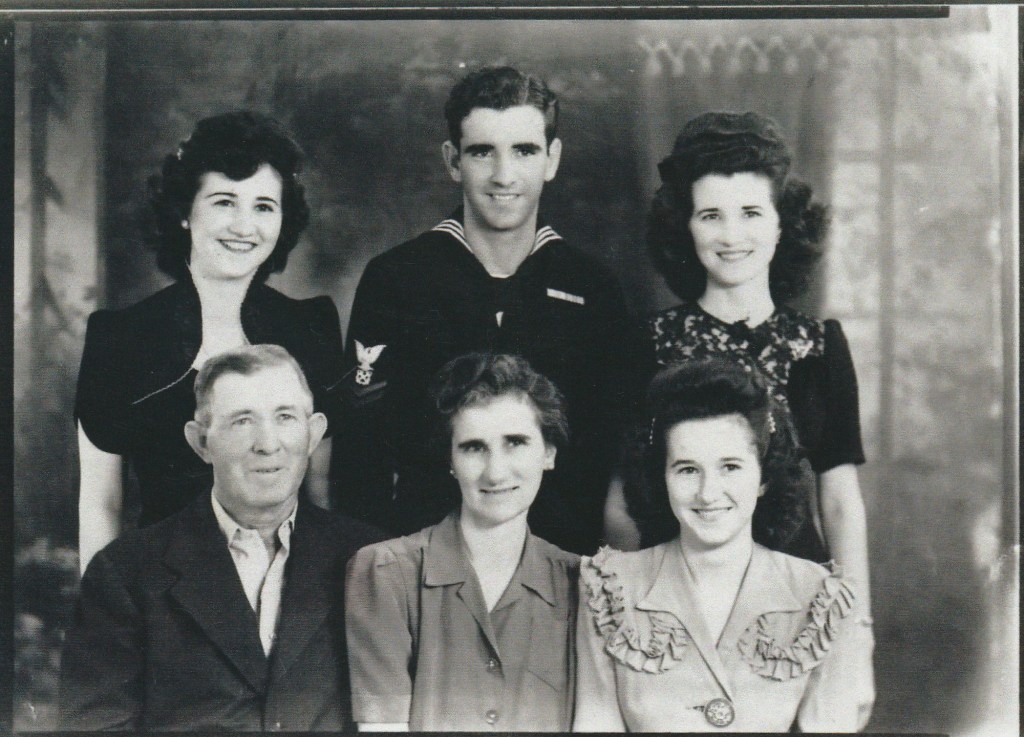
the Manley Family: Front from left, Jasper, Marcy, Lavelle. Standing, from left, Mozelle, Jay, and Catharine

Leaving home to forge a new life can be an exhilarating journey or a regretful mistake, depending on the circumstances of the departure. My mother, Mozelle, saw it as a journey that must be made; there would be no regret or sadness. The days of laboring in the fields and chopping cotton were behind her now. She would never again grip the wooden handle of a hoe.

Her mother’s parting tears left a permanent stain on the shoulder of her best dress. Her father’s apathy and refusal to hold her pierced her heart.

The bus ride to Fort Worth stretched into the night, giving her time to reflect and to shed her tears in the dark.

Sharing an apartment with her sister, Lavelle, she found work at Consolidated Aircraft Corporation, where she built B-24 bombers as part of the war effort. She was now the girl on the famous poster, with her sleeve rolled up and a polka dot headscarf. Her life was all work with little time for a social life.

In a letter from home, her father demanded that she and her sister send him a percentage of their paychecks, as their departure from the farm had forced him to hire labor and change crops that yielded less money. They complied, albeit unwillingly, for the sake of their mother. They learned that the Preacher and his family had come one last time, and with no cotton to pick, returned to San Angelo, where he passed a few months later. His sons carried on the church. She never forgot Preacher and his mainline to Jesus.

Her brother, Jay, wrote frequently to his sisters from his ship in the Pacific theater. He was a gunner on a destroyer and participated in the invasion of Iwo Jima. He was one of my two uncles who were the best liars and spinners of yarns and tall tales, and he passed that treasure on to me.

The front porch of the family farm house was his stage, and I would sit for hours absorbing his tales, some true, some as tall as the oak tree growing in the front yard. Give the man a few Pearl Beers and he could orate as well as Will Rogers. I felt he missed his calling to be a writer or a stage personality. In later years, the stories had darker undertones, and he became a world-class alcoholic who, after two stays in a state hospital, beat the demon and lived a sober life until his passing in a car accident in 1968, a head-on collision caused by, of all things, a drunk driver. She believed the war affected him deeply and led to his drinking problem. Today, we call it PTSD. My mother loved him dearly, and she was the force that convinced and aided him to seek help. His death affected her deeply, and I believe she grieved him for the rest of her life.

As a young girl, my mother wrote poetry and was quite good; she won an award in grade school. Her handwriting was exquisite. She and a fountain pen became one, and a sheet of lined school paper became her canvas.

Reading the great poets of her time and writing her own poems was her idea of a proper education, and she dreamed of one day publishing her own book. There were hundreds of pages of poems, squirreled away in a drawer, for someday. The poems were lost, and so was the day with them.

After the war ended, she and her sister worked on drawing maps. There was more time for a social life, and the two enjoyed dancing, so that led them to nightclubs at Crystal Springs on Lake Worth, Belknap Street, and Jacksboro Highway. She wasn’t looking for a boyfriend or a husband, but was swept off her feet by a good-looking, dynamic young fiddle player in one of the bands. The attraction was immediate and intense, and both of their backs were chock-full of Cupid’s arrows. That nice young man, a native of Fort Worth, a veteran, and recently relocated from Hawaii, would become my father.

Jesus Got A Mainline..Tell Him What You Want


Southwest Texas in the 1930s was its own special kind of hell. It wasn’t better or worse off than most of the state, but it was way out yonder and then some. Most Texas folks never ventured that far.

You could find a hundred preachers and ask them if God was punishing Texas farmers, and they would all praise the Lord and tell you times are hard, but we are blessed. Preachers back then were good at blowing smoke up folks’ backside, and then blessing them after the plate was passed.

One main highway, US 377 from Fort Worth, led to Stephenville, Dublin, Brownwood, Coleman, Santa Anna, and on to San Angelo, then farther out to desolate West Texas and the Chihuahuan Desert Big Bend. Small crop and cattle farms along the route, made up of God-fearing, gun-toting, worn-down, and dirt-poor families, faded into heat waves and obscurity as the fence post clicked by. The WPA was new to road and highway repair. Craftsmen and skilled labor were scarce, and what was available was assigned to building and repairing buildings, schools, bridges, and parks. The last place our government wanted to send its money was to the South to make living conditions better for poor southern white folk. Not much has changed in Washington, but we folks in Texas figured it out.

My grandparents, during those years, were cotton farmers in Santa Anna, Texas. A good crop of anything was a dream, a decent one, a miracle. Johnson Grass and Thistle Weed ruled the rows, and if a family could keep them at bay, a sellable crop of cotton might be picked: that’s if rain fell, and like miracles, there wasn’t much of either available.

My mother, Mozelle Manley, one of four children, lived on her parents’ farm and suffered through those hard-scrabble times. These are her recollections as told to me over many years. Sometimes over a glass of wine, or a late-night conversation, or just a visit while she prepared dinner. She didn’t keep a diary or put her thoughts to paper, but she was exceptional in her oral history, and I, if nothing else, was a devoted son and an apt listener.

Around late September, the cotton was getting ripe for picking. My grandfather, a miserly old goat, used his children as unpaid farm labor, which was the custom back then: the more kids you had, the less labor you paid. My mother, a delicate young girl, wanted to write poetry and stories, but her pen was the wooden end of a hoe, chopping weeds in the cotton rows. I learned this after I was an adult in my forties, and she finally gathered the courage to tell me about her childhood years. I played the part of the good son, listener, and historian.

Pickers would come to their area around harvest time to pick the cotton for the families they knew needed the help. They mainly were black folk from around San Angelo, or farther west. They had their own farms, but could make a good buck picking sacks of white gold, enough to hold them over for the winter months and beyond.

One family would come to Santa Anna every year: a large black family from San Angelo. The patriarch was an old snow white haired man folks called “Preacher.” He was an actual certified man of God with his own small country church, but had a passel of kids that worked to keep the family afloat. My grandfather never knew much about the man, or the brood, but always paid them in cash money, and trusted him enough as to not quibble over the weight or his sacks of cotton weighed at the gin at the end of each day. Preacher always said he had a “mainline to God.” No one doubted that, ever. You could see it in his eyes, his face, his demeanor, and his spirit that traveled with him like a treasured handbag. Men of God have a discerning spirit and a glow about them, even in the dark of night.

Every summer, my mother and her siblings would chop weeds in the cotton rows. Pesky little growths that kept the poor soil’s nutrients from feeding the precious cotton bolls. By harvest time, the entire group of children was worn down to a nubbin and ready to catch the first hobo freight out of town for Fort Worth or Dallas. My grandfather was a hard-assed father who used his children as day labor and often treated them the same way. In his later years, he found Jesus and softened a bit, but only enough that you could spread his soul like hard butter on a two-day-old biscuit.

Preacher and his family would show up about the time grandfather was pacing the wood off of the back porch floor. They would pitch a few tarp tents, sleep in his barn and eat a few of granny’s five-hundred or so Chickens. The cotton was picked, weighed, and the Preacher and his clan got their cash and went home to San Angelo and their church. This went on for years, maybe a decade or more.

As my mother and her siblings aged and graduated high school, they knew what they must do: leave the farm to forge a life for themselves. My uncle joined the Navy, fighting in the Pacific theater against the Japs. My mother and her two sisters caught the train to Fort Worth and built bombers and fighters in the aircraft plants for World War II. The days of free labor were over, and grandfather switched from cotton to maze, corn, and Johnson grass for hay. Preacher came back once, but seeing that the end was there, never returned. He knew the things that could kill a family’s spirit, and he didn’t care to see this one end. He truly had a mainline to God. I found it amazing and yet amusing what a few glasses of wine and a few hours with my mother taught me about her family.

Having a mainline to God is a special gift. My mother knew this and always kept Preacher in her prayers and thoughts.

The Old Time Revival Inspired by Charlie Kirk’s Memorial: A Soliloquy For Young Believers


It’s been a few weeks since Charlie Kirk was assassinated, and a few days since his memorial, which was a landmark television event in itself. Yes, many folks of high standards and lofty ideals spoke in eloquent tones, delivered soaring soliloquies on the life of a young patriot taken too soon. It was somber for the most part, but like any television production, it utilized technology to connect with the audience.

My wife, Momo, and I shed a few tears, moved by the words spoken by government officials that professed their Christianity to the world, and didn’t hold back. Near the end, when Charlie’s widow, Erika Kirk, spoke with humility and eloquence, I knew she had been chosen to lead a new revival of young men and women to Christianity and conservatism. She will lead them to reclaim our country as envisioned by the founding fathers.

Then, in a flashback, uninvited moments I often have as I grow older, I envisioned it as something entirely different. In crystal-clear black and white, it evoked the memory of an old-time 1950s Texas Christian revival I attended as a young child, held in a weathered circus tent in a field of drought-stricken grass near Santa Anna High School. Unlike the sturdy Baptist Church in town, there were no pews or wooden floors; only hard wooden folding chairs and a foot-trampled, grassy floor, harboring insects that crawled up my legs and delivered vicious bites. I yelped, and my mother smacked me on the back of my tiny, crew-cut-wearing head. “Be respectful,” she sternly whispered, “God is using the preacher as his lightning bolt.” No matter how hot the weather and the misery caused by pestilence, I obeyed. Pretending to listen to the droning sermon, half asleep from the heat and boredom, I would rather have been anywhere but that tent. My grandparents sat behind us, their hands holding heavy black Bibles that would leave a mark when connected to an insulant child’s behind. I could feel the searing stare of my grandmother’s laser eyes on the back of my neck. I looked straight ahead in fear, knowing that if my chin dipped half an inch or I wavered sideways, a bump from the good book would remind me why I was there. I was six years old and a reluctant, ignorant, bordering on a Christian at best. I yearned in silence to follow my older cousins; they were washed in the blood of the Lamb, bathed in the Holy Spirit, and had been dipped like spring sheep in a trough of holy water. I was just a young kid with no spiritual compass to guide me. It took some time, too slow to my mother’s liking, but I eventually came to Jesus in my own terms. Making me kiss the casketed, heavily perfumed body of my dead great-grandmother set me back a few years, from trauma alone. But God did find me, and I found him. It wasn’t the lightning bolt jolt from above, but a slow and gentle process that fitted my preciousness.

The memorial service in Arizona was similar, but in a larger way. Thousands gathered in air-conditioned comfort, with cold drinks and hot dogs served to feed the masses. Clean restrooms, paved parking, and ushers were on hand to help you find your seat. Believers and those seeking to become believers gathered to pay respects to a young man who will likely become the unofficially appointed sainted leader of the next Jesus Revolution, similar to the one started by Pastor Greg Laurie in the early 1970s in California. Take away the stadium, put the masses in a tent with no air conditioning, a grass floor, a rural setting, and a grieving, electrifying widow instead of a hellfire and brimstone preacher delivering the word of God, and you have today’s equivalent of an old-time tent revival. And, it’s about time.

Dispatches From The Cactus Patch, August 10, 2025


Keep Those Teeth In Your Mouth….

One of my recent “Ask A Texan” write-ups included a blurb where a large dog ate a man’s lower false teeth. It fit the story well, and it actually occurred about 67 years ago, and I was around when it happened.

My late, late, late uncle wore choppers, as he called them, and had a love-hate relationship with his false teeth. This was back in the days when the technology was archaic at best, and folks suffered greatly when wearing the prosthetics. They weren’t quite George Washington’s wooden teeth, but not much better. I’ll tell the story as best I remember it, as it was told to me by my uncle, then my Sainted Mother.

My two late uncles were the best liars and yarn spinners I have known. My Mother says I am possessed with their restless spirit, wisdom, and imagination: I’ll gladly accept that. Uncle Jay was the best of the two. Uncle Bill was close and at times could out-lie and rip a great yarn better than his brother, but only after Jay drank too much Pearl Beer. I would sit in awe as the two of them went at it on the front porch of the farmhouse on hot summer nights. Of course, cold Pearl Beer always made everything better. One night, the two of them may have had a bit too much beer and retired early. Uncle Jay had lower false teeth, a result of an injury in World War II. He collided with his anti-aircraft gun, or that’s the story he told. My Mother, his sister, said he got them knocked out in a barroom brawl, which sounded about right; he was a mighty scrapper. He also had a large Chow dog named Mr. Pooch. As dogs go, he was friendly, but only if you didn’t get too close, look at him, or try to pet his big head; then he would rip your arm off. So, we cousins stayed the hell away from Mr. Pooch.

Upon turning in for the night, Uncle Jay removed his lower teeth and set them on a chair by his bed. Mr. Pooch, ever the faithful dog, slept by the bed on a pallet of Granny’s quilts. The dog needed something to chew on, so during the night, he helped himself to Jay’s lower false teeth. In the morning, Jay, seeing a tooth and some gum material on Pooch’s pallet, realized the dog had eaten his teeth. Country folks didn’t use vets back in the 1950s, so he figured Pooch would pass the teeth in a day or two. Granny gave Mr. Pooch a dose of salts and some fiber to speed up the process.

The cousins, including me, were doing our usual daytime activities: shooting chickens with our BB Guns, roaming around the Mesquite Tree woods looking for Rattlesnakes, the usual kid stuff. My cousin, Beverly, headed back to the farmhouse by herself, probably to get some ice tea. We heard her scream and took off running. We found her plastered against the wooden plank wall of the smokehouse, crying and snow white; she was having a minor breakdown. We checked her for a snake bite and found none. She then pointed to a large pile of dog poop about ten feet away and wailed louder. Jerry and I walked over to the unusually large pile, and there, alone, was one of the most enormous dog turds we had ever seen. Looking closer, we saw that it had human teeth and was smiling. It scared the hell out of us, and we ran to join Beverly. We didn’t know that Mr. Pooch had eaten our uncle’s lower false teeth, so we thought it was a demon turd from hell or something worse. After Granny told us the story and inspected the poop, we all had a great laugh. Uncle Jay and Mr. Pooch never lived that one down. We never let him forget it.

The Legend of Little Audie Murphy: A Pig’s Heroic Journey


The farm. Santa Anna, Texas. July of 1955. My two uncles, Jay and Bill, need more to occupy their time. I need them away from me. I’m a six-year-old kid, and their influence is ruining my childhood. They told me Howdy Doody is not real, Santa Claus is dead, and Captain Kangaroo hates kids. I cried for days.


The chaw of Red Man chewing tobacco behind the smokehouse was the last straw. Seeing a kid puking for two hours seemed funny to them.


My grandfather told the two grown kids that a man in Coleman has a pig that won the ” Purple Paw” award. Every year, the governor of Texas bestows the prize on an animal that has performed a heroic act. Who knew there was a hero nearby?


Of course, my two uncles have to see this pig, so they head for Coleman with my cousin Jerry and me in tow. Arriving in Coleman, we stop at the feed store for directions and a Coke.
The owner tells my uncles to be very respectful of the pig since he saved the farmer and his family’s lives. In appreciation, the farmer named the pig “Little Audie Murphy,” after the famous World War 2 hero and movie star. I am more than impressed. This pig is the real deal.

Arriving at the farm, we are met at the gate by the proud farmer. My uncle Bill has a $10.00 bet with Jay that this is a load of bullcrap. They never stop.

Jay wants to hear the pig’s story, so the farmer is more than happy to recount.

The farmer takes a chaw of Red Man and begins, ” I was plowing one day, and my old tractor hits a stump and tips over, trapping me underneath. I’m yelling for help for an hour, and finally, my old pig shows up. The pig grabs a timber and scoots it underneath the tractor, then stands on it so’s the tractor tilts up, and I can scoot out. That porker saved my life.”
I can tell by the look on my uncle’s faces that they think this is B.S.
The farmer continues, ” about a week after that, I’m in town at the domino parlor, and my house catches on fire. My wife and kids are knocked out by the smoke, and the pig pulls them out of the burning house and revives them—a true porcine hero, that pig.”
Now my uncles are impressed. I see a tear trickle from Bill’s eye. I got a lump in my throat.

At this point, we want to see this pig for ourselves, so the farmer takes us to the barn. He stands outside the corral and yells, ” Little Audie, come on out.”


A huge Yorkshire pig wearing a ribbon and gold medal around its neck makes its way out of the barn. I’ve seen pigs before, and this wasn’t any normal pig. He was missing an ear and a front and back leg. Where the legs had been, the pig now sported a homemade wooden prosthesis. He seemed to walk fine and was friendly.

My uncle Jay was shocked and asked the farmer what the hell had happened to the poor pig.


The farmer took a minute to answer that question. Then he smiled and said, ” well, a pig this special, we can’t just eat him all at once.”

The West Texas Wooly Booger


My grandparent’s farmhouse front porch was made for storytelling. It wrapped around half the old home and was covered with a sturdy roof so we could sit out during any weather. Summer or winter, after dark, under the moonlight or stars, it was fertile ground for swapping yarns.

My two long-deceased uncles, Bill and Jay, were the best liars and yarn spinners I have known. I am proud to have inherited, to some degree, their ability to recount and or mold loads of total chicken crap into something believable.

Christmas Eve of 1957 found our family visiting the Santa Anna, Texas farm. The weather that day was mild with thunderstorms expected in the evening. In Texas, Indian Summer often shows up at Christmas time leaving us kids sad because Santa won’t have any snow for his sleigh. We assumed he could still land on rocks and hard dirt, or we wouldn’t get any presents while at the farm. My grandfather cut down a small Cedar tree in his pasture, and my parents brought some of our home ornaments, or we would have been treeless and nowhere for Santa to put our gifts.

After supper, some of the family would gather on the front porch to listen to our two Uncles spin their eloquent yarns of life growing up on a farm in rural Texas. Uncle Jay carried the metal Coleman cooler full of ice and Pearl Beer to the porch, and Bill rolled some cigarettes and brought out a pack of Red Man Chewing Tobacco. The stories wouldn’t start until the third or fourth beer was consumed. Uncle Bill said beer is a required fuel for any storyteller to practice his craft.

The lightning to the Northwest was flashing behind the Santa Anna mountain. Uncle Jay remarked that it reminded him of shells exploding miles away at night while he was onboard a battleship in the Pacific. That was the first time he mentioned his time in the war to us kids. We wanted to know more, but he changed the subject. We were years away from him sharing those times with us. The conditions on the porch were perfect. My cousins and I sat around our uncles in a circle, waiting for the first word.

Sitting at the opposite end of the porch, my granny piped in, ” Jay, did you ever tell the kids about the Wooly Booger’s?”

“The what boogers, “my cousin Margurite squealed. No, they had failed to mention them.

Uncle Jay took a swig of Pearl, looked at the lightning, and in a hoarse whisper said, “We got West Texas One-Eyed Wooly Booger’s right here in Santa Anna, and they are partial to eating kids.”

There, it was out. First, it was Pole Cats, then Coyotes, Bobcats, Feral Hogs, Rattle Snakes, Copperheads, and the giant Mountain Boomer, and now One Eyed Wooly Boogers. Sum bitch, everything around this farm wanted to kill us kids; no wonder we were a nervous wreck and lost weight every time we visited. At that moment, I was ready to go back to Fort Worth. At least there, I only had to worry about getting smacked by a car while riding my bike to school.

Uncle Bill chimed in: ” I saw one about forty years ago. I was sleeping on the screened-in porch with my dog, Giblet when one of them got through a hole in the screen and jumped on my chest. It was the size of a house cat with one big red eye in the middle of it’s skull. I was paralyzed with fear and couldn’t move; I guess the big red eye hypnotized me. Old Giblet killed the critter, and Granny took a picture of it with her Brownie camera. Then, we buried the little demon in the back pasture. I hear tell that they are attracted to the smell of nose boogers, which kids usually have a lot of. They go for the nose and chew it right off of your face, then the ears and eyeballs if you don’t die from the nose wound. I happened to have a cold that night, so that’s why the creature tried to get me.”

My cousin Jerry, even in the dark, was pale as a baby’s butt; he had a winter cold and a big-time snotty nose. He was a goner, and I had to sleep beside him on a pallet on the screened-in porch. I would be the second to get it.

I slept with my Daisy BB Gun and Cub Scout camping knife for the next few nights. I wasn’t going down without a fight.

Texas Lore And Legends


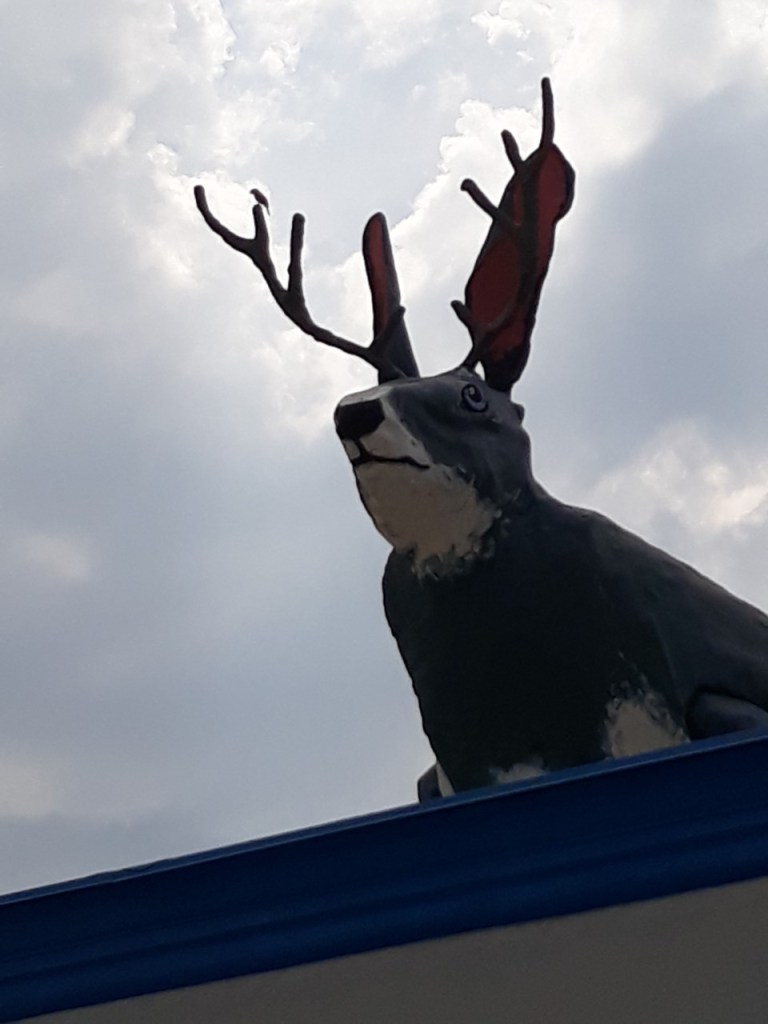
The Jackalope

I first learned of the “Jackalope” from my late Uncle Bill Manley. Summer nights on the porch of my grandparent’s farmhouse were ripe for spinning yarns and swapping lies. Uncle Bill was a masterful storyteller; my cousins and I were young and ready to believe anything he dreamed up.

The Jackalope is part Jack Rabbit and part Antelope and is a staple of Texas lore; is it real or a yarn? No one knows for sure, but many have claimed to have seen one, Uncle Bill among them.

After three or four ice-cold Pear beers, he begins his recount.

His voice lowers an octave; he leans over, rests his elbows on his knees, and begins,

” Back in 1948, when myself and the missus were visiting down from Chicago to this here farm, I was looking for my doggy that escaped the screened-in porch. It was almost dark, and I was walking through the back pasture, making my way into a grove of Mesquite trees, and there it was, sitting, chewing on a big blade of Johnson grass. He was a big critter, about the size of a big old lazy dog. His horns stuck up like a West Texas Antelope, his eyes glowed ruby red, and his pupils were yellow like a big summer squash. I was scared the varmint was going to gore me with those big horns, but I stayed real still and began to talk to the critter. I knew it was a Jackalope right away. The more I talked, the critter seemed to like what I was saying, and it began inching closer to me. I went on for a while, and when I took a break, the varmint was right next to me, looking up at my face with those crazy eyes. Then he did something funny; he nuzzled me with his head, and not knowing what was up, I reached out and scratched him behind his long ears. He made a funny sound, sort of a cat purring. I knew we were buddies now.” Wow, what a story! My cousins and I were delighted; we wanted more, so I asked, ” Uncle Bill, what happened to the Jackalope?”

Uncle Bill always had a dramatic end to his tales; this one was no different. He takes a giant slug of his Pearl Beer and says,

” There was a pack of wiley Coyotes roaming around the farm making a ruccus and killing Granny’s chickens. I went out hunting them one night and found the Jackalope all chewed up over behind the hen house; the Coyotes got him. He put up a good fight because there was two dead Coyotes laying beside him, all gored up from the horns. I took him to the taxidermist in Brownwood and had his head mounted, and that’s him hanging on the wall of the Biscuit Cafe.” Twenty years later, I stopped at that cafe, and the Jackalope was still there.

The Easter Chickens of Brown County


“Western history is bizarre because of the nature of what it has got. Historians and other writers do what men have always done in the desert. They make the best of what little they do have. Westerners have developed a talent for taking something small and blowing it up to a giant size like a photographer blows up a photograph. They write of cowboys as if they were noble knights and cowmen, kings. They do biographies of bad men, Billy the Kid, The Plummer gang, and Sam Bass, of bad women like Calamity Jane, of gunmen like Wyatt Earp and Wild Bill Hickock. They blow the abandoned saloon up into an art museum and Boot Hill into a shrine for pilgrims. In Montana, Charlie Russel is better than Titian, and in the Black Hills, Fredrick Remington is greater than Michelangelo. Custer, who blundered to his death and took better men with him, found a place in every saloon not already preempted to that travesty on decency and justice, Judge Roy Bean.”  As quoted by J. Frank Dobie, Texas Author, and Historian

I have no qualms or embarrassment about growing up in Texas. I am a native son and proud of it. If the Alamo needed defending again, I would fight the attackers on top of its wall with a yard hoe and my typewriter as weapons. At times, my unchecked pride borders on braggart, but I don’t interact with many folks that are not Texans, so it’s a moot point.

 Storytelling and tall tales run in my family. Uncles, grandfathers, and sometimes grandmothers filled my head with tales I remember today. I’m writing as fast as I can before I forget them. My son and grandchildren will be better educated once they have them in print. No one in my family wrote down what was told around the supper table or the front porch. I can assume that they figured the spoken version was good enough, and for decades, it has been, but now it’s my quest to put them to paper and pass them on. It doesn’t matter that many of them are about half true and could be considered a “tall tale.”  

The revered Texas author, historian, and master of tales, J. Frank Dobie understood the flow of Texas and its people. He told of the hardscrabble farming of the hill country, horse and cow trading, lost gold mines and Indian fighting, and of the Texas Rangers and their heroic and often ghastly behavior because he had lived and seen it as a child and young man and procured the tales, though many tall by nature, from cowboys and characters around campfires or leaning on the bar-rail of a saloon. He himself was considered a character, but with a top-notch university education. Spoken tales, true or not, are as much a part of Texas as our majestic bovine, the Longhorn.  

From my two late uncles, who were brothers Bill and Jay Manley, I heard stories that, on some nights, made sleep impossible, either from fear or captivation. They were the two best liars and storytellers I have met. Often, there would be a discussion and a following challenge to witness something they had heard about at the feed store or domino hall. They thirsted for the unordinary and would drive fifty miles or more to view a three-legged chicken or a pig that saved a farmer’s family from a house fire; things that sane and educated people would pshaw. My cousin Jerry and I were backseat passengers on many of these excursions.

Their preferred stage was summer nights on the farmhouse front porch. My grandparents had no air conditioning or television, and the radio only sometimes worked, so listening to their stories and trying to catch a cooling breeze was the only entertainment. The occasional yip of the Coyote added flavor to the moment. A Coleman cooler of iced Pearl Beer sat between the two orators, and the cold beverage allowed the tales to spill from them, most times like Will Rogers, other times like Saturday nights inebriated cowboy. I am a lucky man to have retained them for all these years. I credit my grandfathers’ advice to “keep your mouth shut and listen.” I was a good listener when I wasn’t yammering on to hear myself talk.

In the summer of 1957, my cousin Jerry and me were sitting with some of the family on the front porch of my grandparent’s farmhouse when my two uncles argued about something they had heard at the domino hall. A lady in Bangs, a small village about eleven miles away, is said to have a flock of hens that lays colored eggs. She calls them her “Easter Chickens.” Uncle Bill, ever the pragmatic questioner but still a believer in the oddities and unexplained, stated that “it was impossible for chickens to lay colored eggs” Jay, his brother, heard from three farmers playing dominos that it is the by-God truth. The argument concluded with the promise of a trip to Bangs in the morning to investigate. As usual in these challenges, a wager of five dollars was attached.

After directions from the local feed store, the source of all directions in Texas, our party proceeded to our destination. Detailed directions said to go five miles on the second dirt road out of town, turn left at the “Jesus Saves” sign on the tree trunk, and go about a hundred yards or so, and you’ll see the farm, a white house with red shutters, and lots of Holstein cows wandering around.

The lady that answered the door, Thalia McMurtry, figured we were there to purchase her “Easter Chicken” eggs. She wasn’t amused that all my uncles wanted to do was confirm if it were true; still, she led them back to the hen house. Her husband, Sonny, joined us. Around a dozen speckled hens were inside a cute little hen house, sitting on their box nest. Thalia stepped inside and retrieved a few eggs, placing them in her apron pocket. Two were bright red, one yellow, and one a deep blue. Uncle Bill sighed; he knew he had lost the wager. The eggs were beautiful; it was as if she had dropped them into a boiling stove pot of egg dye. She told Jerry and me, “go ahead and peel one; they’re ready to eat just as they are, already hard-boiled and everything.” Uncle Bill called BS; no chicken in this world lays hard-boiled eggs, and he accused Thalia and Sonny McMurtry of fakery to the highest degree and to explain how they did it.

Thalia, not a bit rebuffed, said, “I started mixing my own mash feed using different stuff from the kitchen cabinet with the regular store-bought mash, and the hens started laying yellow eggs, so I tinkered around a little more, and they started laying blue eggs, then a bit more, and red ones appeared. We’re not sure why they are hard-boiled, but maybe it’s caused by the heat lamps we use to keep my little beauties warm has something to do with it.” My two uncles, feeling like the village idiots, purchased a few dozen mixed colors and took them back to the farm. My grandmother, faking surprise at their discovery, had eaten a few of them some months back, given to her by a friend, but she didn’t tell her sons. Once again, another adventure of the absurd to remember.

Years later, I read a blurb in the Texas Farm Almanac about a lady in Bangs, Texas, who ran a farm called “Easter Chicken Acres.” Her hens laid hard-boiled multi-colored eggs just in time for Easter. She was also mentioned in the famous book “Ripley’s Believe It or Not” and made Bangs a place to visit. They came really close to putting the Easter Bunny out of business.

“The Legend of The Mountain Boomers of Santa Anna Texas”


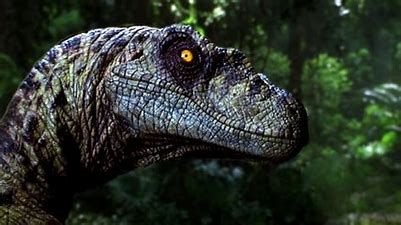
My childhood vision of a Mountain Boomer

Every so often, I feel a story or a rousing recount should get a second visit and be shared again. I wrote this one a few years ago because it made it’s way back to me in a dream. I watched one of the Jurassic movies earlier in the week. I had a squirmy nightmare for a few nights in a row, which usually results in me making a hot cup of Ovaltine in the microwave and reading for an hour or so to quieten my brain a bit. The problem was, it wasn’t a nightmare; it was a true account from my childhood. I swear on a stack of good books, not the Bible, of course, but maybe a few by Hemingway and Steinbeck. My two long-deceased and loveable uncles were the best storytellers, beer drinkers, and liars I have known. I never knew where the realism ended, and the bullcrap started, but they both swore, in between gulps of cold Pearl beer, sitting there on top of their Coleman coolers out on my grandparent’s front porch, that this one was as real as a bad case of chickenpox.

At seven years old, I learned of my first, but far from the last Texas legend. One of the best storytellers and liars I ever knew, my uncle Bill told my cousins and me about Santa Anna’s “Mountain Boomers.”

Supposedly, man-size lizards that ran on two legs came down from the Santa Anna mountain searching for food. Anything would do, but they were partial to goats, chickens, and tiny humans. If you were caught outside in the wee morning hours, it was a sure bet a Mountain Boomer would get you. Us kids were scared shitless of even going out after dark.

With no air conditioning in the farmhouse, we were forced to sleep with the windows open and would lay in our beds shaking all night, waiting for the monsters to break through the window screen and carry us away. Our Granny was no help; her standard goodnight to us was ” sleep tight and don’t let the Mountain Boomers bite.”

Summer evenings on the farm were made for sitting on my grandparent’s covered porch, watching lightning bugs dance, listening to the crickets chirp, and catching the far away howels of an occasional Coyote pack running the pastures.

The sky was black as pitch, the Milky Way as white as talcum powder, and heat lighting in the West added to the drama of the evening. We kids were ripe for a big one, and my uncles never disappointed. First, homemade ice cream was eaten, then the cooler of Pearl Beer came out, and the stories commenced.

Already that June, my cousin Jerry and me had been to see the hero pig and the three-legged chickens, so we needed a new adventure. But, unfortunately, the hobos had left the railroad bridge down the road, and our summer was losing air like a punctured tire.

“Did you kids see that over there in the trees? I think that might have been one of them Mountain Boomers,” says uncle Bill, in between swigs of Pearl. Then, of course, we strained our eyes to see what he said he saw, but nothing. Then a few moments later, ” there it goes again, I tell you kids, that was one of them sumbitches running on two legs carrying a goat.”

He had us hooked and scared. Then he starts in on the story.

Uncle Bill took a swig of Pearl and says, ” Right down this road here, about twenty-years ago, a families car broke down. The daddy, a man I knew well, walked into town to find some help. He left his wife and small son in the car. It was late at night, so he figured they would sleep until he returned. The little boy, got out of the car to pee along side the road. His Momma heard him scream and came out of the car in a hurry, there was a 7 foot Mountain Boomer standing there with the little kid in it’s mouth. The poor boy was almost chewed in half already. His guts were hanging out and dragging on the ground. The big lizard took off running with the Momma chasing it. Another of them Boomers was hiding in the scrub brush and got her too. A few days later, the sheriff found their bloody remains up on the mountain. They knew a Mountain Boomer had got em because they found their tracks. That’s why we never go outside after midnight around here.” Jerry and I were almost pissing our pants.

When we stayed at the farm, I don’t believe either of us ever slept well again after that night. But, even after we were adults, my Uncle Bill swore the legend and the story was true. I still dream of them.