Henry’s Journey: Cattle, Family, A Cow Dog, and the Brazos River


The Brazos River winds its way through the stoic rock cliffs a mile east of the small village of Glenrose, Texas, its waters glinting like scattered stars as the sun throws its golden light upon the white limestone bedrock beneath the water. In the tranquil shallows and deeper pools, hues of emerald and azure spiral together, mirroring the darting fish that traverse the hidden world below. Eagles and Hawks prowl the sky above, capturing the fish that swim too close to the surface. Towering Oak, Pecan, and Elm trees stand as steadfast guardians along the banks, their roots deep in the fertile soil, while just beyond, the land erupts in a profusion of wildflowers, a testament to the beauty and resilience of this little patch of earth. This is the land that Henry’s family chose as their homestead.

In the shadows of the towering hills, wide stretches of grasslands unfold, a realm where cattle and deer roam free, finding solace in the abundance that the land offers. Here, the grass is plentiful, and competition is not considered. The earth yields enough to sustain all who seek its bounty. Mesquite trees stand in tight groves, their gnarled limbs ready to provide the firewood for warmth and light for the ranch house. Henry thanks God every day that his family chose this little slice of Heaven so many decades ago, when Texas was newly freed from Mexico and formed into a Republic. His family and the Comanches made friends early on, sharing the bounty of the land and feeding the tribe with a beef or two when needed. It was a choice of peace over bloodshed and battle.

Henry’s two boys left the ranch years ago. His youngest works as a deputy in Fort Worth, an honorable but dangerous profession. His oldest boy is a gambler and a scoundrel, and haunts the saloons and gambling halls of New Orleans and Houston, making a shady wage and living an abhorrent lifestyle. Abigail, his wife, pines for a reunion with her boys, but they have been without her loving touch for many years. She is old, sick, and frail, and Henry fears each day might be her last, so he doesn’t travel far from the house and checks on her often during the workday. Henry is older than her, and he’s no spring chicken. His days of ranching and sitting in a saddle will be ending soon.

Cattle are made for roaming; it’s their inherent nature. Cowboys are made for finding and securing the unruly bovines; it’s a circle game played out daily. Henry is missing twelve, maybe thirteen, and two calves, all Longhorns. He knows they are drawn to the river; they smell the wetness and know that the grass is sweetest near the banks, and the spreading Oaks offer a safe respite when night comes. He sent his ranch hand West to search, but he knew they likely headed East to the river.

Henry picks up the cattle tracks in the soft sandy soil, heading to the river. He follows for a few miles to the West bank of the Brazos. There, they crossed in water no more than a foot deep, but swift enough to take a man off his feet. Across the river, maybe thirty yards, he sees their exit up a steep incline next to a sharp cliff that drops off to the right, large rocks scattered along the bank below, and trapped broken tree trunks and limbs reside there among the stones. The trees are thick on the left, so there is no option but the one the cattle took. Henry gives them credit for being smart enough to figure it out. They cross with no effort. Witherspoon, his old horse, knows about as much as a ranch horse could learn. Henry considers him smarter than many of the men he knows. They start up the incline, which is steeper than it appeared from the other bank. Witherspoon struggles, slipping on the soft earth and gravel, and rolls to the right. Henry knows they are falling, and it won’t be a soft one. He grabs the saddle horn and braces for the impact as they fall backwards off the cliff.

When Henry opens his eyes, the sky looks a color of blue he is not familiar with. Deep Azure, not the familiar soft blue. He is flat on his back, lying atop stones. He doesn’t feel pain and figures he escaped injury. Witherspoon, his horse, grazes near the face of the cliff they fell from; he appears uninjured as well. He raises himself up on his elbows. From the left side, a dog approaches, tail wagging. Henry is shocked; it’s his cow dog, Buster, gone for three months now. Henry was sure a pack of coyotes got him, but here he is, now licking his face in between joyful whines. Abigail will be pleased as punch to see Buster back home. She mourned for weeks, assuming he had passed.

Witherspoon is in good shape, not a scratch on him, so he mounts, and Buster leads the way up the incline. This time, it’s an easy climb, and they continue down the path, Buster following the tracks and stopping ever so often to look back and bark to let Henry know the way.

The three come upon a man leaning on a broken gate. The wood of the gate is in poor shape. The man is dressed in city clothes, sharp and clean, boots shined and a snazzy derby perched on his head. Henry has been in these parts many times and doesn’t remember this place.

The man motions his hand and says, ” Howdy neighbor, what brings you to these parts?

” Looking for some strays that crossed the river maybe yesterday or the day before, you seen them” Henry says. Buster sits on his bollocks, ears low, hair on his back up: it’s clear this is not a nice fellow. Henry trusts his dog’s instincts, which are always right.

” Had some strays here a few days ago, just walked right in the gate and up to the main house, you’re welcome to come and see if they are yours. I’ve got some good corn liquor if you’d like a jolt, but the dog has to stay at the gate, no dogs allowed on this spread, they cause too much trouble,” says the man with a broad, fake smile. Buster lowers his body and snarls, emitting a low growl.

Henry looks at the entrance, the tracks must be at least a few weeks old, and the rain has almost vanished them. He says,” No thanks, my dog has picked up their scent and tracks, and they lead on up the road, so we’ll be moseying along.”

” Suit yourself, neighbor, if you don’t find them, you can come to the main house, but the dog isn’t welcome.” The man turns and leaves as Henry moves Witherspoon along the tracks that Buster has picked up.

A few miles down the road, Henry comes upon another gate. A young woman is replacing the hinges. She has a toolbox and has clearly been working hard. Her clothes are a bit dirty, her boots are worn, and her straw hat has seen better days. Without hesitation, Buster goes to her and she bends down and gives him a hug, he whines and licks her face.

She puts down her tool and says, ” Bet you’re looking for those Longhorns that came by this morning, twelve of them, with two calves. They walked right in the gate and up to the barn. I put them in a holding pen. I figured someone would come looking. Why don’t you and your cow dog follow me up to the barn, and I’ll give ya’ll a cool drink of water, and Cookie might have a biscuit or two left from breakfast if you’re hungry. Why don’t you dismount and walk with me up to the main house?”

Henry and Buster walk beside her, Witherspoon in tow. The road is well kept, the trees lining the road are healthy and green, and some are bursting with fruit, Apples, Pears, Peaches, Mulberries, and the wild flowers are as abundant and colorful as he has ever seen. In the distance he sees the main house. It’s a sprawling place, maybe three or four stories, painted white and trimmed in gold. There are dozens of folks sitting in chairs under the covered porch. Dogs and children play on the lawn. Buster takes off down the road to join in with them.

The young woman takes off her leather gloves, offers a hand to Henry, and says, ” Howdy, my name is Angela. This ain’t my place, it belongs to my Father. You must be Henry and your cow dog must be Buster, right?”

Henry shakes her hand. Her face is beaming, glowing in the afternoon light. Bright blue eyes, silky brown hair, and the whitest teeth he’s ever seen on a person. He says, ” Angela, how do you know my name? I don’t recall telling you yet. I can’t stay long. I’ll collect my strays and need to head back. My wife is sickly, and I’ve been gone too long as it is. I worry about her, and she doesn’t need the misery of thinking something happened to me.”

Angela moves closer to Henry and takes his hand in hers as they stroll down the road. She says, ” Henry, we’ve been expecting you, Witherspoon, and Buster for a while now, and don’t worry too much about Abigail, she’ll be along shortly. Ain’t this place just a slice of Heaven.”


Ask A Texan: One Last Halloween


Advice For Non-Texas Folks That Need It, Whether They Know It Or Not

The Texan

I received an email from Mrs. Lillian Munster of Winston, Massachusetts. It seems her husband is determined to have one last Halloween, and she is fearing the worst.

Mrs. Munster: Mr. Texan, I read about your advice in a magazine I got at the Goodwill Store last week. My husband, Boris, is 92 years old and recently had an episode from being electrocuted while working in his shop ( he calls it his lab ). Still, it’s really just a shop in our garage, which is full of crazy stuff he has been building for decades: lots of glass tubes, electronic machines, tables with straps, and things like that. He was installing a large Ham Radio tower and lightning struck it, knocking him out from the jolt. Our oldest son, Eddie, just happened to drop by and found him on the garage floor mumbling nonsense. The doctor at the ER said the lightning jolt and the fall likely affected his brain. Now he is insisting that he go trick-or-treating because he thinks this will be his last Halloween, and it may well be. The jolt and the fall gave him a cut on his forehead, but Eddie used a staple gun to close the injury, and it did disfigure his face a bit, giving him a limp, and he now drags one leg behind him, and it’s hard for him to walk because he is 7 feet 6 inches tall. It also affected his speech, and he now only talks gibberish and is afraid of fire. He wants to go trick-or-treating with the kids in the neighborhood, but I’m afraid for his safety. We have folk in our rural area that own guns, pitchforks and torches, and they might get the wrong idea when he mumbles for some candy. He does look a bit scary. Do you have any suggestions on how I can prevent him from going through with this? I’m sending you a recent photo of him so you’ll see what I’m talking about.

My husband, Boris, after his morning coffee

The Texan: Mrs. Munster, I can see why you are concerned. He looks pretty scary, and if I answered the door and he was standing there with his plastic pumpkin candy holder mumbling gibberish, I might well grab my 12-gauge or a garden pitchfork too. Try to persuade him to visit a haunted house, or at least attend a Halloween carnival at the local school or church; he would likely be a big hit with the kids there. My late uncle Zevon developed a facial condition, and long brown hair grew and covered his entire face, which made him resemble the Wolf Man from the old 1930s movies. He became increasingly self-conscious and stopped going out in public; instead, he began to make a living by writing hit songs. I’m sending you a CD of Halloween songs, which includes the Monster Mash, the tune my uncle wrote. I’m also sending your husband a box of Cherry Bombs to keep him occupied in his lab. Keep in touch.

Dispatches From The Cactus Patch, August 10, 2025


Keep Those Teeth In Your Mouth….

One of my recent “Ask A Texan” write-ups included a blurb where a large dog ate a man’s lower false teeth. It fit the story well, and it actually occurred about 67 years ago, and I was around when it happened.

My late, late, late uncle wore choppers, as he called them, and had a love-hate relationship with his false teeth. This was back in the days when the technology was archaic at best, and folks suffered greatly when wearing the prosthetics. They weren’t quite George Washington’s wooden teeth, but not much better. I’ll tell the story as best I remember it, as it was told to me by my uncle, then my Sainted Mother.

My two late uncles were the best liars and yarn spinners I have known. My Mother says I am possessed with their restless spirit, wisdom, and imagination: I’ll gladly accept that. Uncle Jay was the best of the two. Uncle Bill was close and at times could out-lie and rip a great yarn better than his brother, but only after Jay drank too much Pearl Beer. I would sit in awe as the two of them went at it on the front porch of the farmhouse on hot summer nights. Of course, cold Pearl Beer always made everything better. One night, the two of them may have had a bit too much beer and retired early. Uncle Jay had lower false teeth, a result of an injury in World War II. He collided with his anti-aircraft gun, or that’s the story he told. My Mother, his sister, said he got them knocked out in a barroom brawl, which sounded about right; he was a mighty scrapper. He also had a large Chow dog named Mr. Pooch. As dogs go, he was friendly, but only if you didn’t get too close, look at him, or try to pet his big head; then he would rip your arm off. So, we cousins stayed the hell away from Mr. Pooch.

Upon turning in for the night, Uncle Jay removed his lower teeth and set them on a chair by his bed. Mr. Pooch, ever the faithful dog, slept by the bed on a pallet of Granny’s quilts. The dog needed something to chew on, so during the night, he helped himself to Jay’s lower false teeth. In the morning, Jay, seeing a tooth and some gum material on Pooch’s pallet, realized the dog had eaten his teeth. Country folks didn’t use vets back in the 1950s, so he figured Pooch would pass the teeth in a day or two. Granny gave Mr. Pooch a dose of salts and some fiber to speed up the process.

The cousins, including me, were doing our usual daytime activities: shooting chickens with our BB Guns, roaming around the Mesquite Tree woods looking for Rattlesnakes, the usual kid stuff. My cousin, Beverly, headed back to the farmhouse by herself, probably to get some ice tea. We heard her scream and took off running. We found her plastered against the wooden plank wall of the smokehouse, crying and snow white; she was having a minor breakdown. We checked her for a snake bite and found none. She then pointed to a large pile of dog poop about ten feet away and wailed louder. Jerry and I walked over to the unusually large pile, and there, alone, was one of the most enormous dog turds we had ever seen. Looking closer, we saw that it had human teeth and was smiling. It scared the hell out of us, and we ran to join Beverly. We didn’t know that Mr. Pooch had eaten our uncle’s lower false teeth, so we thought it was a demon turd from hell or something worse. After Granny told us the story and inspected the poop, we all had a great laugh. Uncle Jay and Mr. Pooch never lived that one down. We never let him forget it.

Ask A Texan: The Quest For Big Rock Candy Mountain And The Bates Motel


Sort of Professional Texas Advice For Folks That Can’t Afford The Real Thing.

The Texan

This Texan received a postcard from The Walmart in Tom Joad, Oklahoma. It seems that Mr. Junior Steinbeck’s wife, Rose of Sharon, thinks she is real sick and wants a vacation bucket list trip, which he can’t afford.

Mr. Steinbeck: Mr. Texan, I’ve never written a request for advice, so please consider this my first and bear with me if I make any mistakes. Two weeks ago, Rose of Sharon, my wife of forty-five years, said she was near the end. This is nothing new; she and her four sisters are all world-class hypochondriacs and have so many fatal diseases that it’s a miracle any of them are still walking around and breathing. The woman has been on death’s door since the honeymoon, but has been as healthy as a town dog for all these years. Rose of Sharon comes to me and says that, since she is pretty sure this malady is the fatal one, she wants to take one last trip and go see the Big Rock Candy Mountain in South Dakota. I say, “There ain’t no Big Rock Candy Mountain, that’s a dang song.” She says, “No, Junior, it’s that big candy rock with those faces carved in it.” I say, ” No, Rose, that’s Mount Rushmore and those faces are the past great presidents, are you a moron?” Well, I gave in since she was ill and all.

We load up the truck and head out. About midnight, Rose says she needs a bed to sleep in, and our Ford Ranger pickup ain’t no Simmons Beauty Rest. I remember that guy on the radio always saying We’ll leave the light on for you, so I started looking for that motel. We drive into a town, and there it is: Motel 3, with its sign all lit up. I walk into the office, and there’s this guy behind the desk dressed like one of those Beatles boys, and he has a red dot on his forehead. The place is all smoky and smells like perfume burning, and I hear a goat from somewhere in the back office. I say we need a room. He says it’s okay, it will cost $25.00. I’m thinking that’s awfully cheap, but I’ll take it. Rose is moaning and groaning and thrashing about in the front seat. Once in the room, Rose decides she needs a shower. She comes out of the bathroom and says, “Junior, there ain’t no towels, toilet paper, or soap, what the hell?” So, I go to the office and tell Mr. Abdul something or another, we need the bare necessities. He says, “towels, $5.00 each, soap is $2.00, toilet paper is $ 3.00. I’m thinking this is a rip-off, but I pay anyway. I get back to the room and Rose says there ain’t no pillows or sheets on the bed. By this time, I’m a little hot. Same response: Pillows $4.00 each, sheets $10.00, and if you want to watch TV, the cord is $5.00. Again, I pay. Rose needs her rest and some clean sheets.

I go to put on the sheets and there is a big, old, huge blood stain on the mattress, so I flip it over and the blood stain is even bigger. Rose of Sharon freaks out and screams, ” Junior, this is the Bates Motel. I ain’t taking no shower and get stabbed by a lunatic granny.” We pack it up and leave, drive all night to Mount Rushmore. Rose thinks it’s no big deal, a big rock with faces. All she ever wanted was to see Big Rock Candy Mountain. Any ideas how I can fix this mess with the Motel 3 and a disappointed wife?

The Texan: Well, dang it, Junior, I’m almost, but not quite, a loss for words on this one. I have a couple of aunts who have been living with fatal diseases for about sixty years, and not one of them has expired yet. My grandpappy says it’s the water in Texas, stuff keeps you alive for a little too long past your shelf life. Motels aren’t what they used to be. I suspect you were looking for that Tom Bodett Motel 6: that’s the one that leaves the light on for you. You stumbled into one of those foreign-run places that charge for everything, even the cock roaches. You can sue the grifter, but it’s likely to cost more than the bill, so let it lie. Take Rose of Sharon to Enchanted Rock in Fredericksburg, Texas: it looks like a big old slab of rock candy, and she probably won’t know the difference. Keep in touch, and I’m sending Rose a box of Big Rock Candy and a copy of The Grapes of Wrath.

Ask A Texan: Mrs. Gentry’s Dilemma: Boat Motors vs. False Teeth


Down Home Advice For Folks That Are Out Of Options

The Texan

I received a letter from Mrs. Gentry of Tallahatchie, Mississippi, stating that her husband, Catfish John, had taken the money she gave him for a set of new false teeth and spent it on a new boat motor. She’s as mad as a cottonmouth.

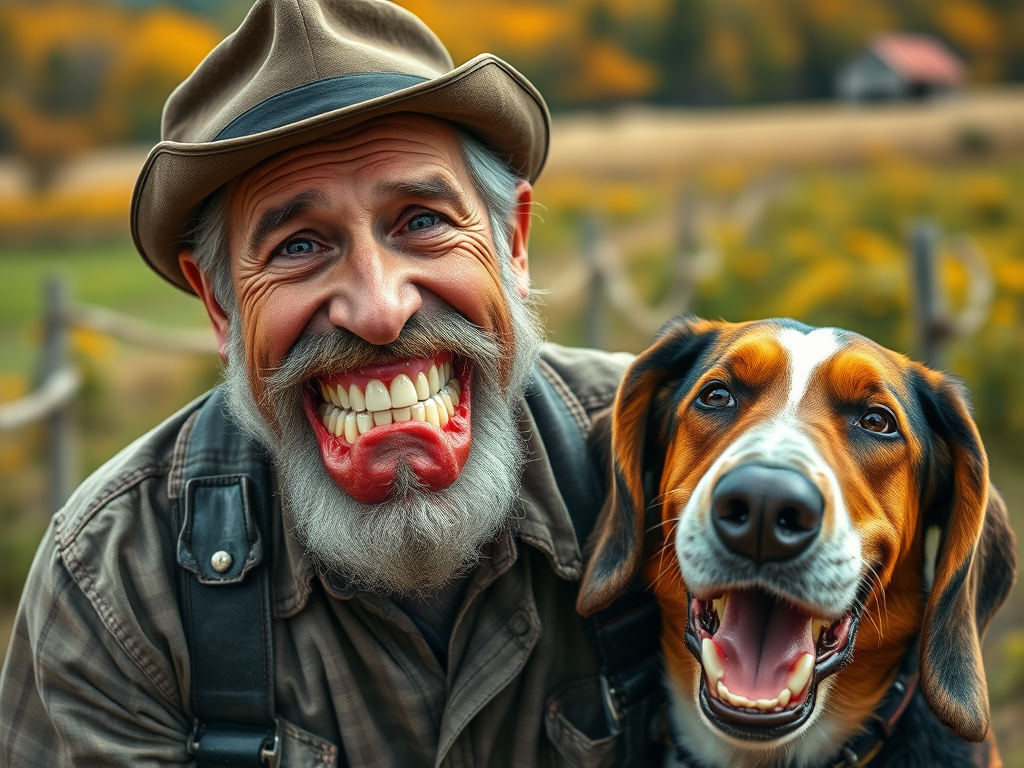
Mrs. Gentry: Mr. Texan, I’m surprised I’m having to ask a stranger for help. I saw your articles in the Farm and Ranch magazine, and you seem to know your groceries. My husband, Catfish John, is what the locals call him because he spends a lot of time on the Tallahatchie River running trotlines. He had three teeth left in his fat head, so I gave him some cash I had hidden away in a coffee can and told him to go to town and get some new teeth cause I was sick of looking at his toothless face. His hound dog, Little Bob Barker, has the same problem, so I told him to get the dog some choppers, too. He comes with what I thought was new teeth. I looked at him and said, “Wait a darn minute here, Catfish, those don’t look like real teeth; they’re too big and are all the same size. ” Well, he admitted that he needed a new boat motor, so he bought a couple of boxes of Chiclets, those lovely little white candies, and super glued them into the holes where his teeth used to be: he did the same for his hound dog. They look like a couple of smiling great white sharks, and I’m out all the hidey money I was saving for our daughter’s upcoming wedding to Billy Joe MacAllister. She’s not around much these days cause Catfish sees her and the boyfriend throwing stuff off the bridge, which worries me; I’m missing a bunch of laying hens and some piglets. I’m as mad as a pissed-off cottonmouth and ready to send him to live with his baby brother, Perch. Any ideas on fixing this mess? I sent you a picture of him and the hound.

The Texan: Wee Doggies, now that’s a problem. Southern men take their fishing real seriously, and a good boat motor is essential. My grandpappy had the same problem, so Granny fed him soft biscuits and white gravy and mashed up his meat, and he got along just fine. Teeth are expensive these days, so he was just trying to save money. I love those little Chiclets candies; they are a true American institution. I wouldn’t worry too much if one falls out, he can replace it, they’re really cheap. As far as the wedding, have your daughter go to the justice of the peace. At least Catfish will always have nice-smelling breath, and if you’re at a social gathering and you need a breath mint, just jerk out one of his teeth. Keep in touch, and I’m sending him a big box of assorted-colored Chiclets so he can change his teeth to suit the holiday festivities. Let me know what your daughter was throwing off that bridge.

Ask A Texan: Finding Joe Bee’s Father


Pretty Stable Advice For Folks That Don’t Live In Texas And Can’t Get Here

The Texan

This Texan received a letter from Miss Sparkle, a business owner in Chattooga, Georgia. She runs the Papa Gus River Rafting and Fish Camp, which was made famous in the movie Deliverance.

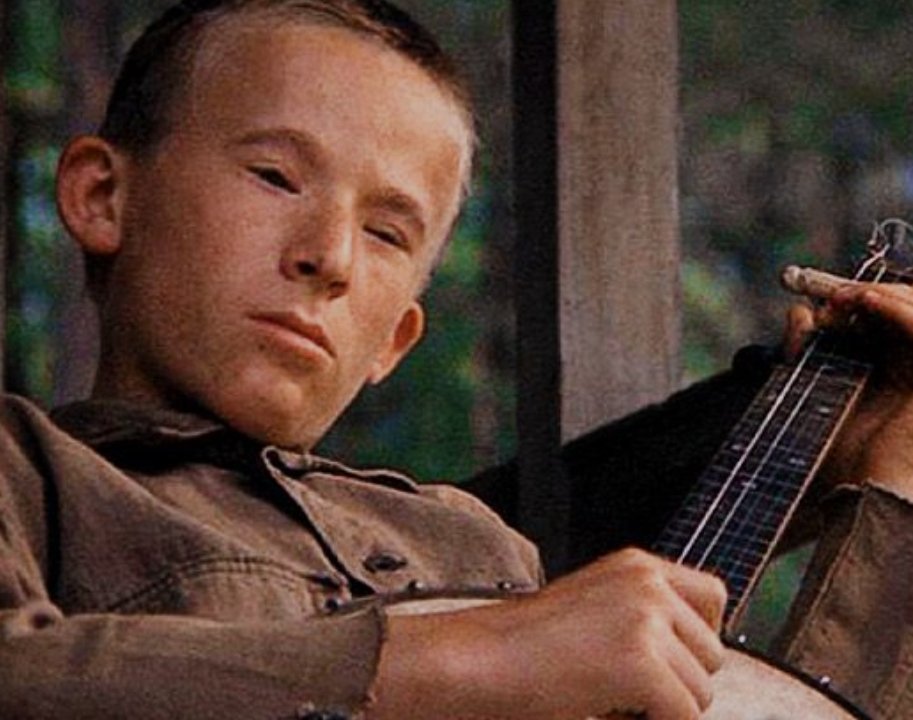
My little boy, Joe Bee before he grew up into a man

Mr. Texan: I can’t get no help around here from nobody: it’s just a bunch toothless hillbillies sitting around drinking moonshine, so maybe you can shine a light on my predicament. I enclosed an old picture of my boy, he’s real shy and won’t let me take a picture now that he’s older.

Back in 1972, a group of Hollywood boys filmed a movie here on the river. It was all fun, and my family got to be in the movie. I enjoyed many an evening drinking shine with some of the actors and got to know one of them really well. Bless his heart, he’s passed on now, but I’ll always remember his funny laugh and how good he was with that bow and arrows. Now, in 1984, a bunch of rich big-shots from Washington, DC came down to ride the Chattooga like in that famous movie that was filmed here. They were nice men and treated me with respect, even though I was just a river rat. Daddy hadn’t been gone long, and I was really sad, so it was nice to have some company at the camp. One night, the bunch of us were sitting around the campfire drinking daddy’s famous shine, and this one fellow they called Joe B started sniffing my hair. I didn’t mind cause I had just washed it with lye soap, and it smelled pretty good. He was a nice man, in a creepy sort of way. Too much shine always gets you in trouble, and I’ve had plenty of it since then. Well, about a year later, the old stork shows up with this bundle of joy. I call him Joe Bee. He ain’t no kid no more and doesn’t want to do anything but sit in his porch swing all day long playing the same song on his damn-ole’ banjo. I’ll tell ya, it’s driving us all to drink more than we normally do, and that’s a bunch. We tried hiding it, but he always finds the darn thing. Little Joe Bee just wants to know who his daddy is. My two other boys, the twins, Smokey and Bandit, their daddy never comes to see them either, but that’s cause he’s dead as a shot squirrel. I’ll give him a pat on the back; at least he gave them each a black Pontiac Trans Am for their sixteenth birthday. At least Joe Bee’s daddy could send him a monster truck or something. He just wants to meet his daddy and have something with big wheels to drive.

The Texan: Miss Sparkle, I’m sorry to hear of your problem and Joe Bee’s fatherless miserable life. Like you, I couldn’t stand to hear a banjo picking all day long. At least you have some good moonshine to knock the edge off. Looks like your boy’s Pop might be found in Washington, DC, and shouldn’t be too hard to track down; the family resemblance to a former big-shot should help find his daddy. We folks down here in Texas believe that every boy deserves a big truck to drive. Keep in touch, and tell your son I’m sending him a DVD of the Smokey And The Bandit movie along with a month’s supply of Ben and Jerry’s Ice Cream.

Finding My Voice Through Tall Tales and Truths


Over the years, I’ve spotlighted the storytelling skills of my two late Uncles, Jay and Bill. They remain in good standing and are the best liars and yarn spinners I have met. Each could have been as popular as Will Rogers, but they chose the farmhouse porch as their stage, shunning the spotlight and life as a celebrity.

Around the age of nine, I was convinced that the spirit of Mark Twain had somehow entered my body, and my destiny was one he had lived. My teacher, an older woman of little patience, was convinced that I was dropped on my head during infancy, which led to my outlandish literary behavior. She couldn’t see that I was destined to be a writer of some importance. Mathematics was a mystery I loathed, but I perked up when the curriculum came around to History and English. To me, everything became a story and originated from my grandparents’ farm, my extended street-rat crazy family, or neighborhood antics, and included made-up tales of ridiculous origins. Mrs. Badger, ever the suffering teacher, labeled me an insufferable pathological liar and called my mother in for the dreaded parental meeting, which included my school’s principal, who sat with a wicked wooden paddle in his lap, poised to administer punishment. Mother handled it well until we reached home. There was no butt whooping, but she did corner me in the kitchen, put her face nose to nose with mine and in a seething saliva spewing accusation said,

“You are one of them..my loathsome, worthless brothers have ruined you: I forbid you to associate with them, ever again.” She was right, they had, and I wore that tawdry badge proudly. All those nights sitting on the farmhouse front porch listening to their beer-infused tall tales, yarns, and lies formed me. I was spoiled, but happy goods. My family lacked the foresight needed to distinguish a liar from written fiction. My Aunt Norma, a tarnished angel, is the gal who taught me to read, write, and imagine. She understood my affliction.

The Green Legacy of Mr. Greenjeans


If you were a kid in the 1950s, then you knew who Captain Kangaroo and his sidekick Mr. Greenjeans were. Their television show was broadcast five days a week in glorious black and white and viewed by millions of kids on tiny television screens. ” Don’t sit too close to that TV, you’ll go blind.” That was the stern warning from every mother, and here we are today, all wearing glasses or blind. How did you expect us to see the Captain and Greenjeans on an 8-inch screen?

The burning question we all had was, did Mr. Greenjeans wear “green jeans?” We were kids, with no color sets, it made us crazy. Was this man green?

A few months ago, I took a shortcut through a Fort Worth neighborhood to avoid road construction and noticed a weirdly dressed man using a hand pump sprayer to paint his yard a deep shade of Kelly green. I stopped and watched him walk from the curb to the house. Long, even strokes coat the brown grass to imitate spring’s favorite color. It was then I noticed his house was green, the cars in the driveway were green, his clothes and skin were green, and a small dog sitting on the porch was also green. What the hell? The man saw me staring and motioned me over.

I parked my car and walked up to the fellow, feeling a bit foolish for interrupting the work of a stranger. I introduced myself and complimented him on his handy work. He thanked me, extended his hand to shake, and said, “names Levi, Levi Greenjeans, nice to meet you.”

” That’s an unusual name, sir. The only time I’ve heard that last name was on Captain Kangaroo, and that was seventy years ago,” I said.

The green fellow laughed and said, ” That’s the family name. Mr. Greenjeans was my pop. My sister and I grew up in a green world, so this is pretty natural for us. Dad’s been fertilizer for a good many years now, so it’s up to me to carry on the family brand.” I agreed; he looked pretty good for an old green guy.

I didn’t want to pry or be too forward, but I asked, ” Sir, what might the family brand be?”

“Call me Levi,” he said. ” You know that song ” The Jolly Green Giant? I wrote it and collect mucho royalties. That Tom Jones song about the green-green grass of home wrote that one, too. The Green Giant food brand, that’s mine; also, copyright infringement made them pay up. Home Depot has a Green Jeans color named after Dad. I get change from that, and I get a shiny penny from YouTube for the Captain Kangaroo videos.” This dude has turned green into green cash.

I am impressed and honored to be in the presence of one of the famous Greenjeans family, but now is the chance to get the answers to my childhood questions. I am afraid of coming off like a six-year-old Duffus, but I asked, ” did your dad wear green jeans and did he have a green face, and was the captain a nice man, and why did he have a big mustache, and did your dad really have a farm? There, I spat it out, and I am an idiot.

Levi chuckled and said, “Dad wore green jeans, and his face was green from stage makeup. The captain, bless his dead heart, was not too friendly. He wore a mustache because, on the first live show, a little kid threw a Coke bottle at him and split his lip; the stash hid the scar, and that’s why he disliked kids. He carried a small cattle prod under his sleeve, and if the kids got too close, he would shock them. Pretty funny stuff to see them jump. And the final answer is yes, Dad had a farm and grew veggies and raised prize-winning Llamas. Recently, my sister Denim planted forty acres of butt-kicking pot that we will sell in our “Mr. Greenjeans Apothecary Co-op in Denver.”

I thanked Levi for his kindness and started to leave when he stopped me. Extracting a green Sharpie from his pocket, he signed his name on the front of my white Eddie Bauer Polo shirt. “Hang on to that shirt, brother. It’ll be worth some cash one day.”

Back Home In Texas: Looking For That Marble Angel


Chapter 18

“A young man is so strong, so mad, so certain, and so lost. He has everything and he is able to use nothing.” Thomas Wolfe

There is no winter like one in Texas. The cold comes with a Blue Norther. It roars down from Canada into the panhandle, gathering tumbleweeds and dust as it goes. It marches south across the flat plains to the Gulf of Mexico. The wet cold cuts deep, biting like the sharp edges of a frozen North Pole. Eskimos would take the first train back home. It is a harsh welcome for a man with tropical-thinned blood.

Johnny’s train pulled into Fort Worth as an ice storm blanketed the city. He had intended to walk two miles from the station. But then he saw a man slip and fall on the ice, and he called for a cab. The ride was rough. It had been over a decade since he faced winter, and now he recalled why he had chosen warmer places to call home.

The house appeared forlorn in winter’s cold, pale light, smaller than he remembered. It was worn out, resembling a sharecropper’s shanty more than his childhood home. He scanned the front porch; no marble angel welcomed him home. Thomas Wolfe was right.

Johnny and his parents left Fort Worth twelve years ago. They set out for California in search of work, to rebuild their lives and forge a future for their children. He was a boy cast into the vast unknown, adrift on the winds of a long journey. This adventure would shape the man he would become. His parents were like ship’s captains, guiding their small crew. He and his dog were the sailors. Their Ford was a proud schooner, and California was the mythical land where treasures lay hidden. They never discovered the chest, yet the treasures came to them in ways they had not anticipated.

Standing on the ice-covered sidewalk, Johnny saw a light in the kitchen window. His father, John Henry, sat at the table. A mug of coffee in his hand. A cigarette slowly burned in an ashtray. His bowl of oatmeal was there too. His mother was absent. She never woke early. Johnny stepped onto the porch and knocked. His father opened the door, and warmth rushed out. After briefly embracing, Johnny settled at the worn table with a steaming mug. The table had seen much—his parents’ fights, their choices, celebrations of childhood, and now his reluctant return. His mother was not sleeping; she had gone to an aunt’s house months ago.

John Henry, sipping his coffee, gave Johnny a brief rundown. Norma, his elder sister, married a schoolmate and now lives in Albuquerque. A second baby was coming soon, or maybe it had already come. John Henry couldn’t remember. His words were hard, filled with the bitterness of a man worn down. Bertha fought with the drinks. The magical elixirs had returned. She wrote letters to their friends in California, a compulsion. Sister Aimee was the one she favored. Norma had taken all she could shoulder and left with her husband. Johnny did not expect a joyful reunion, but this was a sorry state of affairs.

Link to the earlier chapter.

Growing Up In The 1950s. Threats Used By Parents To Keep Kids In Line


Pictured is the infamous “Dope Farm” in Fort Worth, Texas. A facility built to house drug addicts and high-profile bad guys. If you grew up in Fort Worth in the 1950s, chances are good that your parents used this place as a threat to keep you in line.

My neighborhood buddies and I were a bit on the bad side; nothing severe, just minor kid things like blowing up mailboxes with cherry bombs, setting garages on fire, raiding the milkman’s truck while he was taking the bottles of milk to a doorstep, dropping firecrackers down rooftop vents, fun little things like that.

These minor infractions usually ended with one or all of us getting a butt whooping with a belt, flyswatter, Mimosa tree switch, a tennis shoe, or a Tupperware cake pan. The Tupperware hurt more than any of the other weapons our mothers could find. When our hijinx got to be too much, our mothers would pull out the dreaded threat of “Okay, that’s it, either straighten up or I’m sending you to the Dope Farm.” That’s all it took to turn us into practicing angels for a few days. All the kids knew about this place. The narcotics users, gangsters, and local children who misbehaved went there. None of us actually knew anyone who had been incarcerated within those walls, but the thought of going there scared the liver out of us.

In the late 1950s, a cousin of mine turned into a genuine hoodlum, robbing a grocery store dressed up like Mr. Greenjeans from the Captain Kangaroo show. Greased back hair, black work boots, dirty Levis, and a white tee-shirt with a pack of Camels rolled into the sleeve, and he rode a junked-out motorcycle. When my mother spoke of him, she crossed herself. My poor cousin was added to the ever-present threat because he spent a year of his teenage life at The Dope Farm, living in a small cell, eating Wonder Bread and Bologna samwithches, and watching the old movie “Boys Town” every Saturday night. There wasn’t a Father Flannigan on the premises, only guards with guns and a Baptist preacher.

I was pretty good for a year while my cousin was locked up. We received a Christmas card with a picture of him dressed in his striped pajamas, slicked-back hair, and a Camel dangling from his snarly mouth. All this while perched on Santa’s knee. It was a nice little card, similar to the ones we made in school from construction paper and paste. Some bad words and threats were written below the photo, but my mother wouldn’t let me read them. She cut the bad word part off and taped the card on the ice-box, so every time I opened it, the threat was there, and it worked.

The only kid, other than my hoodlum cousin, who was dragged off to the place was our baseball team center fielder, Billy Roy. Billy started hanging out with our nemesis across the track, The Hard Guys, and became a regular James Cagney by the fourth grade, robbing a local convenience store with a Mattel Fanner 50 cap pistol. You guessed it, he went to the Dope Farm for six months. He learned some good stuff there because when he came out, he went directly into a lucrative life of hoodlummanity and crime. Last I heard, he was in Sing Sing.