The Legend of A. Dillo: Austin’s Musical Muse


I wrote this story in 2012 after a visit to Threadgill’s on Barton Springs Road. During the Armadillo Headquarters days, I often went in and out of Austin and knew many of the musicians responsible for its progressive music scene. No one can remember who, what, or how it started, so why not make it an Armadillo?

A. Dillo influenced a generation of Texas musicians and tunesmiths. On a scorching Saturday in September 1970, a group of dazed and confused hippies found this precocious little Armadillo digging for grubs on the lawn of the state capitol. They were lounging on the grass, sunning themselves, drinking Lone Star beer, and smoking pot, recuperating from a busy week of doing absolutely nothing, which was what they did best.

He was a sad Armadillo, lost and searching for his family unit after being separated from them in Zilker Park a few days earlier during a vicious thunderstorm and a frog-floating flood. A happy reunion was not to be. His mother and father were tits-up on Congress, and his siblings had been lunch for a pack of wild dogs. He was an orphan.

The dazed but kindly hippies were drawn to the friendly little tank. They took him back to their pad just off Congress and raised him as one of their own. He was christened A. Dillo.

One of the more studious hippie chicks in the house was majoring in animal behavior and journalism at the University of Texas and saw a spark of something in the wee critter. Wading into uncharted territory, the twinkle in his tiny red eyes caused the two of them to connect magically. After a few weeks of sputtering starts and misses, she was soon tutoring the ardent little critter in reading and writing.

Within six months, A. Dillo had mastered penmanship and was writing prose. Within a year, he wrote short stories and speeches for the university’s professors and a host of prolific student protesters who hung around the house.

He experimented with strange illicit substances and began hanging out with artist types and deep thinkers, writing about current events, political science, theology, and music with the best of them. He was, in a sense, humanized.

A. Dillo’s popularity grew, and he was invited to give readings of his work at weekend hootenannies, parties, and student gatherings. He was the critter version of Alan Ginsburg.

Being an Armadillo, he had no clothing, only his armored shell, so he employed an artist friend to decorate his tough covering to resemble a fashionable tie-dye t-shirt. He then wore round rose-colored sunglasses and various pins and peace symbols. He was beyond incredibly cool and a perfect fit for Austin. A problem arose within the house. A few of his adopted Bohemian family members harbored a bone of jealousy. Though quietly envious of the little fellow, they accused him of selling out to “the man.” Perplexed and hurt, he asked his tutor who this “man” he sold out to was. She shushed him, explaining it was anyone who did anything better than themselves.

The bad vibes from his former adoring family were a downer, so unable to create and win back their adoration, he packed his few belongings in a Piggly Wiggly grocery bag and returned to Barton Springs and Zilker Park for peace and tranquility among the Oak trees and dancing waters.

While shuffling down Barton Springs Road, he happened upon a recently opened venue called The Armadillo World Headquarters. Delighted to find a place that openly celebrated his kind, he scurried through a hole in the fence and took up residence beneath the beer garden stage, enjoying the clamorous musical atmosphere and the continual supply of spilled Lone Star beer that flowed through the cracks of the wood floor.

A group of guitar-picking musicians who frequented the club’s beer garden befriended A.Dillo, and soon, he was anointed as the “official mascot” of the headquarters. He was cool again but didn’t understand this new scene where long-haired Hippie types wore cowboy hats and listened to country music. He kept copious notes, sensing that a reversal of attitudes was happening. Cowboys and Hippies learning to fraternize in a peaceful manner.

The little poet was inspired by his energizing surroundings and began putting his thoughts and prose to paper. In a moment of trusting innocence, he exposed his talent and shared his library of work with a few of the beer garden musicians, hoping for a morsel of recognition.

The coterie of musicians was so impressed with his talent that, without asking permission, they confiscated his poems and lyrics and made them their own. That this library of written work came from an Armadillo seemed utterly reasonable. After all, it was Austin in the early 70s, and it’s a well-documented fact that if you remember that time, you weren’t really there.

Within a few months, the musicians and wailers at the headquarters were singing songs about Austin and everything Texas. A handful of local artists were drawing A. Dillo’s likeness on their concert posters to promote the rapidly changing musical landscape. The times were a-changing.

Willie Nelson and Waylon Jennings took up residence at the headquarters and became the shaggy royal ambassadors of Austin music. It was a heady time for Texas music.

A. Dillo was heartbroken. He had been bamboozled by the “love your brother and sister” preaching musicians, who were scoundrels, thieves, and false profits. His trust had been violated. The soaring soliloquies, his enlightening prose, his ramblings about Texas, all stolen and plagiarized with no hope of recovery. One cruel musician blatantly took his favorite poem and made a song about “Going Home With The Armadillo.” That was the deepest cut of all. He was a broken critter. ” Oh, the pain of it all,” he wailed.

He soon left the headquarters, again packing his Piggly Wiggly bag and stealing away into the night.

A. Dillo returned to his home burrow in Zilker Park. He reconnected with the inhabitants, giving nightly readings of his new poetry to an enthusiastic and adoring crowd. He was elevated to Homeric status among the park’s animal population, and his name was known to all creatures. He was at peace with himself and his life.

A. Dillo was the unappreciated spark of inspiration for Austin’s progressive music scene of the 1970s. Without his influence and the spread of his stolen words, tunesmiths, musicians, and vocalist all over Austin would still be writing and singing those dreary Three-chord hillbilly songs or tripping out to psychedelic brain fuzz. Jerry Jeff, Willie, Waylon, and the boys would have needed to seek inspiration elsewhere, and the city would not have evolved into Austin as we know it today.

Tall tales have it that some years later, on a stormy night similar to the one that started his journey, A. Dillo was hit by a vehicle while attempting to cross Barton Springs Road.

An elderly lady living in the Shady Grove trailer park scooped up his remains and fed them to her two Chihuahuas. She used the decorated shell as a planter, adorning the steps of her Air-Stream trailer.

The small shell’s bright colors faded over time and sat on the steps of that old trailer for decades. Couples with gray hair walking to one of the many restaurants on the street, grandchildren and dogs in tow, would sometimes notice the shell full of colorful flowers and pause to take a photo. Austinites who had known the little poet or knew the legend would approach the unassuming shrine and pay homage, explaining to their grandchildren the true story of the “real father” of Austin music.

January Dispatch From The Cactus Patch


Don’t Look At That Sun..You’ll Go Blind

I’m ready for the Eclipse in April. That’s me back in my 3-D days. I walked around for months wearing my cheesy glasses. Everything looked better in the beautiful hues of red and blue, so I saved them in my Roy Rogers lunch box with the original Thermos that held my cold Ovaltine and kept it cold for half a day. How did it know? I figure these specs will work just fine for the Solar Eclipse.

The Beat Goes On…And On

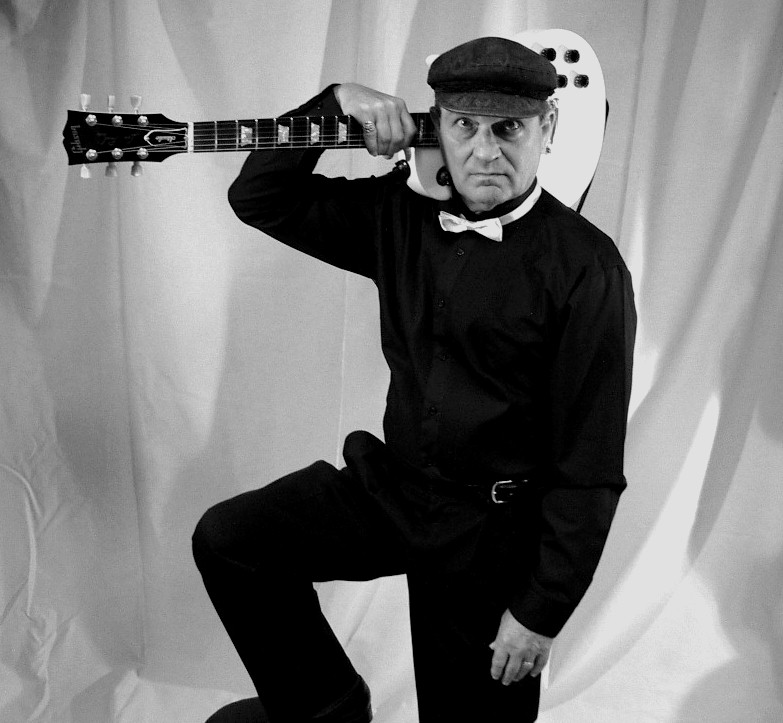
My father’s late cousin, Mail Order Preacher, Little Jimi Bob Fender of Fort Worth, Texas. He started out playing that “Devil music,” rock-a-billy, and jive-assed jumping-around stuff out on Jacksboro Highway. After getting knifed a few times, then shot up real good by the jealous husband of some old hairy-legged gal, he glammed onto religion and started the “Church Of What’s Happening Now.” He had the rocking-ist church music in Texas, and many of the great musicians, such as Delbert McClinton and Willie, stopped by on Sundays to jam. As you can see, he was a snappy dresser. Dig that guitar and that blue suit.

When It’s Round-Up Time In Texas

Back in the 1950s, long before there was the Dixie Chicks, there was my late 14th cousins’ trio, “The Texas Fried Pies.” They played most of the grocery store openings, school assemblies, parades, Tupperware parties, Avon get-togethers, rodeos, The Fat Stock Show, and select funerals. Left to right: Peach E. Keen on the doghouse bass, my cousin Apple Coreby on the banjo, and Cherry la’Tartness on the squeezebox.

The Gospel According To That Person of The Year

Good Lord, help us, please. Now she has her own religion and a bible? It was bound to happen, given she has around ten million young zombie followers. I read from a former swiftie-cult member that when she turned 21 years old, her brain hit reset, and she became a normal woman and started listening to George Strait. There is hope.

It’s 2009, And We Are In The Studio, Again!


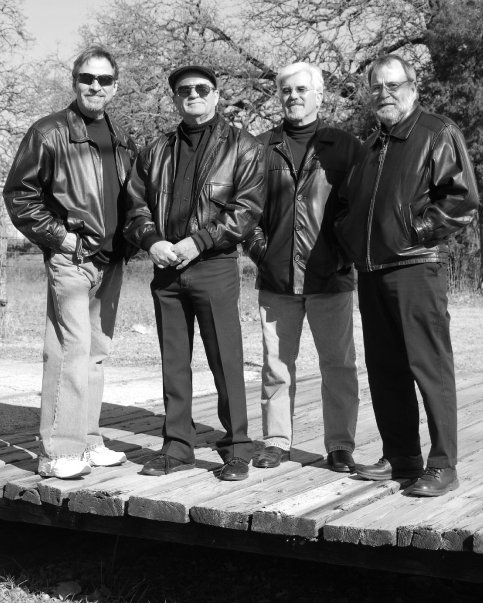
The American Classics Band, 2009

The American Classics Band

Track 4 covers Jerry Jeff Walker’s “Navajo Rug.” I’m new to SoundCloud, so I cut off our heads in the pictures. Why do these apps make it so darn hard to move anything over? WordPress won’t allow WMV files, so I had to upload the tunes to SoundCloud, which converted it to an MP3.

Track 1, “For What It’s Worth,” is our cover of Buffalo Springfield’s song about the riots on the Sunset Strip in 1967. The CD was cut at Wavelight Studios in Haltom City, north of Fort Worth. Larry Dylan was the sound engineer and owner of the studio.

Danny and I, back in 67-69, played together in “The Orphans” and “The A.T.N.T.,” which I posted our record a few weeks ago. John Payne played with the “Fabulous Sensations” out of Lubbock, Texas. He also got to sit down and visit with Buddy Holley’s parents in Buddy’s childhood home, so he has been close to musical royalty. Jordan Welch played with The Coachmen, another great popular band in the DFW area, back in the 1960s.

If you haven’t noticed, I discovered background colors today, so bear with the experimentation. It doesn’t take much to entertain me these days.

When the Band Plays the Last Song


Two weeks ago, John Payne, my friend of twenty years, and fellow bandmate was laid to rest. The last song was played, Happy Trails closed the show and JP has left the building.

Our story started two decades back when my old friend Danny Goode, and former bandmate from the 60s, called me after a thirty-year gap and wanted to have lunch.

The next day, over Whataburger’s, he asked me if I would be interested in playing with a rock band that he and two other friends had put together. I said I might be interested, but I didn’t own an electric guitar, an amp, a strap, or even a guitar pick and had not touched an instrument since 1990. He made a call on his cell, and after a brief muffled conversation, he told me everything was arranged. We were to meet at Jordan’s house on Saturday.

That Saturday, I met John Payne, lead guitar, and Jordan Welch, percussionist. John apologized for not having much time to put together the loaner equipment, and he hoped it would be alright. In my spot was a vintage Fender Twin Reverb amplifier with guitar picks and a cold beer sitting on top. The loaner guitar was a 1960s Gibson Les Paul. I told John that I think this gear would be more than adequate. I knew then, that John probably had more vintage gear than Guitar Center.

We played half a dozen songs, and I knew this grouping of four had something special. We all had been playing for decades and the musicianship was there. What was surprising, is our three-part harmonies. We sounded like the Ethel Murman Tabernacle Choir; it was borderline scary. We took a break and consumed a cold one to calm ourselves. We all sat in Jordan’s den, grinning like a Raccoon caught in a trash can.

The three amigos asked if I was in? Well hell yeah! I was then told there was a gig in North Richland Hills on Saturday night; be there at 7 sharp to set up. John said It was sort of a supper club and bar situation. And away we go.

Arriving at the “supper club,” I noticed the sign on the building read “Tuckers Catfish Café.” Okay, so it’s a seafood restaurant. After parking in the back, I give the secret squirrel knock on the rear door. A series of four or five deadbolts unlock the door parts, and I see Johns’ face peering through the door crack. He asked if I paid that guy holding the paper bag a few bucks to guard my car; if I didn’t, it would be wise to do so. So I did. The paper bag held a 40 oz Miller, and I paid the nice fellow five bucks.

It took a few minutes for my eyesight to adjust to the darkened conditions of the room, but I made out the obligatory small stage in the corner stacked with equipment, the wood parquet dance floor, a trash can full of dancing sawdust, a ceiling-mounted disco ball, shuffleboard, numerous vintage neon beer signs, and a cardboard streamer reading Happy New Year 1965. The place was also one living, breathing ashtray.

John comes over and says, ” well, what do you think of the place?” I should have been more diplomatic, but I blurted out, ” John, this place ain’t no supper club, it’s a beer-joint.”

John is smiling ear to ear, ” yeah, I know, ain’t it cool.” In a way, yes, it was cool. I hadn’t played in a beer joint in decades, so this would be my homecoming of sorts. John clearly dug the place to his bones.

The gig went much better than we expected, and the next few weeks were spent kicking around a name for this outfit. Finally, Jordan comes up with ‘The American Classics Band,’ taken from the brand of drumsticks he uses. Sounds good, everyone’s happy, and we become an official band.

That night, I had no idea what my time with these three amigos would bring, but I was up for the ride; and man was it a ride.

John requested that I call him JP. I did, and we eventually became good friends. He and I loved country and bluegrass music. Not the new stuff, but the classic 40s and 50s songs. We knew many of the same country pickers, and he was a fiddle player, like my father was, so the two of us had things in common, which carried over into the band’s dynamics.

We practiced every Thursday night for ten years, and became such a tight band that we read each others minds like little Yoda. There was not a song we couldn’t play or put our spin on.

Eventually, the practices became more about friendship and less about the playing. Sure, the music was always there, the bonding agent that kept us together, but many nights, there was more fellowship than picking. A bit of beer and some bourbon always appeared from a paper bag.

We helped each other through hardships; the death of a spouse, the death’s of two sons and other problems that happen in families, but the music and the friendships were always there, always strong and enduring.

Twenty years fly by, and Danny, Jordan and myself find ourselves without our friend John, and we know there will be no more music for us. It’s not in our bones, and somehow it wouldn’t seem right without John. We are old men now, all of us in our 70s, but we well remember when this ride for the four of us started, and how it has effected, and shaped our lives.

Play on JP, play on.