Back Home In Texas: Looking For That Marble Angel


Chapter 18

“A young man is so strong, so mad, so certain, and so lost. He has everything and he is able to use nothing.” Thomas Wolfe

There is no winter like one in Texas. The cold comes with a Blue Norther. It roars down from Canada into the panhandle, gathering tumbleweeds and dust as it goes. It marches south across the flat plains to the Gulf of Mexico. The wet cold cuts deep, biting like the sharp edges of a frozen North Pole. Eskimos would take the first train back home. It is a harsh welcome for a man with tropical-thinned blood.

Johnny’s train pulled into Fort Worth as an ice storm blanketed the city. He had intended to walk two miles from the station. But then he saw a man slip and fall on the ice, and he called for a cab. The ride was rough. It had been over a decade since he faced winter, and now he recalled why he had chosen warmer places to call home.

The house appeared forlorn in winter’s cold, pale light, smaller than he remembered. It was worn out, resembling a sharecropper’s shanty more than his childhood home. He scanned the front porch; no marble angel welcomed him home. Thomas Wolfe was right.

Johnny and his parents left Fort Worth twelve years ago. They set out for California in search of work, to rebuild their lives and forge a future for their children. He was a boy cast into the vast unknown, adrift on the winds of a long journey. This adventure would shape the man he would become. His parents were like ship’s captains, guiding their small crew. He and his dog were the sailors. Their Ford was a proud schooner, and California was the mythical land where treasures lay hidden. They never discovered the chest, yet the treasures came to them in ways they had not anticipated.

Standing on the ice-covered sidewalk, Johnny saw a light in the kitchen window. His father, John Henry, sat at the table. A mug of coffee in his hand. A cigarette slowly burned in an ashtray. His bowl of oatmeal was there too. His mother was absent. She never woke early. Johnny stepped onto the porch and knocked. His father opened the door, and warmth rushed out. After briefly embracing, Johnny settled at the worn table with a steaming mug. The table had seen much—his parents’ fights, their choices, celebrations of childhood, and now his reluctant return. His mother was not sleeping; she had gone to an aunt’s house months ago.

John Henry, sipping his coffee, gave Johnny a brief rundown. Norma, his elder sister, married a schoolmate and now lives in Albuquerque. A second baby was coming soon, or maybe it had already come. John Henry couldn’t remember. His words were hard, filled with the bitterness of a man worn down. Bertha fought with the drinks. The magical elixirs had returned. She wrote letters to their friends in California, a compulsion. Sister Aimee was the one she favored. Norma had taken all she could shoulder and left with her husband. Johnny did not expect a joyful reunion, but this was a sorry state of affairs.

Link to the earlier chapter.

AI Is Up Everyones A_ _!


Greetings From Beijing.

China got us again. First, it was the China Virus. Now, it’s a spiffy little AI program. This tech wonderment was developed in a few hours with barely enough chips to run a flip-top phone. The nervous boys at the stock market panic, that’s what they do best. They start selling tech stocks and ruining millions of folks. Has anyone in our government checked to see if this CCP program works? I doubt it. We can be assured that the technology was handed over to China for a few million. Maybe it was passed in a brown envelope delivered by a devious first son. Or perhaps someone hacked it from a secure computer while the tech was napping in their safe room. It doesn’t much matter now: they got us good this time. We need Denzel Washington or Sylvester Stallone to take names and kick ass.

Is this the newest Sputnik moment?

“Surprise…you greedy capitalist dogs. We couldn’t finish you with our little viral bug, but this should do the trick. Check your fortune cookie for lottery numbers.”

From Nehi Soda to Napping Camps: A Journey of Texan Creativity


I read an article in my local paper a few days back. It was about a youngster from Louisiana who fed his pet earthworms small amounts of nuclear waste. This made them glow in the dark and grow to the size of a state-fair Corndog. 

He is now raking in cash and hawking them on his own late-night infomercials and online. Every fisherman in the South wants a giant wiggling glowing worm. Every bass needs one. It seems the folks below the Mason-Dixon line will fall for anything.

My family tree in the “old country” was chock full of these sorts. Dreamers, schemers, and medicine show hucksters. All died poor except one.

Take my Great-Great-Great Uncle Nehi, a puny Scott with a sweet tooth. He spent his spare time in search of sugary delights. One night, while experimenting with various potions of colored water, fruit, and healthy doses of sugar, he invented “Nehi Soda.” It wouldn’t be summer without a grape Nehi and a Moon Pie, would it? His tinkering resulted in the all-American soda. Soda pop made him wealthy. He died young from a roaring case of Diabetes. Still, he died prosperous and happy. 

I always preferred Dr. Pepper, but my parents made us drink Nehi every year on the anniversary of his passing.

If it wasn’t for dreamers and hucksters, a beloved section of our economy would not exist. There would be no infomercials on television and no online pop-ups. Drug stores would have fewer aisles for valuable little as seen on TV products. People would wonder how to make fresh juice. They would also wonder how to cover that bald spot. How would they puff their hair out to look like a jelly roll? How do they do this while roaming around town in a snuggie blanket with armholes? Hanging upside-down tomatoes would not exist. How would the astronauts write upside down without that nice ballpoint pen? I get a little scared thinking about what life would be like without these gadgets.

This past summer, my wife and I enjoyed lunch on a Saturday. We dined at a quaint restaurant alongside the Guadalupe River in Gruene, Texas. It was hot—a real sizzler—100 degrees in the shade. We sat outside on their covered deck. We enjoyed the river’s tranquility and were cooled by the misters. 

My wife, Momo, full of food and a cold beer, drowsily commented,

“A nap would be nice right now.” I agreed, but there was nowhere to have a nappy except the hot car, so that idea was out.

I summoned our bill and sat staring at the beautiful river. I watched the tubers drift by and listened to the lull of bubbling water. Nature’s respite entranced and hypnotized me.

 When my bill arrived, the server placed an ice-cold Nehi Grape Soda on the plate, bound for another’s enjoyment. I hadn’t seen a Nehi soda in decades. 

This boy and the girls slapped me hard. The Nehi, the river, the need for a nap, and nature hit me simultaneously. I couldn’t speak and only croak out, “Nap camp…Nehi…nappy.” 

Momo thought I was having a stroke. She whipped out her cell phone and started to dial 911. She stopped when I finally said,

“Uncle Nehi’s Nap Camp.”

She knows that stupid look. It was something akin to holding my beer and watching this. She waited for the spiel, which I was overly anxious to deliver.

Grabbing her reluctant hand, I dragged her down to the river bank. She was scared, but I was excited—invigorated and drunk on the elixir of my vision.

“Why didn’t I think of this years ago” I yelled,

“It’s like the boy and his nuclear fishing worms. It’s not too late, seize the minute, mark your territory, piss into the wind for a change. People need to sleep, they need a good nap, it’s our right!”

I was so excited that I waved my arms and spun around like a tent revival preacher. I was on a roll. 

I yelled with the excitement of a five-year-old on a sugar high,

“Over there, we can build cedar posts and metal roof pole barns by those trees along the river. We can add ceiling fans and misters. Let’s put up some comfy hammocks. We’ll have an outside bar selling Nehi sodas, cold Lone Star beer and baloney, and rat cheese sandwiches. There is a small barn with little hanging beds for the kids and dogs. Also, there should be a separate napping barn for in-laws and people you don’t care for. Imagine napping in a hammock beside the calm river, life doesn’t get any better. Right?”

A grizzled old fisherman was sitting by a tree with his cane pole, listening to this opera of fools. He said,

“That’s not a bad idea, sonny boy. But Old Blind Mable tried that back in 1959. She lost her butt, You can’t put a business in a flood plain. This river flooded pretty well every year back then, just as it does now. Old Blind Mable had a mess of hammocks and people sleeping in them. The river floods and washes everyone down to New Braunfels. This happens whether they want to go there or not. If you got some money to piss away, go ahead. I’ll have a nap here until it rains. Then I’m heading to high ground.”

Momo looked at me and said,

“let’s go home and have a nap, Einstein.”

I was crushed, a broken man. My vision was a pile of raccoon crap. A crusty old river rat shot it down. My wife agreed with him. No Nehi sodas, ice-cold Lone Star in a hammock, or nap camp. Another lost vision.

As we returned to the car, a large dog came strutting down the street, pulling a kid on a skateboard. I watched them cruise by and thought, a big skateboard for two. Add seats and get some big dogs. Rent them to pull people around town. Now, that’s a moneymaker.

The Legend of Little Moses: A Texas Rancher’s Tall Tale


Little Moses of Texas with his herd of followers

My grandfather on the left and his friend Hymie Rothstein with his horse, Miss Golda.

Hymie Rothstein departed the “old country”—New York City—in 1910, driven by a fierce longing to carve out a life as a cattle rancher. Armed with a tidy sum of money, a gift from his father, he purchased 500 acres of ranch land between Weatherford and Mineral Wells, filling the vast plains of Texas with 500 head of Hereford cattle. In a nod to his roots, he named the ranch “The Flying Menorah,” a tribute to his mother’s enduring spirit.

His mother’s cousin in New York, a man of ambition and impeccable taste, owned a fine restaurant in Manhatten. He made an agreement with Hymie to provide kosher meat for his clientele that desired it. Hymie, not one for shouldering piety, found himself adrift in the ways of raising kosher cattle. He took his best shot, his only shot.

He instructed his hands to don traditional Yarmulkes and grow their beards long as if the mere outward appearance would somehow sanctify the herd. On Fridays, just before the onset of the Sabbath, he would wheel a wagon through the pastures, a local Rabbi perched in the back, chanting blessings over the cattle and the land itself. Hymie, in his complacency, assumed some transformative power in these rituals. However, the Rabbi was paid twenty-five dollars for his solemnity and kept his thoughts on the insufficiency of such blessings close to his vest. A buck is a buck.

It was then that Hymie, seeking to nurture and grow his herd, purchased a massive Hereford bull from a neighboring ranch. He named this hulking creature. The rancher that sold the bull warned Hymie that the bovine suffered from a restless spirit and could not be contained by mere wire fences. The bull’s wildness seemed almost elemental; he broke through barbed wire as if it didn’t exist, suggesting desperation and freedom to roam. Hymie named the bovine “Little Moses.”

As December descended into winter, a blue Texas norther swept across the prarie, enveloping it in a foot of snow. It was two days before Hymie’s ranch hands could reach the cattle, and when they finally did, they found the herd had vanished into the vastness, leaving only a gaping break in the fence. “Little Moses,” with his insatiable desire to roam, had led the others away into the boundless prairie.

Worry filled the air as the cowboys scoured the land for trails, only to lose their way in the rugged hills. Frantic, Hymie called upon the local sheriff, JD Ramses, to put out an alert for the missing cattle—a flyer caricaturing a group of smiling cows decorated every telephone pole and storefront in town. The sheriff alerted law enforcement in the surrounding counties. The poster added a comic touch in desperate times. Reports trickled in from West Texas of a large number of cattle seen crossing Route 66 a week ago.

Hymie and his men doggedly pursued the herd, picking up cow tracks outside of Lubbock. Thirty-nine days had passed, and the exhausted cowboys were ready to return home. On the fortieth day, they stumbled upon their herd resting against the edge of Palo Duro Canyon. All seemed accounted for, save for their leader, “Little Moses.”

As twilight descended, one of the men caught sight of a ghost emerging from the canyon, a snow-white bull, trembling, stumbling, yet proud. “Little Moses” had returned, his dark coat transformed into a glaring white, his eyes a startling blue that shifted like lightning in a storm. The bull had witnessed a Biblical apparition, possibly a burning tumbleweed or a flame-engulfed Mesquite tree.

The beast settled near the campfire, surrounded by his loyal herd, which gathered to pay homage as if sensing the moment’s gravity. Hymie offered him bread and a few sips of kosher wine as a final kindness. “Little Moses” then lay down next to the campfire. Accepting the warmth and the final moment, he drew his last breath, exhaling a vapor cloud that floated upward into the chilled night.

The sky boomed with thunder, a sudden crack of lightning that could have startled any common cattle, yet no one moved. Instead, they stood, rapt in attention, staring upward as a celestial sound of trumpets pierced the night. From somewhere above, two heavenly Holstein Angel Cows, graced with beautiful white wings, descended, each adorned with a golden trumpet in their right hoove.

The angelic cows flanked “Little Moses,” and, in a transcendent moment, the trio ascended into the heavens, a journey not just for the bull but for every living soul that had wandered alongside him. The Cowboys were left gobsmacked.

The group of men, in stunned silence, sat by the campfire, finding solace in their whiskey, rolled cigarettes, and hardtack. Dialogue sputtered and finally ended: no one could explain the miraculous ascending of Little Moses. Hymie, being the most religious of the bunch, said, “If God takes us sinful cowboys to Heaven, why not a cow? “

As dawn painted the sky anew, the cowboys awoke to find a snow-white bull calf standing proud among the cows—fiery blue eyes that sparked with the promise of a bovineious legacy. This new leader, born from the mystique of the canyon, would guide the way back to the Flying Menorah, a symbol of continuity in a world that had brushed against the divine.

Caught by a Girl Scout: A Cookie Sales Encounter At The Walmart


Walking into Walmart this morning to pick up my meds, I was accosted, not by a panhandler or some poor schmuck with a sob story, but by a cute eight-year-old girl selling Girl Scout cookies. She wouldn’t take no for an answer and “had” all the answers. This little waif, hands on her hips and a defiant gleam in her eye, actually blocked my entrance into the Walmart. Standing in front of me like a little David about to punch Goliath, she meant business. I couldn’t bump her out of the way, so I was forced to engage her. It was all a grand scheme. Standing behind a table stacked with boxes of cookies were four Mama Bears, arms crossed, foot tapping, just waiting for me to decline. They all had that ” Just try to get out of this one” look on their face.

” I don’t have any money,” I pleaded.

” We take credit and debit cards,” she chirps. When did this start? Does every kid have a credit card machine in their backpack?

” I’m diabetic and could have a seizure,” I add.

“No problem mister, we have sugar and gluten-free,” she sneers.

I’m trapped. Twenty adults are staring at me as if I am a criminal. I hand her my Visa card, and she rings up five boxes of cookies and a twenty percent tip to boot. I take my cookies and walk to my car, fearing they will grab me again on the way out. I’ll be having cookies for supper.

My Local Grocery Store: Surprising Encounters with Father Frank


I visited my local H.E.B. a few days ago to do my grocery shopping for the week. Just so you know, I loathe shopping for groceries: negotiating the crowded aisles, pushing a cart that steers hard left, trying to read your shopping list, and dodging the blue hairs wanting to run you over. It’s more than any man my age should have to endure.

The geriatric inhabitants of Pecan Plantation have christened this store as their domain, and they make their own rules of engagement. I’ve had my toes run over, my legs pinned between a grocery cart and the dairy cabinet, rammed from behind for being too slow, and verbally assaulted by an 80-pound octogenarian because I got the last loaf of “dollar bread.” The old bag pulled out a flip-top Motorola cell phone and threatened to call 911 to report me, so I reluctantly handed over the loaf. She shook a bony finger in my face and growled, “And your little dog, too.”

Wednesday is the big day for the sample gals to push their wares on the shoppers. You can’t go twenty feet without a chirpy hostess wearing her “Pioneer Woman” apron wanting to stick a food sample in your face. Forget trying to get away, they track you until you stop and then thrust the toothpick impaled morsel into your protesting mouth. I unwillingly managed to taste sushi, sausage roll, carrot cake, cheese whiz, and wine before I could get to the first aisle, and by then, I needed a Prilosec, so I bought that as well.

After shopping, I proceeded to the checkout stand. As I rounded a corner near the book section, I bumped hard into a table, partially blocking the aisle.

Father Frank, the priest from my former church, Our Lady of Perpetual Repentance, sat behind a 6-foot fold-out table.
On his table is a stack of leaflets, bottles of water, and giveaway key chains shaped like the Virgin Mary. It’s been a while since I have seen the good Father, so we exchange our pleasantries. The missus and I changed churches about a year ago, choosing one closer to home.

After a brief howdy conversation, I asked Father Frank why he was staffing a table at a grocery store?


With a deep sigh, he explained,

“The church is losing so many of the flock that the diocese has put me here to drum up new members.”


I didn’t want to offend by asking delicate questions, so I said, ” I suppose you have to start somewhere, and the crowd here is about the right age to be finalizing their looming Heavenly travel arrangements.” He thought that was prolific and said he would use that phrase in a future sermon.

Now, more curious, I ask him about the giveaways on his table.
With a big smile, he explains,

“The bottled water is actually blessed holy water, bottled right in my church by altar boys. We figure if it’s good enough to drive out demons and christen babies, it is strong enough to cure the pallet and insides of foul offenses. It has a slight hint of mint, so it may be used as an alcohol-free mouthwash in a pinch. I drank a bottle a few days ago and was confined to the rectory bathroom for many hours. Nothing like a happy gut and pleasant breath you know”.


I said, “Yes, I know that feeling, and my cousin Beverly could have used a case of that for mouthwash if you know what I mean.” He said he did and gave me a bottle to aid in her deliverance.

The good Father is on a roll and excitedly explains that they have made considerable changes to his church to attract new members.
Handing me the leaflet to inspect, he proudly proclaims,

“look at these pictures! We now have a glassed-in section of pews with flat-screen monitors installed on the back of each bench so the young boys and girls can access their computer games and social media during the sermon, piped into the enclosure by a high-powered HD digital audio system. To save parishioners time, confessions can be uploaded via your home computer or smartphone, and communion has an optional wine flight that, for a nominal fee, comes with a small crystal goblet.


Am I not hearing him, right? Preteen kids gaming in the pews, computer confessions, wine tasting? How about the singing choirs, the fire, and damnation, the rock-hard pews that make your butt sweat and your legs go numb? A church service is supposed to have some misery, not comfort.

I tried to interrupt, but the good Father was in over-drive as he continued to exclaim,

“The most daring change, and the one I’m most proud of, is converting the adult Sunday school room to a sports bar for after-service football games. It’s a brilliant concept; come to church, walk across the hall, and watch the game on 80-inch flat screens. We call it “The Blue Nun Sports Bar,” with Mother Prudy’s help, I recruited some of the younger nuns from the Abby to come over and wait tables after their service. The sisters are doing a great job but grumbling about the miserly tips and are threatening to hold a sit-in.
I told them to stop offering a repentance prayer over every beer served, and the tips may improve. It’s best to reserve a blessing for food service only. Next thing I know, they are wearing tight-fitting T-shirts with “We Aren’t Your Mommas Nuns” on the back. I don’t know what gives with these younger sisters. The piercings, tattoos, and spiky hairdos are not what I‘m used to. Nuns are supposed to be stoic and mean, not cute and hip.


Well, I say,

” you’re certainly doing everything you can to increase membership, I may have to come to see you next Sunday. I need a good dose of religion and football.”
I shake the good Father’s hand, bid him adieu, and shuffle on to the checkout.

On my way out of the store, I noticed a table tucked in by the potting soil and flowers. Staffed by a young, tanned, rock star, poofy-haired, frock-clad fellow flanked by two bikini-clad girls, standing on either side of the table handing out free cold beer and hot dogs. The sign above them read “Rolling Rock Love and Peace Community Church Membership Drive.” I was thirsty, so I scooted on over. Looks like Father Frank may be in trouble here.

Coca-Cola Cowboys: The Charm of Hollywood Icons And A Politician That Wants To Be Noticed


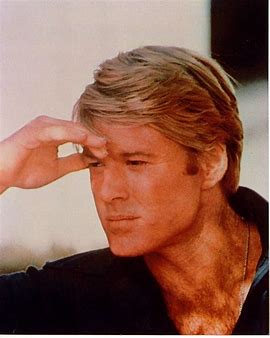
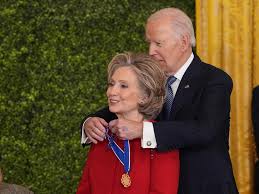
“He’s just a Coca-Cola cowboy…He’s got an Eastwood smile and Robert Redford hair.” Mel Tillis

And he’s a pretty good actor. Just saying

End Times in Texas: Snow Chaos at H-E-B


Backyard Bird Cafe at Casa de Strawn

According to the news gals on TV, the end of the world is upon Texas: snow is coming on Thursday and Friday, maybe a foot or more of the lovely puffy winter blanket. The problem is that the folks in this part of Texas don’t know anything about snow or how to deal with it. Schools are closing, businesses are having “End of Times” sales and liquor stores are running out of stock. This is as serious as the chicken flu.

Like every other fool in town, I went to the H-E-B for a few supplies: pork rinds, wine, beer, Cheeto’s, Wolf Brand Chili, A2 milk, and Ovaltine. I live in a hilly area, and if Momo and I get snowed or iced in, we cannot get out. Exceptions would be made for the hospital or the liquor store for hootch supplies.

I walked into an “End Times” scenario. The H-E-B, that pure Texas grocer, was in full pandemonium mode. The local police were arresting a mother for stealing food from an old woman’s shopping cart, her two young baby childs holding onto their mother’s legs as she was dragged out of the store. The store manager tased an old guy for ramming other shoppers with the store’s personal scooter.

Women were fighting, pulling hair, punching, kicking, and biting each other over toilet paper. Children ran wild down the aisles, grabbing cookies and any sugary treat. One kid stood atop the frozen food kiosk, throwing Red Baron pizzas at the snarling crowd below. It was like a scene from The Walking Dead.

I ran into my old pal Mooch. He had a garbage bag full of Pork Rinds and five cases of Pabst Beer, enough to see him through the apocalypse.

I found what I needed and went to the cashier; she said,

“take it, no charge, the machines have cratered.”

Arriving home, I found Momo cleaning our pistols and checking our ammo supply. She’s a crack shot, so I pity the fool who comes onto our property with intentions to steal. She’s excited about the Snowmeggdon and wants to make snow angels in our backyard. I told her the only thing we could make would be old people’s angels when we fall down and can’t get up and have to crawl back to the patio.

Reflecting on the Luanne Platter at Luby’s…It’s A Texas Thing, Ya’ll


Miss Luanne Platter

Maureen and I visited Luby’s Cafeteria last week for lunch. The smell of the food brought back memories from my childhood.

Back in the 1950s, in Fort Worth, there were Wyatt’s and Luby’s cafeterias. It was always a hard choice for the family. Luby’s had the best deserts, while Wyatt’s always served larger portions. My Dad usually chose Wyatt’s—more bang for the buck. It was the Eisenhower years, and things were tight. That’s back when he was still a Democrat. I was just a hungry kid.

We took our place in line, trays aligned on the metal rail. I scanned the extra-large menu board for my favorite dish but couldn’t find it. I panicked. The platter I came for and have always ordered for decades is “The Luanne Platter,” and they damn well better have it. My blood sugar was low, and I could feel a rant coming on. Maureen rubbed a few drops of “Peace of Mind” lotion under my nose to calm me. Then, in the lower corner of the board, I spotted it. ” The Luann Platter, half portions with a roll – $8.99.” What the hell! It used to be $4.99 with a roll, a drink, and a slice of pie? Retired folk can’t afford those prices.

I approached the smiling lady server and, using my best old man-controlled voice, said,

” I’m not paying $8.99 for a half portion that was $4.99 with a piece of pie the last time I ate at Luby’s,” and I slammed my fist on my tray for effect.

Still smiling, she replied,

” Well,, sir, then you can choose the children’s plate if you are over 65 and/or acting like a child, as of which you appear to be. You have a choice of chicken strips, a hot dog, or spaghetti with 2% milk and a fruit cup. That will set you back $4.99 plus tax. And by the way, The Luanne Platter has been $8.99 since 2001.”

Oh man, the little Pop-Tart was really messing with me now. Her smile had turned to a slight sneer, and her eyes got beady. I leaned over the glass barrier.

” Do you know who Luann Platter is, young lady?” I demanded.

” No, sir. Was she a famous cook or employee of the month or something?” she said. Good Lord, this girl is clueless.

By this point, two other line servers had flanked the young miss in case I went postal. I faced them and, with conviction, said,

” Luanne Platter is the most famous character on the television show, ” King of the Hill.” An animated series set in Garland, Texas, and this dish you serve is named for her. Don’t you know who Hank, Bobby, and Peggy Hill are?”

The three servers’ young faces showed social ignorance. It was useless to explain. I collected my platter, and we proceeded to the checkout.

We sat in our booth, eating our lunch in silence. The food wasn’t as good as it used to be. The good old days are gone for good. My turnip greens were Kale, the most evil weed ever cooked. Maureen’s chicken was rubber faux, and my corn muffin was doughy and awful. We can scratch this one off of our list.

Leaving the cafeteria, a fortyish blond woman in the Luby’s uniform held the door open for us. In a girlish voice, she said,

” Ya’ll come back now.” I noticed her name tag read “Luanne.”

Growing Up With Mexican Food in 1950s Fort Worth,Texas..My First Visit To Trashy Juanita’s


Childhood memories are like teeth; we all have good and rotten ones. If you grew up in Texas in the 1950s, you will identify with some of mine, or maybe not.

I was nine years old before I dined in a Mexican restaurant. I knew they existed because my father and mother enjoyed them, bringing home little mints and matchbooks touting the restaurant’s name. I got the mints, and my parents put the matchbooks in a jar in the kitchen. I dreamed that one day, I might visit one.

In Texas, Mexican food is part of life. It’s one of the major food groups; a boy cannot grow into a man of substance without it. Not having real Mexican food at that young age affected my evolution into a healthy young specimen. I harbored a nervous tick, stuttered sometimes, and had one leg shorter than the other. All those maladies were cured once I ate the real stuff. The medicinal qualities of Mexican food are exceptional.

For many years, I had eaten tacos at my cousin’s house, believing them to be authentic Mexican food. Sadly, they were nowhere near the real deal. Several times over the summer, my cousin Jok’s mother, Berel, would cook tacos and invite the families for a feast. Cold Beer and tongue-scorching Tacos. Pure Texas.

Berel would stand at her massive gas range, a large pot of ground beef, and a cauldron of boiling Crisco, heating the room to cooking temperature. She would drop a tortilla stuffed with meat into the witch’s cauldron, pull it out, and toss it to the pack of wild African dogs sitting around her kitchen table. The dogs, of course, were my cousins and me. My poor mother would leave the room. She could not bear to see her son eat like a feral child: growling, biting, snarling as we consumed the tacos like they were a cooked Wildebeest. That is what I consider Mexican food and proper behavior when consuming it.

Driving Northwest of downtown Fort Worth on Jacksboro Highway, right before you come to the first honkey tonk, you would find “Trashy Juanita’s” Mexican restaurant. Legendary for its tacos, frijoles, and cold Pearl Beer. It was also legendary for things my father would not mention until I was older. Gambling, shooting dice, and generally questionable behavior were part of the after-hours entertainment. It wasn’t on Jacksboro Highway for the view.

The owner of Juanita Batista, Carlita Rosanna Esposito, was not a trashy woman but a middle-aged Latin beauty with a bawdy laugh and sharp wit. The restaurant’s front yard adornments earned the name. Offended at first, she finally accepted her crown and wore it proudly.

Two rust-eaten pick-up trucks, one painted blue and the other yellow, sat abandoned in the front yard behind a cyclone fence. Pots of flowers decorated the fenders while the beds overflowed with vines and small flowering trees. Fifty or more chickens strutted and pecked around the yard, giving the place a barnyard atmosphere. Some saw a work of art, while others called it a junkyard that happened to serve great food.
In an interview in the Fort Worth Star-Telegram, Juanita claimed to be related to General Santa Anna, Pancho Villa, and the Cisco Kid, making her royalty in Mexico. The people of Fort Worth loved her, and she was considered a local character of some importance. She often dined with Ben Hogan and the Leonard brothers at Colonial Country Club.

Trashy Juanita’s was my first introduction to authentic Mexican food and all that comes with it.

My father sold one of his many fiddles to a buddy, and with the profit, he took the whole family to dine at Trashy Juanita’s on the Fourth of July, 1958.

Juanita had gone “whole hog” on this holiday. American flags hung from the front porch and draped the cyclone fence. Two small children sat in the front yard shooting bottle rockets at the cars driving on Jacksboro Highway, and the chickens were wrapped in red-white-and-blue crepe paper streamers. Very patriotic and also very redneck Texas.

A jovial Juanita escorted us to a large table beside the kitchen doorway. A waiter delivered tortillas, chips, salsa, and two Pearl beers for my father and grandfather along with large, frosty glasses of sweet iced tea for the rest of us. There was no menu; it was Tacos or nothing at all.

The unfamiliar aroma of exotic food floated on a misty cloud from the kitchen, filling my young nostrils and activating my developing saliva glands. A torrent of spit dripped from my mouth onto the front of my new sear-sucker shirt. My mother cleaned me up and wrapped a napkin around my neck. I was ready: I had my eating clothes on.
We decided the family would dine on a medley of beef and chicken Tacos, frijoles and rice, and guacamole ala Juanita. The waiter rushed our order to the kitchen.

The evening was turning out great. My father was telling jokes, the cold beer flowed, and a waiter walked past our table into the kitchen. Under each arm was one of the patriotically wrapped chickens from the front yard. My grandfather must have forgotten that two young children were at the table and remarked, “There goes our Tacos, can’t get any fresher than that.”

His remark went unnoticed until I asked my father, ” Dad, are we going to eat the pet chickens from the front yard?” He didn’t offer an answer.
I got a big lump in my throat, and my eyes got misty. My sister whimpered and cried like a baby, and my grandmother, seeing her grandchildren in such distress, shed tears in support. Mother gave the two adult men the worst evil eye ever. The mood at the table went from happy to crappy in a minute or less. So much for a joyous family celebration. We might as well be eating Old Yeller for supper.

There was a ruckus in the kitchen, yelling, pots and pans clashing, and the two chickens, still wearing their streamers, half-flew, and half-ran through the dining room and out the front door. The cook was right behind them but tripped over a man’s foot, knocking himself out as he hit the floor.

Standing in the middle of the dining room, Juanita announced that there would only be beef Tacos tonight. The two doomed birds had escaped the pan, and my sister and I were happy again. My father breathed a sigh of relief that the night was saved, and my grandfather bent down and polished the new scuff on his size 10 wingtip.