Is New Year’s Just Another Day Like the One Before? Yes


Some of my late relatives celebrated New Year’s in 1955

For me and my wife, Momo, New Year’s Eve wasn’t much different than the day before it. We had a nice supper, watched a bit of TV, and then we were in the sack by 9:30 CT. Texts from my son, grandchildren, and friends went off at about 11:45 PM, prompting me to get up and answer back. I’m getting better at texting once I found out how to use the voice-to-text part on my iPhone. That’s what us old folks do for special occasions: nothing, and we do it quite well.

The fireworks started about dark and continued until around 1 AM. Our neighborhood is a “no fireworks” area, so many of the residents got around the law by firing their automatic handguns and rifles into the air. The Sheriff will give them a ticket for a bottle rocket, but firing weapons at random is ok by them: It’s a Texas thing. Momo and I were tempted to take our automatic handguns into the backyard and fire off a magazine or two, but it was too cold, and we were already in our jammies and had slurped down hot Ovaltine and old folks meds. Maybe next year.

New Year’s Day will be the same as the day before. Nothing, with a bit more of nothing, except adding some of Momo’s Blackeyed Pea Soup with Jalapeno and Texas-style cornbread, will keep it gastronomically interesting for the rest of the day. She made a batch of homemade salsa and put a smidgen of my Vietnamese Death Pepper in the mix. It was pretty darn good once I got past the tearing eyes, the shortness of breath, and the muscle spasms that occurred when I leaned over the pot and dipped my Frito into the sauce. She also whipped up some homemade “Nanner-pudding” with Vanilla Waffers embedded in the luscious mix. I plan to eat myself into a mild desert-induced coma this evening.

I hope everyone who follows my blog and the ones I follow has a great 2024 year. Let’s be honest about it: things can’t get much worse than they were in 2023. Well, maybe they could, but I’ll address that in a few days. From the cactus patch, have a Happy New Year, folks.

A Christmas Lesson Remembered


In 1955 I was six years old and received a Daisy Red Ryder BB gun for Christmas. Looking back, I was probably too young for such a weapon, even though it struggled to break through a cardboard target. Attitudes then were different about what a boy should have and be exposed to. There was no “toxic masculinity,” or confusion about what was between our spindly legs; boys were boys and girls were the way God made them to be, something my neighborhood buddies and I would appreciate in later years.

I asked Santa for the rifle, and behold, the old gent delivered, just like the one Ralphie got in “A Christmas Story.” A few of my friends also received the same air rifle. We were now armed and ready for war against the Germans or even the Alamo revisited. My parents, typical of the times, saw nothing wrong in me having a gun. My father, a veteran of WW2 knew them well and wasn’t about to raise no pansy-assed kid. Try that these days, CPS would be knocking at your door within the hour.

My grandfather, a veteran of WW1 volunteered to instruct me in the finer points of gun safety and marksmanship. He fought in the trenches in Europe and knew his way around a weapon or two. I didn’t know more than that about his war days, it was all a bit secretive.

Before Christmas supper, we drove to Sycamore Park for the first lesson. Forest Park was but a few blocks away, but he felt we needed more land around us in case a BB took a wrong turn. He retrieved a few empty soup cans from the trunk and placed them on a log about thirty feet away. I loaded the rifle and waited. Grandfather showed me how to hold the gun, site my target, and squeeze the trigger. I missed all the cans and wasted most of the BBs in the tube. I was down to maybe a dozen or so and still hadn’t hit my target. He wasn’t impatient with my lack of marksmanship but felt it was time for some hands-on instruction. He took the rifle, shouldered the stock, aimed, and knocked every can off the log without missing one shot. I was beside myself with envy. Here’s my old grandfather shooting like Buffalo Bill. After he handed the gun to me, I proceeded to miss every can until the BBs were gone. Time to go home.

Walking back to the car I told him that maybe someday I would be able to shoot as well as him. I was a kid and blurted things out without thinking, so I said “Grandad, did you learn to shoot like that in the war?” We were almost to the car when he said, ” Yes I did, but shooting soup cans off of a log is different than shooting a man.” I didn’t understand what his answer meant; too young and blissfully ignorant.

That lesson was more than an old man showing his grandson how to hit a soup can perched on a log. It was the best life lesson I ever received.

Christmas Is Time to Recognize Family. Right?


I received two emails a few days ago; one from Family Search and the other from Ancestry, both genealogy websites. I’m more well-connected than I thought.

It appears that on my mother’s side of the family tree, I am related to Belle Starr, the infamous female outlaw, Cheif Quannah Parker, the famous chief of the Comanche Nation, and son of Cynthia Ann Parker and Peta Nocona. My great-grandmother was on friendly terms with Quannah when she lived on the Indian reservation and before she met my great-grandfather, Love Simpson, who was a Cherokee and a Deputy U.S. Marshall for the Indian territory in Oklahoma. My grandmother would often hint that maybe they took a few long walks in the misty moonlight and things may have gotten out of hand. She also possessed an old ratty-assed wig and would pull the thing out ever so often and show it to us kids. She said it was Chief Parker’s long ponytail after it was cut off when the soldiers arrested him. We believed every word of it. It gets better. I am also related to the infamous Texas outlaw killer, John Wesley Hardin. For some unknown reason, Bob Dylan was intrigued with outlaws and killing for a while, so he wrote a song about Hardin. This was before his Nashville days. I’m waiting on that royalty check, Bob.

I had no idea that Davy Crockett was in my family tree, yep, also on my mother’s side. That explains my over-the-top childhood obsession with the Alamo, flintlock firearms, long sharp knives, and coonskin hats. I would have been picked for membership in the “Sons of the Alamo” lodge if I had known this forty years ago. Captain Kangaroo, Buffalo Bob, and Shari Lewis are also cousins; so that makes Shari’s puppet Lambchop a family member too. Howdy Doody is not mentioned, nor is Mr. Greenjeans, although he was my favorite.

Family Search, the site run by the Morman Tabernacle Church, and choir, says that on my father’s side, I am related to our first president, General George Washington, Elvis Presley, Jerry Lee Lewis, Waylon Jennings, Will Rogers, Wild Bill Hickock, Buffalo Bill Cody, Billy the Kid, Doris Day, Mary Martin, Tiny Tim, Roy Rogers, Ray Charles and a fifty-fifty chance, to Rin-Tin-Tin and Sasquatch. Damn, son, now that’s a list. I’m getting a big head just writing this.

My mother always told me that our family goes way back and has lots of closets and skeletons. My father, always said that his family has a whole scrapyard of bones and is bat-shit crazy on top of that. Now I have to figure out how to tell my friends about my relations without sounding like a deranged liar.

The West Texas Wooly Booger


My grandparent’s farmhouse front porch was made for storytelling. It wrapped around half the old home and was covered with a sturdy roof so we could sit out during any weather. Summer or winter, after dark, under the moonlight or stars, it was fertile ground for swapping yarns.

My two long-deceased uncles, Bill and Jay, were the best liars and yarn spinners I have known. I am proud to have inherited, to some degree, their ability to recount and or mold loads of total chicken crap into something believable.

Christmas Eve of 1957 found our family visiting the Santa Anna, Texas farm. The weather that day was mild with thunderstorms expected in the evening. In Texas, Indian Summer often shows up at Christmas time leaving us kids sad because Santa won’t have any snow for his sleigh. We assumed he could still land on rocks and hard dirt, or we wouldn’t get any presents while at the farm. My grandfather cut down a small Cedar tree in his pasture, and my parents brought some of our home ornaments, or we would have been treeless and nowhere for Santa to put our gifts.

After supper, some of the family would gather on the front porch to listen to our two Uncles spin their eloquent yarns of life growing up on a farm in rural Texas. Uncle Jay carried the metal Coleman cooler full of ice and Pearl Beer to the porch, and Bill rolled some cigarettes and brought out a pack of Red Man Chewing Tobacco. The stories wouldn’t start until the third or fourth beer was consumed. Uncle Bill said beer is a required fuel for any storyteller to practice his craft.

The lightning to the Northwest was flashing behind the Santa Anna mountain. Uncle Jay remarked that it reminded him of shells exploding miles away at night while he was onboard a battleship in the Pacific. That was the first time he mentioned his time in the war to us kids. We wanted to know more, but he changed the subject. We were years away from him sharing those times with us. The conditions on the porch were perfect. My cousins and I sat around our uncles in a circle, waiting for the first word.

Sitting at the opposite end of the porch, my granny piped in, ” Jay, did you ever tell the kids about the Wooly Booger’s?”

“The what boogers, “my cousin Margurite squealed. No, they had failed to mention them.

Uncle Jay took a swig of Pearl, looked at the lightning, and in a hoarse whisper said, “We got West Texas One-Eyed Wooly Booger’s right here in Santa Anna, and they are partial to eating kids.”

There, it was out. First, it was Pole Cats, then Coyotes, Bobcats, Feral Hogs, Rattle Snakes, Copperheads, and the giant Mountain Boomer, and now One Eyed Wooly Boogers. Sum bitch, everything around this farm wanted to kill us kids; no wonder we were a nervous wreck and lost weight every time we visited. At that moment, I was ready to go back to Fort Worth. At least there, I only had to worry about getting smacked by a car while riding my bike to school.

Uncle Bill chimed in: ” I saw one about forty years ago. I was sleeping on the screened-in porch with my dog, Giblet when one of them got through a hole in the screen and jumped on my chest. It was the size of a house cat with one big red eye in the middle of it’s skull. I was paralyzed with fear and couldn’t move; I guess the big red eye hypnotized me. Old Giblet killed the critter, and Granny took a picture of it with her Brownie camera. Then, we buried the little demon in the back pasture. I hear tell that they are attracted to the smell of nose boogers, which kids usually have a lot of. They go for the nose and chew it right off of your face, then the ears and eyeballs if you don’t die from the nose wound. I happened to have a cold that night, so that’s why the creature tried to get me.”

My cousin Jerry, even in the dark, was pale as a baby’s butt; he had a winter cold and a big-time snotty nose. He was a goner, and I had to sleep beside him on a pallet on the screened-in porch. I would be the second to get it.

I slept with my Daisy BB Gun and Cub Scout camping knife for the next few nights. I wasn’t going down without a fight.

The Boys and Girls of Summer


On the third day of summer vacation, the euphoria of no school for three months had lost its sparkle. Our gang of sweaty-smelly boys spent most of the day sitting under our neighbor, the Mister’s Mimosa tree, drinking grape Kool-Aid and eating home-baked oatmeal cookies baked by our mom-mentor, Mrs. Mister. Saturday couldn’t get here fast enough; that was the first day of official practice for our second-year little league team, “The Jets.”

This year, as a group, by a special vote in Skipper’s garage, we decided to let Cheryl and Ann play on the team, putting Freckeled Face Bean and Georgey on the bench for a few innings. Mr. and Mrs. Mister were in agreement; the girls were better at catching fly balls. In 1957, teams didn’t award participation trophies; it was all about winning the game. Cheryl played some last season, and we put Ann through the try-out wringer at recess. and she passed every test, so we will be the first and only team in the Fort Worth Little League system to have two girls on a boy’s team. We “broke on through to the other side” and didn’t know what we had done. I believe our assistant coach, Mrs. Mister, was secretly proud, being a former Air Force officer and ball player herself.

Saturday arrived, and our practice time on the diamonds was at noon, right when it was cooking like a griddle at a balmy 98 degrees. Mr. Mister worked with our two pitchers, and Mrs. Mister took the rest of us heathens to the field, hitting flys and grounders and yelling at us when we messed up. Ann and Cheryl caught every fly ball, and me, at shortstop, only missed two grounders and tosses to first. It was going to be a good season. Georgy and Bean sat on the bench, sulking. I guess I would, too, if I lost my spot to a girl. We were kids, but back then, even boys were a bit manly men, only smaller.

After practice, Mr. Mister told us that the coach from the Trimble Tech area team had been spying on us, hiding behind the concession stand and taking notes. It was a known fact that any team from that area of Fort Worth would be known as ” the hard guys.” We figured he was scouting out whose legs to break if they caught any of us out of our neighborhood and alone.

Our first game was a week later, and damn if it wasn’t the “hard guys” team. We watched from our dugout as they warmed up, fearing the worst. The pitcher had a five-o’clock shadow and arms so long that he left knuckle furrows in the infield dirt. Most of their team was a head taller than us and had to be old enough to drive. These guys can’t be Little League? Many had likely spent time at the Dope Farm or jail; they had all the markings of experienced delinquents. Their coach was a walking mugshot. We were doomed and knew it.

Bottom of the seventh, and we were down by two runs. Skipper was throwing his hardest and slipping in some calculated peppered pitches Mr. Mister had taught him. The “hard guys” weren’t even swinging hard, and all their balls went to the fence line and a few over it.

Our coach, Mr. Mister, suspected something for some reason and asked the umpire to examine their bats. The umpire was equally suspicious, so he grabbed a few of their bats, pulled a pen knife from his pocket, dug out a wad of wood filler, and emptied four large ball bearings into his hand. The little mobsters were using fixed bats. He then checked their cleats and found all of them to have been filed to a sharp edge. He confiscated their bats and shoes, making them play in sneakers or barefoot. He gave them a beat-up Rawlings bat to use. They were caught, and the crowd of parents booed them into the next county. After that, they couldn’t buy a ball past second base, and we scored three runs and beat them. Strike one up for the good guys. Mrs. Mister informed us that their team had been dissolved a few days later, and the players were suspended. Their coach was likely on his way back to Sing-Sing.

The rest of our season was memorable. Our two girls got a write-up in the paper, along with a cute picture. Skipper got bonked in the forehead and missed four games, and Freckled Face Bean caught a case of Polio and was out for the season but expected to make a full recovery. We missed the championship by two games, but hey, it was a great season.

The Misters gave the team a backyard cookout a few days before school started. Parents, siblings, dogs, and the whole shebang crowded into their backyard. At the end of the party, with fireflies drifting around us in the summer evening, our team gathered in a circle for a moment of recollection. We had been so wrapped up in months of baseball no one noticed that we all had changed. The school fat was gone, replaced with dark suntans and sinewy arms and legs. Baseball was our game, America’s game. At that brief moment, as we stood in the dark, silent, we were the boys and girls of summer.

Texas Lore And Legends


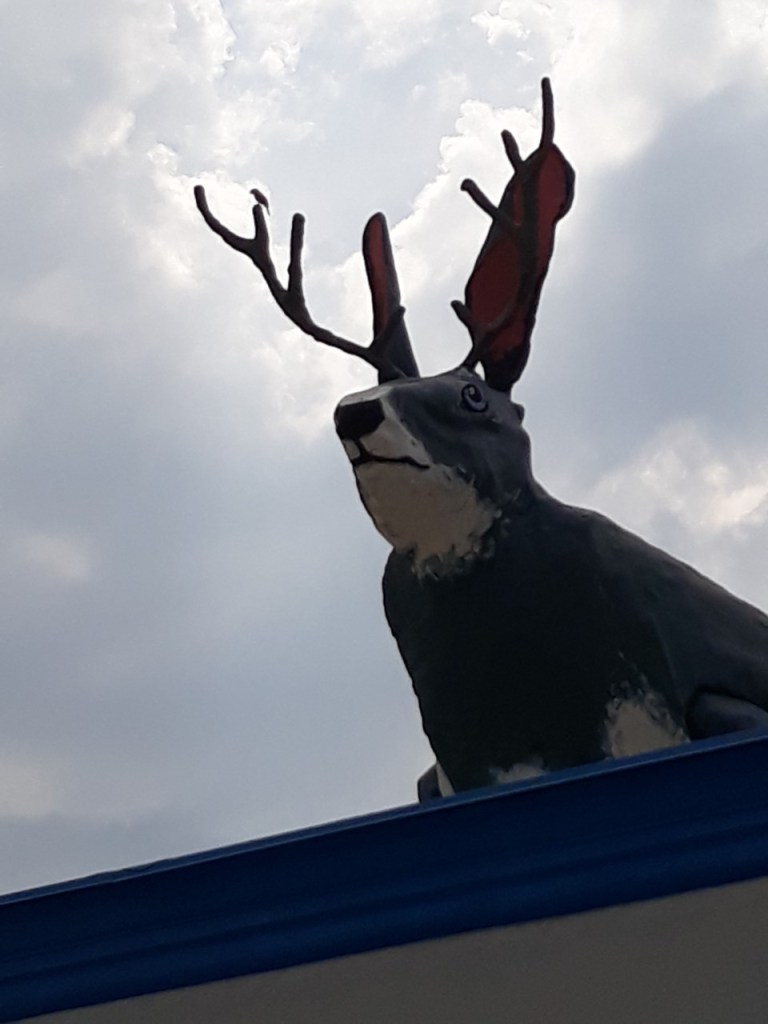
The Jackalope

I first learned of the “Jackalope” from my late Uncle Bill Manley. Summer nights on the porch of my grandparent’s farmhouse were ripe for spinning yarns and swapping lies. Uncle Bill was a masterful storyteller; my cousins and I were young and ready to believe anything he dreamed up.

The Jackalope is part Jack Rabbit and part Antelope and is a staple of Texas lore; is it real or a yarn? No one knows for sure, but many have claimed to have seen one, Uncle Bill among them.

After three or four ice-cold Pear beers, he begins his recount.

His voice lowers an octave; he leans over, rests his elbows on his knees, and begins,

” Back in 1948, when myself and the missus were visiting down from Chicago to this here farm, I was looking for my doggy that escaped the screened-in porch. It was almost dark, and I was walking through the back pasture, making my way into a grove of Mesquite trees, and there it was, sitting, chewing on a big blade of Johnson grass. He was a big critter, about the size of a big old lazy dog. His horns stuck up like a West Texas Antelope, his eyes glowed ruby red, and his pupils were yellow like a big summer squash. I was scared the varmint was going to gore me with those big horns, but I stayed real still and began to talk to the critter. I knew it was a Jackalope right away. The more I talked, the critter seemed to like what I was saying, and it began inching closer to me. I went on for a while, and when I took a break, the varmint was right next to me, looking up at my face with those crazy eyes. Then he did something funny; he nuzzled me with his head, and not knowing what was up, I reached out and scratched him behind his long ears. He made a funny sound, sort of a cat purring. I knew we were buddies now.” Wow, what a story! My cousins and I were delighted; we wanted more, so I asked, ” Uncle Bill, what happened to the Jackalope?”

Uncle Bill always had a dramatic end to his tales; this one was no different. He takes a giant slug of his Pearl Beer and says,

” There was a pack of wiley Coyotes roaming around the farm making a ruccus and killing Granny’s chickens. I went out hunting them one night and found the Jackalope all chewed up over behind the hen house; the Coyotes got him. He put up a good fight because there was two dead Coyotes laying beside him, all gored up from the horns. I took him to the taxidermist in Brownwood and had his head mounted, and that’s him hanging on the wall of the Biscuit Cafe.” Twenty years later, I stopped at that cafe, and the Jackalope was still there.

Back In The Saddle Again


My good friend John Payne was raised in West Texas, and I have, with his permission, used his antics as a teenager to inspire my favorite character, Ferris Ferrier. This story was inspired by John.

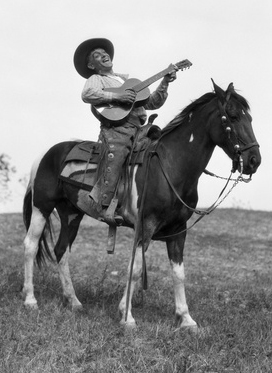
Ferris Ferrier lives in Happy Texas. It’s 1958, and he is as happy as a resident can be. He reads an article in the Amarillo newspaper about a movie soon to be filming in Fort Worth, and the company is auditioning for cowboys who can sing and play guitar while riding a horse.

Ferris plays guitar a bit and has some fancy cowboy duds, and his father has Ole’ Rip, the family ranch cutting horse, so he’s convinced he could give this a shot. His parents give him their blessing, and it’s arranged that his cousins Jimmy Jam and Mary Meredith will take him and Ole Rip to the casting call.


Ferris isn’t nervous about the singing and playing but more about Ole’ Rip getting spooked and bucking him off. Ole’ Rip is a working horse used to cattle and his pen, and he’s pretty unpredictable, but he’s the only horse on the farm, so Ole Rip it is.
Jimmy Jam suggests that Ferris and Ole Rip give a practice performance in the upcoming Christmas Parade next week. “Give the folks in Happy a preview of their soon-to-be movie star,” says Jimmy. Ferris agrees, and plans are made for his debut.


On the day of the parade, Mimi Jo Musson, the coordinator, moves Ferris and Ole’ Rip to the front of the show, right behind the baton twirlers.

“Might as well give our new movie star a plug, right?” she said. Ferris is nervous as hell.

Why right in front of the high school band? Ole’ Rip is bound to have a meltdown once that loud music starts. He explains to Mimi Jo the scenario that will likely happen.

Mimi Jo says, “It will be fine; all horses love music.”


At noon, the parade is lined up in the alley between the Prairie Bank and the Big Biscuit Café. Baton twirlers, Ferris and Rip, the drum major and high school band, and six floats, followed by a stagecoach driven by Gabby Roy Parnell, where Santa Claus rides and throws candy to the children.


Ferris is freaking out. His throat is dry as sand, he has to pee, and Ole’ Rip cuts one fart after the other, a sure sign he is unhappy. As the parade turns the corner from the alley onto the main street, Ferris starts to play and sing, and Ole’ Rip is doing fine. Then, the drums start, the band kicks into Jingle Bells, and Ole Rip loses it. It is the first time Ferris has seen him rear up on his back legs like Trigger, and is, for a moment, impressed…until the horse makes a hard right turn and runs into Miss Honey’s Beauty Parlor.

As Ferris and Rip enter the business, Ferris hits his forehead on the top door jamb and spews blood like a fountain. Ole Rip manages to demolish half the parlor before turning around and heading out the front door. They travel a few stores down, running parade watchers off the sidewalk.

The next stop, Western Auto and Rip, is doing a similar demo job on the best store in town. Ferris is bleeding, his guitar is smashed, and the saddle is beginning to slide sideways. As they exit Western Auto, there are three vacant lots until you reach Bramwell’s Feed Store. Ole’ Rip, smelling horse feed, picks up speed and heads for the feed store lot.

As they enter the lot, Rip is smelling oats and makes a beeline for the warehouse, where he abruptly stops in front of an open bin and proceeds to chow down.

The saddle slips sideways, and Ferris is on the ground.

He is a sorry sight, with a bloody face, torn clothes, and his precious Harmony acoustic guitar smashed to kindling, and then Margie Lou, his secret crush, shows up. She is so excited she can barely speak.

” Good God, Ferris, I have never seen a demonstration of horsemanship like that in my whole life, and I’m a rodeo queen. That was fabulous and sensational,” she screams. Ferris picks himself up and thanks Margie Lou.


She adds, ” and next week you are going to audition for that movie, you should be so excited.”

Ferris says, “You know Margie Lou, I think I’ll do my guitar playing on the ground from now on. Who knows, in a few years, I might start a band. By the way, that’s a good idea for a name, The Fabulous Sensations, and I’ll keep that in mind.”

Just A Little Off The Top, Please


If you were a kid in the 1950s, there is a good chance you had to endure the “home haircut.”

My father, also known as “Mr. Cheapass,” became a barber almost overnight. A friend had given him a pair of worn-out electric barber clippers, and he saw a way to save that $1.50 flat top haircut I received once a month. My mother, bless her heart, tried to intervene and save her only son from the humiliation of the shearing, but the old man won the battle, and I found myself sitting in our kitchen with two phone books under my butt, just like the real barbershop.

No cape, no tissue around my skinny neck, no talcum powder, no Lucky Tiger Hair Tonic, just a worn-out towel with a clothespin holding it in place. My mother sat at the kitchen table, misty-eyed, crossing herself despite being a Baptist.

My father tried to act like a “real live barber” by making small talk, asking me about my baseball team, the weather, and my dog. It didn’t work; I knew I was in for a massacre.

He didn’t know which guide to use, so naturally, he picked the wrong one, flipped the switch, and tore into my nice, thick seven-year-old hair. Gobs of dark hair were spilling onto the towel and the floor. My mother sat there with a shocked look on her face. The more he buzzed me, the worse it got. Finally, he removed the guide and put the clippers on my scalp, rendering me bald except for a tuft of hair in front for the application of Butch Wax.

The deed was done. I was scalped, mutilated, disfigured, and humiliated. Lucky for me, it was summer, and by the start of school, I would have a normal head of hair. My father was rather pleased with his handiwork and strutted around the house for an hour or so. I happened to catch my mother tossing the clippers into the garbage can in the alley the next day. When school started, she took me to my regular barber and paid half the buck from her grocery stash.

The Little Buckaroo


The Little Buckaroo, early 1950s

I was young, barely talking, so I couldn’t say Trigger. It came out as Twigger. The other little buckaroos in the neighborhood mocked my speech impediment. I was three years old, so what. I rode the wilds of Sycamore Park, ducking under low branches, hearing Indians in the trees and Buffalo calling. I rode the banks of the swollen creek, watching turtles feed on the carcass of a carp. I was, in my intended element, a cowboy. Then, the owner of the Little Pony Picture Service lifted me off and put the pony in the trailer. Bummer.

Strawn, Texas, My Little Town


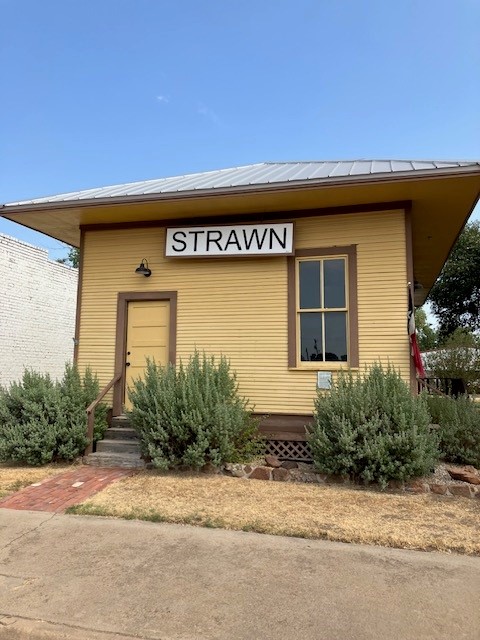
Strawn, Texas Depot, back when there was a train running

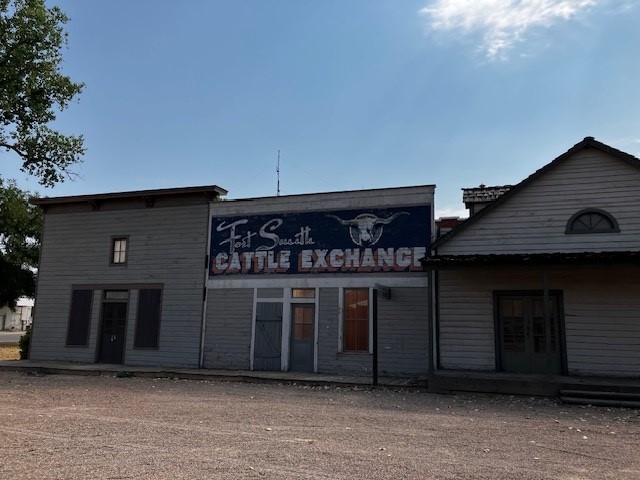
Strawn, Texas. Yep, same name as mine and a distant relative in the family food chain. We visited the town last Saturday for a day trip and lunch. Founded in the late 1800s and soon to be the gateway to our newest Texas state park, “Palo Pinto Mountains State Park.” A 5,400-acre rough and rustic layout that includes a lake, a river, a creek, mountains, trails, rocky escarpments as big as a house, and every kind of critter imaginable. The main entrance is through the town, which is in need of a shot in the arm to boost the economy. 80 percent of the downtown buildings are vacant. The Paramount Plus, Taylor Sherriden-driven television show “1883 The Bass Reeves Story” wrapped filming in the town last March and, at the request of the city fathers, left many of the sets and changes made to the abandoned 1800-style buildings. The little town has seen better days, but no one can remember when.

The Strawn Greyhounds are the winningest six-man football team in history, with numerous state championships. Mary’s Cafe, the famous eatery written up in food magazines and Texas Monthly for her large Chicken Fried Steaks, was left in its original condition because Mary and her gals fed the film crews good ole’ high-calorie Texas vittles; Chicken fried everything and topped off with gallons of white gravy, and to finish up, with a lot of sugary pie, iced tea, and coldbeer ( all one word in Texas).

Fake front movie set left by the 1883 crews
Old Hotel repurposed for the series

I’m no stranger to Strawn. My affiliation with the village goes back to 1958 when my father purchased a lot on Lake Tucker, the town’s source of drinking water and a beautiful small body of water formed by a creek when the dam was built by the PWA in the 1930s. The lot itself was steep and rocky, backing up to a massive hill and rock escarpment with boulders the size of a single-family home and a Buick. There was a dwelling of sorts, a small plywood one-room fishing shack with a tar paper roof. It had running water, a bathroom, a window unit, a hotplate for cooking a few cots, and a small dock. My mother was appalled but captive and had to rough it; she couldn’t walk out and darn sure couldn’t swim back to the dam. The place was crawling with Rattlesnakes, Copperheads, and Coral Snakes, and that was just the vicinity of the shack. Down at the dock, by our flat-bottom aluminum boat, the only transportation to the shack unless you could rock climb, the Water Moccasins were as thick as mosquitos. My mother, holding my baby sister in a parental death hug, damn near had a nervous breakdown as my father and I set about chopping the heads off of every venomous reptile we could find with a sharpshooter-shovel and a chunkable bolder. The Rattlers were the most fun; they would strike the shovel and break a fang before they were guillotined. I got to remove and keep the rattlers for later use in scaring the kids in my neighborhood. I could have been bitten many times over if I had thought about being scared, but I tackled the task with glee and abandon. I was a feral boy in my element.

The second night in the shack, during the wee hours before dawn, my mother heard something sniffing and clawing at the door. It could have been a Coyote, a Mountain Lion, a Bobcat, a Bear, or the dreaded Sasquatch. That was it for her, and we packed and left the next morning. She never went back.