“Hope Neil Young will remember, a southern man don’t need him around anyhow.” Lynard Skinnard had it right, and neither does the eastern or the western man. Sliding into rock and roll obscurity is a pitiful state. Joni Mitchell, one of my favorite singers from ” back in the day,” has joined the “has-been” wagon supporting old Neil. She’s been on that trip for a while now. Together, she and Neil can enjoy swooshing downward until they hit the pile of crap at the bottom of the celebrity slide. Eventually, everyone in rock music gets to ride it.
Old Neil was never one of my favorites. He can’t sing for squat and possesses a thirteen-year-old valley girl’s whiney, tinny voice. So, it’s puzzling why Crosby, Stills, and Nash asked him to be in their supergroup. Those three guys could sing like hashed out angels, so Young must have been there for his guitar chops and fancy fringed leather jackets.
Joe Rogan is the new big deal in town. A new age sheriff with lots of tats and a six-gun on each hip. He’s as cool as Clint Eastwood and has the literacy jive of Jack Kerouac. He calls it as it is and doesn’t coat anything with honey.
So, Joe Rogan is the guy that Neil Young and Joni Mitchell always protested against way back in their hippie-dippy days, and Biden, who is the personification of “the man holding them down,” with his kings’ scroll of mandates, is their new golden calf. Go figure that crazy town crap out. They canceled themselves.
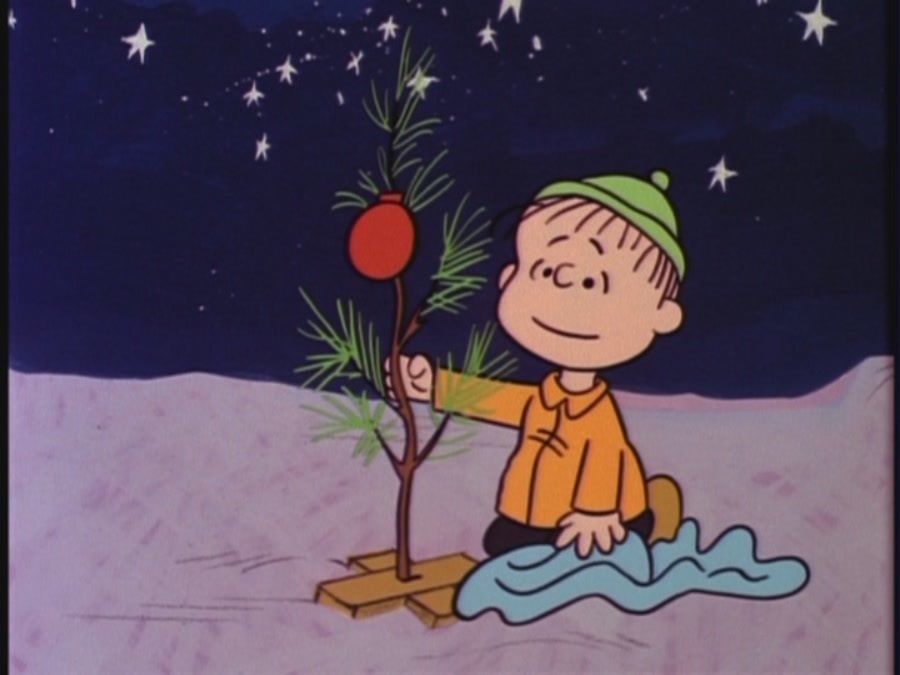
Since I don’t subscribe to expensive cable television anymore, and my wimpy HD antenna receives only when it feels like it, I missed the annual telecast of Charlie Browns Christmas show.
Actually, there are only two parts I like; when they are dancing to ” Linus and Lucy” by Vince Guaraldi and when Linus recites his Christmas speech under the spotlight. The rest is also fun, but those two scenes make the show. Now I’m bummed because I missed it, and the networks along with Disney, who owns the rights, so they show it once a year and don’t let anyone know when, until the last minute. Sort of like Cong-television. Pop-up entertainment.
It appears that Mike Nesmith, formerly of the Monkees, made a more significant impact on our culture than anyone imagined. It’s said that he invented the music video format and country-rock, two massive contributions to our video and audiophile obsessed society. He was a fellow Texan, so he gets a 10 in my book for that alone. Mickey Dolenz, the remaining Monkee, will most likely hang it up and enjoy the renewed interest in his former band and maybe make a few bucks. God Bless ole’ Mike Nesmith, and may he keep playing music in his heavenly venue.
I was a fan of the show; how could a teenager in 1966 not be? Rock music, comedy, and a groundbreaking video music format were the perfect show for that time. I played in a rock band, so I felt the show was made for us musicians. The public had no idea that the boys didn’t play their music. Super Beatle amplifiers, Gretsch guitars, and drums, a Vox Continental organ, top-of-the-line gear, and these guys were as famous as the Fabs or any of the English bands.
I don’t recall when I discovered the band was not a real band, but only four funny guys. It wasn’t a devastating blow, but it pissed me off that the television producers had put one over on young people. Don Kirshner likely leaked the truth when he was fired from the show as a music producer. Tommy Boyce and Bobby Hart wrote the tunes, and the famous Wrecking Crew provided great music. We were duped, but it was a good duping.
My younger sister was a huge fan, so she and I attended a Monkees live show in 1967. They were playing their own instruments and were rumored to be quite good by then. The show was at Memorial Auditorium in Dallas, Texas, the best venue for a large crowd but terrible acoustics for music. The crowd was teenage or younger boys and girls, their mothers, and guys like me bringing a sibling too young to drive.
The warm-up act, a local band, Kenny And the Kasuals, put on a solid show. The promoters and the Monkees were likely afraid of being outplayed. As it turns out, they were, but the crowd was there to see the Monkees, not a local act, so it went unnoticed.
When the Monkees took the stage, the screaming began. I could hardly hear their first two songs. Mike Nesmith was playing a 12 string Gretsch guitar and couldn’t keep the beast in tune, so like any good musician, he proceeded to tune up for ten minutes. All music stopped. The crowd grew restless, and folks started to leave. No music and three Monkees standing around smiling and waving at the attendees did not make a good show. He got his instrument tuned, and the music proceeded, but the excitement in the room was gone. The band did an encore, performing “Last Train To Clarksville,” and the show ended. It wasn’t the Beatles, but my sister saw the Monkees live, so it was a good night.
Marjorie Mae has a dozen chickens living on her small farm on the outskirts of San Angelo, Texas. Normal Texas folks don’t think much of chickens except when they eat their eggs or have a piece of it fried or baked. Marjorie Mae is different; she treats her chickens like real folks; all of her fowl have first names and are somewhat educated.
Gilda, Ruby, Tootie, Francis, Lucille, Ethel, Jessie, Rea, Poochie, Piddle, Bebe, and Poteet. Call any one of them by their given name, and they come running like a spotted pup. She rather prides herself on being the keeper of educated farm fowl. She isn’t sure about the depth of their education, but they seem smarter than most run-of-the-mill barnyard chickens.
One day, walking by her barn on the way to the chicken coops to gather eggs, she hears piano music. She instantly recognizes the out-of-tune sound of her ancient broken-down upright piano that’s been stored there for ten years. Unfortunately, her husband Wilfred doesn’t play, so she figures a hobo or possibly an escaped felon from the prison farm must be hiding in her barn, twinkling the ivories. She grabs a 20 gauge from the house and marches off to confront the interloper.
As she gets closer, she realizes this is not some rube pecking around on her piano, but an educated musician, like herself, that knows their way around the 88 keys. So she slows her advance to a near stop to listen a bit more. She can’t be sure, but that sounds like Mozart’s Concerto No. 3 in B minor, but the piano is old and out of tune, so it could be anything short of a barn cat walking on the keyboard.
When she reaches the barn door, the music stops, then starts again. The beautiful haunting notes of Moon River float from within the dark depths. Whoever this trespasser is, she wants to meet them and have a bite of lunch at her kitchen table; hobo or felon, she opens the sliding door and enters the barn.
Thirty steps to the center of the barn, behind the frozen-up Ford tractor, is her dust-covered piano. The tarp cover is haphazardly thrown to one side. In the low light of the barn, she can’t see anyone, yet the playing continues. Finally, the culprit is discovered when she gets within five feet of the piano.
Her Sussex Speckled Hen, Rea, is standing on the keyboard, pecking the keys with her beak and both feet. Not the corny huckster trick pecking you see the chicken at the county fair playing on the toy piano for a quarter, but calculated and coordinated movements that are producing beautiful music. The first thing that comes to her mind is, “I’m going to be rich.”
I’m into the second week of my month-long summer visit to my grandparent’s farm in Santa Anna, Texas. It’s a hot night, and everyone is sitting on the covered front porch drinking sweet iced tea and Pearl beer. My two uncles, Jay and Bill, are visiting for a few days from Fort Worth and are putting the finishing touches on a case of beer they bought this morning at the Dino station. July is beer drinking season around here. It’s considered a main food group but must be served iced-cold to gain the nutritional value from the barley and hops.
Bill gets up from his chair and reaches into the Coleman cooler, extracting another Pearl; he uses his feed store church key and a pen knife to pop the cap. Then, looking out over the Santa Anna mountain, he says to no one in particular, ” I heard this morning there’s a piano-playing chicken over by San Angelo.” Uncle Jay, his brother, immediately replies, ” bull-shit, there ain’t no such thing as a piano-playing chicken. I bet you twenty dollars it’s a can of crap.”
The two brothers are the biggest storytellers and liars in Southwest Texas and will bet on anything. The more far-fetched and unbelievable, the better. Uncle Bill says we are leaving for San Angelo in the morning. I’m excited about this one.
After getting directions from the feed store and a man standing on a street corner, we head towards the farm of Miss Marjorie Mae. She is already a local celebrity and is the gossip fodder of the town. We arrive at her farm around 10 AM.
Marjorie answers her screen door, and uncle Jay states that we are here to see the piano-playing chicken. She says, ” it’s ten bucks a carload and I can’t promise you she will be a play’in if there are eggs to lay, she will most likely be doing that first; she’s a chicken you know.”
We are led to the barn, the door is opened, and there, glistening in the sunlight is a hand-polished upright piano. A silver candelabra and swirled glass vase of fresh flowers rest on top. Marjorie collects the ten bucks from uncle Bill. Jay pokes him in the ribs and whispers, “this is all bull-shit so you might as well pay me now. ”
Marjorie emerges from the barn carrying a fat Sussex Speckled Hen. This chicken is downright gorgeous for a barnyard critter. Its feathers are fluffed up into a fuzzball, and its toenails are painted bright red. A gold nametag hangs around the fowl’s neck. I can tell my uncles are duly impressed, as I am.
The hen is placed on the keyboard and immediately launches into a jive-inspired rendition of Glen Miller’s” In The Mood.” Finishing that tune, she plays a classical number and then goes right into ” Moon River, ” closing with the theme from ” A Summer Place.” My uncles are tapping their feet and laughing like deranged mental patients. Finally, the hen hops down from the keyboard and struts back into the barn; the show is over.
Uncle Bill thanks the lady for her hospitality. As we leave, he asks her name. She replies, “Marjorie Mae Mancini.” Bill inquires if the chicken has a name. She says, “oh yes, that’s Hen-Rea Mancini.” I kid you not.
The Bongo Band at The Hip Hereford. Sargent ( Sal ) York in Stripped shirt
In 1957 there was a coffee house and Beatnik hangout in downtown Fort Worth, Texas called “The Hip Hereford,” named in honor of the owner’s prized champion bull.
Sargent ( Salvatore )Tulane York was related to the legendary war hero, Sargent York, on his fathers’ side of the family, thus his naming after his famous cousin.
Growing up on a vast cattle ranch outside of Weatherford Texas, Salvatore wanted one thing; to be a singing cowboy, like Gene Autry, Roy Rogers, and maybe Tex Ritter.
All-day, every day, from the time he could sit a saddle, Salvatore sat on his shetland pony, “Giblet,” playing a plastic ukulele while singing “Home On The Range” and “Oh Susana.” This behavior went on for years, and his parents finally gave up on the little savant, letting him ride the range singing his two-song songbook to the cattle and the critters. At times, his parents forgot to call him in for supper, or when it rained, and little Salvatore would make camp with the doggies, showing up a few days later as if nothing strange had happened.
When Salvatore turned 17, he began going by his family name of Sargent. It made him feel dignified and a little important. He and a few boys from school formed a little guitar and fiddle band and began playing around Parker County. Chicken fights, church fundraisers, and intermission at the Cowtown Drive Inn were about the only gigs they could get. They knew four songs and were hard to listen to. They called themselves ” The Parker Valley Ranch Boys.” They met Buddy Holley once and asked for his advice. He told them to stay the hell away from him and his Crickets and to get a real job.
The band didn’t work out, so Sargent decided he would try being a Beatnik. It didn’t take talent or an education, both of which he had none of, so he figured he could make it work.
He opened the first Beatnik-type coffee house in Fort Worth near the Majestic Theater. He gave the guitar and fiddle band one more shot but it didn’t fit the atmosphere. He had another idea that would work. Why even have music! Just have a few guys playing bongo drums while people speak or recite poetry. How cool is that? No messy music or instruments, just the gentle beat of the soothing bongo to accentuate the moment.
The picture above is the first incarnation of “Sargent Yorks Lovely Beatnik Bongo Band,” onstage at The Hip Hereford. Sargent York, the band leader, is the dude in the middle wearing the striped shirt.
Word got out about how cool and hip the place was, and soon every performer around wanted to be seen there. Elvis Presley was at Fort Hood serving his time in the Army, so he would come up on Saturday nights and sing a few tunes. Jack Ruby ( yes, that one ) would bring Candy Barr, the famous stripper to do her show, and Lyndon B.Johnson and Lady Bird would stop by to shake a few hands and recite the latest bill he was introducing in the senate. Lady Bird would give gardening advice. Brother Dave Gardner, the famous comedian made a few appearances, as did Lenny Bruce, Joan Rivers, Phylis Diller, Jonny Carson, Alvin, and The Chipmunks, Soupy Sales, and Rabbi Schmolie and his singing dog, Moses.
The place rocked on for another year, then when interest waned, Sargent closed the doors and went to Greenwich Village to become a folk singer.
The rumor that floated around for years, even into the mid-60s, was that some English musician was vacationing in Texas and caught a few acts at the Hip Hereford. He dug the name of the house bongo band and later passed it along to some of his blokes over on Abbey Road. Who knows, it could have happened?
I am a Beatles fan from the night I saw them on Ed Sullivan back in February of 1964. I bought all of their albums, and when I played in a rock band starting in 1965, I played their music with a vengeance. Loud amplifiers and crunching electric guitars, that’s what the lads inspired us to do. They also taught me that there are more than three guitar chords as well as diminished and augmented ones to boot. The poor Beach Boys never figured that out until Brian Wilson wrote and engineered Pet Sounds. The boys from Liverpool gave them a lesson or two.
I watched the trailer for the upcoming Beatles documentary by Peter Jackson a few nights ago. “Let It Be” is and will be a huge hit and seen by millions if not more. Beautiful cinematography and soundtrack make this the best rock music movie ever made. Hats off to Peter for his effort and talent.
The Beatles, as a band, hasn’t played a lick together since 1970, and then it was an unpleasant experience from what I have read. The movie gives us a glimpse of their shared acrimony, but we will never know the sordid details, nor should we.
Recently, Sir Paul, the fossilized bass player said it was John that killed the band, not he. I can see that being true, but at this point, there are not many who still care who’s fault it was, or is. John and his muse, Yoko, or was it the other way around? drove a stone wedge into the heart of the lad’s kindred spirits ending the greatest musical act ever known to humans of my generation and perhaps a few after.
Paul also said a few days ago that the Rolling Stones were basically a blues cover band. Well, that is true, that is what they were and still are. Their music pales to the catalog of the Beatles. It’s almost amateurish in comparison, and if you have seen the Stones live in the last 10 years, you wonder who keeps digging up their graves and reanimating them, although Charlie Watts checked out with some class the others will never have. And that is what brings me to this next observation.
The Beatles had their time in history and used it well. Their legacy and music will be around for centuries in one form or another, the two remaining members will not. Ringo Starr has throttled it back and enjoys being in his late 70s, playing a gig here and there, and enjoying what few years he has left. Paul McCartney, the cute one, the mop-top lovable narcissist can’t seem to let it go. Once the “old man” voice sets in, then it’s curtains. Paul has it bad. Time to pay the valet and get the hell home, drink your Ovaltine, and hit the sack. It’s a bit embarrassing to see an old geezer jumping around on stage flicking his hair about like he is 20 years old. Come to think of it, that’s exactly what Mick the Jagger does, but only a bit better, and he is more agile and thinner because he hasn’t eaten a cheeseburger in 50 years and lives on good booze, spring water, and replacement organs.
I find as the years have slipped by, I am less a Beatles fan than I was in the 80s, 90s, or even the early 2000s. I still have all the albums, but rarely spin them. I guess one could say I suffer from Beatles fatigue, or misplaced envy, or even old age, of which I am, at 72. One thing good is that I am still a musician and singer, and can play most of their tunes if I wished to. The trouble is, I don’t wish to now. I’m not hating on the boys, and I hope Peter Jackson makes a zillion bucks with his film, and it wins an Oscar or some trophy.
I am only suggesting that maybe after 57 years, maybe the Beatles should just say goodnight, and Let It Be.
“Do not forsake me, oh my Darlin,” on this our wedding day,” who didn’t know the first verse of that song from the radio? A massive hit from the 1952 movie “High Noon,” performed by everybody’s favorite singing cowboy, Tex Ritter.
In 1957, I was eight years old, and on some Saturday nights, I got to tag along with my father to the “Cowtown Hoedown,” a popular live country music show performed at the Majestic Theater in downtown Fort Worth, Texas. My father was the fiddle player in the house stage band, so I was somewhat musical royalty, at least for a kid.
Most of the major and minor country stars played Fort Worth and Dallas as much as they did Nashville, and I was fortunate to have seen many of them at this show. One, in particular, made a lasting impression on my young self.
I was sitting on a stool backstage before the show, talking to a few kids; who, like me, got to attend the show with their fathers.
My father came over and asked me to follow him. We walked behind the back curtain and stopped at a stage-level dressing room. There in the doorway stood a big fellow in a sequined cowboy suit and a 30 gallon Stetson. I knew who he was; that is Tex Ritter, the movie star and cowboy singer. My father introduced me, and I shook hands with Tex. I was floored, shocked, and couldn’t speak for a few minutes. What kid gets to meet a singing cowboy movie star in Fort Worth, Texas? I guess that would be me.
Tex asked my name and then told me he had a son the same age as me. We talked baseball and cowboy movies for a bit, then he handed me a one-dollar bill and asked if I would go to the concession stand and buy him a package of Juicy Fruit chewing gum. So I took the buck and took off down the service hallway to the front of the theater. I knew all the shortcuts and hidey holes from my vast exploration of the old theater during the shows.
I knew nothing of the brands and flavors, not being a gum chewer, but the words Juicy Fruit made my mouth water. Not having much money, what change I did get from selling pop bottles went to Bubble Gum Baseball Cards, not fancy chewing gums.
I purchased the pack of gum for five cents. Then, gripping the change tightly in my sweating little hand, I skedaddled back to Tex’s dressing room. He was signing autographs but stopped and thanked me for the favor. He then gave me two quarters for my services and disappeared into his dressing room for a moment. He handed me an autographed 8×10 photograph of him playing the guitar and singing to the doggies when he returned. I was in country and western music heaven. He also gave me a piece of Juicy Fruit, which I popped into my mouth and began chewing, just like Tex.
Juicy Fruit became my favorite gum, and now, whenever I see a pack or smell that distinct aroma as someone is unwrapping a piece, I remember the night I shared a chew with Tex Ritter.
I was awake at 2: 45 this morning. I have learned that once my brain engages, there is no time for sleep. I get up, turn off the alarm, turn on Mr. Coffee and my laptop. I don’t bother with television news anymore, but I prefer to read news sites for my information. The coffee brews, a cup is poured, and it tastes darn good. After two cups, I forget about coffee and start making notes for a future blog post. Thirty minutes later, I decide on a third cup. Good grief, the coffee taste like swill, burned, and nasty. I learned this morning that if you leave the coffee on the burner for thirty minutes, it’s ruined, and you might as well pour it down the drain. This makes an excellent argument for using our Keurig machine, but the pods will break your grocery budget, so it stays in retirement. I am meant to suffer for coffee.
I follow many blog sites on WordPress. In turn, some follow mine. It’s an excellent trade-off. For example, this morning, I came across a blog focusing on religion, one of my favorite argument topics.
The writer, a Christian and a Catholic living in the UK, takes offense to music in church. Not so much the white-haired old lady playing the Hammond organ and a choir singing old-time religious songs, but the entire rock band on stage with a trio of singers wailing away about who knows what. He calls it “Jesus Rock.” I get it. I am a musician, and I know how music can move you. A well-played tune can energize your soul or take you to your knees in grief. But, unfortunately, the wrong kind of music can also distract your worship and send me running for the exit. I don’t need a Van Halen tribute band blowing the roof off the house of worship and the congregation holding up Bic lighters as they sway to the music. So I tend to lean more to the liturgical side of prayer. The old-style church service from “back in the day” is what I know. Damnation soothes the soul.
Sunday mornings sitting on a rock-hard pew, sweating, and fidgeting in my starched shirt and slacks while the Baptist preacher tells me I am going to Hell; now that is the real church of my youth. Although at six years old, I have no concept of Hell or why I am going there? My mother tells me to be still and then cleans my ears with a handkerchief and spit. The organist and the choir break into The Old Rugged Cross, the plate comes around and I deposit a dime. I am miserable. It is God’s wish.
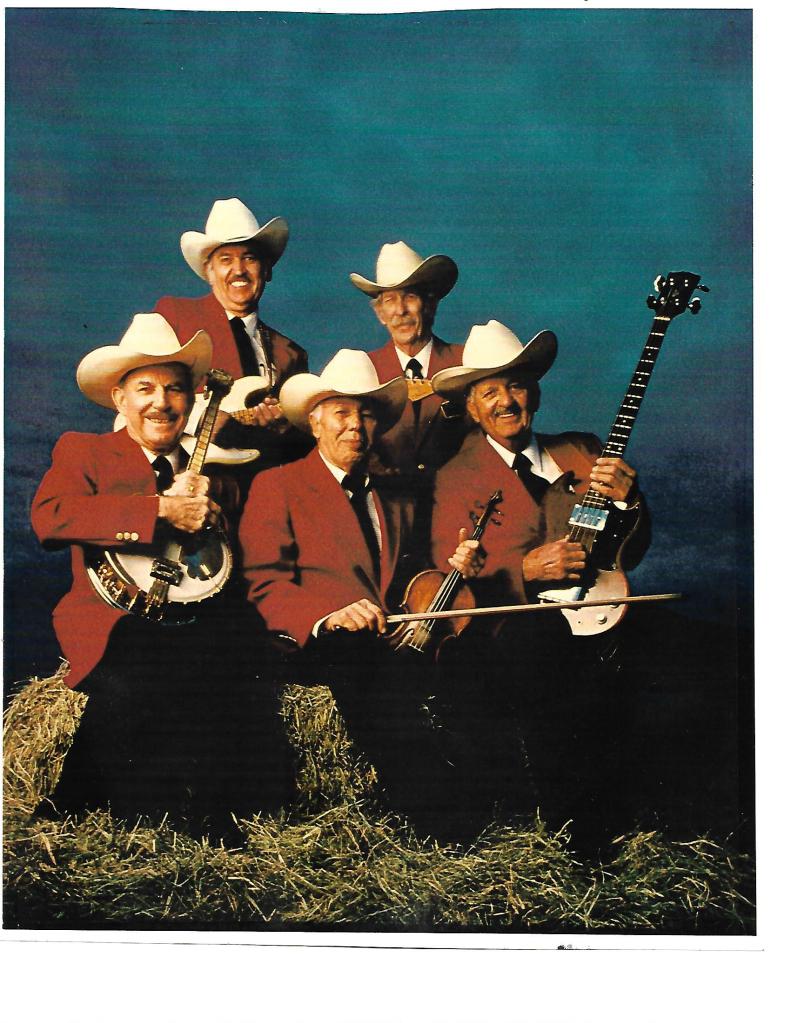
I am posting a picture of the legendary Texas western swing band, The Light Crust Doughboys, in memory of National Country Music Day. Top L to R; Jerry Elliot and Bill Simmons, bottom L to R; Smokey Montgomery, Johnny Strawn ( my father), and Jim Boyd.
As a small child growing up in Fort Worth, Texas, these men were part of my life until I helped carry some of them to their final rest. Texas, country music, and I are better because of them.
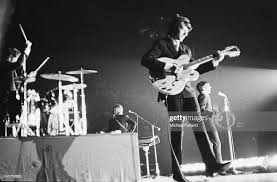
In 1968, the rock band I was in signed a management contract with the top agency in Dallas, Texas; Mark Lee Productions. We had been together since 1967 and played all over Texas, but once we hitched on to Mark Lee, we entered another level. Friday and Saturday nights were booked for the next year, and we made more money than our fathers. Pretty good for a bunch of teenagers in Texas.
That was the year that rock music exploded in Dallas and Fort Worth. Forget Los Angeles and New York, we had more bands and better music right here in Texas. American Blues, which would soon be ZZ Top, Felicity that would become the Eagles, Delbert McClinton, Roy Orbison, B.W. Stevens, Michael Martin Murphy, Ray Wylie Hubbard, Jimmy Vaughn, Stevie Ray Vaughn, Doyle Bramhall, Southwest F.O.B that would birth England Dan and John Ford Coley, Kenny and The Kasuals, Kenny Rogers and the First Edition, Sly Stone, The Jackals, The Nova’s, and our band, The ATNT. We didn’t think much about the East or West coast; there was too much happening here.
A rock band out of San Diego, California, was making some noise with a 45 that was getting some airplay on KLIF AM radio in Dallas. The Iron Butterfly was unknown outside of California but was starting to make some noise in our neighborhood. With the release of their 45 and the following album, they hit the tour circuit playing smaller venues in the Southwest.
Mark Lee informed us that the band would be coming through Dallas in a month and if we would like to do a few dates with them at a local music club called “Strawberry Fields” and “The Phantasmagoria.” It was a go. We got their 45 and really dug their music, so we learned the two tunes and added them to our set-list. Folks liked them even though the songs were much heavier than what our local bands were playing.
The night of the first show at Strawberry Fields, we set up first then the Butterly arrived and added their gear to the stage, making it darn tight, so we agreed to let them use some of our equipment. In the dressing room, they were quiet, talking among themselves and not much to us. We were teenagers, 16 being the youngest and 19 the oldest. They were in their mid-twenties or older, hardcore and mysterious rock musicians from the west coast.
Before we went on, our manager, Mark Lee thought that it would be nice if we did one of The Iron Butterly’s songs; an adoring shout-out of sorts. We were young and stupid, so we agreed to do their song “Possession.” If we had massacred the song, it would probably have gone unnoticed, but we nailed it to the wall and plastered it with gold stars. We finished our set and were met by the pissed-off members of the Butterfly. The keyboardist and the elder leader, Doug Engle, tried his best to keep his band members from kicking our butts. He understood what we had done and didn’t take offense to our gaff. Our illustrious manager thought the entire event was hilarious and was laughing his ass off. Feelings were soothed, tempers lowered, and we finished the gig and on to the next club where, by the end of the evening, we were all buddies, exchanging phone numbers and promises to keep in touch after we all made the big time rock scene.





 Notes From The Cactus Patch