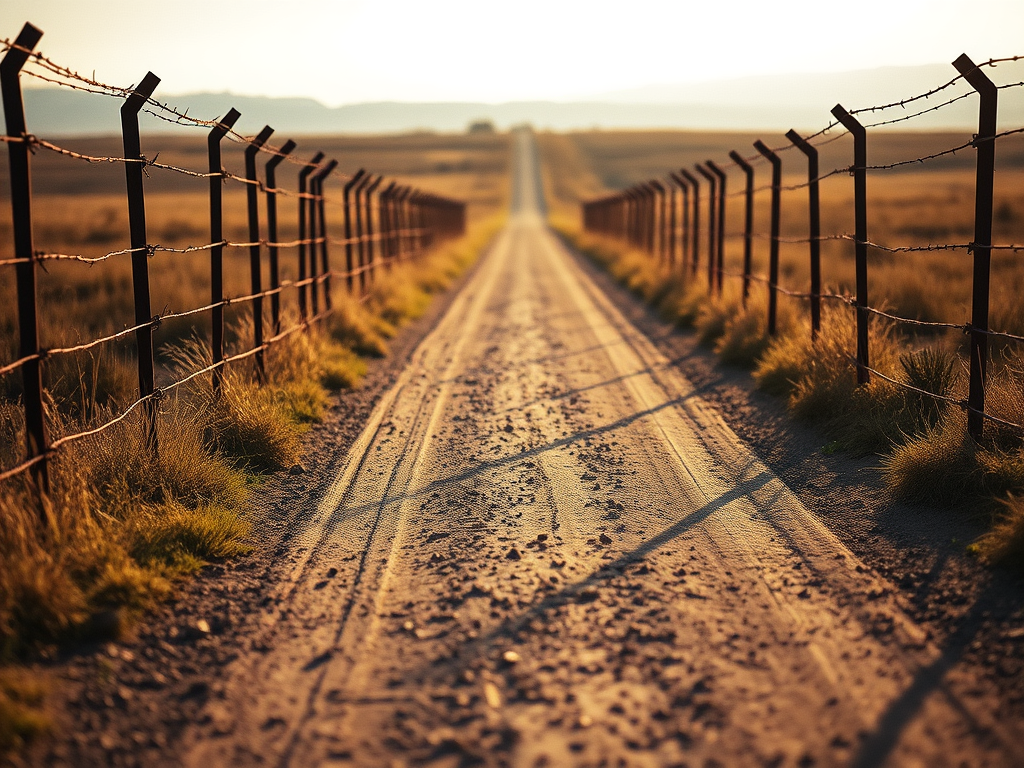
Tall Tales From Texas: The Legend of The Mountain Boomers of The Santa Anna Mountain


At seven years old, I learned of my first, but far from the last, Texas legend. The best storytellers and liars I ever knew were my two uncles on my mother’s side of the family, Uncles Bill and Jay Manley. They are the ones who told my cousins and me about Santa Anna’s “Mountain Boomers.” My mother believed the two ruined me and turned me into a liar and teller of tall tales, which is not such a bad thing.

The Mountain Boomers were giant lizards that ran on two legs and came down from their lair on Santa Anna Mountain in search of food. Anything would do, but they were partial to goats, wild pigs, small cows, chickens, and tiny humans. If you were caught outside in the wee morning hours, it was a sure bet a Mountain Boomer would get you. We, kids, were scared shitless of even going out of the farmhouse after dark. Now we had giant lizards and the dreaded Woolly Boogers to deal with.

With no air conditioning in the farmhouse, we were forced to sleep with the windows open and would lay in our beds shaking all night, waiting for the monsters to break through the window screen and carry us away. Our Granny was no help; her standard goodnight to us was ” sleep tight and don’t let the Mountain Boomers bite.”

Summer evenings on the farm were made for sitting on my grandparents’ covered porch, watching lightning bugs dance, listening to the crickets chirp, and catching the faraway howls of an occasional Coyote pack running the creek that passed through the pastures.

The sky was black as pitch, the Milky Way as white as talcum powder, and heat lighting in the West added to the drama of the evening. We kids were ripe for a big one, and my uncles never disappointed. First, homemade ice cream was eaten, then the cooler of Pearl Beer came out, and the stories commenced.

Already that June, my cousin Jerry and I had been to see the hero pig and the three-legged chickens and had learned of the dreaded Woolly Boogers. Hence, we needed a new adventure: our summer was losing air like a punctured tire: we were tiring of shooting chickens with our Daisy BB Guns, then getting our butts switched by Granny.

“Did you kids see that over there in the trees across the road? I think that might have been one of them Mountain Boomers,” says Uncle Bill, in between swigs of Pearl. Then, of course, we strained our eyes to see what he said he saw, but nothing. Then, a few moments later, “There it goes again, I tell you kids, that was one of them sumbitches running on two legs carrying a wild pig in its teeth.”

He had us firmly hooked and reeled in. Then he starts in on the story. Uncle Bill took a swig of Pearl and said,

” Right down this road here, about twenty years ago, a family’s car broke down, ran out of gas, I think. The daddy, a man I knew well, walked into town to find some help. He left his wife and small son in the car. It was late at night, so he figured they would sleep until he returned with some gas. The little boy got out of the car to pee alongside the road. His Momma heard him scream and came out of the car in a hurry: a 7-foot-tall Mountain Boomer was standing there with the little kid in its mouth. The poor boy was already almost chewed in half. His guts were hanging out and dragging on the ground. The big lizard took off running with the Momma chasing it. Another of them, Boomers, was hiding in the scrub brush and got her, too. A few days later, the sheriff found their bloody remains up on the mountain. They knew a Mountain Boomer had gotten them because they found their tracks. That’s why we never go outside after midnight around here.” My other cousins and I were almost pissing our pants.

When we stayed at the farm, I don’t believe any of us ever slept well again after that night. But, even after we were adults, my uncles swore the legend and the story were true. I still dream of them.
The Journey to Fort Worth: A Story of Hope and Sacrifice


The continuing story of Jesus Got A Mainline
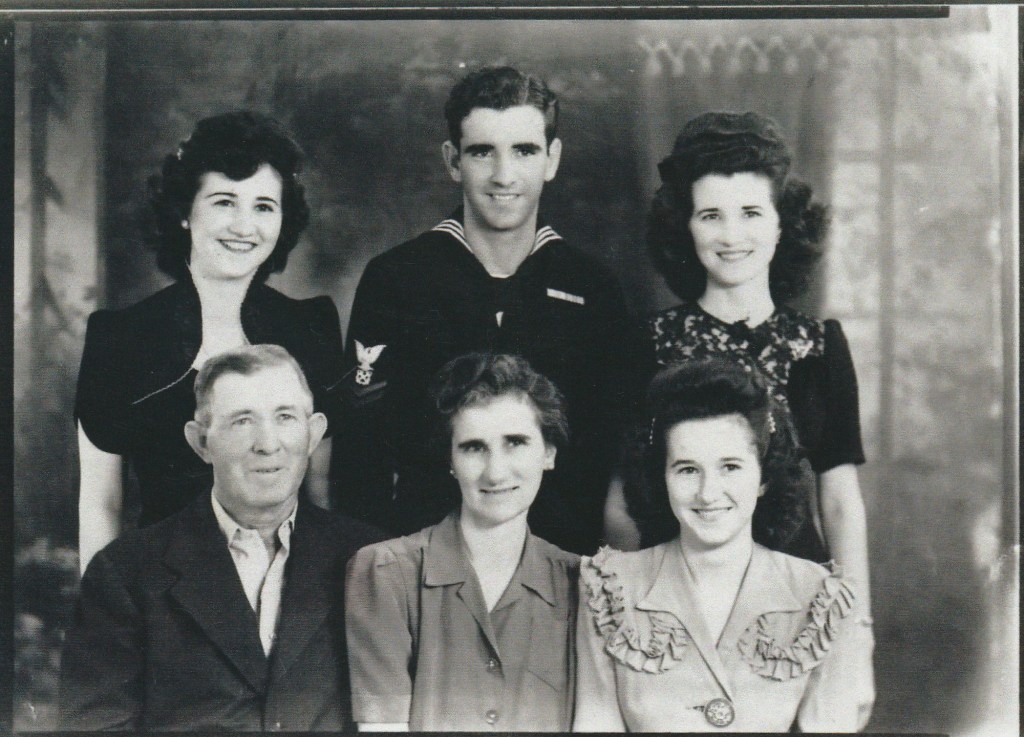
the Manley Family: Front from left, Jasper, Marcy, Lavelle. Standing, from left, Mozelle, Jay, and Catharine

Leaving home to forge a new life can be an exhilarating journey or a regretful mistake, depending on the circumstances of the departure. My mother, Mozelle, saw it as a journey that must be made; there would be no regret or sadness. The days of laboring in the fields and chopping cotton were behind her now. She would never again grip the wooden handle of a hoe.

Her mother’s parting tears left a permanent stain on the shoulder of her best dress. Her father’s apathy and refusal to hold her pierced her heart.

The bus ride to Fort Worth stretched into the night, giving her time to reflect and to shed her tears in the dark.

Sharing an apartment with her sister, Lavelle, she found work at Consolidated Aircraft Corporation, where she built B-24 bombers as part of the war effort. She was now the girl on the famous poster, with her sleeve rolled up and a polka dot headscarf. Her life was all work with little time for a social life.

In a letter from home, her father demanded that she and her sister send him a percentage of their paychecks, as their departure from the farm had forced him to hire labor and change crops that yielded less money. They complied, albeit unwillingly, for the sake of their mother. They learned that the Preacher and his family had come one last time, and with no cotton to pick, returned to San Angelo, where he passed a few months later. His sons carried on the church. She never forgot Preacher and his mainline to Jesus.

Her brother, Jay, wrote frequently to his sisters from his ship in the Pacific theater. He was a gunner on a destroyer and participated in the invasion of Iwo Jima. He was one of my two uncles who were the best liars and spinners of yarns and tall tales, and he passed that treasure on to me.

The front porch of the family farm house was his stage, and I would sit for hours absorbing his tales, some true, some as tall as the oak tree growing in the front yard. Give the man a few Pearl Beers and he could orate as well as Will Rogers. I felt he missed his calling to be a writer or a stage personality. In later years, the stories had darker undertones, and he became a world-class alcoholic who, after two stays in a state hospital, beat the demon and lived a sober life until his passing in a car accident in 1968, a head-on collision caused by, of all things, a drunk driver. She believed the war affected him deeply and led to his drinking problem. Today, we call it PTSD. My mother loved him dearly, and she was the force that convinced and aided him to seek help. His death affected her deeply, and I believe she grieved him for the rest of her life.

As a young girl, my mother wrote poetry and was quite good; she won an award in grade school. Her handwriting was exquisite. She and a fountain pen became one, and a sheet of lined school paper became her canvas.

Reading the great poets of her time and writing her own poems was her idea of a proper education, and she dreamed of one day publishing her own book. There were hundreds of pages of poems, squirreled away in a drawer, for someday. The poems were lost, and so was the day with them.

After the war ended, she and her sister worked on drawing maps. There was more time for a social life, and the two enjoyed dancing, so that led them to nightclubs at Crystal Springs on Lake Worth, Belknap Street, and Jacksboro Highway. She wasn’t looking for a boyfriend or a husband, but was swept off her feet by a good-looking, dynamic young fiddle player in one of the bands. The attraction was immediate and intense, and both of their backs were chock-full of Cupid’s arrows. That nice young man, a native of Fort Worth, a veteran, and recently relocated from Hawaii, would become my father.

Ask A Texan: Wife Moves To New York City To Be A Social Worker


Advice For Non-Texan Husbands Who Are Hearing Impaired

This Texan received a letter from Mr. Bobby Joe Boudreaux from Chigger Bayou, Louisiana. Seems his wife is determined to go to New York City and work as a social worker for the new communist mayor, Mamdani.

Mr. Boudreaux: My wife of thirty years, Lolita Belle, says she is moving to New York City to work for that commie whack job, Mamdani. Since he is replacing the police force with social workers who will talk to the criminals instead of arresting them. Lolita Belle is a world champion talker. She starts in around 7 am and goes until after bedtime. She even talks in her sleep, so I have to wear earplugs or turn my hearing aids off. She’s worn our four iPhones in the last year, talking to her relatives over in Shreveport. She stops folks in the grocery store and starts telling them about the nutritional values of the food they are buying. The poor folks are cornered and can’t escape. Our preacher at the Chigger Bayou Fourth Baptist let her lead communion one Sunday, and she got carried away, talking for an hour about why the church should be using real wine and Ritz crackers instead of Welch’s grape juice and crunchy bread. Now the church won’t let us in the door. She got stopped by a policeman for speeding, and she gave the poor cop a thirty-minute explanation on speed limits and why his uniform didn’t fit properly, and he needed to get his teeth whitened. The poor policeman finally gave her twenty dollars just to stop, and he got on his motorcycle and took off. She thinks if she can talk a policeman out of a ticket, then she can speak a criminal into being a good guy, just like that socialist street rat, Mamadami, who isn’t even an American, thinks will work. She read that all his new staff will be women, so she can have some sisters to talk to. I need some help down here.

The Texan: I hear your pain. ( pun intended ). Some folks are born with a genetic predisposition to constantly orate. My late, late, late, aunt, Beulah, from Santa Anna, Texas, ran off three husbands and at least a dozen dogs and cats for the same reason. When her priest was giving her the last rites before she passed away, she wouldn’t stop telling him what to say, so he just left. Short of using a shock collar like folks do with those noisy Beagles, I would let her go on up to New York and work for that commie pinko rat. If she can talk a cop out of a ticket, the poor criminal will probably give up and beg to be arrested just to shut her up. I’m sending her a CD language course on how to talk like a New Yorker, and to help a brother out, I’ll cover the cost of the airfare. I’m also sending you a box of Cherry Bombs to help relieve your anxiety. There’s nothing like blowing up Fire Ant mounds to calm a man down. Keep in touch.

Jesus Got A Mainline..Tell Him What You Want


Southwest Texas in the 1930s was its own special kind of hell. It wasn’t better or worse off than most of the state, but it was way out yonder and then some. Most Texas folks never ventured that far.

You could find a hundred preachers and ask them if God was punishing Texas farmers, and they would all praise the Lord and tell you times are hard, but we are blessed. Preachers back then were good at blowing smoke up folks’ backside, and then blessing them after the plate was passed.

One main highway, US 377 from Fort Worth, led to Stephenville, Dublin, Brownwood, Coleman, Santa Anna, and on to San Angelo, then farther out to desolate West Texas and the Chihuahuan Desert Big Bend. Small crop and cattle farms along the route, made up of God-fearing, gun-toting, worn-down, and dirt-poor families, faded into heat waves and obscurity as the fence post clicked by. The WPA was new to road and highway repair. Craftsmen and skilled labor were scarce, and what was available was assigned to building and repairing buildings, schools, bridges, and parks. The last place our government wanted to send its money was to the South to make living conditions better for poor southern white folk. Not much has changed in Washington, but we folks in Texas figured it out.

My grandparents, during those years, were cotton farmers in Santa Anna, Texas. A good crop of anything was a dream, a decent one, a miracle. Johnson Grass and Thistle Weed ruled the rows, and if a family could keep them at bay, a sellable crop of cotton might be picked: that’s if rain fell, and like miracles, there wasn’t much of either available.

My mother, Mozelle Manley, one of four children, lived on her parents’ farm and suffered through those hard-scrabble times. These are her recollections as told to me over many years. Sometimes over a glass of wine, or a late-night conversation, or just a visit while she prepared dinner. She didn’t keep a diary or put her thoughts to paper, but she was exceptional in her oral history, and I, if nothing else, was a devoted son and an apt listener.

Around late September, the cotton was getting ripe for picking. My grandfather, a miserly old goat, used his children as unpaid farm labor, which was the custom back then: the more kids you had, the less labor you paid. My mother, a delicate young girl, wanted to write poetry and stories, but her pen was the wooden end of a hoe, chopping weeds in the cotton rows. I learned this after I was an adult in my forties, and she finally gathered the courage to tell me about her childhood years. I played the part of the good son, listener, and historian.

Pickers would come to their area around harvest time to pick the cotton for the families they knew needed the help. They mainly were black folk from around San Angelo, or farther west. They had their own farms, but could make a good buck picking sacks of white gold, enough to hold them over for the winter months and beyond.

One family would come to Santa Anna every year: a large black family from San Angelo. The patriarch was an old snow white haired man folks called “Preacher.” He was an actual certified man of God with his own small country church, but had a passel of kids that worked to keep the family afloat. My grandfather never knew much about the man, or the brood, but always paid them in cash money, and trusted him enough as to not quibble over the weight or his sacks of cotton weighed at the gin at the end of each day. Preacher always said he had a “mainline to God.” No one doubted that, ever. You could see it in his eyes, his face, his demeanor, and his spirit that traveled with him like a treasured handbag. Men of God have a discerning spirit and a glow about them, even in the dark of night.

Every summer, my mother and her siblings would chop weeds in the cotton rows. Pesky little growths that kept the poor soil’s nutrients from feeding the precious cotton bolls. By harvest time, the entire group of children was worn down to a nubbin and ready to catch the first hobo freight out of town for Fort Worth or Dallas. My grandfather was a hard-assed father who used his children as day labor and often treated them the same way. In his later years, he found Jesus and softened a bit, but only enough that you could spread his soul like hard butter on a two-day-old biscuit.

Preacher and his family would show up about the time grandfather was pacing the wood off of the back porch floor. They would pitch a few tarp tents, sleep in his barn and eat a few of granny’s five-hundred or so Chickens. The cotton was picked, weighed, and the Preacher and his clan got their cash and went home to San Angelo and their church. This went on for years, maybe a decade or more.

As my mother and her siblings aged and graduated high school, they knew what they must do: leave the farm to forge a life for themselves. My uncle joined the Navy, fighting in the Pacific theater against the Japs. My mother and her two sisters caught the train to Fort Worth and built bombers and fighters in the aircraft plants for World War II. The days of free labor were over, and grandfather switched from cotton to maze, corn, and Johnson grass for hay. Preacher came back once, but seeing that the end was there, never returned. He knew the things that could kill a family’s spirit, and he didn’t care to see this one end. He truly had a mainline to God. I found it amazing and yet amusing what a few glasses of wine and a few hours with my mother taught me about her family.

Having a mainline to God is a special gift. My mother knew this and always kept Preacher in her prayers and thoughts.

The Comedic Side of Childhood Baptisms: Learning To Swim In The Holy Waters


I was a Southern Baptist kid, not by choice of my own, but by my mother and father’s doing. I was a feral six-year-old, and my sister was a swaddled titty baby along for the ride. My father had not yet been dunked, but my mother had been many times at the First Baptist Church in Santa Anna, Texas. I was a captive, unable to escape, so I had no choice but to enter the holy tub of East Fort Worth’s unfluoridated river water.

The good Reverend Augustin Z. Bergeron, our illustrious chain-smoking, iced-tea-drinking preacher from the bayou of Louisiana, was a world champion baptizer. He could hold a body under the water for a good minute while orating the word of God to the congregation on why this sinner had found their way to his tub of holy water. I was a kid, I didn’t know sin, or lying, or anything, I was just a dumb little fart that was dragged to church every Sunday and fell asleep in my own sweat-covered pants sitting on oak wooden pews, holding my feet high so I wouldn’t be dragged to the depths of Hell through the hot wooden floor of the church. My sainted mother thought it was time for me to take the dunking, which marked the start of a once-a-year ritual that would last for half a decade. I was baptized so many times that’s how I learned to swim. It was that or drown. My skin was permanently wrinkled, my scalp was free of Brylcream and dandruff, my skin was soft, and I smelled of Trinity River holy water most of the school week after my Sunday dunking. I may have been the cleanest and holiest kid in school. My teacher, Mrs. Edwards, a strong Christian lady of faith, always knew on Monday morning that I had been cleansed; she treated me better than the other little heathens in our class. I got two towels to lie on at nap time. I rather liked my status.

I remember my first baptism. I was barely six years old. My mother cornered the good reverend and demanded I be cleansed. My cousins, all a few years older, were considered world-class professionals, having been dunked every Sunday for two years. Mother, not wanting to be outdone by her sister, needed me to catch up. Reverend Z was hesitant because I had not been a regular attendee at Sunday School, but that didn’t deter my mother; she was determined to pursue her mission. He finally agreed over a glass of iced tea while my mother smoked three Camel cigarettes while nursing my sister and making her point.

The big-haired church ladies sang the usual hymns, a few of the overly faithful fainted and were carried out of the church. Reverend Z preached his usual knock-down-drag-out sermon, complete with rolling on the floor, smoking a half-pack of Lucky Strikes, and drinking a gallon of iced sweet tea. Not a hair on his coiffed head was out of place, and his suit was creaseless. He was a holy mannequin of God, in a good way, of course. The good Lord appreciates a snappy dresser.

After the two-hour sermon with four or five cigarette breaks, the line of folks to be baptized was down to me. Dressed in my best pants and a starched white shirt, Snap-On tie, and my new Timex kids’ watch, I was somewhat stylish for a boy my age. The young girls in the congregation gave me their toothless grin of approval. I had no idea what awaited me when the good reverend called my name to approach the pulpit and the holy tub. It was a quick affair. Reverend Z lifted me into the water, shoes, watch and all, said a few words, held me under until my legs kicked, and then raised me up, gasping for air. I was terrified. If the holy ghost had entered my body or wrapped their arms around me, I was unaware. I gagged and couldn’t catch my breath. The good reverend, seeing I was in holy distress, slapped me on the back, causing my breakfast to hurl into the holy water, which in turn made the congregation gasp in horror. This dumb-assed kid puked into the baptismal water, blaspheming and ruining the whole experience. I had eaten biscuits and gravy that morning, so the volume and solidity of the puke were rather disgusting. Reverend Z literally threw me out of the tank, lit a cigarette, took a swig of tea, and continued with a remarkable recovery sermon, saying I had rebuked the devil. The mess in the tub was the demon I expelled. It was a brilliant recovery, a saving grace for both of us. I went on to participate in many more Baptisms over the years and improved with each one, learning to hold my breath and refrain from eating before church.

The Old Time Revival Inspired by Charlie Kirk’s Memorial: A Soliloquy For Young Believers


It’s been a few weeks since Charlie Kirk was assassinated, and a few days since his memorial, which was a landmark television event in itself. Yes, many folks of high standards and lofty ideals spoke in eloquent tones, delivered soaring soliloquies on the life of a young patriot taken too soon. It was somber for the most part, but like any television production, it utilized technology to connect with the audience.

My wife, Momo, and I shed a few tears, moved by the words spoken by government officials that professed their Christianity to the world, and didn’t hold back. Near the end, when Charlie’s widow, Erika Kirk, spoke with humility and eloquence, I knew she had been chosen to lead a new revival of young men and women to Christianity and conservatism. She will lead them to reclaim our country as envisioned by the founding fathers.

Then, in a flashback, uninvited moments I often have as I grow older, I envisioned it as something entirely different. In crystal-clear black and white, it evoked the memory of an old-time 1950s Texas Christian revival I attended as a young child, held in a weathered circus tent in a field of drought-stricken grass near Santa Anna High School. Unlike the sturdy Baptist Church in town, there were no pews or wooden floors; only hard wooden folding chairs and a foot-trampled, grassy floor, harboring insects that crawled up my legs and delivered vicious bites. I yelped, and my mother smacked me on the back of my tiny, crew-cut-wearing head. “Be respectful,” she sternly whispered, “God is using the preacher as his lightning bolt.” No matter how hot the weather and the misery caused by pestilence, I obeyed. Pretending to listen to the droning sermon, half asleep from the heat and boredom, I would rather have been anywhere but that tent. My grandparents sat behind us, their hands holding heavy black Bibles that would leave a mark when connected to an insulant child’s behind. I could feel the searing stare of my grandmother’s laser eyes on the back of my neck. I looked straight ahead in fear, knowing that if my chin dipped half an inch or I wavered sideways, a bump from the good book would remind me why I was there. I was six years old and a reluctant, ignorant, bordering on a Christian at best. I yearned in silence to follow my older cousins; they were washed in the blood of the Lamb, bathed in the Holy Spirit, and had been dipped like spring sheep in a trough of holy water. I was just a young kid with no spiritual compass to guide me. It took some time, too slow to my mother’s liking, but I eventually came to Jesus in my own terms. Making me kiss the casketed, heavily perfumed body of my dead great-grandmother set me back a few years, from trauma alone. But God did find me, and I found him. It wasn’t the lightning bolt jolt from above, but a slow and gentle process that fitted my preciousness.

The memorial service in Arizona was similar, but in a larger way. Thousands gathered in air-conditioned comfort, with cold drinks and hot dogs served to feed the masses. Clean restrooms, paved parking, and ushers were on hand to help you find your seat. Believers and those seeking to become believers gathered to pay respects to a young man who will likely become the unofficially appointed sainted leader of the next Jesus Revolution, similar to the one started by Pastor Greg Laurie in the early 1970s in California. Take away the stadium, put the masses in a tent with no air conditioning, a grass floor, a rural setting, and a grieving, electrifying widow instead of a hellfire and brimstone preacher delivering the word of God, and you have today’s equivalent of an old-time tent revival. And, it’s about time.

Dispatches From The Cactus Patch, August 10, 2025


Keep Those Teeth In Your Mouth….

One of my recent “Ask A Texan” write-ups included a blurb where a large dog ate a man’s lower false teeth. It fit the story well, and it actually occurred about 67 years ago, and I was around when it happened.

My late, late, late uncle wore choppers, as he called them, and had a love-hate relationship with his false teeth. This was back in the days when the technology was archaic at best, and folks suffered greatly when wearing the prosthetics. They weren’t quite George Washington’s wooden teeth, but not much better. I’ll tell the story as best I remember it, as it was told to me by my uncle, then my Sainted Mother.

My two late uncles were the best liars and yarn spinners I have known. My Mother says I am possessed with their restless spirit, wisdom, and imagination: I’ll gladly accept that. Uncle Jay was the best of the two. Uncle Bill was close and at times could out-lie and rip a great yarn better than his brother, but only after Jay drank too much Pearl Beer. I would sit in awe as the two of them went at it on the front porch of the farmhouse on hot summer nights. Of course, cold Pearl Beer always made everything better. One night, the two of them may have had a bit too much beer and retired early. Uncle Jay had lower false teeth, a result of an injury in World War II. He collided with his anti-aircraft gun, or that’s the story he told. My Mother, his sister, said he got them knocked out in a barroom brawl, which sounded about right; he was a mighty scrapper. He also had a large Chow dog named Mr. Pooch. As dogs go, he was friendly, but only if you didn’t get too close, look at him, or try to pet his big head; then he would rip your arm off. So, we cousins stayed the hell away from Mr. Pooch.

Upon turning in for the night, Uncle Jay removed his lower teeth and set them on a chair by his bed. Mr. Pooch, ever the faithful dog, slept by the bed on a pallet of Granny’s quilts. The dog needed something to chew on, so during the night, he helped himself to Jay’s lower false teeth. In the morning, Jay, seeing a tooth and some gum material on Pooch’s pallet, realized the dog had eaten his teeth. Country folks didn’t use vets back in the 1950s, so he figured Pooch would pass the teeth in a day or two. Granny gave Mr. Pooch a dose of salts and some fiber to speed up the process.

The cousins, including me, were doing our usual daytime activities: shooting chickens with our BB Guns, roaming around the Mesquite Tree woods looking for Rattlesnakes, the usual kid stuff. My cousin, Beverly, headed back to the farmhouse by herself, probably to get some ice tea. We heard her scream and took off running. We found her plastered against the wooden plank wall of the smokehouse, crying and snow white; she was having a minor breakdown. We checked her for a snake bite and found none. She then pointed to a large pile of dog poop about ten feet away and wailed louder. Jerry and I walked over to the unusually large pile, and there, alone, was one of the most enormous dog turds we had ever seen. Looking closer, we saw that it had human teeth and was smiling. It scared the hell out of us, and we ran to join Beverly. We didn’t know that Mr. Pooch had eaten our uncle’s lower false teeth, so we thought it was a demon turd from hell or something worse. After Granny told us the story and inspected the poop, we all had a great laugh. Uncle Jay and Mr. Pooch never lived that one down. We never let him forget it.

Ode To The Mesquite Switch


Memories of your childhood can invade your life at the oddest of times. While shopping at H-E-B a short while back, I witnessed a young mom dragging a screaming toddler down the aisle by his arm while the rest of his little body slid along the floor, she used her other arm to push the cart, which also held another small child. She was nonchalant about the whole scene; obviously, this was a common occurrence for her. I thought she at least had the guts not to give in to the little demon. In my childhood days, not that anyone gives a shit about what an old man remembers, my mother, and more likely my Cherokee Indian grandmother, would have administered a healthy dose of parental punishment. Today’s mothers call in a “child whisperer” to reason with the kid on their behalf.

My two late uncles, Jay and Bill Manley, had a significant influence on my upbringing, and not always in a good way. It must have been in the mid-1950s, on the farm in Santa Anna, Texas. My cousin, Jerry, and I were out behind the smoke-house shooting tin cans with our Daisy BB guns. This was about our only form of entertainment on the farm, except for shooting at rattlesnakes and each other. My uncle Jay walked up and asked if he could shoot my gun. Of course, he could; he was my idol, my mentor, my mother’s older brother; he could do no wrong, except that most everything he did was wrong in my mother’s eyes. I handed him my Daisy. He turned and shot one of my grandmother’s five hundred chickens square in the butt. The hen jumped, squawked, and ran a few feet, then went about pecking the ground for whatever chickens peck for. I was shocked. Jay said the BBs give the chickens a little sting, but don’t hurt the birds, their feathers are too thick. Well, that’s all I needed to know. I popped a few, as did cousin Jerry, and man-oh-man, what fun that was. Jay walked away knowing that he had given his nephews a new source of entertainment.

The rest of the day was spent shooting chickens. I must have used two tubes of BBs. The chickens, one of natures stupidest birds, jumped, squawked, and then went on about their chicken lives. My cousin and I were having a grand old time, and improving our shooting skills on moving targets.

Unbeknownst to us, my grandmother was watching the shooting gallery from the back porch of the farmhouse. Her son, Jay, ratted us out after putting us up to the crime. She let us have our fun.

At supper time, she called us to the farmhouse. Standing on the back steps to the porch with her arms crossed, we knew that she knew we had been shooting her egg-laying chickens. It was no use to plead and beg for mercy; we accepted our sentence. As always, she told us to go to the barn, go around to the back of it, and cut a nice limb from a Mesquite tree that would serve as the switch to deliver our punishment. She knew the mental anguish this caused, having us deliver the weapon to the executioner. I cut the shortest limb I could reach, hoping that the smallest weapon would deliver the least pain.

I handed her the puny limb. She smiled and said, “That’s the sorriest excuse for a switch I’ve ever seen.” She then walked to the barn and came back with a whole tree limb, complete with all the thorns. Jerry and I almost pissed our blue jeans. My uncle Jay was standing on the porch, doubled over in laughter. At that moment, I realized my mother was right about her brother.

Instead of switching us with her tree limb, she asked for my BB gun. She was an old Indian gal and knew how to shoot. She instructed Jerry and me to go about fifty feet away and start running in circles, which we did. She then started shooting both of us in the butt with our own BB guns, and man, did it hurt. I don’t think she missed a shot. After that, we didn’t shoot anything except tin cans. We knew that Granny kept a 22 rifle next to the ice-box.

The Legend of Little Audie Murphy: A Pig’s Heroic Journey


The farm. Santa Anna, Texas. July of 1955. My two uncles, Jay and Bill, need more to occupy their time. I need them away from me. I’m a six-year-old kid, and their influence is ruining my childhood. They told me Howdy Doody is not real, Santa Claus is dead, and Captain Kangaroo hates kids. I cried for days.


The chaw of Red Man chewing tobacco behind the smokehouse was the last straw. Seeing a kid puking for two hours seemed funny to them.


My grandfather told the two grown kids that a man in Coleman has a pig that won the ” Purple Paw” award. Every year, the governor of Texas bestows the prize on an animal that has performed a heroic act. Who knew there was a hero nearby?


Of course, my two uncles have to see this pig, so they head for Coleman with my cousin Jerry and me in tow. Arriving in Coleman, we stop at the feed store for directions and a Coke.
The owner tells my uncles to be very respectful of the pig since he saved the farmer and his family’s lives. In appreciation, the farmer named the pig “Little Audie Murphy,” after the famous World War 2 hero and movie star. I am more than impressed. This pig is the real deal.

Arriving at the farm, we are met at the gate by the proud farmer. My uncle Bill has a $10.00 bet with Jay that this is a load of bullcrap. They never stop.

Jay wants to hear the pig’s story, so the farmer is more than happy to recount.

The farmer takes a chaw of Red Man and begins, ” I was plowing one day, and my old tractor hits a stump and tips over, trapping me underneath. I’m yelling for help for an hour, and finally, my old pig shows up. The pig grabs a timber and scoots it underneath the tractor, then stands on it so’s the tractor tilts up, and I can scoot out. That porker saved my life.”
I can tell by the look on my uncle’s faces that they think this is B.S.
The farmer continues, ” about a week after that, I’m in town at the domino parlor, and my house catches on fire. My wife and kids are knocked out by the smoke, and the pig pulls them out of the burning house and revives them—a true porcine hero, that pig.”
Now my uncles are impressed. I see a tear trickle from Bill’s eye. I got a lump in my throat.

At this point, we want to see this pig for ourselves, so the farmer takes us to the barn. He stands outside the corral and yells, ” Little Audie, come on out.”


A huge Yorkshire pig wearing a ribbon and gold medal around its neck makes its way out of the barn. I’ve seen pigs before, and this wasn’t any normal pig. He was missing an ear and a front and back leg. Where the legs had been, the pig now sported a homemade wooden prosthesis. He seemed to walk fine and was friendly.

My uncle Jay was shocked and asked the farmer what the hell had happened to the poor pig.


The farmer took a minute to answer that question. Then he smiled and said, ” well, a pig this special, we can’t just eat him all at once.”

Driving Lessons from Grandpa: A Childhood Memory


The dirt road was not much to speak of, so most folks didn’t. It was rutted, the kind of nasty ruts that could swallow a small child whole, never to be seen again.

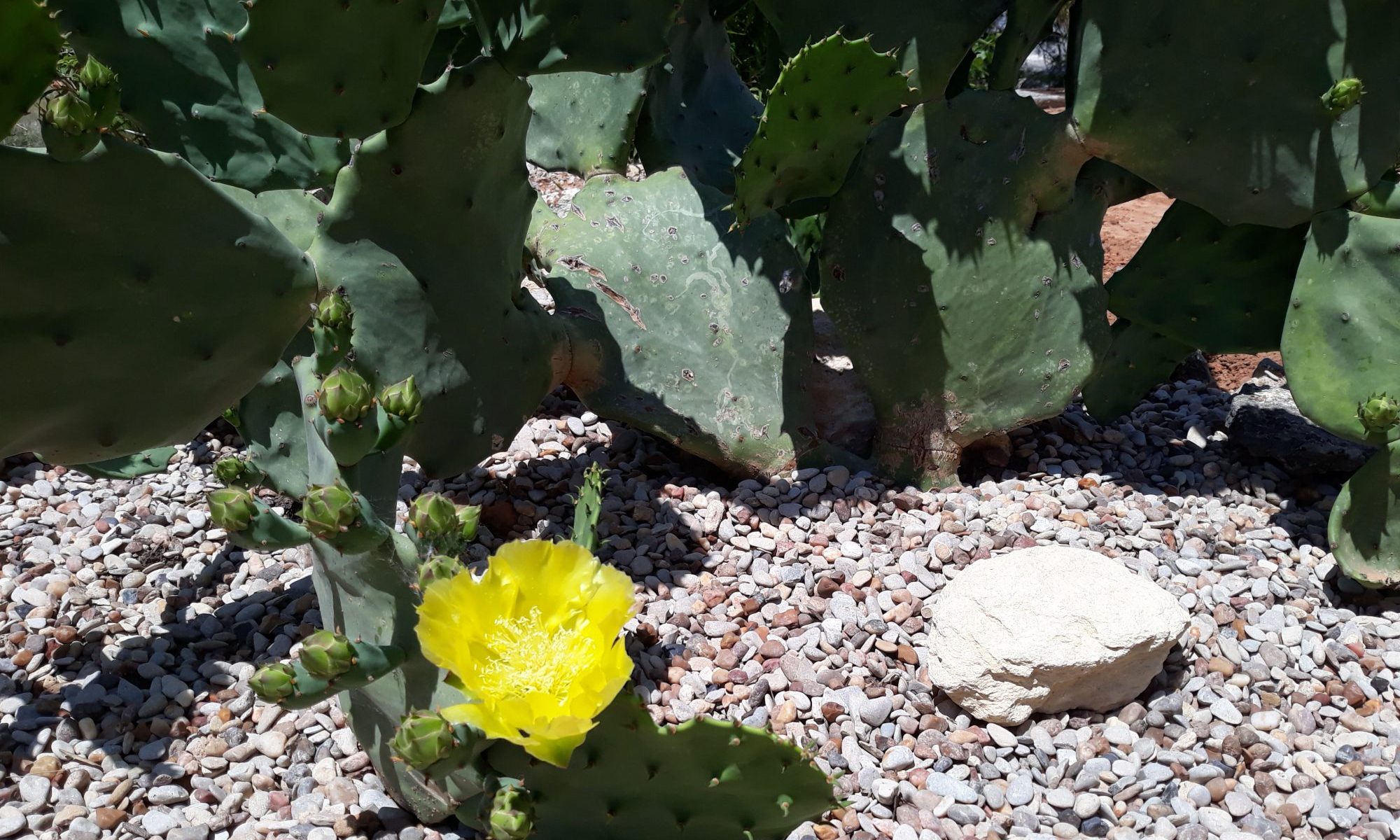
No signs marked its path until my uncle Jay painted a small board with an arrow and the family name and attached it to a fence post with baling wire. People simply referred to it as the road to the Manley farm, the first right turn after crossing the bridge. It was a quiet, dirt path that meandered past Mrs. Ellis’s house and abruptly ended at a gargantuan cactus patch about a block past the railroad bridge.  

  My visits to the farm were during the summer, and I usually stayed for three weeks. I vividly remember the chickens, a noisy five hundred or so troupe circling the farmhouse, scratching the dirt, and being ever-busy. I also remember that almost everything on that farm wanted to kill me. The Mountain Boomers, Coyotes, and Rattlesnakes were my first worry, so I carried my completely ineffective Red Ryder BB Gun as protection.

     My grandfather Jasper decided it was time for me to drive a car, as most farm kids did out of necessity. At ten years old, I had mastered the tractor well enough to tear down parts of his barbed-wire fence without a second thought. He believed I was ready for his old stick shift V8 Ford. My grandmother fretted about his failing eyesight and knew better than to step into the driver’s seat herself: driving cars and deep water haunted her dreams, and she wouldn’t face either. My grandfather needed a chauffeur, skilled or not, for his trips to the domino parlor in the town’s only cafe, The Biscuit Ranch. I was his first and only choice.

     My first excursion behind the wheel was chilling, at least to me. What sort of adult would let a ten-year-old kid drive a car? If Grandfather was apprehensive, he hid it well.

  Turning out of the farm gate, hitting a hard left, clutching and shifting to second gear, working the accelerator, and attempting to steer the metal beast without running us into a ditch was all I could handle. By the grace of God, we made it to the railroad bridge where the hobos gathered, so we stopped so Grandfather could visit a spell. He enjoyed chawing with the hobos, swapping stories, chewing and sharing his Red Man tobacco, and telling dirty jokes: things that weren’t allowed at home. One of the hobo’s remarked that I drove exceptionally well for a little kid, and he and his buddy could hitch a ride into town. My grandfather was out of chewing tobacco, so he invited the hobos into the back seat for our first trip to the feed store in town.

  I was feeling optimistic and a bit cocky about my driving skills by the time we pulled up to the highway intersection. Grandfather checked for traffic and, finding none, told me to hit it, which I did: skidding out onto the pavement in front of the large truck he didn’t see coming; my small PF Flyer-covered foot floored the beast and hit second into third gear, squealing the tires like a stock car driver. The hobos in the back seat laughed and said I was the best kid driver they had ever known. The Ford made it to the feed store; then, we stopped at the Domino parlor, where I was introduced as the main chauffeur for the Manley family. When my mother came to collect me toward the end of July, I was car-driving Jessie. My grandmother marched me to the barn while my mother threw the grandest hissy fit ever after her father bragged about my good driving.