Chapter 17. Back Home In Texas: Looking For That Marble Angel


“A young man is so strong, so mad, so certain, and so lost. He has everything and he is able to use nothing.” Thomas Wolfe

There is no winter like one in Texas. The cold comes with a Blue Norther. It roars down from Canada into the panhandle, gathering tumbleweeds and dust as it goes. It marches south across the flat plains to the Gulf of Mexico. The wet cold cuts deep, biting like the sharp edges of a frozen North Pole. Eskimos would take the first train back home. It is a harsh welcome for a man with tropical-thinned blood.

Johnny’s train pulled into Fort Worth as an ice storm blanketed the city. He had intended to walk two miles from the station. But then he saw a man slip and fall on the ice, and he called for a cab. The ride was rough. It had been over a decade since he faced winter, and now he recalled why he had chosen warmer places to call home.

The house appeared forlorn in winter’s cold, pale light, smaller than he remembered. It was worn out, resembling a sharecropper’s shanty more than his childhood home. He scanned the front porch; no marble angel welcomed him home. Thomas Wolfe was right.

Johnny and his parents left Fort Worth twelve years ago. They set out for California in search of work, to rebuild their lives and forge a future for their children. He was a boy cast into the vast unknown, adrift on the winds of a long journey. This adventure would shape the man he would become. His parents were like ship’s captains, guiding their small crew. He and his dog were the sailors. Their Ford was a proud schooner, and California was the mythical land where treasures lay hidden. They never discovered the chest, yet the treasures came to them in ways they had not anticipated.

Standing on the ice-covered sidewalk, Johnny saw a light in the kitchen window. His father, John Henry, sat at the table. A mug of coffee in his hand. A cigarette slowly burned in an ashtray. His bowl of oatmeal was there too. His mother was absent. She never woke early. Johnny stepped onto the porch and knocked. His father opened the door, and warmth rushed out. After briefly embracing, Johnny settled at the worn table with a steaming mug. The table had seen much—his parents’ fights, their choices, celebrations of childhood, and now his reluctant return. His mother was not sleeping; she had gone to an aunt’s house months ago.

John Henry, sipping his coffee, gave Johnny a brief rundown. Norma, his elder sister, married a schoolmate and now lives in Albuquerque. A second baby was coming soon, or maybe it had already come. John Henry couldn’t remember. His words were hard, filled with the bitterness of a man worn down. Bertha fought with the drinks. The magical elixirs had returned. She wrote letters to their friends in California, a compulsion. Sister Aimee was the one she favored. Norma had taken as much as she could shoulder and left with her husband. Johnny did not expect a joyful reunion, but this was a sorry state of affairs.

From Nehi Soda to Napping Camps: A Journey of Texan Creativity


I read an article in my local paper a few days back. It was about a youngster from Louisiana who fed his pet earthworms small amounts of nuclear waste. This made them glow in the dark and grow to the size of a state-fair Corndog. 

He is now raking in cash and hawking them on his own late-night infomercials and online. Every fisherman in the South wants a giant wiggling glowing worm. Every bass needs one. It seems the folks below the Mason-Dixon line will fall for anything.

My family tree in the “old country” was chock full of these sorts. Dreamers, schemers, and medicine show hucksters. All died poor except one.

Take my Great-Great-Great Uncle Nehi, a puny Scott with a sweet tooth. He spent his spare time in search of sugary delights. One night, while experimenting with various potions of colored water, fruit, and healthy doses of sugar, he invented “Nehi Soda.” It wouldn’t be summer without a grape Nehi and a Moon Pie, would it? His tinkering resulted in the all-American soda. Soda pop made him wealthy. He died young from a roaring case of Diabetes. Still, he died prosperous and happy. 

I always preferred Dr. Pepper, but my parents made us drink Nehi every year on the anniversary of his passing.

If it wasn’t for dreamers and hucksters, a beloved section of our economy would not exist. There would be no infomercials on television and no online pop-ups. Drug stores would have fewer aisles for valuable little as seen on TV products. People would wonder how to make fresh juice. They would also wonder how to cover that bald spot. How would they puff their hair out to look like a jelly roll? How do they do this while roaming around town in a snuggie blanket with armholes? Hanging upside-down tomatoes would not exist. How would the astronauts write upside down without that nice ballpoint pen? I get a little scared thinking about what life would be like without these gadgets.

This past summer, my wife and I enjoyed lunch on a Saturday. We dined at a quaint restaurant alongside the Guadalupe River in Gruene, Texas. It was hot—a real sizzler—100 degrees in the shade. We sat outside on their covered deck. We enjoyed the river’s tranquility and were cooled by the misters. 

My wife, Momo, full of food and a cold beer, drowsily commented,

“A nap would be nice right now.” I agreed, but there was nowhere to have a nappy except the hot car, so that idea was out.

I summoned our bill and sat staring at the beautiful river. I watched the tubers drift by and listened to the lull of bubbling water. Nature’s respite entranced and hypnotized me.

 When my bill arrived, the server placed an ice-cold Nehi Grape Soda on the plate, bound for another’s enjoyment. I hadn’t seen a Nehi soda in decades. 

This boy and the girls slapped me hard. The Nehi, the river, the need for a nap, and nature hit me simultaneously. I couldn’t speak and only croak out, “Nap camp…Nehi…nappy.” 

Momo thought I was having a stroke. She whipped out her cell phone and started to dial 911. She stopped when I finally said,

“Uncle Nehi’s Nap Camp.”

She knows that stupid look. It was something akin to holding my beer and watching this. She waited for the spiel, which I was overly anxious to deliver.

Grabbing her reluctant hand, I dragged her down to the river bank. She was scared, but I was excited—invigorated and drunk on the elixir of my vision.

“Why didn’t I think of this years ago” I yelled,

“It’s like the boy and his nuclear fishing worms. It’s not too late, seize the minute, mark your territory, piss into the wind for a change. People need to sleep, they need a good nap, it’s our right!”

I was so excited that I waved my arms and spun around like a tent revival preacher. I was on a roll. 

I yelled with the excitement of a five-year-old on a sugar high,

“Over there, we can build cedar posts and metal roof pole barns by those trees along the river. We can add ceiling fans and misters. Let’s put up some comfy hammocks. We’ll have an outside bar selling Nehi sodas, cold Lone Star beer and baloney, and rat cheese sandwiches. There is a small barn with little hanging beds for the kids and dogs. Also, there should be a separate napping barn for in-laws and people you don’t care for. Imagine napping in a hammock beside the calm river, life doesn’t get any better. Right?”

A grizzled old fisherman was sitting by a tree with his cane pole, listening to this opera of fools. He said,

“That’s not a bad idea, sonny boy. But Old Blind Mable tried that back in 1959. She lost her butt, You can’t put a business in a flood plain. This river flooded pretty well every year back then, just as it does now. Old Blind Mable had a mess of hammocks and people sleeping in them. The river floods and washes everyone down to New Braunfels. This happens whether they want to go there or not. If you got some money to piss away, go ahead. I’ll have a nap here until it rains. Then I’m heading to high ground.”

Momo looked at me and said,

“let’s go home and have a nap, Einstein.”

I was crushed, a broken man. My vision was a pile of raccoon crap. A crusty old river rat shot it down. My wife agreed with him. No Nehi sodas, ice-cold Lone Star in a hammock, or nap camp. Another lost vision.

As we returned to the car, a large dog came strutting down the street, pulling a kid on a skateboard. I watched them cruise by and thought, a big skateboard for two. Add seats and get some big dogs. Rent them to pull people around town. Now, that’s a moneymaker.

Caught by a Girl Scout: A Cookie Sales Encounter At The Walmart


Walking into Walmart this morning to pick up my meds, I was accosted, not by a panhandler or some poor schmuck with a sob story, but by a cute eight-year-old girl selling Girl Scout cookies. She wouldn’t take no for an answer and “had” all the answers. This little waif, hands on her hips and a defiant gleam in her eye, actually blocked my entrance into the Walmart. Standing in front of me like a little David about to punch Goliath, she meant business. I couldn’t bump her out of the way, so I was forced to engage her. It was all a grand scheme. Standing behind a table stacked with boxes of cookies were four Mama Bears, arms crossed, foot tapping, just waiting for me to decline. They all had that ” Just try to get out of this one” look on their face.

” I don’t have any money,” I pleaded.

” We take credit and debit cards,” she chirps. When did this start? Does every kid have a credit card machine in their backpack?

” I’m diabetic and could have a seizure,” I add.

“No problem mister, we have sugar and gluten-free,” she sneers.

I’m trapped. Twenty adults are staring at me as if I am a criminal. I hand her my Visa card, and she rings up five boxes of cookies and a twenty percent tip to boot. I take my cookies and walk to my car, fearing they will grab me again on the way out. I’ll be having cookies for supper.

My Local Grocery Store: Surprising Encounters with Father Frank


I visited my local H.E.B. a few days ago to do my grocery shopping for the week. Just so you know, I loathe shopping for groceries: negotiating the crowded aisles, pushing a cart that steers hard left, trying to read your shopping list, and dodging the blue hairs wanting to run you over. It’s more than any man my age should have to endure.

The geriatric inhabitants of Pecan Plantation have christened this store as their domain, and they make their own rules of engagement. I’ve had my toes run over, my legs pinned between a grocery cart and the dairy cabinet, rammed from behind for being too slow, and verbally assaulted by an 80-pound octogenarian because I got the last loaf of “dollar bread.” The old bag pulled out a flip-top Motorola cell phone and threatened to call 911 to report me, so I reluctantly handed over the loaf. She shook a bony finger in my face and growled, “And your little dog, too.”

Wednesday is the big day for the sample gals to push their wares on the shoppers. You can’t go twenty feet without a chirpy hostess wearing her “Pioneer Woman” apron wanting to stick a food sample in your face. Forget trying to get away, they track you until you stop and then thrust the toothpick impaled morsel into your protesting mouth. I unwillingly managed to taste sushi, sausage roll, carrot cake, cheese whiz, and wine before I could get to the first aisle, and by then, I needed a Prilosec, so I bought that as well.

After shopping, I proceeded to the checkout stand. As I rounded a corner near the book section, I bumped hard into a table, partially blocking the aisle.

Father Frank, the priest from my former church, Our Lady of Perpetual Repentance, sat behind a 6-foot fold-out table.
On his table is a stack of leaflets, bottles of water, and giveaway key chains shaped like the Virgin Mary. It’s been a while since I have seen the good Father, so we exchange our pleasantries. The missus and I changed churches about a year ago, choosing one closer to home.

After a brief howdy conversation, I asked Father Frank why he was staffing a table at a grocery store?


With a deep sigh, he explained,

“The church is losing so many of the flock that the diocese has put me here to drum up new members.”


I didn’t want to offend by asking delicate questions, so I said, ” I suppose you have to start somewhere, and the crowd here is about the right age to be finalizing their looming Heavenly travel arrangements.” He thought that was prolific and said he would use that phrase in a future sermon.

Now, more curious, I ask him about the giveaways on his table.
With a big smile, he explains,

“The bottled water is actually blessed holy water, bottled right in my church by altar boys. We figure if it’s good enough to drive out demons and christen babies, it is strong enough to cure the pallet and insides of foul offenses. It has a slight hint of mint, so it may be used as an alcohol-free mouthwash in a pinch. I drank a bottle a few days ago and was confined to the rectory bathroom for many hours. Nothing like a happy gut and pleasant breath you know”.


I said, “Yes, I know that feeling, and my cousin Beverly could have used a case of that for mouthwash if you know what I mean.” He said he did and gave me a bottle to aid in her deliverance.

The good Father is on a roll and excitedly explains that they have made considerable changes to his church to attract new members.
Handing me the leaflet to inspect, he proudly proclaims,

“look at these pictures! We now have a glassed-in section of pews with flat-screen monitors installed on the back of each bench so the young boys and girls can access their computer games and social media during the sermon, piped into the enclosure by a high-powered HD digital audio system. To save parishioners time, confessions can be uploaded via your home computer or smartphone, and communion has an optional wine flight that, for a nominal fee, comes with a small crystal goblet.


Am I not hearing him, right? Preteen kids gaming in the pews, computer confessions, wine tasting? How about the singing choirs, the fire, and damnation, the rock-hard pews that make your butt sweat and your legs go numb? A church service is supposed to have some misery, not comfort.

I tried to interrupt, but the good Father was in over-drive as he continued to exclaim,

“The most daring change, and the one I’m most proud of, is converting the adult Sunday school room to a sports bar for after-service football games. It’s a brilliant concept; come to church, walk across the hall, and watch the game on 80-inch flat screens. We call it “The Blue Nun Sports Bar,” with Mother Prudy’s help, I recruited some of the younger nuns from the Abby to come over and wait tables after their service. The sisters are doing a great job but grumbling about the miserly tips and are threatening to hold a sit-in.
I told them to stop offering a repentance prayer over every beer served, and the tips may improve. It’s best to reserve a blessing for food service only. Next thing I know, they are wearing tight-fitting T-shirts with “We Aren’t Your Mommas Nuns” on the back. I don’t know what gives with these younger sisters. The piercings, tattoos, and spiky hairdos are not what I‘m used to. Nuns are supposed to be stoic and mean, not cute and hip.


Well, I say,

” you’re certainly doing everything you can to increase membership, I may have to come to see you next Sunday. I need a good dose of religion and football.”
I shake the good Father’s hand, bid him adieu, and shuffle on to the checkout.

On my way out of the store, I noticed a table tucked in by the potting soil and flowers. Staffed by a young, tanned, rock star, poofy-haired, frock-clad fellow flanked by two bikini-clad girls, standing on either side of the table handing out free cold beer and hot dogs. The sign above them read “Rolling Rock Love and Peace Community Church Membership Drive.” I was thirsty, so I scooted on over. Looks like Father Frank may be in trouble here.

End Times in Texas: Snow Chaos at H-E-B


Backyard Bird Cafe at Casa de Strawn

According to the news gals on TV, the end of the world is upon Texas: snow is coming on Thursday and Friday, maybe a foot or more of the lovely puffy winter blanket. The problem is that the folks in this part of Texas don’t know anything about snow or how to deal with it. Schools are closing, businesses are having “End of Times” sales and liquor stores are running out of stock. This is as serious as the chicken flu.

Like every other fool in town, I went to the H-E-B for a few supplies: pork rinds, wine, beer, Cheeto’s, Wolf Brand Chili, A2 milk, and Ovaltine. I live in a hilly area, and if Momo and I get snowed or iced in, we cannot get out. Exceptions would be made for the hospital or the liquor store for hootch supplies.

I walked into an “End Times” scenario. The H-E-B, that pure Texas grocer, was in full pandemonium mode. The local police were arresting a mother for stealing food from an old woman’s shopping cart, her two young baby childs holding onto their mother’s legs as she was dragged out of the store. The store manager tased an old guy for ramming other shoppers with the store’s personal scooter.

Women were fighting, pulling hair, punching, kicking, and biting each other over toilet paper. Children ran wild down the aisles, grabbing cookies and any sugary treat. One kid stood atop the frozen food kiosk, throwing Red Baron pizzas at the snarling crowd below. It was like a scene from The Walking Dead.

I ran into my old pal Mooch. He had a garbage bag full of Pork Rinds and five cases of Pabst Beer, enough to see him through the apocalypse.

I found what I needed and went to the cashier; she said,

“take it, no charge, the machines have cratered.”

Arriving home, I found Momo cleaning our pistols and checking our ammo supply. She’s a crack shot, so I pity the fool who comes onto our property with intentions to steal. She’s excited about the Snowmeggdon and wants to make snow angels in our backyard. I told her the only thing we could make would be old people’s angels when we fall down and can’t get up and have to crawl back to the patio.

Reflecting on the Luanne Platter at Luby’s…It’s A Texas Thing, Ya’ll


Miss Luanne Platter

Maureen and I visited Luby’s Cafeteria last week for lunch. The smell of the food brought back memories from my childhood.

Back in the 1950s, in Fort Worth, there were Wyatt’s and Luby’s cafeterias. It was always a hard choice for the family. Luby’s had the best deserts, while Wyatt’s always served larger portions. My Dad usually chose Wyatt’s—more bang for the buck. It was the Eisenhower years, and things were tight. That’s back when he was still a Democrat. I was just a hungry kid.

We took our place in line, trays aligned on the metal rail. I scanned the extra-large menu board for my favorite dish but couldn’t find it. I panicked. The platter I came for and have always ordered for decades is “The Luanne Platter,” and they damn well better have it. My blood sugar was low, and I could feel a rant coming on. Maureen rubbed a few drops of “Peace of Mind” lotion under my nose to calm me. Then, in the lower corner of the board, I spotted it. ” The Luann Platter, half portions with a roll – $8.99.” What the hell! It used to be $4.99 with a roll, a drink, and a slice of pie? Retired folk can’t afford those prices.

I approached the smiling lady server and, using my best old man-controlled voice, said,

” I’m not paying $8.99 for a half portion that was $4.99 with a piece of pie the last time I ate at Luby’s,” and I slammed my fist on my tray for effect.

Still smiling, she replied,

” Well,, sir, then you can choose the children’s plate if you are over 65 and/or acting like a child, as of which you appear to be. You have a choice of chicken strips, a hot dog, or spaghetti with 2% milk and a fruit cup. That will set you back $4.99 plus tax. And by the way, The Luanne Platter has been $8.99 since 2001.”

Oh man, the little Pop-Tart was really messing with me now. Her smile had turned to a slight sneer, and her eyes got beady. I leaned over the glass barrier.

” Do you know who Luann Platter is, young lady?” I demanded.

” No, sir. Was she a famous cook or employee of the month or something?” she said. Good Lord, this girl is clueless.

By this point, two other line servers had flanked the young miss in case I went postal. I faced them and, with conviction, said,

” Luanne Platter is the most famous character on the television show, ” King of the Hill.” An animated series set in Garland, Texas, and this dish you serve is named for her. Don’t you know who Hank, Bobby, and Peggy Hill are?”

The three servers’ young faces showed social ignorance. It was useless to explain. I collected my platter, and we proceeded to the checkout.

We sat in our booth, eating our lunch in silence. The food wasn’t as good as it used to be. The good old days are gone for good. My turnip greens were Kale, the most evil weed ever cooked. Maureen’s chicken was rubber faux, and my corn muffin was doughy and awful. We can scratch this one off of our list.

Leaving the cafeteria, a fortyish blond woman in the Luby’s uniform held the door open for us. In a girlish voice, she said,

” Ya’ll come back now.” I noticed her name tag read “Luanne.”

Growing Up With Mexican Food in 1950s Fort Worth,Texas..My First Visit To Trashy Juanita’s


Childhood memories are like teeth; we all have good and rotten ones. If you grew up in Texas in the 1950s, you will identify with some of mine, or maybe not.

I was nine years old before I dined in a Mexican restaurant. I knew they existed because my father and mother enjoyed them, bringing home little mints and matchbooks touting the restaurant’s name. I got the mints, and my parents put the matchbooks in a jar in the kitchen. I dreamed that one day, I might visit one.

In Texas, Mexican food is part of life. It’s one of the major food groups; a boy cannot grow into a man of substance without it. Not having real Mexican food at that young age affected my evolution into a healthy young specimen. I harbored a nervous tick, stuttered sometimes, and had one leg shorter than the other. All those maladies were cured once I ate the real stuff. The medicinal qualities of Mexican food are exceptional.

For many years, I had eaten tacos at my cousin’s house, believing them to be authentic Mexican food. Sadly, they were nowhere near the real deal. Several times over the summer, my cousin Jok’s mother, Berel, would cook tacos and invite the families for a feast. Cold Beer and tongue-scorching Tacos. Pure Texas.

Berel would stand at her massive gas range, a large pot of ground beef, and a cauldron of boiling Crisco, heating the room to cooking temperature. She would drop a tortilla stuffed with meat into the witch’s cauldron, pull it out, and toss it to the pack of wild African dogs sitting around her kitchen table. The dogs, of course, were my cousins and me. My poor mother would leave the room. She could not bear to see her son eat like a feral child: growling, biting, snarling as we consumed the tacos like they were a cooked Wildebeest. That is what I consider Mexican food and proper behavior when consuming it.

Driving Northwest of downtown Fort Worth on Jacksboro Highway, right before you come to the first honkey tonk, you would find “Trashy Juanita’s” Mexican restaurant. Legendary for its tacos, frijoles, and cold Pearl Beer. It was also legendary for things my father would not mention until I was older. Gambling, shooting dice, and generally questionable behavior were part of the after-hours entertainment. It wasn’t on Jacksboro Highway for the view.

The owner of Juanita Batista, Carlita Rosanna Esposito, was not a trashy woman but a middle-aged Latin beauty with a bawdy laugh and sharp wit. The restaurant’s front yard adornments earned the name. Offended at first, she finally accepted her crown and wore it proudly.

Two rust-eaten pick-up trucks, one painted blue and the other yellow, sat abandoned in the front yard behind a cyclone fence. Pots of flowers decorated the fenders while the beds overflowed with vines and small flowering trees. Fifty or more chickens strutted and pecked around the yard, giving the place a barnyard atmosphere. Some saw a work of art, while others called it a junkyard that happened to serve great food.
In an interview in the Fort Worth Star-Telegram, Juanita claimed to be related to General Santa Anna, Pancho Villa, and the Cisco Kid, making her royalty in Mexico. The people of Fort Worth loved her, and she was considered a local character of some importance. She often dined with Ben Hogan and the Leonard brothers at Colonial Country Club.

Trashy Juanita’s was my first introduction to authentic Mexican food and all that comes with it.

My father sold one of his many fiddles to a buddy, and with the profit, he took the whole family to dine at Trashy Juanita’s on the Fourth of July, 1958.

Juanita had gone “whole hog” on this holiday. American flags hung from the front porch and draped the cyclone fence. Two small children sat in the front yard shooting bottle rockets at the cars driving on Jacksboro Highway, and the chickens were wrapped in red-white-and-blue crepe paper streamers. Very patriotic and also very redneck Texas.

A jovial Juanita escorted us to a large table beside the kitchen doorway. A waiter delivered tortillas, chips, salsa, and two Pearl beers for my father and grandfather along with large, frosty glasses of sweet iced tea for the rest of us. There was no menu; it was Tacos or nothing at all.

The unfamiliar aroma of exotic food floated on a misty cloud from the kitchen, filling my young nostrils and activating my developing saliva glands. A torrent of spit dripped from my mouth onto the front of my new sear-sucker shirt. My mother cleaned me up and wrapped a napkin around my neck. I was ready: I had my eating clothes on.
We decided the family would dine on a medley of beef and chicken Tacos, frijoles and rice, and guacamole ala Juanita. The waiter rushed our order to the kitchen.

The evening was turning out great. My father was telling jokes, the cold beer flowed, and a waiter walked past our table into the kitchen. Under each arm was one of the patriotically wrapped chickens from the front yard. My grandfather must have forgotten that two young children were at the table and remarked, “There goes our Tacos, can’t get any fresher than that.”

His remark went unnoticed until I asked my father, ” Dad, are we going to eat the pet chickens from the front yard?” He didn’t offer an answer.
I got a big lump in my throat, and my eyes got misty. My sister whimpered and cried like a baby, and my grandmother, seeing her grandchildren in such distress, shed tears in support. Mother gave the two adult men the worst evil eye ever. The mood at the table went from happy to crappy in a minute or less. So much for a joyous family celebration. We might as well be eating Old Yeller for supper.

There was a ruckus in the kitchen, yelling, pots and pans clashing, and the two chickens, still wearing their streamers, half-flew, and half-ran through the dining room and out the front door. The cook was right behind them but tripped over a man’s foot, knocking himself out as he hit the floor.

Standing in the middle of the dining room, Juanita announced that there would only be beef Tacos tonight. The two doomed birds had escaped the pan, and my sister and I were happy again. My father breathed a sigh of relief that the night was saved, and my grandfather bent down and polished the new scuff on his size 10 wingtip.

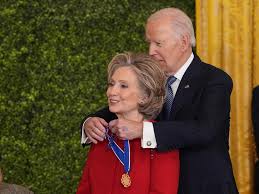
Everybody Gets A Medal


“Awww, come on man.”

I’m excited for the first time in almost four years: I might receive a Medal of Freedom. I got so worked up that Momo, my wife and a retired RN, had to put me on a Valium drip.

I penned a letter using my Parker fountain pen and had it delivered to the White House via FedEx special D. This morning, I received an email from someone who didn’t use spell-check or Grammarly: What is it with the youngsters working for the old guy? No one can spell.

The young lady, a staffer named Maya Sharona, said someone might consider my request and somebody might be circling back to me. Wow, there is a chance?

I thought my correspondence was professional and heartfelt. It went something like this:

Dear Mr. President Demento,

Since the once sacred Medal of Freedom is now nothing more than a Holiday Inn key-chain hung around one’s neck: the traitor who left behind our patriots in Benghazi receives the medal from the traitor who left behind our patriots in Afghanistan, a Nazi collaborator demonic Hell-Hound, a few half-assed actors, the grumpy old fashion designer, a fake science guy, the monkey whisperer, filthy-rich insider stock trader, backstabbing traitor warmonger, retired basketball player that gave women aids, talk show host, chef, fry cook, and Marty McFly get one, then I should too. Give my best regards to the babysitter.

Patiently waiting for your response,

I’m all jazzed up.

Phil

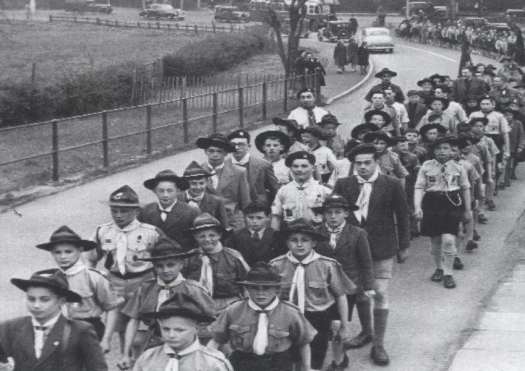
Addressing Border Issues: Boy Scouts Armed with Daisy Air Rifles


Troop of Texas Boy Scouts marching to the El Paso border.

There has got to be a better way to secure our border. Our illustrious governor of Texas sent the state National Guard to help the border patrol, but they were issued only one bullet, which is to be carried in their shirt pocket, like Officer Barney Fife. Now we have Venuswealean gangs attacking our officers and guards with knives, broken bottles, and tire irons, and our boys can’t shoot back to protect themselves.

Problem solved: send in a troop of Texas Boy Scouts armed with Daisy pellet rifles. Those pellets may not kill the invaders, but damn, they hurt, and those Boy Scouts always save the day. Be Prepared!

A Garden of Memories: My Time with Mr. Cohen


I met Mr. Cohen in the fall of 1958.

After spending two hours rummaging through a vacant lot along Morningside Drive, I’m dragging my rusted and barely operable Western Auto wagon full of discarded soda pop bottles home for counting. Redeemable for 2 cents each, the glass containers will yield the change I need for a few Moon Pies and perhaps an RC Cola, readily available at our neighborhood grocer.

Unfortunately, money for me is scarce. When I asked for a dime or even a few pennies, my parent’s stock answer was, “money? kids don’t need money. What in the world will you do with money? Go out and play.” As a result, I am habitually broke and maybe the only kid I know with an empty piggy bank and lint-filled pockets.

Three houses away from home, a stout man in white tee-shirt plants himself in front of my wagon, blocking the sidewalk and my path home. He is not a large man, and his manner is more friendly than intimidating.

I’ve seen him a few times before, mowing his grass, trimming a bush, or sweeping the sidewalk in front of his tidy home, which happens to be the envy of our block.

A black Buick sits in his driveway. A banker or a young doctor’s car if they can’t afford the required Caddie. Professional folks drive Buicks; the rest of the peons must drive Fords or Chevrolets, or in the worst case, a Plymouth or Studebaker. My family owns a Chevy, and my grandfather a Plymouth. One of my cousins drives a Corvette with factory air conditioning, but he is single and spends money like a sailor on shore leave.

The man extends his arm with a large hand attached. I lack proper adult protocol and stare at his appendage like a moron. It takes a moment to realize his intention, and then I reluctantly put my small hand in his. We shake hands, and he introduces himself.

Milo Cohen is the first adult male to shake my hand.

Unfortunately, my father or grandfather hasn’t found the time to educate me on the social requirements of impending manhood, so I am young and culturally ignorant. Until this time, my contact with the adult world has been limited to a few of my parent’s friends, my baseball coach, teachers, and relatives who view me as a noisy nuisance to be constantly reprimanded. At that moment, I grow up a little.

Mr. Cohen makes pleasant talk about the neighborhood. He and Mrs. Cohen have lived here for the past 8 years since they came to Texas from the old country. He speaks with an accent I’ve not heard, so I imagine he is not from Texas.

My collection of throw-away bottles catches his attention. I tell him it’s my way of making a bit of change for Saturday movies or a Moon Pie. He nods as if he understands my predicament, then excuses himself and walks to his garage, returning with a wheelbarrow full of empty soda pop bottles. There must be a hundred bottles stacked in rows upon rows. Coke, Pepsi, Dr. Pepper, Grapette, RC Cola, and Frosty root beer; all the best brands. Mr. Cohen says he has been saving them for years, and I could make better use of them. He graciously gifts me his collection of classic bottles.

Dumbfounded and grateful, I struggle to find my voice and finally manage to spit out a squeaky “thank you.” He accepts my awkward attempt, and we are immediate friends for life.

The following Saturday, I notice Mr. Cohen trimming the bushes in front of his house. I walk down for a visit, assuming that we are now friends and I can come onto his property uninvited to pester him. Instead, he welcomes my presence and appears to enjoy my childish questions. ” Why do you cut some of the roses off and leave the others?” I ask.

He explains, ” I cut the spent and almost spent blooms off to make room for the new ones. Always break apart the old blooms and throw the spent petals onto the ground because they become fertilizer for the plant.” This bantering about pruning goes on for a while, then we are on to other botanical mysteries. For example, I had no idea that the angle a stem is pruned reflects rainwater and deters rot, and cut correctly, it will coax the branch to grow in a specific direction. Finally, he asked me if I would care to learn more about plants? I accept his offer. Lifes education comes in different forms, at the most unusual times.

Mr. Cohen’s landscape is a picturesque postcard of beauty, and not by accident. His story is, as a boy, back in the old country, he learned the care of plants and all things botanical from his mother and father. But, unfortunately, he doesn’t say where the old country might be, and I am too polite to inquire.

My Saturdays and some Sunday afternoons find me at Mr. Cohens, assisting him with his gardening. But, unfortunately, I feel that I am more a hindrance than a botanical apprentice.

After a few weeks of instruction, he gives me an older pair of rusted pruning shears, warning that they are sharp and will lop off my finger if not used properly. Under his guidance, I prune my first bush, an Autumn Rose Salvia that has become unruly and obstinate. An hour goes by, and I finish the task. Mr. Cohen tells me it’s one of the better pruning jobs he has seen in a while. I know it’s a little better than a hot mess, but I smile like a drooling fool. “Next week,” he says, ” we will tackle a pithy Pitisporum.” He assigns human traits to his plants. Odd, but I like it.

A week before Halloween, my grandfather passes away. It was expected to happen sooner than later. Mustard Gas from the First World War is the likely reason for his cancer, says the doctor at the VA Hospital. No cure; his days were numbered from the moment he inhaled the gas. The trenches of France offered no retreat.

It’s my first funeral, and I don’t know how to grieve as expected. My grandmother and relatives are professionals; they should be paid for their performance, wailing and thrashing about sporting contorted faces for days. I feel the loss of his presence, but I can’t find a tear to shed.

Mr. Cohen, with my assistance, plants a Gardenia bush in our front yard in memory of grandfather. Then, Mrs. Cohen delivers a large basket of comfort food and a bottle of wine to our household. She tells me it’s what is done in the old country. Food for the comfort of the soul and wine for soothing the spirit. Her accent echos Mr. Cohens. She is a kind lady with sad brown eyes and unruly hair.

While digging the hole for the Gardenia bush, I notice a series of crude black numbers on the inside of Mr. Cohens’ left forearm. I’ve seen him with dirt to his elbows and never noticed the numbers before. It looks to be a tattoo. So, I ask him what they mean. He pauses momentarily, then says, ” those numbers are my phone number, so in case I am run down by a bus, the authorities will know to call Mrs. Cohen.” Makes perfect sense to me; everyone should be so considerate.

A few days later, I mentioned Mr. Cohens’ tattoo and his explanation to my father. He laughed, then took a moment and sat with me on the back porch steps, something he rarely does.

“Mr. Cohen,” he says,” is, from what I hear around the neighborhood, is of the Jewish faith. Before, and during the war, the one that I fought in, the Nazi’s incarcirated many millions of men, women and children in camps across Europe. They were treated horribly. Most died, but a few managed to survive and come to America to start a new life. I believe the tattoo on his arm might be his identification number. It will always be with him as a reminder.”

I know nothing of the Jewish faith, or the Nazi’s or of camps. However, public schooling teaches us about the Alamo and the Revolutionary War and not much about recent history. I know just enough to embarrass myself now, so I pledge not to question Mr. Cohen further. I am sad to know my friend endured that treatment. The adult world is a cruel one. I wonder if there is a way I can remain at this age forever?

Thanksgiving arrives with bitter cold and sleet. The trees drop what leaves remain, and Mr. Cohens’ landscape, within a few days, turns from green to hues of gold and brown. Winter is early this year, and my botanical apprenticeship is paused until next spring. He gives me a binder of handwritten gardening instructions to study. His book is much more challenging than any from school. I vow to be ready when March arrives.

Ten days before Christmas, and I have not seen Mr. Cohen. His car has not moved from its usual spot in his driveway. At night, there is one light burning in the kitchen. The rest of the house is dark and lonely.

One afternoon, after school, I knocked on their door. Although it is bitter cold, Mr. Cohen answers but doesn’t invite me inside. He says Mrs. Cohen is ill and needs her rest. I ask if there are any chores I can help with? He says removing and hauling the remaining leaves to the backyard compost pile would greatly help. He pays me a new quarter, knowing I am suitable for the work. I notice his eyes are rimmed with dark blue circles, and the pallor of his skin reminds me of my grandfather’s last days.

Christmas Eve arrives, and there are snow flurries in the air. Father stands on our front porch, smoking a cigarette and checking the weather. He finds a small wrapped package leaning against the front door jamb. It’s for me.

The Cohens gave me a shiny pair of pruning shears and leather yard gloves. I feel bad because I slipped a rather childish Christmas card that I made into their mailbox, being all I could afford. Crayons and construction paper only go so far. From what I am told, it’s the thought that counts. I need more soda pop bottles.

New Year has passed, and I have still not seen Mr. Cohen. School is back in session, and I am distracted by my studies and homework. But then my mother told me there was an obituary in the newspaper for Mrs. Cohen, and her funeral service was a few days ago. Why did I not know this? I am crushed.

I take my pruning shears and gloves and retreat to the front porch steps. It’s a bitter day, and my jeans do little to protect my rear from the cold concrete. But I am already numb, so it doesn’t matter.

The tears that couldn’t be found for my grandfather now flow for Mrs. Cohen and then for other things as well.

I cry for my sweet dog that my parents gave away when we moved without telling me. I call for my dead puppy. I yearn for my old neighborhood and my friends and home that was taken from me without explanation because my parents planted me in this hell hole of a neighborhood. I cry angry tears for my treatment from the snotty rich kids at my new school who called me white trash because I have patches on my jeans and an old winter coat. It all comes out at once. Finally, my final tears flow for my friend Mr. Cohen, who I know is suffering from a broken heart, and there is nothing I can do to help him.

At the end of February, I visit Mr. Cohen. He asks if I have studied my notebook and am I ready for spring gardening? Of course, I reply yes on all counts. It’s good to have him back, and I am happy to resume my newfound craft.

The weather is still cold, but there are woody shrubs to prune, flower beds to turn, mulch and compost to spread, and bulbs to plant; it’s an overwhelming task, but I enjoy every minute. My mentor noticed my happiness, and in return, it made him proud. He is back to his old self as much as he can be. March is a week away, and spring will not wait for dawdlers. Green blades of grass are poking up through his brown lawn; we had best hurry up.

April comes, and spring explodes. Mr. Cohen’s landscape, with my help, will have an award-winning year if he chooses to seek recognition from the Botanical Society of Fort Worth, but he is a shy man and doesn’t require accolades for his passion and craft. So, I, too, now share that passion.

In June, my parents announced that we were again moving. This time to Wichita Falls, Texas, not quite the end of the world, but almost halfway there. My father is starting a new career building homes and will no longer be a professional musician. Once again, within a few years, my life will be uprooted and thrown to the wind. I have no say, so I offer no resistance. It will be good to be away from that hateful school and this part of Fort Worth. I spend as much time with Mr. Cohen as possible, helping him with chores and tending his landscape before we leave.

Moving day arrives, the truck is loaded, the doors locked, and we follow the moving truck out of town. I said goodbye to Mr. Cohen that morning. He gives me additional pages for my notebook, his address if I find time to drop him a line, and his phone number if I ever get in a jamb. We shake hands, and I am gone.

A decade passes in what seems like a matter of months. I have graduated high school and live in Plano, Texas. My father is a successful home builder, and those miserable days in Fort Worth seemed a lifetime back. There is a family gathering in Fort Worth, and I take my own car, so I might leave early and visit Mr. Cohen. There were a few Christmas cards over the years, and then correspondence dwindled. I got older, and so did he.

When I pulled up in front of his home, I knew Mr. Cohen didn’t live there. A Volkswagen Bug and a station wagon are in the driveway—no black Buick. The landscape still looks cared for but is many steps below Mr. Cohen’s standards. The house trim is a different color. The large Sycamore tree in the yard is gone. But it was bound to happen.

A woman answers the door. She looks to be in her early thirties; I hear children from somewhere in the house. Her husband joins her. I introduce myself, explaining that I lived a few houses down for four years and was a good friend of Mr. Cohen, the original owner. The couple has lived in the house for five years and purchased it from Mr. Cohen’s estate. That explains the cease in correspondence. Unfortunately, Mr. Cohen is no longer alive.

The woman leaves and returns with a binder full of notes. A book much like the one I have. It seems Mr. Cohen left specific written instructions, with notes, letters, and sketches, for whoever buys his home. The new owners will care for the landscape for a minimum of five years, following his instructions in the book to the letter. The man says my name is mentioned many times in the book and that I was Mr. Cohens’ only apprentice. I felt they were fishing for a compliment, so I stretched the truth a bit and said, ” the landscape looks beautiful; I’m sure Mr. Cohen would approve.” It was a little more than a hot mess. The both of them smiled like drooling fools.