I wrote this post some years back, but I want to share it again with my faithful blogging friends. Halloween is not just for kids.
I did something last night that surprised me, and that’s always good. I watched ” Its The Great Pumpkin Charlie Brown,” the proverbial 1960s Halloween show.
Seeing the old Peanuts gang looking so healthy and young was comforting. Pig Pen and Linus are still my favorites. Charlie Brown has a defeatist attitude, so I never got into him. While watching that program, I told my wife, Maureen, that it rejuvenated my interest in Halloween and trick-or-treating. Things are going to be different this year, I declared.
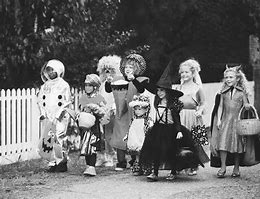
As a child, I fondly remember the anticipation of Halloween. When October 1st arrived, the kids in my neighborhood counted the days until Halloween. Back in the day (the 1950s), we celebrated Halloween on the actual date and did our begging on that evening, in the dark, even if it was a school night. We were tough kids back then, staying up late and going to school the next day. We didn’t need a weekend to recover and didn’t know what a safe room was. Trick-or-treating was damn serious stuff for us, and we were good at it.
In a fit of nostalgia, I announced to my wife that I would go trick-or-treating this year. She is going along with the idea as if I am joking. I tell her I am not, and she can hide and watch. As for a costume, I will wear a black t-shirt, a black jacket, jeans and sneakers, and possibly a Texas Rangers ball cap if the weather is inclement. I will not carry a glow stick or a flashlight; that’s for babies. If I can’t find a group of kids to walk with, I will trudge on by myself. I am determined to experience one last Halloween before that tall, robe-wearing dude with a sickle knock on my door. This has evolved into a bucket list thing, and I must see it through.
I have given this some thought and have worked out the perfect plan accepted in today’s society. When I ring the first doorbell, and a smiling man or woman answers, I will say trick-or-treat, holding their candy bowl. Their first reaction will be to say, “where’s your grandkid, or what the hell is this.” Either one, I’m ready. I will look them straight in their parental eye and say, ” I identify as a 6-year-old.” I will come home with a full bag of goodies or bond out of jail. It’s going to be a good Halloween this year.
The winds of war swept smoke over the Pacific and the Atlantic, shrouding America in the grim scent of burning flesh and shattered towns. No American could turn away from the truth that lay ahead.
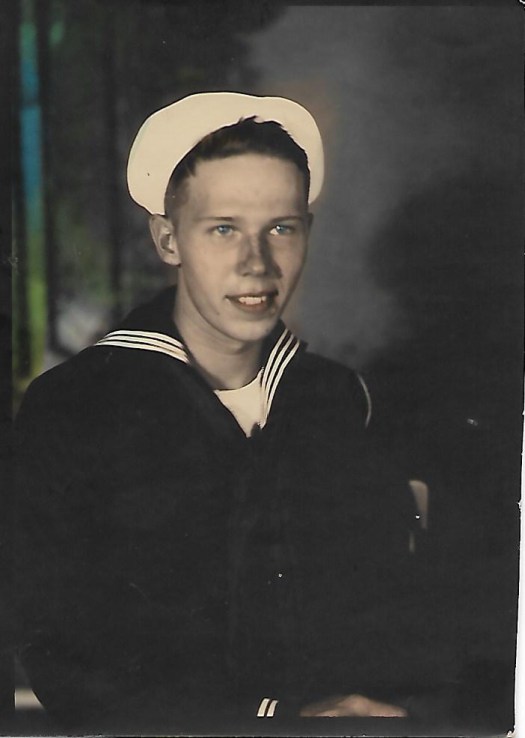
With his basic training done, my father, Johnny, boarded a troop ship headed for Pearl Harbor, Hawaii. The voyage lasted a week, maybe more. He met many young men like him, all seventeen, their fathers signing the papers for them to join the Navy. They were bonded by youth, their love for their country, and the call of duty that carried them forward.
In Los Angeles, my grandmother Bertha accepted, somewhat, that her only boy was going to war. She kept busy writing letters to him before he made it to the islands. Her frantic behavior brought back the elixirs. Sister Aimee’s healing failed, yet no one in the family dared to take her back for a tune-up.
After arriving in Hawaii and settling into his barracks, the post carrier handed him two dozen letters, all from Mama. He did not need to read them; he understood their essence: “Come home, I need you, I might die soon.” It was all self-inflated nonsense, and for the first time, he recognized it and turned away. From then on, he would burn or tear the letters into shreds, neither reading nor answering a single one. The umbilical cord, though long, had been severed.
The islands of Hawaii were beautiful, like a dream each young man held close. The mountains rose with dignity, green forests swayed softly, and the beaches called out their enticing embrace. It was difficult to accept that an island paradise could be in such turmoil. Yet, reality ousted the vision.
Johnny stood on the fantail of a destroyer, the sea raging with anger, trapped between the allure of paradise and the blood-soaked chaos of war, all within a day’s sail. He reconsidered his reluctance to write and penned a few letters: one to his mother, sister, and father, in case he didn’t return to safe harbor.
Hollywood portrayed war in a way that seemed clean and tidy. The soldiers and sailors donned uniforms that were always crisp, and wounds were mere shadows, with no blood to mar the screen. But for Johnny, the truth of war came crashing down on the third day out at sea. His ship, along with four others, escorted an aircraft carrier that was suddenly attacked by Japanese planes. They struck the carrier twice, and Johnny’s destroyer was caught in the crossfire, taking a torpedo hit that crippled its forward compartments. Though the ship still moved, it was ordered to return to Pearl for repairs. Fear didn’t manifest itself until he was awakened in his bunk, shaking and praying that he had made the right choice. At that moment, he realized that death was a real option.
My grandfather, John Henry Strawn, was a man who walked through the shadow of World War I, kill or be killed, and he did that to stay alive. This left his life marked indelibly by the echoes of battle and the night terrors of remembrance.
Like a capricious storyteller, as most newspapers were in those years, in the bustling heart of Los Angeles, the “Daily News” spilled forth tales of a world war that often danced precariously between the lines of truth and embellishment. John Henry read the papers, listened to the radio, and sensed the winds of conflict stirring anew: England, under the dogged leadership of Churchill, had already been forced to take up arms against Germany, and the very fabric of Europe was being torn apart by Hitler’s relentless march. The veterans he worked with and once fought beside in the first war, their spirits worn yet resolute, whispered with a shared conviction that Japan, lurking in the periphery, was quietly readying itself for an insidious alliance with the Nazis, as if the world were a stage set for a dark, unfolding tragedy.
Though a year too young to answer the call of duty, my father carried the heavy knowledge that at eighteen, the war might come knocking at his door.
With weary eyes and a resolve hardened by fate, Churchill was bartering and begging Roosevelt for machines of war, trying to keep the demons of Hitler from roaming freely on Europe’s fields and invading his island nation. With the earnestness and bravo of youth, Young Johnny approached his father, asking him to sign the papers letting him enter the fray at seventeen. No man who had walked the grim aisles of battle wanted his only son to face the specter of death on foreign soil, yet in a moment of bittersweet surrender, he found himself issuing that reluctant blessing, driven by a love that could not deny the call of his son’s heart. Convincing his wife, Bertha, would be a battle he dreaded and would likely lose.
Japan unleashed its first thunderbolt, and as the morning awoke over Pearl Harbor, Hawaii, our once-proud Navel fleet lay shattered on the waters of war, a haunting reflection of the chaos unleashed on that fateful December 7th, 1941. The weight of long-forgotten battles seemed to press upon the shoulders of the divine Emperor Hirohito as if the specters of ancient warlords propelled him towards an unseen abyss, a dark and uncertain fate simmering beyond the horizon. The gates of Hell swallowed Japan, and the gatekeeper kept them imprisoned until their foolish folly was completed.
Three members of the string band Blind Faith had fancied themselves sailors and enlisted in the Navy, much to the dismay of Johnny, Blind Jelly Roll, Pancho Villa, and Le’ Petite Fromage, who found themselves in possession of a hefty bag of bookings badly in need of some good ol’ resolution. To add a sprinkle of chaos to the mix, Pancho Villa, the loyal seeing eye dog of Blind Jelly Roll, had now joined the ranks of the visually impaired, having lost sight in his last good eye. Sister Aimee, ever the resourceful soul, splurged on a certified German Shepherd to take over the seeing-eye duties, much like the replacement engine in a clunky old jalopy. Pancho Villa, undeterred and full of moxie, took to his new post on a small platform fixed to the back of this new pooch’s harness, barking orders like a captain adrift at sea, blissfully unaware of his own shortcomings. More than once, they came perilously close to being flattened by a passing car, prompting Jelly to stuff Pancho into a papoose on his shoulder, urging the little rascal to button it. It was becoming painfully apparent that the music of the Blind Faith string band was about to fade into the pages of history, as every good tale must come to an end; their final curtain had been drawn, and boy, did it drop with a thud!
Le Petite Fromage, bless her heart, found herself smitten with the charming trumpet player of the church orchestra, a situation that surely raised the eyebrows of the good girls in the choir. Sister Aimee tied the knot between the two in their rather cramped dressing room as a way of keeping things discreet—or perhaps just to save on wedding costs. Off they scampered on an Eastbound train to Chigger Bayou, Louisiana, the very next day, with visions of a well-timed little one dancing in their heads like so many sugar plum fairies. Meanwhile, good ol’ John Henry, ever the dutiful father, marched with his son Johnny to the enlistment office, signing his life away in exchange for a rather dashing Navy uniform, all at the tender age of seventeen. As for Bertha, bless her soul, she took to her bed like a shipwrecked sailor, wailing and concocting her questionable brews that promised to calm her nerves but likely only added to her woes. There she lay, utterly convinced that her son was on an express boat to Pearl Harbor and straight into the chaos of World War II. The dutiful son had left one duty to embrace another.
Sleep is a sneaky little thing, often playing hide and seek; some nights, with the right concoction of pain medications, I drift off like a mighty oak, a tree that has finally decided to take a break from standing tall. Just the other night, however, the meds turned their backs on me, and there I was, half awake and befuddled, reaching for my trusty hot Ovaltine to lend a healing hand. With my vision askew from wearing the wrong pair of spectacles, I grabbed my Bible, thinking I’d find some solace in holy verses, only to stumble upon the most thrilling tales of storms, hurricanes, and the odd musings about planting under the October moons, eventually realizing that I’d accidentally opened the pages of the Farmers Almanac instead.
Many of my readers have been transfixed or shocked by the epic tale of the Strawn family, who, in a fit of brave lunacy, decided to traipse from Fort Worth, Texas, to Los Angeles, California, all during that notorious dust bowl of the 1930s. Now, as I wipe the dust from my fingers and finish this latest chapter, I find myself staring into the abyss of forgetfulness. Is my memory playing tricks—after all, reaching 75 isn’t exactly the golden age of recall—or did my father and aunt, long since departed, keep the family secrets tucked away like old socks full of silver coins? You see, I was but a wee lad, soaking up the stories like a dry sponge around the family campfire, spinning yarns until I waded into my twenties. I do recall reading the best of my grandmother’s missives to her siblings, which was the catalyst that started this literary campfire. So, onward, I go, armed with a mighty pen and a healthy dose of ancestral curiosity, ready to dig deeper into the sands of time! If I can locate my shovel.
Last week, Mrs. Momo and I set forth on a meandering journey to the sun-drenched sands of Padre Island, where we sought respite among the company of my son Wes, his wife Yolli, and my spirited grandson Jett, along with my oldest grandson, Johnathan, who had deftly forged a new life in Corpus after escaping the relentless grip of a desolate land rife with crime, situated just east of Fort Worth. Even after the passage of years, the name Dallas invokes within me the primal instinct to spit into the dirt or a sidewalk, a ritual harkening back to the deep-rooted traditions of Amon Carter’s Texas. My grandfather, a quintessential Texan in every sense, would erupt at the mere mention of that city, a sentiment that courses through the veins of my remaining kin. The few ventures I undertook into that sprawling metropolis during my youth were begrudgingly limited to solemn funerals or the obligatory excursions with my father, who charmed the patrons as part of the house band at The Big D Jamboree. But let us return to The Island, as the locals fondly refer to it. Our ambition was to embark on a fishing expedition in my son’s Gulf Coast fishing boat, cradled comfortably in the canal behind his home; yet, as fate would have it, life had scripted a different tale. The weather was hellishly hot, and now, knowing my limitations for physical abuse, the trip will happen another time. We did, however, find the opportunity to journey to Port Aransas, where we reveled in a banquet of seafood and marveled at the garish, towering temples—those three and four-story houses, not erected for the warmth of home but serving as mere rental coffins—sprouting up like unwanted weeds in a fishing village that had cradled myself and my sons childhood, now stripped of its charm and morphed into a pale imitation of Myrtle Beach. I remember driving every road in Port A during the late sixties with my surfboard secured atop my Korean War-era jeep, Captain America. That faithful jeep has since vanished, much like my surfboards, yet Wes has preserved a fine collection of vintage longboards. I will be embarking on these new wonder pharmaceutical supplements I catch glimpses of in commercials; perhaps I’ll summon the energy to paddle out and catch a wave, allowing me to once again sit atop the world. I can already hear the Beach Boys playing my tune.
With my grandmother, Bertha, now sober from her curious but legal elixirs, the Strawns greeted each day with the sun smiling through their kitchen window and robins launching into song like miniaturized opera stars: even Lady, the family Terrier, found a pal in the backyard squirrel named Little Nutbreath, a name that rolled off the tongue as easily as whiskey.
Now, the one pesky habit Sister Aimee couldn’t shake was her ceaseless missives to the sisters and friends she’d left behind in Texas. Each innocent hello morphed into a screenplay or a short novella, bursting at the seams with bravado but lacking even a whisper of truth from her ink-stained fingers. That woman could ruin a nice Parker fountain pen faster than a sailor could down a rum, and her right arm took on the brawn of Popeye the Sailor Man, ready to box anyone who dared challenge her. Norma and Johnny intercepted as many as possible, but the lion’s share slipped out of California like a secret lover in the night.
John Henry gifted Bertha a well-used typewriter, cheaper than the dozens of fountain pens. One novella, typed out on that clunky machine, landed on the executive’s desk at RKO Studios like a drunken sailor falling off a barstool. Bertha, bless her heart, sent the same tale to every big studio and received naught but indifferent glances in return. But this executive, searching for a breath of fresh air amidst the stale smoke of Hollywood hype, passed her little novella around like it was a shot of low-quality whiskey, but it might be drinkable. They extended her a contract—five hundred dollars, cold and hard, American cash. The family thought it was a cruel prank, perhaps RKO was tipsy, or just mean to a poor soul like Bertha. John Henry, ever the practical one, sought his boss’s advice, and the wise man assured him the offer was the real deal. They signed their names, returned it, and waited like a fisherman with a line cast out on a lazy afternoon. Days shuffled by, and then a courier showed up at the door, handing Bertha a certified check—a blessing or a curse, it was hard to tell. Could lightning strike twice in the same spot? Her tale, a wild ride of a detective couple and their scrappy little terrier turned into a screenplay and a film, but my grandmother, wise yet weary, never pocketed a nickel more, caught in the trap of a contract filled with weasel words.
Rantings Of an Elderly Man That Has lost all filters and doesn’t give a damn if I ever get them back….
Let me set this writ straight from the start: I am not a union supporter and never have been. When I was building multiple projects at the Mall Of America in the early 90s, the local labor unions threatened me and my family with death numerous times. Tires slashed late-night phone threats and everything you could imagine if my employer, a Texas company, and I did not comply with their Nazi commands. This was in Minneapolis, Minnesota, supposedly America’s friendliest state; if you believe that whispering downhome wolf in a sheepskin suit, Garrison Keillor, the hometown boy, made good, then exposed as the unvirtuous butt-pinching bad boy of small-town America.
The longshoremen are shutting down the country because a forklift driver’s six-figure income is insufficient. The average income for a hardworking American is 58K. And a man driving a forklift on a dock is worth over three times that? Since when did our country go full “batshit crazy?”I would guess it was around when the sainted Franklin D. Roosevelt was crowned president for what he envisioned as a lifetime. An elitist northerner sporting a lilted half-European accent that smoked his ciggies in a pearl holder and humped more willing women than JFK could dream of. He was a cad, but considering the almost canine looks of his genius wife, I could throw him a bone: Sorry for the apparent cheap joke.
Momo and I are trekking to the HEB tomorrow to stock up on whatever is left. The panic buying is upon us like a flock of city park Ducks on a single Junebug.: my condolences to the dearly departed ducks in Springfield Ohio. Ordinary women in far-too-skin-tight leggings fight in the aisles over toilet paper, face moisturizers, wine, Mountain Dew, and Rice A Roni, the San Francisco treat. Down here in Texas, we won’t put up with that crap in the Northeast. We have plenty of farms with fresh produce, hordes of cows, pigs, and fish, feral pigs, feral cats and dogs, and feral people, and if we don’t have it, we will invade Mexico and take it. Why not? They have already invaded us.
Did I say too much? Probably. If you have any significant complaints, call me at BR-549 and ask for Junior.
I’ve always believed in the raw strength of prayer. A small child kneels by the bed. A grown man kneels beside a dying parent. God listens. He may not grant all our prayers. There are reasons for this. A dying parent approaches the end, no cure in sight. It is time. We all have our moment.
Momo and I found ourselves at a prayer gathering in the park a week ago. The turnout was sparse, the heat oppressive, the air thick with discomfort. Yet, amid it all, the holy spirit lingered among us. Men, women, and children knelt, some on one knee, others prostrated on the pine needles, indifferent to the thoughts of strangers. The older ones were weighed down by age, needing to rise again; I understood. What struck me was the number of young folks present: teens and those in their twenties, engulfed in faith. I thought, why should I be surprised? This faith is not merely for the old; it is for the young, from the cradle to the grave and beyond. It filled me with a quiet hope against the dark forces that assail our nation—a small, emerging army ready to stand, bolstered by the strength of Michael, the Archangel. Change is coming; stay tuned.
I’ve recently sprouted a beard, and much to my surprise, not a single dark hair dares to intrude upon my snowy facial wilderness: the scruffy testament to my frothy mirth matches the proud hue atop my head, a delicate white crown. As a son of Cherokee lineage, I stood astonished, finding myself transforming into an old man with pearly locks in my forties. This change, I suspect, is the handiwork of my father’s Scotch-Irish heritage—a rowdy clan of kilted revelers who seemed to navigate life with laughter and a touch of mischief. They must have commandeered a ship, setting sail for New York, then onto Pennsylvania, where the merry-making reached promising heights. My grandfather would neither confirm nor deny the wild tales of our kin. This speaks volumes about my love for Irish Whiskey, while the Cherokee blood in my veins draws me to large, sharp knives. Hand a drink to an Indian, and trouble isn’t far behind. History whispers of how Little Bighorn ended for Custer. Loose chatter suggests that Sitting Bull and Howling Wolf snagged a wagon load of drink the night before the fray, bestowing upon the braves a reckless spirit. Had they chosen an early night with a hearty breakfast of Buffalo tacos, perhaps the bloody disaster would have been averted.
As a boy of nine, I dreamt of writing like Twain. In my innocence, I thought I was his spirit reborn, dropped into a different time: September of 1949, the last year of the baby boomer generation. With a Big Chief Tablet and a number 2 pencil, I set out to capture the simple chaos of childhood mischief. There were four of us, bold and reckless, stealing cigarettes, hurling water balloons at police cars, and fighting with the tough kids across the tracks. The local papers laughed at my tales as if a child’s imagination could not hold weight. My aunt, wise and educated, introduced me to Spillane and Steinbeck. Spillane turned me into a wise-ass, insufferable child, resulting in numerous mouth cleansings with Lifeboy soap. Steinbeck felt right—my family had lived a life like Tom Joad’s, migrating to California during hard times of the Dust Bowl and the 1930s. I had stories in me, maybe even a book. A therapist dismissed it as a childish fantasy, saying it would fade. Yet here I am, much older, still tethered to that innocence. Now, I’m in my Hemingway phase, my looks echoing the rugged man who lived wild in Cuba, writing furiously while embracing the chaos of life.
There is more sand in the bottom of my hourglass than in the top. I feel the end approaching. I do not wish to know the day or hour. I can only pray it is a good one, resulting in a trip to Heaven, which is better than the alternative. I am not the writer Twain, Steinbeck, or Hemingway was. They had talent, and they had time from youth to hone their craft and find their voices. Yet, I will still give it a try.
I realize my thoughts might carry as much weight as a thimble in a swimming pool, but at 75, I’ve witnessed more ups and downs than a cheap roller coaster. Lately, though, it feels like our dear old blue planet has taken a wrong turn and is spinning like a top on a greased floor, sending everything straight into a comical disaster!
Momo whisked me away to a swanky birthday supper at a place called 1890—how fancy! We had previously visited there, of course, but on that occasion, our wallets had us seated in the bar, indulging in a drink and a wedge salad that could barely fill a mouse’s stomach. This time, however, we plopped ourselves into the big boy chairs adorned with linen tablecloths and sparkling silverware that made us feel like we were pretending to be someone important. Our waiter—his name was a puzzler, something foreign that I couldn’t grasp, yet I distinctly recall his well-groomed beard and a whiff of patchouli oil wafting about him. It took me back to our youthful days as hippies in the 70s when that scent was all the rage with the hairy-legged hippie chicks. Momo went for a steak that could challenge a cow in size while I, with an empty wallet echoing my woes, settled for saltines slathered in butter and Tabasco—gourmet, I assure you! As we departed, stomachs full and wallet depleted, we spotted a black Greyhound-style bus parked at the courthouse. We mused that perhaps a country band was visiting our quaint township for a hearty meal. But lo and behold, when the door flung open, cats erupted like confetti, scattering everywhere—hundreds, I’d wager, taking over the square as if they owned the place. Nuns, dressed in their required uniform, handed out squeaky toys, kitty litter, and catnip to placate the new arrivals. Curious, I asked the driver what on earth was happening. With a grin, he informed me that the SPCA was orchestrating a rescue mission, whisking away all the cats and some distressed dogs from Springfield, Ohio, to Texas. It was, he said, a noble endeavor backed by a contingent of single cat ladies and a handful of purified nuns forever wed to their feline friends.
Football players are often regarded as the dimmest bulbs in the grand carnival of manly athletics, a parade of brawn where a surplus of testosterone is the secret sauce for getting through the heavy lifting of life. Picture, if you will, poor Travis Kelce, relegated to the bench like a discarded plaything, wearing the kind of woeful hang-dog expression that could bring tears to a Confederate statue. Ah, but even Neanderthals have their emotions, and it seems the Swift One is tucked away in her plush hotel suite, likely crafting a breakup ballad that might just capture the essence of their fleeting romance, a tale as old as time and yet as fresh as a morning breeze. Young love is a fleeting aura that departs on the fickle winds of gastronomical flatulence. He should have taken the strenuous advice of friends and whisked her off to a tar paper shack in deep Appalachia and kept her barefoot and pregnant with annoying little swifties playing small plastic Ukelales.
Tonight, I discovered that my pitching arm doesn’t work anymore. Listening to the debate, I couldn’t tell who deserved my ire. Trump could have done better, and Harris surely had the questions, possibly weeks in advance, so it wasn’t really a debate but a corrugated yuk-yuk party. I started scanning my den for objects to hurl at my flat screen. My Dallas Cowboys honorary brick would go through the set and possibly the wall, so that was out. Maybe a vinyl record album, but then I like them too much. A music CD, nope, I like them too. Maybe a sandal, nope, might ruin the footwear. So I threw an old Texas Highways magazine, and it bounced off: no power in my throwing arm anymore. Trump did bring up the Haitians eating people’s pets, which got a yuk from the moderators, but folks, that is true. I read that one Ohio grandmother watched a hungry Haitian eat her little Yorkie while she still held the leash. Haitians have a new dish, Kitty Tacos, which we’ve likely eaten before if you lived in Texas. I can’t take any more politics, so this will be my last post about the subject. Chapter 10 on Wagons Ho to California is about in the can, so stay tuned for that. May the force be with you…well, maybe not; Luke Skywalker likes Harris. Why did he have to go and ruin my Star Wars memories?


 Notes From The Cactus Patch