I wrote this story a while back and decided It needed a recall for those who may have missed it.
Pictured are Aunt Bee, Lester Munroe the IV, and Hunny Bee. Photo by Jay Sebring
My late father’s late Aunt Bee and her late sister, Hunny, had the most unique beauty parlor in town. Happy Texas was, and still is, not known as anything but a place you wind up if you get lost. In the 1950s, it was so small it wasn’t shown on road maps, so most of Texas didn’t know the village existed. The one gas station in town always had a father behind the wheel of a station wagon full of screaming kids and barking dogs, asking directions to anywhere but there. Any wrong turn within twenty miles always puts you in the middle of Happy.
In the 1950s, some oil tycoon from Lubbock started a bank there. The Happy Texas State Bank was born so the caddie-driving cowboy could embezzle from himself instead of the big banks. The feds couldn’t arrest him because he always managed to pay back the money before they could move in. Then, in the 1960s, a bunch of Hollywood boys came to town and made a movie. All the citizens were used as extras. Aunt Bee and Hunny found themselves genuine movie stars. Their beauty shop was used in many of the scenes.
The movie was about a little cowboy kid who lived on a cattle ranch with his grandparents after his Daddy, Jake, was stomped by a bull, and his Mama ran off with his Daddy’s brother. Little cowboy Gabby also got kicked in the head by a mean Shetland pony. He was a real slow after that, so his Granny had her ranch dog trained as a service animal to watch after her addled grandson so he wouldn’t wander off onto the prairie and get eaten by Coyotes or Dingo’s. However, there aren’t Dingo’s in Texas, it was a movie, so no one cared.
The dog hired for the movie was a relative of the famous Lassie, but it developed a prima-donna attitude and wouldn’t do anything but chase chickens and bite the movie-set boys. They were in a spot and needed a four-legged actor, pronto.
Aunt Hunny Bee happened to have a cattle dog named Lester Munroe the IV, who was a female. She named all her dogs after her favorite uncle, Lester Munroe, who got himself trampled to mush by a Brahma bull when she was a child. Being the only trained dog in town, Lester was hired to replace the star. Unfortunately, the movie script called for a male dog, so the poor canine had to wear a prosthetic penis and gonads, which didn’t jee-haw with Lester Munroe the IV.
Lester had to spend two hours every morning in make-up and then was sedated so the movie vet could apply the prosthesis, turning Lester Munroe, the IV, into a male dog.
After a few weeks of filming, Lester started hiking her leg to pee and humping the actor’s legs. The pooch was a nervous wreck.
Finally, Hunny Bee took poor Lester to her beauty shop and gave her a set and curl, one of the dogs’ favorite things, but it didn’t help; the dog had gone through the change. The vet decided to leave the prosthesis on Lester because it wasn’t worth getting a bit bit to try to remove it. He said it would eventually fall off.
After the movie crew left town, Lester Munroe IV pranced around town for a few days, as if she owned the place; he was the big dog in town. Then one day, it rained, the prosthetic gonads fell off, and the fake penis followed. After that, Lester Munroe the IV got moody and depressed and really squirrely, so the town vet had to give her Valium, Xanex, and some hormones to help her out. The picture above is after Lester Munroe the IV returned to the beauty shop for her weekly curl and set.
The makeshift sunblock my father had fashioned from a tarp and four cane fishing poles wasn’t beautiful, but it worked fine. Sitting under the contraption was my little sister, mother, and grandmother. I was eight years old. He and my grandfather were not far away, holding their fishing rods after casting into the rough surf. Whatever they caught would be our supper that evening. I wasn’t invited to fish with them; I was too young, and the surf too dangerous. Besides, my small Zebco rod was only strong enough to catch a passing perch.
The visit was our annual summer fishing trip to Port Aransas, Texas, a small fishing village on the northern tip of Mustang Island. I don’t remember my first visit, but my mother said I was barely one year old. After that, the Gulf of Mexico, the beach, and that island became part of my DNA
I’m an old man now, but I can recall every street, building, and sand dune of that small village. Over the decades, it became a tourist mecca for the wealthy, destroying the innocent and unpretentious charm of the town. Gone are the clapboard rental cottages with crushed seashell paving and fish-cleaning shacks. Instead, rows of stores selling tee shirts made in China sit between the ostentatious condominiums, restaurants, and hotels. I prefer to remember it as it was in the 1950s when families came to fish, and the children explored the untamed beaches and sand dunes.
Born in 1891, my grandfather was an old man by the time I was eight years old. Tall and lanky, with white hair and skin like saddle leather. He was a proud veteran of World War 1 and as tough as the longhorn steers he herded as a boy. He lost part of his left butt cheek from shrapnel and was gassed twice while fighting in France. Nevertheless, he harbored no ill feelings toward the Germans, even though he killed and wounded many of them.
On the contrary, he disliked the French because they refused to show proper gratitude for the doughboys saving their butts from the Krauts. As a result, he wouldn’t allow French wine in his home. He preferred Kentucky bourbon with a splash of branch water or an ice-cold Pearl beer. He left his hard-drinking days in Fort Worth’s Hell’s Half Acre decades ago. He told a few stories about the infamous place, but he was careful to scrub them clean for us youngsters.
His one great joy in life was saltwater fishing with my father, playing his fiddle, and telling stories to whoever would listen. The recounting of his early childhood and life in Texas captivated my sister, cousins, and me for as long as the old man could keep talking. He told about being in France but never about the horrors of the war. He lived a colorful childhood and, for a while, was a true Texas cowboy. Half of it may have been ripping yarns, but he could tell some good ones. My mother said I inherited his talent for recounting and spinning yarns. If that’s true, I’m proud to have it.
He could have been in a Norman Rockwell painting while standing in the surf, a white t-shirt, a duck-billed cap, and khaki pants rolled to his knees. I was in awe of the old man, but I was too young to know how to tell him. My grandmother said he was crazy for wearing his gold watch while fishing.
The timepiece was a gift of gratitude from his employer when he worked in California during the Depression years. A simple gold-plated 1930s-style Bulova. It was an inexpensive watch, but he treated it like the king’s crown, having it cleaned yearly and the crystal replaced if scratched. He called that watch his good luck charm and wore it when fishing for good juju. It was a risk that the salt water might ruin it, but he took it. He caught five speckled sand trout and half a dozen Golden Croaker that day, so the charm worked. Add the three specs my father snagged, joined with the cornbread and pinto beans my mother and grandmother cooked, and we dined like the Rockefeller’s that night.
The next few days were a repeat of the same thing. I rode my blow-up air mattress in the shore break and caught myself a whopper of a sunburn on my back. The jellyfish sting added to my discomfort. I was miserable and well-toasted, but I kept going, determined to enjoy every second of beach time. We returned to Fort Worth as a spent and happy bunch. The family would give it another go the following year.
Two years passed. One day, my father told me my grandfather was sick and would be in the veteran hospital in Dallas for a while. He mentioned cancer. I was young and didn’t understand this disease, so I looked it up in our encyclopedia and then understood its seriousness. One week, he seemed fine, sitting in his rocking chair playing his fiddle and telling stories, and the next week, he was in a hospital fighting for his life. His doctor said being gassed in the war was the cause of his cancer. It was not treatable and would be fatal.
Near a month later, he was not the same man when he came home. His face was gaunt; his body, which was always lean and wiry, was now skin and bone. The treatments the doctors ordered had ravaged him as much as the disease. My grandmother’s facial expressions told it all. There was no need to explain; I knew he would soon be gone. My father was stoic, if only for his mother’s benefit. His father, my grandfather, was fading away before our eyes, and we couldn’t do a thing to change the outcome.
A week after returning home, Grandfather found his strength, walked to their living room, and sat in his rocking chair. He asked me for his fiddle, which I fetched. He played half of one tune and handed it back to me. I cased it and returned it to the bedroom closet; he was too weak for a second tune. His voice was raspy and weak when he spoke, but he had something to say, so I took my position on my low stool, as I often did when he recounted his tales. I noticed his gold watch was loose and had moved close to his elbow. His attachment to the timepiece would not allow removal. It was a part of him. He spoke a few words, but continuing was a painful effort. My grandmother helped him to his bed. He removed his watch, placed it on the nightstand, and lay down. He was asleep within minutes. From that day on, he would sleep most of the time, waking only to be helped to the bathroom or to sip a few spoonfuls of hot soup. I would visit after school, sitting next to him while he slept, cleaning his watch with a soft cloth, winding it, and ensuring the time was correct. I felt he knew I was caring for this treasured talisman.
I came home from school on a Friday, and my grandfather was gone. I could see the imprint in the bed where he had laid, and his medication bottles and watch were missing from the nightstand. Mother said he took a turn for the worse, and my father took him back to the veteran’s hospital.
The following day, my father came home and told us my grandfather had passed away during the night. I noticed he was wearing his gold watch. I thought if the timepiece was such a lucky charm, as I had been told all these years, why had it not saved my grandfather?
Life continued on Jennings Street; for me, some of it was good, and a little of it was not. Father wore grandfather’s watch in remembrance and respect. He waited for the magic to come. He gave me his worn-out Timex, which was too big for my wrist, but I wore it proudly.
The magic of the watch began to work for my father. He acquired two four-unit apartment houses near downtown, fixed them up a bit, rented them out, and sold them. We then moved to Wichita Falls, where he started building new homes. A year later, we moved to Plano, Texas, where he continued to build houses. It appeared the good luck of the watch was working overtime. I became a believer in this talisman. The hard days in Fort Worth were well behind us now. The future held promise for our family.
On a day in 1968, riding with my father to lock his homes for the night, we had a long overdue father-to-son talk. I rarely saw him because of his work, so I welcomed the time. Had I thought about college? What was going on in my life? I played in a popular rock band, so that was a point we touched on. He didn’t want me to become a professional musician as he had been. I assured him this phase would end soon. He and my mother were worried I would be drafted and sent to Vietnam. We talked for two hours. He remarked that as long as he wore his father’s watch, everything he touched turned gold. My father was successful, so how could I doubt his beliefs?
In the summer of 1969, the band on the old watch broke while we were fishing for Kingfish in the gulf off Port Aransas. While gaffing a Kingfish, my father bumped his wrist against the side of our boat. The watch fell into the water, and in a flash, it was gone. He said that if he had to lose it, this was a fitting end, lost to the water his father loved so much.
I’m an old-school reader. An Amazon tablet sits in my desk drawer, but it has gone untouched for four years. Electronic devices don’t allow me the same experience as holding a book made from cardboard and ink printed on recycled paper. Technology is fine for some but for the written word.
It starts with the jacket. Most are now in color, printed on shiny paper, with the author’s name as large as the title, a nice photo or drawing, and a few lines of publisher praise to capture your attention and make you feel that the $30 or more you paid wasn’t in vain. It’s a dance of sorts, but our money has been collected, so it’s best to continue the waltz.
Then comes the preface or the dedication to loved ones, friends, or contributors. Some are short, sweet, and curt and fail to credit the deserved; others ramble on until I lose interest.
Truman Capote snubbing Harper Lee’s dedicated research with “In Cold Blood” comes to mind. A few excluded words of thanks ruined a lifelong friendship. He wasn’t the first, but his pettiness was unforgivable.
I notice the typeset and spacing information, the font, the Library of Congress notes, the printing dates, and then the first paragraph, which sets the tone for the next few hundred pages or more.
Ernest Hemingway said a book should begin with ‘one true sentence.’ He knew it was a waste of the author’s and their readers’ time if it didn’t. His advice has taught me well.
My wife, Momo, a Registered Nurse, retired last August. Soon after, she underwent major back surgery, and during her recuperation, she re-discovered her love of reading. Now, instead of watching television until late hours, we both retire early, prop ourselves up on our bed pillows, and read our books late into the night.
I recently revisited ” In Cold Blood,” Capote’s masterpiece that so affected his life that he never fully recovered to write another novel. I enjoyed it more this time than I did thirty years ago. It was a butt-whooping to the end. Every chapter contained a piece of his soul.
Anthony Doerr’s two newest novels are commanding reads. My wife and I have read both, and she is on the verge of starting his third. I am reading Amor Towels and find his storytelling to be in the style of Steinbeck and Hemingway. I was once a James Elroy fan, but his last two books were an effort from start to completion. He is on my rest list for now.
Besides ” Fun With Dick and Jane,” the first real books I read were Mark Twain’s ” The Adventures of Tom Sawyer” and then his follow-up “The Adventures Of Huckleberry Finn.”
I come from a family of non-readers, so my love for books comes from somewhere, possibly my elementary school librarian or my father’s sister, Norma. She was a voracious reader who leaned toward romance schlock, Cormack McCarthy, and Micky Spillane noir. I am thankful to both for their influence and guidance. It was Aunt Norma who introduced me to Thomas Wolf. I returned the favor with Joseph Heller and Kurt Vonnegut.
My wife and I are relieved that the year 2024 is behind us. It won’t be missed. No tears from this household, only two middle fingers pointed skyward. Our ages allow us to forget what we wish to and remember the best. I believe 2025 will be our year of reading dangerously. We may, holding hands and a frosty cocktail, step out onto that literary ledge and take the leap, attempt to leave our comfort zone, and take a chance or three. Time is of the essence, my eyesight is on the fritz, I have a blister on my thumb, and the books keep coming.
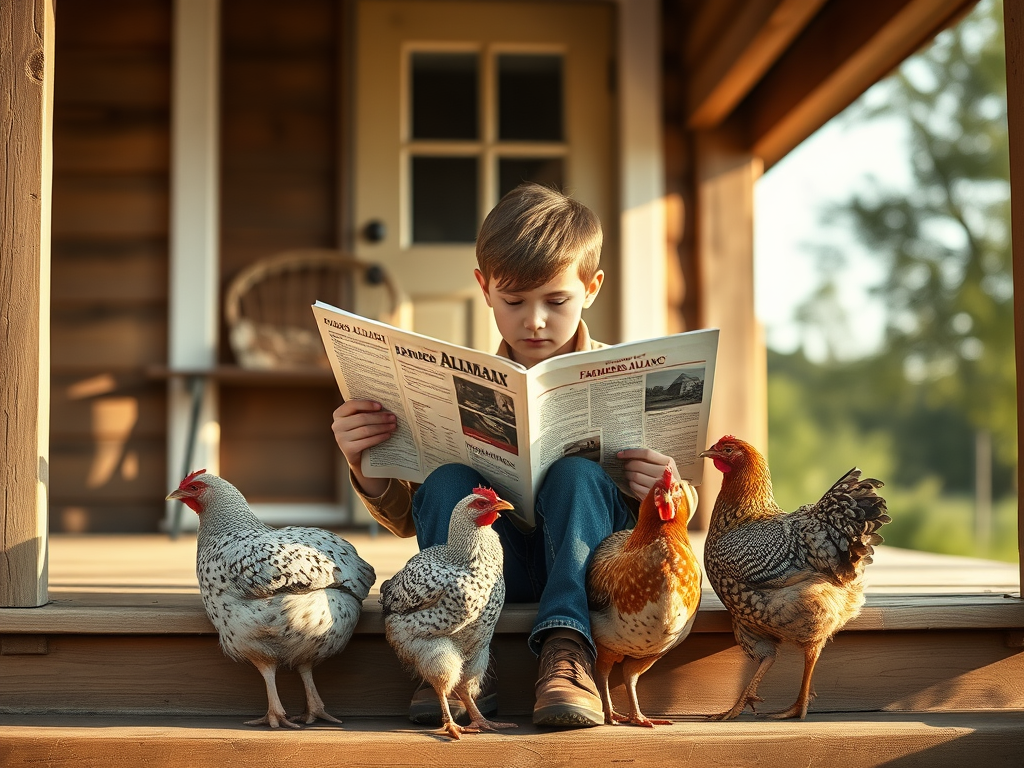
I have been reading the revered Farmer’s Almanac for the past six months, and it’s surprising how accurate and sometimes inaccurate it can be.
The Almanac and I go back a long way. My Grandparents introduced me to the book when I was six years old and spent summers on their Texas farm trying to convert myself from a city slicker to a country boy. They were firm believers in the power of its predictions, although they were let down more than a few times.
This fine morning, as I drink a cup of java and read the pages, it tells me the summer in this part of Texas is forecast to be cooler and wetter than average. I knew it to be BS the moment I read it. No summer in Texas is cooler and wetter. Every day is a mix of misery and suffering, topped off with biting and stinging bugs. We are the land of burn-your-ass-off heat, and everything planted or growing wild turns brown and shrivels away by August; the bugs are with us until the first freeze. It was a bit wetter in July, but the temperatures are still around 95 degrees, making you feel wrapped in a hot, wet towel and sitting in the devil’s sauna. Unfortunately, they missed that forecast by a few hundred miles.
There is no mention of the Corona Virus and all the hoopla that came with it. So, how did the staff at the Almanac not know about this bug?
Back when the Farmers Almanac was in its heyday, rural folks depended on it for farming, ranching, and day-to-day living. The book was also full of home remedies, potions, poultices, plants, and hocus-pocus to treat their maladies. Unfortunately, doctors were few, and most families lived their lives without seeing one. As a result, most country folks were born at home and also died there.
The Almanac takes great pride in “do it yourself” folk remedies and contains dozens of them, along with questionable ads for elixirs, oils, good luck charms, H’aint Bags, and voodoo dolls. Grandmother used them all. I knew if I became ill while at the farm, all of these would be administered. My Grandfather was strangely healthy for his age. He knew better than to get sick around his wife. If he was ill, no one knew it.
It was bound to happen. In the summer of 1956, I am spending my summer on the farm. Fever and chills arrive during the night. My temperature is off the charts, and I am shaking like a hound dog passing a peach pit. Grandmother calls in her friend down the road, Mrs. Ellis, for a second opinion. The two-country alienists stand at the foot of my deathbed in deep consultation.
It is decided. I will receive the complete treatment reserved for the rare “Raccoon Flu” and possible “demonic possession.” Treatment will commence immediately.
The two women dragged me from my sickbed and thrust my aching body into a cold water bath for an hour. Grandmother gives me two doses of salts, three teaspoons of “Reverend Moses Triple Strength Root Tonic,” and a double-dog dose of “Dr. Sal’s Really Good Opioid Extract.” Then, my shivering torso is coated with “Sister Amy’s Pure And Blessed Olive Oil” from the banks of the River Jordan. Next, I am wrapped like a mummy in a white cotton blanket; a mustard poultice is glued to my chest, and a burlap bag of foul-smelling something is tied around my neck. They place me in bed, covering me with 6 quilts, and two speckled hens are brought in to sleep in my room overnight. Grandmother says I will be well by breakfast. At this point, I am praying for death during my sleep.
Dawn brings a cool breeze into my sick room, and I am awakened by one of the spotted hens sitting on my chest. She is clucking softly as if to say, “it’s time to get up; you’re well now.” I realize the hen is right; I feel like a new kid. No fever or chills, and I am hungry for a fat biscuit and my Granny’s country gravy.
I follow the two hens down the hallway into the kitchen. Grandfather sits at the breakfast table, reading the Almanac. Without looking up, he exclaims, ” going to rain today, The Almanac says around noon.” The last rain the farm had was over a month ago; what does the stupid book know.
Granny tells me to take the two-spotted hens outside and feed a big handful of laying mash because the Almanac said mottled hens will have an excellent laying week. She doesn’t ask how I feel; she knows her hocus pocus worked.
I head back to the farmhouse for noon dinner after spending the morning building Horned Toad houses out of pebbles and sticks. We sit at the kitchen table, munching on fried chicken, when a loud clap of thunder shakes the house. Granddad, without looking up, says, “Yep.”
A brand-spankin-new series for folks that want to know what a Texan thinks
The Texan
Mr. Bromide S. Eltzer from Arizona sent me an email.
Q: Mr. Texan, my wife and little girl have taken over my stereo Hi-Fi setup. They play the same Taylor Swift album all day long and it’s driving me to drink, and I’m losing my faith in humanity. Do you have any thoughts on how to handle this situation?
Texan: First off, Mr. Bromide, Taylor Swift’s music is not real music; it’s a cartoon soundtrack. I can see your little one getting hooked on this nonsense, but your wife is another can of fishing worms. Are you drinking beer or whiskey? The quality of hooch does make a difference in how this stuff effects you. I prefer Redneck Riviera Whiskey out of Nashville, give that a try. Go find some good vinyl records by Creedence, Patsy Cline, Merle Haggard or Johnny Cash, and when they’re not hogging your turntable, tie them up with some good rope from the Home Depot, and make them listen to some real music. If that don’t work, invest in a nice Bass boat and start spending time on the lake or river. If that doesn’t restore your faith, say a prayer to Saint Willie, and eat three Whataburgers, my son.
I wrote this recount a few years back and figured it might need a little sunlight shined on it.
We’ve been on North Padre Island for the past few days, visiting my son and his family. I’ll be 72 on the 17th and figured I owe myself a bucket list item: surfing one more time.
Wes, my son, also a surfer, was accommodating and borrowed a new, all-foam board that he thought I could handle. My grandson has a much shorter board because he is 8. The beach at Padre Island was the most crowded mess I have ever witnessed. Granted, the last time I was on a Texas beach on Labor day was in the mid-90s, and that was at Port Aransas. This was beyond stupid. Thousands of people parking their cars near the water, getting stuck in the sand, hogging any sliver of a spot to reach the water. After searching for an hour, Wes found a small opening and managed to squeeze his truck into the slot.
Beach chairs are unloaded, cooler and surfboards ready, so my grandson and I grab our boards and wade into the surf. As it turns out, the surf today was terrible. Slushy with no good form. We struggled to find a decent wave.
I paddled through the shore break past the first sand bar and tried to sit on my board. Nope, that wasn’t happening. I needed a real fiberglass and foam board. I took off on a wave and couldn’t stand up: nope, that neither. The head injury from two years ago is most likely the culprit. No balance and no equilibrium, and less good sense. Being 72 didn’t help my quest. I was a good surfer in the 60s and 70s, and I figured it was something that couldn’t be forgotten. Wrong on my part. The defeat was at hand, and I took it willingly.
Humility hung on me like my wet tee-shirt. I slow walked it back to the beach. I laid the board down and told my wife, Momo, that I could scratch this one off the bucket list. Sometimes your memories are bigger than your brain.
I wrote this story in 2021. It’s a real-life encounter near my Grandmother’s farm in Santa Anna, Texas: I was seven years old.
I was told not to go near the railroad tracks or the bridge over them; Hobo’s lived there. My Grandmother warned me daily of the consequences, which were all bad. Scary men, vagrants with no home and no family, they were just there, alone, living their life as best they could. I was seven years old and unafraid.
The dirt road along the tracks took me past Mrs. Ellis’s shack of a home. She didn’t live much better than the Hobo’s, but she had a home, a warm dry bed, chickens, and a dog, so she was poor but stable. She waved as I walked by, and then, as I got a few yards past, she took off to my grandmother’s farmhouse to tattle on me. I knew I was in trouble even before I got to the bridge. I considered turning back, but no, I needed to see this through.
As I got closer to the bridge, I could see there was a lone figure sitting on a bucket next to a campfire. I was puzzled because Granny always said there were dozens of those evil men under the bridge. Now, there was only one, and he appeared to be old and not much of a threat, sitting on his bucket cooking a can of something in the campfire. I approached him but with caution and a bit of fear. The Hobo waved me over. He was an old black man with hair as white as south Texas cotton. His clothes, mostly rags, hung on his frail frame; he resembled the scarecrow in my Papa’s garden. Next to him was a Calico cat, curled up in an old felt hat, purring and licking its paw. In the fire was a can of pork and beans cooking on a flat rock and bubbling like a witch’s brew. I sat crossed-legged on the dirt next to him.
” Does your Granny know you are here?” he asked.
” No sir, she don’t know, and I’m in a heap of trouble.” said I.
He smiled at me and said, ” It’ll all be good, your Granny knows old Bebe. I used to do odd jobs for her and your Papa and she paid me good and always fed me her heavenly biscuits and gravy. She is a wonderful lady, your Granny.” I couldn’t disagree with that, so I smiled back.
He took a worn-out spoon, heaped a large serving of beans into a dirty tin cup, and handed it to me. I was hungry. We ate our dinner together without talking. He gave the cat a spoonful of his beans. It was then that I noticed he had given me most of the can, and left little for himself. This old Hobo is living under a bridge with hardly any food and nothing of value to his name, except maybe the Calico cat, which he shared with a stranger, possibly his one meal of the day. In the mind of a seven-year-old, this seemed normal.
Bebe told me a little about his life and how he came to be a Hobo. I shared what little life experience I had accumulated up to that point. We laughed a little, and then he said I had better head back to the farm. We shook hands; I scratched the cat and walked down the road towards a switching I knew was coming.
My Granny took my explanation well. There was no switching my butt this time and no dressing down. As I walked through the screen door and headed for the barnyard, she said, “Sometimes the folks who have the least share the most. Remember that.” I have.
“We got ourselves into so much trouble that our Mothers would take shifts whooping everyone’s butt just to give the other moms spanking arm a break.” It was 1956, and that’s how it was for my neighborhood pals and me.
Summer was our best and our worst season because there was more playtime outside, increasing the opportunity to get ourselves into predicaments that never ended well. Our moms didn’t buy into that “Dr. Spock crap.” I would bet that none of the moms in my neighborhood ever heard of that weirdo. There was no negotiating out of corporal punishment, and trophies were non-existent.
My neighbor, Mr. Mister, was the neighborhood scientist and inventor; our very own Mr. Wizard. Not the dweeb on television, but a real-life mad scientist with a movie star wife.
We kids would spend our weekends sitting underneath his Mimosa tree, watching him build his oddball inventions in his garage that doubled as his laboratory. Looking back, he was more a “mad scientist” than an inventor. The only thing missing was the Frankenstein monster lumbering out of his garage.
Mrs. Mister, his Hollywood-looking wife, would keep a steady supply of cold Kool-Aid and cookies flowing. She closely resembled the movie star Jane Mansfield but could bake a cookie-like Betty Crocker. Always with a frosty martini in one hand and a cigarette in the other, she was the dream Mom none of us had. No butt whooping’s around the Mister household, no matter what we said or did. So we were free to be our feral selves.
Some of Mr. Misters’ inventions were downright crazy. My two favorites were his motorized and drivable charcoal griller and the half-size rocket that took Fred and Ginger, his wife’s twin poodles, into the stratosphere, returning the two. “Dog-o-nauts” small space capsule safely to earth; via an Army surplus parachute.
After the spectacular launch, which also torched the Misters’ back yard and part of their garage, Mr. Mister was paid a visit by the F.B.I. and the Air Force. Who in the world knew it was a national security violation to build and launch a solid-fuel rocket from your backyard?
That incident caused Mrs. Mister to suffer a minor breakdown, so no more using the pooches.
As in most neighborhoods, there are disagreements with other groups of kids. A gang of mean and nasty punks lived across the railroad tracks from us. They were older, bigger, and made our lives miserable. We called them “The Hard Guy’s.” A few of them carried switch-blade knives that had been smuggled in from Mexico. We all attended the same elementary school and suffered their daily attacks during the school year; now, they were sneaking into our neighborhood, cutting our bicycle tires with their switchblades, egging our houses, and stealing our goodies. So we devised a plan to get even, and of course, it involved our hero and mentor, Mr. Mister.
Mr. Mister said that he had experienced a similar gang of kids growing up in East Los Angeles. So he suggested a way to retaliate using every kid’s favorite firecracker, “Cherry Bombs,” delivered by an ancient invention called the catapult. Wow! what a guy. With his help, we built a small wagon-mounted catapult in a few hours. It was a beaut. He donated a shoebox full of the little bombs for the cause.
The first Cherry Bomb we launched from the weapon went 50 ft and exploded; not enough weight. So Georgie suggested putting a Cherry Bomb inside a sidewalk biscuit, like the ones his sister and her friends make.
For the folks that didn’t grow up in the 50s, the “sidewalk biscuit” is purely a kid invention native to Texas. It’s made by putting a large glob of dough on a red-hot 250-degree sidewalk and letting the heat do the rest.
We stuffed a Cherry Bomb into a fist-size glob of dough and placed it on my front sidewalk. Within an hour, we had our weapon of mass destruction. The hot concrete produced a biscuit-bomb the size of a grapefruit with a beautiful golden crust. Georgie tried to eat one and chipped a tooth.
The test shoot was a success; the biscuit bomb flew about 100 yards and exploded as it hit the ground; perfect. We were ready for revenge. Mr. Mister beamed like a proud Father.
Word in the neighborhood was that Chucky, the leader of the “Hard Guys,” was having a backyard birthday party, and his gang of hoodlums and their families would be attending. Unfortunately, we also learned that a few of our neighborhood girls would be there, which made them traitors to the cause. We tried to warn them without revealing our battle plan, but, oh well, they will be sorry when the crap hits the fan.
At dusk, our small group of commandos, wearing our best Army surplus helmets and packs, pushed the catapult to the edge of the railroad tracks. The party was in full gear, Elvis was on the record player, parents were dancing, kids were yelling, and a clown was making balloon animals; we could smell the hamburgers cooking, reminding us that it was supper time.
Skipper, our math wiz-kid, calculated the trajectory and distance with his father’s slide rule. Georgie loaded the “Biscuit Bomb” into the catapult pouch and then pulled a can of Ronson lighter fluid from his pack and doused the weapon. Countdown from five to one, I lit the fuse and the soaked bomb and pulled the release lever.
The “Flying Burning Biscuit Bomb” sailed high and long, leaving a trail of black smoke and flames as it soared toward its target. We gasped in awe at the beauty of our weapon.
The first biscuit bomb bounced once, landed on the charcoal grill, and exploded. The adults sitting nearby were coated in charcoal-broiled hamburger patties, weenies, and biscuit chunks. A piece of hot charcoal set Chucky’s mom’s beehive hair-do on fire, and his father wasted two cold Schlitz beers dousing the flaming mess.
The second “biscuit bomb” blew up “Squiggles The Clown’s” prize table, sending balloon animals, Captain Kangaroo penny-whistles, and birthday cupcakes in all directions. It was pure pandemonium at the party place.
The third bomb was a dud. We were in the process of loading a fourth when the “Hard Guys” came running towards us, followed by their fathers. We had no plan of retreat, no “plan B.” So we did what any commando would do; dropped our gear and ran like hell towards Mr. Mister’s back fence. Reaching the fence, we vaulted into the backyard and to safety.
Mr. Mister knew the attack was a bust, and he gathered us around the Mimosa tree. Mrs. Mister gave us a cold glass of Kool-Aid to calm us.
The “Hard Guys” and their fathers stood at the back fence yelling obscenities. Naturally, this didn’t go over well with Mr. Mister, so he walked to the back fence and addressed the lynch mob.
Mr. Mister didn’t sound like himself. His voice was deep and foreboding as he spoke to the group. ” Millard Mister here, Colonel, U.S. Air Force, this is my wife, Captain Jane Mister, U.S. Air Force, is there a problem here gentlemen?” The fathers jerked to attention, eyes forward. This sounded serious.
Chuckies father explained the scenario. Mr. Mister replied, ” I am aware of the operation and why it took place.” He then explained to the fathers all the havoc their sons were creating in our neighborhood. The gang of hoodlums realizing the jig was up, took off running for their homes, angry fathers right behind them. We had snatched victory from the jaws of defeat.
Mr. Mister turned, gave us a salute, and said, “job well done men.” Three kids stood as tall as nature would allow and returned his salute.
The rest of the summer was great for us, and Mr. Mister invented the first Air-conditioned Riding Lawnmower.
Old Pal Mooch called this morning asking me if I would help him bury something. Mooch is not a sentimental guy, so I was a bit taken back with his request. He didn’t say who are what it was, or what happened. I immediately assumed it was his old Chihuahua, “Giblet.” He said he would pick me up in ten-minuets.
As I opened the passenger side of the pick-up truck, I noticed a tarp with something underneath, and a shovel laying in the bed. There was also a gas can. We drove in silence for a few miles then turned on a dirt road and onto some federal land.
Mooch found a spot by a large Oak tree and dug a nice little hole, about large enough for a small dog. He then retrieved the tarp and laid it on the ground next to the grave.
When he jerked back the tarp, I expected to see the remains of his beloved dog, but instead, there was his new Apple laptop that his wife had given him for a birthday present. He quickly pushed it into the hole, poured gas on the machine and threw in a match. The fire did it’s work in less than a minute. I was too stunned to say much about what I had witnessed so I let Mooch do the talking.
“I paid nearly two grand for that sorry piece of plastic and I turn it on this morning and get Error 19. Sum-bitch, the darn laptop has the COVID-19 Virus so here we are burning it just like they did when the plague was killing those folks in Europe” he says.
It was best to just remain quiet. I didn’t have the heart to tell him it was a computer error, not a virus.
Read this morning that Woodstock will be back for another encore. It’s been fifty-six years since half a million young people sat in a pasture, listening to rock music, believing they had changed the world. It was revisited in the 90s and was a miserable mess, even without the rain and mud. Some things should be remembered for what they were and leave it at that. But possibly, this 56-year reboot could be a winner.
Imagine if some of the original musicians returned, and they might if asked. It would be worth the ticket cost to see Stills, Nash, and Young wheeze through a set. They could set a full size cardboard figure of Crosby next to them, since he has gone to Nirvana. Melanie could ride her little scooter onstage and croak through a few tunes. Country Joe and the Fish could do the Vietnam song again, and Joni Mitchell might even make the gig this time. John Fogarty will be born on the bayou again. Of course, Hendrix, Janice Joplin, and the mighty Joe Cocker have checked out, so Santana must fill that void. John Sebastian and Arlo Guthrie could do their hippie single-guitar thing and say “wow” a few hundred times. Wavy Gravy and the Hog Farm could run the concessions.
I’m sure the rest of the lineup will consist of current stars. Rappers, dancers, acrobats, and singers fly through the air or take the stage via a zip line suspended from a cell phone tower a mile away. It’s not about talent these days. It’s all, “look at me” and auto-tune. Katy Perry can fly in on a Game of Thrones dragon while lip-singing any of her forgettable songs. Courtney Hadwin, the fiery young reincarnation of Janice Joplin, will probably steal the show. Greta Van Fleet will wow the crowd with their spot-on imitation of Zeppelin. Wonder how that will turn out since Robert Plant will be performing?
I attended the 1969 Texas International Pop Festival and saw most of the acts at Woodstock a few weeks later, so I can say, “been there and seen it all.” It will be fitting for the old-timers to show the young fans how it used to be. ” No rain-No rain.”







 Notes From The Cactus Patch