Most years, when I remember, I invite my old buddies to a Christmas lunch at Whataburger. Imagine my surprise when I stopped off for a Number 1 meal, with extra pickles and a Dr Pepper, and ran into my old pal Mooch. I had planned on calling him, but the sticky note fell off the fridge, and Momo sucked it up with her third appendage, also known as a cordless vacuum. I can’t survive a day without sticky note reminders. Plug in the coffee percolator, take meds, wash your face, turn off the burglar alarm system, feed the birds, etc. Life is easier when you have a yellow note lighting the way.
I joined Mooch in our usual booth, third from the entry door, chipped formica on the front edge, and “Jose loves YaYa” carved into the tabletop. Mooch looked all hangdog down in the mouth, which is his usual mood, but his personal pity party didn’t hinder him from stuffing his face with a double order of french fries and a Dr Pepper shake. I knew better than to inquire about his misfortune, but my mouth over-rode my sensible brain, and I asked what was wrong.
Mooch’s troubles stem from his wife, Mrs. Mooch, his son, Mooch Junior, or his foul little demon Chihuahua dog, Giblet. Today, Giblet had the man in a hand-wringing fit of despair. He brushed back a tear with his ketchup-covered napkin and let loose,
” That damn little dog has gone MAGA on me. Now, I kinda like Trump, but I always write in my vote for Ross Perot. The dog watches Fox News on his little TV all day, and some way, he got hold of my credit card number and ordered an official Trump hair piece from the RNC website. My wife sent a picture of him in his little wig to President Trump, and now he’s coming to Granbury to meet the mutt and take him to Chick Fil-A for a lunch visit. The guy from the Presidents office called and said that Trump may have a slot for Giblet in his administration, so now me and Mrs. Mooch will have to move to Washington and put up with all that crap.” I just had to ask him… didn’t I.
Having made the painful choice to journey back to Texas, Johnny found himself in a heart-wrenching struggle, surrendering the opportunities that lay before him—holdings that promised riches within a decade. With a heavy heart and resolute spirit, he cast aside dreams of wealth, fully aware that the path behind him had irrevocably vanished, leaving only the words of “what have been.”
The lots on the edge of downtown Honolulu vanished in a few days to a dodgy speculator, who offered a fire sale price. The used car lot was sold to a former commanding officer with a firm handshake and a promise that money would follow when the last existing vehicles found new homes. Now, he was left with nothing but the relic of a pawn shop fiddle, a token of better days. He returned the instrument to the old Korean man, who was less than friendly, still smarting from the failed romance between his granddaughter and Johnny. He offered a few dollars, which was silently rebuked. Confident that his father had cared for his prized violin, it would be waiting for the bow’s stroke across the strings.
Johnny made his rounds to bid farewell. The Royal Hawaiian staff had treated him kindly despite his being a Haole. The folks at the Pearl City News and the companions of his musical venture each received a heartfelt goodbye.
On his last night in paradise, Johnny dined alone. Over the years, The Brass Monkey Tavern and its delicious seafood had comforted him. Pika, the native Hawaiian bartender, produced a special bottle from the top shelf. Tonight, there would be no cheap hooch for his valued Haole friend.
The bitterness of his embattled relationship with his mother touched every part of his soul. He knew full well that forgiveness, if it ever came, would be a long, winding road marred by the shadows of contrived intent. Knowing that his father was faltering added to his haste in his departure.
The troop ship to California was packed with weary yet hopeful servicemen returning from their duties. A loud hum of excitement hung thick in the air. For many, it was a moment to rekindle the flame of old lives or to carve out new paths. Yet Johnny was lost to his sadness and felt no thrill. His thoughts drifted to Blind Jelly Roll, Sister Aimee, and Le Petite Fromage, now back in Chigger Bayou. Their presence in his life had brought him great joy. He felt obliged to give them one final visit, knowing it would be the last in his lifetime.
Blind Jelly Roll, aware that his days were numbered, was grateful for the visit. His humor was intact, and he asked Johnny if he would like to ride in his new sedan, touting that his driving skills had improved since their last visit. Pancho Villa, the tiny demon dog, had only taken a soft nip on Johnny’s hand, but his lack of front teeth made the nip more of a gumming affair. Sister Aimee, angelic as ever, had transformed into a maternal figure for Jelly and promised Johnny that the old bluesman would find a nurturing and loving home until his final hour. Even that cantankerous dog would be cared for. Johnny saw something in her eyes; the looks she cast on the old man were more than motherly; he detected an inner fire that fueled her commitment. Farewells were exchanged. There were strong hugs, a few tears, and some laughs. The final, out-the-door goodbye was punctuated by promises to write.
That evening, Johnny boarded the Super Chief bound for Chicago, with a stop in Fort Worth. The journey would take three days and arrive in the morning light. He kept his arrival a secret from his family, anticipating the thrill of surprise. He sat cradling a cup of coffee on a wooden bench in the train station. He had gotten it from the diner. The lady behind the counter, dressed in a waitress uniform, reminded him of his sister. He missed Norma and was troubled by her not writing in almost two years. He knew something was wrong and would make it all right today. The night stretched long. He had come to find peace in books. He thought of Thomas Wolfe’s words, “You can’t go home again.” But could he? Would he be met by a marble angel on the porch or find only a locked door at the end of his journey?
I was in Walmart a few days ago. The Christmas season is the best time to observe humanity at its finest and lowest and street-rat-crazy humans.
All the usual suspects were there. People dressed in bathrobes, onesie pajamas, and rabbit-eared bedroom slippers. One lady squeezed herself into an Elf costume four or five sizes too small. Her husband looked like Edger Alan Poe; all that was missing was the stuffed Raven on his shoulder. Another old lady had her grocery basket full of Mountain Dew and Pork Rinds, which is considered a food group in Appalachia and now in Granbury, Texas. Two little girls absconded bicycles from the toy department and were speeding down the isles terrorizing shoppers: their mother watched with an adoring smile as her little angels wreaked havoc: they likely received a small trophy when they got home. A crazed woman was ripping into the poor Pharmacist because he wouldn’t fill her prescription for Oxycodone; she clearly needed her medication; pulling her hair out in fistfuls didn’t help her cause.
One family, mom, pop, and the three kids pushed baskets with a flat-screen television for each member. What is the fascination with large televisions? Are we the only society that is addicted to electronics? The kids looked undernourished but had to have that TV instead of healthy food.
A lady and her young daughter, maybe five, passed by. They were both on their cell phones. Mama was engrossed in a personal conversation that should have been private, and the little girl was jabbering into her pink Barbie smartphone. I assumed the kid on the other end was about the same age since I couldn’t understand her words. Five-year-olds appear to have a unique language used to communicate with other children. When did giving a child barely out of diapers a smartphone become acceptable? As the song says, ” Only In America.”
Exiting the store, I looked for the Salvation Army and their red kettle. None to be found. The greeter lady said they should be showing up any day. I have childhood memories of my mother dropping change into that kettle as the kindly lady stood ringing her bell. In some years, it was a quarter; in better years, it might have been a dollar. She always had a change in her coin purse to help the less fortunate. I’ve continued that tradition every year of my adult life, stuffing a few dollars into that slot and hearing a “Merry Christmas and God bless you.” That’s when I knew it was Christmas time.
A friend of mine in the blogverse is a music historian. Max Gower has a blog on WordPress called PowerPop An Eclectic Collection of Pop Culture. Max and me have been trading emails and post for over two years and I greatly enjoy his side trips into the 60s music scene covering bands that maybe weren’t all that well known. Max has been writing about Texas rock music for a while now and found a few old interviews I gave many moons ago. I appreciate the shout out and hope you all enjoy his post as much as I do. Thanks again, Max.
A few weeks ago I posted about Mouse and the Traps, a Texas band formed in the 1960s. I thought my fellow blogger friend Phil from Notes from the Cactus Patch may have known them. He did…. so I thought…I would like to write about Phil’s 1960s band. I first heard of Phil from Hanspostcard… he sent me THIS link to Phil’s post about meeting John Sebastian in Texas in the sixties along with the other Lovin Spoonful. He also briefly met Janis Joplin when she cut the food line at the Texas International Pop Festival. ” I survived one-hundred-degree temperatures for three days and got to meet Janis Joplin one late night when this nice gal with a Texas twang asked me if she could cut in line as I was waiting to buy a hot dog. It took a minute for me to realize it was her, but I was cool; it was the sixties, man. That night, ole Janis “took a little piece of my heart, now baby.”
I’m get most of the info from this post. I urge you to read that because he tells a more complete story. Phil’s Dad, Johnny Strawn played with the Light Crust Doughboys so Phil was surrounded by music when he grew up. He went through a few bands on the way. He formed his first band in 1964 and they were called The Dolphins and in late 65 they became The Orphans. The Orphans lasted until 1967 and the members were Johnny Strawn, vocals and lead guitar – Jarry Davis, vocals and rhythm guitar- Danny Goode, lead vocals and bass – Marshall Sartain, vocals and keyboards- Barry Corbett, drums and vocals.
The music they played was all over the place and everything that kept people on the dance floor. The music they played was Soul Music, Beatles, Bee Gees, Rascals, Hendrix, Doors, Steppenwolf, Cream, Stones, Vanilla Fudge, and Jefferson Airplane. They played all over Texas and parts of Oklahoma…and some of the clubs he mentioned were The Studio Club, LuAnn’s, Strawberry Fields, Phantasmagoria, The Cellar, The Box, and more. This was when three of the band were still in high school.
Phil Strawn: We used to do a lot of double bills at The Studio Club and LuAnn’s; that was a big thing back then. I remember playing a lot of them with Southwest F.O.B. We were playing at LuAnn’s one weekend when during the Jimi Hendrix song Fire, our drummer put lighter fluid on his cymbals, lit his drum sticks, then hit the cymbals and ignited them. It got a little out of hand and it burned up his drums. That kind of stuff wouldn’t fly nowadays, but back then, we didn’t think of the repercussions. The crowd loved it, sort of like The Who, only with real fire and smoke. Miss Lou Ann was not pleased and banned us from the club for about six months. We eventually worked our way back into her good graces. Ron Chapman the famous DJ on KLIF and KVIL remembered us as the band that nearly burned down LuAnn’s. Some legacy.
They met a guy named Mark Lee who became their manager. After they signed with him their gigs increased. They even opened up for Iron Butterfly at a place called Strawberry Fields. The Orphans committed a cardinal sin by learning an Iron Butterfly song called Possession and nailed it while opening for Iron Butterfly. Lee put them up to it because he knew it would get under Iron Butterfly’s skin…and it did! They ended up swiping Phil’s Vox Wah Wah pedal and a velvet Nehru suit from their drummer.
In 1968 they had to change their name. The drummer, Barry Corbett, had a friend, Jerry Deaton who wanted to manage them but they were happy with Mark Lee. The guy went out and had “The Orphans” copyrighted and told the band he would sue them if they continued so they changed their name. Phil said: “We liked ATNT {Alice talks “n” talks} and Jerry’s mother was the inspiration for that name. Later, we found out that he had managed another band called the Orphans for a while, so that was the reason for all the drama. He copyrighted the name so we had to change.”
Check out this 1968 Flower Fair entertainment. ATNT played and look at the other artists as well. Spencer Davis, Jimmy Reed, Mitch Ryder, The Lemon Pipers, and Neil Diamond. The Doors were going to play but they had scheduling conflicts.
In 1966 they recorded a song that Phil wrote called “Leader of My Mind” which was a Byrds-type song with harmonica but no one can find any copies. In 1968 they recorded two songs called “No One Told Me About Her” with the flipside Cobblestone Street.
They also did a couple of appearances on Mark Stevens TV Show which they lipsynced to their songs. Phil quit in the late sixties because of a disagreement with the rhythm guitar player. He had to make a choice and his final exams were coming up and Phil decided to study rather than just practice with the band.
After that, Phil said he didn’t play much until around 1974 when he started to play in the progressive country music scene in Austin and Dallas. I played with various people around town and some in south Texas and did some pick-up and studio work. I joined the Trinity River Band in late ’79 and played with them until ’85. I also played with The Light Crust Doughboys from time to time and did some studio work on the five-string banjo. I was fortunate to play on the Light Crust Doughboys album, ” One Hundred-Fifty Years of Texas Music.”
Phil Strawn: The A side is “Cobblestone Street,” written and sung by myself and our drummer Barry Corbett. The B side is ” No One Told Me About Her,” written and sung by our lead singer and bass player, Danny Goode. The two producers, Marvin Montgomery and Artie Glenn, suggested we add horns to get a Chicago Transit Authority sound. Before the brass was added, Cobblestone Street was loud and raw with loud guitars and organs. After adding the horns, we returned to the studio and tweaked the cuts. I purposely untuned my Gibson 335 a bit to give the guitar break a bit of an out-of-tune carnival sound. Marvin, who went by the name of Smokey, was a member of the Light Crust Doughboys since the 1930s and played with Bob Wills. He produced Paul and Paula and Delbert McClinton. Artie Glenn wrote the famous Elvis hit “Crying In The Chapel” and many others; he was also a Light Crust Doughboy western swing musician. These two men were top-shelf record producers, so we listened when they suggested
Phil Strawn: It was absolutely the best time of my life. How could you not enjoy being a teenager in the ’60s and playing in a popular rock band? The people we met and played with, the experience that we will all carry with us the rest of our lives. It was just a part of life that helped shape us into what we are now – being part of that change in our country, that decade. It was a time of turmoil, but it was also the last year of the innocence we grew up with. Teenagers these days are so hardened. The music then was happy and said a lot. It would move you, whether you played it or danced to it. The music now has a meaner, harder edge, and reflects the times we live in.
Phil Strawn: I am a project manager in commercial construction, and do a lot of painting and artwork – mostly Texas art. After 35 years, Danny Goode, who I played with in ATNT and the Orphans, called me and asked me to be part of their group, The American Classics. I joined them about two years ago and that’s what we do nowadays. The band consists of Danny Goode, bass and lead vocals; John Payne, lead guitar and keyboards; Jordan Welch, drums; and me on rhythm guitar and vocals. We play about once a month or so around Dallas Fort Worth, mostly private parties. We recently played in Deep Ellum, and will probably be back down there soon. We stick to mostly ’60s music – it’s what we know well. It’s good to still be playing rock music at this age. You really never outgrow it.
I love the horns in this song but I would also love to hear what it sounded like with loud guitars as well.
Carl Benson, Jr.says:What a ‘bill’ that was! I would’ve gone to see Mitch Ryder & his band & Neil Diamond.Liked by 2 peopleReply
Badfinger (Max)says:It does sound like a great one. That was the time to grow up for music…LikeReply
Carl Benson, Jr.says:Ya’, I was 4 years old then or going on 4 but I have always loved that era of ‘Pop’ music. I love that debate on what decade was the best & the 60’s are up there…I think the 80’s myself, but I’m biased lol.Liked by 1 person
Badfinger (Max)says:I was weird Carl…I grew up in the 80s….turned 13 in 1980…I didn’t like the synth stuff and the fake drums….they still drive me up the wall… I was mostly listening to the 60s during the 80s….Now…thats not to say that I don’t like many songs from the 80s….I liked the Heartland Rockers like Mellencamp, Springsteen, Petty, and others…along with The Replacements, REM and Prince….in other words…bands and artists with guitars!Liked by 1 person
Carl Benson, Jr.says:Awesome…I think that I mentioned before that when I was a kid my Dad was in the music business when after we moved to Ft. Wayne in ’67 & my little brother was born later in that year. Both of my parents were college graduates from ’63 & ’64 so they were hip parents. They put a radio & a television in my brother & I’s room (bunk beds) so we could chose what we wanted to watch & hear. He had a television show on what became the PBS station which was a 1-hour music show (R&B) & he & a fraternity brother owned a nightclub & were managing groups. So I got to hear a lot of R&B as a young kid & meet some of those folks who did his show. But, I always had an earl for ‘Pop’ music & when we moved to Idaho in ’74 my buddies were into the other side of ‘Pop’ & of course guitar based ‘Rock & Roll’. I graduated from high school in ’82 & had been listening to a lot of 60’s music (& funk) my jr. & sr. years & then I got the bug for synthetic dance ‘New Wave’ music. Thompson Twins, The Human League, The Talking Heads, The Tom Tom Club, The B-52’s etc., I was always a ‘Minneapolis Sound’ dude. I always heard from my musician friends that they hated ‘Tech’ back then with the electronic drums & stuff & I can appreciate that Max. I generally loved the ‘Moog’ sound then…I was into dancing back then.Liked by 1 person
Badfinger (Max)says:See I liked The Talking Heads and The B-52s…so there were a few I liked…yea the Minnesota sound was huge…Prince, The Replacements and others came out of there. Also Carl…it’s normal for teens to like the era they grow up in….so like I said…I was wierd…I liked the timeless sound. You grew up in the perfect time Carl! You got to experience the best of the 60s – 80s in real time! Plus your parents sound great dude.Liked by 1 person
Carl Benson, Jr.says:Ya’, I remember that they had ‘hippie’ friends that were white folks before we moved to Idaho when I was 10 in ’74. My little brother & I had an unusual childhood for a couple of black kids in our era Max. That’s why my musical tastes are so eclectic Max.Liked by 2 people
Badfinger (Max)says:And that is a great thing Carl! I think it’s rewarding to be eclectic.Liked by 2 people
newepicauthorsays:One of your longer posts Max and I thought it was interesting learning about this obscure group.Liked by 1 personReply
Badfinger (Max)says:Yes I usually don’t go this long but Phil was in some interesting spots and bands. He knew a lot of those Texas bands that did have some hits…plus I was in one of those local bands two decades later…heck…may do mine one day!Liked by 1 personReply
glyn40wiltonsays:Light Crust Doughboys was a great name for a band. I liked the list of the groups they played songs of in their set.Liked by 1 personReply
Badfinger (Max)says:Thanks Glyn…they were a country band legend.Liked by 1 personReply
Davesays:Great post Max! It’s so cool that one of our online friends has such a great musical history. I’ve heard that ‘Cobblestone Street’ before…it’s very ’60s but very agreeable. Sounds very British Invasion to me, I wouldn’t have pegged it as being from Texas. Phil makes a good point about how rock, and teens, then were so much more optimistic than nowadays. Phil, good job and if you have the b-side, hope you let us hear it!Liked by 2 peopleReply
Badfinger (Max)says:I loved when they opened for Iron Butterfly and then played one of their songs! LOL. That takes guts and I’m glad they did it.LikeReply
obbversesays:Agree with all you say here Dave. And I really do believe for a lot of the kids teen years (these days) are more a journey of joy and learning than a rite of passage.Liked by 1 personReply
obbversesays:Sorry Dave, less joy, more passage! Doh! (Note to self; Proof read, O.)Liked by 1 personReply
randydafoesays:Well I knew a bit of Phil’s musical past and this post is a great enhancement. I agree with Dave on that British Invasion sound for sure.Liked by 1 personReply
Badfinger (Max)says:I played 2 decades later but I can relate to this…I mean every successful band usually starts out like this…sometimes it just works out but most of the time it doesn’t as far as the big time….but it keeps music alive in communities across the globe with local bands….yes it’s very sixties.Liked by 1 personReply
randydafoesays:Yes I am sure this is very close to home for you. I probably mentioned by oldest brother is a bass player and while he did play with some recording artists he never ended up on one himself. He has played in bands for over 50 years and still does, but he does it for himself, because he loves it. So these stories are in some ways a vicarious look that scene.Liked by 1 person
Badfinger (Max)says:I tell people…once you learn music you keep it for the rest of your life. You don’t have to be famous…but no one can take it away from you. The only recording artist I played on the same bill with? The Royal Guardsman in the late 80s early 90s…lol…but hey it still counts! Our claim to fame was outdrawing Richard Sterban (singer for the Oak Ridge Boys) at a theater….we played a week later….lol.Liked by 2 people
obbversesays:Max mentioning the Royal Guardsmen- Christmas and ‘Snoopy’s Christmas’ must be on the horizon!Liked by 1 person
Badfinger (Max)says:It’s gotta be! I never thought of posting that one…but I must now.Liked by 1 person
obbversesays:Love these ‘I was there’ bits of history. Phil sure got around, and what a great decade to grow up in. And as for Phil- letting Janis grab what should have been his hot dog, rubbing shoulders with John S, rubbing Mike Love the wrong way- great stories.Liked by 1 personReply
Badfinger (Max)says:Yes they are… I can’t imagine meeting those people especially Janis…he said she was really tiny in person… Opening up for Iron Butterfly…pretty cool and having your wah wah pedal stolen by their crew…not cool!Liked by 1 personReply
obbversesays:Well, with Iron Butterfly, they weren’t exactly your easy-going peace love and pass the reefer 60s band, or so I’d imagine, going by their sound. (PS, I’ll be mentioning ‘Snoopy’s Christmas’ in an upcoming musically related post soon. Music and Christmas carols based? Yes. Harmonious and in the best spirit of Christmas? Nooooo.)Liked by 1 person
Badfinger (Max)says:Cool… I will soon echo Snoopy… I would not expect any other from you…I would be quite dissapointed if you showed too much cheer…obbverse sellout? Never.Liked by 1 person
cincinnatibabyheadsays:I’ll echo Dave and say “Great post”. Phil covers a lot of territory (He’s from Texas. Makes sense). I’m sure I could spend an evening hanging with Phil and be entertained on a lot of levels. Lots I like, his sense of humor not the least. Enjoying the listen. Blue ribbon post Max and PhilLiked by 1 personReply
Badfinger (Max)says:Thanks CB…it’s much longer than I wanted but to get everything in it had to be. Hanging out with Phil for a while would be really cool.Liked by 1 personReply
Christian’s Music Musingssays:It sounds like Phil Strawn has met many interesting artists and has some intriguing stories to tell. “The Cobblestone Stone Street” is a great song. Perhaps not surprisingly, I had never heard of A.T.N.T. before.Liked by 1 personReply
Badfinger (Max)says:Yea…Phil has some great stories… his story about meeting the Lovin Spoonful is great…and opening up for Iron Butterfly was really cool as well.Liked by 1 personReply
Phil Strawnsays:Max, thank you for the great write up and kind words. It does my old heart good to hear from so many of your followers that dig the 60s sound. I happened to be in the right place at that time and it all fell into place. My friend, Danny Goode who I played with back in the 60s and again in the 2000s lives in Granbury too. We hung up the axes in 2019 after a 19-year run with The American Classics Band, doing much of the same music we played back in “the day.” Thanks again, Max.Liked by 2 peopleReply
Badfinger (Max)says:Phil, I just hope I got it mostly right for you. I want to thank you for letting me do it. I had a good time writing it. We might not have been in huge bands that had a lot of hits, but we entertained a lot of people and that is what matters plus the the adventures we got out of it. Thanks again, Phil.Liked by you and 1 other personReply
Phil Strawnsays:You are welcome kind sir. We all have to admit that after doing live shows for a while, it brings out the hambone in all of us. I can’t recall a time that I was nervous onstage except the time my Fender amp blew a fuse and I didn’t have a spare, now that was scary.Liked by 1 person
Badfinger (Max)says:I wasn’t nervous either except for my first gig but it went away quickly. THAT would be scary. Our lead guitar player’s amp went out so I plugged him into mine and we shared…not a great sound…but the show went on.Like
Nancy Homlitassays:Your music bio of Phil Strawn was a thoroughly enjoyable read, Max. Of course, I’m partial to 60’s music and can appreciate how good “Cobblestone Street” is compared to other songs in that genre. You did a good job making Phil appear to be a focused and serious musician. We both know he’s a crazy fun-loving hoot! 🙂LikeReply
Archives Select Month December 2024 (4) November 2024 (41) October 2024 (37) September 2024 (17) August 2024 (43) July 2024 (37) June 2024 (26) May 2024 (43) April 2024 (42) March 2024 (34) February 2024 (41) January 2024 (45) December 2023 (58) November 2023 (34) October 2023 (53) September 2023 (45) August 2023 (44) July 2023 (46) June 2023 (41) May 2023 (40) April 2023 (17) March 2023 (44) February 2023 (37) January 2023 (41) December 2022 (53) November 2022 (44) October 2022 (46) September 2022 (38) August 2022 (2) July 2022 (33) June 2022 (51) May 2022 (56) April 2022 (55) March 2022 (45) February 2022 (41) January 2022 (45) December 2021 (50) November 2021 (42) October 2021 (40) September 2021 (41) August 2021 (42) July 2021 (44) June 2021 (41) May 2021 (44) April 2021 (41) March 2021 (42) February 2021 (36) January 2021 (44) December 2020 (50) November 2020 (47) October 2020 (59) September 2020 (52) August 2020 (50) July 2020 (59) June 2020 (48) May 2020 (76) April 2020 (70) March 2020 (60) February 2020 (55) January 2020 (58) December 2019 (66) November 2019 (61) October 2019 (64) September 2019 (62) August 2019 (60) July 2019 (44) June 2019 (43) May 2019 (43) April 2019 (56) March 2019 (73) February 2019 (77) January 2019 (81) December 2018 (81) November 2018 (65) October 2018 (69) September 2018 (43) August 2018 (29) July 2018 (27) June 2018 (22) May 2018 (22) April 2018 (3) March 2018 (1) February 2018 (2) January 2018 (9) December 2017 (1) November 2017 (3) October 2017 (7) September 2017 (4)
Last night, I dreamed of Europe, teetering on the brink of war, reminiscent of those haunting days of the 1940s. It was not a nightmare but rather a sepia-toned memory, grainy like an old newsreel flickering in a rundown theater, the air thick with the scent of buttered popcorn and sticky sodas clinging to the soles of my worn Tom McCann wingtips. Beside me, my wife, Momo, sat elegantly in her gabardine dress, her silk scarf accentuating her perfect neck. A picture of quiet strength amidst the storm brewing outside. Somehow, as if a magical spell, we knew of war, maybe because our fathers had participated, not reluctantly like some, but dutiful, knowing their presence would make a difference in the outcome.
We found ourselves seated amid a crowd, the air thick with the scent of Old Spice, a memory of times past. Momo leaned forward; her senses caught Chanel No. 5 drifting languidly alongside us while cigarette smoke curled upwards, smothering the flickering images that danced on the screen. An army advanced in unyielding formation, each soldier a cog in an unfeeling machine ready to unleash mayhem upon a peaceful country. A lone figure stood poised for inspection; within his eyes, a cold emptiness lingered, reminiscent of a predator—those soulless eyes of a waiting shark. At first, I thought he might be Hitler, a returned demon from the depths of Hell. I was wrong. A Russian, short in stature, long on evil, intent on destruction. The shark now has legs and walks among us. I awakened, sweating and gasping. Momo sleeping peacefully, unaware of the dream we shared. We left without seeing the movie.
Foreword: Usually by anotherwriter or friend.Excuse the breaking of tradition. These chapters reveal my struggle with the truths of my family. As a child and later as an adult, I saw the darkness of alcoholism and how it grips every soul within a household. I wished for families like those in a Norman Rockwell painting, gathered at the table with Grandfather carving the turkey, but life shattered that image. AA was just beginning to rise, and the word “enabler” had not yet marked the shadow of alcoholism. Bleeding in a public arena is not pretty.
The island of Hawaii held its charm, still untouched by the war. A year after the conflict with Japan, a few tourists arrived by boat, drawn to its beaches and emerald water. The men and women in uniform returned home, demobilized from the military. Johnny chose differently. He stayed, nurturing the holdings he had acquired over two years. Luck had favored him; he owned land in downtown Honolulu, not the best area, but one that would grow over the years and be worth hundreds of times what he paid. California held no interest, Texas even less. He would again be under the veil of his mother’s demands and secrets. The more time away he had, the more he saw that the extended family of her sisters and cousins was more toxic than nurturing. The arrangement with the old Korean had soured; there would be no marriage to his granddaughter, a relief to Johnny. He would take his chances to either flourish or fail in Hawaii.
Near the end of his first year after leaving the Navy, once again, the missives from home arrived almost daily. They were often the same—repetitive and sharp. Nothing had changed; Sister Aimee’s cures were lost like smoke in the wind. His father did not write, making Johnny feel like he was not there or had no strength to fight. The family had returned to Fort Worth. He now knew that something dire had transpired.
A letter from his sister Norma came with bad news. His beloved dog, Lady, had passed peacefully in her sleep at the age of eighteen. John Henry was not doing well; a depression had set upon him soon after they returned to Texas from California. His leaving a prestigious job and salary and returning to the furniture shop, working for a pittance of his former wage, caused him great stress. He would go days without speaking to anyone, lost in his sadness, reluctantly accepting the fact that he was now an older man and he had left his best life out west. PTSD was not yet diagnosed, but his behavior had all the signs of the illness. Killing another human, even in the ugliness of war, will take a piece of a man, leaving him un-whole and susceptible to the whispers of the Demons that await. John Henry had many to fight.
Johnny’s mother had become a mean, spiteful woman full of hatred for anyone other than her precious sisters in arms; they were all swimming in alcohol for the better part of each day. The reality of life was a concept they didn’t grasp; the party came first, and to hell with the rest of it.
Norma was planning to leave and join her brother in Hawaii but was reluctant to leave their father in his fragile state. Guilt washed over Johnny for not being there for his dog, Lady; she had been his faithful companion for his entire life. He was ashamed that he was more broken up over her death than the tribulations of his parents; they were adults who occupied their own prison. They could deal with it themselves. He wanted nothing to do with any part of their perils. Still, the missives came daily, now more frantic and cruel than ever. He was teetering, trying to stay positive and not give in to the dark web woven by his mother’s disease. It was impossible to fight. In anguish, he gave into her cruelty, hating himself for his weakness. Arriving in Hawaii, a boy, then becoming his own man, now again, a boy dragged across the Pacific Ocean by a three thousand-mile umbilical cord.
I wrote this story in 2012 after a visit to Threadgill’s on Barton Springs Road. During the Armadillo Headquarters days, I often went in and out of Austin and knew many of the musicians responsible for its progressive music scene. No one can remember who, what, or how it started, so why not make it an Armadillo?
A. Dillo influenced a generation of Texas musicians and tunesmiths. On a scorching Saturday in September 1970, a group of dazed and confused hippies found this precocious little Armadillo digging for grubs on the lawn of the state capitol. They were lounging on the grass, sunning themselves, drinking Lone Star beer, and smoking pot, recuperating from a busy week of doing absolutely nothing, which was what they did best.
He was a sad Armadillo, lost and searching for his family unit after being separated from them in Zilker Park a few days earlier during a vicious thunderstorm and a frog-floating flood. A happy reunion was not to be. His mother and father were tits-up on Congress, and his siblings had been lunch for a pack of wild dogs. He was an orphan.
The dazed but kindly hippies were drawn to the friendly little tank. They took him back to their pad just off Congress and raised him as one of their own. He was christened A. Dillo.
One of the more studious hippie chicks in the house was majoring in animal behavior and journalism at the University of Texas and saw a spark of something in the wee critter. Wading into uncharted territory, the twinkle in his tiny red eyes caused the two of them to connect magically. After a few weeks of sputtering starts and misses, she was soon tutoring the ardent little critter in reading and writing.
Within six months, A. Dillo had mastered penmanship and was writing prose. Within a year, he wrote short stories and speeches for the university’s professors and a host of prolific student protesters who hung around the house.
He experimented with strange illicit substances and began hanging out with artist types and deep thinkers, writing about current events, political science, theology, and music with the best of them. He was, in a sense, humanized.
A. Dillo’s popularity grew, and he was invited to give readings of his work at weekend hootenannies, parties, and student gatherings. He was the critter version of Alan Ginsburg.
Being an Armadillo, he had no clothing, only his armored shell, so he employed an artist friend to decorate his tough covering to resemble a fashionable tie-dye t-shirt. He then wore round rose-colored sunglasses and various pins and peace symbols. He was beyond incredibly cool and a perfect fit for Austin. A problem arose within the house. A few of his adopted Bohemian family members harbored a bone of jealousy. Though quietly envious of the little fellow, they accused him of selling out to “the man.” Perplexed and hurt, he asked his tutor who this “man” he sold out to was. She shushed him, explaining it was anyone who did anything better than themselves.
The bad vibes from his former adoring family were a downer, so unable to create and win back their adoration, he packed his few belongings in a Piggly Wiggly grocery bag and returned to Barton Springs and Zilker Park for peace and tranquility among the Oak trees and dancing waters.
While shuffling down Barton Springs Road, he happened upon a recently opened venue called The Armadillo World Headquarters. Delighted to find a place that openly celebrated his kind, he scurried through a hole in the fence and took up residence beneath the beer garden stage, enjoying the clamorous musical atmosphere and the continual supply of spilled Lone Star beer that flowed through the cracks of the wood floor.
A group of guitar-picking musicians who frequented the club’s beer garden befriended A.Dillo, and soon, he was anointed as the “official mascot” of the headquarters. He was cool again but didn’t understand this new scene where long-haired Hippie types wore cowboy hats and listened to country music. He kept copious notes, sensing that a reversal of attitudes was happening. Cowboys and Hippies learning to fraternize in a peaceful manner.
The little poet was inspired by his energizing surroundings and began putting his thoughts and prose to paper. In a moment of trusting innocence, he exposed his talent and shared his library of work with a few of the beer garden musicians, hoping for a morsel of recognition.
The coterie of musicians was so impressed with his talent that, without asking permission, they confiscated his poems and lyrics and made them their own. That this library of written work came from an Armadillo seemed utterly reasonable. After all, it was Austin in the early 70s, and it’s a well-documented fact that if you remember that time, you weren’t really there.
Within a few months, the musicians and wailers at the headquarters were singing songs about Austin and everything Texas. A handful of local artists were drawing A. Dillo’s likeness on their concert posters to promote the rapidly changing musical landscape. The times were a-changing.
Willie Nelson and Waylon Jennings took up residence at the headquarters and became the shaggy royal ambassadors of Austin music. It was a heady time for Texas music.
A. Dillo was heartbroken. He had been bamboozled by the “love your brother and sister” preaching musicians, who were scoundrels, thieves, and false profits. His trust had been violated. The soaring soliloquies, his enlightening prose, his ramblings about Texas, all stolen and plagiarized with no hope of recovery. One cruel musician blatantly took his favorite poem and made a song about “Going Home With The Armadillo.” That was the deepest cut of all. He was a broken critter. ” Oh, the pain of it all,” he wailed.
He soon left the headquarters, again packing his Piggly Wiggly bag and stealing away into the night.
A. Dillo returned to his home burrow in Zilker Park. He reconnected with the inhabitants, giving nightly readings of his new poetry to an enthusiastic and adoring crowd. He was elevated to Homeric status among the park’s animal population, and his name was known to all creatures. He was at peace with himself and his life.
A. Dillo was the unappreciated spark of inspiration for Austin’s progressive music scene of the 1970s. Without his influence and the spread of his stolen words, tunesmiths, musicians, and vocalist all over Austin would still be writing and singing those dreary Three-chord hillbilly songs or tripping out to psychedelic brain fuzz. Jerry Jeff, Willie, Waylon, and the boys would have needed to seek inspiration elsewhere, and the city would not have evolved into Austin as we know it today.
Tall tales have it that some years later, on a stormy night similar to the one that started his journey, A. Dillo was hit by a vehicle while attempting to cross Barton Springs Road.
An elderly lady living in the Shady Grove trailer park scooped up his remains and fed them to her two Chihuahuas. She used the decorated shell as a planter, adorning the steps of her Air-Stream trailer.
The small shell’s bright colors faded over time and sat on the steps of that old trailer for decades. Couples with gray hair walking to one of the many restaurants on the street, grandchildren and dogs in tow, would sometimes notice the shell full of colorful flowers and pause to take a photo. Austinites who had known the little poet or knew the legend would approach the unassuming shrine and pay homage, explaining to their grandchildren the true story of the “real father” of Austin music.
Marfa, Texas, is one leg of the infamous Texas Triangle. Alpine, Fort Davis, and Marfa make up the redneck Bermuda Triangle and all the oddities that spring from its lands.
Momo and I have visited the quirky town a few times and plan another trip, perhaps in December. On our last trip, sitting in Planet Marfa, sipping a Lone Star beer and listening to the locals spin yarns and tall tales about the goings-on around the Chihuahuan Desert. We learned of nuclear-crazed killer Chihuahua dogs, strange lights in the mountains, the ghosts of James Dean and Liz Taylor at the Piasano Hotel, and enchanted horned toads that grant wishes. The young’uns that have relocated from Austin only add to the weirdness of the place.
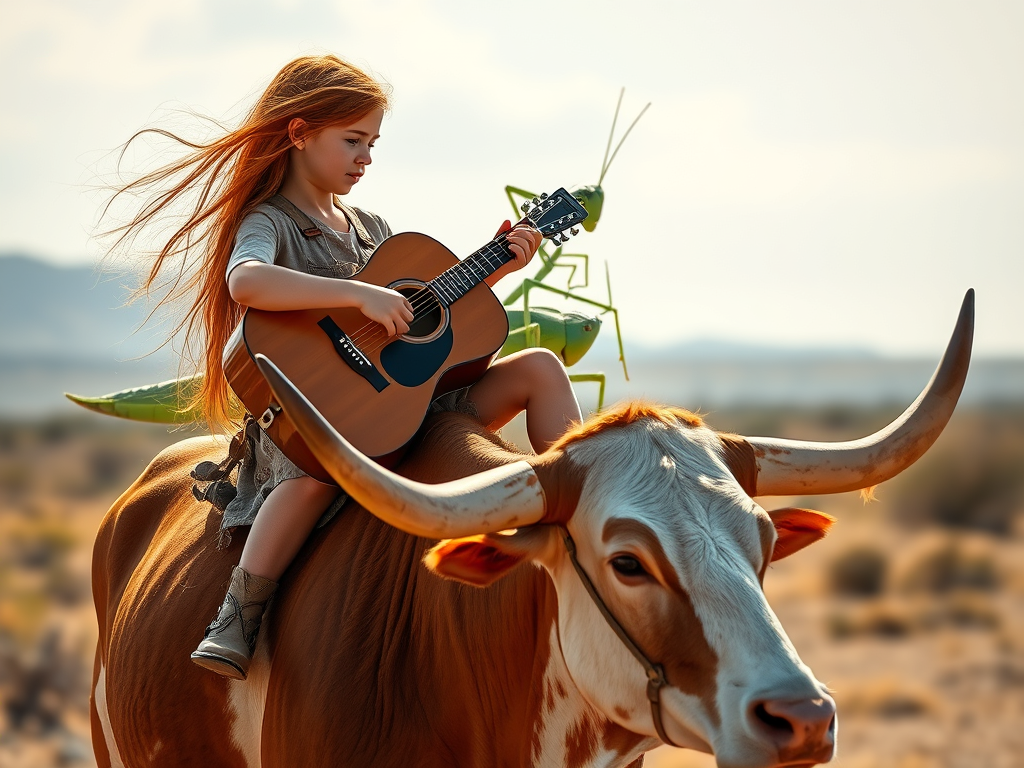
The one story that folks were reluctant to rattle about was the young girl who vanished from her family’s desert home in 1965. She strolled into the desert behind their home to collect grasshoppers and other insects for a science project and never returned, and not a smidgen of evidence was ever found. A few days later, the parents noticed her prized acoustic guitar was missing from her bedroom, and their pet Longhorn steer, Little Bill, was missing from his stall. The girl often led him out into the desert to graze on the clumps of tasty grasses and plants. Lawman worked to solve the case for two decades, but no leads or culprits were found. Word around town was that space aliens had abducted her and the steer for scientific purposes or worse. No one thought much about the theory since Marfa loved that nonsense.
Sagebrush Sonny Toluse, the Grand Pooh-Bah of all things Marfa, tells the best version of the story. He said to a group around the bar,
“ I was walking my old doggy for his nighttime constitution. I live just outside of town, nearly in the desert, and that’s how I like it. The moon was full, so Rufus and I walked a little farther than usual. I hear guitar music from somewhere. It’s not a loud electric guitar but a soft one, like a Mexican guitar. It’s getting closer, and now I hear singing, the floating voice of a young girl. I stop, turn around, and passing by me; no more than ten feet is this little girl riding a Longhorn steer, playing the guitar, and singing an odd song I didn’t know, something about a Kay Serra or something like that. Behind her, sitting on the steer, is a giant grasshopper about half the size of the girl. I know we have big bugs here in Texas, but this critter was massive, about the size of old Rufus, my dog. The trio rode past me into the fading desert, never paying any attention to us. I was troubled by the encounter, so I went and asked the older sister, who is now an old woman, about the young girl who vanished so long ago. I told her about the ghostly encounter in the desert. She said her sister often rode the Longhorn steer like a horse and would play her favorite tune while sitting atop the beast. It was a Doris Day song, and she sang a bit. “Que Sera Sera, whatever will be, the future’s not ours to see, Que Sera Sera. “
I am not pretending to be a sports writer. No, sir, my knowledge of football and the NFL is as sparse as a Teralingua lawn. I possess the cutting humor—or maybe it’s cutting-edge angst—that allows me to see the man behind the green curtain and pay attention to what he does and doesn’t do.
It’s been almost thirty years since America’s team has been to a Super Bowl game. Still, I would bet the owner, Jerry “Smiley” Jones, has attended more than a few super bowl parties in his ostentatious Dallas neighborhood of Highland Park. The day that smirking hillbilly with a gold card bought my team, the Dallas Cowboys, and fired the legendary Tom Landry was a low point for that shining turd on the hill, known as Dallas, Texas. Landry was almost a saint, a winged Arch Angel in a grey fedora that stalked the sidelines like a lion, pushing his team to victory with a blend of tough love and radar-melting glares. If Landry didn’t like you, no one would. The man should have been allowed to resign instead of a quick meeting and a handful of traveling papers. Smiley Jones, the new owner of the team and the son of Jed Clampett and Ma Kettle drove into Dallas with furniture tied to his Mercedes and grandma strapped to the roof. It’s been a shavit show since.
Jimmy Johnson clashed with Jones from day one. Johnson was a football man, a brilliant coach, and had the best hairstyle in the NFL. Jones was a wannabe coach who knew nothing about football, so the mating was bound to go sour, and it did, but only after a few Super Bowls. Barry Switzer took over and coasted across the finish line for another shiny trophy. Then Jones took over, and the team has been complete crap since. The Cowgirls are on track to deliver their worst season after paying a mediocre, nice guy quarterback 60 million a year for life. Prescott is a has-been; the money has taken over his brain, and he doesn’t care; he’s got the money, and Smiley doesn’t have shavit to show for it. The days of wine and roses are over for the Jones family. What is sad is that after Jerry is laid to rest, there are two more sons, a daughter, and a surgically enhanced wife to take the helm, which should put the city out of its misery.
Don’t misunderstand me; Momo and I are happy with the election result. I feel bad for all the self-serving celebrities who publically promised to move from this country because of the election. Where will they go? Canada or Europe may be their only hope for survival. If they were smart, and there are plenty of them that are not, they would seek to find the magical land of Nirvana. You know, the elusive country hidden in the Tibetan Mountains, a stone’s throw from Xanadu, which would also offer a safe harbor.
Of course, there would be drawbacks. The Monks who run these places don’t care much for Hollywood folks. There wouldn’t be movie studios, movie houses, fancy restaurants, Mercedes dealerships, or elections. In fact, there would be no work for them at all except for pruning the bushes and flowers. They might find true inner peace and illumination by spending the rest of their days there, wearing a flowing white robe as they stroll the mystical gardens accompanied by a mystical grasshopper.
Momo and I gave it some serious thought. Moving to Nirvana or Xanadu sounds warm and fuzzy, like new Christmas pajamas. After many nights of kicking the idea around, she announced that there is no way she can move to a place that doesn’t show “The Wheel of Fortune” and doesn’t have her H-E-B.


 Author




 Notes From The Cactus Patch