A Small Miracle


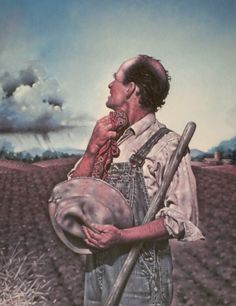
My Grandfather was a farmer. His life was a hundred seventy-five acres of cruel, rocky land in Southwest Texas. He would not have had it any other way.

On a scorching July afternoon in 1955, I stood next to him at a fence row along the south pasture, watching anvil thunderheads form in the West, behind the Santana Mountain Peak, the namesake of his town, Santa Anna.


Little rain had fallen the past few years. The stock tanks were dry, animals were suffering, crops were dead or dying, and the town’s soul was faltering. The prayers on Sunday were plentiful and to the point: Please bring rain.

There was talk of bringing in a rainmaker at the domino parlor, but the town had little money for such a wild idea. The town folk felt as though the good Lord wasn’t listening. A miracle was needed, even if it was a small one.

We had been standing at that fence row for a good hour, Grandfather not flinching or diverting his eyes from those clouds.
I wanted to see what he was seeing, but I couldn’t. He seemed to be taunting those thunderheads to come over that mountain, staring them down, challenging those clouds to bring what they had to his farm.
Looking away from the clouds for a moment, I looked at his weathered face. Just like his land, deep furrows everywhere. It’s as if each wrinkle was his reminder of a furrow that hadn’t produced a crop. He was only sixty, but his face looked decades older.
He glanced down and caught me staring. Embarrassed, I said the first thing that came to mind,

“Grandfather, why are you a farmer?”


Still staring at the clouds, he cleared his throat and said,

“I’ve always been a farmer boy; it’s all I ever knowed. One night, when I was about your age, the good Lord sent a tiny angel to my bed. She lit on the quilt and said Jasper, you’re going to be a farmer, and you will grow food to feed the children and the beast. This will be your life. How can you argue with the Lord boy? So, here I am.”


Until then, we had never had a real conversation, and I liked the kindness in his voice. I wanted to know this man who had been so elusive and indifferent to me.


“Does the good Lord always tell people what they will do?” I asked.

He replied, It’s what I here’d,” Now you best go tell Granny to get the cellar ready; it’s going to come up a cloud tonight.”

And with that, our first visit was over. Even though it was short, I now felt a closeness to him that hadn’t been there before, and I was eager for the next time.


I came round the barn and saw Granny carrying an armful of quilts and pillows to the storm cellar. She already knew a storm was coming. She always knew.


Grandfather missed supper, unwilling to leave that fence row, afraid those thunderheads would retreat if he did. They didn’t. The first crack of thunder shook the walls and sent me and Granny running for the storm cellar.


Grandfather wouldn’t come with us. He stood at that fence row until the hail stones pounded the cellar door. Only then did he come down, wet and bleeding from the cuts on his scalp. Granny fussed over him for a few minutes, and then he laid down on a cot and fell asleep.
We passed the night in that damp cellar. Granny, sitting, reading her Bible by the light of an oil lantern, Grandfather snoring, and me slumbering between fitful dreams of thunder and lightning. The storm did what it was sent to do.

At dawn, we came out to a sea of water. The fields, flooded, reflected the sunrise like a new jewel. The farm animals rejoiced in unison. Grandfather checked the rain gauge on the fence,

” Seven inches” he yelled.

Granny cried into her cupped hands, and I can’t remember why, but I cried with her.


Around lunchtime, we loaded into the old Ford and drove into town. People lined the sidewalks. Women hugged each other, old farmers patted one another on the back, dogs barked, and children laughed. The town had regained its spirit and hope overnight.


The Biscuit Café was alive, as was the domino parlor and the feed store. Everywhere, the people of Santa Anna rejoiced and gave open thanks for this small miracle.


At the café, Grandfather treated us to a nice chicken lunch. Pastor Bobby and his wife came in and, standing in the middle of the café, offered a prayer of thanks for the rain. Grandfather, not a church-going man, bowed his head and gave a hearty “amen” along with the rest of the patrons.

As we returned to the car, Granny’s old friend Miss Ellis came up to Grandfather, hugged him tight, and in a weepy voice said,

“it’s a miracle Jasper, God gave us a miracle.”

He politely endured her hug for a minute, then we moved on towards home.


That seven-inch rain didn’t end the drought for Santa Anna, but it gave the farms enough relief for the crops to stand tall again and the stock to survive that summer and fall. Grandfather became a church-going man, never missing a Sunday, and his farm produced the best crop in years.


Sixty-seven years later, my wife and I took a day trip back to Santa Anna. I was curious if the town had grown and prospered. It hadn’t. The Biscuit Café, the feed store, the domino parlor, and most of the other shops I remembered were gone. The old church still stood, showing its age but still holding its head high.


We drove out to the old farm. The house, the barn, and the smokehouse are all gone, lost to a fire. The only thing left was the windmill and the cellar. The fields were taken by scrub brush and weeds. Not a furrow survived.


I stood at that old fence line and looked west to the Santana Mountain. Just like that day in 1955, thunderheads were building behind the peak. It was going to “come up a cloud.” I never forgot that conversation with my Grandfather that day, and sadly, I never got to know him better before he passed away a few years later.


I have always believed that the power of prayer can produce miracles, and on that day, standing at that fence line, Grandfather and the Lord struck up a deal. The town got their small miracle, and Grandfather got religion.
Polio Days


Polio was coming to get us: that’s what me and my neighborhood buddies believed. Our mothers could talk of nothing else but the dreaded affliction. My mother would check my temperature at breakfast and right before bedtime.

Fort Worth in 1956 was smack-dab in the middle of the Polio epidemic.

The walls, the baseboards, and every door handle were scrubbed clean. My mother had declared war on the Polio germ, and thanks to that, I didn’t see a swimming pool or movie theater for my entire summer vacation. We, kids, weren’t afraid of the Polio germ: we continued to share a cold Coke or a popsicle; swapping spit didn’t phase us; we had been exposed to every germ in the galaxy, so we figured we were immune.

Halfway through July, and being the hottest summer my folks could remember, a kid two streets over came down with the Polio. Of course, our mothers overreacted and quarantined us until it was deemed safe to venture outside. I knew the kid; his name was Jeremy Pullium, and he was in the fifth grade and played baseball on one of our city’s Little League teams. His little brother, Stevie, sometimes played ball with us and was an official gang member.

The neighborhood mothers thought visiting Jeremy and taking him some cupcakes would be nice. Mrs. Mister made the treats, and she and her two Poodles, Fred and Ginger, would accompany us on the visit.

A quarantine sign was stuck in Jeremy’s front yard, and another was on the front door. We were led back to Jeremeys’s bedroom, where Mrs Mister held the pan of cupcakes.

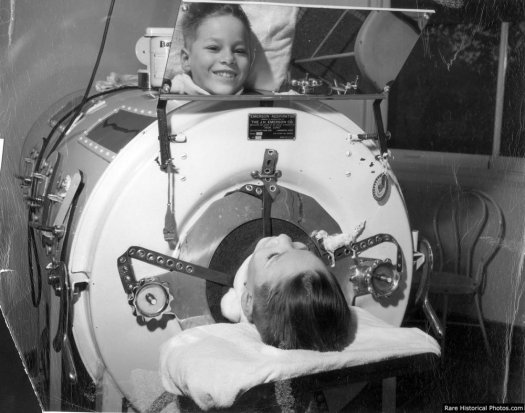
There was baseball-playing Jeremy lying in a large metal tube that took up most of the bedroom. He seemed happy to see us, even though he couldn’t escape his contraption. Skipper, our neighborhood wiz-kid, checked out the machine called an Iron Lung. We thought it was nifty. The cupcakes were passed around, and Jeremy’s mother fed him one with a fork. Everything but his head was trapped inside the machine. We didn’t get it; he could talk like nothing was wrong and move his head around, but the rest of him was paralyzed and trapped in the Iron Lung. Jeremy’s mother explained how the machine kept him alive by breathing for him, and the doctors said he might be in the lung for a year and was likely to recover.

On the way over to Jeremy’s house, Mrs. Mister warned us about being polite, and she meant it. All the mothers had deputized her, and she was allowed to administer a butt whooping if needed.

Georgie is usually the one that gets us in trouble; he can’t contain his mouth. Looking into one of the machine’s windows, he asks Jeremy,

” What do you do if you gotta pee or poop?”

Before Jeremy’s mother could answer the delicate question, Jeremy says,

” I just do it, and the nurse cleans me up. I don’t have to do nothing. Pretty cool.”

The visit abruptly ends. Once we reach the sidewalk, Mrs. Mister, using her open hand, pops Georgie upside his mouthy little head several times. We heard that later that day, Georgie got a well-deserved butt whooping from his mother while Mrs. Mister enjoyed a glass of iced tea and observed her technique.

“Ain’t Scared”


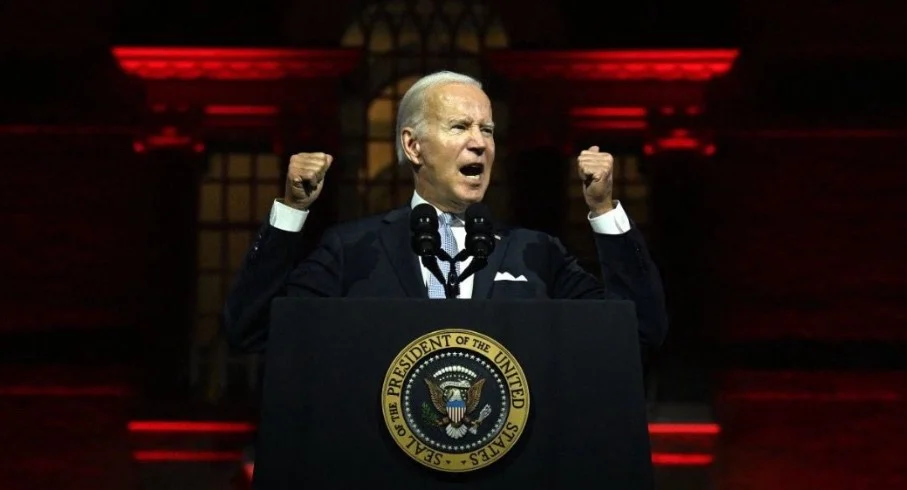
This, Dear Hearts, should scare conservative Americans to death.

CHILLING: Biden Regime Declares Trump Supporters Domestic Terror Threats in Newly Released Internal Documents, Sought to Set Up DHS Intel Unit to Target Them

Here in Texas, we have more down-home sayings than cattle. “Ain’t Scared” is one of them, and it sort of says it all about how we Texans feel about the crap that our government fan throws our way. The above title is real, and Dear Hearts, this time we should be scared…real scared. If the title doesn’t hit you in the gut, perhaps the picture will.

How I long for the presence and the voice of the esteemed Paul Harvey. His ability to provide perspective on our nation’s turmoil and division would be invaluable.

Good day.

It’s 1968, And We Are In A Recording Studio


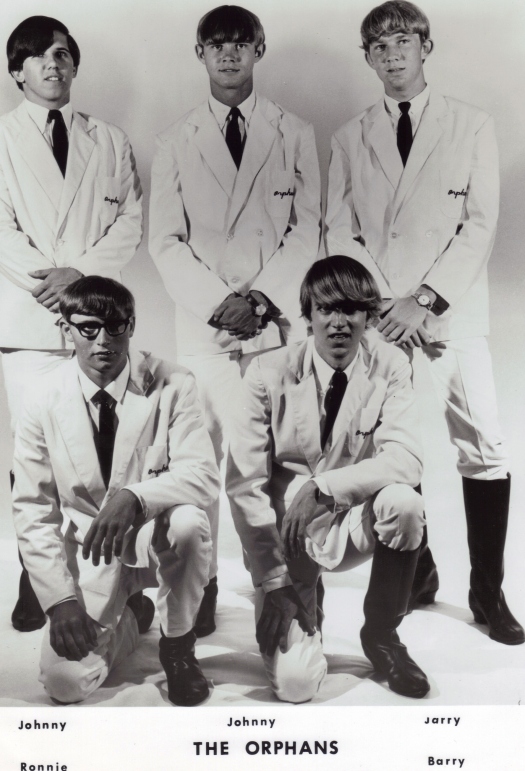
By request, I am again publishing this post, including my 1968 recording of the band I was part of, The A.T.N.T.; formally, we were the Orphans but changed our name at the suggestion of Mark Lee Productions, our manager. Enjoy.

The year was 1968, and the rock band I played in, The A.T.N.T., recorded a 45 at Summit Sounds in Dallas, Texas. The band had been called The Orphans, but a copywriting dispute resulted in a name change. Our then-manager, Mark Lee Productions, wasn’t keen on the idea because we had been under his management and promotion for a year.

The A side is “Cobblestone Street,” written and sung by myself and our drummer Barry Corbett. The B side is ” No One Told Me About Her,” written and sung by our lead singer and bass player, Danny Goode. The two producers, Marvin Montgomery and Artie Glenn, suggested we add horns to get a Chicago Transit Authority sound. Before the brass was added, Cobblestone Street was loud and raw with loud guitars and organs. After adding the horns, we returned to the studio and tweaked the cuts. I purposely untuned my Gibson 335 a bit to give the guitar break a bit of an out-of-tune carnival sound. Marvin, who went by the name of Smokey, was a member of the Light Crust Doughboys since the 1930s and played with Bob Wills. He produced Paul and Paula and Delbert McClinton. Artie Glenn wrote the famous Elvis hit “Crying In The Chapel” and many others; he was also a Light Crust Doughboy western swing musician. These two men were top-shelf record producers, so we listened when they suggested.

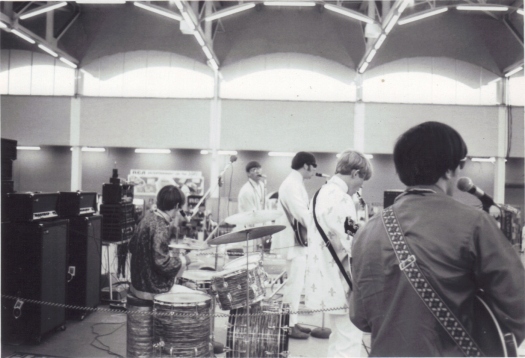
The A.T.N.T. at Flower Fair 1968

Our band members in the above picture are: foreground right John P. Strawn ( me ), then Jarry Davis on rhythm guitar, Barry Corbett on drums, Danny Goode on bass, and Marshall Sartin on keyboards. Barry and Marshall have passed on, but Danny, Jarry, myself, and our wives met for lunch a few weeks back in Fort Worth. It’s obvious why we all have severe hearing loss from the large amplifiers turned up to 11.

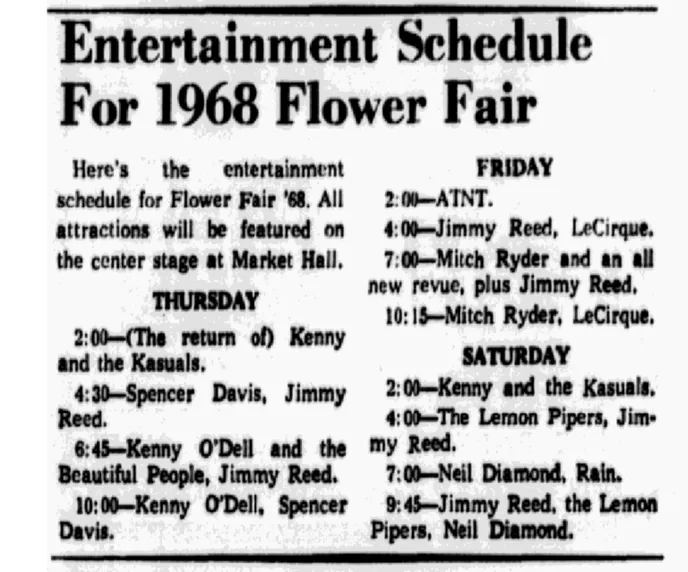
We introduced the songs at Flower Fair 1968 but without the horns. The Doors were supposed to play the event, but last-minute scheduling got sideways, and they couldn’t make it. This was the Spencer Davis Group without Steve Wynwood in the band. LeCirque ( The Smell Of Incense Fills The Air ) was formally known as The Southwest F.O.B. with members England Dan and John Ford Coley, who would later go on to fame as a duo, both local Texas boys. Kenny and the Kasuals were also a local group managed by Mark Lee.

The record received good airplay, but we never made much money. Distribution was the key, although the local radio personalities gave it positive chatter. Hope you enjoy the tunes.

“Getting Zapped…Brown Shoes Don’t Make It” And A “Beach Party On The Ganges”


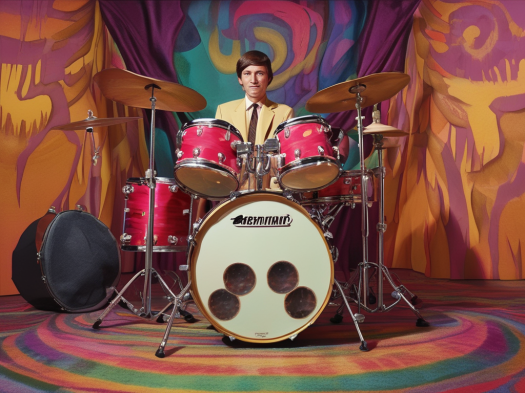
It would be a shame if I didn’t include some local 1960s rock musical history by spotlighting our drummer, Barry Corbett, otherwise known in our tight little musical circle as ” Li’l Spector.” The moniker came about because the boy, at age 15 years old, was a musical genius in the same vein as Brian Wilson, Leonard Bernstein, and Phil Spector: thus his earned nickname. We would never know why he chose the drums as his primary instrument: the guy played an assortment, including Bongo drums, kazoo, paper and comb, Dog House bass, violin, Hurdy Gurdy, guitar, keyboards, Vibes, Trumpet, Piccolo, Harmonica, Juice-Harp, Spoons, Autoharp, Dulcimer, French Horn, Tabla, finger cymbals, gasoline-powered Lawnmower, and Sitar. I’ve probably left a few out; it’s been a while since I thought about this. Barry’s original drums were worn out, so his father purchased him a set of Slingerlands. The finish was all swirling and psychedelic, and if we wore those cheesy 3D glasses from 7-Eleven, we could see the Summer of Love a full year before it happened.

In 1966, our repertoire consisted of The Beatles, The Rolling Stones, Hollies, Paul Revere And The Raiders, The Turtles, and The Byrds. We also played a handful of Beach Boy songs. Our voices were still high, so the Brian Wilson falsetto wasn’t a problem.

The 1966 Orphans in our Paul Revere boots

Unknown to Jarry and I, Barry secretly listened to weird underground music: “Frank Zappa And The Mothers of Invention.” These guys were so whacked out that the radio refused to play them, but Barry would. He adored Zappa and wouldn’t wear brown shoes in brotherhood to the song ” Brown Shoes Don’t Make It.” He was also a newbie-semi-devout disciple of East Indian music, mainly Ravi Shankar and his droning Sitar, thanks to George Harrison and the album Rubber Soul.

We knew Barry had purchased a Sitar from “Pier One,” a Dallas specialty store loved by the Hippies. The store hawked strange goods from India and the Middle East. He called one day and asked that Jarry and myself drop by to hear him play his sitar.

We were surprised when he could coax the part to “Norwegian Wood” out of the goofy instrument, so we agreed to learn the song and let him play it during our next gig at the Richardson Recreation Center the coming Saturday evening. He failed to mention that he had two additional musicians accompany him. He was a tinkerer, so he removed the electric pickups from his Gibson Melody Maker guitar and installed them on the sitar, creating the first electric East Indian instrument. Two Electrovoice condenser microphones were used to amplify his additional musicians.

Our gear was set up, and sound checked an hour before the dance, and in strolls Barry, dressed in a Nehru suit: his girlfriend and a guy about Barry’s age in tow. His followers, wearing a white Sari and a Dhoti, trolled behind him: they carried a small bongo-like drum called a Tabla and two tiny Zildjian cymbals on cute little stands. The guy was carrying an instrument that looked like a cross between a fiddle, a guitar, and a Dulcimer. All three had bright red Bindi dots on their foreheads. Barry was lugging his sitar, drum kit, and a Vox AC30 amplifier. After he set up his drums, he ran a sound check on the electric sitar and stuck the other mic inside the Tabla drum, one next to the little cymbals and the frankeninstrument. They sounded pretty good for a Rube Goldberg rigged setup. The three of us were duly impressed but leary of what might happen. Chaos followed Barry like an afternoon shadow.

The band played the first set to about 300 sweaty teenagers. The building’s air conditioning couldn’t keep up: it was a typical July in Texas.

Barry and the two musicians rolled out a Persian rug, which was likely stolen from his mother’s dining room, and positioned it in front of his drums. The girl lighted incense sticks held in large brass holders. Barry lugs his sitar from behind the stage, plugs it into the Vox amp, and sits in the traditional Shankar crossed-legged position. He is ready to rock. We break into Norwegian Wood, and the three-piece Hindi band sounds darn good but a bit loud. The teenagers move in close and surround the trio. Who are these weirdo-freaks? We finished the tune and received polite applause. A better reception than we had hoped for, but then…

For their second tune, Barry announces they will play Ravi Shankers’ biggest hit: “Beach Party On The Ganges,” a snappy little number sounding like Brian Wilson, and the boys meet Ghandi and crew for a cookout on a crocodile-infested beach. The sitar starts to feedback, and the Tabla drummer and Frankenguitar lose their tempo, not that there was one ever established, and Barry, now in a musical trance, is all over the sitar. The crowd of surrounding teens is transfixed, awed by his Zen Zone musicianship. The two other musicians, lost and toasted, have stopped playing. Lil Spector drives onward in his moment of musical adulation.

The Sitar feedback was incredible, so Barry, still locked in his “Ravi sitting position,” leaned back to reduce the volume on his amp. He leans too far, loses his balance, and falls backward, causing the head of his Sitar to catch a mic stand and break off the long body of the instrument. No one knew that Sitar strings were wound to a deathly tension. When the Sitar broke, the strings popped, winding around Barry’s head into his hair and then into his two other musicians’ long hair. It was a disaster. All three were incapacitated on the rug, unable to move. The crowd hooped and hollard, thinking it was part of the show. The poor Sitar wound up in the dumpster, and his musical disciples left the fold, throwing their red-dot makeup tin at Barry as they stormed out of the Rec Center. At his request, we dropped Norwegian Wood from our setlist.

My Political Scab Got Knocked Off…


It’s been a rough few months in the Cactus Patch. A pesky winter turned into a monsoon-like spring, and bandit Squirrels raided my bird feeders. Now, I have to contend with the sitcom on television known as politics. A demented, crooked old man holding off a bit younger old man, and one of them will wind up in the most expensive nursing home in our nation. My political wound was about healed, and now this indictment thing knocked the scab right on off, causing me extreme discomfort. Momo, my nurse wife, wants to stitch it up with sewing needles and thread. I rubbed some Whataburger ketchup on the wound and took a double shot of Irish Whiskey, and it’s healing nicely.

We took a trip to Colorado last week to visit Momo’s daughter and grandkids and sell Momo custom purses at a craft show, but that didn’t pan out. As most of you know, Colorado is one of the most liberal states in the union. California used to be, but folks moved from there to the rocky mountain high that old John Denver used to warble about. We saw plenty of trippy folks when we shopped at Sprouts for regular cereal and milk. Everyone in the store looked like models from an L.L. Bean catalog. Lots of flannel, leggings, facial hair, patchouli oil fragrance, and expensive hiking boots. We found some all-natural, gluten-free, free-range raisin brand and Tibetan goat’s milk, as well as some Mrs.Sasquatch gluten-free, sugar-free cookies. The girl at the checkout had so many piercings on her face that she looked like she took a head dive into a tackle box. She was very mountain trippiesque. The 6,588-foot altitude played hell with my breathing, so I figure most of the folks in Colorado Springs are perpetually high from oxygen deprivation, and you add weed on top of that.

We Love Rock N Roll..


God save Davy Crockett and the Alamo: Anthony Blinken now thinks he is Jimmy Paige. Maybe he should play “Stairway To Heaven” for his boss?

Comedy Gone A ‘Foul


I love Mark Twain. I revered him to the point that when I was a child of ten, becoming Mark Twain was my life’s ambition. Sadly for me, it didn’t work out, but he still inspires me to this day, not only with his witty writing but his keen eyes focused on the human race. Not much has changed since his days on the big river, or so I thought.

I attempted, and somewhat succeeded, to watch portions of a streaming salute to the black comedian Kevin Hart on Netflix. Filmed at the bastion of liberal theater, the elitist government-funded “The Kennedy Center.” He was being awarded with the Mark Twain Prize for American Humor.

I like Kevin Hart; he’s a funny guy who is not afraid to dig into squeamish subjects. But he is strictly adult comedy: crude, foul-mouthed, racist, and mean at times. He has his place in clubs, streaming specials, and R-rated movies, not on the stage of the “Sacred Cow Kennedy Center” in front of a mixed audience of wealthy Hollywood folks jiggling their jewelry and rich old ladies who were clearly put off by the humor he and his roasting guest comedians spat out. The F word seemed to be the most favored of the night, and they all used it for maximum value.

Jerry Seinfeld, the king of clean comedy, introduced the show and praised Kevin for his body of work. Kevin, in the king and queen box, yuked it up, kissed his kids and wife, and wiped away a few tears; it was a touching tribute until Seinfeld left the stage, and that is when the show went to comedic hell in a “Jackie O Handbasket.”

I know how to cuss, learning it from my father’s side of the family and from my sainted Cherokee mother, who could string some of the better words into a formidable tirade. The F word and a few more, are in my vocabulary, and lately, watching the maddening news on television, I find myself screaming adult language at my set. But that is in my home, in front of Momo, who can cuss as well as I can, sometimes better. We don’t dare say bad words in public or in mixed company or around our family, especially the grandkids. So why is filthy, foul-mouthed thuggish language acceptable for an audience at “Jack’s Palace?” You could see Jerry Seinfeld cringe when the camera panned to him. I’m certain he has used those words, especially dealing with Kramer, Newman, and maybe the Soup Nazi.

When Hart finally took the stage to thank everyone and show his stuff, it was a recitation of F you, F this, F that, and so on: all his comedy buds in the box seats roared with approval, showing me that you can be funny, make a butt-load of money and have folks idolize you, but you that doesn’t give you class.

Hollywood and its ilk have taken what was once a reverent, respected, cherished, and Homeric award and turned it into another cheap-assed participation trophy, like the Oscar. Mark Twain deserves so much better.

Deep Thoughts From The Cactus Patch


Something to ponder: how did the Kardashians wish their father a happy Mother’s Day? It must have been uncomfortable.

How often does Doctor Jill check the president’s diaper?

Momo and I are going to Colorado Springs next week to see family, and she is selling her custom purses in a craft show over Memorial Day on top of Pikes Peak. The problem is that she is afraid of heights and mountains, so I will have to knock her out with a pill, drive her up to the top, and then give her another pill to wake her up. Then, repeat the process to take her back down. Hope she sells some purses in between.

It’s been a rainy week in the Cactus Patch garden. My plants are now at the “Plantzilla” stage and need trimming. Things are improving; I was stung by bitchy little bees twice and bitten by spiders of an unknown origin a few times. Now, I’m waiting for a snake bite to complete the circle. Just part of gardening in the Texas countryside.

The bird-feeding area is now a combat zone. Two flat feeders and a plastic rooftop one, and yet they fight over seeds. The Doves used to be the bully-birds, but now the Crows have claimed that title, pushing everyone around. Now, there are two Squirrels, likely siblings, that visit and eat the Peanuts that the Crows and Bluejays love and the Crows attack the Squirrels, who in turn flip the feeders and scatter the food on the gravel. The poor Cardinals and the other species sit in the trees and watch the battles. No one is starving yet, but with food as costly as a car payment, they soon may be eating bugs and wooly worms, which have invaded my landscape by the hundreds. I may catch a jar full of them and dump their wooly little selves into the bird feeders. Much healthier than all those sunflower seeds.

5.12.24 Dispatches From The Cactus Patch


Say It Ain’t So Willie…

Now, I know that the world is off its axis: Willie Nelson is moving his famous 4th of July Picnic from Texas to somewhere in the Northeast to beat the heat. Look, Willie, the brutal life ending heat, Lone Star longnecks beer, no restroom facilities, drugged crazed hippies and cowboys are what your picnic is about. If Waylon was here, he would kick your scrawny old butt for even considering a relocation to of all places…Yankee land. Kris is still around, so he might just step in and do it. I attended one of his picnics back in the late 70s at Palo Duro Canyon and damn near expired from the hellish heat, no water and very little food. I survived by crawling under a car for shade, which at that point, it didn’t matter, my skin was roasted, and my dark hair bleached white. Around dark, ole Willie steps up to the mic and belts out Whisky River. Trigger, his beat-up Martin guitar was out of tune, his singing was off meter and he was likely higher than a California Redwood, but it was Willie, our Patron Saint of Texas Country Music. We sat transfixed on the hard dirt and rock, fire ants chewing on our legs, Rattle Snakes crawling about begging for a beer, and hundreds of poor passed out folks missing the show they came for. Please, Willie, keep it in Texas. I have confirmation from a good and mostly reliable source that your Saint Hood is imminent. This might screw it up.

Jewish Students Revolt Against Federal Protected Students

There is now a movement on most of the elite university campuses to oust and delete the fake Palestinian protesters. Two groups calling themselves “Jews For Jesus” and “Frat Boys Revenge” are now in place at most of the major universities. Maya Sharona, field correspondent for NPR interviewed a protestor at MIT.

MS: Excuse me, are you a woman or a man, It’s hard to tell with all the scarfs wrapped around your head?

Student: I am neither of those words, call me a new servant of Allah, willing to die for whatever Allah and that woman with the megaphone tells me too. Please film my left side, that’s my best profile. Should I show my molitove cocktail for the camera?

MS: Sorry, there is no camera, this is radio. What exactly are you protesting?

Student: I am not really sure, wait a moment, I must check TikTok and Facebook, all of our information and instructions comes from them. Ahh yes, here we are, (screaming)” Death to Israel, Death to all Jews, and Death to America” we demand Starbucks Latte’s and vegan pizzas, student loan forgiveness, and a free diploma in the curriculum of our choice. That’s a bummer about the no camera, got all dressed up for nothing.

MS: There is a group of frat boys over there by that police car. They look menacing and most of them are twice the size of your comrades. I believe they may be about to kick your butts.

Student: Allah and Papa Biden will protect us, we are the chosen people of Palestine, or maybe it’s Gaza, or Syria. It doesn’t matter, we are protected by the Federal Government, like the tiny fish and the lady-boys with fake boobies.