The Quirky Side of Christmas Shopping at Walmart


I was in Walmart a few days ago. The Christmas season is the best time to observe humanity at its finest and lowest and street-rat-crazy humans.

All the usual suspects were there. People dressed in bathrobes, onesie pajamas, and rabbit-eared bedroom slippers. One lady squeezed herself into an Elf costume four or five sizes too small. Her husband looked like Edger Alan Poe; all that was missing was the stuffed Raven on his shoulder. Another old lady had her grocery basket full of Mountain Dew and Pork Rinds, which is considered a food group in Appalachia and now in Granbury, Texas. Two little girls absconded bicycles from the toy department and were speeding down the isles terrorizing shoppers: their mother watched with an adoring smile as her little angels wreaked havoc: they likely received a small trophy when they got home. A crazed woman was ripping into the poor Pharmacist because he wouldn’t fill her prescription for Oxycodone; she clearly needed her medication; pulling her hair out in fistfuls didn’t help her cause.

One family, mom, pop, and the three kids pushed baskets with a flat-screen television for each member. What is the fascination with large televisions? Are we the only society that is addicted to electronics? The kids looked undernourished but had to have that TV instead of healthy food.

A lady and her young daughter, maybe five, passed by. They were both on their cell phones. Mama was engrossed in a personal conversation that should have been private, and the little girl was jabbering into her pink Barbie smartphone. I assumed the kid on the other end was about the same age since I couldn’t understand her words. Five-year-olds appear to have a unique language used to communicate with other children. When did giving a child barely out of diapers a smartphone become acceptable? As the song says, ” Only In America.”

Exiting the store, I looked for the Salvation Army and their red kettle. None to be found. The greeter lady said they should be showing up any day. I have childhood memories of my mother dropping change into that kettle as the kindly lady stood ringing her bell. In some years, it was a quarter; in better years, it might have been a dollar. She always had a change in her coin purse to help the less fortunate. I’ve continued that tradition every year of my adult life, stuffing a few dollars into that slot and hearing a “Merry Christmas and God bless you.” That’s when I knew it was Christmas time.

Born Without Politics


I came into this world in 1949, a mere flicker of life amidst the portal to the West, Fort Worth. The good nuns who ran the hospital, those stern guardians of order, chose an unconventional method to usher me into my first cries, with a 12-inch wooden ruler upon my fragile backside rather than the customary spank from a soft hand. From that day forward, I held a quiet disdain for nuns, a sentiment my mother echoed with an understanding heart. I emerged into stark confusion—bright lights glaring above, towering figures in black robes scuttling about. A tiny stranger in a bewildering land devoid of any plan, I only wanted to know what the hell just happened and where I was.

I was a happy kid, or so I’m told. My routine was breakfast, playing until lunch, eating a baloney sandwich, washing it down with Kool-Aid, playing some more, eating fresh-baked cookies from Mrs. Mister’s kitchen, watching afternoon cartoons, taking a bath after supper, and going lights out—pretty mundane stuff.

My family rallied behind Roosevelt in the 1930s, their hearts giddy with hope for a better tomorrow. They believed with every fiber of their being that Franklin Delano Roosevelt pulled this nation from the dark abyss of despair during the Great Depression, and perhaps he did in many ways. Pushing the buttons that led the country into World War Two with the Nazis and giving the checkered flag to spank the Japs. The Works Progress Administration sprang forth from his dream, and thousands of men and women found temporary refuge in constructing parks and carving streets in Fort Worth; each brick laid a testament to earning a paycheck. My father had a lovely singing voice, so he filled our home with a constant tempest of musical disdain aimed at Dwight Eisenhower from the first light of dawn until the sun sank low and I was fast under my covers. Eisenhower was a gentle figure, a soft old soul cradling a golf club like a weary king holding his lost crown tightly. Later in life, when I took to the sport, I learned he was a 3 handicapped and was a certified bad-ass who commanded our troops on D-Day.

I was too young to grasp the significance then, but amidst the familiar shouts and wailing, I began carving my political identity. To belong to this raucous, somewhat heathen brood, I learned to hurl adult insults at Eisenhower and shake my tiny fist in solidarity with my kin. It is a truth held dear — a family that goes full bore batshit crazy together stays together. We were a close-knit brood, vowing to all enter the mental hospital together if need be to prop up the sickest of the clan. My father was the first. Politics and his alcoholic mother got the better of his mind, and he was tied down and shocked like Ready Killowwat. He came out of the procedure a Republican, which caused his extended family to shrink back in disgust and horror. The doctors had taken a witty lunatic Democrat and turned him into a pipe-smoking, tweed-jacketed professor of Ryan Street. His demeanor hadn’t changed much, but the burn marks on his temples never faded. I viewed him as a now sophisticated Frankenfather.

Thanks to my electrically converted Pop, I eventually forgot about old Dwight. I learned to read and write and took to my Big Cheif Tablet, hoping to make a mark, or at least a permanent stain, on this planet. Politics went by the wayside, and I lost interest in gnashing, wailing, and blaming fault. I was becoming a writer thanks to my favorite aunt, Norma, who diligently taught me to read and write before entering first grade. I was a bored child prone to fidgeting while daydreaming about Mark Twain and Micky Spillane while sitting at my tiny desk. I had no interest in the little people around me, uneducated booger eating feral children with no purpose.

When John Kennedy was elected president in 1961, I began reading Life Magazine, my mother’s favorite slick-paged rag. He was a nice-looking fellow with an elegant wife. My mother and her friends went limp, noodle-wobbly-legged when discussing Mr. and Mrs. Camalot. I didn’t get it until the Cuban missile crisis came about. He was willing to risk the population of America just to give Castro and Krushev a butt-whooping and the middle finger; “here Jackie, Hold my 80-year-old Scotch and soda and watch this shit”. JFK had some big ones, as attested by Marylin Monroe. All of us school kids knew we were about to be ashes to ashes and dust to dust. Teachers stepped up the nuclear drills, and we spent the better part of each school day hiding under our desks. Why? If the bomb incinerated our school building, then our tiny desk wasn’t going to protect us. That’s when I realized teachers were as stupid as the rest of us Neanderthal knuckle-dragging children.

When the lovely gentleman with the perfect hair took a headshot in downtown Dallas, Texas, I was like most of my kin and friends. We all felt terrible and mourned for a few days, but then it was “back to the basics of life;Luckenbach, Texas, didn’t exist then, so we made do with Fort Worth.

My cousins and I were heavily into Brother Dave Gardner, the preacher turned comic. His albums were a bulging bag of witty, logical, and borderline racist comedy. America hadn’t learned quite yet to be so easily offended. Brother Dave’s favorite targets were Lyndon Baines Johnson and James Lewis, a fictional black character from the Deep South. LBJ was perhaps the most excellent Politicasterd crook in history, and by damn, he just had to be from the great state of Texas. We agreed; the lumbering goon from the hill country was as slimy as they come.

Around 1965, I began to form my own political beliefs. I was neither a lib nor a conservative, But a white flag on a long stick, wafting in the breeze. Heavily into surfing and playing rock music on my cheap Japanese guitar, I began to listen to the Beatles. I was told that some songs held mysterious political messages. When Sargent Pepper‘s Lonely Hearts Club Band debuted, My bandmates and I recorded the album on a Reel Reel tape machine and played it backward. After that, I was sure the four lads from Liverpool had been sent by Beelzebub to corrupt our nation’s youth. That’s around the same time our drummer, Little Spector, bought into the Hindu religion and found solace in Ravi Shankar and his melodious Sitar. It seemed I was the only one in the band with enough political knowledge to hold a riveting conversation with an adult.

The 1960s found me non-committal to a political party. The long hair and playing in a band were my disguise. Most of my friends and bandmates were in the bag for the liberal side of life; I was a relic, an uncommitted poof in the wind, although I dug Robert Kennedy and was just getting into his mantra when he followed his older brother to the Spirit In the Sky. Now, there was no choice, but “Little Richard” Nixon and his “Five O’clock World” beard shadow and sweaty upper lip creeped me out.

In 1976, I took a direct hit to the head from the mast while sailing my Hobie Cat 16-foot catamaran sailboat in the Gulf of Mexico off the island of Port Aransas. I was sailing by myself, which is not recommended, and was jibing downwind, which is also a no-no, when the mast caught the wind and reversed position, knocking me off the boat. I was wearing a diaper rig attached to the main mast, and that saved my life. What I do remember after the initial shock from that experience was that, like my father and his electrical conversion, I was now a Republican and have been ever since. I wonder if there is voting in Heaven?

The Great Pumpkin Made Me Do it, 2.0


I wrote this post some years back, but I want to share it again with my faithful blogging friends. Halloween is not just for kids.

I did something last night that surprised me, and that’s always good. I watched ” Its The Great Pumpkin Charlie Brown,” the proverbial 1960s Halloween show.

Seeing the old Peanuts gang looking so healthy and young was comforting. Pig Pen and Linus are still my favorites. Charlie Brown has a defeatist attitude, so I never got into him. While watching that program, I told my wife, Maureen, that it rejuvenated my interest in Halloween and trick-or-treating. Things are going to be different this year, I declared.

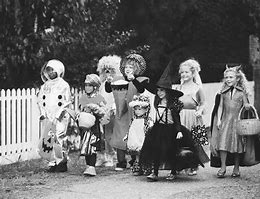
As a child, I fondly remember the anticipation of Halloween. When October 1st arrived, the kids in my neighborhood counted the days until Halloween. Back in the day (the 1950s), we celebrated Halloween on the actual date and did our begging on that evening, in the dark, even if it was a school night. We were tough kids back then, staying up late and going to school the next day. We didn’t need a weekend to recover and didn’t know what a safe room was. Trick-or-treating was damn serious stuff for us, and we were good at it.

In a fit of nostalgia, I announced to my wife that I would go trick-or-treating this year. She is going along with the idea as if I am joking. I tell her I am not, and she can hide and watch. As for a costume, I will wear a black t-shirt, a black jacket, jeans and sneakers, and possibly a Texas Rangers ball cap if the weather is inclement. I will not carry a glow stick or a flashlight; that’s for babies. If I can’t find a group of kids to walk with, I will trudge on by myself. I am determined to experience one last Halloween before that tall, robe-wearing dude with a sickle knock on my door. This has evolved into a bucket list thing, and I must see it through.

I have given this some thought and have worked out the perfect plan accepted in today’s society. When I ring the first doorbell, and a smiling man or woman answers, I will say trick-or-treat, holding their candy bowl. Their first reaction will be to say, “where’s your grandkid, or what the hell is this.” Either one, I’m ready. I will look them straight in their parental eye and say, ” I identify as a 6-year-old.” I will come home with a full bag of goodies or bond out of jail. It’s going to be a good Halloween this year.

Driving Lessons from Grandpa: A Childhood Memory


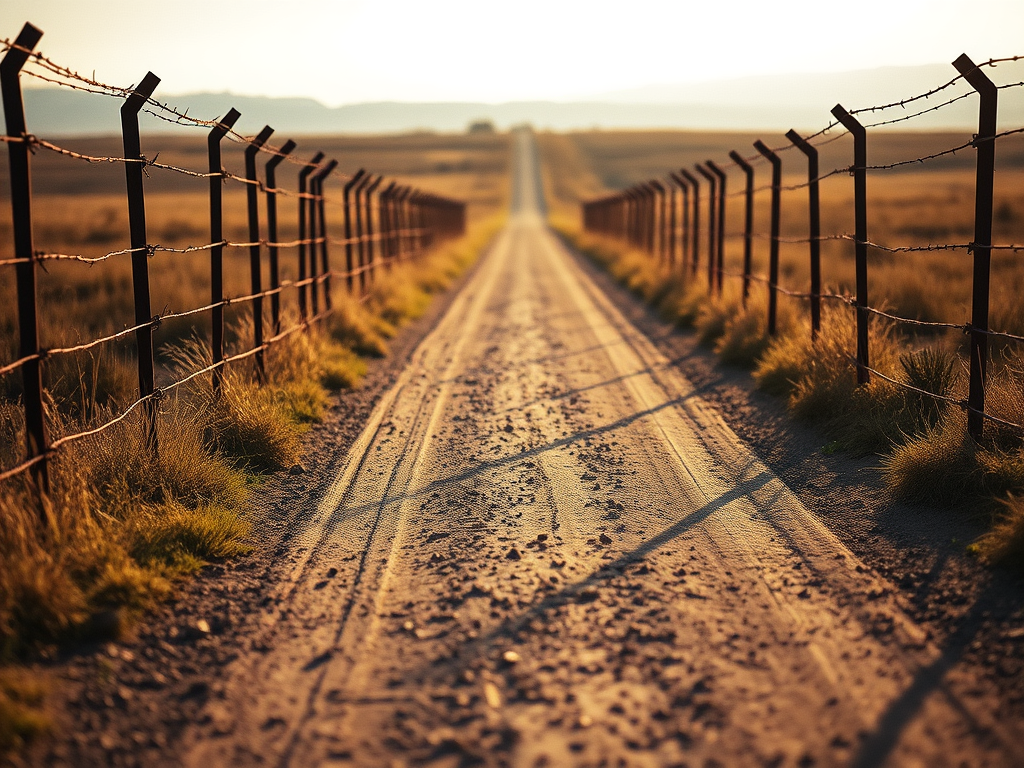
The dirt road was not much to speak of, so most folks didn’t. It was rutted, the kind of nasty ruts that could swallow a small child whole, never to be seen again.

No signs marked its path until my uncle Jay painted a small board with an arrow and the family name and attached it to a fence post with baling wire. People simply referred to it as the road to the Manley farm, the first right turn after crossing the bridge. It was a quiet, dirt path that meandered past Mrs. Ellis’s house and abruptly ended at a gargantuan cactus patch about a block past the railroad bridge.  

  My visits to the farm were during the summer, and I usually stayed for three weeks. I vividly remember the chickens, a noisy five hundred or so troupe circling the farmhouse, scratching the dirt, and being ever-busy. I also remember that almost everything on that farm wanted to kill me. The Mountain Boomers, Coyotes, and Rattlesnakes were my first worry, so I carried my completely ineffective Red Ryder BB Gun as protection.

     My grandfather Jasper decided it was time for me to drive a car, as most farm kids did out of necessity. At ten years old, I had mastered the tractor well enough to tear down parts of his barbed-wire fence without a second thought. He believed I was ready for his old stick shift V8 Ford. My grandmother fretted about his failing eyesight and knew better than to step into the driver’s seat herself: driving cars and deep water haunted her dreams, and she wouldn’t face either. My grandfather needed a chauffeur, skilled or not, for his trips to the domino parlor in the town’s only cafe, The Biscuit Ranch. I was his first and only choice.

     My first excursion behind the wheel was chilling, at least to me. What sort of adult would let a ten-year-old kid drive a car? If Grandfather was apprehensive, he hid it well.

  Turning out of the farm gate, hitting a hard left, clutching and shifting to second gear, working the accelerator, and attempting to steer the metal beast without running us into a ditch was all I could handle. By the grace of God, we made it to the railroad bridge where the hobos gathered, so we stopped so Grandfather could visit a spell. He enjoyed chawing with the hobos, swapping stories, chewing and sharing his Red Man tobacco, and telling dirty jokes: things that weren’t allowed at home. One of the hobo’s remarked that I drove exceptionally well for a little kid, and he and his buddy could hitch a ride into town. My grandfather was out of chewing tobacco, so he invited the hobos into the back seat for our first trip to the feed store in town.

  I was feeling optimistic and a bit cocky about my driving skills by the time we pulled up to the highway intersection. Grandfather checked for traffic and, finding none, told me to hit it, which I did: skidding out onto the pavement in front of the large truck he didn’t see coming; my small PF Flyer-covered foot floored the beast and hit second into third gear, squealing the tires like a stock car driver. The hobos in the back seat laughed and said I was the best kid driver they had ever known. The Ford made it to the feed store; then, we stopped at the Domino parlor, where I was introduced as the main chauffeur for the Manley family. When my mother came to collect me toward the end of July, I was car-driving Jessie. My grandmother marched me to the barn while my mother threw the grandest hissy fit ever after her father bragged about my good driving.

Aspirations, Expectations And Exasperation


75th Birthday Dinner with Momo

I’ve recently sprouted a beard, and much to my surprise, not a single dark hair dares to intrude upon my snowy facial wilderness: the scruffy testament to my frothy mirth matches the proud hue atop my head, a delicate white crown. As a son of Cherokee lineage, I stood astonished, finding myself transforming into an old man with pearly locks in my forties. This change, I suspect, is the handiwork of my father’s Scotch-Irish heritage—a rowdy clan of kilted revelers who seemed to navigate life with laughter and a touch of mischief. They must have commandeered a ship, setting sail for New York, then onto Pennsylvania, where the merry-making reached promising heights. My grandfather would neither confirm nor deny the wild tales of our kin. This speaks volumes about my love for Irish Whiskey, while the Cherokee blood in my veins draws me to large, sharp knives. Hand a drink to an Indian, and trouble isn’t far behind. History whispers of how Little Bighorn ended for Custer. Loose chatter suggests that Sitting Bull and Howling Wolf snagged a wagon load of drink the night before the fray, bestowing upon the braves a reckless spirit. Had they chosen an early night with a hearty breakfast of Buffalo tacos, perhaps the bloody disaster would have been averted.

As a boy of nine, I dreamt of writing like Twain. In my innocence, I thought I was his spirit reborn, dropped into a different time: September of 1949, the last year of the baby boomer generation. With a Big Chief Tablet and a number 2 pencil, I set out to capture the simple chaos of childhood mischief. There were four of us, bold and reckless, stealing cigarettes, hurling water balloons at police cars, and fighting with the tough kids across the tracks. The local papers laughed at my tales as if a child’s imagination could not hold weight. My aunt, wise and educated, introduced me to Spillane and Steinbeck. Spillane turned me into a wise-ass, insufferable child, resulting in numerous mouth cleansings with Lifeboy soap. Steinbeck felt right—my family had lived a life like Tom Joad’s, migrating to California during hard times of the Dust Bowl and the 1930s. I had stories in me, maybe even a book. A therapist dismissed it as a childish fantasy, saying it would fade. Yet here I am, much older, still tethered to that innocence. Now, I’m in my Hemingway phase, my looks echoing the rugged man who lived wild in Cuba, writing furiously while embracing the chaos of life.

There is more sand in the bottom of my hourglass than in the top. I feel the end approaching. I do not wish to know the day or hour. I can only pray it is a good one, resulting in a trip to Heaven, which is better than the alternative. I am not the writer Twain, Steinbeck, or Hemingway was. They had talent, and they had time from youth to hone their craft and find their voices. Yet, I will still give it a try.

“Dreams Will Keep You In Line.” Recollections From A Scared Baptist Kid


This is an oldie but a goody. If any of you knew who Brother Dave Garner was, you’d appreciate my bringing him back for an earthly bow.

This morning, I shuffled into the kitchen at 4 am, chastising myself for not getting enough sleep, which I will pay later in the day. I figure a nap will take me down around noon. But, when my country and our laws are under assault from evil men, I take it seriously, even though there is little I can do except pray for divine intervention or a selective lightning bolt from Heaven. My dreams were filled with political discourse, and sleep was fitful at best. I awakened sweaty and fearful of what lay ahead. “Our ship is foundering in seas of discontent, and the ominous rocks are within sight. The sails are in tatters, our rigging is failing, and we are destined to be dashed to pieces on the jagged rocks of an unknown land.” I paraphrase that description; it came from someone important, maybe Mark Twain or Confusious.

Last night, Mrs. MoMo and I watched the final seasonal episode of “The Chosen,” the story of Jesus and his disciples. The program is filmed in North Texas and Montana, and the cast is exceptional as well, as the writing takes the scripture and uses it as real folks would have heard and spoken it in those times, making it realistic and not words printed in the Holy Bible. We are fans. It’s as if I am attending a church service without the peripheral distractions of bad music and wailing children. I assure MoMo that I am not a heathen knuckle-dragging Neanderthal chewing on a Brontisaures leg bone, but a bonafide Christian who seeks Biblical truths and inspirations differently. She understands.

I spent too many hours on the hard wooden pulpits the Baptists prefer to be anything else. I knew that just below my pew, Hell awaited, and raging demons could pull me down through the wooden floorboards by my small legs if I faltered in faith. I equated faith with fear. Folks today are not fearful of God. Doing good deeds is commendable, but they won’t buy you a stairway to Heaven. Maybe Led Zepplin was onto something?

My zealous preacher, resembling a frothing-mouthed Bulldog pacing the stage, arms waving, and holding a large silver microphone to his dripping lips, advanced the service to a dramatic interpretation featuring hysterical heights that made the congregation swoon with the vapors. He reminded me of Brother Dave Gardner, the preacher turned comedian. I heard a few soft chuckles from my father occasionally; he was a fan of Brother Dave. Lofty condemnations, browbeating, and blanket accusations kept the flock in line; Amens were as plentiful as the women’s Beehive hair du’s, and the basket, when passed, was always overflowing with dollar bills and personal bank checks. I proudly gave my dime, which my mother pressed into my hand at the last moment. I was a kid and had no currency of my own to tithe. The little money I got from selling soda pop bottles went to candy bars, comic books, and Dr Peppers, the staples of child sustenance. Those unsettling experiences are burned into my conscience and come to me in dreams when I least expect them. Perhaps our country needs some of that “old-time religion” to scare the hell out of us.

Remembering the 4th of July 1957


The whirling of the push mower blades sings a song of torment as I strive to advance the heavy beast forward. I missed cutting the grass by two days: now, it’s akin to whacking my way through a South American jungle. I’m eight years old, and it’s the 4th of July 1957.

Later this afternoon, folks and kin will come over for a backyard cookout and fireworks. A watermelon is chilling in the ice-filled tub, while a supply of Cold Pearl beer and soft drinks occupy another. Both tubs rest in the refreshing shade of our backyard Mimosa tree. My old man’s cherished Leonard Brothers all-steel Master Chef charcoal grill sits on the driveway, brimming with Mesquite briquettes freshly bought from “Little Bills Cookout Ranch” in Eastwood Texas.

Many of the kinfolk invited to the family gathering have long found themselves on my father’s “Naughty List,” but being a kind man, he extends the invitation year after year, including on Christmas Day. They always come, and before long, the reasons for their past banishments come to the fore. Cold beer, followed by a belt of Old Crow whiskey, seems to grant them the audacity to make a truly remarkable spectacle of themselves. They can be quite entertaining, but only for a short while. As a young one, their antics matter little to me. My mind is set on handling dangerous fireworks and causing grandiose explosions.

Folks start moseying in as the sun starts its descent. A few cousins near my age will make the shindig bearable. My tomboy cousin Ginger brings her bow and target arrows, while I tote a bag full of steel-pointed lawn darts. Ginger wastes no time in shooting my cousin Jok in his left buttock. My father yanks out the arrow, and a band-aid does the trick. Kids were made of sterner stuff back then. Only a speeding bullet might have given us pause. We then move on to firecrackers, cherry bombs, and sparklers.

Burgers are served along with “tater salad” and watermelon. Pearl beer gives my father’s uncle Orum the ability to talk like Will Rogers. His home-spun recounts of past family gatherings captivate the adults. Without the lubrication of beer, he is as humorless as a cardboard box.

Cousin Ginger finds her not so well-hidden bow and arrows in our garage and sends an arrow through a bedroom window glass. Her father, Jake administers a well-deserved butt whooping. It’s not often I see a girl get a spanking. Jok and I egg our uncle Jake on. Ginger does the one-arm escape dance, screaming for mercy, as her father delivers the blows.

I obliterate every ant hill in our alley using Black Cat firecrackers before launching a tin can into the stratosphere with a Cherry Bomb. Cousin Jok places a Cherry Bomb on the front tire of his older brother’s new MG convertible to gauge the velocity of the blast. The firework creates an outward dent in the fender, serving as a foreboding omen for Jok’s impending doom; he is well aware of the retribution that awaits him upon his return home.

Darkness comes, and we twirl sparklers in figure-eight shapes. Sticks of metal ablaze at 3,000 degrees. Children clutching a welding torch; what could possibly go wrong? Cousin Jok miscalculating the burn duration of a sparkler, singes his hand, leading him to release the little torch, igniting a yard blanket upon which his mother was seated, prompting her to drop her beer and hot dog. My father douses the blaze with a garden hose. Jok is surely on track to set a new standard for butt whooping’s when he gets home.

Ten o’clock arrives, and I’m lying in bed after my bath. The soft whir of my bedroom fan lulls me into La-La Land. The adults are still in the backyard. I hear their laughter and catch a few words of some dirty jokes.

Drowsiness comes; sleep is but a minute away; then I hear my mother singing God Bless America, and the others join in. It feels good to be a kid on the 4th of July.

A Young Scholar Among Jabbering Idiots


Thanks to my late favorite aunt, Norma Lavender, I became a scholar early in life.

Five-year-olds are stuck between that titty-baby stage and graduating to sandlot baseball and comic books. If life got tough, I could still console myself with a grimy thumb to my mouth, and a skinned knee sent me squalling to momma. I couldn’t tie my own sneakers or button a shirt.

My pushy aunt realized my floundering ways and rescued me with books. She got her hands on the first two years of Fun With Dick and Jane, the books the Fort Worth school system used to teach kids to read; comic books would have to wait; Micky Spillane and Mike Hammer were calling me.

Aunt Norma quizzed me like a Perry Mason for a year, teaching me to write and read. By my sixth birthday, I was a reading Jesse, a child phenom, and a leper to my neighborhood gang. They could barely write and couldn’t read a lick of anything. Here I was, a young Shakespeare among a crowd of jabbering idiots.

Having given her parenting rights to her sister-in-law for a year, my sainted mother has now stepped in to reacquaint herself with her young scholar. I still couldn’t tie my sneakers and applied too much Butch Wax to my flat-top haircut. My mother was a hard-core Southern Baptist, and I didn’t understand why when I colored outside of her parental lines, she would cross herself and say a prayer right before she administered a righteous butt whooping with her favorite weapon; a 9inch by 12-inch Tupperware cake holder. To this day, I won’t touch a piece of Tupperware.

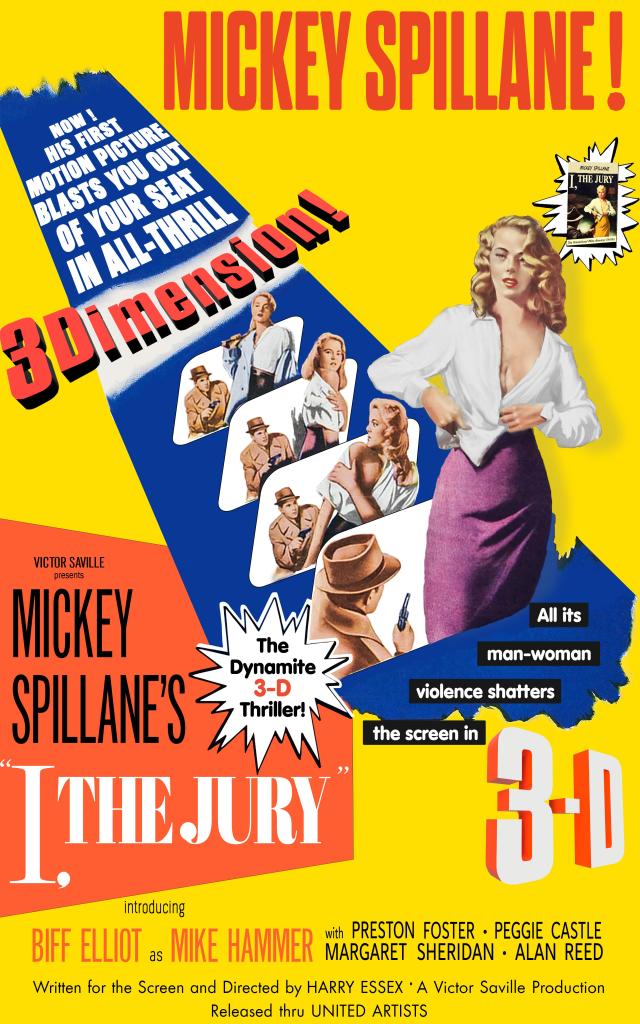
I was assigned a weekly Micky Spillane paperback and expected to read the entire book. Looking back, those trashy, noir detective books were not fit for a child or an educated adult, but Aunt Norma would read a book in 24 hours and was quite an educated gal. I didn’t understand most of what I read, but a few phrases stuck with me: “Is that a pistol in your pocket, or are you just happy to see me?” “A hard man is good to find?” Mike Hammer was always in trouble with a trashy broad. I shared my new vocabulary with the gang, and they dug it.

Mother started receiving phone calls from the other moms, blaming me, her little boy, for teaching their uneducated idiots smutty language. The Tupperware storage pan came out of the cabinet, and my butt burned for a week. Aunt Norma gave me Mark Twain and Huckleberry Finn to reprogram me. I dreamed of someday becoming Mark Twain, a kid with a Big Cheif tablet and a handful of Number 2 yellow pencils stored in a Tupperware container.

A Small Miracle


My Grandfather was a farmer. His life was a hundred seventy-five acres of cruel, rocky land in Southwest Texas. He would not have had it any other way.

On a scorching July afternoon in 1955, I stood next to him at a fence row along the south pasture, watching anvil thunderheads form in the West, behind the Santana Mountain Peak, the namesake of his town, Santa Anna.


Little rain had fallen the past few years. The stock tanks were dry, animals were suffering, crops were dead or dying, and the town’s soul was faltering. The prayers on Sunday were plentiful and to the point: Please bring rain.

There was talk of bringing in a rainmaker at the domino parlor, but the town had little money for such a wild idea. The town folk felt as though the good Lord wasn’t listening. A miracle was needed, even if it was a small one.

We had been standing at that fence row for a good hour, Grandfather not flinching or diverting his eyes from those clouds.
I wanted to see what he was seeing, but I couldn’t. He seemed to be taunting those thunderheads to come over that mountain, staring them down, challenging those clouds to bring what they had to his farm.
Looking away from the clouds for a moment, I looked at his weathered face. Just like his land, deep furrows everywhere. It’s as if each wrinkle was his reminder of a furrow that hadn’t produced a crop. He was only sixty, but his face looked decades older.
He glanced down and caught me staring. Embarrassed, I said the first thing that came to mind,

“Grandfather, why are you a farmer?”


Still staring at the clouds, he cleared his throat and said,

“I’ve always been a farmer boy; it’s all I ever knowed. One night, when I was about your age, the good Lord sent a tiny angel to my bed. She lit on the quilt and said Jasper, you’re going to be a farmer, and you will grow food to feed the children and the beast. This will be your life. How can you argue with the Lord boy? So, here I am.”


Until then, we had never had a real conversation, and I liked the kindness in his voice. I wanted to know this man who had been so elusive and indifferent to me.


“Does the good Lord always tell people what they will do?” I asked.

He replied, It’s what I here’d,” Now you best go tell Granny to get the cellar ready; it’s going to come up a cloud tonight.”

And with that, our first visit was over. Even though it was short, I now felt a closeness to him that hadn’t been there before, and I was eager for the next time.


I came round the barn and saw Granny carrying an armful of quilts and pillows to the storm cellar. She already knew a storm was coming. She always knew.


Grandfather missed supper, unwilling to leave that fence row, afraid those thunderheads would retreat if he did. They didn’t. The first crack of thunder shook the walls and sent me and Granny running for the storm cellar.


Grandfather wouldn’t come with us. He stood at that fence row until the hail stones pounded the cellar door. Only then did he come down, wet and bleeding from the cuts on his scalp. Granny fussed over him for a few minutes, and then he laid down on a cot and fell asleep.
We passed the night in that damp cellar. Granny, sitting, reading her Bible by the light of an oil lantern, Grandfather snoring, and me slumbering between fitful dreams of thunder and lightning. The storm did what it was sent to do.

At dawn, we came out to a sea of water. The fields, flooded, reflected the sunrise like a new jewel. The farm animals rejoiced in unison. Grandfather checked the rain gauge on the fence,

” Seven inches” he yelled.

Granny cried into her cupped hands, and I can’t remember why, but I cried with her.


Around lunchtime, we loaded into the old Ford and drove into town. People lined the sidewalks. Women hugged each other, old farmers patted one another on the back, dogs barked, and children laughed. The town had regained its spirit and hope overnight.


The Biscuit Café was alive, as was the domino parlor and the feed store. Everywhere, the people of Santa Anna rejoiced and gave open thanks for this small miracle.


At the café, Grandfather treated us to a nice chicken lunch. Pastor Bobby and his wife came in and, standing in the middle of the café, offered a prayer of thanks for the rain. Grandfather, not a church-going man, bowed his head and gave a hearty “amen” along with the rest of the patrons.

As we returned to the car, Granny’s old friend Miss Ellis came up to Grandfather, hugged him tight, and in a weepy voice said,

“it’s a miracle Jasper, God gave us a miracle.”

He politely endured her hug for a minute, then we moved on towards home.


That seven-inch rain didn’t end the drought for Santa Anna, but it gave the farms enough relief for the crops to stand tall again and the stock to survive that summer and fall. Grandfather became a church-going man, never missing a Sunday, and his farm produced the best crop in years.


Sixty-seven years later, my wife and I took a day trip back to Santa Anna. I was curious if the town had grown and prospered. It hadn’t. The Biscuit Café, the feed store, the domino parlor, and most of the other shops I remembered were gone. The old church still stood, showing its age but still holding its head high.


We drove out to the old farm. The house, the barn, and the smokehouse are all gone, lost to a fire. The only thing left was the windmill and the cellar. The fields were taken by scrub brush and weeds. Not a furrow survived.


I stood at that old fence line and looked west to the Santana Mountain. Just like that day in 1955, thunderheads were building behind the peak. It was going to “come up a cloud.” I never forgot that conversation with my Grandfather that day, and sadly, I never got to know him better before he passed away a few years later.


I have always believed that the power of prayer can produce miracles, and on that day, standing at that fence line, Grandfather and the Lord struck up a deal. The town got their small miracle, and Grandfather got religion.

Polio Days


Polio was coming to get us: that’s what me and my neighborhood buddies believed. Our mothers could talk of nothing else but the dreaded affliction. My mother would check my temperature at breakfast and right before bedtime.

Fort Worth in 1956 was smack-dab in the middle of the Polio epidemic.

The walls, the baseboards, and every door handle were scrubbed clean. My mother had declared war on the Polio germ, and thanks to that, I didn’t see a swimming pool or movie theater for my entire summer vacation. We, kids, weren’t afraid of the Polio germ: we continued to share a cold Coke or a popsicle; swapping spit didn’t phase us; we had been exposed to every germ in the galaxy, so we figured we were immune.

Halfway through July, and being the hottest summer my folks could remember, a kid two streets over came down with the Polio. Of course, our mothers overreacted and quarantined us until it was deemed safe to venture outside. I knew the kid; his name was Jeremy Pullium, and he was in the fifth grade and played baseball on one of our city’s Little League teams. His little brother, Stevie, sometimes played ball with us and was an official gang member.

The neighborhood mothers thought visiting Jeremy and taking him some cupcakes would be nice. Mrs. Mister made the treats, and she and her two Poodles, Fred and Ginger, would accompany us on the visit.

A quarantine sign was stuck in Jeremy’s front yard, and another was on the front door. We were led back to Jeremeys’s bedroom, where Mrs Mister held the pan of cupcakes.

There was baseball-playing Jeremy lying in a large metal tube that took up most of the bedroom. He seemed happy to see us, even though he couldn’t escape his contraption. Skipper, our neighborhood wiz-kid, checked out the machine called an Iron Lung. We thought it was nifty. The cupcakes were passed around, and Jeremy’s mother fed him one with a fork. Everything but his head was trapped inside the machine. We didn’t get it; he could talk like nothing was wrong and move his head around, but the rest of him was paralyzed and trapped in the Iron Lung. Jeremy’s mother explained how the machine kept him alive by breathing for him, and the doctors said he might be in the lung for a year and was likely to recover.

On the way over to Jeremy’s house, Mrs. Mister warned us about being polite, and she meant it. All the mothers had deputized her, and she was allowed to administer a butt whooping if needed.

Georgie is usually the one that gets us in trouble; he can’t contain his mouth. Looking into one of the machine’s windows, he asks Jeremy,

” What do you do if you gotta pee or poop?”

Before Jeremy’s mother could answer the delicate question, Jeremy says,

” I just do it, and the nurse cleans me up. I don’t have to do nothing. Pretty cool.”

The visit abruptly ends. Once we reach the sidewalk, Mrs. Mister, using her open hand, pops Georgie upside his mouthy little head several times. We heard that later that day, Georgie got a well-deserved butt whooping from his mother while Mrs. Mister enjoyed a glass of iced tea and observed her technique.