A Small Miracle


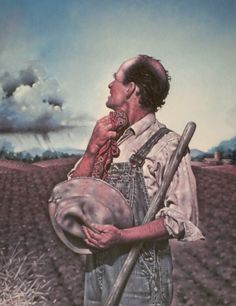
My Grandfather was a farmer. His life was a hundred seventy-five acres of cruel, rocky land in Southwest Texas. He would not have had it any other way.

On a scorching July afternoon in 1955, I stood next to him at a fence row along the south pasture, watching anvil thunderheads form in the West, behind the Santana Mountain Peak, the namesake of his town, Santa Anna.


Little rain had fallen the past few years. The stock tanks were dry, animals were suffering, crops were dead or dying, and the town’s soul was faltering. The prayers on Sunday were plentiful and to the point: Please bring rain.

There was talk of bringing in a rainmaker at the domino parlor, but the town had little money for such a wild idea. The town folk felt as though the good Lord wasn’t listening. A miracle was needed, even if it was a small one.

We had been standing at that fence row for a good hour, Grandfather not flinching or diverting his eyes from those clouds.
I wanted to see what he was seeing, but I couldn’t. He seemed to be taunting those thunderheads to come over that mountain, staring them down, challenging those clouds to bring what they had to his farm.
Looking away from the clouds for a moment, I looked at his weathered face. Just like his land, deep furrows everywhere. It’s as if each wrinkle was his reminder of a furrow that hadn’t produced a crop. He was only sixty, but his face looked decades older.
He glanced down and caught me staring. Embarrassed, I said the first thing that came to mind,

“Grandfather, why are you a farmer?”


Still staring at the clouds, he cleared his throat and said,

“I’ve always been a farmer boy; it’s all I ever knowed. One night, when I was about your age, the good Lord sent a tiny angel to my bed. She lit on the quilt and said Jasper, you’re going to be a farmer, and you will grow food to feed the children and the beast. This will be your life. How can you argue with the Lord boy? So, here I am.”


Until then, we had never had a real conversation, and I liked the kindness in his voice. I wanted to know this man who had been so elusive and indifferent to me.


“Does the good Lord always tell people what they will do?” I asked.

He replied, It’s what I here’d,” Now you best go tell Granny to get the cellar ready; it’s going to come up a cloud tonight.”

And with that, our first visit was over. Even though it was short, I now felt a closeness to him that hadn’t been there before, and I was eager for the next time.


I came round the barn and saw Granny carrying an armful of quilts and pillows to the storm cellar. She already knew a storm was coming. She always knew.


Grandfather missed supper, unwilling to leave that fence row, afraid those thunderheads would retreat if he did. They didn’t. The first crack of thunder shook the walls and sent me and Granny running for the storm cellar.


Grandfather wouldn’t come with us. He stood at that fence row until the hail stones pounded the cellar door. Only then did he come down, wet and bleeding from the cuts on his scalp. Granny fussed over him for a few minutes, and then he laid down on a cot and fell asleep.
We passed the night in that damp cellar. Granny, sitting, reading her Bible by the light of an oil lantern, Grandfather snoring, and me slumbering between fitful dreams of thunder and lightning. The storm did what it was sent to do.

At dawn, we came out to a sea of water. The fields, flooded, reflected the sunrise like a new jewel. The farm animals rejoiced in unison. Grandfather checked the rain gauge on the fence,

” Seven inches” he yelled.

Granny cried into her cupped hands, and I can’t remember why, but I cried with her.


Around lunchtime, we loaded into the old Ford and drove into town. People lined the sidewalks. Women hugged each other, old farmers patted one another on the back, dogs barked, and children laughed. The town had regained its spirit and hope overnight.


The Biscuit Café was alive, as was the domino parlor and the feed store. Everywhere, the people of Santa Anna rejoiced and gave open thanks for this small miracle.


At the café, Grandfather treated us to a nice chicken lunch. Pastor Bobby and his wife came in and, standing in the middle of the café, offered a prayer of thanks for the rain. Grandfather, not a church-going man, bowed his head and gave a hearty “amen” along with the rest of the patrons.

As we returned to the car, Granny’s old friend Miss Ellis came up to Grandfather, hugged him tight, and in a weepy voice said,

“it’s a miracle Jasper, God gave us a miracle.”

He politely endured her hug for a minute, then we moved on towards home.


That seven-inch rain didn’t end the drought for Santa Anna, but it gave the farms enough relief for the crops to stand tall again and the stock to survive that summer and fall. Grandfather became a church-going man, never missing a Sunday, and his farm produced the best crop in years.


Sixty-seven years later, my wife and I took a day trip back to Santa Anna. I was curious if the town had grown and prospered. It hadn’t. The Biscuit Café, the feed store, the domino parlor, and most of the other shops I remembered were gone. The old church still stood, showing its age but still holding its head high.


We drove out to the old farm. The house, the barn, and the smokehouse are all gone, lost to a fire. The only thing left was the windmill and the cellar. The fields were taken by scrub brush and weeds. Not a furrow survived.


I stood at that old fence line and looked west to the Santana Mountain. Just like that day in 1955, thunderheads were building behind the peak. It was going to “come up a cloud.” I never forgot that conversation with my Grandfather that day, and sadly, I never got to know him better before he passed away a few years later.


I have always believed that the power of prayer can produce miracles, and on that day, standing at that fence line, Grandfather and the Lord struck up a deal. The town got their small miracle, and Grandfather got religion.
Polio Days


Polio was coming to get us: that’s what me and my neighborhood buddies believed. Our mothers could talk of nothing else but the dreaded affliction. My mother would check my temperature at breakfast and right before bedtime.

Fort Worth in 1956 was smack-dab in the middle of the Polio epidemic.

The walls, the baseboards, and every door handle were scrubbed clean. My mother had declared war on the Polio germ, and thanks to that, I didn’t see a swimming pool or movie theater for my entire summer vacation. We, kids, weren’t afraid of the Polio germ: we continued to share a cold Coke or a popsicle; swapping spit didn’t phase us; we had been exposed to every germ in the galaxy, so we figured we were immune.

Halfway through July, and being the hottest summer my folks could remember, a kid two streets over came down with the Polio. Of course, our mothers overreacted and quarantined us until it was deemed safe to venture outside. I knew the kid; his name was Jeremy Pullium, and he was in the fifth grade and played baseball on one of our city’s Little League teams. His little brother, Stevie, sometimes played ball with us and was an official gang member.

The neighborhood mothers thought visiting Jeremy and taking him some cupcakes would be nice. Mrs. Mister made the treats, and she and her two Poodles, Fred and Ginger, would accompany us on the visit.

A quarantine sign was stuck in Jeremy’s front yard, and another was on the front door. We were led back to Jeremeys’s bedroom, where Mrs Mister held the pan of cupcakes.

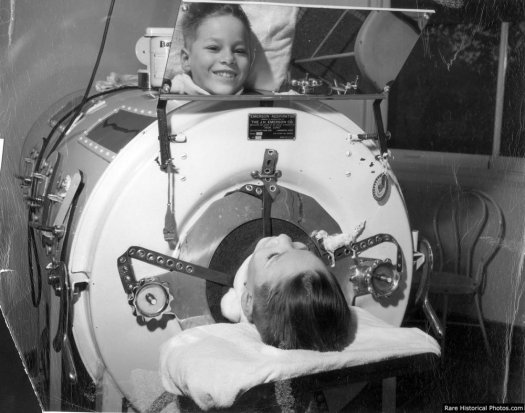
There was baseball-playing Jeremy lying in a large metal tube that took up most of the bedroom. He seemed happy to see us, even though he couldn’t escape his contraption. Skipper, our neighborhood wiz-kid, checked out the machine called an Iron Lung. We thought it was nifty. The cupcakes were passed around, and Jeremy’s mother fed him one with a fork. Everything but his head was trapped inside the machine. We didn’t get it; he could talk like nothing was wrong and move his head around, but the rest of him was paralyzed and trapped in the Iron Lung. Jeremy’s mother explained how the machine kept him alive by breathing for him, and the doctors said he might be in the lung for a year and was likely to recover.

On the way over to Jeremy’s house, Mrs. Mister warned us about being polite, and she meant it. All the mothers had deputized her, and she was allowed to administer a butt whooping if needed.

Georgie is usually the one that gets us in trouble; he can’t contain his mouth. Looking into one of the machine’s windows, he asks Jeremy,

” What do you do if you gotta pee or poop?”

Before Jeremy’s mother could answer the delicate question, Jeremy says,

” I just do it, and the nurse cleans me up. I don’t have to do nothing. Pretty cool.”

The visit abruptly ends. Once we reach the sidewalk, Mrs. Mister, using her open hand, pops Georgie upside his mouthy little head several times. We heard that later that day, Georgie got a well-deserved butt whooping from his mother while Mrs. Mister enjoyed a glass of iced tea and observed her technique.

Are You A Boy..Or Are You A Girl?


So now the Boy Scouts of America have put on their make-up, styled their hair, and inserted their tampons in the appropriate orifice.

I was a Boy Scout and a Cub Scout. My grandson was a Cub Scout and is now a Boy Scout, and my son is his troop leader. I can tell you, they are not a bunch of whiny-assed pansies like we are reading about in the news. What a disgrace to America. All those years of honor flushed like a happy bear toilet wipe.

Yeah, I get the lawsuits and all that, and the payouts, and girls wanting to be boys instead of their biological gender, and the little sissy boys wanting to be a girl scout in a boy scout uniform; it’s where the world is at this day.

How about drinking some Ovaltine, putting your hand between your legs and feeling what God gave you, and go shoot your Daisy BB gun and shut the hell up.

Hello Dalai…


Dalai “Tex” Lama

My sainted Mother’s second cousin, Elfinian Keebler, owned one of the largest cattle ranches in Texas. Located between Mineral Wells and Ranger, Texas. It took four days to cover the width and another two days or so to ride the length. By Texas standards, it was a residential lot, but 3,800 acres ain’t what it used to be in the 1950s.

Elfinian’s daughter, Cookie, wasn’t into raising cattle, although she was the proverbial FFA queen. She had gone steady with every boy in high school and most of the ranch hands and had been riding horses since she could crawl. Her older brother, Chip, was a knock off the old Keebler block; he was a cowboy to the bone, raised on Roy Rogers and Gene Autry. His mama, Piddle, fancied herself as a debutant who married low and wanted her baby boy to be a doctor of some sort, but Chip was a dunce and had the IQ of a piss-ant: riding the range was about all he was good for, and his horse did most of the thinking. Cookie was the plucky little prickly one and decided she was taking the ranch in a different direction, creating a stink between her and Daddy Elfinian. Cookie wanted to raise Llamas and Highland goats. In Texas, anything but cattle and horses is considered blasphemy, and sheep and goats aren’t welcome except on the supper menu.

A year into her Llama plan, Daddy put the brakes on. One Hundred Llamas, forty donkeys to guard the Llamas against Coyotes, and half a dozen cow dogs to keep the donkeys under control were more than Papa Keebler could swallow. The donkeys and dogs had lost interest in the Llamas and had gone back to hanging out with the cattle. The critters were pretty, but they were no better than a cow: eat, spit, and crap.

A contingent of robe-wearing folks in limousines arrived at the ranch house on a Saturday afternoon. A realtor from Mineral Wells introduced them as followers of the Dalai Lama, most recently of Tibet, a tiny country in Asia. Elfinian had never heard of this Lama guy, but he invited them in for a set down, some of Piddles’s baked cookies, and a drink of Jack Daniels. The head robe-wearing spokesperson was the Dalai Lama’s sister, Deli Lama. She wanted to buy a piece of the Keebler Ranch so the Dalai could have refuge from the Chinese who had booted him out of Tibet, and he wanted to raise a Llama or some hairy sheep, his favorite spirit animal.

Papa Keebler sold the group three hundred acres, including the existing herd of Llamas and all the donkeys and cow dogs. It was a win-win deal. Cookie volunteered to help get the ranch workable and show the tinder-foots the art of Texas ranching.

Eight weeks later, the Dalai Llama arrived in a private helicopter, touching down on the new helipad next to the ranch house an army of Monks and Hari Krishna volunteers had constructed for his holiness. His sister, Deli, her daughter Carol, and The Keebler family were there to welcome him to Texas. He stepped out of the chopper wearing a white Stetson from Leddy’s Western Store over in Fort Worth. The multi-talented Monks also played many instruments, so they broke into a rousing rendition of San Antonio Rose and then The Eyes of Texas Are Upon You. The Dalai felt right at home and immediately asked for a “coldbeer.”

After an all-nighter traditional Texas BBQ and a dozen kegs of Pearl and Tibetian Beer, The Dalai Lama surprised everyone by mounting a horse at sunrise and touring the ranch with Cookie and Elfinian. He had picked up a pair of jeans, some Justin boots, and a 44 Colt pistol in Fort Worth, and like in the movies, he was itching to plug him some Hombres. He also had purchased a twin-engine Cesena T50 airplane like Sky King flew and wanted Cookie to be his sidekick. Elfinian managed to wrangle the pistola from the Dalai before someone wound up planted, and he damned sure didn’t want his daughter flying in a plane with this loco-Lama.

The Dalai’s sister, Deli, and her daughter, Carol, were huge fans of New York musicals, especially Carol Channing. Miss Channing was in Fort Worth appearing at the Casa Manana production of “Hello Dolly,” so the Dalai Lama arranged for Carol and the entire theater company to put on an open-air show at his new Llama ranch. A cast of a hundred, the orchestra and sets were delivered by trucks, rigged, and a portable stage was built near the Llama corral. Half the ranching community was seated on the tailgate of their pickups, beer coolers stocked with Pearl and Mama’s, and babies scurried around the grassy lawn in front of the ranch house. The sun went down, the lights came up, and Carol Channing, as “Dolly,” walked up to the mike and sang, ” Hello Dalai, it’s so nice to have you back where you belong.” This kind of stuff can only happen in Texas.

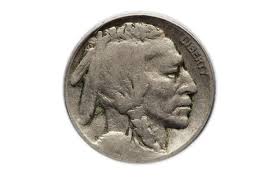
A Nickle Will Save Your Soul


My first dose of old-time Texas religion came at six years old. Up until then, my sainted mother deemed me too young, fidgety, and stupid to grasp the complexity of the Southern Baptist philosophy. She was right, and I finally gave up when I became an Episcopalian.

The Polytechnic First Baptist Church in Fort Worth, Texas, was rumored to be the place to go if you wanted a direct line into Heaven. On Sundays, the pews were packed, and folks lined the walls while the children sat in the aisles. Christmas and Easter, the church opened its doors at daylight so the longest-standing members could claim seats. My father’s large extended family, around thirty members and their relatives by marriage and accidents, lived in Poly, and they all attended the PFBC, as it was called by the congregation. My two cousins and I, being the same age, were the newest lambs to enter the flock.

My first Sunday arrived in September of 1955, the week after my sixth birthday.

September weather in Texas is no different than August, July, or June: it’s miserable hot. Dressed in a heavily starched, long-sleeved white shirt, a kid-sized clip-on tie, black trousers, and shiny new Buster Brown shoes, I was a styling child and feeling pretty good about my debut. By the time my father skidded his Buick into the church’s gravel parking lot, my new duds were sweat-soaked, and I smelled like a beer-joint ashtray: our car had no air-conditioning, and my parents smoked Lucky Strikes two at a time. My sister was five months away from making her appearance, so my mother was chain-smoking for two.

Once in the church, my cousin Jock joined me, and we seated ourselves next to my mother so she could control our behavior with her patented one-eyed stare or a motherly, open-handed whack to the back of our flat-top-haircut-wearing little heads. She gave me a gentle swat before entering the church, just to let me know what awaited me if I acted like a fool.

Most of my father’s aunts and uncles took the first rows closest to the preacher. Their warped reasoning was that the closer to the pulpit and the preacher, the better the chance of forgiveness for last night’s debauched beer-fest and the slight chance of possibly slipping past the pearly entrance gate guarded by Saint Peter. They’ve all been gone for decades, so no one knows if their plan worked. The promised contact from beyond has yet to materialize.

My grandmother, her four sisters, and one brother were hard-drinking, two-stepping, championship-cussing Baptists and had no use for Presbyterians, Methodists, and especially Catholics. PFBC: Our church was so bright-white that you needed sunglasses to kill the glare.

The leader of our church, the exalted flamboyant Reverend Augustin Z. Bergeron, a transplant Cajun from Chigger Bayou, Louisiana, was a certified autograph-signing local celebrity. He wore expensive mohair suits from Leonard Brothers Department Store, retained a personal hair stylist who kept his wavy locks immaculate, and sported custom-made footwear from Larry’s Shoes. He was likely the inspiration for the outrageous 1950s ex-preacher turned comedian Brother Dave Gardner. The man commanded the pulpit and the stage like a Broadway entertainer. With a lighted cigarette in one hand and a Tupperware tumbler full of iced-sweet tea in the other, he paced and screamed like a detained mental patient, cursed the Devil and his minions, admonished the sinners in the congregation, strutted, shuffled, stomped, rolled on the floor, crawled on his hands and knees, and wept like a middle-aged housewife going through the change of life. The choir of big-haired ladies standing behind him punctuated every nuance with an “Amen, Hallelujahs, or Praise the Lord.” It was expected that two or three of the older singers would faint dead out during his sermon. It was cast in newsprint that if Reverend Bergeron’s bombastic sermons couldn’t bring a sinner to Jesus, no one could, not even J. Frank Norris or “By-Gosh” Billy Graham.

An hour into his fiery sermon, Reverend Bergeron took a potty break, and the ushers passed the silver plate down each row of pews. My mother gave Jock and me a nickel to contribute. I was reluctant to part with the change; a nickel was a lot of money, and by selling a few soda pop bottles, I would have enough for a Superman comic book. The plate came to me, and without hesitation, in went the prized coin: my first tithe. Jock dropped his nickel but pulled a sleight of hand and took a beautiful fifty-cent piece in exchange. Looking back, that might have been the start of his slide into petty crime that would find him, on his sixteenth birthday, a resident of the local detention facility known as “The Dope Farm.”

Our young lives took different paths: mine a bit boring but safe, and Jock’s loaded with excitement but long on trouble. I would like to believe that by giving up that coveted nickel, I was blessed with a thumbs-up from above.

Easter Evening From The Cactus Patch


It was a rather quiet Sunday here in the Cactus Patch. The church service was pretty good, the band on stage was stellar, and the Pastor gave a rousing benediction using Acts as his vehicle. We left a little early to make a late lunch engagement with Momo’s daughter’s family in Fort Worth. We were both worn out from attending the Liverpool Legends concert on Saturday night at the Granbury Opera House. Dancing in the aisles, old folks holding up their lit phones since they banned Bic lighters, and most folks don’t smoke anymore. An ambulance was waiting at the curbside in case any of the audience suffered the Rock n Roll vapors. Good time. Then…

“Are You A Boy..Or Are You A Girl?”

A catchy tune from 1965 by the band “The Barbarians,” a tongue-in-cheek poke at long-haired hippie dudes with beautiful Breck Shampoo flowing hair. Being well into my 70s, it takes a lot to surprise or tick me off, especially if it comes from Washington, D.C. Now, I find out that today, Easter Sunday, the holiest of days in our Christian faith, has been officially recognized by the white house as “Transgender Visibility Day.” Who in the Hell made this decision? I would say our president, but then he is supposedly a cafeteria Catholic and doesn’t at this time have the mental capacity to recognize what a slap in the face to Christian Americans he has delivered. Of course, the blowback is off the charts. Stay tuned for masses of pilgrims marching on Washington with torches and pitchforks.

If a teenage boy wants to dress like a teenage girl; go ahead. Same for the girls that want to wear a pair of Levis, Tocava boots, and a lumberjack shirt, do it, but shut up about it. You don’t need a special calendar day for the rest of America to see you are a nut job. At ten years old, I wanted to be Mark Twain, but I didn’t prematurely age myself and wear a white suit and wig. Thank the Lord the world didn’t have social media back then. TikTok, Facebook, and all the rest should take a huge chunk of the blame for this madness; radical teachers and Hollywood take the rest. No matter how dangerous and sick, the newest trends become the life our children grasp to follow. And now, no matter how small, the movement has its special day on the world calendar. Did someone in DC not check for conflicting dates? Was this intentional? I believe it was and it pokes a sharp stick in the eye of Christian Americans. I’ve seen it all and can stop worrying about future surprises. There, I feel better.

“So You Want To Be A Rock N’ Roll Star”

A few other great bloggers I follow, Dave of “A Sound Day,” Max of “Power Pop,” and Cincinnati Babyhead, have previously suggested that I chronicle my times in the Rock music world back in the 1960s. I have decided to give it a healthy shot; although I am timid about blowing my little tin horn, I will attempt to make it as humble and accurate as possible.

Put Those Dark Glasses On…It’s The End Of The World

Yep, I’m ready. Momo and I got our cardboard-certified Eclipse glasses and are ready for the world-changing event on April 8th. Our town, Granbury, Texas, expects an additional 100 thousand folks starting next Friday through Sunday. I may rent my extra wooded lot for camping since many pilgrims will not have accommodations. We are stocking up on canned foods, water, hootch, and ammo in case everything goes sideways.

Who Came First; The Bunny or Jesus?


Not the Easter Rabbit

Us Christians have to admit: the Easter Bunny is a great secular ploy to teach our children the wrong meaning of Easter. We can thank German immigrants in the 1700s for bringing this little Paganisitc celebration to our shores. Sure, they meant well, and at that time, most Germans were Christians, but being trapped indoors during those long winters, they came up with an idea to amuse their children. I assume kids in those days got on their parents’ nerves and were a bit bratty.

Their rabbit, which was a German Hare, was said to lay actual eggs, which were given as gifts to family, or small trophies to placate their children. Once the tradition wormed its way into American society, it became a cute bunny rabbit buying eggs from hard-working chickens, then selling them to parents, who, in turn, hid them under bushes, on playground equipment, and in tall grass for their kids to find. Once found, they were placed in a woven basket with fake green or yellow grass to be put aside for later consumption. The chocolate bunny, invented by Hershey, came later and added to the cavity count. My favorites were Peeps, the tiny marshmallow chicks that melted in my greedy little mouth. They never mentioned the Yellow Dye 44 that might kill you later in life. But that was the 1950s, and even doctors blew cigarette smoke in your face. Nothing killed you back then; we were all safe.

My cousins and I hunted many eggs and became quite good at spotting them. My grandmother used real eggs that we kids decorated and later ate with salt and pepper; the Peeps came later.

I will admit to being a part of this tradition. My two boys bought right into it. So what’s a Dad to do? I put the Easter Rabbit up there with Santa Claus, The Tooth Fairy, Sasquatch, Godzilla, Invaders from Mars, and Pod People.

This Sunday, families will get together for a meal and a nice visit, and then, if kids are present, they will likely do the Bunny egg thing. I get it. We all have done it and will keep doing it until something better comes along.

That something better is Jesus.

Growing Up In The 1950s. Threats Used By Parents To Keep Kids In Line


Pictured is the infamous “Dope Farm” in Fort Worth, Texas. A facility built to house drug addicts and high-profile bad guys. If you grew up in Fort Worth in the 1950s, chances are good that your parents used this place as a threat to keep you in line.

My neighborhood buddies and I were a bit on the bad side; nothing severe, just minor kid things like blowing up mailboxes with cherry bombs, setting garages on fire, raiding the milkman’s truck while he was taking the bottles of milk to a doorstep, dropping firecrackers down rooftop vents, fun little things like that.

These minor infractions usually ended with one or all of us getting a butt whooping with a belt, flyswatter, Mimosa tree switch, a tennis shoe, or a Tupperware cake pan. The Tupperware hurt more than any of the other weapons our mothers could find. When our hijinx got to be too much, our mothers would pull out the dreaded threat of “Okay, that’s it, either straighten up or I’m sending you to the Dope Farm.” That’s all it took to turn us into practicing angels for a few days. All the kids knew about this place. The narcotics users, gangsters, and local children who misbehaved went there. None of us actually knew anyone who had been incarcerated within those walls, but the thought of going there scared the liver out of us.

In the late 1950s, a cousin of mine turned into a genuine hoodlum, robbing a grocery store dressed up like Mr. Greenjeans from the Captain Kangaroo show. Greased back hair, black work boots, dirty Levis, and a white tee-shirt with a pack of Camels rolled into the sleeve, and he rode a junked-out motorcycle. When my mother spoke of him, she crossed herself. My poor cousin was added to the ever-present threat because he spent a year of his teenage life at The Dope Farm, living in a small cell, eating Wonder Bread and Bologna samwithches, and watching the old movie “Boys Town” every Saturday night. There wasn’t a Father Flannigan on the premises, only guards with guns and a Baptist preacher.

I was pretty good for a year while my cousin was locked up. We received a Christmas card with a picture of him dressed in his striped pajamas, slicked-back hair, and a Camel dangling from his snarly mouth. All this while perched on Santa’s knee. It was a nice little card, similar to the ones we made in school from construction paper and paste. Some bad words and threats were written below the photo, but my mother wouldn’t let me read them. She cut the bad word part off and taped the card on the ice-box, so every time I opened it, the threat was there, and it worked.

The only kid, other than my hoodlum cousin, who was dragged off to the place was our baseball team center fielder, Billy Roy. Billy started hanging out with our nemesis across the track, The Hard Guys, and became a regular James Cagney by the fourth grade, robbing a local convenience store with a Mattel Fanner 50 cap pistol. You guessed it, he went to the Dope Farm for six months. He learned some good stuff there because when he came out, he went directly into a lucrative life of hoodlummanity and crime. Last I heard, he was in Sing Sing.

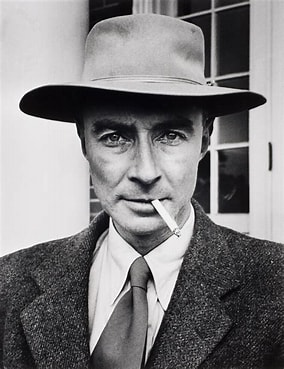
Me And My Buddy, J. Robert Oppenheimer


I made it through another year of not watching the Oscar thing. I did see “Oppenheimer” which was a darn good picture, even with the out-of-place icky sex scenes. Did he really have time for all of that humping about? No, the poor, underfed man was trying to build the ultimate vaporizing weapon, so I doubt he had time for all that Hollywood ya-hoo. This leads me to another story related to the atomic bomb.

Back in 2019, when I found out the “Big C” had taken up residence in my holy temple, the doctor at UT Southwestern in Dallas suggested a radical new treatment of Ultra high-dose radiation delivered by a robot-type device. The word radical caught my attention.

Doctor Hanan said it’s mainly used on brain cancer but had recently been used on maybe three folks with my type of Cancer, and two were still around, so it showed all the signs of being safe except for the one major side effect; death. Well, I had two choices; expire at the hands of a radioactive robot or die by cancer, so I chose the robot that was affectionately known at UTS as SBRT.

Weeks of pre-treatment torture left me weak, discombobulated, and begging for mercy, but none of the techs or nurses would accommodate my plea. I must have given gallons of blood and tissue to the labs, and not one of them could answer why they needed all of my sacred blood when one drop was all it took. I came to the conclusion that all nurses, including my nurse wife Momo, like to stick people with needles and other sharp objects.

The first inquisition-style treatment was on a Wednesday in April. The perky nurse at the front desk told me it would be a simple MRI with contrast.

I asked, ” Like the contrast on my TV?” I couldn’t believe myself to be that backwoods, but I was. ” No you silly man, we stick a real big needle in your arm and pump radioactive dye into your body and it lights up all the cancer stuff so we can see it better.” That was my first encounter with radioisotopes, but not my last.

Gown on, little yellow footy socks on my feet, escorted to a hard metal table leading into a large magnetic tube. IV inserted, joy juice running through my body, and then the tech pulls out this scale model of the Hindenburg Blimp. I am not joking; this was about the size of a Wilson Professional Football, evil-looking with a glowing red twirly thing on the end. “Where is that going?” I asked. The tech snickered and said, ” Where do you think?”

I must have puckered pretty well because he said that wouldn’t do any good; I have a Craftsman tool that will take care of that; and he used it. The last thing I remember was him saying, ” I won’t lie, this is going to hurt like a sum-bitch.” and it did, then I went off to LaLa land without drugs.

Limping back to the dressing room, I felt like a Chihuahua that had been locked in a cage with a dozen Great Danes. A few more procedures were required to protect my other innards, and they were almost as traumatic. At this point I was thinking the alternative might be the better option. The day of the “big show” arrived.

My cancer doctor met me in the hallway as a nurse rolled me into the special room. ” Are all these straps necessary?” I asked.

He said, “Yes, we don’t want you trying to escape once the robot hits his stride. And by the way, you look just marvelous.”

I was rolled into the “special room.” My nurse technician, dressed in a radioactive suit, rolled me into position. The SBRT Robot was more of a machine from a 1950s Sci-Fi movie. A large ring with multiple robotic arms that sported tiny laser guns on the end of each appendage. I was scared shitless, but the giant elephant enema a few hours earlier had taken care of that.

My nurse was a comforting soul. She explained there would be a lot of noise and flashing lights. I would hear something like a zapping sound, and the doughnut part of the machine would rotate around my body while the SBRT Robot administered the high-dosage radiation. I strained against the straps.

I asked her, “How high of a dose is this radiation?”

She replied, ” Well if you know anything about the 1945 Atom Bomb, it’s the same nuclear isotopes that Oppenheimer used at Los Alamos Labs, where we get a shipment from every week. We are assured it is the top shelf “Good Stuff,” so no worry, it’ll vaporize that nasty old cancer. You’ll lose some hair, maybe some minor damage to your internal organs, a few hundred million brain cells that might affect your memory and motor skills, and your pee will glow in the dark for a few years, but other than that, you’ll be just marvelous.”

Holy crap, the same stuff used on the first bomb. I asked for a bottle of Valium, I got three pills that killed my anxiety attack, and I went to LaLa land.

This too personal recount explains why I identify with the movie “Oppenheimer.” I feel J. Robert and I have a connection of sorts. He may have invented the bomb that killed thousands, but that same stuff saved this old guy.

Dispatches From The Cactus Patch 3/9/24


My late cousin, Chumly, is pictured above after he found his calling in shark training. Steven Speilberg employed him to wrangle his pen of sharks used in the movie Jaws. This is the last photo of Chum after he thought he had made friends with the lead shark. The only parts of Chum recovered were the sneakers and sunglasses.

My mother’s late uncle Zap was considered the inventor of the family. His most famous contribution was the ” Home Personal Hair Removal Wand,” which was the forerunner to Nair and other hair removal products that became household staples in the 1950s. Zap and his lovely wife, Yippie, a Harpers Bizzare hair model, are pictured here, demonstrating the device for the Fort Worth Press in their backyard pool in 1957. Her hair from the waist down was zapped away, but when she fell backward into the pool, she was rendered bald as a cue ball. The divorce came shortly afterward.

Pictured above is my cousin’s niece, Fifi, who, since the age of 16, has identified as a dog. After years of expensive therapy, her parents gave in and presented her with a custom-made Serta dog bed. The last report is that all was going well except for letting her out to pee twice a night and holding an umbrella over her when it’s raining.

Pictured above is my grandson’s Boy Scout Troop 33 1/3 of the Texas Longhorn Division, arriving at the Texas/Mexico border to support the National Guard. After arrival, they were issued Daisy BB guns and a towsack full of chunkable river rocks to fend off the invaders. Jesus Navidad, an illegal, after crawling through the razor wire, said, “Those Boy Scouts are mean little shits, and man, those BB guns and rocks hurt, I texted all my relatives and told them to stay home until they can catch a free flight to New York.”

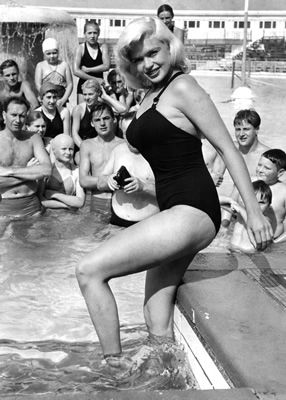
My childhood neighbor, Mrs. Mister, in 1956, posing for the Fort Worth Star-Telegram after becoming the only female swimming instructor at the parks and recreation’s Forest Park Pool. Swimming lessons hit an all-time high that summer and the pool had a record year. I’m the goofy kid, bottom right, second up behind our right fielder, Rhonda.

Pictured above, around 1954, is my neighborhood milkman, Mr. Rock Pint. He was a swell guy who gave all of us kids free chocolate milk and ice cream sandwiches during the hot Texas summers. All the moms loved him, and many of the younger kids resembled Mr. Pint; must have been something in the milk?

Pictured above is a crowd photo from the Texas International Pop Festival, August 1969. I am in the center of the crowd, about thirty people back; Momo, my wife, is just to the right of the center, about forty people back. My buddy, Jarry, is the blond guy with the severe sunburn that required hospitalization, but the paramedics wouldn’t transport him until the Grand Funk Railroads set was over. I survived one-hundred-degree temperatures for three days and got to meet Janis Joplin one late night when this nice gal with a Texas twang asked me if she could cut in line as I was waiting to buy a hot dog. It took a minute for me to realize it was her, but I was cool; it was the sixties, man. That night, ole Janis “took a little piece of my heart, now baby.” Momo and I still get a good laugh and a few wheezes when we revisit those times. Our children and grandchildren will never be as cool as we were.