The Legend of Little Moses: A Texas Rancher’s Tall Tale


Little Moses of Texas with his herd of followers

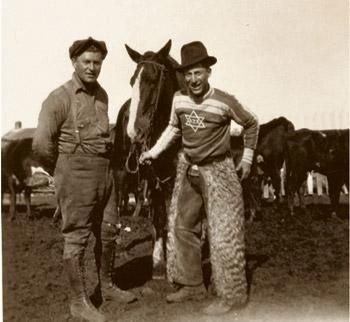
My grandfather on the left and his friend Hymie Rothstein with his horse, Miss Golda.

Hymie Rothstein departed the “old country”—New York City—in 1910, driven by a fierce longing to carve out a life as a cattle rancher. Armed with a tidy sum of money, a gift from his father, he purchased 500 acres of ranch land between Weatherford and Mineral Wells, filling the vast plains of Texas with 500 head of Hereford cattle. In a nod to his roots, he named the ranch “The Flying Menorah,” a tribute to his mother’s enduring spirit.

His mother’s cousin in New York, a man of ambition and impeccable taste, owned a fine restaurant in Manhatten. He made an agreement with Hymie to provide kosher meat for his clientele that desired it. Hymie, not one for shouldering piety, found himself adrift in the ways of raising kosher cattle. He took his best shot, his only shot.

He instructed his hands to don traditional Yarmulkes and grow their beards long as if the mere outward appearance would somehow sanctify the herd. On Fridays, just before the onset of the Sabbath, he would wheel a wagon through the pastures, a local Rabbi perched in the back, chanting blessings over the cattle and the land itself. Hymie, in his complacency, assumed some transformative power in these rituals. However, the Rabbi was paid twenty-five dollars for his solemnity and kept his thoughts on the insufficiency of such blessings close to his vest. A buck is a buck.

It was then that Hymie, seeking to nurture and grow his herd, purchased a massive Hereford bull from a neighboring ranch. The rancher who sold the bull warned Hymie that the bovine suffered from a restless spirit and could not be contained by mere wire fences. The bull’s wildness seemed almost elemental; he broke through barbed wire as if it didn’t exist, suggesting desperation and freedom to roam. Hymie named the bovine “Little Moses.”

As December descended into winter, a blue Texas norther swept across the prarie, enveloping it in a foot of snow. It was two days before Hymie’s ranch hands could reach the cattle, and when they finally did, they found the herd had vanished into the vastness, leaving only a gaping break in the fence. “Little Moses,” with his insatiable desire to roam, had led the others away into the boundless prairie.

Worry filled the air as the cowboys scoured the land for trails, only to lose their way in the rugged hills. Frantic, Hymie called upon the local sheriff, JD Ramses, to put out an alert for the missing cattle—a flyer caricaturing a group of smiling cows decorated every telephone pole and storefront in town. The sheriff alerted law enforcement in the surrounding counties. The poster added a comic touch in desperate times. Reports trickled in from West Texas of a large number of cattle seen crossing Route 66 a week ago.

Hymie and his men doggedly pursued the herd, picking up cow tracks outside of Lubbock. Thirty-nine days had passed, and the exhausted cowboys were ready to return home. On the fortieth day, they stumbled upon their herd resting against the edge of Palo Duro Canyon. All seemed accounted for, save for their leader, “Little Moses.”

As twilight descended, one of the men caught sight of a ghost emerging from the canyon, a snow-white bull, trembling, stumbling, yet proud. “Little Moses” had returned, his dark coat transformed into a glaring white, his eyes a startling blue that shifted like lightning in a storm. The bull had witnessed a Biblical apparition, possibly a burning tumbleweed or a flame-engulfed Mesquite tree.

The beast settled near the campfire, surrounded by his loyal herd, which gathered to pay homage as if sensing the moment’s gravity. Hymie offered him bread and a few sips of kosher wine as a final kindness. “Little Moses” then lay down next to the campfire. Accepting the warmth and the final moment, he drew his last breath, exhaling a vapor cloud that floated upward into the chilled night.

The sky boomed with thunder, a sudden crack of lightning that could have startled any common cattle, yet no one moved. Instead, they stood, rapt in attention, staring upward as a celestial sound of trumpets pierced the night. From somewhere above, two heavenly Holstein Angel Cows, graced with beautiful white wings, descended, each adorned with a golden trumpet in their right hoove.

The angelic cows flanked “Little Moses,” and, in a transcendent moment, the trio ascended into the heavens, a journey not just for the bull but for every living soul that had wandered alongside him. The Cowboys were left gobsmacked.

The group of men, in stunned silence, sat by the campfire, finding solace in their whiskey, rolled cigarettes, and hardtack. Dialogue sputtered and finally ended: no one could explain the miraculous ascending of Little Moses. Hymie, being the most religious of the bunch, said, “If God takes us sinful cowboys to Heaven, why not a cow? “

As dawn painted the sky anew, the cowboys awoke to find a snow-white bull calf standing proud among the cows—fiery blue eyes that sparked with the promise of a bovineious legacy. This new leader, born from the mystique of the canyon, would guide the way back to the Flying Menorah, a symbol of continuity in a world that had brushed against the divine.

The Comedic Side of Childhood Baptisms: Learning To Swim In The Holy Waters


I was a Southern Baptist kid, not by choice of my own, but by my mother and father’s doing. I was a feral six-year-old, and my sister was a swaddled titty baby along for the ride. My father had not yet been dunked, but my mother had been many times at the First Baptist Church in Santa Anna, Texas. I was a captive, unable to escape, so I had no choice but to enter the holy tub of East Fort Worth’s unfluoridated river water.

The good Reverend Augustin Z. Bergeron, our illustrious chain-smoking, iced-tea-drinking preacher from the bayou of Louisiana, was a world champion baptizer. He could hold a body under the water for a good minute while orating the word of God to the congregation on why this sinner had found their way to his tub of holy water. I was a kid, I didn’t know sin, or lying, or anything, I was just a dumb little fart that was dragged to church every Sunday and fell asleep in my own sweat-covered pants sitting on oak wooden pews, holding my feet high so I wouldn’t be dragged to the depths of Hell through the hot wooden floor of the church. My sainted mother thought it was time for me to take the dunking, which marked the start of a once-a-year ritual that would last for half a decade. I was baptized so many times that’s how I learned to swim. It was that or drown. My skin was permanently wrinkled, my scalp was free of Brylcream and dandruff, my skin was soft, and I smelled of Trinity River holy water most of the school week after my Sunday dunking. I may have been the cleanest and holiest kid in school. My teacher, Mrs. Edwards, a strong Christian lady of faith, always knew on Monday morning that I had been cleansed; she treated me better than the other little heathens in our class. I got two towels to lie on at nap time. I rather liked my status.

I remember my first baptism. I was barely six years old. My mother cornered the good reverend and demanded I be cleansed. My cousins, all a few years older, were considered world-class professionals, having been dunked every Sunday for two years. Mother, not wanting to be outdone by her sister, needed me to catch up. Reverend Z was hesitant because I had not been a regular attendee at Sunday School, but that didn’t deter my mother; she was determined to pursue her mission. He finally agreed over a glass of iced tea while my mother smoked three Camel cigarettes while nursing my sister and making her point.

The big-haired church ladies sang the usual hymns, a few of the overly faithful fainted and were carried out of the church. Reverend Z preached his usual knock-down-drag-out sermon, complete with rolling on the floor, smoking a half-pack of Lucky Strikes, and drinking a gallon of iced sweet tea. Not a hair on his coiffed head was out of place, and his suit was creaseless. He was a holy mannequin of God, in a good way, of course. The good Lord appreciates a snappy dresser.

After the two-hour sermon with four or five cigarette breaks, the line of folks to be baptized was down to me. Dressed in my best pants and a starched white shirt, Snap-On tie, and my new Timex kids’ watch, I was somewhat stylish for a boy my age. The young girls in the congregation gave me their toothless grin of approval. I had no idea what awaited me when the good reverend called my name to approach the pulpit and the holy tub. It was a quick affair. Reverend Z lifted me into the water, shoes, watch and all, said a few words, held me under until my legs kicked, and then raised me up, gasping for air. I was terrified. If the holy ghost had entered my body or wrapped their arms around me, I was unaware. I gagged and couldn’t catch my breath. The good reverend, seeing I was in holy distress, slapped me on the back, causing my breakfast to hurl into the holy water, which in turn made the congregation gasp in horror. This dumb-assed kid puked into the baptismal water, blaspheming and ruining the whole experience. I had eaten biscuits and gravy that morning, so the volume and solidity of the puke were rather disgusting. Reverend Z literally threw me out of the tank, lit a cigarette, took a swig of tea, and continued with a remarkable recovery sermon, saying I had rebuked the devil. The mess in the tub was the demon I expelled. It was a brilliant recovery, a saving grace for both of us. I went on to participate in many more Baptisms over the years and improved with each one, learning to hold my breath and refrain from eating before church.

Getting Down With Reverend A.Z. Bergeron: My Time As A Southern Baptist


Brother Dave Gardner

After church service on Sunday, I was visiting with my Pastor. I had finished playing in the worship band, and we talked music for a minute or two, then he asked me about a recent post I had written about my uncle’s dog eating his false teeth. He wanted to know if the dog ate all the teeth and whether the story was true.

I am blessed with a colorful family on both my parents’ sides, so most of what I write is factual and as accurate as my old mind remembers. My cousins disown me, and the rest of the living family thinks I make everything up and have a mental disorder, which I may have, thanks to a bad fall and brain trauma I suffered a few years back that erased part of my memory. However, I didn’t need that part anyway; I still have plenty to tell. I will admit to embellishing the historical facts a bit, only to make the story more believable and easier on those who lack imagination. If I hadn’t witnessed the events firsthand, I wouldn’t believe them either.

The Pastor and I got to talking about my experience as a child attending the Polytechnic First Baptist Church back in the 1950s. I was young, only six years old, with no formal religious training or exposure, except for a few weeks of vacation Bible School in Santa Anna, Texas, taught by two of the meanest, vengeful old bags in town —old maid sisters who were as mean as a sun-stroked Rattlesnake. So my attending that church was a tiny miracle, because I was traumatized by the old battle-axes and should have been in professional counseling. My parents were always short on cash, so a cup of hot Ovaltine and some cookies were the cure for most everything, including childhood trauma.

The good Reverend Augustin Z. Bergeron, the preacher at Poly Baptist, was no mere mortal man. He came from the deep in the Louisiana bayou country, a small Parish named Chigger Bayou, which is also the home of Le Petite Fromage and her daddy, the famous Cajun musician Baby Boy Fromage. My father was good friends with Le Petite during his teenage years in Los Angeles, California.

Reverend Bergeron possessed magical, mystical, fantastical powers, or so the legend is told in Fort Worth. He could cure folks from almost any malady, and did so weekly during Sunday services. He possessed an uncanny resemblance to the famous preacher turned comic, Brother Dave Gardner, another southerner with a bombastic Beatnik style wit and a side wink at southern-style Christianity. Reverend Bergeron either copied Gardner or Gardner saw the good reverend in Chigger Bayou and stole his schtick, which was controversial for a preacher. My father always compared him to Brother Dave, saying his wit was just as sharp and funny. I was a kid, so I didn’t get any of it. I was two years away from discovering Gardner’s comedy records, but when I did, I wore them out and fancied myself a mini-Brother Dave: when I wasn’t pretending to be Mark Twain.

The congregation at Poly Baptist never knew what to expect when the service started at 9 AM. The chorus of big-haired gals in purple robes sang the traditional hymns, all boring and dry as a week-old biscuit. Reverend Bergeron would saunter in from stage left, grab the microphone off the pulpit, and start singing like Ray Charles. The organist followed suit, and the choir became Martha and the Vandellas. That’s when the place started rocking like a black church in the Mississippi low country, which was strange, because most white folk Baptist churches in Texas didn’t have music other than a choir, and no hot-shot keyboardist. The Reverend would dance across the stage, duck walking like Chuck Berry, spinning, falling to his knees, yelling “Thank you, sweet Jesus”, then crawling across the stage like a baby, and, all the time holding on to his lighted Camel cigarette and the microphone. Another blasphemous act, since smoking was deemed a sin by the church. He also had a large Tupperware tumbler of Ice-Cold sweet tea sitting on the pulpit and would constantly refill the tumbler from a pitcher just off stage. Some folks speculated it wasn’t tea, but hooch, and that was the reason for his antics. My parents loved the guy and would smoke as many cigarettes as he did during the service. Almost everyone in the church smoked and would drop their ashes on the wood floor, another sinful citation. An ethereal cloud of toxic blue smoke hung in the air of the un-airconditioned church. It was so thick that it hid the tops of the stylish ladies’ Bee-Hive hairdo. It gave the place a creepy feeling, as if we were suspended in the clouds or the fires of Hell were seeping through the cracks in the old wood floor. I believed it to be from below, and always kept my small legs propped on the Bible holder on the back of the pew. Satan wasn’t going to pull my young butt through those cracks in the floor.

Our family left the church a year or two later and attended an Episcopal Church, which was boring compared to Reverend Bergeron’s Baptist Church. I still dig Brother Dave Gardner.

Religion, Family, and a Baptism Gone Wrong


Swimming With Jesus In A Cement Pond

My first taste of religion came when I was six. A boy from Fort Worth, I was taken to the Polytechnic Baptist Church to witness the near-drowning of my young father. He was baptized by a man named Reverend Agustin Z Bergeron. The preacher was a legend, standing alongside only two others: Reverend J. Frank Norris and Billy Graham.

Someone in my family, an aunt or a cousin or all members thereof, thought that father’s soul needed saving to ensure his path to Heaven would be an honest one. I suspect it was his mother. She was a championship sinner with no way to redemption, so convincing her only son to Baptism might also gain her entry to God’s domain as a parental guest. I also suspect that the bottles of hooch and the 38 special in her traveling suitcase would also be overlooked as she accompanied him through the pearly gates. Looking back on my family history, I now realize that the entire bunch of my father’s family was street-Rat-crazy.

The Sunday of the Baptism was as hot as I can remember. The small church was surrounded by large shade trees, but there was not a whiff of a breeze inside the building. Religion and suffering are one and the same. July in Texas is considered a preview of the weather in Hell, and the good reverend used it well.

I sat beside my mother. My little sister was in her lap, not yet a year old. My clothes were soaked with sweat. I might have wet myself and not known it. The summer heat rose from the wooden floor beneath us. Hell lay just below, waiting for us to waver, to lose our faith. Satan would pull us down if we let go. It seemed so simple. I didn’t understand sin or what it meant to fall into Hell. Kids don’t think about such things.

Pacing the floor, Preacher Augustin moved from wall to wall. Behind him, the big-haired women added their Amen and Halleluiahs, their voices sharp and clear. The pulpit held the preacher’s Bible, unused, but not forgotten. He did not need its leather-bound wisdom. He knew all he needed to instill fear in the hearts of those gathered in that church. The stifling air was drenched in repentance.

The sermon concluded, and the Baptismal commenced. Father was the last on the list.

Mother had dressed him in a new white shirt and a black tie. With his new black horn-rim glasses, he looked like the television comedy star, Steve Allen. The shirt was stiff as cardboard, making it hard to move. One might expect that if someone were to be dunked in water, a swimsuit or at least a robe would be fitting. But no, Baptists preferred it genuine, fully dressed in their best clothes, shoes, watch, and wallet.

Father’s name was called. Entering the pulpit from behind a velvet curtain, he climbed into the Baptizing tank. I found it odd that a church would have a small swimming pool at the altar. A waist-deep concrete tub full of unpurified water. How would one know that the occupants hadn’t released a stream of urine into the sacred water in their moment of personal repentance and acceptance? It’s a natural response akin to peeing in a lake. Father stood in the holy waters awaiting his deliverance. He carried the look of a trapped man; no escape route was available, so his fate was sealed.

Preacher Augustin wasted no time. He asked Father if he was ready to accept Jesus and be bathed in the Holy waters. Father mumbled a few words, and the preacher pushed him back into the Holy water. Time passed, it seemed like minuets, and along with lovely words and passages, and still, Father was immersed under the Holy waters. A hand, then an arm reached up, flailing about. Finally, a leg broke the surface, and a shoe flew off. Still, Preacher Agustin continued the cleansing.

Looking back, it was common knowledge that father was a country musician and made his living playing in the beer joints along Jacksboro Highway. Preacher Augustin figured since my father was a fully certified sinner, an extra dose of saving was needed.

Father made it to the surface with seconds to spare. Sputtering and coughing, on the verge of death, he rolled over the side of the cement pond and lurched toward the side door of the church. Holding my baby sister, my mother grabbed me by my bony arm, and we made a hasty beeline to the car. Father was there waiting, dripping wet, looking like a bad meal on a china plate, but he was a saved man.

A Nickle Will Save Your Soul


My first dose of old-time Texas religion came at six years old. Up until then, my sainted mother deemed me too young, fidgety, and stupid to grasp the complexity of the Southern Baptist philosophy. She was right, and I finally gave up when I became an Episcopalian.

The Polytechnic First Baptist Church in Fort Worth, Texas, was rumored to be the place to go if you wanted a direct line into Heaven. On Sundays, the pews were packed, and folks lined the walls while the children sat in the aisles. Christmas and Easter, the church opened its doors at daylight so the longest-standing members could claim seats. My father’s large extended family, around thirty members and their relatives by marriage and accidents, lived in Poly, and they all attended the PFBC, as it was called by the congregation. My two cousins and I, being the same age, were the newest lambs to enter the flock.

My first Sunday arrived in September of 1955, the week after my sixth birthday.

September weather in Texas is no different than August, July, or June: it’s miserable hot. Dressed in a heavily starched, long-sleeved white shirt, a kid-sized clip-on tie, black trousers, and shiny new Buster Brown shoes, I was a styling child and feeling pretty good about my debut. By the time my father skidded his Buick into the church’s gravel parking lot, my new duds were sweat-soaked, and I smelled like a beer-joint ashtray: our car had no air-conditioning, and my parents smoked Lucky Strikes two at a time. My sister was five months away from making her appearance, so my mother was chain-smoking for two.

Once in the church, my cousin Jock joined me, and we seated ourselves next to my mother so she could control our behavior with her patented one-eyed stare or a motherly, open-handed whack to the back of our flat-top-haircut-wearing little heads. She gave me a gentle swat before entering the church, just to let me know what awaited me if I acted like a fool.

Most of my father’s aunts and uncles took the first rows closest to the preacher. Their warped reasoning was that the closer to the pulpit and the preacher, the better the chance of forgiveness for last night’s debauched beer-fest and the slight chance of possibly slipping past the pearly entrance gate guarded by Saint Peter. They’ve all been gone for decades, so no one knows if their plan worked. The promised contact from beyond has yet to materialize.

My grandmother, her four sisters, and one brother were hard-drinking, two-stepping, championship-cussing Baptists and had no use for Presbyterians, Methodists, and especially Catholics. PFBC: Our church was so bright-white that you needed sunglasses to kill the glare.

The leader of our church, the exalted flamboyant Reverend Augustin Z. Bergeron, a transplant Cajun from Chigger Bayou, Louisiana, was a certified autograph-signing local celebrity. He wore expensive mohair suits from Leonard Brothers Department Store, retained a personal hair stylist who kept his wavy locks immaculate, and sported custom-made footwear from Larry’s Shoes. He was likely the inspiration for the outrageous 1950s ex-preacher turned comedian Brother Dave Gardner. The man commanded the pulpit and the stage like a Broadway entertainer. With a lighted cigarette in one hand and a Tupperware tumbler full of iced-sweet tea in the other, he paced and screamed like a detained mental patient, cursed the Devil and his minions, admonished the sinners in the congregation, strutted, shuffled, stomped, rolled on the floor, crawled on his hands and knees, and wept like a middle-aged housewife going through the change of life. The choir of big-haired ladies standing behind him punctuated every nuance with an “Amen, Hallelujahs, or Praise the Lord.” It was expected that two or three of the older singers would faint dead out during his sermon. It was cast in newsprint that if Reverend Bergeron’s bombastic sermons couldn’t bring a sinner to Jesus, no one could, not even J. Frank Norris or “By-Gosh” Billy Graham.

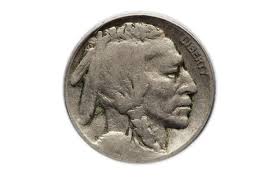
An hour into his fiery sermon, Reverend Bergeron took a potty break, and the ushers passed the silver plate down each row of pews. My mother gave Jock and me a nickel to contribute. I was reluctant to part with the change; a nickel was a lot of money, and by selling a few soda pop bottles, I would have enough for a Superman comic book. The plate came to me, and without hesitation, in went the prized coin: my first tithe. Jock dropped his nickel but pulled a sleight of hand and took a beautiful fifty-cent piece in exchange. Looking back, that might have been the start of his slide into petty crime that would find him, on his sixteenth birthday, a resident of the local detention facility known as “The Dope Farm.”

Our young lives took different paths: mine a bit boring but safe, and Jock’s loaded with excitement but long on trouble. I would like to believe that by giving up that coveted nickel, I was blessed with a thumbs-up from above.