Ask A Texan: Finding Joe Bee’s Father


Pretty Stable Advice For Folks That Don’t Live In Texas And Can’t Get Here

The Texan

This Texan received a letter from Miss Sparkle, a business owner in Chattooga, Georgia. She runs the Papa Gus River Rafting and Fish Camp, which was made famous in the movie Deliverance.

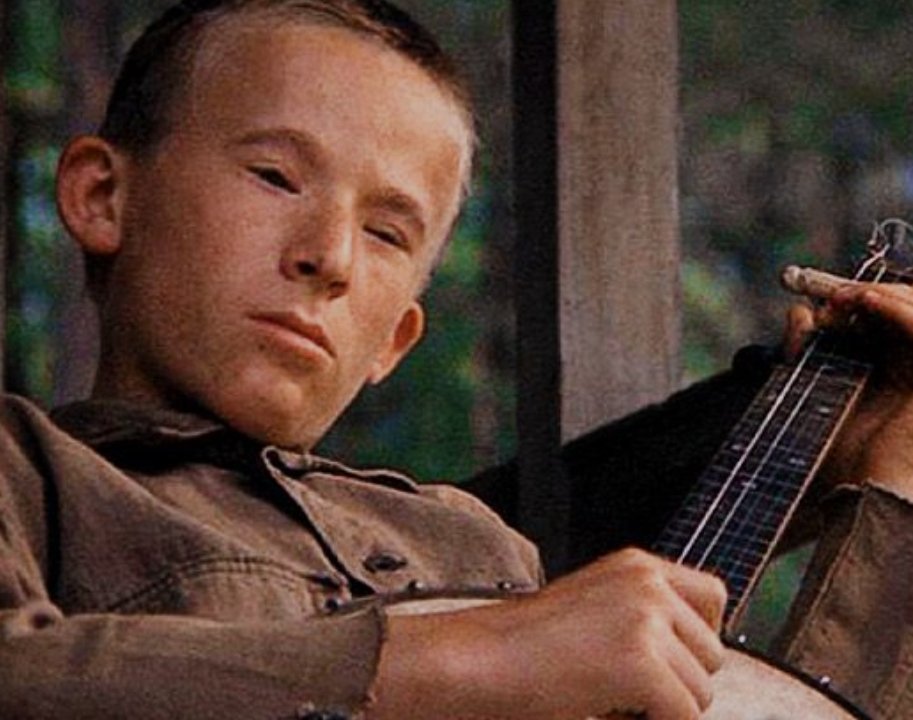
My little boy, Joe Bee before he grew up into a man

Mr. Texan: I can’t get no help around here from nobody: it’s just a bunch toothless hillbillies sitting around drinking moonshine, so maybe you can shine a light on my predicament. I enclosed an old picture of my boy, he’s real shy and won’t let me take a picture now that he’s older.

Back in 1972, a group of Hollywood boys filmed a movie here on the river. It was all fun, and my family got to be in the movie. I enjoyed many an evening drinking shine with some of the actors and got to know one of them really well. Bless his heart, he’s passed on now, but I’ll always remember his funny laugh and how good he was with that bow and arrows. Now, in 1984, a bunch of rich big-shots from Washington, DC came down to ride the Chattooga like in that famous movie that was filmed here. They were nice men and treated me with respect, even though I was just a river rat. Daddy hadn’t been gone long, and I was really sad, so it was nice to have some company at the camp. One night, the bunch of us were sitting around the campfire drinking daddy’s famous shine, and this one fellow they called Joe B started sniffing my hair. I didn’t mind cause I had just washed it with lye soap, and it smelled pretty good. He was a nice man, in a creepy sort of way. Too much shine always gets you in trouble, and I’ve had plenty of it since then. Well, about a year later, the old stork shows up with this bundle of joy. I call him Joe Bee. He ain’t no kid no more and doesn’t want to do anything but sit in his porch swing all day long playing the same song on his damn-ole’ banjo. I’ll tell ya, it’s driving us all to drink more than we normally do, and that’s a bunch. We tried hiding it, but he always finds the darn thing. Little Joe Bee just wants to know who his daddy is. My two other boys, the twins, Smokey and Bandit, their daddy never comes to see them either, but that’s cause he’s dead as a shot squirrel. I’ll give him a pat on the back; at least he gave them each a black Pontiac Trans Am for their sixteenth birthday. At least Joe Bee’s daddy could send him a monster truck or something. He just wants to meet his daddy and have something with big wheels to drive.

The Texan: Miss Sparkle, I’m sorry to hear of your problem and Joe Bee’s fatherless miserable life. Like you, I couldn’t stand to hear a banjo picking all day long. At least you have some good moonshine to knock the edge off. Looks like your boy’s Pop might be found in Washington, DC, and shouldn’t be too hard to track down; the family resemblance to a former big-shot should help find his daddy. We folks down here in Texas believe that every boy deserves a big truck to drive. Keep in touch, and tell your son I’m sending him a DVD of the Smokey And The Bandit movie along with a month’s supply of Ben and Jerry’s Ice Cream.

Finding My Voice Through Tall Tales and Truths


Over the years, I’ve spotlighted the storytelling skills of my two late Uncles, Jay and Bill. They remain in good standing and are the best liars and yarn spinners I have met. Each could have been as popular as Will Rogers, but they chose the farmhouse porch as their stage, shunning the spotlight and life as a celebrity.

Around the age of nine, I was convinced that the spirit of Mark Twain had somehow entered my body, and my destiny was one he had lived. My teacher, an older woman of little patience, was convinced that I was dropped on my head during infancy, which led to my outlandish literary behavior. She couldn’t see that I was destined to be a writer of some importance. Mathematics was a mystery I loathed, but I perked up when the curriculum came around to History and English. To me, everything became a story and originated from my grandparents’ farm, my extended street-rat crazy family, or neighborhood antics, and included made-up tales of ridiculous origins. Mrs. Badger, ever the suffering teacher, labeled me an insufferable pathological liar and called my mother in for the dreaded parental meeting, which included my school’s principal, who sat with a wicked wooden paddle in his lap, poised to administer punishment. Mother handled it well until we reached home. There was no butt whooping, but she did corner me in the kitchen, put her face nose to nose with mine and in a seething saliva spewing accusation said,

“You are one of them..my loathsome, worthless brothers have ruined you: I forbid you to associate with them, ever again.” She was right, they had, and I wore that tawdry badge proudly. All those nights sitting on the farmhouse front porch listening to their beer-infused tall tales, yarns, and lies formed me. I was spoiled, but happy goods. My family lacked the foresight needed to distinguish a liar from written fiction. My Aunt Norma, a tarnished angel, is the gal who taught me to read, write, and imagine. She understood my affliction.

The Green Legacy of Mr. Greenjeans


If you were a kid in the 1950s, then you knew who Captain Kangaroo and his sidekick Mr. Greenjeans were. Their television show was broadcast five days a week in glorious black and white and viewed by millions of kids on tiny television screens. ” Don’t sit too close to that TV, you’ll go blind.” That was the stern warning from every mother, and here we are today, all wearing glasses or blind. How did you expect us to see the Captain and Greenjeans on an 8-inch screen?

The burning question we all had was, did Mr. Greenjeans wear “green jeans?” We were kids, with no color sets, it made us crazy. Was this man green?

A few months ago, I took a shortcut through a Fort Worth neighborhood to avoid road construction and noticed a weirdly dressed man using a hand pump sprayer to paint his yard a deep shade of Kelly green. I stopped and watched him walk from the curb to the house. Long, even strokes coat the brown grass to imitate spring’s favorite color. It was then I noticed his house was green, the cars in the driveway were green, his clothes and skin were green, and a small dog sitting on the porch was also green. What the hell? The man saw me staring and motioned me over.

I parked my car and walked up to the fellow, feeling a bit foolish for interrupting the work of a stranger. I introduced myself and complimented him on his handy work. He thanked me, extended his hand to shake, and said, “names Levi, Levi Greenjeans, nice to meet you.”

” That’s an unusual name, sir. The only time I’ve heard that last name was on Captain Kangaroo, and that was seventy years ago,” I said.

The green fellow laughed and said, ” That’s the family name. Mr. Greenjeans was my pop. My sister and I grew up in a green world, so this is pretty natural for us. Dad’s been fertilizer for a good many years now, so it’s up to me to carry on the family brand.” I agreed; he looked pretty good for an old green guy.

I didn’t want to pry or be too forward, but I asked, ” Sir, what might the family brand be?”

“Call me Levi,” he said. ” You know that song ” The Jolly Green Giant? I wrote it and collect mucho royalties. That Tom Jones song about the green-green grass of home wrote that one, too. The Green Giant food brand, that’s mine; also, copyright infringement made them pay up. Home Depot has a Green Jeans color named after Dad. I get change from that, and I get a shiny penny from YouTube for the Captain Kangaroo videos.” This dude has turned green into green cash.

I am impressed and honored to be in the presence of one of the famous Greenjeans family, but now is the chance to get the answers to my childhood questions. I am afraid of coming off like a six-year-old Duffus, but I asked, ” did your dad wear green jeans and did he have a green face, and was the captain a nice man, and why did he have a big mustache, and did your dad really have a farm? There, I spat it out, and I am an idiot.

Levi chuckled and said, “Dad wore green jeans, and his face was green from stage makeup. The captain, bless his dead heart, was not too friendly. He wore a mustache because, on the first live show, a little kid threw a Coke bottle at him and split his lip; the stash hid the scar, and that’s why he disliked kids. He carried a small cattle prod under his sleeve, and if the kids got too close, he would shock them. Pretty funny stuff to see them jump. And the final answer is yes, Dad had a farm and grew veggies and raised prize-winning Llamas. Recently, my sister Denim planted forty acres of butt-kicking pot that we will sell in our “Mr. Greenjeans Apothecary Co-op in Denver.”

I thanked Levi for his kindness and started to leave when he stopped me. Extracting a green Sharpie from his pocket, he signed his name on the front of my white Eddie Bauer Polo shirt. “Hang on to that shirt, brother. It’ll be worth some cash one day.”

The Weight of Goodbye: Johnny’s Regretful Return Home


Chapter 17

Having made the painful choice to journey back to Texas, Johnny found himself in a heart-wrenching struggle, surrendering the opportunities that lay before him—holdings that promised riches within a decade. With a heavy heart and resolute spirit, he cast aside dreams of wealth, fully aware that the path behind him had irrevocably vanished, leaving only the words of “what have been.”

The lots on the edge of downtown Honolulu vanished in a few days to a dodgy speculator, who offered a fire sale price. The used car lot was sold to a former commanding officer with a firm handshake and a promise that money would follow when the last existing vehicles found new homes. Now, he was left with nothing but the relic of a pawn shop fiddle, a token of better days. He returned the instrument to the old Korean man, who was less than friendly, still smarting from the failed romance between his granddaughter and Johnny. He offered a few dollars, which was silently rebuked. Confident that his father had cared for his prized violin, it would be waiting for the bow’s stroke across the strings.

Johnny made his rounds to bid farewell. The Royal Hawaiian staff had treated him kindly despite his being a Haole. The folks at the Pearl City News and the companions of his musical venture each received a heartfelt goodbye.

On his last night in paradise, Johnny dined alone. Over the years, The Brass Monkey Tavern and its delicious seafood had comforted him. Pika, the native Hawaiian bartender, produced a special bottle from the top shelf. Tonight, there would be no cheap hooch for his valued Haole friend.

The bitterness of his embattled relationship with his mother touched every part of his soul. He knew full well that forgiveness, if it ever came, would be a long, winding road marred by the shadows of contrived intent. Knowing that his father was faltering added to his haste in his departure.

The troop ship to California was packed with weary yet hopeful servicemen returning from their duties. A loud hum of excitement hung thick in the air. For many, it was a moment to rekindle the flame of old lives or to carve out new paths. Yet Johnny was lost to his sadness and felt no thrill. His thoughts drifted to Blind Jelly Roll, Sister Aimee, and Le Petite Fromage, now back in Chigger Bayou. Their presence in his life had brought him great joy. He felt obliged to give them one final visit, knowing it would be the last in his lifetime.

Blind Jelly Roll, aware that his days were numbered, was grateful for the visit. His humor was intact, and he asked Johnny if he would like to ride in his new sedan, touting that his driving skills had improved since their last visit. Pancho Villa, the tiny demon dog, had only taken a soft nip on Johnny’s hand, but his lack of front teeth made the nip more of a gumming affair. Sister Aimee, angelic as ever, had transformed into a maternal figure for Jelly and promised Johnny that the old bluesman would find a nurturing and loving home until his final hour. Even that cantankerous dog would be cared for. Johnny saw something in her eyes; the looks she cast on the old man were more than motherly; he detected an inner fire that fueled her commitment. Farewells were exchanged. There were strong hugs, a few tears, and some laughs. The final, out-the-door goodbye was punctuated by promises to write.

That evening, Johnny boarded the Super Chief bound for Chicago, with a stop in Fort Worth. The journey would take three days and arrive in the morning light. He kept his arrival a secret from his family, anticipating the thrill of surprise. He sat cradling a cup of coffee on a wooden bench in the train station. He had gotten it from the diner. The lady behind the counter, dressed in a waitress uniform, reminded him of his sister. He missed Norma and was troubled by her not writing in almost two years. He knew something was wrong and would make it all right today. The night stretched long. He had come to find peace in books. He thought of Thomas Wolfe’s words, “You can’t go home again.” But could he? Would he be met by a marble angel on the porch or find only a locked door at the end of his journey?

Johnny’s Journey: From War to Healing in Hawaii


Chapter 16: Johnny Didn’t Come Marching Home

Foreword: Usually by another writer or friend. Excuse the breaking of tradition. These chapters reveal my struggle with the truths of my family. As a child and later as an adult, I saw the darkness of alcoholism and how it grips every soul within a household. I wished for families like those in a Norman Rockwell painting, gathered at the table with Grandfather carving the turkey, but life shattered that image. AA was just beginning to rise, and the word “enabler” had not yet marked the shadow of alcoholism. Bleeding in a public arena is not pretty.

The island of Hawaii held its charm, still untouched by the war. A year after the conflict with Japan, a few tourists arrived by boat, drawn to its beaches and emerald water. The men and women in uniform returned home, demobilized from the military. Johnny chose differently. He stayed, nurturing the holdings he had acquired over two years. Luck had favored him; he owned land in downtown Honolulu, not the best area, but one that would grow over the years and be worth hundreds of times what he paid. California held no interest, Texas even less. He would again be under the veil of his mother’s demands and secrets. The more time away he had, the more he saw that the extended family of her sisters and cousins was more toxic than nurturing. The arrangement with the old Korean had soured; there would be no marriage to his granddaughter, a relief to Johnny. He would take his chances to either flourish or fail in Hawaii.

Near the end of his first year after leaving the Navy, once again, the missives from home arrived almost daily. They were often the same—repetitive and sharp. Nothing had changed; Sister Aimee’s cures were lost like smoke in the wind. His father did not write, making Johnny feel like he was not there or had no strength to fight. The family had returned to Fort Worth. He now knew that something dire had transpired.

A letter from his sister Norma came with bad news. His beloved dog, Lady, had passed peacefully in her sleep at the age of eighteen. John Henry was not doing well; a depression had set upon him soon after they returned to Texas from California. His leaving a prestigious job and salary and returning to the furniture shop, working for a pittance of his former wage, caused him great stress. He would go days without speaking to anyone, lost in his sadness, reluctantly accepting the fact that he was now an older man and he had left his best life out west. PTSD was not yet diagnosed, but his behavior had all the signs of the illness. Killing another human, even in the ugliness of war, will take a piece of a man, leaving him un-whole and susceptible to the whispers of the Demons that await. John Henry had many to fight.

Johnny’s mother had become a mean, spiteful woman full of hatred for anyone other than her precious sisters in arms; they were all swimming in alcohol for the better part of each day. The reality of life was a concept they didn’t grasp; the party came first, and to hell with the rest of it.

Norma was planning to leave and join her brother in Hawaii but was reluctant to leave their father in his fragile state. Guilt washed over Johnny for not being there for his dog, Lady; she had been his faithful companion for his entire life. He was ashamed that he was more broken up over her death than the tribulations of his parents; they were adults who occupied their own prison. They could deal with it themselves. He wanted nothing to do with any part of their perils. Still, the missives came daily, now more frantic and cruel than ever. He was teetering, trying to stay positive and not give in to the dark web woven by his mother’s disease. It was impossible to fight. In anguish, he gave into her cruelty, hating himself for his weakness. Arriving in Hawaii, a boy, then becoming his own man, now again, a boy dragged across the Pacific Ocean by a three thousand-mile umbilical cord.

Born Without Politics


I came into this world in 1949, a mere flicker of life amidst the portal to the West, Fort Worth. The good nuns who ran the hospital, those stern guardians of order, chose an unconventional method to usher me into my first cries, with a 12-inch wooden ruler upon my fragile backside rather than the customary spank from a soft hand. From that day forward, I held a quiet disdain for nuns, a sentiment my mother echoed with an understanding heart. I emerged into stark confusion—bright lights glaring above, towering figures in black robes scuttling about. A tiny stranger in a bewildering land devoid of any plan, I only wanted to know what the hell just happened and where I was.

I was a happy kid, or so I’m told. My routine was breakfast, playing until lunch, eating a baloney sandwich, washing it down with Kool-Aid, playing some more, eating fresh-baked cookies from Mrs. Mister’s kitchen, watching afternoon cartoons, taking a bath after supper, and going lights out—pretty mundane stuff.

My family rallied behind Roosevelt in the 1930s, their hearts giddy with hope for a better tomorrow. They believed with every fiber of their being that Franklin Delano Roosevelt pulled this nation from the dark abyss of despair during the Great Depression, and perhaps he did in many ways. Pushing the buttons that led the country into World War Two with the Nazis and giving the checkered flag to spank the Japs. The Works Progress Administration sprang forth from his dream, and thousands of men and women found temporary refuge in constructing parks and carving streets in Fort Worth; each brick laid a testament to earning a paycheck. My father had a lovely singing voice, so he filled our home with a constant tempest of musical disdain aimed at Dwight Eisenhower from the first light of dawn until the sun sank low and I was fast under my covers. Eisenhower was a gentle figure, a soft old soul cradling a golf club like a weary king holding his lost crown tightly. Later in life, when I took to the sport, I learned he was a 3 handicapped and was a certified bad-ass who commanded our troops on D-Day.

I was too young to grasp the significance then, but amidst the familiar shouts and wailing, I began carving my political identity. To belong to this raucous, somewhat heathen brood, I learned to hurl adult insults at Eisenhower and shake my tiny fist in solidarity with my kin. It is a truth held dear — a family that goes full bore batshit crazy together stays together. We were a close-knit brood, vowing to all enter the mental hospital together if need be to prop up the sickest of the clan. My father was the first. Politics and his alcoholic mother got the better of his mind, and he was tied down and shocked like Ready Killowwat. He came out of the procedure a Republican, which caused his extended family to shrink back in disgust and horror. The doctors had taken a witty lunatic Democrat and turned him into a pipe-smoking, tweed-jacketed professor of Ryan Street. His demeanor hadn’t changed much, but the burn marks on his temples never faded. I viewed him as a now sophisticated Frankenfather.

Thanks to my electrically converted Pop, I eventually forgot about old Dwight. I learned to read and write and took to my Big Cheif Tablet, hoping to make a mark, or at least a permanent stain, on this planet. Politics went by the wayside, and I lost interest in gnashing, wailing, and blaming fault. I was becoming a writer thanks to my favorite aunt, Norma, who diligently taught me to read and write before entering first grade. I was a bored child prone to fidgeting while daydreaming about Mark Twain and Micky Spillane while sitting at my tiny desk. I had no interest in the little people around me, uneducated booger eating feral children with no purpose.

When John Kennedy was elected president in 1961, I began reading Life Magazine, my mother’s favorite slick-paged rag. He was a nice-looking fellow with an elegant wife. My mother and her friends went limp, noodle-wobbly-legged when discussing Mr. and Mrs. Camalot. I didn’t get it until the Cuban missile crisis came about. He was willing to risk the population of America just to give Castro and Krushev a butt-whooping and the middle finger; “here Jackie, Hold my 80-year-old Scotch and soda and watch this shit”. JFK had some big ones, as attested by Marylin Monroe. All of us school kids knew we were about to be ashes to ashes and dust to dust. Teachers stepped up the nuclear drills, and we spent the better part of each school day hiding under our desks. Why? If the bomb incinerated our school building, then our tiny desk wasn’t going to protect us. That’s when I realized teachers were as stupid as the rest of us Neanderthal knuckle-dragging children.

When the lovely gentleman with the perfect hair took a headshot in downtown Dallas, Texas, I was like most of my kin and friends. We all felt terrible and mourned for a few days, but then it was “back to the basics of life;Luckenbach, Texas, didn’t exist then, so we made do with Fort Worth.

My cousins and I were heavily into Brother Dave Gardner, the preacher turned comic. His albums were a bulging bag of witty, logical, and borderline racist comedy. America hadn’t learned quite yet to be so easily offended. Brother Dave’s favorite targets were Lyndon Baines Johnson and James Lewis, a fictional black character from the Deep South. LBJ was perhaps the most excellent Politicasterd crook in history, and by damn, he just had to be from the great state of Texas. We agreed; the lumbering goon from the hill country was as slimy as they come.

Around 1965, I began to form my own political beliefs. I was neither a lib nor a conservative, But a white flag on a long stick, wafting in the breeze. Heavily into surfing and playing rock music on my cheap Japanese guitar, I began to listen to the Beatles. I was told that some songs held mysterious political messages. When Sargent Pepper‘s Lonely Hearts Club Band debuted, My bandmates and I recorded the album on a Reel Reel tape machine and played it backward. After that, I was sure the four lads from Liverpool had been sent by Beelzebub to corrupt our nation’s youth. That’s around the same time our drummer, Little Spector, bought into the Hindu religion and found solace in Ravi Shankar and his melodious Sitar. It seemed I was the only one in the band with enough political knowledge to hold a riveting conversation with an adult.

The 1960s found me non-committal to a political party. The long hair and playing in a band were my disguise. Most of my friends and bandmates were in the bag for the liberal side of life; I was a relic, an uncommitted poof in the wind, although I dug Robert Kennedy and was just getting into his mantra when he followed his older brother to the Spirit In the Sky. Now, there was no choice, but “Little Richard” Nixon and his “Five O’clock World” beard shadow and sweaty upper lip creeped me out.

In 1976, I took a direct hit to the head from the mast while sailing my Hobie Cat 16-foot catamaran sailboat in the Gulf of Mexico off the island of Port Aransas. I was sailing by myself, which is not recommended, and was jibing downwind, which is also a no-no, when the mast caught the wind and reversed position, knocking me off the boat. I was wearing a diaper rig attached to the main mast, and that saved my life. What I do remember after the initial shock from that experience was that, like my father and his electrical conversion, I was now a Republican and have been ever since. I wonder if there is voting in Heaven?

Driving Lessons from Grandpa: A Childhood Memory


The dirt road was not much to speak of, so most folks didn’t. It was rutted, the kind of nasty ruts that could swallow a small child whole, never to be seen again.

No signs marked its path until my uncle Jay painted a small board with an arrow and the family name and attached it to a fence post with baling wire. People simply referred to it as the road to the Manley farm, the first right turn after crossing the bridge. It was a quiet, dirt path that meandered past Mrs. Ellis’s house and abruptly ended at a gargantuan cactus patch about a block past the railroad bridge.  

  My visits to the farm were during the summer, and I usually stayed for three weeks. I vividly remember the chickens, a noisy five hundred or so troupe circling the farmhouse, scratching the dirt, and being ever-busy. I also remember that almost everything on that farm wanted to kill me. The Mountain Boomers, Coyotes, and Rattlesnakes were my first worry, so I carried my completely ineffective Red Ryder BB Gun as protection.

     My grandfather Jasper decided it was time for me to drive a car, as most farm kids did out of necessity. At ten years old, I had mastered the tractor well enough to tear down parts of his barbed-wire fence without a second thought. He believed I was ready for his old stick shift V8 Ford. My grandmother fretted about his failing eyesight and knew better than to step into the driver’s seat herself: driving cars and deep water haunted her dreams, and she wouldn’t face either. My grandfather needed a chauffeur, skilled or not, for his trips to the domino parlor in the town’s only cafe, The Biscuit Ranch. I was his first and only choice.

     My first excursion behind the wheel was chilling, at least to me. What sort of adult would let a ten-year-old kid drive a car? If Grandfather was apprehensive, he hid it well.

  Turning out of the farm gate, hitting a hard left, clutching and shifting to second gear, working the accelerator, and attempting to steer the metal beast without running us into a ditch was all I could handle. By the grace of God, we made it to the railroad bridge where the hobos gathered, so we stopped so Grandfather could visit a spell. He enjoyed chawing with the hobos, swapping stories, chewing and sharing his Red Man tobacco, and telling dirty jokes: things that weren’t allowed at home. One of the hobo’s remarked that I drove exceptionally well for a little kid, and he and his buddy could hitch a ride into town. My grandfather was out of chewing tobacco, so he invited the hobos into the back seat for our first trip to the feed store in town.

  I was feeling optimistic and a bit cocky about my driving skills by the time we pulled up to the highway intersection. Grandfather checked for traffic and, finding none, told me to hit it, which I did: skidding out onto the pavement in front of the large truck he didn’t see coming; my small PF Flyer-covered foot floored the beast and hit second into third gear, squealing the tires like a stock car driver. The hobos in the back seat laughed and said I was the best kid driver they had ever known. The Ford made it to the feed store; then, we stopped at the Domino parlor, where I was introduced as the main chauffeur for the Manley family. When my mother came to collect me toward the end of July, I was car-driving Jessie. My grandmother marched me to the barn while my mother threw the grandest hissy fit ever after her father bragged about my good driving.

Growing Up In The 1950s. Threats Used By Parents To Keep Kids In Line


Pictured is the infamous “Dope Farm” in Fort Worth, Texas. A facility built to house drug addicts and high-profile bad guys. If you grew up in Fort Worth in the 1950s, chances are good that your parents used this place as a threat to keep you in line.

My neighborhood buddies and I were a bit on the bad side; nothing severe, just minor kid things like blowing up mailboxes with cherry bombs, setting garages on fire, raiding the milkman’s truck while he was taking the bottles of milk to a doorstep, dropping firecrackers down rooftop vents, fun little things like that.

These minor infractions usually ended with one or all of us getting a butt whooping with a belt, flyswatter, Mimosa tree switch, a tennis shoe, or a Tupperware cake pan. The Tupperware hurt more than any of the other weapons our mothers could find. When our hijinx got to be too much, our mothers would pull out the dreaded threat of “Okay, that’s it, either straighten up or I’m sending you to the Dope Farm.” That’s all it took to turn us into practicing angels for a few days. All the kids knew about this place. The narcotics users, gangsters, and local children who misbehaved went there. None of us actually knew anyone who had been incarcerated within those walls, but the thought of going there scared the liver out of us.

In the late 1950s, a cousin of mine turned into a genuine hoodlum, robbing a grocery store dressed up like Mr. Greenjeans from the Captain Kangaroo show. Greased back hair, black work boots, dirty Levis, and a white tee-shirt with a pack of Camels rolled into the sleeve, and he rode a junked-out motorcycle. When my mother spoke of him, she crossed herself. My poor cousin was added to the ever-present threat because he spent a year of his teenage life at The Dope Farm, living in a small cell, eating Wonder Bread and Bologna samwithches, and watching the old movie “Boys Town” every Saturday night. There wasn’t a Father Flannigan on the premises, only guards with guns and a Baptist preacher.

I was pretty good for a year while my cousin was locked up. We received a Christmas card with a picture of him dressed in his striped pajamas, slicked-back hair, and a Camel dangling from his snarly mouth. All this while perched on Santa’s knee. It was a nice little card, similar to the ones we made in school from construction paper and paste. Some bad words and threats were written below the photo, but my mother wouldn’t let me read them. She cut the bad word part off and taped the card on the ice-box, so every time I opened it, the threat was there, and it worked.

The only kid, other than my hoodlum cousin, who was dragged off to the place was our baseball team center fielder, Billy Roy. Billy started hanging out with our nemesis across the track, The Hard Guys, and became a regular James Cagney by the fourth grade, robbing a local convenience store with a Mattel Fanner 50 cap pistol. You guessed it, he went to the Dope Farm for six months. He learned some good stuff there because when he came out, he went directly into a lucrative life of hoodlummanity and crime. Last I heard, he was in Sing Sing.

We All Could Use A Little Mercy Now


My granddaughter recently introduced me to the music streaming service Spotify; I am officially hooked on this application that is now on my laptop and my iPhone. John Prine, Emmy Lou, Willie and Waylon, and Lyle Lovett, they are all on there. One artist I had not heard of is Mary Gaither, a grammy winning folk singer. I thank the good Lord for helping me find Mary and her music.

One song, in particular, grabs me by the heart. ” Mercy Now.” She came to write this song by living it or knowing someone who has walked that path. I think we all have walked that path at one time or another; I know my trail is well-worn like the wagon tracks on the prairie.

Lyrics to “Mercy Now”

First Verse;

My father
could use a little mercy now
The fruits of his labor fall
and rot slowly on the ground
His work is almost over
it won’t be long; he won’t be around
I love my father; he could use some mercy now

My father has been gone for a long while, since 1995, my mother since 1998, and my oldest son since 2012. I still think of them, but not as often as I once did or should, but this song washes me in their memory. My father started his life as a country musician and ended it as a successful home builder. He became ill in 1994, struggled, and fought a mighty battle, but passed from brain cancer. When he passed, he and I were at odds on a few things that we never resolved, and I deeply regret that. I, if anyone, should have shown him and my son a little mercy; it should have been me. My failure to forgive is my burden to carry. We all are flawed people. God made us that way so he could lead us back to him and give us our faith or let us ride the express train to hell. It’s our decision. Fathers, mothers, sons, sisters, and daughters should put aside their pettiness, interferences, verbal battles, and self-righteous beliefs. Some, too soon, will leave this world, and it should be on good terms and wrapped in forgiveness and love. We will all die, and mercy is our gift to our loved ones.

Third and Fourth Verse That Sums Up Our World

My church and my country
could use a little mercy now
As they sink into a poisoned pit
it’s going to take forever to climb out
They carry the weight of the faithful
who follow them down
I love my church and country,
they could use some mercy now
Every living thing could use a little mercy now

Only the hand of grace can end the race toward another mushroom cloud
People in power,
they’ll do anything to keep their crown
I love life and life itself
could use some mercy now
could use a little mercy now

I know we don’t deserve it
But we need it anyhow
We hang in the balance
Dangle ‘tween hell and hallowed ground
Every single one of us
could use some mercy now
Every single one of us
could use some mercy now

Not since World War II has our country teetered on the verge of war, not just two enemies, but many that will come at us from all continents and within our own country. Our leaders, hungry for power and greed, have let us become weak and lost. Our Churches and our pastors try to appease everyone instead of leading their flock by the word of the Bible and leading us in the right direction. People are angry at one another, some for a good reason, but many are taking their anger and misfortunes out on the innocents, family, or strangers around them.

We all should show a little mercy now.