The Legacy of Junior: Cowboy to Coffeehouse Icon


Junior Gives Fort Worth The Blues

An old friend of mine passed a few months ago. We had been apart for years, yet he held a distinct place in my thoughts. I sometimes borrowed fragments of his vivid life for my short stories, which pleased him. His name was simply Junior. He believed a last name was of no consequence and cared little for family ties.

In 1957, he opened a coffee house in the heart of downtown Fort Worth, Texas. Although they will tell you that “The Cellar” was the first, the “Hip Hereford” came first by a full year.

Junior was born to be a cowboy. His father, grandfather, great-grandfather, and all the uncles and cousins wore the same boots and lived by the code of the West. There were more cowboys in his bloodline than in a John Wayne film. It should have been his fate. But then, his favorite horse, Little Bill, kicked him hard in the head. After that, he turned his back on the rugged ideals of the West. He became the owner of a coffee house club, a renaissance man, a poet, and a man who lived life like a Stetson-wearing beatnik. He said a life spent on a sweaty saddle, inhaling the stench of cattle farts, was not the life he dreamed of.

The opening night for the coffee house was Halloween 1957. Junior hires two street winos to help run the door and do odd jobs. They were reluctant to give him their birth names, so he christened them Wino 1 and Wino 2. They were good to go as long as Junior paid them and kept the booze flowing. The following is an excerpt from the unfinished story.

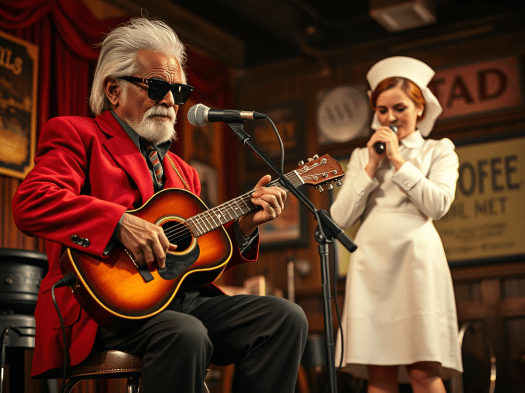
Around 7:15, Wino 2 informs Junior that the first performer has arrived and takes the stage for the introduction. He steps to the mic and, in that pleasant voice, says, “Ladies and gents, please welcome to the stage, Mr. Blind Jelly-roll Jackson and his nurse Carpathia.”

An ancient black man with hair as white as South Texas cotton, holding a guitar as old as himself, is helped to the stage by a prim female nurse dressed in a starched white uniform. The old man wears a red smoking jacket, a silver ascot, and black trousers. Dark sunglasses and a white cane complete his ensemble. The old fellow is as blind as Ray Charles.

The nurse gently seats the old gentleman in a chair provided by Wino 1 and lowers the large silver microphone to a height between his face and his guitar. She then stands to the side of the stage, just out of the spotlight. Blind Jelly Roll starts strumming his guitar like he’s hammering a ten-penny nail. Thick, viscous down strokes with note-bending riffs in between. His frail body rocks with every note he coaxes out of his tortured instrument. He leans into the mic and sings,

“We’s gonna have us a mess o’ greens tonight…haw..haw..haw…haw…gonna wash her down with some cold Schlitz beer..haw..haw..haw..gonna visit ma woman out on Jacksboro way…gonna get my hambone greased”. This was Texas blues at its best.

On cue, his nurse steps into the spotlight, extracts a shiny Marine Band harmonica from her pocket, and cuts loose on a sixteen-bar mouth-harp romp. Her ruby-red lips attack that “hornica” like a ten-year-old eating a Fat Stock Show Corndog. The crowd loves it. They dig it. When Blind Jelly Roll finishes his song, Wino 2 passes a small basket through the group for tips. Jelly Roll and his nurse take their kitty and depart. He’s due back at the old folk’s home before midnight.

A Grandfather’s War Stories: Realities Beyond Hollywood


Honor And Duty In 1918

I wrote this back in 2020; hope you enjoy.

My grandfather, in 1917-18, served in the Army and the war to end all wars: World War 1. He fought in the mud and bacteria filled trenches in France: wounded twice and gassed once. He killed Germans in close hand to hand combat with a bayonet and a knife, never forgetting the look on the faces. He lost friends in vicious battles. There was no time to grieve or pay respects. That would come later in life.

Looking back through my childhood relationship with him, he likely suffered from what we now call PTSD. My Grandmother said he was a different man after that war, and at times, not a good one.

He refused to talk about the fighting and killing until I was around ten-years-old, and he was dying from Lymphoma cancer. His doctors at the VA Hospital said it was caused by the gassing he received in the war. He knew that I might someday go to war, so he wanted to let me know it was not like the movies.

We sat for a many hours one afternoon a few weeks before his passing. His descriptions of battle and the things he had done for his own survival was beyond anything I could imagine. I was young, and war to me was black and white movies. James Cagney in “The Fighting 69th,” or John Wayne and a host of others playing army, like my neighborhood friends and I did. No one really died, and when shot, there was no blood or screaming.

The last few days of his life were spent in and out of reality, reliving those battles as he lay in a veteran’s hospital in Dallas. My father, a veteran himself, was the recipient of my grandfathers last horrors. Those days my father sat by his bed, listening to the nightmare his father had carried for all those years, had a profound effect on him.

John Henry Strawn made sure I knew what real honor and duty were about. It followed him for a lifetime.

Fort Worth Legends: A Young Musician’s Rise Under Bob Wills


Chapter 19: The continuing saga of the Strawn family and the challenges of living in Texas during the 1930s and 1940s.
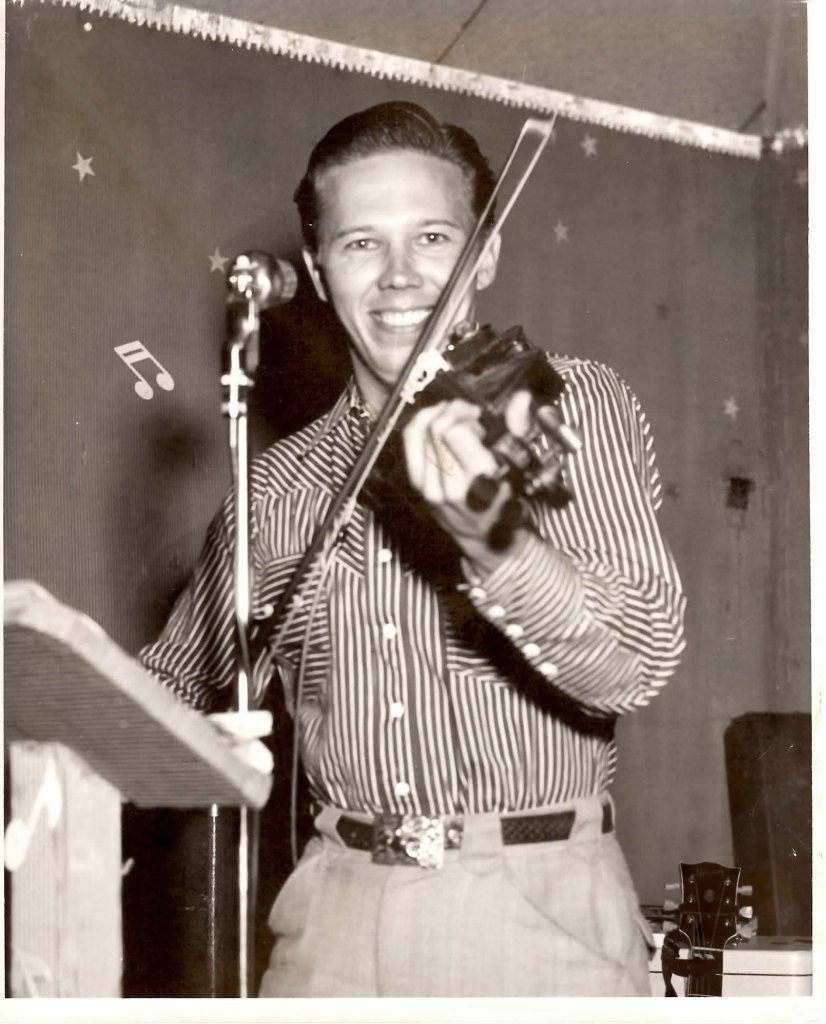
Johnny Strawn around 1948, Fort Wort,h Texas

My grandfather, John Henry, walked to his job at the furniture shop. Years ago, the same place had closed down, driven by the Depression, forcing him to move his family to California for work. Now, twelve years later, he has taken giant steps back, from a good job in Los Angeles to once more building furniture for an hour’s wage. Defeat weighs heavily in his heart. Middle age has come, and the future is murky. So, doing what men do, he keeps walking, counting his steps to nowhere. There are many to blame, but he alone bears the burden of his failures.

The iced ground crunches under his shoes. The cold goes to his bones. His jacket is no match for this weather. He favors the feel of the ground beneath his feet over the Ford sedan in the garage, which is idle most of the time and now a home for mice and other wandering critters.

After the upsetting homecoming with his father, Johnny walked a few blocks to the small neighborhood grocery store to call his best friend, Dick Hickman. His father remained firm in his decision about the telephone, vowing to never have one in the house. The old man viewed the contraption as a rattlesnake in a bag. Lousy news reached him in time enough; no reason to expedite misery.

Two sisters from Germany ran the store, always open, even when the ice storm howled outside. They preferred work to idleness; a dollar was worth more than knitting by the stove. They missed their homeland, but not the darkness that had settled under Hitler’s shadow. Johnny walked in and felt the warmth; they had known him since he was a boy. Following a few hearty hugs and cheek kisses, he was offered a mug of coffee, hot and strong with bourbon and a hint of cinnamon, a taste of what once was.

Dick and Johnny had forged a bond on the playground one morning; Dick was trapped by older boys, their intentions were dark, and Dick knew he was in for a ruckus. Johnny, a full head smaller than Dick, added his small fist for ammunition. A few busted lips and a bloody nose ended the altercation, and the boys would be bound for life by bloody noses and skint knuckles.

Dicks mother, a woman of stern Christian resolve, lived simply, her heart full of faith. Father Hickman was a ghost of a man, suddenly appearing from nowhere, then off again to somewhere. Mother Hickman, as she was called, gave what little extra money they had to Preacher J. Frank Norris, the charismatic leader of the First Baptist Church of Fort Worth. Nice clothes were a luxury during the Depression, and most children at R. Vickery’s school wore hand-me-downs or worse. Dick wore the yellow welfare pants distributed by the Salvation Army, a sign that his folks were poor. Mother Hickman saw nice clothing as a sign of waste, except when it came to her Sunday fashions. Johnny had a pair of those detestable canvas pants but refused to wear them; the old dungarees with patches did just fine.

Both boys felt the weight of loss when the Strawn family left for the promised land. They exchanged a few postcards during the years in California. Nevertheless, they adhered to the unspoken rule that young men did not write to one another. This was a relic of manly notions of the time. A line or two every six months was enough. Both joined the Navy around the same time, meeting briefly in Pearl Harbor. Then came the seriousness of war. Young sailors, they carried on.

Dick arrived at the two sisters’ store to fetch Johnny. His transportation was a rattle-trap Cushman motor scooter. It refused to stop on the icy street. The scooter slid on its side into the curb and threw Dick off of the beast. The ride to Dick’s apartment was a jolt, far worse than the taxi. Johnny vowed to buy a car when the weather cleared, maybe one for his buddy, too. He held a tidy wad of cash from Hawaii.

A brotherly deal was struck. Johnny would share Dick’s large apartment on Galveston Street, splitting the rent and bills evenly. They were friends again, but now men, and they had different thoughts, dreams, and needs. Dick was courting a young woman from Oklahoma and doing a miserable job of it. Still, marriage lingered in the air, heavy like the rich aroma of brewing coffee, the kind they both drank too much of. Dick took his poison with cream and sugar; Johnny preferred his black and strong.

Johnny’s goal was to play music for a living, and this was the right city to make that happen. He joined the musicians’ union and sent a message to Bob Wills that he was back in Fort Worth.

Wills was now the celebrated band leader of the western swing band, The Texas Playboys. He remembered that meeting at the radio show in Bakersfield, California, long ago. The boy stood out. It was no small feat because Wills was the finest fiddle player in country music.

Bob Wills was not a man known for kindness. He could be brash and indifferent to fans and bandmates alike. Yet, for Johnny, he made an exception. Bob took the young man under his wing, becoming a mentor to my father. A few calls were made, and the boot was in the door. Johnny secured auditions at some of Fort Worth’s best clubs, and each went well. Bob invited him to rehearse with the Playboys. It was there he met men who would soon be legends in country music. A few years later, he would find himself in that circle.

Bonnie and Clyde: The Glamorous Outlaws’ Secrets


A Girl Has To Look Good When She Goes


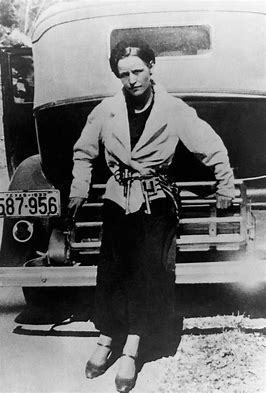
Thanks to the new Netflix movie “The Highwaymen,” the two most famous outlaws from Texas are captivating a generation that has never heard of them. I’m referring to those two crazy kids from West Dallas; Bonnie Parker and Clyde Barrow.

Their hijinx and daily run-ins with the law kept many a small-town newspaper in print and propelled the two young delinquents into living legends of their own time.

The car chases, robberies of banks, merchants, grocery stores, five and dimes, gas stations, gumball machines, lemonade stands, produce stands, and just ordinary citizens made spectacular fodder for the papers. They were the new folk heroes of the southwest, and as bad as these two were, their antics were pure journalistic gold. And, they didn’t mind killing a few lawmen and citizens if deemed necessary.

In the 1920s and early 1930s, my father’s Aunt, Katy Eberling, owned and operated a beauty salon on the corner of Rosedale and Hemphill Street in Fort Worth, Texas. For seven years, it was prosperous and allowed her to employ four beauticians and a manicurist. She was thriving and often turned away new clients or referred them to other shops. She wasn’t wealthy but made a darn good living for the times. Then, along comes that pesky old depression and she loses three beauticians and the manicurist because her clients now do their hair at home, or go to Leonard Brothers Department Store for two dollars less per set. Katy is weeks away from closing the doors when a visit from a new client changes her luck.

A cold December Friday afternoon finds Katy sweeping up the shop and preparing to close when a man and women enter through the back alley door.

The women, a frail, bony little thing is dressed in the best clothes that money can buy. A pale yellow cashmere sweater with a beige camel hair skirt. A string of pearls drapes her little neck. The man that accompanies her wears a three-piece pin-striped suit and a black fedora. These two are right out of Macy’s of New York. 

The woman is small, almost child size, no more than eighty pounds. She strides up to Katy, extends her tiny hand and says, “ My name is Bonnie and could you please give me a wash, cut and set. I know its late, but I will pay you nicely if it is not too much trouble.”

Katy, having made little money that day, agrees and escorts her to the shampoo sink. As Katy is shampooing Bonnie’s hair for the third time, she notices the man sitting by the back door holding a shotgun in his lap. It is then, reality sets in, and Katy realizes who this new client might be. She removes her hands from the woman’s wet hair and retreats a few steps.

 Bonnie, sensing her fright, assures her in a kind voice, “ Mam, I am here for a beauty appointment, we mean you no harm and will pay for the service.” Katy assured that she will not be gunned down, completes the shampoo and leads Bonnie to the beautician’s chair.

Once Bonnie Parker is seated, it’s as if she’s a lost Catholic girl returning to confession.

She recounts her childhood, being married young, wanting to be a poet and attend a good university and make her Mama proud. She then makes mention of that mongrel over there by the door and how he has ruined her life beyond repair.

 Once she begins the tales of their lives on the run, she cackles like a mad witch and has Katy laughing along with her. First-hand knowledge makes it all the crazier. Katy knows that Bonnie is leaving out the killing parts to spare her.

Two hours later, the appointment is finished. Bonnie Parker hands Katy six twenty-dollar bills and says she will be back next month around the same time of day if that is alright. Katy says that will be fine, and Bonnie departs with Clyde in tow.

Knowing she has to keep this to herself, she tells her husband Harvey, and no one else. Katy is full of remorse, knowing that the money she accepted is probably blood money or someone’s life savings, yet she took it because it will allow her to keep her shop open for another few months. If she is truthful with herself, she enjoyed the excitement it produced.

The next month, on a Friday, the two most wanted crooks in the land arrive at 4:30 PM. Bonnie receives a wash, trim and set and the confessions continue. Katy earns another six twenty-dollar bills. This time, she is less remorseful and less frightened.

Bonnie visits twice more. The last visit was un-nerving for Katy. Bonnie Parker is unwashed, and her clothes need to be cleaned. She is gaunt and hollow-eyed. There are no confessions or funny stories. Clyde remained in their car and Bonnie, upon being seated in Katy’s chair removes a 38 pistol from her purse and cradles it in her lap as if she was expecting trouble.

When the appointment is finished, Bonnie Parker checks her makeup in the mirror, straightens her skirt and says to Katy, “ My mama always says, a girl’s gotta look good when she goes. How do I look, Miss Katy?” Katy replies, “ You look lovely as ever.”

Bonnie hands Katy eight twenty-dollar bills and says she will see her next month.

A few weeks later, Katy reads in the newspaper that Bonnie and Clyde were killed in a shootout with the law in Louisiana. Katy hopes she looked good when it happened.

This story was told to myself and my cousins many times. When we were young, Aunt Katy left out much of the detail. As we grew older, into teenagers, the story became more graphic and colorful. I had no idea Aunt Katy was so famous.

The Green Legacy of Mr. Greenjeans


If you were a kid in the 1950s, then you knew who Captain Kangaroo and his sidekick Mr. Greenjeans were. Their television show was broadcast five days a week in glorious black and white and viewed by millions of kids on tiny television screens. ” Don’t sit too close to that TV, you’ll go blind.” That was the stern warning from every mother, and here we are today, all wearing glasses or blind. How did you expect us to see the Captain and Greenjeans on an 8-inch screen?

The burning question we all had was, did Mr. Greenjeans wear “green jeans?” We were kids, with no color sets, it made us crazy. Was this man green?

A few months ago, I took a shortcut through a Fort Worth neighborhood to avoid road construction and noticed a weirdly dressed man using a hand pump sprayer to paint his yard a deep shade of Kelly green. I stopped and watched him walk from the curb to the house. Long, even strokes coat the brown grass to imitate spring’s favorite color. It was then I noticed his house was green, the cars in the driveway were green, his clothes and skin were green, and a small dog sitting on the porch was also green. What the hell? The man saw me staring and motioned me over.

I parked my car and walked up to the fellow, feeling a bit foolish for interrupting the work of a stranger. I introduced myself and complimented him on his handy work. He thanked me, extended his hand to shake, and said, “names Levi, Levi Greenjeans, nice to meet you.”

” That’s an unusual name, sir. The only time I’ve heard that last name was on Captain Kangaroo, and that was seventy years ago,” I said.

The green fellow laughed and said, ” That’s the family name. Mr. Greenjeans was my pop. My sister and I grew up in a green world, so this is pretty natural for us. Dad’s been fertilizer for a good many years now, so it’s up to me to carry on the family brand.” I agreed; he looked pretty good for an old green guy.

I didn’t want to pry or be too forward, but I asked, ” Sir, what might the family brand be?”

“Call me Levi,” he said. ” You know that song ” The Jolly Green Giant? I wrote it and collect mucho royalties. That Tom Jones song about the green-green grass of home wrote that one, too. The Green Giant food brand, that’s mine; also, copyright infringement made them pay up. Home Depot has a Green Jeans color named after Dad. I get change from that, and I get a shiny penny from YouTube for the Captain Kangaroo videos.” This dude has turned green into green cash.

I am impressed and honored to be in the presence of one of the famous Greenjeans family, but now is the chance to get the answers to my childhood questions. I am afraid of coming off like a six-year-old Duffus, but I asked, ” did your dad wear green jeans and did he have a green face, and was the captain a nice man, and why did he have a big mustache, and did your dad really have a farm? There, I spat it out, and I am an idiot.

Levi chuckled and said, “Dad wore green jeans, and his face was green from stage makeup. The captain, bless his dead heart, was not too friendly. He wore a mustache because, on the first live show, a little kid threw a Coke bottle at him and split his lip; the stash hid the scar, and that’s why he disliked kids. He carried a small cattle prod under his sleeve, and if the kids got too close, he would shock them. Pretty funny stuff to see them jump. And the final answer is yes, Dad had a farm and grew veggies and raised prize-winning Llamas. Recently, my sister Denim planted forty acres of butt-kicking pot that we will sell in our “Mr. Greenjeans Apothecary Co-op in Denver.”

I thanked Levi for his kindness and started to leave when he stopped me. Extracting a green Sharpie from his pocket, he signed his name on the front of my white Eddie Bauer Polo shirt. “Hang on to that shirt, brother. It’ll be worth some cash one day.”

Hey Kids, It’s Fun Being Sick!


How Kids Beat The Pandemic In The 1950s

Kids are an intelligent species. They know far more about human interaction and theatrical interpretation than their parents suspect. I can’t put a date on when this anomaly was discovered, but people with fancy degrees and a goatee first noticed this behavior in the early 1950s. My neighborhood may have been ground zero for their study.

As a bunch, the kids in my neighborhood were healthy. We ate mouthfuls of dirt, sucked on pebbles, and ingested every foodstuff imaginable without washing our grimy hands. This was perfectly acceptable to our mothers. Our young immune system was that of a caveman: we scoffed at germs, ” away with you foul vermin.” Like Superman on the TV, we were indestructible.

The only malady that affected us, was the dreaded Monday morning tummy-throat-aching body-virus. This malady usually broke-out in after a thirty or forty day incubation period. It spread like wildfire through our four-block coterie and most of the second and third grades, mostly affecting boys, but the girls were losing their immunity at an alarming rate.

The second week in November, close to Thanksgiving, most of our second-grade class was infected and missing in action. The symptoms were: headache, stomach ache, sore throat, and body aches, sometimes we developed a limp and had to crawl from the bathroom to our bed. When our mothers asked how we felt, we would point at the affected areas and groan, eliciting additional sympathy.

The first morning was the worst, then by noon we recovered enough to watch cartoons and eat some ice-cream, then after supper, the symptoms worsened, and mom made the call for us to stay home another day. Sleeping in was mandatory, and if we were recovered by lunchtime, we could go outside for some fresh air. This bug was known to not last more than three days, tops.

A seven year old can’t grasp the enormity of a situation the way their parents can. As a group, we were unaware that our symptoms matched those of the dreaded Polio Virus. Our kindly school nurse, fearing the worse, calls the health department for back-up.

Two blocks away at George C. Clark Elementary, our diligent principal cancels all classes and has the entire building sanitized by a nuclear cleanup team from Carswell Air Force Base. The newspapers are on this like a duck on a June Bug.

Lounging in bed eating Jell-O, and watching Bugs Bunny cartoons, my cohorts and I are unaware of our neighborhood pandemic.

Tuesday, mid-morning, a contingent of doctors and nurses from the Fort Worth health department, arrive to access the outbreak. They plan to visit every affected home around our school and test every sick child for the dreaded Polio Virus. Large syringes and foot-long throat swabs are required. A dozen ambulances stood by to transport the poor ill children to the hospital. The local newspaper was there, as well as the television news folks.

Skipper, my stalwart best buddy, and the elected grand Poo-Bah of our gang, was the first to break. With two syringes sucking blood from his skinny little kid arms, he sobbed and said he was faking it, we all were faking it. He gave us up like Benedict Arnold. Roger Glen ran screaming from his house when he saw the size of the needles, and the smartest girl in our class, Annie, gave a signed confession. The epidemic was over.

Most of us couldn’t comfortably sit for a few days, but we were all healthy until the next school year. That’s when the Asian bird, chicken, rat, and cat flue got us all.

Religion, Family, and a Baptism Gone Wrong


Swimming With Jesus In A Cement Pond

My first taste of religion came when I was six. A boy from Fort Worth, I was taken to the Polytechnic Baptist Church to witness the near-drowning of my young father. He was baptized by a man named Reverend Agustin Z Bergeron. The preacher was a legend, standing alongside only two others: Reverend J. Frank Norris and Billy Graham.

Someone in my family, an aunt or a cousin or all members thereof, thought that father’s soul needed saving to ensure his path to Heaven would be an honest one. I suspect it was his mother. She was a championship sinner with no way to redemption, so convincing her only son to Baptism might also gain her entry to God’s domain as a parental guest. I also suspect that the bottles of hooch and the 38 special in her traveling suitcase would also be overlooked as she accompanied him through the pearly gates. Looking back on my family history, I now realize that the entire bunch of my father’s family was street-Rat-crazy.

The Sunday of the Baptism was as hot as I can remember. The small church was surrounded by large shade trees, but there was not a whiff of a breeze inside the building. Religion and suffering are one and the same. July in Texas is considered a preview of the weather in Hell, and the good reverend used it well.

I sat beside my mother. My little sister was in her lap, not yet a year old. My clothes were soaked with sweat. I might have wet myself and not known it. The summer heat rose from the wooden floor beneath us. Hell lay just below, waiting for us to waver, to lose our faith. Satan would pull us down if we let go. It seemed so simple. I didn’t understand sin or what it meant to fall into Hell. Kids don’t think about such things.

Pacing the floor, Preacher Augustin moved from wall to wall. Behind him, the big-haired women added their Amen and Halleluiahs, their voices sharp and clear. The pulpit held the preacher’s Bible, unused, but not forgotten. He did not need its leather-bound wisdom. He knew all he needed to instill fear in the hearts of those gathered in that church. The stifling air was drenched in repentance.

The sermon concluded, and the Baptismal commenced. Father was the last on the list.

Mother had dressed him in a new white shirt and a black tie. With his new black horn-rim glasses, he looked like the television comedy star, Steve Allen. The shirt was stiff as cardboard, making it hard to move. One might expect that if someone were to be dunked in water, a swimsuit or at least a robe would be fitting. But no, Baptists preferred it genuine, fully dressed in their best clothes, shoes, watch, and wallet.

Father’s name was called. Entering the pulpit from behind a velvet curtain, he climbed into the Baptizing tank. I found it odd that a church would have a small swimming pool at the altar. A waist-deep concrete tub full of unpurified water. How would one know that the occupants hadn’t released a stream of urine into the sacred water in their moment of personal repentance and acceptance? It’s a natural response akin to peeing in a lake. Father stood in the holy waters awaiting his deliverance. He carried the look of a trapped man; no escape route was available, so his fate was sealed.

Preacher Augustin wasted no time. He asked Father if he was ready to accept Jesus and be bathed in the Holy waters. Father mumbled a few words, and the preacher pushed him back into the Holy water. Time passed, it seemed like minuets, and along with lovely words and passages, and still, Father was immersed under the Holy waters. A hand, then an arm reached up, flailing about. Finally, a leg broke the surface, and a shoe flew off. Still, Preacher Agustin continued the cleansing.

Looking back, it was common knowledge that father was a country musician and made his living playing in the beer joints along Jacksboro Highway. Preacher Augustin figured since my father was a fully certified sinner, an extra dose of saving was needed.

Father made it to the surface with seconds to spare. Sputtering and coughing, on the verge of death, he rolled over the side of the cement pond and lurched toward the side door of the church. Holding my baby sister, my mother grabbed me by my bony arm, and we made a hasty beeline to the car. Father was there waiting, dripping wet, looking like a bad meal on a china plate, but he was a saved man.

Hipster Dogs Are Among Us


I wrote this story in 2020 after an encounter at a hipster restaurant in the trendy section of Fort Worth. I wish my stash looked as good as his.

A sweet little dog with a strange name is pictured for your educational pleasure. “Graphon Chardonnay” is what’s known in 2020 as a “Hipster Companion Service Dog.” I’m sure little Graphon would rather be out pissing on trees and digging holes in flower beds than wearing a beard and leather jacket. Dogs look odd in human clothing and look alien when they sport the same beard as their owner.

While strolling the “hot new neighborhood” on West 7th Street a few weeks ago, my wife and I stopped at a small outdoor café for lunch. It was one of those sunny February days where it wants to be pleasant, but you still need a coat if you dine outside. A teaser day, we Texans call it.

A nice-looking couple sat down next to us with their small dog. They were dressed in expensive “Fort Worth Hip” to the tee. The young man had a formidable beard, a ” Stallone” pork pie hat, Ray-Ban sunglasses, and skinny jeans. The woman was dressed similarly but without facial hair. These aren’t your poor retro-hippies; these Kats have dough, good jobs in IT, and live in an expensive high-rise overlooking the Trinity River. They most likely drive a Tesla or a hybrid Beemer.

The two diners immediately immersed themselves in their Apple I iPhones. Hipsters must only use Apple products: Sorry, Samsung, and HTC.

I felt sorry for the little pooch; he didn’t have a phone of his own or even a bowl of water, so I asked a kind waitstaff to bring the wee fellow a dog bowl of H2O. When his water bowl arrived, the man gasped and removed the water dish before the parched dog could catch a drink.

” Graphon does not drink regular water,” he shrieked. ” He’s chlorine intolerant.”

Of course, I apologized for not knowing the dog was allergic to water, so I asked his father, what does Graphon drink?

The young woman looked up from her iPhone and smugly replied, “Graphon Chardonnay drinks only Starbucks decaffeinated coffee, “Chateau La Pew” white wine and natural spring water from Tibet. He is also vegan and has an IQ of 165.” Well, holy hot shit, I am impressed that this furball with two names is smarter than most of us humans; myself included.

I had already figured out these two were vegans, so when our juicy hamburgers arrived, we made a big deal of our meal, loudly commenting on every greasy bite we took. The two gave us the ” hope you die” look.

I accidentally knocked a French fry off my plate in my meat-eating frenzy. The little genius, Graphon, caught it before it hit the ground and gobbled it down. His father screamed, grabbed the dog, and began the “Heimlich maneuver ” until the dog coughed up the slimy fry.

” That fry is cooked in animal fats, are you trying to murder my dog! Graphon could die if he ingests anything other than his special veggies,” he shouted. The woman was crying and having a small breakdown after witnessing her vegan dog eating the evil French fry.

The young couple was so traumatized they took little Graphon Chardonnay and departed the patio. I got the last laugh. I slipped the pooch a nice bite of my burger while they weren’t looking. I’m pretty sure he is going to have some righteous gas.

The Truth About Ambiance in Tex-Mex Restaurants


After a trip to Frisco Texas for a doctors visit today, Momo and me stopped off at a local Fort Worth Mexican restaurant for an early supper before taking the cattle trail back to Granbury.

Seated, beers in hand, decompressing from two hours of hell on earth Dallas traffic, our Senorita waitress stopped by to drop a bowl of chips and salsa at our table; the usual fare for Tex-Mex food.

Over the years I have told my readers that my social filters have left on the last train to Clarksville, so I’m apt to blurt out any number of insults to no one in particular. The damn music was so loud I couldn’t understand a word the young miss was saying.

“Miss, can you turn down the music, or maybe give me a tablet and a pen so I can write out my order?” I say.

She was well indoctrinated. “Sir, the music is here to add to the ambiance and to make the food more tasty. We want our customers to think they are in old Mexico enjoying a meal while gazing at the Pacific ocean or the Gulf of America.”

Momo is giving me that ” you had better not say it” look, but I did anyway.

In my best old man I mean business voice I say, ” lookey here, Senorita, your food ain’t that good, and the music sucks, I can’t speak Spanish so why do you think I can understand a word that girl is singing? As far as ambiance, I’m looking out the window at the traffic whizzing by on Hulen Street and there is not a palm tree or a beach, or a dude leading a burro with a margarita machine strapped to its back. It’s Fort Worth Texas, not Cancun.”

Thoroughly insulted, she turns and stomps away. A few minuets later, Dire Straits is playing Money For Nothing. I notice all the folks our age are tapping their feet and digging the music. A few words of wisdom: music doesn’t make the food taste better.

Traumatized By Puppets!


A Childhood Tragedy

The asphalt parking lot is so hot it’s melting the rubber soles of my PF Flyer “tinny” shoes to the pavement. It’s July of 1957, and there are at least one hundred kids, including our neighborhood coterie of twenty-five, standing on that lot, waiting to see our television idols, Mickey Mud Turtle and Amanda Opossum.

Piggly Wiggly Food hired the puppet duo from Channel 11 for the grand opening of their newest grocery store on Berry Street. With the show’s growing following, the folks at Piggly are betting on a full house because every kid in Fort Worth, Texas, wanted to meet Mickey and Amanda up close and in person.

Without an introduction, the puppets popped up onto the stage of their television theater and launched into their shtick. The jokes are age-appropriate and corny. Birthdays are shouted out, and then more jokes, but with no cartoons to kill time, the felt and cardboard critters are out of material and are bombing like the Hiroshima fat boy.

The Mud Turtle launched into a commercial for Piggly Wiggly, and the Opossum began her’s for Buster Brown Shoes, over-riding Mickey, which in turn made him mad, and he grabbed a small bat with his mouth and popped Amanda Opossum a good one. The kids loved it. Watching the two puppets fight is better than cartoons, any day, hands down.

I feel a tug on my shirt and realize my mother is dragging me into the grocery store. As we pass the back of the puppet theater, the side curtain is halfway open, and there, in living color, are two adults sitting on low stools with their hands stuffed up the butts of our beloved stars. Kids are good at fooling themselves into believing things that aren’t real. I know they are cheesy cardboard and fabric puppets, but destroying my imagination is serious stuff.

Mortified and traumatized from the scene I witnessed, my mother drags me through the air-conditioned store as she completes her shopping. There is no sympathy or coddling from this tough-as-nails woman. She mumbles something about puppets being stupid, and I feel tears forming on my cheeks. I may never recover from this destruction of my childhood.

Leaving the store, we pass the stage, and a man and woman are putting the puppets into their wooden boxes and autographing glossy postcards of the critters. I still have mine.