The Magic of My Grandfather’s Watch


Port Aransas Fishing Pier, 1950s

The makeshift sunblock my father had fashioned from a tarp and four cane fishing poles wasn’t beautiful, but it worked fine. Sitting under the contraption was my little sister, mother, and grandmother. I was eight years old. He and my grandfather were not far away, holding their fishing rods after casting into the rough surf. Whatever they caught would be our supper that evening. I wasn’t invited to fish with them; I was too young, and the surf too dangerous. Besides, my small Zebco rod was only strong enough to catch a passing perch.


The visit was our annual summer fishing trip to Port Aransas, Texas, a small fishing village on the northern tip of Mustang Island. I don’t remember my first visit, but my mother said I was barely one year old. After that, the Gulf of Mexico, the beach, and that island became part of my DNA


I’m an old man now, but I can recall every street, building, and sand dune of that small village. Over the decades, it became a tourist mecca for the wealthy, destroying the innocent and unpretentious charm of the town. Gone are the clapboard rental cottages with crushed seashell paving and fish-cleaning shacks. Instead, rows of stores selling tee shirts made in China sit between the ostentatious condominiums, restaurants, and hotels. I prefer to remember it as it was in the 1950s when families came to fish, and the children explored the untamed beaches and sand dunes.


Born in 1891, my grandfather was an old man by the time I was eight years old. Tall and lanky, with white hair and skin like saddle leather. He was a proud veteran of World War 1 and as tough as the longhorn steers he herded as a boy. He lost part of his left butt cheek from shrapnel and was gassed twice while fighting in France. Nevertheless, he harbored no ill feelings toward the Germans, even though he killed and wounded many of them.


On the contrary, he disliked the French because they refused to show proper gratitude for the doughboys saving their butts from the Krauts. As a result, he wouldn’t allow French wine in his home. He preferred Kentucky bourbon with a splash of branch water or an ice-cold Pearl beer. He left his hard-drinking days in Fort Worth’s Hell’s Half Acre decades ago. He told a few stories about the infamous place, but he was careful to scrub them clean for us youngsters.

His one great joy in life was saltwater fishing with my father, playing his fiddle, and telling stories to whoever would listen. The recounting of his early childhood and life in Texas captivated my sister, cousins, and me for as long as the old man could keep talking. He told about being in France but never about the horrors of the war. He lived a colorful childhood and, for a while, was a true Texas cowboy. Half of it may have been ripping yarns, but he could tell some good ones. My mother said I inherited his talent for recounting and spinning yarns. If that’s true, I’m proud to have it.


He could have been in a Norman Rockwell painting while standing in the surf, a white t-shirt, a duck-billed cap, and khaki pants rolled to his knees. I was in awe of the old man, but I was too young to know how to tell him. My grandmother said he was crazy for wearing his gold watch while fishing.


The timepiece was a gift of gratitude from his employer when he worked in California during the Depression years. A simple gold-plated 1930s-style Bulova. It was an inexpensive watch, but he treated it like the king’s crown, having it cleaned yearly and the crystal replaced if scratched. He called that watch his good luck charm and wore it when fishing for good juju. It was a risk that the salt water might ruin it, but he took it. He caught five speckled sand trout and half a dozen Golden Croaker that day, so the charm worked. Add the three specs my father snagged, joined with the cornbread and pinto beans my mother and grandmother cooked, and we dined like the Rockefeller’s that night.


The next few days were a repeat of the same thing. I rode my blow-up air mattress in the shore break and caught myself a whopper of a sunburn on my back. The jellyfish sting added to my discomfort. I was miserable and well-toasted, but I kept going, determined to enjoy every second of beach time.
We returned to Fort Worth as a spent and happy bunch. The family would give it another go the following year.


Two years passed. One day, my father told me my grandfather was sick and would be in the veteran hospital in Dallas for a while. He mentioned cancer. I was young and didn’t understand this disease, so I looked it up in our encyclopedia and then understood its seriousness. One week, he seemed fine, sitting in his rocking chair playing his fiddle and telling stories, and the next week, he was in a hospital fighting for his life. His doctor said being gassed in the war was the cause of his cancer. It was not treatable and would be fatal.


Near a month later, he was not the same man when he came home. His face was gaunt; his body, which was always lean and wiry, was now skin and bone. The treatments the doctors ordered had ravaged him as much as the disease. My grandmother’s facial expressions told it all. There was no need to explain; I knew he would soon be gone. My father was stoic, if only for his mother’s benefit. His father, my grandfather, was fading away before our eyes, and we couldn’t do a thing to change the outcome.


A week after returning home, Grandfather found his strength, walked to their living room, and sat in his rocking chair. He asked me for his fiddle, which I fetched. He played half of one tune and handed it back to me. I cased it and returned it to the bedroom closet; he was too weak for a second tune. His voice was raspy and weak when he spoke, but he had something to say, so I took my position on my low stool, as I often did when he recounted his tales. I noticed his gold watch was loose and had moved close to his elbow. His attachment to the timepiece would not allow removal. It was a part of him. He spoke a few words, but continuing was a painful effort. My grandmother helped him to his bed. He removed his watch, placed it on the nightstand, and lay down. He was asleep within minutes. From that day on, he would sleep most of the time, waking only to be helped to the bathroom or to sip a few spoonfuls of hot soup. I would visit after school, sitting next to him while he slept, cleaning his watch with a soft cloth, winding it, and ensuring the time was correct. I felt he knew I was caring for this treasured talisman.


I came home from school on a Friday, and my grandfather was gone. I could see the imprint in the bed where he had laid, and his medication bottles and watch were missing from the nightstand. Mother said he took a turn for the worse, and my father took him back to the veteran’s hospital.


The following day, my father came home and told us my grandfather had passed away during the night. I noticed he was wearing his gold watch. I thought if the timepiece was such a lucky charm, as I had been told all these years, why had it not saved my grandfather?


Life continued on Jennings Street; for me, some of it was good, and a little of it was not. Father wore grandfather’s watch in remembrance and respect. He waited for the magic to come. He gave me his worn-out Timex, which was too big for my wrist, but I wore it proudly.


The magic of the watch began to work for my father. He acquired two four-unit apartment houses near downtown, fixed them up a bit, rented them out, and sold them. We then moved to Wichita Falls, where he started building new homes. A year later, we moved to Plano, Texas, where he continued to build houses. It appeared the good luck of the watch was working overtime. I became a believer in this talisman. The hard days in Fort Worth were well behind us now. The future held promise for our family.

On a day in 1968, riding with my father to lock his homes for the night, we had a long overdue father-to-son talk. I rarely saw him because of his work, so I welcomed the time. Had I thought about college? What was going on in my life? I played in a popular rock band, so that was a point we touched on. He didn’t want me to become a professional musician as he had been. I assured him this phase would end soon. He and my mother were worried I would be drafted and sent to Vietnam. We talked for two hours. He remarked that as long as he wore his father’s watch, everything he touched turned gold. My father was successful, so how could I doubt his beliefs?

In the summer of 1969, the band on the old watch broke while we were fishing for Kingfish in the gulf off Port Aransas. While gaffing a Kingfish, my father bumped his wrist against the side of our boat. The watch fell into the water, and in a flash, it was gone. He said that if he had to lose it, this was a fitting end, lost to the water his father loved so much.
Our Neighborhood Wizard


We got ourselves into so much trouble that our Mothers would take shifts whooping everyone’s butt just to give the other moms spanking arm a break.” It was 1956, and that’s how it was for my neighborhood pals and me.

Summer was our best and our worst season because there was more playtime outside, increasing the opportunity to get ourselves into predicaments that never ended well. Our moms didn’t buy into that “Dr. Spock crap.” I would bet that none of the moms in my neighborhood ever heard of that weirdo. There was no negotiating out of corporal punishment, and trophies were non-existent.

My neighbor, Mr. Mister, was the neighborhood scientist and inventor; our very own Mr. Wizard. Not the dweeb on television, but a real-life mad scientist with a movie star wife.

We kids would spend our weekends sitting underneath his Mimosa tree, watching him build his oddball inventions in his garage that doubled as his laboratory. Looking back, he was more a “mad scientist” than an inventor. The only thing missing was the Frankenstein monster lumbering out of his garage.

Mrs. Mister, his Hollywood-looking wife, would keep a steady supply of cold Kool-Aid and cookies flowing. She closely resembled the movie star Jane Mansfield but could bake a cookie-like Betty Crocker. Always with a frosty martini in one hand and a cigarette in the other, she was the dream Mom none of us had. No butt whooping’s around the Mister household, no matter what we said or did. So we were free to be our feral selves.

Some of Mr. Misters’ inventions were downright crazy. My two favorites were his motorized and drivable charcoal griller and the half-size rocket that took Fred and Ginger, his wife’s twin poodles, into the stratosphere, returning the two. “Dog-o-nauts” small space capsule safely to earth; via an Army surplus parachute.

After the spectacular launch, which also torched the Misters’ back yard and part of their garage, Mr. Mister was paid a visit by the F.B.I. and the Air Force. Who in the world knew it was a national security violation to build and launch a solid-fuel rocket from your backyard?

That incident caused Mrs. Mister to suffer a minor breakdown, so no more using the pooches.

As in most neighborhoods, there are disagreements with other groups of kids. A gang of mean and nasty punks lived across the railroad tracks from us. They were older, bigger, and made our lives miserable. We called them “The Hard Guy’s.” A few of them carried switch-blade knives that had been smuggled in from Mexico.
We all attended the same elementary school and suffered their daily attacks during the school year; now, they were sneaking into our neighborhood, cutting our bicycle tires with their switchblades, egging our houses, and stealing our goodies. So we devised a plan to get even, and of course, it involved our hero and mentor, Mr. Mister.

Mr. Mister said that he had experienced a similar gang of kids growing up in East Los Angeles. So he suggested a way to retaliate using every kid’s favorite firecracker, “Cherry Bombs,” delivered by an ancient invention called the catapult. Wow! what a guy. With his help, we built a small wagon-mounted catapult in a few hours. It was a beaut. He donated a shoebox full of the little bombs for the cause.

The first Cherry Bomb we launched from the weapon went 50 ft and exploded; not enough weight. So Georgie suggested putting a Cherry Bomb inside a sidewalk biscuit, like the ones his sister and her friends make.

For the folks that didn’t grow up in the 50s, the “sidewalk biscuit” is purely a kid invention native to Texas. It’s made by putting a large glob of dough on a red-hot 250-degree sidewalk and letting the heat do the rest.

We stuffed a Cherry Bomb into a fist-size glob of dough and placed it on my front sidewalk. Within an hour, we had our weapon of mass destruction. The hot concrete produced a biscuit-bomb the size of a grapefruit with a beautiful golden crust. Georgie tried to eat one and chipped a tooth.

The test shoot was a success; the biscuit bomb flew about 100 yards and exploded as it hit the ground; perfect. We were ready for revenge. Mr. Mister beamed like a proud Father.

Word in the neighborhood was that Chucky, the leader of the “Hard Guys,” was having a backyard birthday party, and his gang of hoodlums and their families would be attending. Unfortunately, we also learned that a few of our neighborhood girls would be there, which made them traitors to the cause. We tried to warn them without revealing our battle plan, but, oh well, they will be sorry when the crap hits the fan.

At dusk, our small group of commandos, wearing our best Army surplus helmets and packs, pushed the catapult to the edge of the railroad tracks. The party was in full gear, Elvis was on the record player, parents were dancing, kids were yelling, and a clown was making balloon animals; we could smell the hamburgers cooking, reminding us that it was supper time.

Skipper, our math wiz-kid, calculated the trajectory and distance with his father’s slide rule. Georgie loaded the “Biscuit Bomb” into the catapult pouch and then pulled a can of Ronson lighter fluid from his pack and doused the weapon. Countdown from five to one, I lit the fuse and the soaked bomb and pulled the release lever.

The “Flying Burning Biscuit Bomb” sailed high and long, leaving a trail of black smoke and flames as it soared toward its target. We gasped in awe at the beauty of our weapon.

The first biscuit bomb bounced once, landed on the charcoal grill, and exploded. The adults sitting nearby were coated in charcoal-broiled hamburger patties, weenies, and biscuit chunks. A piece of hot charcoal set Chucky’s mom’s beehive hair-do on fire, and his father wasted two cold Schlitz beers dousing the flaming mess.

The second “biscuit bomb” blew up “Squiggles The Clown’s” prize table, sending balloon animals, Captain Kangaroo penny-whistles, and birthday cupcakes in all directions. It was pure pandemonium at the party place.

The third bomb was a dud. We were in the process of loading a fourth when the “Hard Guys” came running towards us, followed by their fathers. We had no plan of retreat, no “plan B.” So we did what any commando would do; dropped our gear and ran like hell towards Mr. Mister’s back fence. Reaching the fence, we vaulted into the backyard and to safety.

Mr. Mister knew the attack was a bust, and he gathered us around the Mimosa tree. Mrs. Mister gave us a cold glass of Kool-Aid to calm us.

The “Hard Guys” and their fathers stood at the back fence yelling obscenities. Naturally, this didn’t go over well with Mr. Mister, so he walked to the back fence and addressed the lynch mob.

Mr. Mister didn’t sound like himself. His voice was deep and foreboding as he spoke to the group. ” Millard Mister here, Colonel, U.S. Air Force, this is my wife, Captain Jane Mister, U.S. Air Force, is there a problem here gentlemen?” The fathers jerked to attention, eyes forward. This sounded serious.

Chuckies father explained the scenario. Mr. Mister replied, ” I am aware of the operation and why it took place.” He then explained to the fathers all the havoc their sons were creating in our neighborhood. The gang of hoodlums realizing the jig was up, took off running for their homes, angry fathers right behind them. We had snatched victory from the jaws of defeat.

Mr. Mister turned, gave us a salute, and said, “job well done men.” Three kids stood as tall as nature would allow and returned his salute.

The rest of the summer was great for us, and Mr. Mister invented the first Air-conditioned Riding Lawnmower.


Finding My Voice Through Tall Tales and Truths


Over the years, I’ve spotlighted the storytelling skills of my two late Uncles, Jay and Bill. They remain in good standing and are the best liars and yarn spinners I have met. Each could have been as popular as Will Rogers, but they chose the farmhouse porch as their stage, shunning the spotlight and life as a celebrity.

Around the age of nine, I was convinced that the spirit of Mark Twain had somehow entered my body, and my destiny was one he had lived. My teacher, an older woman of little patience, was convinced that I was dropped on my head during infancy, which led to my outlandish literary behavior. She couldn’t see that I was destined to be a writer of some importance. Mathematics was a mystery I loathed, but I perked up when the curriculum came around to History and English. To me, everything became a story and originated from my grandparents’ farm, my extended street-rat crazy family, or neighborhood antics, and included made-up tales of ridiculous origins. Mrs. Badger, ever the suffering teacher, labeled me an insufferable pathological liar and called my mother in for the dreaded parental meeting, which included my school’s principal, who sat with a wicked wooden paddle in his lap, poised to administer punishment. Mother handled it well until we reached home. There was no butt whooping, but she did corner me in the kitchen, put her face nose to nose with mine and in a seething saliva spewing accusation said,

“You are one of them..my loathsome, worthless brothers have ruined you: I forbid you to associate with them, ever again.” She was right, they had, and I wore that tawdry badge proudly. All those nights sitting on the farmhouse front porch listening to their beer-infused tall tales, yarns, and lies formed me. I was spoiled, but happy goods. My family lacked the foresight needed to distinguish a liar from written fiction. My Aunt Norma, a tarnished angel, is the gal who taught me to read, write, and imagine. She understood my affliction.

The Legacy of Junior: Cowboy to Coffeehouse Icon


Junior Gives Fort Worth The Blues

An old friend of mine passed a few months ago. We had been apart for years, yet he held a distinct place in my thoughts. I sometimes borrowed fragments of his vivid life for my short stories, which pleased him. His name was simply Junior. He believed a last name was of no consequence and cared little for family ties.

In 1957, he opened a coffee house in the heart of downtown Fort Worth, Texas. Although they will tell you that “The Cellar” was the first, the “Hip Hereford” came first by a full year.

Junior was born to be a cowboy. His father, grandfather, great-grandfather, and all the uncles and cousins wore the same boots and lived by the code of the West. There were more cowboys in his bloodline than in a John Wayne film. It should have been his fate. But then, his favorite horse, Little Bill, kicked him hard in the head. After that, he turned his back on the rugged ideals of the West. He became the owner of a coffee house club, a renaissance man, a poet, and a man who lived life like a Stetson-wearing beatnik. He said a life spent on a sweaty saddle, inhaling the stench of cattle farts, was not the life he dreamed of.

The opening night for the coffee house was Halloween 1957. Junior hires two street winos to help run the door and do odd jobs. They were reluctant to give him their birth names, so he christened them Wino 1 and Wino 2. They were good to go as long as Junior paid them and kept the booze flowing. The following is an excerpt from the unfinished story.

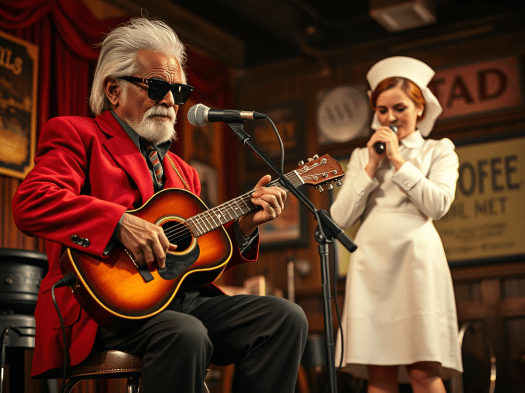
Around 7:15, Wino 2 informs Junior that the first performer has arrived and takes the stage for the introduction. He steps to the mic and, in that pleasant voice, says, “Ladies and gents, please welcome to the stage, Mr. Blind Jelly-roll Jackson and his nurse Carpathia.”

An ancient black man with hair as white as South Texas cotton, holding a guitar as old as himself, is helped to the stage by a prim female nurse dressed in a starched white uniform. The old man wears a red smoking jacket, a silver ascot, and black trousers. Dark sunglasses and a white cane complete his ensemble. The old fellow is as blind as Ray Charles.

The nurse gently seats the old gentleman in a chair provided by Wino 1 and lowers the large silver microphone to a height between his face and his guitar. She then stands to the side of the stage, just out of the spotlight. Blind Jelly Roll starts strumming his guitar like he’s hammering a ten-penny nail. Thick, viscous down strokes with note-bending riffs in between. His frail body rocks with every note he coaxes out of his tortured instrument. He leans into the mic and sings,

“We’s gonna have us a mess o’ greens tonight…haw..haw..haw…haw…gonna wash her down with some cold Schlitz beer..haw..haw..haw..gonna visit ma woman out on Jacksboro way…gonna get my hambone greased”. This was Texas blues at its best.

On cue, his nurse steps into the spotlight, extracts a shiny Marine Band harmonica from her pocket, and cuts loose on a sixteen-bar mouth-harp romp. Her ruby-red lips attack that “hornica” like a ten-year-old eating a Fat Stock Show Corndog. The crowd loves it. They dig it. When Blind Jelly Roll finishes his song, Wino 2 passes a small basket through the group for tips. Jelly Roll and his nurse take their kitty and depart. He’s due back at the old folk’s home before midnight.

A Grandfather’s War Stories: Realities Beyond Hollywood


Honor And Duty In 1918

I wrote this back in 2020; hope you enjoy.

My grandfather, in 1917-18, served in the Army and the war to end all wars: World War 1. He fought in the mud and bacteria filled trenches in France: wounded twice and gassed once. He killed Germans in close hand to hand combat with a bayonet and a knife, never forgetting the look on the faces. He lost friends in vicious battles. There was no time to grieve or pay respects. That would come later in life.

Looking back through my childhood relationship with him, he likely suffered from what we now call PTSD. My Grandmother said he was a different man after that war, and at times, not a good one.

He refused to talk about the fighting and killing until I was around ten-years-old, and he was dying from Lymphoma cancer. His doctors at the VA Hospital said it was caused by the gassing he received in the war. He knew that I might someday go to war, so he wanted to let me know it was not like the movies.

We sat for a many hours one afternoon a few weeks before his passing. His descriptions of battle and the things he had done for his own survival was beyond anything I could imagine. I was young, and war to me was black and white movies. James Cagney in “The Fighting 69th,” or John Wayne and a host of others playing army, like my neighborhood friends and I did. No one really died, and when shot, there was no blood or screaming.

The last few days of his life were spent in and out of reality, reliving those battles as he lay in a veteran’s hospital in Dallas. My father, a veteran himself, was the recipient of my grandfathers last horrors. Those days my father sat by his bed, listening to the nightmare his father had carried for all those years, had a profound effect on him.

John Henry Strawn made sure I knew what real honor and duty were about. It followed him for a lifetime.

Chapter 18. Fort Worth Legends: A Young Musician’s Rise Under Bob Wills


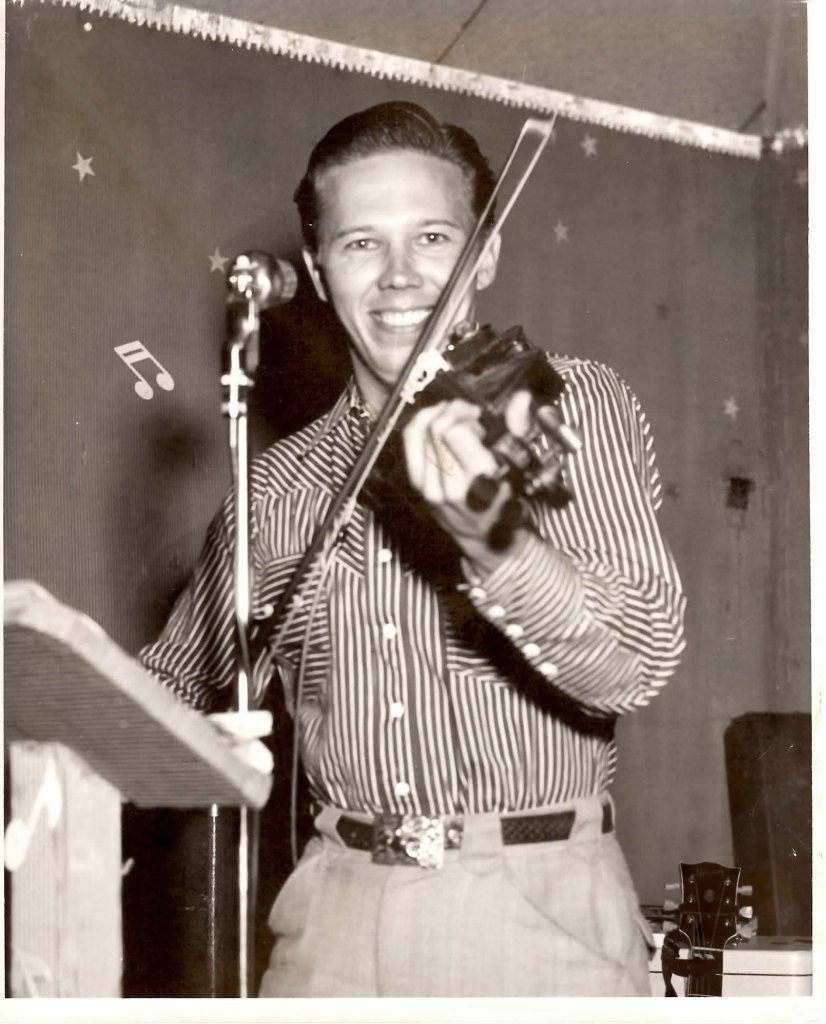
Johnny Strawn, around 1948, Fort Worth, Texas

My grandfather, John Henry, walked to his job at the furniture shop. Years ago, the same place had closed down, driven by the Depression, forcing him to move his family to California for work. Now, twelve years later, he has taken giant steps back, from a good job in Los Angeles to once more building furniture for an hour’s wage. Defeat weighs heavily in his heart. Middle age has come, and the future is murky. So, doing what men do, he keeps walking, counting his steps to nowhere. There are many to blame, but he alone bears the burden of his failures.

The iced ground crunches under his shoes. The cold goes to his bones. His jacket is no match for this weather. He favors the feel of the ground beneath his feet over the Ford sedan in the garage, which is idle most of the time and now a home for mice and other wandering critters.

After the upsetting homecoming with his father, Johnny walked a few blocks to the small neighborhood grocery store to call his best friend, Dick Hickman. His father remained firm in his decision about the telephone, vowing to never have one in the house. The old man viewed the contraption as a rattlesnake in a bag. Lousy news reached him in time enough; no reason to expedite misery.

Two sisters from Germany ran the store, always open, even when the ice storm howled outside. They preferred work to idleness; a dollar was worth more than knitting by the stove. They missed their homeland, but not the darkness that had settled under Hitler’s shadow. Johnny walked in and felt the warmth; they had known him since he was a boy. Following a few hearty hugs and cheek kisses, he was offered a mug of coffee, hot and strong with bourbon and a hint of cinnamon, a taste of what once was.

Dick and Johnny had forged a bond on the playground one morning; Dick was trapped by older boys, their intentions were dark, and Dick knew he was in for a ruckus. Johnny, a full head smaller than Dick, added his small fist for ammunition. A few busted lips and a bloody nose ended the altercation, and the boys would be bound for life by bloody noses and skint knuckles.

Dicks mother, a woman of stern Christian resolve, lived simply, her heart full of faith. Father Hickman was a ghost of a man, suddenly appearing from nowhere, then off again to somewhere. Mother Hickman, as she was called, gave what little extra money they had to Preacher J. Frank Norris, the charismatic leader of the First Baptist Church of Fort Worth.

Nice clothes were a luxury during the Depression, and most children at R. Vickery’s school wore hand-me-downs or worse. Dick wore the yellow welfare pants distributed by the Salvation Army, a sign that his folks were poor. Mother Hickman saw nice clothing as a sign of waste, except when it came to her Sunday fashions. Johnny had a pair of those detestable canvas pants but refused to wear them; the old dungarees with patches did just fine.

Both boys felt the weight of loss when the Strawn family left for the promised land. They exchanged a few postcards during the years in California. Nevertheless, they adhered to the unspoken rule that young men did not write to one another. This was a relic of manly notions of the time. A line or two every six months was enough. Both joined the Navy around the same time, meeting briefly in Pearl Harbor. Then came the seriousness of war. Young sailors, they carried on.

Dick arrived at the two sisters’ store to fetch Johnny. His transportation was a rattle-trap Cushman motor scooter. It refused to stop on the icy street. The scooter slid on its side into the curb and threw Dick off of the beast. The ride to Dick’s apartment was a jolt, far worse than the taxi. Johnny vowed to buy a car when the weather cleared, maybe one for his buddy, too. He held a tidy wad of cash from Hawaii.

A brotherly deal was struck. Johnny would share Dick’s large apartment on Galveston Street, splitting the rent and bills evenly. They were friends again, but now men, and they had different thoughts, dreams, and needs. Dick was courting a young woman from Oklahoma and doing a miserable job of it. Still, marriage lingered in the air, heavy like the rich aroma of brewing coffee, the kind they both drank too much of. Dick took his poison with cream and sugar; Johnny preferred his black and strong.

Johnny’s goal was to play music for a living, and this was the right city to make that happen. He joined the musicians’ union and sent a message to Bob Wills that he was back in Fort Worth.

Wills was now the celebrated band leader of the western swing band, The Texas Playboys. He remembered that meeting at the radio show in Bakersfield, California, long ago. The boy stood out. It was no small feat because Wills was the finest fiddle player in country music.

Bob Wills was not a man known for kindness. He could be brash and indifferent to fans and bandmates alike. Yet, for Johnny, he made an exception. Bob took the young man under his wing, becoming a mentor to my father. A few calls were made, and the boot was in the door. Johnny secured auditions at some of Fort Worth’s best clubs, and each went well. Bob invited him to rehearse with the Playboys. It was there he met men who would soon be legends in country music. A few years later, he would find himself in that circle.

The Green Legacy of Mr. Greenjeans


If you were a kid in the 1950s, then you knew who Captain Kangaroo and his sidekick Mr. Greenjeans were. Their television show was broadcast five days a week in glorious black and white and viewed by millions of kids on tiny television screens. ” Don’t sit too close to that TV, you’ll go blind.” That was the stern warning from every mother, and here we are today, all wearing glasses or blind. How did you expect us to see the Captain and Greenjeans on an 8-inch screen?

The burning question we all had was, did Mr. Greenjeans wear “green jeans?” We were kids, with no color sets, it made us crazy. Was this man green?

A few months ago, I took a shortcut through a Fort Worth neighborhood to avoid road construction and noticed a weirdly dressed man using a hand pump sprayer to paint his yard a deep shade of Kelly green. I stopped and watched him walk from the curb to the house. Long, even strokes coat the brown grass to imitate spring’s favorite color. It was then I noticed his house was green, the cars in the driveway were green, his clothes and skin were green, and a small dog sitting on the porch was also green. What the hell? The man saw me staring and motioned me over.

I parked my car and walked up to the fellow, feeling a bit foolish for interrupting the work of a stranger. I introduced myself and complimented him on his handy work. He thanked me, extended his hand to shake, and said, “names Levi, Levi Greenjeans, nice to meet you.”

” That’s an unusual name, sir. The only time I’ve heard that last name was on Captain Kangaroo, and that was seventy years ago,” I said.

The green fellow laughed and said, ” That’s the family name. Mr. Greenjeans was my pop. My sister and I grew up in a green world, so this is pretty natural for us. Dad’s been fertilizer for a good many years now, so it’s up to me to carry on the family brand.” I agreed; he looked pretty good for an old green guy.

I didn’t want to pry or be too forward, but I asked, ” Sir, what might the family brand be?”

“Call me Levi,” he said. ” You know that song ” The Jolly Green Giant? I wrote it and collect mucho royalties. That Tom Jones song about the green-green grass of home wrote that one, too. The Green Giant food brand, that’s mine; also, copyright infringement made them pay up. Home Depot has a Green Jeans color named after Dad. I get change from that, and I get a shiny penny from YouTube for the Captain Kangaroo videos.” This dude has turned green into green cash.

I am impressed and honored to be in the presence of one of the famous Greenjeans family, but now is the chance to get the answers to my childhood questions. I am afraid of coming off like a six-year-old Duffus, but I asked, ” did your dad wear green jeans and did he have a green face, and was the captain a nice man, and why did he have a big mustache, and did your dad really have a farm? There, I spat it out, and I am an idiot.

Levi chuckled and said, “Dad wore green jeans, and his face was green from stage makeup. The captain, bless his dead heart, was not too friendly. He wore a mustache because, on the first live show, a little kid threw a Coke bottle at him and split his lip; the stash hid the scar, and that’s why he disliked kids. He carried a small cattle prod under his sleeve, and if the kids got too close, he would shock them. Pretty funny stuff to see them jump. And the final answer is yes, Dad had a farm and grew veggies and raised prize-winning Llamas. Recently, my sister Denim planted forty acres of butt-kicking pot that we will sell in our “Mr. Greenjeans Apothecary Co-op in Denver.”

I thanked Levi for his kindness and started to leave when he stopped me. Extracting a green Sharpie from his pocket, he signed his name on the front of my white Eddie Bauer Polo shirt. “Hang on to that shirt, brother. It’ll be worth some cash one day.”

Hey Kids, It’s Fun Being Sick!


How Kids Beat The Pandemic In The 1950s

Kids are an intelligent species. They know far more about human interaction and theatrical interpretation than their parents suspect. I can’t put a date on when this anomaly was discovered, but people with fancy degrees and a goatee first noticed this behavior in the early 1950s. My neighborhood may have been ground zero for their study.

As a bunch, the kids in my neighborhood were healthy. We ate mouthfuls of dirt, sucked on pebbles, and ingested every foodstuff imaginable without washing our grimy hands. This was perfectly acceptable to our mothers. Our young immune system was that of a caveman: we scoffed at germs, ” away with you foul vermin.” Like Superman on the TV, we were indestructible.

The only malady that affected us, was the dreaded Monday morning tummy-throat-aching body-virus. This malady usually broke-out in after a thirty or forty day incubation period. It spread like wildfire through our four-block coterie and most of the second and third grades, mostly affecting boys, but the girls were losing their immunity at an alarming rate.

The second week in November, close to Thanksgiving, most of our second-grade class was infected and missing in action. The symptoms were: headache, stomach ache, sore throat, and body aches, sometimes we developed a limp and had to crawl from the bathroom to our bed. When our mothers asked how we felt, we would point at the affected areas and groan, eliciting additional sympathy.

The first morning was the worst, then by noon we recovered enough to watch cartoons and eat some ice-cream, then after supper, the symptoms worsened, and mom made the call for us to stay home another day. Sleeping in was mandatory, and if we were recovered by lunchtime, we could go outside for some fresh air. This bug was known to not last more than three days, tops.

A seven year old can’t grasp the enormity of a situation the way their parents can. As a group, we were unaware that our symptoms matched those of the dreaded Polio Virus. Our kindly school nurse, fearing the worse, calls the health department for back-up.

Two blocks away at George C. Clark Elementary, our diligent principal cancels all classes and has the entire building sanitized by a nuclear cleanup team from Carswell Air Force Base. The newspapers are on this like a duck on a June Bug.

Lounging in bed eating Jell-O, and watching Bugs Bunny cartoons, my cohorts and I are unaware of our neighborhood pandemic.

Tuesday, mid-morning, a contingent of doctors and nurses from the Fort Worth health department, arrive to access the outbreak. They plan to visit every affected home around our school and test every sick child for the dreaded Polio Virus. Large syringes and foot-long throat swabs are required. A dozen ambulances stood by to transport the poor ill children to the hospital. The local newspaper was there, as well as the television news folks.

Skipper, my stalwart best buddy, and the elected grand Poo-Bah of our gang, was the first to break. With two syringes sucking blood from his skinny little kid arms, he sobbed and said he was faking it, we all were faking it. He gave us up like Benedict Arnold. Roger Glen ran screaming from his house when he saw the size of the needles, and the smartest girl in our class, Annie, gave a signed confession. The epidemic was over.

Most of us couldn’t comfortably sit for a few days, but we were all healthy until the next school year. That’s when the Asian bird, chicken, rat, and cat flue got us all.

Hipster Dogs Are Among Us


I wrote this story in 2020 after an encounter at a hipster restaurant in the trendy section of Fort Worth. I wish my stash looked as good as his.

A sweet little dog with a strange name is pictured for your educational pleasure. “Graphon Chardonnay” is what’s known in 2020 as a “Hipster Companion Service Dog.” I’m sure little Graphon would rather be out pissing on trees and digging holes in flower beds than wearing a beard and leather jacket. Dogs look odd in human clothing and look alien when they sport the same beard as their owner.

While strolling the “hot new neighborhood” on West 7th Street a few weeks ago, my wife and I stopped at a small outdoor café for lunch. It was one of those sunny February days where it wants to be pleasant, but you still need a coat if you dine outside. A teaser day, we Texans call it.

A nice-looking couple sat down next to us with their small dog. They were dressed in expensive “Fort Worth Hip” to the tee. The young man had a formidable beard, a ” Stallone” pork pie hat, Ray-Ban sunglasses, and skinny jeans. The woman was dressed similarly but without facial hair. These aren’t your poor retro-hippies; these Kats have dough, good jobs in IT, and live in an expensive high-rise overlooking the Trinity River. They most likely drive a Tesla or a hybrid Beemer.

The two diners immediately immersed themselves in their Apple I iPhones. Hipsters must only use Apple products: Sorry, Samsung, and HTC.

I felt sorry for the little pooch; he didn’t have a phone of his own or even a bowl of water, so I asked a kind waitstaff to bring the wee fellow a dog bowl of H2O. When his water bowl arrived, the man gasped and removed the water dish before the parched dog could catch a drink.

” Graphon does not drink regular water,” he shrieked. ” He’s chlorine intolerant.”

Of course, I apologized for not knowing the dog was allergic to water, so I asked his father, what does Graphon drink?

The young woman looked up from her iPhone and smugly replied, “Graphon Chardonnay drinks only Starbucks decaffeinated coffee, “Chateau La Pew” white wine and natural spring water from Tibet. He is also vegan and has an IQ of 165.” Well, holy hot shit, I am impressed that this furball with two names is smarter than most of us humans; myself included.

I had already figured out these two were vegans, so when our juicy hamburgers arrived, we made a big deal of our meal, loudly commenting on every greasy bite we took. The two gave us the ” hope you die” look.

I accidentally knocked a French fry off my plate in my meat-eating frenzy. The little genius, Graphon, caught it before it hit the ground and gobbled it down. His father screamed, grabbed the dog, and began the “Heimlich maneuver ” until the dog coughed up the slimy fry.

” That fry is cooked in animal fats, are you trying to murder my dog! Graphon could die if he ingests anything other than his special veggies,” he shouted. The woman was crying and having a small breakdown after witnessing her vegan dog eating the evil French fry.

The young couple was so traumatized they took little Graphon Chardonnay and departed the patio. I got the last laugh. I slipped the pooch a nice bite of my burger while they weren’t looking. I’m pretty sure he is going to have some righteous gas.

The Truth About Ambiance in Tex-Mex Restaurants


After a trip to Frisco Texas for a doctors visit today, Momo and me stopped off at a local Fort Worth Mexican restaurant for an early supper before taking the cattle trail back to Granbury.

Seated, beers in hand, decompressing from two hours of hell on earth Dallas traffic, our Senorita waitress stopped by to drop a bowl of chips and salsa at our table; the usual fare for Tex-Mex food.

Over the years I have told my readers that my social filters have left on the last train to Clarksville, so I’m apt to blurt out any number of insults to no one in particular. The damn music was so loud I couldn’t understand a word the young miss was saying.

“Miss, can you turn down the music, or maybe give me a tablet and a pen so I can write out my order?” I say.

She was well indoctrinated. “Sir, the music is here to add to the ambiance and to make the food more tasty. We want our customers to think they are in old Mexico enjoying a meal while gazing at the Pacific ocean or the Gulf of America.”

Momo is giving me that ” you had better not say it” look, but I did anyway.

In my best old man I mean business voice I say, ” lookey here, Senorita, your food ain’t that good, and the music sucks, I can’t speak Spanish so why do you think I can understand a word that girl is singing? As far as ambiance, I’m looking out the window at the traffic whizzing by on Hulen Street and there is not a palm tree or a beach, or a dude leading a burro with a margarita machine strapped to its back. It’s Fort Worth Texas, not Cancun.”

Thoroughly insulted, she turns and stomps away. A few minuets later, Dire Straits is playing Money For Nothing. I notice all the folks our age are tapping their feet and digging the music. A few words of wisdom: music doesn’t make the food taste better.