California Dreamin’ Chapter 6


New friends, a fresh vocation, and a fine abode for an extended stay. The Strawns couldn’t reckon their good fortune. Were they in the midst of a reverie, or was it a heavenly intervention from on high? My grandmother continued casting glances over her shoulder, half-expecting to glimpse the Guardian Angel who was running this show. Sister Aimee and her mammoth church would require some acclimatization, at least on John Henry’s part.

After the church service, which was more of a Hollywood show than a religious sanctuary, John Henry ambled backstage in search of Blind Jelly Roll Jackson. He rapped on a door marked “orchestra,” but receiving no response, he turned the unlocked knob and proceeded inside. There sat Jelly Roll on a red velvet setee while Sister Aimee fervently laid her hands on his cotton-top head, offering a vigorous prayer of salvation. Pancho Villa stood behind her, firmly attached, growling like a small lion and tugging hard at the bottom of her satin robe. Upon catching sight of John Henry, Sister Aimee hollered,

“Clear out, sinner! Can’t you see I’m rescuing this wretched man’s soul?” John Henry promptly shut the door and made his way back to his family, wanting no part in the strange affairs of that place. This church wasn’t through with him quite yet.

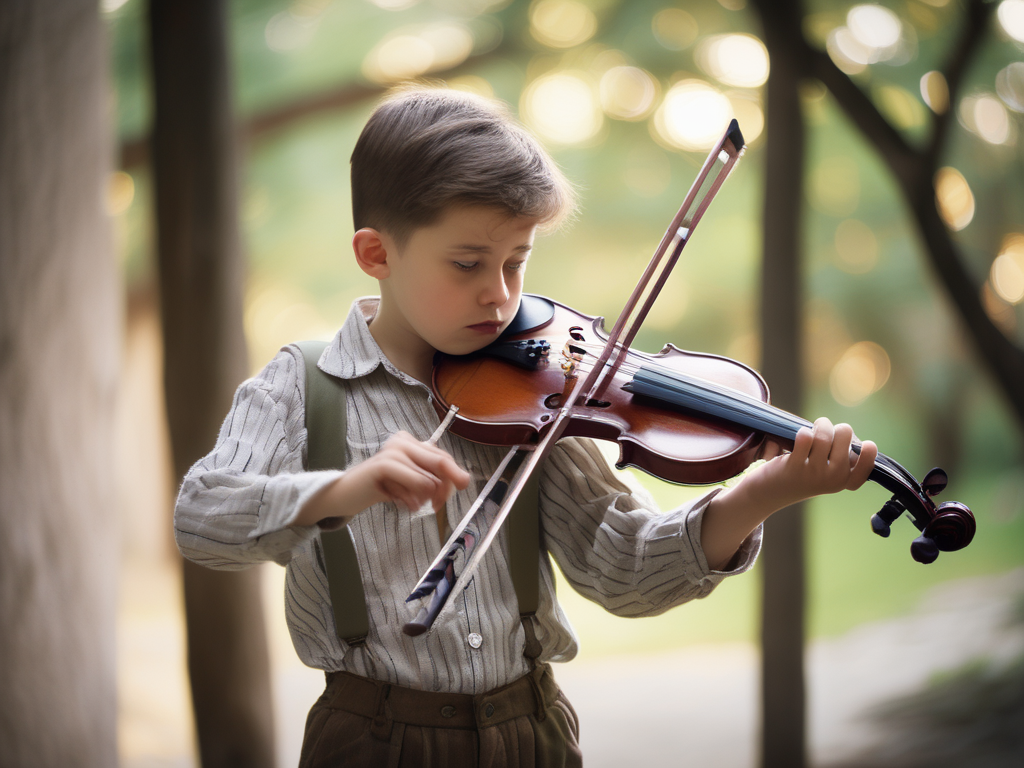
Two weeks into his new job, John Henry felt comfortable enough to open the case of his fiddle. During his time in Texas, he had earned the reputation of a “campfire fiddler,” skilled enough to keep up with any string band in Fort Worth. Nevertheless, this was not the path he aimed to follow. For nearly two years, Young Johnny had shown a deep interest in mastering the art of playing the instrument. The time had come to pass on this skill to the eager young man.

A visit to a local pawn shop produced a fifth-hand fiddle. It wasn’t much of an instrument, but for $5.00, case and bow included, it was good enough for the boy. Johnnie, when given the instrument, almost keeled over from joy. He took the fiddle to his back porch bedroom and began to torment every dog and cat in the neighborhood with his playing, which was more screeching than music.

Miss Angel Halo, a retired high school music teacher, resided a few houses away. She recognized that sound, having heard the screech of strings from her students for most of twenty years. Her Basset Hound, Baby Dog, cowered beneath the back porch while her feline companion, Miss Greta Garbo, made a hasty exit to escape the noise. Miss Halo made her way to the offending house and exchanged pleasantries with the Strawns. Over a cup of coffee, some neighborhood gossip, and a large slice of warm bundt cake, she offered her aid in schooling young Johnnie in the ways of musical notation and the art of the violin; she was a cello player herself. If the boy would mow her grass twice a week, and pull any pesky weeds in her flower beds, she would instruct him in learning the instrument.; no charge. The pact was sealed, and harmony was restored to the neighborhood.

Six weeks into his son’s tutoring, John Henry, not having heard the boy play, was curious if he had learned to play the fiddle. At his teacher’s insistence, Johnnie’s practice sessions were daytime only, and he was confined to the garage, door down, so as not to upset the neighbors.

Saturday evening found John Henry on the front porch, nursing a cold beer and coaxing a few tunes from his beloved fiddle. He asked Johnnie to fetch his instrument and join him, and in a swift instant, the boy returned, fiddle in hand, eager to display his skills to his father. To John Henry’s amazement, as he played an Irish jig, his son effortlessly intertwined harmonious notes with his own, giving the old man a partnership in the form of twin fiddles. A father’s pride has no bounds, and he played on, ignoring the tears on his cheek. In time, that instrument and the dreams of a child would take young Johnnie to the pinnacle of country music.

More to come in Chapter 7

https://notesfromthecactuspatch.com/2024/07/28/california-and-the-magical-elixers-chapter-7/

Chapter 3- Wagons Ho, and Settling In California


Being in the right place at the right time can lead to life-changing events. A bit of prayer added to the mix produces wonderful things.

From what I was told, my grandfather was willing to lend a helping hand to anyone who needed one. He was kind to a fault and was often taken advantage of by family members and close friends. I can’t use them in this chapter because their families are still alive, they know where I live, and everyone is so touchy. I was ten when my grandfather passed on. He made sure I learned numerous lessons from his mistakes. Being the great poohbah recounter in the family, he left me with enough oral history to fill a book. I remember most of it from his stories and yarns, of which he could spin some tall ones. No one thought to write anything down, so for now, I’ve been blessed with a good memory, but only for a while.

John Henry helps the man carry the heavy piece of furniture into the house and places it in a small bedroom that appears to be that of a girl. Pink ruffles and stuffed animals is a sure sign.

With the furniture all squared away, the two men stood on the front porch, taking a break to enjoy a smoke. John Henry offered one of his Lucky Strikes to the other fellow, and they both lit up with a flick of the Zippo John Henry still carried from the war. The man introduced himself as Sargent James, said that was his real name, and he never rose higher than corporal in the Army. That got a good laugh out of them both. He told John Henry about his wife, Sunny, and their daughter Cloudy, away at school in Sacramento on some kind of scholarship, studying’ to be a doctor no less.

  After lunch, the two men traded stories and discovered they served in France at about the same time, 1917-1918, in the big war against the Germans.

Veterans become fast, tight friends; the probability of dying from a bullet or an exploding shell bonds them in a way only they understand. It’s a brotherhood for life, formed on the battlefield.

     They had both been wounded in battle; John Henry having but half a left buttock, compliments of shrapnel and had been gassed twice while fighting in the muddy trenches. His new friend was shot in the leg and the arm but recovered enough to continue fighting until some shrapnel sent him to a hospital in England and then home for good. Both showed their scars like kids on a school playground trying to outdo the other.

     John Henry is no saint; he will own up to killing men in battle, some with his rifle, a few with a bayonet, one with a large rock to the head, and one stabbed through the heart with his side knife. He regrets them all, especially the young German boy, no more than a teenager he stabbed during hand-to-hand fighting before the soldier got the better of him with his sidearm. His face is the one in his worst dreams. The boy’s face looks as if he knows he is a dead man, as he is within seconds. It took years for the brutality to catch up to him, and now, late at night, when the ticking clock is the only sound in the house, his demons come for him.  

      Both men dance around the worst battle stories but share memories of their friends, living and dead. It’s easier that way. John Henry’s half-a-buttock won the competition. The prize was a large slice of apple pie with melted cheese topping.   He feels comfortable enough to ask his host if he might know of any work a man could find. Sargent mulls the question a few moments, then says,

“I’ve got a cousin that works at the docks building shipping crates, I’ll give him a call and see if he can get you an interview. Swing by here in the morning around seven and I’ll have you an answer. I can’t promise anything, but he has the ear of the owner. ”

Good on his word, Sargent had John Henry an answer, and it was the one he had hoped for, an interview for a job. He thanked Sargent and gladly took the biscuit sandwich that Sunny insisted he eat before his interview.

Six-thirty finds John Henry standing on the sidewalk in front of the business, 808 Shipping Row. The docks are half-block away, and the noise of men and equipment moving heavy crates onto ships carries in the cool morning breeze.

Two doors are marked “Entry,” so he takes the one on the left. Down a short hallway into a large office, he finds a man sitting at a desk drinking coffee and writing in a journal. The man invites him to sit and have a cup. John Henry thinks this must be the shop foreman or the interview man. After drinking coffee for a few minutes, the man asked him about family, church, drinking, accountability, and his time in the service. After a thirty-minute visit, with a few laughs, the fellow stands, shakes John Henry’s hand, and tells him to start tomorrow morning at seven am sharp, and by the way, he is the company’s owner. Augustus Petrillo, and welcome aboard.

More to come in Chapter 4.

Chapter 4, Wagons-Ho, Leaving Texas Far Behind

Hello Dalai…


Dalai “Tex” Lama

My sainted Mother’s second cousin, Elfinian Keebler, owned one of the largest cattle ranches in Texas. Located between Mineral Wells and Ranger, Texas. It took four days to cover the width and another two days or so to ride the length. By Texas standards, it was a residential lot, but 3,800 acres ain’t what it used to be in the 1950s.

Elfinian’s daughter, Cookie, wasn’t into raising cattle, although she was the proverbial FFA queen. She had gone steady with every boy in high school and most of the ranch hands and had been riding horses since she could crawl. Her older brother, Chip, was a knock off the old Keebler block; he was a cowboy to the bone, raised on Roy Rogers and Gene Autry. His mama, Piddle, fancied herself as a debutant who married low and wanted her baby boy to be a doctor of some sort, but Chip was a dunce and had the IQ of a piss-ant: riding the range was about all he was good for, and his horse did most of the thinking. Cookie was the plucky little prickly one and decided she was taking the ranch in a different direction, creating a stink between her and Daddy Elfinian. Cookie wanted to raise Llamas and Highland goats. In Texas, anything but cattle and horses is considered blasphemy, and sheep and goats aren’t welcome except on the supper menu.

A year into her Llama plan, Daddy put the brakes on. One Hundred Llamas, forty donkeys to guard the Llamas against Coyotes, and half a dozen cow dogs to keep the donkeys under control were more than Papa Keebler could swallow. The donkeys and dogs had lost interest in the Llamas and had gone back to hanging out with the cattle. The critters were pretty, but they were no better than a cow: eat, spit, and crap.

A contingent of robe-wearing folks in limousines arrived at the ranch house on a Saturday afternoon. A realtor from Mineral Wells introduced them as followers of the Dalai Lama, most recently of Tibet, a tiny country in Asia. Elfinian had never heard of this Lama guy, but he invited them in for a set down, some of Piddles’s baked cookies, and a drink of Jack Daniels. The head robe-wearing spokesperson was the Dalai Lama’s sister, Deli Lama. She wanted to buy a piece of the Keebler Ranch so the Dalai could have refuge from the Chinese who had booted him out of Tibet, and he wanted to raise a Llama or some hairy sheep, his favorite spirit animal.

Papa Keebler sold the group three hundred acres, including the existing herd of Llamas and all the donkeys and cow dogs. It was a win-win deal. Cookie volunteered to help get the ranch workable and show the tinder-foots the art of Texas ranching.

Eight weeks later, the Dalai Llama arrived in a private helicopter, touching down on the new helipad next to the ranch house an army of Monks and Hari Krishna volunteers had constructed for his holiness. His sister, Deli, her daughter Carol, and The Keebler family were there to welcome him to Texas. He stepped out of the chopper wearing a white Stetson from Leddy’s Western Store over in Fort Worth. The multi-talented Monks also played many instruments, so they broke into a rousing rendition of San Antonio Rose and then The Eyes of Texas Are Upon You. The Dalai felt right at home and immediately asked for a “coldbeer.”

After an all-nighter traditional Texas BBQ and a dozen kegs of Pearl and Tibetian Beer, The Dalai Lama surprised everyone by mounting a horse at sunrise and touring the ranch with Cookie and Elfinian. He had picked up a pair of jeans, some Justin boots, and a 44 Colt pistol in Fort Worth, and like in the movies, he was itching to plug him some Hombres. He also had purchased a twin-engine Cesena T50 airplane like Sky King flew and wanted Cookie to be his sidekick. Elfinian managed to wrangle the pistola from the Dalai before someone wound up planted, and he damned sure didn’t want his daughter flying in a plane with this loco-Lama.

The Dalai’s sister, Deli, and her daughter, Carol, were huge fans of New York musicals, especially Carol Channing. Miss Channing was in Fort Worth appearing at the Casa Manana production of “Hello Dolly,” so the Dalai Lama arranged for Carol and the entire theater company to put on an open-air show at his new Llama ranch. A cast of a hundred, the orchestra and sets were delivered by trucks, rigged, and a portable stage was built near the Llama corral. Half the ranching community was seated on the tailgate of their pickups, beer coolers stocked with Pearl and Mama’s, and babies scurried around the grassy lawn in front of the ranch house. The sun went down, the lights came up, and Carol Channing, as “Dolly,” walked up to the mike and sang, ” Hello Dalai, it’s so nice to have you back where you belong.” This kind of stuff can only happen in Texas.

Who Came First; The Bunny or Jesus?


Not the Easter Rabbit

Us Christians have to admit: the Easter Bunny is a great secular ploy to teach our children the wrong meaning of Easter. We can thank German immigrants in the 1700s for bringing this little Paganisitc celebration to our shores. Sure, they meant well, and at that time, most Germans were Christians, but being trapped indoors during those long winters, they came up with an idea to amuse their children. I assume kids in those days got on their parents’ nerves and were a bit bratty.

Their rabbit, which was a German Hare, was said to lay actual eggs, which were given as gifts to family, or small trophies to placate their children. Once the tradition wormed its way into American society, it became a cute bunny rabbit buying eggs from hard-working chickens, then selling them to parents, who, in turn, hid them under bushes, on playground equipment, and in tall grass for their kids to find. Once found, they were placed in a woven basket with fake green or yellow grass to be put aside for later consumption. The chocolate bunny, invented by Hershey, came later and added to the cavity count. My favorites were Peeps, the tiny marshmallow chicks that melted in my greedy little mouth. They never mentioned the Yellow Dye 44 that might kill you later in life. But that was the 1950s, and even doctors blew cigarette smoke in your face. Nothing killed you back then; we were all safe.

My cousins and I hunted many eggs and became quite good at spotting them. My grandmother used real eggs that we kids decorated and later ate with salt and pepper; the Peeps came later.

I will admit to being a part of this tradition. My two boys bought right into it. So what’s a Dad to do? I put the Easter Rabbit up there with Santa Claus, The Tooth Fairy, Sasquatch, Godzilla, Invaders from Mars, and Pod People.

This Sunday, families will get together for a meal and a nice visit, and then, if kids are present, they will likely do the Bunny egg thing. I get it. We all have done it and will keep doing it until something better comes along.

That something better is Jesus.

God Bless The Alamo


A few more days until we solemnly recognize the fall of the Alamo, March 6th, 1836. It’s not a day that will live in infamy like Pearl Harbor, the battles of Gettysburg and Yorktown, but for us native Texans, it’s a day of retrospect that deserves the reverence we bestow upon it.

The blog-es-phere is chock full of opinions about Travis and his men; poor old Santa Anna only wanted to get along, move along and be friends, but had to kill all the defenders because he was forced to. Bullshit, he was a murdering dictator and knew full well what he was doing. Three thousand plus soldiers against less than two hundred poorly equipped pioneers and farmers. Not much brotherly love was present in San Antonio that February and March. There are even stories, one of which I read today, that swear black slaves were picking Texas cotton outside the gates of the mission before the Mexican army invaded. If it’s on the internet, it’s got to be true. Right?

Starting in the first grade, I was taught the history of the Alamo. My teacher made sure my classmates and I knew the story of the battle, the events that led up to it, and the aftermath at San Jacinto. Mrs. Edwards, my teacher, was a native of San Antonio, so she was a bit “ett” up with the whole thing. Us six year- olds, although slightly lacking in historical proficiency, understood the enormity and the importance of the battle. We regularly staged a neighborhood reproduction of the battle a few times a month, using my parent’s garage as the besieged mission.

Walt Disney and his television series Davey Crockett, King of The Wild Frontier, turned every boy, and most girls, in my grade school into a rabid Texian defender, ready and willing to fight the battle a second time using our Daisy BB guns and Cub Scout knives for arms. Having a native Texan and hometown boy, Fess Parker, in the role of old Davey didn’t go unnoticed in Fort Worth. Fess, dressed in full buckskin and coonskin cap came to Fort Worth to promote the show and the schools had to declare a holiday because they were empty. That is how serious we are about our history. Yes, we are all braggarts, insufferable most of the time, and onery as a Honey Badger, but pound for pound, put us against any enemy, and we will get the job done. My fellow members at The Sons of The Alamo Lodge, of which I am a member in good standing, can attest to our state of readiness.

Keep your powder dry; God Bless The Alamo, Goliad, San Jacinto, William Travis, Sam Houston, Juan Sequin, Davey Crockett, Bob Wills, Willie Nelson, and George Strait.

Daily Writing Prompts…You Ain’t the Boss of Me!


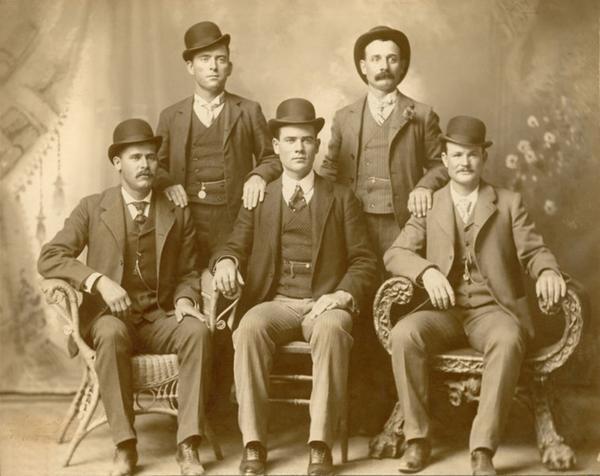
Butch, Sundance, and the gang during a weekend in Granbury, Texas

Maybe some bloggers need prompts to give them that “get along little doggy” push, but I’m not one of them. My personal writing space and white laptop screen belong to me alone. I don’t need ” Big Brother Blogger” to lead me in any direction. I get lost enough on my own. WordPress means well. They want to help us. Think of them as the “Blog spot with a heart, we are all one big internet family, it takes a village” and all that crap. My track record of offending everyone is extensive and documented. No prisoners were taken, and none were harmed. My internal and social filters were lost some years ago. Not even WordPress can reinstall them. I am a rebel with no cause.

Me, the author, back in the day before I got a haircut

The writing prompt for today was a zinger: what would you put on a highway billboard. Considering most drivers have one eye and hand on their cell phones and are not paying attention to the road, why would the morons be looking up at a billboard? “Get your face back in that phone you idiot! Are you trying to cause a wreck?” would be an appropriate sign.

I don’t have a problem with highway advertising. Buc-ee’s has some great signs, as do Dairy Queen and McDonald’s. The only time they catch my attention is when Momo is driving, and I have time to scan the horizon. Churches are getting more inventive, ” Next Exit To Save Your Soul” visit the Second Baptist Church of Twickelstick, Texas, turn right and go 4 miles to reach Heaven. Car dealers are the most annoying. The classics that scream of desperation are ” Dust Bowl City, Where Texas History Lives.” Every darn town in Texas is not a historical landmark. My town, Granbury, is a true old-west historic town., and has been voted that honor for many years now. Lots of notable stuff went down here in the 1800s. General Granbury of the Confederate Army of Texas is a famous man; he lived here, so the town was named after him. The city fathers have armed citizens standing guard over his statue on the square because the new wokie residents from California want to pull it over with a rope tied to their Tesla.

Notable and historical visitors, gangsters, outlaws, and past residents of Granbury were; Billy The Kid, Sam Bass, Bass Reeves, Billy the singing Bass, The Bass-O-Matic, The Purple Passion Triple Jiggle Bass Lure, Cheif Quanah Parker, Santana, Sitting Bull, Crawling Bull, Annie Oakley, The Statler Brothers, Jerry Reed, Wild Bill Hickock, Jack Ruby, Lee Harvey Oswald, Lyndon Johnson, Lady Bird, Big Bird, The Surfing Bird, Elmo, Burt and Ernie, Clarance Odbody, Mr. Potter, George Baily, Rasputin, Krushev, Stalin, The Big Bopper, Buddy Holley, Candy Barr, Bill Barr, Captain Kangeroo, Mr. Peppermint, Ickey Twerp, Steve Allen, Ernie Kovacs, Soupy Sales, Mr. Greenjeans, Mr. Rogers, Mrs. Rogers, Roy Rogers, Buck Rogers, Roger Ram Jet, The Jetsons, Sky King and Penny, Poncho and Cisco, Yogi Bear, Boo-Boo, Willie Nelson, Charles Nelson Riley, Paul Lynde, Wally Cox, Rose Marie, Dick Van Dyke, Little Dutch Boy with his finger in the dyke( Rosie O’Donnel) Van Dyke Parks, Jack Keroauc, Sal Paradise, Wavey Gravy, Deputy Dawg and Muskie, The Three Stooges, Chewbacca, Princes Leia, R2D2, CP30, Willie Wonka, Kim Kardashian, Eddie Murphy, The Vanderbilt family, William Randolph Hearst, Patty Hearst, Huey Newton, Huey Lewis and the News, Malcolm X, Angela Davis, Rodney Dangerfield, The Gopher, Carl the greenskeeper, Lacy Underall, The judge, Davey Crockett, Jim Bowie, the defenders of the Alamo, The Hole In The Wall Gang, and others liked the food at the hotel and the drinks at the saloon. The Paramount TV show 1883 was filmed here, and I heard that Taylor Sheridan liked the town so much he plans to buy it. So Granbury has some bragging rights and the signs to prove it. My town finds its way into many of my stories, as do the citizens, who now have it out for me. I have to go incognito when strolling the square.

The bottom line is I will not be prompted to write about trivial ca-ca. If what I do write turns out to be bull crap, then so be it. I fear this post, against my will and better writing judgment, accomplished what WordPress requested. But, as any five-year-old will say: “You ain’t the boss of me.”