Ask A Texan: Finding Joe Bee’s Father


Pretty Stable Advice For Folks That Don’t Live In Texas And Can’t Get Here

The Texan

This Texan received a letter from Miss Sparkle, a business owner in Chattooga, Georgia. She runs the Papa Gus River Rafting and Fish Camp, which was made famous in the movie Deliverance.

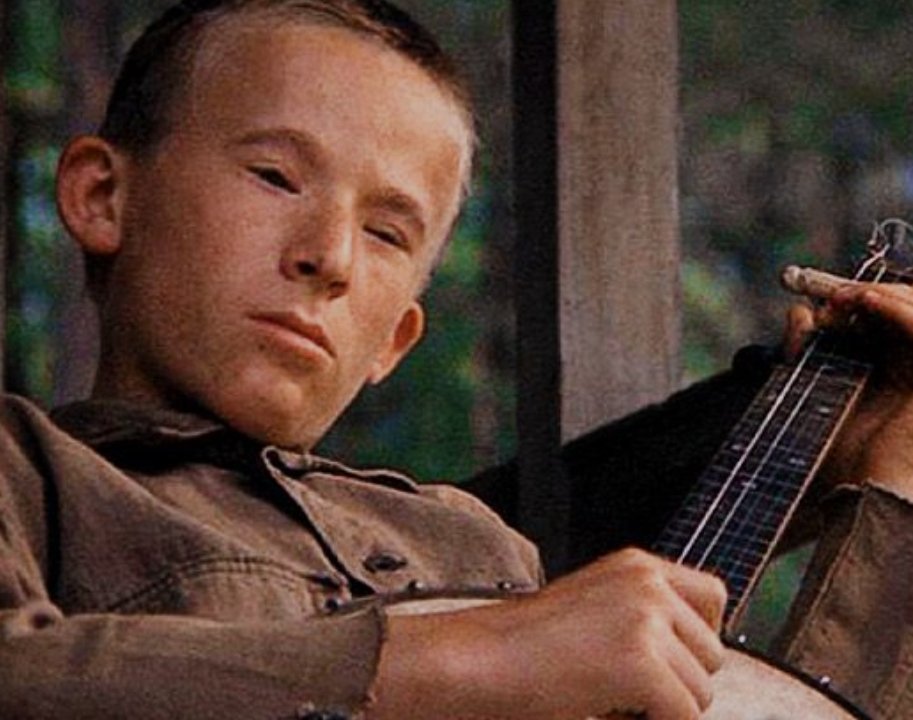
My little boy, Joe Bee before he grew up into a man

Mr. Texan: I can’t get no help around here from nobody: it’s just a bunch toothless hillbillies sitting around drinking moonshine, so maybe you can shine a light on my predicament. I enclosed an old picture of my boy, he’s real shy and won’t let me take a picture now that he’s older.

Back in 1972, a group of Hollywood boys filmed a movie here on the river. It was all fun, and my family got to be in the movie. I enjoyed many an evening drinking shine with some of the actors and got to know one of them really well. Bless his heart, he’s passed on now, but I’ll always remember his funny laugh and how good he was with that bow and arrows. Now, in 1984, a bunch of rich big-shots from Washington, DC came down to ride the Chattooga like in that famous movie that was filmed here. They were nice men and treated me with respect, even though I was just a river rat. Daddy hadn’t been gone long, and I was really sad, so it was nice to have some company at the camp. One night, the bunch of us were sitting around the campfire drinking daddy’s famous shine, and this one fellow they called Joe B started sniffing my hair. I didn’t mind cause I had just washed it with lye soap, and it smelled pretty good. He was a nice man, in a creepy sort of way. Too much shine always gets you in trouble, and I’ve had plenty of it since then. Well, about a year later, the old stork shows up with this bundle of joy. I call him Joe Bee. He ain’t no kid no more and doesn’t want to do anything but sit in his porch swing all day long playing the same song on his damn-ole’ banjo. I’ll tell ya, it’s driving us all to drink more than we normally do, and that’s a bunch. We tried hiding it, but he always finds the darn thing. Little Joe Bee just wants to know who his daddy is. My two other boys, the twins, Smokey and Bandit, their daddy never comes to see them either, but that’s cause he’s dead as a shot squirrel. I’ll give him a pat on the back; at least he gave them each a black Pontiac Trans Am for their sixteenth birthday. At least Joe Bee’s daddy could send him a monster truck or something. He just wants to meet his daddy and have something with big wheels to drive.

The Texan: Miss Sparkle, I’m sorry to hear of your problem and Joe Bee’s fatherless miserable life. Like you, I couldn’t stand to hear a banjo picking all day long. At least you have some good moonshine to knock the edge off. Looks like your boy’s Pop might be found in Washington, DC, and shouldn’t be too hard to track down; the family resemblance to a former big-shot should help find his daddy. We folks down here in Texas believe that every boy deserves a big truck to drive. Keep in touch, and tell your son I’m sending him a DVD of the Smokey And The Bandit movie along with a month’s supply of Ben and Jerry’s Ice Cream.

Ask A Texan: Wife Tries to Sing Like Willie Nelson


Pretty Good Advice For Folks That Don’t Live In Texas, But Wishing They Did

The Texan

Mr. ET ( Ernest Tom ) Home from Roswell New Mexico sent this Texan a long letter written on a McDonald’s takeout food bag. His wife is attempting to become a country singer and has gone to extremes, and he’s hoping I can help.

ET Home: Mr. Texan, about a month ago, the wife, Willowmina, decided she was going to become a country songstress. Well, that’s all fine and dandy, but the poor gal, bless her heart, sounds like Phyllis Diller when she sings. Both cats have left home and the neighbors are knocking on our door, a lot. She see’s old Willy Nelson on the View and he’s bragging about how he gave Beyonce some of his strongest weed and it turned her into a country singer. Well, that’s all it took. Next day, we drive to Ruidoso and visit the Miss Dolly’s Weed Emporium and Desert Shop. The wife asked the young lady manager what is the best and strongest stuff she has from old Willy. She leads us into a back room, then into a closet and down some secret stairs into another little room. She hands her a small box and says this is the best stuff on planet earth: Willy’s “Hide And Watch” secret stuff. I hear it can be a life changer, and not always in a good way. Well, we take the stuff and go back to Alien city.

She’s been puffing away on that stuff for a while now, and I hear her singing in the shower, and will admit, she is getting better. Then about a week ago, she put her long gray hair in braids, put a bandanna on her head and starts playing songs on our granddaughters Taylor Swift plastic Ukulele. She’s starting to look like old Willy, face stubble and all, and I think I must be losing my marbles. So’s, I calls the daughter, Little Tator, and she drives down from Raton Pass, walks in the house looks at her mother and says, “You ain’t crazy Daddy, that’s Willy Nelson in a Pioneer Woman house robe and Pokemon slippers.” Looking for an answer here.

The Texan: Well, Mr. ET I was at a loss on this one so I called a friend of mine, Dr. Scaramouche at the Fred Mercury Hospital For The Deranged in Queens, NY. He says this derangement is new and becoming more common thanks to entertainers like Taylor Swift and the Kardashian clan. Folks think that by eating, drinking, ingesting things, or dressing like their idols, they can glam off their talent and become a version of them. Willy was right, Beyonce is about as country as Martha Stewart. I would start out by taking away the weed. If that doesn’t change things, you might consider buying a used tour bus and going “On The Road Again.” I hear it can be a lot of fun. Keep in touch, and I am sending her a box of Little Debbie snack cakes.

No Rain…No Rain…


Read this morning that Woodstock will be back for another encore. It’s been fifty-six years since half a million young people sat in a pasture, listening to rock music, believing they had changed the world. It was revisited in the 90s and was a miserable mess, even without the rain and mud. Some things should be remembered for what they were and leave it at that. But possibly, this 56-year reboot could be a winner.

Imagine if some of the original musicians returned, and they might if asked. It would be worth the ticket cost to see Stills, Nash, and Young wheeze through a set. They could set a full size cardboard figure of Crosby next to them, since he has gone to Nirvana. Melanie could ride her little scooter onstage and croak through a few tunes. Country Joe and the Fish could do the Vietnam song again, and Joni Mitchell might even make the gig this time. John Fogarty will be born on the bayou again. Of course, Hendrix, Janice Joplin, and the mighty Joe Cocker have checked out, so Santana must fill that void. John Sebastian and Arlo Guthrie could do their hippie single-guitar thing and say “wow” a few hundred times. Wavy Gravy and the Hog Farm could run the concessions.

I’m sure the rest of the lineup will consist of current stars. Rappers, dancers, acrobats, and singers fly through the air or take the stage via a zip line suspended from a cell phone tower a mile away. It’s not about talent these days. It’s all, “look at me” and auto-tune. Katy Perry can fly in on a Game of Thrones dragon while lip-singing any of her forgettable songs. Courtney Hadwin, the fiery young reincarnation of Janice Joplin, will probably steal the show. Greta Van Fleet will wow the crowd with their spot-on imitation of Zeppelin. Wonder how that will turn out since Robert Plant will be performing?

I attended the 1969 Texas International Pop Festival and saw most of the acts at Woodstock a few weeks later, so I can say, “been there and seen it all.” It will be fitting for the old-timers to show the young fans how it used to be. ” No rain-No rain.”


Just Another Day Full Of Things


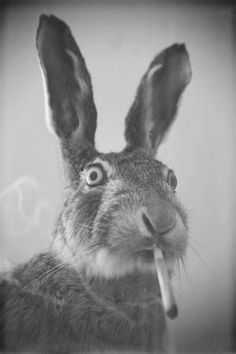
Before I kicked the smoking habit, I look better now

Old people do odd things: I know this firsthand. I’m good at it. A few months ago, the urge to gather and distribute my personal items to family and friends took hold. 2 am in the wee hours, wide awake, I wrote a list of my treasures and who might be the recipient when I assume room temperature. I found that over the years, I have accumulated more useless crap that no one would want.

My tool shed, art studio, storage shed, and junk pile will likely go to the nice folks at the local Goodwill store. The handicap shower chair and the two walkers will stay. The nice walker, the one with four wheels, a handbrake, and a seat, will likely be my new ride. Some guys get a Corvette; I get a souped-up walker. My friend Mooch says he can add a battery-powered motor to make the baby run 30 MPH.

A few weeks back, I bought back one of my acoustic guitars that I sold to Mooch when Momo and I moved to Georgetown, Texas in 2008. It’s a real beaut: a Gibson-made Epiphone E J160 e. Only fifty of them were made in Bozeman, Montana, likely by some of the Yellowstone Dutton family. Now, I have one guitar for each of my three grandchildren, of whom two play guitar.

Us’un humans collect things throughout our lives; it’s our nature. At the time, we might have needed them, but eventually, the things become useless “things” taking up space.

Momo and I are taking a road trip in mid-April. Back to Marfa and Fort Davis, Texas, the Big Bend Chihuahuan Desert. God’s country, big sky and brilliant stars. Marfa is our go-to escape. The town is full of eccentric street-rat crazy folks, and we enjoy interacting with them. I plan to interview a few while sitting at the bar in Planet Marfa, where most of them congregate nightly to swap lies and tell tall tales. I fit right in, my kind of folks, and I need fodder for my stories and yarns. I may fill my pickup full of “things” and give them to the characters I meet. Folks like free stuff and can give the things to their friends down the line.

Chapter 18. Fort Worth Legends: A Young Musician’s Rise Under Bob Wills


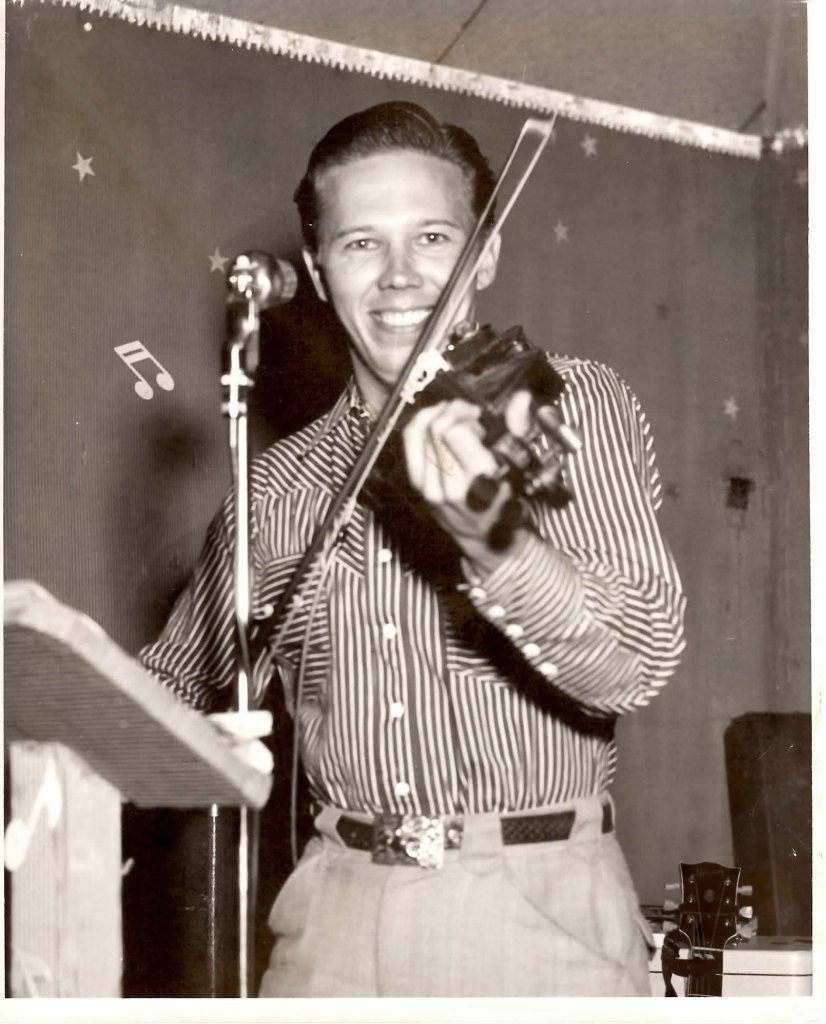
Johnny Strawn, around 1948, Fort Worth, Texas

My grandfather, John Henry, walked to his job at the furniture shop. Years ago, the same place had closed down, driven by the Depression, forcing him to move his family to California for work. Now, twelve years later, he has taken giant steps back, from a good job in Los Angeles to once more building furniture for an hour’s wage. Defeat weighs heavily in his heart. Middle age has come, and the future is murky. So, doing what men do, he keeps walking, counting his steps to nowhere. There are many to blame, but he alone bears the burden of his failures.

The iced ground crunches under his shoes. The cold goes to his bones. His jacket is no match for this weather. He favors the feel of the ground beneath his feet over the Ford sedan in the garage, which is idle most of the time and now a home for mice and other wandering critters.

After the upsetting homecoming with his father, Johnny walked a few blocks to the small neighborhood grocery store to call his best friend, Dick Hickman. His father remained firm in his decision about the telephone, vowing to never have one in the house. The old man viewed the contraption as a rattlesnake in a bag. Lousy news reached him in time enough; no reason to expedite misery.

Two sisters from Germany ran the store, always open, even when the ice storm howled outside. They preferred work to idleness; a dollar was worth more than knitting by the stove. They missed their homeland, but not the darkness that had settled under Hitler’s shadow. Johnny walked in and felt the warmth; they had known him since he was a boy. Following a few hearty hugs and cheek kisses, he was offered a mug of coffee, hot and strong with bourbon and a hint of cinnamon, a taste of what once was.

Dick and Johnny had forged a bond on the playground one morning; Dick was trapped by older boys, their intentions were dark, and Dick knew he was in for a ruckus. Johnny, a full head smaller than Dick, added his small fist for ammunition. A few busted lips and a bloody nose ended the altercation, and the boys would be bound for life by bloody noses and skint knuckles.

Dicks mother, a woman of stern Christian resolve, lived simply, her heart full of faith. Father Hickman was a ghost of a man, suddenly appearing from nowhere, then off again to somewhere. Mother Hickman, as she was called, gave what little extra money they had to Preacher J. Frank Norris, the charismatic leader of the First Baptist Church of Fort Worth.

Nice clothes were a luxury during the Depression, and most children at R. Vickery’s school wore hand-me-downs or worse. Dick wore the yellow welfare pants distributed by the Salvation Army, a sign that his folks were poor. Mother Hickman saw nice clothing as a sign of waste, except when it came to her Sunday fashions. Johnny had a pair of those detestable canvas pants but refused to wear them; the old dungarees with patches did just fine.

Both boys felt the weight of loss when the Strawn family left for the promised land. They exchanged a few postcards during the years in California. Nevertheless, they adhered to the unspoken rule that young men did not write to one another. This was a relic of manly notions of the time. A line or two every six months was enough. Both joined the Navy around the same time, meeting briefly in Pearl Harbor. Then came the seriousness of war. Young sailors, they carried on.

Dick arrived at the two sisters’ store to fetch Johnny. His transportation was a rattle-trap Cushman motor scooter. It refused to stop on the icy street. The scooter slid on its side into the curb and threw Dick off of the beast. The ride to Dick’s apartment was a jolt, far worse than the taxi. Johnny vowed to buy a car when the weather cleared, maybe one for his buddy, too. He held a tidy wad of cash from Hawaii.

A brotherly deal was struck. Johnny would share Dick’s large apartment on Galveston Street, splitting the rent and bills evenly. They were friends again, but now men, and they had different thoughts, dreams, and needs. Dick was courting a young woman from Oklahoma and doing a miserable job of it. Still, marriage lingered in the air, heavy like the rich aroma of brewing coffee, the kind they both drank too much of. Dick took his poison with cream and sugar; Johnny preferred his black and strong.

Johnny’s goal was to play music for a living, and this was the right city to make that happen. He joined the musicians’ union and sent a message to Bob Wills that he was back in Fort Worth.

Wills was now the celebrated band leader of the western swing band, The Texas Playboys. He remembered that meeting at the radio show in Bakersfield, California, long ago. The boy stood out. It was no small feat because Wills was the finest fiddle player in country music.

Bob Wills was not a man known for kindness. He could be brash and indifferent to fans and bandmates alike. Yet, for Johnny, he made an exception. Bob took the young man under his wing, becoming a mentor to my father. A few calls were made, and the boot was in the door. Johnny secured auditions at some of Fort Worth’s best clubs, and each went well. Bob invited him to rehearse with the Playboys. It was there he met men who would soon be legends in country music. A few years later, he would find himself in that circle.

Speak A Little Louder, I Can’t Hear You


Old man finishing off what hearing he has left…

I visited my Ear, Nose, and Throat doctor today. He wasn’t in the office, so I saw his PA. She escorted me to an exam room, and two techs checked my old ears for wax buildup and performed several tests by blowing air and a vacuum in both ears. Then, the PA took a microscopic robot thingy and stuck the device in both ears. When someone says, ” Hmm, oh my,” that gets my attention. Medical people have their own language. I should know; Momo is one of them. They use big words and have a secret handshake. She knew the gal from her hospital days; they hugged and did the handshake, then said some big words about my condition. When they got around to the hearing test, I was a nervous wreck.

The hearing test was easy: sit in a sound booth with headphones and a little button to push when you hear a beep. I sat there for a while in silence. Finally, I asked the tech when the test started. She said it started ten minutes ago. I failed miserably; I can’t hear jack shit, deaf as a cave-dwelling Salamander.

The PA showed me the results. She and Momo used some bigger words to describe my condition. Almost deaf in the left ear and coming up fast in the right one, my good ear.

” Doc, isn’t there anything you can do, like a transplant or a microchip or something?” She did that hmm thing again and told me to start learning sign language, stat. Crap, I’m going to be like Helen Keller, deaf and mute; it all goes hand in hand. First, the ears go, then the speech, then I’ll go blind and stagger around the family Christmas dinner, grabbing fist fulls of food off my relative’s plates. And to top it off, the PA says folks with severe hearing loss always get Dementia. So I’ll be deaf, blind, and mute, sitting in a chair with a drool sponge under my chin, and Momo will have to pull me around in a Western Flyer wagon. There has to be a better way to checkout.

I didn’t know that back in the day, standing in front of a Fender Duel Showman amp playing rock music at incredible decibels would destroy my hearing? Hell, I was sixteen and heard everything just fine. Alice Cooper once said that rock music will get you, one way or the other. It took a while, and I didn’t learn my lesson; I spent another twenty years doing the same thing in the 2000s. By the end of my tenure in the American Classics rock band, all of us were almost deaf.

The good news is that these new hearing aids have Bluetooth and Wi-Fi. I can talk on my iPhone hands-free, check my voice and email, listen to my stereo, tune into Police radio, listen to air traffic control, hack other folks’ hearing aids, and listen in on their conversations. It also checks my vital signs and brain function and sends reports back to my doctor, and I can still play music with my church praise band. Who knew going deaf could be so interesting.

The Truth About Ambiance in Tex-Mex Restaurants


After a trip to Frisco Texas for a doctors visit today, Momo and me stopped off at a local Fort Worth Mexican restaurant for an early supper before taking the cattle trail back to Granbury.

Seated, beers in hand, decompressing from two hours of hell on earth Dallas traffic, our Senorita waitress stopped by to drop a bowl of chips and salsa at our table; the usual fare for Tex-Mex food.

Over the years I have told my readers that my social filters have left on the last train to Clarksville, so I’m apt to blurt out any number of insults to no one in particular. The damn music was so loud I couldn’t understand a word the young miss was saying.

“Miss, can you turn down the music, or maybe give me a tablet and a pen so I can write out my order?” I say.

She was well indoctrinated. “Sir, the music is here to add to the ambiance and to make the food more tasty. We want our customers to think they are in old Mexico enjoying a meal while gazing at the Pacific ocean or the Gulf of America.”

Momo is giving me that ” you had better not say it” look, but I did anyway.

In my best old man I mean business voice I say, ” lookey here, Senorita, your food ain’t that good, and the music sucks, I can’t speak Spanish so why do you think I can understand a word that girl is singing? As far as ambiance, I’m looking out the window at the traffic whizzing by on Hulen Street and there is not a palm tree or a beach, or a dude leading a burro with a margarita machine strapped to its back. It’s Fort Worth Texas, not Cancun.”

Thoroughly insulted, she turns and stomps away. A few minuets later, Dire Straits is playing Money For Nothing. I notice all the folks our age are tapping their feet and digging the music. A few words of wisdom: music doesn’t make the food taste better.

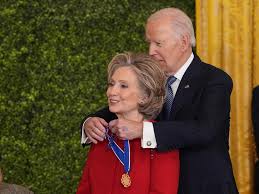
Everybody Gets A Medal


“Awww, come on man.”

I’m excited for the first time in almost four years: I might receive a Medal of Freedom. I got so worked up that Momo, my wife and a retired RN, had to put me on a Valium drip.

I penned a letter using my Parker fountain pen and had it delivered to the White House via FedEx special D. This morning, I received an email from someone who didn’t use spell-check or Grammarly: What is it with the youngsters working for the old guy? No one can spell.

The young lady, a staffer named Maya Sharona, said someone might consider my request and somebody might be circling back to me. Wow, there is a chance?

I thought my correspondence was professional and heartfelt. It went something like this:

Dear Mr. President Demento,

Since the once sacred Medal of Freedom is now nothing more than a Holiday Inn key-chain hung around one’s neck: the traitor who left behind our patriots in Benghazi receives the medal from the traitor who left behind our patriots in Afghanistan, a Nazi collaborator demonic Hell-Hound, a few half-assed actors, the grumpy old fashion designer, a fake science guy, the monkey whisperer, filthy-rich insider stock trader, backstabbing traitor warmonger, retired basketball player that gave women aids, talk show host, chef, fry cook, and Marty McFly get one, then I should too. Give my best regards to the babysitter.

Patiently waiting for your response,

I’m all jazzed up.

Phil

Elvis Presley Meets the Afterlife: A Southern Tale


Two Kings In A Caddie

The high desert at night is solitude. The velvet blackness holds wondrous things.

The “57” Caddie pulled away from the gas station, spewing gravel. The old man who had filled it up a few minutes ago watched until the tail lights disappeared down the highway. Two twenty-dollar bills for ten dollars of gas, go figure. A two-dollar bill was mixed in the bills; TCB was printed on the front. What did that mean?

The most comfortable place in the world for the aged singer was sitting behind the wheel of his beloved white Cadillac.  

He was not the sleek crooner in size thirty-six sport coats anymore; he didn’t care to be. He was comfortable in his own skin.  After decades of dieting, he surrendered to the siren’s call of biscuits, gravy, and his beloved peanut butter and banana sandwiches. Everybody gets a little heavy as they age, he told himself, and after seeing an old girlfriend in a supermarket trash magazine, he felt better about his expanding looks. The once sleek red-headed dancer was now as portly as himself. It’s a shame he couldn’t call her up. But then again, she loved the man he used to be, and he loved the girl she once was.

The decision to disappear in the late 70s was his way of escaping the hell he had created for himself. Drugs, alcohol, guns, crazy-ass women, and an army of hangers-on. The whole scene was sucking what life he had left from him. Realizing that if he was going live incognito, Las Vegas, Nevada, was ground zero. Every casino on the strip had Elvis impersonators. He could hide in plain sight.

To stave off boredom, he worked at one of the cheesy late-night wedding chapels for a while, imitating himself. He loved the irony of it all: having the wedding party cry and gagging with laughter, telling stories only the real Elvis would know. The patrons appreciated his stories and one-man karaoke performance, and he could still make a few young brides swoon.

At times, he became bone-weary and yearned to go home, but he knew that could never happen except in dreams. These long rides in the desert calmed him and allowed sleep without prescription drugs. He was clean now and was damn – straight going to stay that way.

The Caddies headlights illuminated the figure of a man standing by the roadside, thumb in the air. Elvis never picked up a hitcher, but a tingling feeling in his scalp told him he should stop for this one. Pulling over, he waited for the stranger to approach the car. The door opened, and a figure slid into the seat beside him. He turned to introduce himself.

An old man sat in the glow of the dash lights. His long gray hair was tied into a ponytail, and a neatly trimmed gray beard filled his face. He wore a loose-fitting red running jacket with matching sweatpants. His gold lame running shoes shined like bars of gold.

Elvis studied him briefly and then asked the old man, “I know you, mister, I’ve seen you on TV, aren’t you, Willie Nelson? What are you doing out in this desert this time of night?”

The old man turned and said, “No, I’m not Willie Nelson, and that’s a fine compliment, to be sure. I’m not going far, and it’s nice to meet you, Elvis.”

Speaking his first name as if he had known him forever, and his voice made him squirm. He hadn’t introduced himself.

In a slightly scolding, fatherly tone, the old man addressed Elvis,

“Young man, I’m shocked that a Christian boy like yourself from a first-class Baptist church in Tunica, Mississippi, would not recognize me. Don’t you find it strange that I know who you are? In fact, my boy, I know everything about you from the day you were born. I’m a little hungry, can I have one of those peanut butter and banana sandwiches hiding in your glove box?”

Elvis told the old man he was welcome to one, and there’s an ice-cold Pepsi in the cooler sitting on the back seat.

The old man pulled a soda from the cooler and then pushed the caddie’s glove box button. The door dropped down with a clunk. From inside came an angelic light that illuminated his face in a soft glow.  Elvis stared into the most striking blue eyes he had ever seen. Endless in depth, filled with kindness and forgiving, but tinged with a bit of sadness. The old fellow looked as old as dirt, but in that light, his features were as soft as a pastel portrait.

The old man sighed and, in between bites, said, “I appreciate the snack. It seems like I’ve been working for an eternity and have missed a lot of meals. All I do is go from one place to another, convincing folks to follow Dad and granting miracles. I was out here last week waiting for you, but that case of heartburn brought on by that Red Baron pizza laid you up for the night. You really shouldn’t eat that junk. Look at me, trim and healthy, all because of the Mediterranean diet. Can you imagine all those gals shooting themselves up with that Ozempic stuff just to stay thin?”

The old man smiled, reached over, touched Elvis’s shoulder, and said,

“ I’ve got someplace to be, and I want you to go with me. We can have a little visit along the way, a counseling session of sorts, no charge, it’s on the house. And by the way, when I’m down here, in this realm, I prefer to be called just plain old Sonny; it’s less frightening…puts people at ease.”

After driving for a while, Sonny turned to Elvis and said, “You know son, I play in a band when I’m home, and your name comes up often, the guys are always asking me when you’re coming up to join them.”

Elvis said, “That’s nice, sir; who might your band members be?” and where, exactly, is home?”

“Well, home is where my Father is; Heaven. You know, the pearly gates and such, sitting on clouds, the weathers good all the time, all of that stuff you read about.”

“You mean streets of gold and everyone lives in their own temple type of Heaven?” asked Elvis.

Sonny replied, “Well not exactly, the streets of gold were a real maintenance nightmare, so we went back to Jordanian river – rock. The temples were a little small, so we made some major changes right after Frank Lloyd Wright came up. Everyone now has a nice little place with a view of the garden…everyone’s equal in Dad’s eyes you know. Your Mamma and Daddy’s place is an exact copy of Graceland. Bet you didn’t know that!”

Elvis swallowed hard and said, “You’ve seen my Mommy and Daddy?”

“Well of course I have you nimrod. Didn’t I just tell you who I am and where I live. Don’t you listen!” replied Sonny.

Sonny clapped his hands on his knees and said, “Now, back to my band for a minute. It’s made up of the best musicians that ever lived.  Your old buddies Carl Perkins and Johnny Cash just recently joined up, and I’ve got Jimi Hendrix, John Lennon, and George Harrison on guitars, and Gene Kruppa and Keith Moon on drums, and I’m looking forward to Ringo joining up pretty soon. There’s Count Basie and Mozart on keyboards, Roy Orbison, Bobby Darin, Buddy Holly, and Old Blue Eyes on vocals. Man, that Orbison can hit those high notes…really ticks Sinatra off. Frank has a bad attitude about everything, always wanting to get the Rat Pack up and running again. Dad always sends him “down below” for a few days to keep him in line.”

Elvis struggled to comprehend what he was hearing. He knew all those dudes when they were alive, and Bobby Darin was a running buddy back in the day.

On a bit of a roll, Sonny continued, “Myself, I play a little bass sometimes if Noel Redding is busy greeting the British arrivals down at the gate.  John Lennon still claims it wasn’t Yoko that broke up the band; he swears it was McCartney’s doings, and old Ed Sullivan already has a Beatles reunion show planned, just waiting for the other two to show up. I told him it wouldn’t be too much longer, but it wasn’t a deal if he had that stupid little mouse puppet Popo Gigio on the bill.  I just wanted to squeeze him until his little eyes popped out. Puppets make me uncomfortable.”

Looking at the road ahead, Elvis was sweating like a lawn sprinkler. His mouth was dry as cotton, and he couldn’t catch a good breath. This was too much for him to digest at one time. Here he is, giving a ride to the Son of God. “Is this the way it’s supposed to be?” he thought, “Aren’t you supposed to see a white light and your loved ones coming to meet you?” Not the Lord telling you he plays in a rock band full of dead musicians and hates mouse puppets. Maybe he was having an LSD flashback.

Sonny turned to Elvis and said, “No, Elvis, you’re not having a flashback, and you don’t always see the light…and yes, I can read your thoughts.  Really, this is pretty much the way it happens. I make special provisions for people as needed, and you are a special provision type of fellow, so enjoy the evening.  I’m not saying it’s your time to come home to “my place,” but who knows. Take the next right up here; you’re going to like where we are going.”

Elvis turned the caddie down the dirt road and, after a mile or so, came to a ramshackle tin building. The exterior looked like an old military barrack, and over the door was a cheesy neon sign that read “Sonny’s Place.” No cars parked in the lot or tire tracks in the sand. This joint was really out of the way.

Sonny escorted Elvis through the front door, greeted by a kindly lady sitting behind a counter. Elvis noticed her name tag read “Patsy C.” When she saw Sonny, she said, “My Savior, how good to see you again; everyone’s been asking if you were going to come by tonight, who’s your pal?”

Sonny replied, “This is the famous Elvis Presley darling, but he’s not here officially yet, he’s just visiting for a spell, slap one of those silver wrist bands on him please.”

Elvis interrupted, “Excuse me sir, what’s the silver band mean?”

Smiling, Sonny said, “Oh, it means you can’t have the top-shelf drinks, can’t use the nice restrooms, and most of all it means you’re not dead yet…dig.”

Elvis understood all right, and that was okay with him. As long as he had not assumed room temperature.

When they walked into the main room, thunderous applause greeted them. Sonny humbly waved and nodded, and Elvis, slack-jawed and gob-smacked, stared at all the dead musicians and singers he had known.

On stage, Bobby Darin was kicking off “Mack The Knife,” accompanied by an all-star band of Jimi Hendrix, George Harrison, Mozart, Charlie Bird, Gene Krupa, Glen Miller, Harry James, and an entire horn section. Bobby saw Elvis and gave him a big smile and a thumbs up.

When the song ended, Bobby directed a spotlight to the small table occupied by Sonny and Elvis, and in that “oh so cool voice,” he announced, “Ladies and Gents, in the crowd tonight we have the one and only, my good friend, Mr. Elvis Presley, stand up and take a bow, E.”

The crowd went wild. Everyone was on their feet, applauding, and from the back of the room, a chant was growing, “Elvis..Elvis..Elvis.” A shaking, teary-eyed Elvis stood as best he could and acknowledged his peers….his dead peers.

Sonny touched his arm and said, “Go on up there, my boy, give it all you got.”

When Elvis walked onstage, the band came over and gave him a hug. His old friend Bobby held him the longest. Elvis grabbed the microphone, turned to the band, and yelled, “Viva Las Vegas in the key of G.”

Strutting, gyrating, not missing a note, the crowd dancing in the aisles, and Elvis was putting on the show of his life. His heart was so full of joy that he felt it would burst, and then it did.

As he floated backward, he felt hands engulfing his body, lowering him to the stage. He was aware of people standing around him, and then he saw a beautiful bright light, and from that light emerged his parents, who were leading him through a heavenly garden to a lovely copy of his beloved Graceland.

The musicians formed a circle around his body, heads bowed, quietly praying.

They parted when Sonny came on stage, and he knelt next to Elvis’s body. With his hand on Elvis’s forehead, he said, “Wake up Elvis, you’re home now.”

Chapter 16. The Weight of Goodbye: Johnny’s Regretful Return Home


Having made the painful choice to journey back to Texas, Johnny found himself in a heart-wrenching struggle, surrendering the opportunities that lay before him—holdings that promised riches within a decade. With a heavy heart and resolute spirit, he cast aside dreams of wealth, fully aware that the path behind him had irrevocably vanished, leaving only the words of “what have been.”

The lots on the edge of downtown Honolulu vanished in a few days to a dodgy speculator, who offered a fire sale price. The used car lot was sold to a former commanding officer with a firm handshake and a promise that money would follow when the last existing vehicles found new homes. Now, he was left with nothing but the relic of a pawn shop fiddle, a token of better days. He returned the instrument to the old Korean man, who was less than friendly, still smarting from the failed romance between his granddaughter and Johnny. He offered a few dollars, which was silently rebuked. Confident that his father had cared for his prized violin, it would be waiting for the bow’s stroke across the strings.

Johnny made his rounds to bid farewell. The Royal Hawaiian staff had treated him kindly despite his being a Haole. The folks at the Pearl City News and the companions of his musical venture each received a heartfelt goodbye.

On his last night in paradise, Johnny dined alone. Over the years, The Brass Monkey Tavern and its delicious seafood had comforted him. Pika, the native Hawaiian bartender, produced a special bottle from the top shelf. Tonight, there would be no cheap hooch for his valued Haole friend.

The bitterness of his embattled relationship with his mother touched every part of his soul. He knew full well that forgiveness, if it ever came, would be a long, winding road marred by the shadows of contrived intent. Knowing that his father was faltering added to his haste in his departure.

The troop ship to California was packed with weary yet hopeful servicemen returning from their duties. A loud hum of excitement hung thick in the air. For many, it was a moment to rekindle the flame of old lives or to carve out new paths. Yet Johnny was lost to his sadness and felt no thrill. His thoughts drifted to Blind Jelly Roll, Sister Aimee, and Le Petite Fromage, now back in Chigger Bayou. Their presence in his life had brought him great joy. He felt obliged to give them one final visit, knowing it would be the last in his lifetime.

Blind Jelly Roll, aware that his days were numbered, was grateful for the visit. His humor was intact, and he asked Johnny if he would like to ride in his new sedan, touting that his driving skills had improved since their last visit. Pancho Villa, the tiny demon dog, had only taken a soft nip on Johnny’s hand, but his lack of front teeth made the nip more of a gumming affair. Sister Aimee, angelic as ever, had transformed into a maternal figure for Jelly and promised Johnny that the old bluesman would find a nurturing and loving home until his final hour. Even that cantankerous dog would be cared for. Johnny saw something in her eyes; the looks she cast on the old man were more than motherly; he detected an inner fire that fueled her commitment. Farewells were exchanged. There were strong hugs, a few tears, and some laughs. The final, out-the-door goodbye was punctuated by promises to write.

That evening, Johnny boarded the Super Chief bound for Chicago, with a stop in Fort Worth. The journey would take three days and arrive in the morning light. He kept his arrival a secret from his family, anticipating the thrill of surprise. He sat cradling a cup of coffee on a wooden bench in the train station. He had gotten it from the diner. The lady behind the counter, dressed in a waitress uniform, reminded him of his sister. He missed Norma and was troubled by her not writing in almost two years. He knew something was wrong and would make it all right today. The night stretched long. He had come to find peace in books. He thought of Thomas Wolfe’s words, “You can’t go home again.” But could he? Would he be met by a marble angel on the porch or find only a locked door at the end of his journey?