
Tonight, I discovered that my pitching arm doesn’t work anymore. Listening to the debate, I couldn’t tell who deserved my ire. Trump could have done better, and Harris surely had the questions, possibly weeks in advance, so it wasn’t really a debate but a corrugated yuk-yuk party. I started scanning my den for objects to hurl at my flat screen. My Dallas Cowboys honorary brick would go through the set and possibly the wall, so that was out. Maybe a vinyl record album, but then I like them too much. A music CD, nope, I like them too. Maybe a sandal, nope, might ruin the footwear. So I threw an old Texas Highways magazine, and it bounced off: no power in my throwing arm anymore. Trump did bring up the Haitians eating people’s pets, which got a yuk from the moderators, but folks, that is true. I read that one Ohio grandmother watched a hungry Haitian eat her little Yorkie while she still held the leash. Haitians have a new dish, Kitty Tacos, which we’ve likely eaten before if you lived in Texas. I can’t take any more politics, so this will be my last post about the subject. Chapter 10 on Wagons Ho to California is about in the can, so stay tuned for that. May the force be with you…well, maybe not; Luke Skywalker likes Harris. Why did he have to go and ruin my Star Wars memories?
The Journey to Bakersfield: A Lively Tale of Struggle and Triumph, Chapter 9
My grandfather, John Henry, possessed a mastery of storytelling that filled the room with warmth. When the rain beat against the windowpanes, or the ice or snow kept me inside, I’d perch myself on the floor near his rocking chair, mesmerized by the tales of his youth in rural Texas, his days as a soldier in the US Army, and the harrowing battles in France. With each word, he painted vivid scenes of the struggle and resilience of his family during the tumultuous depression years in 1930s California. Pausing only to adjust his fiddle, John Henry would then draw the bow across the strings, filling the room with a lively jig that seemed to echo the resilience and spirit of those days and family members long ago passed on. When my grandfather passed, my father, as any good son would do, took the helm, recounting those years in California and beyond. A few drinks of good scotch whiskey for us both lit up his memory and released his vivid imagination. The more scotch we consumed, the more colorful his recounts, so parts of this story may be a bit grandiose.
Bringing Blind Jelly Roll Jackson and Le Petite Fromage into the string band’s musical circle infused the fellows with newfound assurance. John Henry found himself utterly taken aback by their musical prowess.
Johnny and the string band continued to improve with each passing week. After six months of playing front porch shows, birthday parties, a few illegal chicken fights, and one funeral, W6XAI Bakersfield, the most influential radio station in California, came calling. The station approached the band with an offer to perform a thirty-minute live show. Le Petite’s Daddy, Baby Boy Fromage, used his questionable connections to secure the band’s spot on the show, as his own band, The Chigger Bayou Boys, were regulars on the hillbilly program hosted by Colonel Bromide A. Seltzer. The esteemed Colonel was famous for featuring the latest talents on his popular daily show, always staying on the lookout for fresh and promising acts he could sign to a strangeling management contract that left him flush with cash and the talent with a pittance. Blind Faith fitted his bill.
Baby Boy Fromage arranged for transportation to and from Bakersfield. The radio station had agreed to pay the boys $75. 00 for the show, which included four commercials for Father Flannigan’s Holy Healing Tonic, Sister Aimee’s Blessed Miricle Face Cream, and Puffy Cloud Lard. In today’s world, that kind of money might buy you a mediocre supper at an Olive Garden, but in the Depression years, it was a small fortune. Of course, Baby Boy would require a chunk for providing the transportation and a meager finder’s fee for getting the band on the show. All said and done, Blind Faith would make $40.00 cash to split six ways. Le Petite had warned the boy that her father’s deals can sometimes border on nefarious, so don’t cry like a freshly born titty-baby if the whole thing flushes down the toilet.
Around noon on Saturday, the stagecoach to Bakersfield arrived at the Strawn residence. Le Petite’s daddy had promised luxury transportation for the haul to Bakersfield. Baby Boy’s idea of a luxury transport was a converted Tiajuna Taxi, complete with no less than a hundred bullet holes along each side of the vehicle. Two church pews nailed to the wooden floor served as seating, and the big stain on the floor was likely blood. The driver was a Mexican chap who didn’t speak English and drove with a bottle of Tequila planted in his lap. His GPS was a ratty map with the route colored in red crayon. Le Petite was furious with her daddy and planned to smack his big head with a *cajun blamofatchy.
Arriving at the station, the band was led into a large room where the broadcast would take place. A small stage covered with short nap rugs and a half dozen microphones placed where each musician would stand. Another band, The Light Crust Doughboys, from Fort Worth, Texas, was packing up, having completed their live show for their sponsor, Light Crust Flour. They were in Hollywood to be in a Western movie with Gene Autry, and this was their last commitment before heading back to Texas. Johnny spotted their fiddle player, made a bee-line over, and introduced himself. The man, Bob Wills, a fellow Texan, wanted to hear youngsters play, so he stuck around for the live show, which was due to start in twenty minutes. The radio technicians placed each member in front of a mic, giving Le Petite her own microphone for singing. The band played 16 bars of music so the man in the sound booth could adjust the volume. Bob Wills sat in a corner, smoking a cigarette and drinking what appeared to be a pint bottle of hooch hidden in a brown paper sack.
The two announcers, a heavy-set fellow wearing a black cowboy hat and his companion, a boney, skittish little gal, also wearing a matching cowgirl hat and white boots, took their positions in front of a microphone next to a nervous Le Petite. The man told the band that when that light on the wall turns from red to green, that means we are live, and you start your theme song while we announce you and our sponsors. Jelly said he couldn’t see the light, but Pancho Villa would give him the queue. The announcer asked Johnny if that man was blind? Johnny said, “Yep, blind as a bat but he’s a pretty good driver and got us here in one piece.”
The boys had no theme song, so Jelly told them to play Red River Valley: You can’t mess that one up. The man at the mic counted down, the light turned green, and the boys let loose on their new theme song. All the time, the two announcers were jabbering about their sponsors.
The announcers stepped back from the microphones and gave the boys a thumbs-up to start their show. Le Petite counted off a cajun song about a “Big Mamou” and went into “Will The Circle Be Unbroken” and then “Cold Beer and Calomine Lotion.” The band played every tune they knew, finishing up with Johnny playing a fiddle tune called “Lone Star Rag,” which caused Bob Wills, with a big grin on his face, to rise from his chair and clap along. When the show ended, Bob gave Johnny a few pointers, telling him he had a bright future in country music and to get in touch when and if he returned to Fort Worth. Fifteen years later, back home in Texas and playing country music for a living, Johnny got in touch with Bob Wills, who became his mentor and close friend, gifting Johnny with one of his fiddles, which he is playing in this photo. I have that fiddle as well as my grandfather’s fiddle.
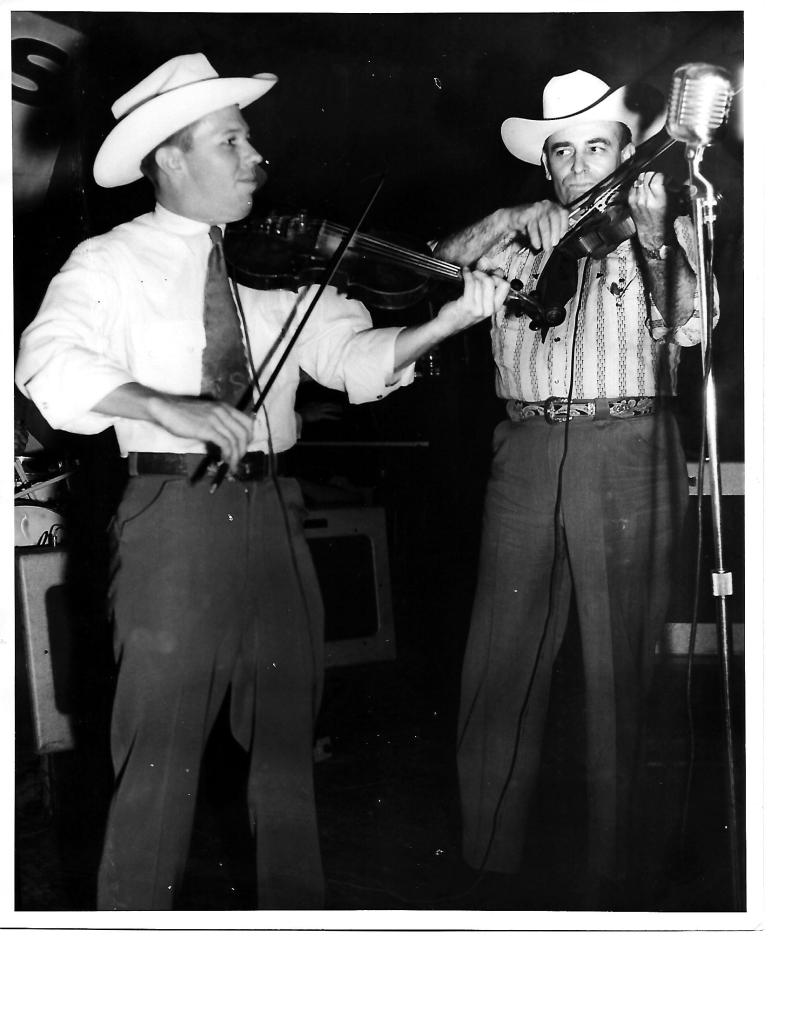
My father, Johnny Strawn playing twin fiddles with Bob Wills. Forth Worth, around 1952.
- * Cajun Blamofatchy is a piece of wood use
Chapter 8. California Ho!-Blind Jelly Roll Jackson Brings Home The Le’ Petite Fromage
Young Johnny and the rest of the string band joined the Strawn family for Sunday church attendance. John Henry warned the boys that they were about to witness a religious spectacle, so hang on to your britches. He also told the boys that If Jelly Roll was invited to join their group, all four of them would be standing before him, even though he is blind, for revering one’s elders was of the utmost importance.
Bertha and the boys walked with John Henry to the orchestra dressing room, where they found Jelly Roll and Pancho Villa seated on a red velvet settee, likely the same furniture that Sister Aimee used in the soul-saving of Jelly Roll, who now embraced his savior with religious zeal. Each of the boys introduced themselves, shook hands with Jelly, and gave a guarded pat to Pancho Villa; the banjo player was the only one to get a vicious bite from the foul-tempered canine. After a brief, casual conversation, young Johnny inquired if Jelly Roll would entertain the notion of joining the string band. Jelly Roll pondered the request for a few minutes, then gave them a yes, but a young female singer from the choir he had recently befriended would come with the package. The boys agreed, and a deal was struck.
Jelly Roll produced a tidbit of dried bacon from a pocket and gave it to Pancho Villa; he then directed the pooch to hurry down the hallway and fetch Miss Fromage. Pancho returned with a smallish girl in tow. Jelly Roll introduced the boys to *Miss Le Petite Fromage from Chigger Bayou, Louisiana. Her daddy is Baby Boy Fromage, the famous Cajun singer, so her vocal abilities come from good stock. Miss Le Petite was a diminutive gal, measuring less than five feet, yet possessing the curves and form of a fully grown woman, except for her hands and feet, which were the size of a small child’s: she had little baby feets and hands. When she spoke, her heavy cajun-accented voice was as smooth as honey on a warm biscuit. Jelly Roll and Miss Fromage agreed to rehearse with the boys on Saturday at John Henry’s home. The group left with the boys feeling like something big was about to happen.
On Saturday, John Henry gathered up Blind Jelly Roll and Miss Fromage and delivered them to his humble home. The boys perched themselves on the front porch. They were as nervous as a cat in a dog show, and who wouldn’t be: this was their first foray into professional music. John Henry kindly assisted Jelly Roll and Pancho Villa to a seat while Miss Fromage opted to stay standing.
After assisting the boys in tuning up, Jelly asked, “Are you all familiar with Mama Mabel Carter’s tune, Will The Circle Be Unbroken?”
The lads nodded knowingly. He then tapped his foot, “In the key of G, one ana two ana three ana four-ahh.”
After a lively eight-bar introduction with Jelly Roll bending his guitar strings into a torturous sound and Johnny joining him with his fiddle, Le Petite took a deep breath, stood up on her tiny toes, and belted out the song with such gusto that her boisterous vocals nearly blew the boards off the porch floor. By the song’s end, neighbors had gathered in the front yard, their feet tapping and hands clapping in rhythm to the spirited tune.
Turning to the band, Le Petite declared, “The next ditty is from my dear ole Daddy, Baby Boy. It’s a G-C-D progression with A minor thrown in for color. It’s called Party On The Bayou: Cold Beer And Calamine Lotion.” Step it up, boys; it’s a rapide quick-un”
The band played for two hours, covering Cajun music, Dallas blues, and some Bakersfield Okie-inspired country. It was clear that Jelly Roll and Le Petite were professionals and were teaching these lads a thing or two. The rehearsal was a rousing success. But now, if they were to play for money, they needed a good name for the band. Johnny threw a couple out, as did the banjo picker, but nothing stuck on the wall.
Le Petite said, ” Monsieur Jelly Roll, being a blind fellow, and now a born again unto sweet Baby Jesus with the strong, unshakable faith, why not call this outfit **”Blind Faith?” They liked it, and Le Petite announced, “So let it be written, so let it be done.”
- *Le Petite Fromage is a type of French cheese popular in the bayou country of Louisiana.
- **Blind Faith was a 1960s supergroup consisting of Steve Winwood, Eric Clapton, Ginger Baker, and Ric Grech. My father couldn’t remember the name of his string band, so Jelly Roll, being blind and embracing his newly found faith, seemed to fit.
Chapter 4, Wagons-Ho, Leaving Texas Far Behind

Divine lightning has been known to strike twice, but only if it is directed by a Guardian Angel.
With a job in his pocket, the few loose coins that jingled in his khakis sounded like a hundred dollars.
John Henry made it a point to stop by, to offer up his thanks to Sargent and Sunny for their helping hand. Their kindness was the kind that stuck with a man, went deeper than any he’d known before.
Sargent asked John Henry to join him for a stroll down the sidewalk, just the two of ’em. They walked and smoked on their Lucky Strikes, talking about this new job that was waiting for John Henry like an open road.
They trudged along the sidewalk, the setting sun beating down on their gray fedoras, until they came to a halt in front of a small, weathered, stucco bungalow. A faded ‘For Rent’ sign hung crookedly from the porch railing, creaking lazily in the faint breeze. An older woman, around Sargent’s age, sat in a creaking swing, sipping listlessly at a glass of iced tea; she gave them a slight wave as friends do. The only sounds were the rhythmic groan of the swing chains and the growing buzz of cicadas, their evening song a mournful hum that seemed to vibrate through the very air itself as dusk drew near.
Sargent took one last drag on his cigarette, the ember flaring orange in the dusk. With a practiced motion, born of countless battlefields, he field-stripped the butt and sent it swirling into the breeze. Beside him, John Henry echoed the gesture, the ritual of it a comforting reminder of days past and the unbreakable bonds of soldiers forged in blood and fire.
Sargent spoke up.
“I’ve already gotten the okay from the owners; they’re fixin’ to move up to San Francisco for a spell, maybe a long one, five or six years they say. The house is yours for the taking if you’re so inclined. I put in a good word for you, figured my vouchin’ would mean something to them. Hope our bond of friendship will be the thing that seals this deal tighter than a jug of moonshine on a hot summer day.”
John Henry let out a hearty laugh, the easy kind that comes from deep in the belly, at the mention of moonshine.
“I ain’t touched the white lightning in near 10 years, Sargent,” he said, a twinkle in his eye. “But I’ll take the house, and you can bet your Justin boots our friendship is stronger than any gold or jug of ‘shine you can find.”
That evening, after John Henry shook on the deal for the house, he stopped at a butcher shop around the corner from Sergeant’s house. He counted out what little change he had left, just enough for three thick pork chops, a couple of fat red potatoes, and a sweet onion. Tonight, he’d throw the chops on the campfire, watch ’em sizzle till they were good and done, and bake the spuds in the coals. Bertha and Johnny, they’d eat like King Farouk. And Lady, she’d get her a big chunk, too, because this was a night for celebration if there ever was one. One thing he had learned in life is to take your blessings as they come and give thanks because they may never come again.
Click the link below for Chapter 5.
Ob-La-De-Ob-La-Da Life Goes’ On Brah…La-La-How The Life Goes’ On
Yes, Dear Hearts, as the Beatles say, life does go on. As of today, I’m five years cancer-free. I’m expecting a face time phone call from Sir Paul and Ringo anytime now.
A Small Miracle
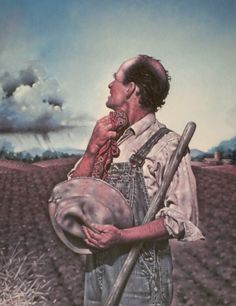
My Grandfather was a farmer. His life was a hundred seventy-five acres of cruel, rocky land in Southwest Texas. He would not have had it any other way.
On a scorching July afternoon in 1955, I stood next to him at a fence row along the south pasture, watching anvil thunderheads form in the West, behind the Santana Mountain Peak, the namesake of his town, Santa Anna.
Little rain had fallen the past few years. The stock tanks were dry, animals were suffering, crops were dead or dying, and the town’s soul was faltering. The prayers on Sunday were plentiful and to the point: Please bring rain.
There was talk of bringing in a rainmaker at the domino parlor, but the town had little money for such a wild idea. The town folk felt as though the good Lord wasn’t listening. A miracle was needed, even if it was a small one.
We had been standing at that fence row for a good hour, Grandfather not flinching or diverting his eyes from those clouds.
I wanted to see what he was seeing, but I couldn’t. He seemed to be taunting those thunderheads to come over that mountain, staring them down, challenging those clouds to bring what they had to his farm.
Looking away from the clouds for a moment, I looked at his weathered face. Just like his land, deep furrows everywhere. It’s as if each wrinkle was his reminder of a furrow that hadn’t produced a crop. He was only sixty, but his face looked decades older.
He glanced down and caught me staring. Embarrassed, I said the first thing that came to mind,
“Grandfather, why are you a farmer?”
Still staring at the clouds, he cleared his throat and said,
“I’ve always been a farmer boy; it’s all I ever knowed. One night, when I was about your age, the good Lord sent a tiny angel to my bed. She lit on the quilt and said Jasper, you’re going to be a farmer, and you will grow food to feed the children and the beast. This will be your life. How can you argue with the Lord boy? So, here I am.”
Until then, we had never had a real conversation, and I liked the kindness in his voice. I wanted to know this man who had been so elusive and indifferent to me.
“Does the good Lord always tell people what they will do?” I asked.
He replied, “It’s what I here’d,” Now you best go tell Granny to get the cellar ready; it’s going to come up a cloud tonight.”
And with that, our first visit was over. Even though it was short, I now felt a closeness to him that hadn’t been there before, and I was eager for the next time.
I came round the barn and saw Granny carrying an armful of quilts and pillows to the storm cellar. She already knew a storm was coming. She always knew.
Grandfather missed supper, unwilling to leave that fence row, afraid those thunderheads would retreat if he did. They didn’t. The first crack of thunder shook the walls and sent me and Granny running for the storm cellar.
Grandfather wouldn’t come with us. He stood at that fence row until the hail stones pounded the cellar door. Only then did he come down, wet and bleeding from the cuts on his scalp. Granny fussed over him for a few minutes, and then he laid down on a cot and fell asleep.
We passed the night in that damp cellar. Granny, sitting, reading her Bible by the light of an oil lantern, Grandfather snoring, and me slumbering between fitful dreams of thunder and lightning. The storm did what it was sent to do.
At dawn, we came out to a sea of water. The fields, flooded, reflected the sunrise like a new jewel. The farm animals rejoiced in unison. Grandfather checked the rain gauge on the fence,
” Seven inches” he yelled.
Granny cried into her cupped hands, and I can’t remember why, but I cried with her.
Around lunchtime, we loaded into the old Ford and drove into town. People lined the sidewalks. Women hugged each other, old farmers patted one another on the back, dogs barked, and children laughed. The town had regained its spirit and hope overnight.
The Biscuit Café was alive, as was the domino parlor and the feed store. Everywhere, the people of Santa Anna rejoiced and gave open thanks for this small miracle.
At the café, Grandfather treated us to a nice chicken lunch. Pastor Bobby and his wife came in and, standing in the middle of the café, offered a prayer of thanks for the rain. Grandfather, not a church-going man, bowed his head and gave a hearty “amen” along with the rest of the patrons.
As we returned to the car, Granny’s old friend Miss Ellis came up to Grandfather, hugged him tight, and in a weepy voice said,
“it’s a miracle Jasper, God gave us a miracle.”
He politely endured her hug for a minute, then we moved on towards home.
That seven-inch rain didn’t end the drought for Santa Anna, but it gave the farms enough relief for the crops to stand tall again and the stock to survive that summer and fall. Grandfather became a church-going man, never missing a Sunday, and his farm produced the best crop in years.
Sixty-seven years later, my wife and I took a day trip back to Santa Anna. I was curious if the town had grown and prospered. It hadn’t. The Biscuit Café, the feed store, the domino parlor, and most of the other shops I remembered were gone. The old church still stood, showing its age but still holding its head high.
We drove out to the old farm. The house, the barn, and the smokehouse are all gone, lost to a fire. The only thing left was the windmill and the cellar. The fields were taken by scrub brush and weeds. Not a furrow survived.
I stood at that old fence line and looked west to the Santana Mountain. Just like that day in 1955, thunderheads were building behind the peak. It was going to “come up a cloud.” I never forgot that conversation with my Grandfather that day, and sadly, I never got to know him better before he passed away a few years later.
I have always believed that the power of prayer can produce miracles, and on that day, standing at that fence line, Grandfather and the Lord struck up a deal. The town got their small miracle, and Grandfather got religion.
“Ain’t Scared”
This, Dear Hearts, should scare conservative Americans to death.
CHILLING: Biden Regime Declares Trump Supporters Domestic Terror Threats in Newly Released Internal Documents, Sought to Set Up DHS Intel Unit to Target Them
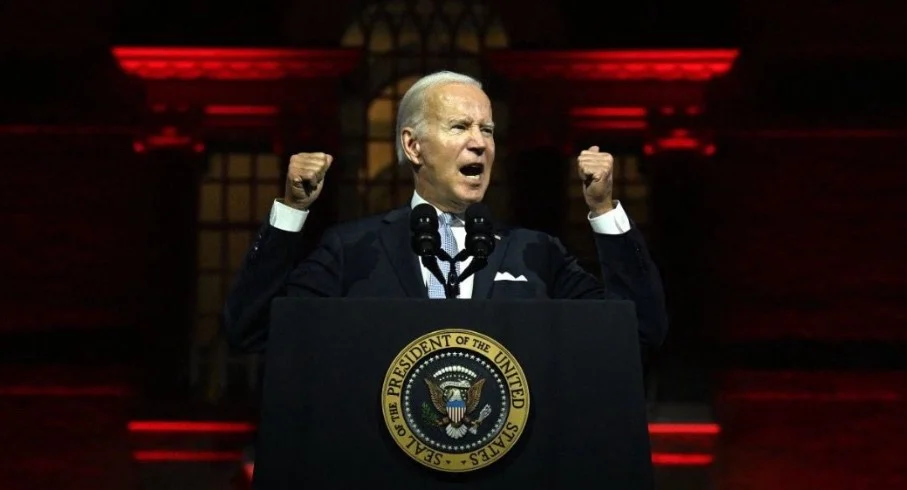
Here in Texas, we have more down-home sayings than cattle. “Ain’t Scared” is one of them, and it sort of says it all about how we Texans feel about the crap that our government fan throws our way. The above title is real, and Dear Hearts, this time we should be scared…real scared. If the title doesn’t hit you in the gut, perhaps the picture will.
How I long for the presence and the voice of the esteemed Paul Harvey. His ability to provide perspective on our nation’s turmoil and division would be invaluable.
Good day.
“Getting Zapped…Brown Shoes Don’t Make It” And A “Beach Party On The Ganges”
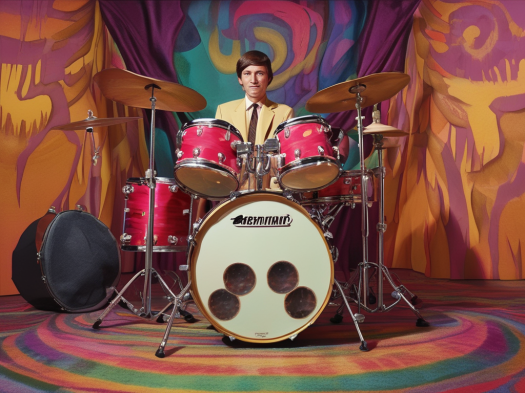
It would be a shame if I didn’t include some local 1960s rock musical history by spotlighting our drummer, Barry Corbett, otherwise known in our tight little musical circle as ” Li’l Spector.” The moniker came about because the boy, at age 15 years old, was a musical genius in the same vein as Brian Wilson, Leonard Bernstein, and Phil Spector: thus his earned nickname. We would never know why he chose the drums as his primary instrument: the guy played an assortment, including Bongo drums, kazoo, paper and comb, Dog House bass, violin, Hurdy Gurdy, guitar, keyboards, Vibes, Trumpet, Piccolo, Harmonica, Juice-Harp, Spoons, Autoharp, Dulcimer, French Horn, Tabla, finger cymbals, gasoline-powered Lawnmower, and Sitar. I’ve probably left a few out; it’s been a while since I thought about this. Barry’s original drums were worn out, so his father purchased him a set of Slingerlands. The finish was all swirling and psychedelic, and if we wore those cheesy 3D glasses from 7-Eleven, we could see the Summer of Love a full year before it happened.
In 1966, our repertoire consisted of The Beatles, The Rolling Stones, Hollies, Paul Revere And The Raiders, The Turtles, and The Byrds. We also played a handful of Beach Boy songs. Our voices were still high, so the Brian Wilson falsetto wasn’t a problem.
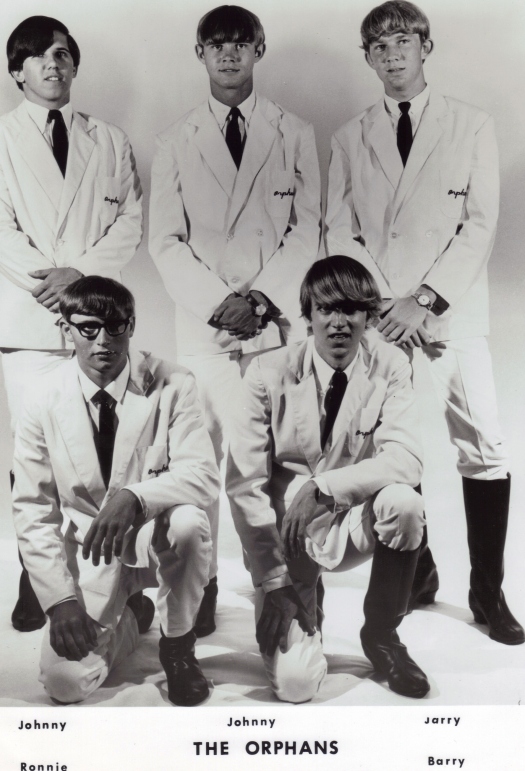
Unknown to Jarry and I, Barry secretly listened to weird underground music: “Frank Zappa And The Mothers of Invention.” These guys were so whacked out that the radio refused to play them, but Barry would. He adored Zappa and wouldn’t wear brown shoes in brotherhood to the song ” Brown Shoes Don’t Make It.” He was also a newbie-semi-devout disciple of East Indian music, mainly Ravi Shankar and his droning Sitar, thanks to George Harrison and the album Rubber Soul.
We knew Barry had purchased a Sitar from “Pier One,” a Dallas specialty store loved by the Hippies. The store hawked strange goods from India and the Middle East. He called one day and asked that Jarry and myself drop by to hear him play his sitar.
We were surprised when he could coax the part to “Norwegian Wood” out of the goofy instrument, so we agreed to learn the song and let him play it during our next gig at the Richardson Recreation Center the coming Saturday evening. He failed to mention that he had two additional musicians accompany him. He was a tinkerer, so he removed the electric pickups from his Gibson Melody Maker guitar and installed them on the sitar, creating the first electric East Indian instrument. Two Electrovoice condenser microphones were used to amplify his additional musicians.
Our gear was set up, and sound checked an hour before the dance, and in strolls Barry, dressed in a Nehru suit: his girlfriend and a guy about Barry’s age in tow. His followers, wearing a white Sari and a Dhoti, trolled behind him: they carried a small bongo-like drum called a Tabla and two tiny Zildjian cymbals on cute little stands. The guy was carrying an instrument that looked like a cross between a fiddle, a guitar, and a Dulcimer. All three had bright red Bindi dots on their foreheads. Barry was lugging his sitar, drum kit, and a Vox AC30 amplifier. After he set up his drums, he ran a sound check on the electric sitar and stuck the other mic inside the Tabla drum, one next to the little cymbals and the frankeninstrument. They sounded pretty good for a Rube Goldberg rigged setup. The three of us were duly impressed but leary of what might happen. Chaos followed Barry like an afternoon shadow.
The band played the first set to about 300 sweaty teenagers. The building’s air conditioning couldn’t keep up: it was a typical July in Texas.
Barry and the two musicians rolled out a Persian rug, which was likely stolen from his mother’s dining room, and positioned it in front of his drums. The girl lighted incense sticks held in large brass holders. Barry lugs his sitar from behind the stage, plugs it into the Vox amp, and sits in the traditional Shankar crossed-legged position. He is ready to rock. We break into Norwegian Wood, and the three-piece Hindi band sounds darn good but a bit loud. The teenagers move in close and surround the trio. Who are these weirdo-freaks? We finished the tune and received polite applause. A better reception than we had hoped for, but then…
For their second tune, Barry announces they will play Ravi Shankers’ biggest hit: “Beach Party On The Ganges,” a snappy little number sounding like Brian Wilson, and the boys meet Ghandi and crew for a cookout on a crocodile-infested beach. The sitar starts to feedback, and the Tabla drummer and Frankenguitar lose their tempo, not that there was one ever established, and Barry, now in a musical trance, is all over the sitar. The crowd of surrounding teens is transfixed, awed by his Zen Zone musicianship. The two other musicians, lost and toasted, have stopped playing. Lil Spector drives onward in his moment of musical adulation.
The Sitar feedback was incredible, so Barry, still locked in his “Ravi sitting position,” leaned back to reduce the volume on his amp. He leans too far, loses his balance, and falls backward, causing the head of his Sitar to catch a mic stand and break off the long body of the instrument. No one knew that Sitar strings were wound to a deathly tension. When the Sitar broke, the strings popped, winding around Barry’s head into his hair and then into his two other musicians’ long hair. It was a disaster. All three were incapacitated on the rug, unable to move. The crowd hooped and hollard, thinking it was part of the show. The poor Sitar wound up in the dumpster, and his musical disciples left the fold, throwing their red-dot makeup tin at Barry as they stormed out of the Rec Center. At his request, we dropped Norwegian Wood from our setlist.
My Political Scab Got Knocked Off…
It’s been a rough few months in the Cactus Patch. A pesky winter turned into a monsoon-like spring, and bandit Squirrels raided my bird feeders. Now, I have to contend with the sitcom on television known as politics. A demented, crooked old man holding off a bit younger old man, and one of them will wind up in the most expensive nursing home in our nation. My political wound was about healed, and now this indictment thing knocked the scab right on off, causing me extreme discomfort. Momo, my nurse wife, wants to stitch it up with sewing needles and thread. I rubbed some Whataburger ketchup on the wound and took a double shot of Irish Whiskey, and it’s healing nicely.
We took a trip to Colorado last week to visit Momo’s daughter and grandkids and sell Momo custom purses at a craft show, but that didn’t pan out. As most of you know, Colorado is one of the most liberal states in the union. California used to be, but folks moved from there to the rocky mountain high that old John Denver used to warble about. We saw plenty of trippy folks when we shopped at Sprouts for regular cereal and milk. Everyone in the store looked like models from an L.L. Bean catalog. Lots of flannel, leggings, facial hair, patchouli oil fragrance, and expensive hiking boots. We found some all-natural, gluten-free, free-range raisin brand and Tibetan goat’s milk, as well as some Mrs.Sasquatch gluten-free, sugar-free cookies. The girl at the checkout had so many piercings on her face that she looked like she took a head dive into a tackle box. She was very mountain trippiesque. The 6,588-foot altitude played hell with my breathing, so I figure most of the folks in Colorado Springs are perpetually high from oxygen deprivation, and you add weed on top of that.
We Love Rock N Roll..
God save Davy Crockett and the Alamo: Anthony Blinken now thinks he is Jimmy Paige. Maybe he should play “Stairway To Heaven” for his boss?
 Notes From The Cactus Patch