Chapter 18. Fort Worth Legends: A Young Musician’s Rise Under Bob Wills


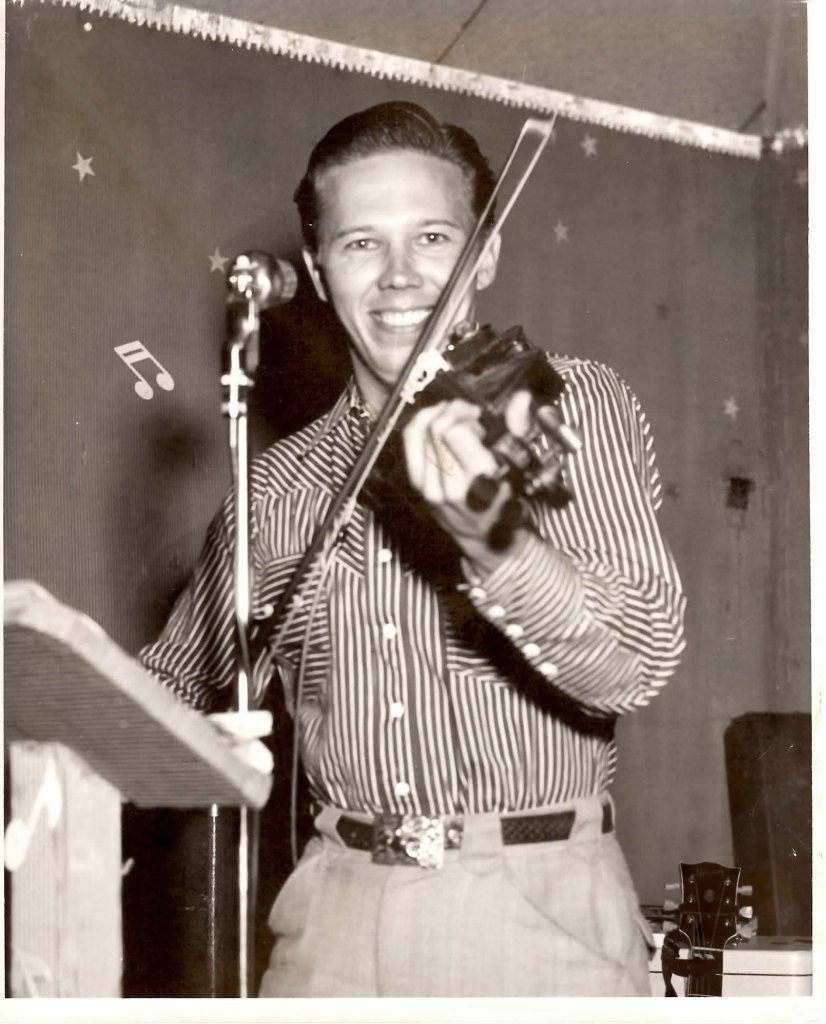
Johnny Strawn, around 1948, Fort Worth, Texas

My grandfather, John Henry, walked to his job at the furniture shop. Years ago, the same place had closed down, driven by the Depression, forcing him to move his family to California for work. Now, twelve years later, he has taken giant steps back, from a good job in Los Angeles to once more building furniture for an hour’s wage. Defeat weighs heavily in his heart. Middle age has come, and the future is murky. So, doing what men do, he keeps walking, counting his steps to nowhere. There are many to blame, but he alone bears the burden of his failures.

The iced ground crunches under his shoes. The cold goes to his bones. His jacket is no match for this weather. He favors the feel of the ground beneath his feet over the Ford sedan in the garage, which is idle most of the time and now a home for mice and other wandering critters.

After the upsetting homecoming with his father, Johnny walked a few blocks to the small neighborhood grocery store to call his best friend, Dick Hickman. His father remained firm in his decision about the telephone, vowing to never have one in the house. The old man viewed the contraption as a rattlesnake in a bag. Lousy news reached him in time enough; no reason to expedite misery.

Two sisters from Germany ran the store, always open, even when the ice storm howled outside. They preferred work to idleness; a dollar was worth more than knitting by the stove. They missed their homeland, but not the darkness that had settled under Hitler’s shadow. Johnny walked in and felt the warmth; they had known him since he was a boy. Following a few hearty hugs and cheek kisses, he was offered a mug of coffee, hot and strong with bourbon and a hint of cinnamon, a taste of what once was.

Dick and Johnny had forged a bond on the playground one morning; Dick was trapped by older boys, their intentions were dark, and Dick knew he was in for a ruckus. Johnny, a full head smaller than Dick, added his small fist for ammunition. A few busted lips and a bloody nose ended the altercation, and the boys would be bound for life by bloody noses and skint knuckles.

Dicks mother, a woman of stern Christian resolve, lived simply, her heart full of faith. Father Hickman was a ghost of a man, suddenly appearing from nowhere, then off again to somewhere. Mother Hickman, as she was called, gave what little extra money they had to Preacher J. Frank Norris, the charismatic leader of the First Baptist Church of Fort Worth.

Nice clothes were a luxury during the Depression, and most children at R. Vickery’s school wore hand-me-downs or worse. Dick wore the yellow welfare pants distributed by the Salvation Army, a sign that his folks were poor. Mother Hickman saw nice clothing as a sign of waste, except when it came to her Sunday fashions. Johnny had a pair of those detestable canvas pants but refused to wear them; the old dungarees with patches did just fine.

Both boys felt the weight of loss when the Strawn family left for the promised land. They exchanged a few postcards during the years in California. Nevertheless, they adhered to the unspoken rule that young men did not write to one another. This was a relic of manly notions of the time. A line or two every six months was enough. Both joined the Navy around the same time, meeting briefly in Pearl Harbor. Then came the seriousness of war. Young sailors, they carried on.

Dick arrived at the two sisters’ store to fetch Johnny. His transportation was a rattle-trap Cushman motor scooter. It refused to stop on the icy street. The scooter slid on its side into the curb and threw Dick off of the beast. The ride to Dick’s apartment was a jolt, far worse than the taxi. Johnny vowed to buy a car when the weather cleared, maybe one for his buddy, too. He held a tidy wad of cash from Hawaii.

A brotherly deal was struck. Johnny would share Dick’s large apartment on Galveston Street, splitting the rent and bills evenly. They were friends again, but now men, and they had different thoughts, dreams, and needs. Dick was courting a young woman from Oklahoma and doing a miserable job of it. Still, marriage lingered in the air, heavy like the rich aroma of brewing coffee, the kind they both drank too much of. Dick took his poison with cream and sugar; Johnny preferred his black and strong.

Johnny’s goal was to play music for a living, and this was the right city to make that happen. He joined the musicians’ union and sent a message to Bob Wills that he was back in Fort Worth.

Wills was now the celebrated band leader of the western swing band, The Texas Playboys. He remembered that meeting at the radio show in Bakersfield, California, long ago. The boy stood out. It was no small feat because Wills was the finest fiddle player in country music.

Bob Wills was not a man known for kindness. He could be brash and indifferent to fans and bandmates alike. Yet, for Johnny, he made an exception. Bob took the young man under his wing, becoming a mentor to my father. A few calls were made, and the boot was in the door. Johnny secured auditions at some of Fort Worth’s best clubs, and each went well. Bob invited him to rehearse with the Playboys. It was there he met men who would soon be legends in country music. A few years later, he would find himself in that circle.

Hey Kids, It’s Fun Being Sick!


How Kids Beat The Pandemic In The 1950s

Kids are an intelligent species. They know far more about human interaction and theatrical interpretation than their parents suspect. I can’t put a date on when this anomaly was discovered, but people with fancy degrees and a goatee first noticed this behavior in the early 1950s. My neighborhood may have been ground zero for their study.

As a bunch, the kids in my neighborhood were healthy. We ate mouthfuls of dirt, sucked on pebbles, and ingested every foodstuff imaginable without washing our grimy hands. This was perfectly acceptable to our mothers. Our young immune system was that of a caveman: we scoffed at germs, ” away with you foul vermin.” Like Superman on the TV, we were indestructible.

The only malady that affected us, was the dreaded Monday morning tummy-throat-aching body-virus. This malady usually broke-out in after a thirty or forty day incubation period. It spread like wildfire through our four-block coterie and most of the second and third grades, mostly affecting boys, but the girls were losing their immunity at an alarming rate.

The second week in November, close to Thanksgiving, most of our second-grade class was infected and missing in action. The symptoms were: headache, stomach ache, sore throat, and body aches, sometimes we developed a limp and had to crawl from the bathroom to our bed. When our mothers asked how we felt, we would point at the affected areas and groan, eliciting additional sympathy.

The first morning was the worst, then by noon we recovered enough to watch cartoons and eat some ice-cream, then after supper, the symptoms worsened, and mom made the call for us to stay home another day. Sleeping in was mandatory, and if we were recovered by lunchtime, we could go outside for some fresh air. This bug was known to not last more than three days, tops.

A seven year old can’t grasp the enormity of a situation the way their parents can. As a group, we were unaware that our symptoms matched those of the dreaded Polio Virus. Our kindly school nurse, fearing the worse, calls the health department for back-up.

Two blocks away at George C. Clark Elementary, our diligent principal cancels all classes and has the entire building sanitized by a nuclear cleanup team from Carswell Air Force Base. The newspapers are on this like a duck on a June Bug.

Lounging in bed eating Jell-O, and watching Bugs Bunny cartoons, my cohorts and I are unaware of our neighborhood pandemic.

Tuesday, mid-morning, a contingent of doctors and nurses from the Fort Worth health department, arrive to access the outbreak. They plan to visit every affected home around our school and test every sick child for the dreaded Polio Virus. Large syringes and foot-long throat swabs are required. A dozen ambulances stood by to transport the poor ill children to the hospital. The local newspaper was there, as well as the television news folks.

Skipper, my stalwart best buddy, and the elected grand Poo-Bah of our gang, was the first to break. With two syringes sucking blood from his skinny little kid arms, he sobbed and said he was faking it, we all were faking it. He gave us up like Benedict Arnold. Roger Glen ran screaming from his house when he saw the size of the needles, and the smartest girl in our class, Annie, gave a signed confession. The epidemic was over.

Most of us couldn’t comfortably sit for a few days, but we were all healthy until the next school year. That’s when the Asian bird, chicken, rat, and cat flue got us all.

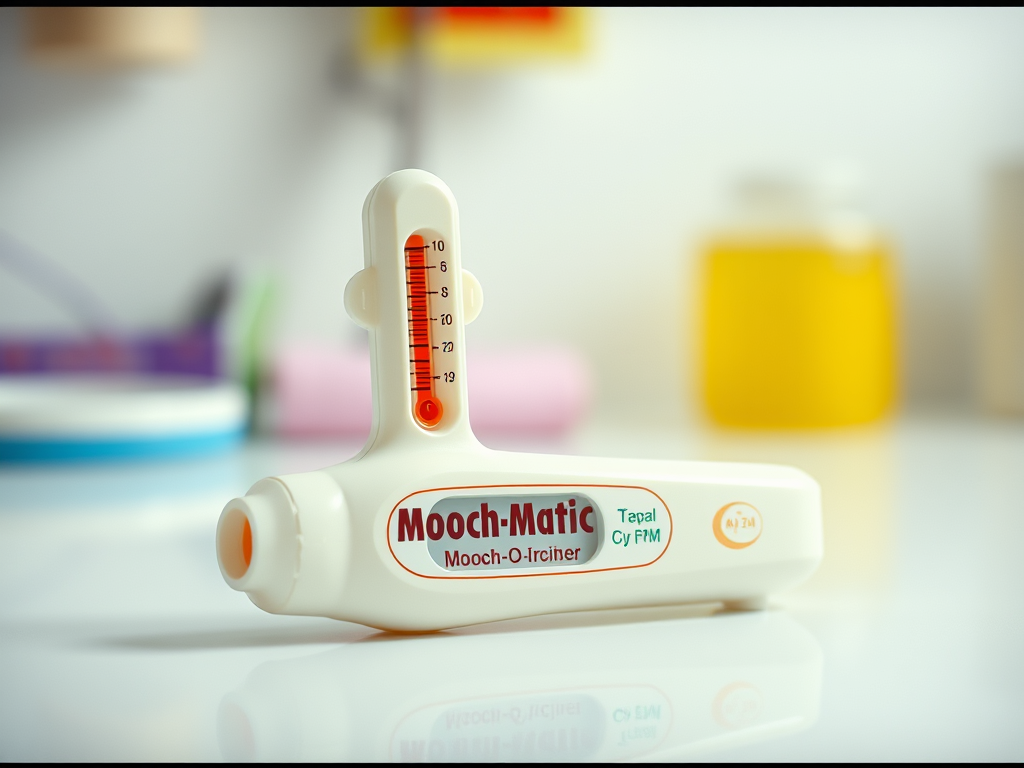
The Mooch-O-Matic life Meter


Life Is A Percentage Game

A few weeks ago, my buddy Mooch and I were driving to Glenrose on a little road trip. We often take an adventure when we hear of something worth investigating. The stranger the better to occupy our precious time.

Mooch heard from someone at the feed store that a lady owns a pig that recently received the “Purple Paw,” the most prestigious civilian award an animal can receive for bravery. We have to see this pig for ourselves since Glenrose is right in our back yard.

Two hours of searching, we find the lady and her pig living in the RV Park by the river. This one is a wild goose chase. It seems her little boy didn’t win a prize in the stock show, so she took a purple TCU lanyard and tied a large gold-painted Mardi-Gras coin on the lanyard, making the pig a medal. This satisfied the whining child and turned the pig into a big shot. Now the kid and the pig think they are hot stuff and are raising hell in the RV Park. The expedition wasn’t a complete waste of time, we ate barbecue at the “Squealing Piglet” and topped it off with some pecan pie and Blue Bell ice cream.

Driving back to Granbury, the oil message light came on warning me I had ten percent oil life left on the old Honda. I bragged to Mooch about how smart my car is, and it seems to know everything. I mentioned, jokingly so, that it would be great if some pharmaceutical company could invent a device to tell us, humans, how much life we have left. Mooch, ever the tinkerer, has a small invention lab in his shed and is always coming up with strange things. He said he would look into that. I knew he would.

A week goes by, and Mooch shows up at my door with a white box under his arm. We sit at my kitchen table, and he pushes the box over my way, urging me to open it. Before I could get the lid off, he yells, ” I did it, its the invention we talked about, its a Mooch-O- Matic Life Meter, we are going to be wealthy.”

I open the box and pull out what appears to be a digital children’s thermometer. On the back are a crudely installed USB port and a sticker reading Mooch Matic. I’m impressed that he could invent something like this so quickly. In my book, his rating just increased by twenty points.

Knowing Mooch was about to explode with pride, I ask him,”What’s in this thing and how does it work?”

Mooch proudly exclaims, ” I took a “Tommy Bear In The Summer Sun” children’s digital rectal thermometer, added two chips from a Nokia flip phone, the activation strips from a “Ellen’s Own”digital pregnancy test, a chip from a Martha Stewart Meat Thermometer, a few innards from my old Amazon Firestick and a USB port so you can save the information. Now all that’s left is to test it on a human. I tried it out on my dog Rex, and damn if he doesn’t have 35% life left. The cat saw me testing Rex and is hiding, so now it’s down to you and me. How about you be the next participant?”

I reluctantly agreed to be the first human to test the Mooch-O-Matic. I entered the bathroom, inserted the device into the proper orifice, and waited until I heard the three beeps that signaled the reading was complete. After straightening myself up a bit I exited the bathroom and gave the device to Mooch. He scrolled through a menu and then blurted out, “holy crap, you have 25% life left, you lucky S.O.B.”

Well, there ya go buddy, I’m going to be watching many more Super Bowl’s. Mooch then took the device into the bathroom to test himself. After ten minutes, I’m getting worried so I knock on the door.

In my best-concerned tone, I said, ” Mooch, you okay, little buddy, you didn’t fall and break a hip, did you?” Mooch opened the door, and his face is the color of snow-whites butt. With a shaking hand, he handed me the device. I looked at the reading and was shocked. Mooch has 1.5% life left, which translates to, he could assume room temperature any minute or by morning at the latest. We are both speechless, and Mooch has tears in his old watery eyes.

Without saying a word, he leaves the house, and me holding the prototype of our disappearing wealth. Just for testing sake, I pulled a previously frozen whole chicken from the fridge and inserted the Mooch-O-Matic into the deceased bird’s butt. Three beeps later, the soon to be chicken dinner that has been dead for who knows how long, reads 35% life left.

I thought for a moment about calling poor Mooch to tell him his device is faulty, but he owes me $200.00, so I’ll let him sleep on this until he pays up.

Hipster Dogs Are Among Us


I wrote this story in 2020 after an encounter at a hipster restaurant in the trendy section of Fort Worth. I wish my stash looked as good as his.

A sweet little dog with a strange name is pictured for your educational pleasure. “Graphon Chardonnay” is what’s known in 2020 as a “Hipster Companion Service Dog.” I’m sure little Graphon would rather be out pissing on trees and digging holes in flower beds than wearing a beard and leather jacket. Dogs look odd in human clothing and look alien when they sport the same beard as their owner.

While strolling the “hot new neighborhood” on West 7th Street a few weeks ago, my wife and I stopped at a small outdoor café for lunch. It was one of those sunny February days where it wants to be pleasant, but you still need a coat if you dine outside. A teaser day, we Texans call it.

A nice-looking couple sat down next to us with their small dog. They were dressed in expensive “Fort Worth Hip” to the tee. The young man had a formidable beard, a ” Stallone” pork pie hat, Ray-Ban sunglasses, and skinny jeans. The woman was dressed similarly but without facial hair. These aren’t your poor retro-hippies; these Kats have dough, good jobs in IT, and live in an expensive high-rise overlooking the Trinity River. They most likely drive a Tesla or a hybrid Beemer.

The two diners immediately immersed themselves in their Apple I iPhones. Hipsters must only use Apple products: Sorry, Samsung, and HTC.

I felt sorry for the little pooch; he didn’t have a phone of his own or even a bowl of water, so I asked a kind waitstaff to bring the wee fellow a dog bowl of H2O. When his water bowl arrived, the man gasped and removed the water dish before the parched dog could catch a drink.

” Graphon does not drink regular water,” he shrieked. ” He’s chlorine intolerant.”

Of course, I apologized for not knowing the dog was allergic to water, so I asked his father, what does Graphon drink?

The young woman looked up from her iPhone and smugly replied, “Graphon Chardonnay drinks only Starbucks decaffeinated coffee, “Chateau La Pew” white wine and natural spring water from Tibet. He is also vegan and has an IQ of 165.” Well, holy hot shit, I am impressed that this furball with two names is smarter than most of us humans; myself included.

I had already figured out these two were vegans, so when our juicy hamburgers arrived, we made a big deal of our meal, loudly commenting on every greasy bite we took. The two gave us the ” hope you die” look.

I accidentally knocked a French fry off my plate in my meat-eating frenzy. The little genius, Graphon, caught it before it hit the ground and gobbled it down. His father screamed, grabbed the dog, and began the “Heimlich maneuver ” until the dog coughed up the slimy fry.

” That fry is cooked in animal fats, are you trying to murder my dog! Graphon could die if he ingests anything other than his special veggies,” he shouted. The woman was crying and having a small breakdown after witnessing her vegan dog eating the evil French fry.

The young couple was so traumatized they took little Graphon Chardonnay and departed the patio. I got the last laugh. I slipped the pooch a nice bite of my burger while they weren’t looking. I’m pretty sure he is going to have some righteous gas.

AI Is Up Everyones A_ _!


Greetings From Beijing.

China got us again. First, it was the China Virus. Now, it’s a spiffy little AI program. This tech wonderment was developed in a few hours with barely enough chips to run a flip-top phone. The nervous boys at the stock market panic, that’s what they do best. They start selling tech stocks and ruining millions of folks. Has anyone in our government checked to see if this CCP program works? I doubt it. We can be assured that the technology was handed over to China for a few million. Maybe it was passed in a brown envelope delivered by a devious first son. Or perhaps someone hacked it from a secure computer while the tech was napping in their safe room. It doesn’t much matter now: they got us good this time. We need Denzel Washington or Sylvester Stallone to take names and kick ass.

Is this the newest Sputnik moment?

“Surprise…you greedy capitalist dogs. We couldn’t finish you with our little viral bug, but this should do the trick. Check your fortune cookie for lottery numbers.”

From Nehi Soda to Napping Camps: A Journey of Texan Creativity


I read an article in my local paper a few days back. It was about a youngster from Louisiana who fed his pet earthworms small amounts of nuclear waste. This made them glow in the dark and grow to the size of a state-fair Corndog. 

He is now raking in cash and hawking them on his own late-night infomercials and online. Every fisherman in the South wants a giant wiggling glowing worm. Every bass needs one. It seems the folks below the Mason-Dixon line will fall for anything.

My family tree in the “old country” was chock full of these sorts. Dreamers, schemers, and medicine show hucksters. All died poor except one.

Take my Great-Great-Great Uncle Nehi, a puny Scott with a sweet tooth. He spent his spare time in search of sugary delights. One night, while experimenting with various potions of colored water, fruit, and healthy doses of sugar, he invented “Nehi Soda.” It wouldn’t be summer without a grape Nehi and a Moon Pie, would it? His tinkering resulted in the all-American soda. Soda pop made him wealthy. He died young from a roaring case of Diabetes. Still, he died prosperous and happy. 

I always preferred Dr. Pepper, but my parents made us drink Nehi every year on the anniversary of his passing.

If it wasn’t for dreamers and hucksters, a beloved section of our economy would not exist. There would be no infomercials on television and no online pop-ups. Drug stores would have fewer aisles for valuable little as seen on TV products. People would wonder how to make fresh juice. They would also wonder how to cover that bald spot. How would they puff their hair out to look like a jelly roll? How do they do this while roaming around town in a snuggie blanket with armholes? Hanging upside-down tomatoes would not exist. How would the astronauts write upside down without that nice ballpoint pen? I get a little scared thinking about what life would be like without these gadgets.

This past summer, my wife and I enjoyed lunch on a Saturday. We dined at a quaint restaurant alongside the Guadalupe River in Gruene, Texas. It was hot—a real sizzler—100 degrees in the shade. We sat outside on their covered deck. We enjoyed the river’s tranquility and were cooled by the misters. 

My wife, Momo, full of food and a cold beer, drowsily commented,

“A nap would be nice right now.” I agreed, but there was nowhere to have a nappy except the hot car, so that idea was out.

I summoned our bill and sat staring at the beautiful river. I watched the tubers drift by and listened to the lull of bubbling water. Nature’s respite entranced and hypnotized me.

 When my bill arrived, the server placed an ice-cold Nehi Grape Soda on the plate, bound for another’s enjoyment. I hadn’t seen a Nehi soda in decades. 

This boy and the girls slapped me hard. The Nehi, the river, the need for a nap, and nature hit me simultaneously. I couldn’t speak and only croak out, “Nap camp…Nehi…nappy.” 

Momo thought I was having a stroke. She whipped out her cell phone and started to dial 911. She stopped when I finally said,

“Uncle Nehi’s Nap Camp.”

She knows that stupid look. It was something akin to holding my beer and watching this. She waited for the spiel, which I was overly anxious to deliver.

Grabbing her reluctant hand, I dragged her down to the river bank. She was scared, but I was excited—invigorated and drunk on the elixir of my vision.

“Why didn’t I think of this years ago” I yelled,

“It’s like the boy and his nuclear fishing worms. It’s not too late, seize the minute, mark your territory, piss into the wind for a change. People need to sleep, they need a good nap, it’s our right!”

I was so excited that I waved my arms and spun around like a tent revival preacher. I was on a roll. 

I yelled with the excitement of a five-year-old on a sugar high,

“Over there, we can build cedar posts and metal roof pole barns by those trees along the river. We can add ceiling fans and misters. Let’s put up some comfy hammocks. We’ll have an outside bar selling Nehi sodas, cold Lone Star beer and baloney, and rat cheese sandwiches. There is a small barn with little hanging beds for the kids and dogs. Also, there should be a separate napping barn for in-laws and people you don’t care for. Imagine napping in a hammock beside the calm river, life doesn’t get any better. Right?”

A grizzled old fisherman was sitting by a tree with his cane pole, listening to this opera of fools. He said,

“That’s not a bad idea, sonny boy. But Old Blind Mable tried that back in 1959. She lost her butt, You can’t put a business in a flood plain. This river flooded pretty well every year back then, just as it does now. Old Blind Mable had a mess of hammocks and people sleeping in them. The river floods and washes everyone down to New Braunfels. This happens whether they want to go there or not. If you got some money to piss away, go ahead. I’ll have a nap here until it rains. Then I’m heading to high ground.”

Momo looked at me and said,

“let’s go home and have a nap, Einstein.”

I was crushed, a broken man. My vision was a pile of raccoon crap. A crusty old river rat shot it down. My wife agreed with him. No Nehi sodas, ice-cold Lone Star in a hammock, or nap camp. Another lost vision.

As we returned to the car, a large dog came strutting down the street, pulling a kid on a skateboard. I watched them cruise by and thought, a big skateboard for two. Add seats and get some big dogs. Rent them to pull people around town. Now, that’s a moneymaker.

Caught by a Girl Scout: A Cookie Sales Encounter At The Walmart


Walking into Walmart this morning to pick up my meds, I was accosted, not by a panhandler or some poor schmuck with a sob story, but by a cute eight-year-old girl selling Girl Scout cookies. She wouldn’t take no for an answer and “had” all the answers. This little waif, hands on her hips and a defiant gleam in her eye, actually blocked my entrance into the Walmart. Standing in front of me like a little David about to punch Goliath, she meant business. I couldn’t bump her out of the way, so I was forced to engage her. It was all a grand scheme. Standing behind a table stacked with boxes of cookies were four Mama Bears, arms crossed, foot tapping, just waiting for me to decline. They all had that ” Just try to get out of this one” look on their face.

” I don’t have any money,” I pleaded.

” We take credit and debit cards,” she chirps. When did this start? Does every kid have a credit card machine in their backpack?

” I’m diabetic and could have a seizure,” I add.

“No problem mister, we have sugar and gluten-free,” she sneers.

I’m trapped. Twenty adults are staring at me as if I am a criminal. I hand her my Visa card, and she rings up five boxes of cookies and a twenty percent tip to boot. I take my cookies and walk to my car, fearing they will grab me again on the way out. I’ll be having cookies for supper.

End Times in Texas: Snow Chaos at H-E-B


Backyard Bird Cafe at Casa de Strawn

According to the news gals on TV, the end of the world is upon Texas: snow is coming on Thursday and Friday, maybe a foot or more of the lovely puffy winter blanket. The problem is that the folks in this part of Texas don’t know anything about snow or how to deal with it. Schools are closing, businesses are having “End of Times” sales and liquor stores are running out of stock. This is as serious as the chicken flu.

Like every other fool in town, I went to the H-E-B for a few supplies: pork rinds, wine, beer, Cheeto’s, Wolf Brand Chili, A2 milk, and Ovaltine. I live in a hilly area, and if Momo and I get snowed or iced in, we cannot get out. Exceptions would be made for the hospital or the liquor store for hootch supplies.

I walked into an “End Times” scenario. The H-E-B, that pure Texas grocer, was in full pandemonium mode. The local police were arresting a mother for stealing food from an old woman’s shopping cart, her two young baby childs holding onto their mother’s legs as she was dragged out of the store. The store manager tased an old guy for ramming other shoppers with the store’s personal scooter.

Women were fighting, pulling hair, punching, kicking, and biting each other over toilet paper. Children ran wild down the aisles, grabbing cookies and any sugary treat. One kid stood atop the frozen food kiosk, throwing Red Baron pizzas at the snarling crowd below. It was like a scene from The Walking Dead.

I ran into my old pal Mooch. He had a garbage bag full of Pork Rinds and five cases of Pabst Beer, enough to see him through the apocalypse.

I found what I needed and went to the cashier; she said,

“take it, no charge, the machines have cratered.”

Arriving home, I found Momo cleaning our pistols and checking our ammo supply. She’s a crack shot, so I pity the fool who comes onto our property with intentions to steal. She’s excited about the Snowmeggdon and wants to make snow angels in our backyard. I told her the only thing we could make would be old people’s angels when we fall down and can’t get up and have to crawl back to the patio.

Growing Up With Mexican Food in 1950s Fort Worth,Texas..My First Visit To Trashy Juanita’s


Childhood memories are like teeth; we all have good and rotten ones. If you grew up in Texas in the 1950s, you will identify with some of mine, or maybe not.

I was nine years old before I dined in a Mexican restaurant. I knew they existed because my father and mother enjoyed them, bringing home little mints and matchbooks touting the restaurant’s name. I got the mints, and my parents put the matchbooks in a jar in the kitchen. I dreamed that one day, I might visit one.

In Texas, Mexican food is part of life. It’s one of the major food groups; a boy cannot grow into a man of substance without it. Not having real Mexican food at that young age affected my evolution into a healthy young specimen. I harbored a nervous tick, stuttered sometimes, and had one leg shorter than the other. All those maladies were cured once I ate the real stuff. The medicinal qualities of Mexican food are exceptional.

For many years, I had eaten tacos at my cousin’s house, believing them to be authentic Mexican food. Sadly, they were nowhere near the real deal. Several times over the summer, my cousin Jok’s mother, Berel, would cook tacos and invite the families for a feast. Cold Beer and tongue-scorching Tacos. Pure Texas.

Berel would stand at her massive gas range, a large pot of ground beef, and a cauldron of boiling Crisco, heating the room to cooking temperature. She would drop a tortilla stuffed with meat into the witch’s cauldron, pull it out, and toss it to the pack of wild African dogs sitting around her kitchen table. The dogs, of course, were my cousins and me. My poor mother would leave the room. She could not bear to see her son eat like a feral child: growling, biting, snarling as we consumed the tacos like they were a cooked Wildebeest. That is what I consider Mexican food and proper behavior when consuming it.

Driving Northwest of downtown Fort Worth on Jacksboro Highway, right before you come to the first honkey tonk, you would find “Trashy Juanita’s” Mexican restaurant. Legendary for its tacos, frijoles, and cold Pearl Beer. It was also legendary for things my father would not mention until I was older. Gambling, shooting dice, and generally questionable behavior were part of the after-hours entertainment. It wasn’t on Jacksboro Highway for the view.

The owner of Juanita Batista, Carlita Rosanna Esposito, was not a trashy woman but a middle-aged Latin beauty with a bawdy laugh and sharp wit. The restaurant’s front yard adornments earned the name. Offended at first, she finally accepted her crown and wore it proudly.

Two rust-eaten pick-up trucks, one painted blue and the other yellow, sat abandoned in the front yard behind a cyclone fence. Pots of flowers decorated the fenders while the beds overflowed with vines and small flowering trees. Fifty or more chickens strutted and pecked around the yard, giving the place a barnyard atmosphere. Some saw a work of art, while others called it a junkyard that happened to serve great food.
In an interview in the Fort Worth Star-Telegram, Juanita claimed to be related to General Santa Anna, Pancho Villa, and the Cisco Kid, making her royalty in Mexico. The people of Fort Worth loved her, and she was considered a local character of some importance. She often dined with Ben Hogan and the Leonard brothers at Colonial Country Club.

Trashy Juanita’s was my first introduction to authentic Mexican food and all that comes with it.

My father sold one of his many fiddles to a buddy, and with the profit, he took the whole family to dine at Trashy Juanita’s on the Fourth of July, 1958.

Juanita had gone “whole hog” on this holiday. American flags hung from the front porch and draped the cyclone fence. Two small children sat in the front yard shooting bottle rockets at the cars driving on Jacksboro Highway, and the chickens were wrapped in red-white-and-blue crepe paper streamers. Very patriotic and also very redneck Texas.

A jovial Juanita escorted us to a large table beside the kitchen doorway. A waiter delivered tortillas, chips, salsa, and two Pearl beers for my father and grandfather along with large, frosty glasses of sweet iced tea for the rest of us. There was no menu; it was Tacos or nothing at all.

The unfamiliar aroma of exotic food floated on a misty cloud from the kitchen, filling my young nostrils and activating my developing saliva glands. A torrent of spit dripped from my mouth onto the front of my new sear-sucker shirt. My mother cleaned me up and wrapped a napkin around my neck. I was ready: I had my eating clothes on.
We decided the family would dine on a medley of beef and chicken Tacos, frijoles and rice, and guacamole ala Juanita. The waiter rushed our order to the kitchen.

The evening was turning out great. My father was telling jokes, the cold beer flowed, and a waiter walked past our table into the kitchen. Under each arm was one of the patriotically wrapped chickens from the front yard. My grandfather must have forgotten that two young children were at the table and remarked, “There goes our Tacos, can’t get any fresher than that.”

His remark went unnoticed until I asked my father, ” Dad, are we going to eat the pet chickens from the front yard?” He didn’t offer an answer.
I got a big lump in my throat, and my eyes got misty. My sister whimpered and cried like a baby, and my grandmother, seeing her grandchildren in such distress, shed tears in support. Mother gave the two adult men the worst evil eye ever. The mood at the table went from happy to crappy in a minute or less. So much for a joyous family celebration. We might as well be eating Old Yeller for supper.

There was a ruckus in the kitchen, yelling, pots and pans clashing, and the two chickens, still wearing their streamers, half-flew, and half-ran through the dining room and out the front door. The cook was right behind them but tripped over a man’s foot, knocking himself out as he hit the floor.

Standing in the middle of the dining room, Juanita announced that there would only be beef Tacos tonight. The two doomed birds had escaped the pan, and my sister and I were happy again. My father breathed a sigh of relief that the night was saved, and my grandfather bent down and polished the new scuff on his size 10 wingtip.

Chapter 16. The Weight of Goodbye: Johnny’s Regretful Return Home


Having made the painful choice to journey back to Texas, Johnny found himself in a heart-wrenching struggle, surrendering the opportunities that lay before him—holdings that promised riches within a decade. With a heavy heart and resolute spirit, he cast aside dreams of wealth, fully aware that the path behind him had irrevocably vanished, leaving only the words of “what have been.”

The lots on the edge of downtown Honolulu vanished in a few days to a dodgy speculator, who offered a fire sale price. The used car lot was sold to a former commanding officer with a firm handshake and a promise that money would follow when the last existing vehicles found new homes. Now, he was left with nothing but the relic of a pawn shop fiddle, a token of better days. He returned the instrument to the old Korean man, who was less than friendly, still smarting from the failed romance between his granddaughter and Johnny. He offered a few dollars, which was silently rebuked. Confident that his father had cared for his prized violin, it would be waiting for the bow’s stroke across the strings.

Johnny made his rounds to bid farewell. The Royal Hawaiian staff had treated him kindly despite his being a Haole. The folks at the Pearl City News and the companions of his musical venture each received a heartfelt goodbye.

On his last night in paradise, Johnny dined alone. Over the years, The Brass Monkey Tavern and its delicious seafood had comforted him. Pika, the native Hawaiian bartender, produced a special bottle from the top shelf. Tonight, there would be no cheap hooch for his valued Haole friend.

The bitterness of his embattled relationship with his mother touched every part of his soul. He knew full well that forgiveness, if it ever came, would be a long, winding road marred by the shadows of contrived intent. Knowing that his father was faltering added to his haste in his departure.

The troop ship to California was packed with weary yet hopeful servicemen returning from their duties. A loud hum of excitement hung thick in the air. For many, it was a moment to rekindle the flame of old lives or to carve out new paths. Yet Johnny was lost to his sadness and felt no thrill. His thoughts drifted to Blind Jelly Roll, Sister Aimee, and Le Petite Fromage, now back in Chigger Bayou. Their presence in his life had brought him great joy. He felt obliged to give them one final visit, knowing it would be the last in his lifetime.

Blind Jelly Roll, aware that his days were numbered, was grateful for the visit. His humor was intact, and he asked Johnny if he would like to ride in his new sedan, touting that his driving skills had improved since their last visit. Pancho Villa, the tiny demon dog, had only taken a soft nip on Johnny’s hand, but his lack of front teeth made the nip more of a gumming affair. Sister Aimee, angelic as ever, had transformed into a maternal figure for Jelly and promised Johnny that the old bluesman would find a nurturing and loving home until his final hour. Even that cantankerous dog would be cared for. Johnny saw something in her eyes; the looks she cast on the old man were more than motherly; he detected an inner fire that fueled her commitment. Farewells were exchanged. There were strong hugs, a few tears, and some laughs. The final, out-the-door goodbye was punctuated by promises to write.

That evening, Johnny boarded the Super Chief bound for Chicago, with a stop in Fort Worth. The journey would take three days and arrive in the morning light. He kept his arrival a secret from his family, anticipating the thrill of surprise. He sat cradling a cup of coffee on a wooden bench in the train station. He had gotten it from the diner. The lady behind the counter, dressed in a waitress uniform, reminded him of his sister. He missed Norma and was troubled by her not writing in almost two years. He knew something was wrong and would make it all right today. The night stretched long. He had come to find peace in books. He thought of Thomas Wolfe’s words, “You can’t go home again.” But could he? Would he be met by a marble angel on the porch or find only a locked door at the end of his journey?