Hey Kids, It’s Fun Being Sick!


How Kids Beat The Pandemic In The 1950s

Kids are an intelligent species. They know far more about human interaction and theatrical interpretation than their parents suspect. I can’t put a date on when this anomaly was discovered, but people with fancy degrees and a goatee first noticed this behavior in the early 1950s. My neighborhood may have been ground zero for their study.

As a bunch, the kids in my neighborhood were healthy. We ate mouthfuls of dirt, sucked on pebbles, and ingested every foodstuff imaginable without washing our grimy hands. This was perfectly acceptable to our mothers. Our young immune system was that of a caveman: we scoffed at germs, ” away with you foul vermin.” Like Superman on the TV, we were indestructible.

The only malady that affected us, was the dreaded Monday morning tummy-throat-aching body-virus. This malady usually broke-out in after a thirty or forty day incubation period. It spread like wildfire through our four-block coterie and most of the second and third grades, mostly affecting boys, but the girls were losing their immunity at an alarming rate.

The second week in November, close to Thanksgiving, most of our second-grade class was infected and missing in action. The symptoms were: headache, stomach ache, sore throat, and body aches, sometimes we developed a limp and had to crawl from the bathroom to our bed. When our mothers asked how we felt, we would point at the affected areas and groan, eliciting additional sympathy.

The first morning was the worst, then by noon we recovered enough to watch cartoons and eat some ice-cream, then after supper, the symptoms worsened, and mom made the call for us to stay home another day. Sleeping in was mandatory, and if we were recovered by lunchtime, we could go outside for some fresh air. This bug was known to not last more than three days, tops.

A seven year old can’t grasp the enormity of a situation the way their parents can. As a group, we were unaware that our symptoms matched those of the dreaded Polio Virus. Our kindly school nurse, fearing the worse, calls the health department for back-up.

Two blocks away at George C. Clark Elementary, our diligent principal cancels all classes and has the entire building sanitized by a nuclear cleanup team from Carswell Air Force Base. The newspapers are on this like a duck on a June Bug.

Lounging in bed eating Jell-O, and watching Bugs Bunny cartoons, my cohorts and I are unaware of our neighborhood pandemic.

Tuesday, mid-morning, a contingent of doctors and nurses from the Fort Worth health department, arrive to access the outbreak. They plan to visit every affected home around our school and test every sick child for the dreaded Polio Virus. Large syringes and foot-long throat swabs are required. A dozen ambulances stood by to transport the poor ill children to the hospital. The local newspaper was there, as well as the television news folks.

Skipper, my stalwart best buddy, and the elected grand Poo-Bah of our gang, was the first to break. With two syringes sucking blood from his skinny little kid arms, he sobbed and said he was faking it, we all were faking it. He gave us up like Benedict Arnold. Roger Glen ran screaming from his house when he saw the size of the needles, and the smartest girl in our class, Annie, gave a signed confession. The epidemic was over.

Most of us couldn’t comfortably sit for a few days, but we were all healthy until the next school year. That’s when the Asian bird, chicken, rat, and cat flue got us all.

Religion, Family, and a Baptism Gone Wrong


Swimming With Jesus In A Cement Pond

My first taste of religion came when I was six. A boy from Fort Worth, I was taken to the Polytechnic Baptist Church to witness the near-drowning of my young father. He was baptized by a man named Reverend Agustin Z Bergeron. The preacher was a legend, standing alongside only two others: Reverend J. Frank Norris and Billy Graham.

Someone in my family, an aunt or a cousin or all members thereof, thought that father’s soul needed saving to ensure his path to Heaven would be an honest one. I suspect it was his mother. She was a championship sinner with no way to redemption, so convincing her only son to Baptism might also gain her entry to God’s domain as a parental guest. I also suspect that the bottles of hooch and the 38 special in her traveling suitcase would also be overlooked as she accompanied him through the pearly gates. Looking back on my family history, I now realize that the entire bunch of my father’s family was street-Rat-crazy.

The Sunday of the Baptism was as hot as I can remember. The small church was surrounded by large shade trees, but there was not a whiff of a breeze inside the building. Religion and suffering are one and the same. July in Texas is considered a preview of the weather in Hell, and the good reverend used it well.

I sat beside my mother. My little sister was in her lap, not yet a year old. My clothes were soaked with sweat. I might have wet myself and not known it. The summer heat rose from the wooden floor beneath us. Hell lay just below, waiting for us to waver, to lose our faith. Satan would pull us down if we let go. It seemed so simple. I didn’t understand sin or what it meant to fall into Hell. Kids don’t think about such things.

Pacing the floor, Preacher Augustin moved from wall to wall. Behind him, the big-haired women added their Amen and Halleluiahs, their voices sharp and clear. The pulpit held the preacher’s Bible, unused, but not forgotten. He did not need its leather-bound wisdom. He knew all he needed to instill fear in the hearts of those gathered in that church. The stifling air was drenched in repentance.

The sermon concluded, and the Baptismal commenced. Father was the last on the list.

Mother had dressed him in a new white shirt and a black tie. With his new black horn-rim glasses, he looked like the television comedy star, Steve Allen. The shirt was stiff as cardboard, making it hard to move. One might expect that if someone were to be dunked in water, a swimsuit or at least a robe would be fitting. But no, Baptists preferred it genuine, fully dressed in their best clothes, shoes, watch, and wallet.

Father’s name was called. Entering the pulpit from behind a velvet curtain, he climbed into the Baptizing tank. I found it odd that a church would have a small swimming pool at the altar. A waist-deep concrete tub full of unpurified water. How would one know that the occupants hadn’t released a stream of urine into the sacred water in their moment of personal repentance and acceptance? It’s a natural response akin to peeing in a lake. Father stood in the holy waters awaiting his deliverance. He carried the look of a trapped man; no escape route was available, so his fate was sealed.

Preacher Augustin wasted no time. He asked Father if he was ready to accept Jesus and be bathed in the Holy waters. Father mumbled a few words, and the preacher pushed him back into the Holy water. Time passed, it seemed like minuets, and along with lovely words and passages, and still, Father was immersed under the Holy waters. A hand, then an arm reached up, flailing about. Finally, a leg broke the surface, and a shoe flew off. Still, Preacher Agustin continued the cleansing.

Looking back, it was common knowledge that father was a country musician and made his living playing in the beer joints along Jacksboro Highway. Preacher Augustin figured since my father was a fully certified sinner, an extra dose of saving was needed.

Father made it to the surface with seconds to spare. Sputtering and coughing, on the verge of death, he rolled over the side of the cement pond and lurched toward the side door of the church. Holding my baby sister, my mother grabbed me by my bony arm, and we made a hasty beeline to the car. Father was there waiting, dripping wet, looking like a bad meal on a china plate, but he was a saved man.

Traumatized By Puppets!


A Childhood Tragedy

The asphalt parking lot is so hot it’s melting the rubber soles of my PF Flyer “tinny” shoes to the pavement. It’s July of 1957, and there are at least one hundred kids, including our neighborhood coterie of twenty-five, standing on that lot, waiting to see our television idols, Mickey Mud Turtle and Amanda Opossum.

Piggly Wiggly Food hired the puppet duo from Channel 11 for the grand opening of their newest grocery store on Berry Street. With the show’s growing following, the folks at Piggly are betting on a full house because every kid in Fort Worth, Texas, wanted to meet Mickey and Amanda up close and in person.

Without an introduction, the puppets popped up onto the stage of their television theater and launched into their shtick. The jokes are age-appropriate and corny. Birthdays are shouted out, and then more jokes, but with no cartoons to kill time, the felt and cardboard critters are out of material and are bombing like the Hiroshima fat boy.

The Mud Turtle launched into a commercial for Piggly Wiggly, and the Opossum began her’s for Buster Brown Shoes, over-riding Mickey, which in turn made him mad, and he grabbed a small bat with his mouth and popped Amanda Opossum a good one. The kids loved it. Watching the two puppets fight is better than cartoons, any day, hands down.

I feel a tug on my shirt and realize my mother is dragging me into the grocery store. As we pass the back of the puppet theater, the side curtain is halfway open, and there, in living color, are two adults sitting on low stools with their hands stuffed up the butts of our beloved stars. Kids are good at fooling themselves into believing things that aren’t real. I know they are cheesy cardboard and fabric puppets, but destroying my imagination is serious stuff.

Mortified and traumatized from the scene I witnessed, my mother drags me through the air-conditioned store as she completes her shopping. There is no sympathy or coddling from this tough-as-nails woman. She mumbles something about puppets being stupid, and I feel tears forming on my cheeks. I may never recover from this destruction of my childhood.

Leaving the store, we pass the stage, and a man and woman are putting the puppets into their wooden boxes and autographing glossy postcards of the critters. I still have mine.

From Nehi Soda to Napping Camps: A Journey of Texan Creativity


I read an article in my local paper a few days back. It was about a youngster from Louisiana who fed his pet earthworms small amounts of nuclear waste. This made them glow in the dark and grow to the size of a state-fair Corndog. 

He is now raking in cash and hawking them on his own late-night infomercials and online. Every fisherman in the South wants a giant wiggling glowing worm. Every bass needs one. It seems the folks below the Mason-Dixon line will fall for anything.

My family tree in the “old country” was chock full of these sorts. Dreamers, schemers, and medicine show hucksters. All died poor except one.

Take my Great-Great-Great Uncle Nehi, a puny Scott with a sweet tooth. He spent his spare time in search of sugary delights. One night, while experimenting with various potions of colored water, fruit, and healthy doses of sugar, he invented “Nehi Soda.” It wouldn’t be summer without a grape Nehi and a Moon Pie, would it? His tinkering resulted in the all-American soda. Soda pop made him wealthy. He died young from a roaring case of Diabetes. Still, he died prosperous and happy. 

I always preferred Dr. Pepper, but my parents made us drink Nehi every year on the anniversary of his passing.

If it wasn’t for dreamers and hucksters, a beloved section of our economy would not exist. There would be no infomercials on television and no online pop-ups. Drug stores would have fewer aisles for valuable little as seen on TV products. People would wonder how to make fresh juice. They would also wonder how to cover that bald spot. How would they puff their hair out to look like a jelly roll? How do they do this while roaming around town in a snuggie blanket with armholes? Hanging upside-down tomatoes would not exist. How would the astronauts write upside down without that nice ballpoint pen? I get a little scared thinking about what life would be like without these gadgets.

This past summer, my wife and I enjoyed lunch on a Saturday. We dined at a quaint restaurant alongside the Guadalupe River in Gruene, Texas. It was hot—a real sizzler—100 degrees in the shade. We sat outside on their covered deck. We enjoyed the river’s tranquility and were cooled by the misters. 

My wife, Momo, full of food and a cold beer, drowsily commented,

“A nap would be nice right now.” I agreed, but there was nowhere to have a nappy except the hot car, so that idea was out.

I summoned our bill and sat staring at the beautiful river. I watched the tubers drift by and listened to the lull of bubbling water. Nature’s respite entranced and hypnotized me.

 When my bill arrived, the server placed an ice-cold Nehi Grape Soda on the plate, bound for another’s enjoyment. I hadn’t seen a Nehi soda in decades. 

This boy and the girls slapped me hard. The Nehi, the river, the need for a nap, and nature hit me simultaneously. I couldn’t speak and only croak out, “Nap camp…Nehi…nappy.” 

Momo thought I was having a stroke. She whipped out her cell phone and started to dial 911. She stopped when I finally said,

“Uncle Nehi’s Nap Camp.”

She knows that stupid look. It was something akin to holding my beer and watching this. She waited for the spiel, which I was overly anxious to deliver.

Grabbing her reluctant hand, I dragged her down to the river bank. She was scared, but I was excited—invigorated and drunk on the elixir of my vision.

“Why didn’t I think of this years ago” I yelled,

“It’s like the boy and his nuclear fishing worms. It’s not too late, seize the minute, mark your territory, piss into the wind for a change. People need to sleep, they need a good nap, it’s our right!”

I was so excited that I waved my arms and spun around like a tent revival preacher. I was on a roll. 

I yelled with the excitement of a five-year-old on a sugar high,

“Over there, we can build cedar posts and metal roof pole barns by those trees along the river. We can add ceiling fans and misters. Let’s put up some comfy hammocks. We’ll have an outside bar selling Nehi sodas, cold Lone Star beer and baloney, and rat cheese sandwiches. There is a small barn with little hanging beds for the kids and dogs. Also, there should be a separate napping barn for in-laws and people you don’t care for. Imagine napping in a hammock beside the calm river, life doesn’t get any better. Right?”

A grizzled old fisherman was sitting by a tree with his cane pole, listening to this opera of fools. He said,

“That’s not a bad idea, sonny boy. But Old Blind Mable tried that back in 1959. She lost her butt, You can’t put a business in a flood plain. This river flooded pretty well every year back then, just as it does now. Old Blind Mable had a mess of hammocks and people sleeping in them. The river floods and washes everyone down to New Braunfels. This happens whether they want to go there or not. If you got some money to piss away, go ahead. I’ll have a nap here until it rains. Then I’m heading to high ground.”

Momo looked at me and said,

“let’s go home and have a nap, Einstein.”

I was crushed, a broken man. My vision was a pile of raccoon crap. A crusty old river rat shot it down. My wife agreed with him. No Nehi sodas, ice-cold Lone Star in a hammock, or nap camp. Another lost vision.

As we returned to the car, a large dog came strutting down the street, pulling a kid on a skateboard. I watched them cruise by and thought, a big skateboard for two. Add seats and get some big dogs. Rent them to pull people around town. Now, that’s a moneymaker.

Reflecting on the Luanne Platter at Luby’s…It’s A Texas Thing, Ya’ll


Miss Luanne Platter

Maureen and I visited Luby’s Cafeteria last week for lunch. The smell of the food brought back memories from my childhood.

Back in the 1950s, in Fort Worth, there were Wyatt’s and Luby’s cafeterias. It was always a hard choice for the family. Luby’s had the best deserts, while Wyatt’s always served larger portions. My Dad usually chose Wyatt’s—more bang for the buck. It was the Eisenhower years, and things were tight. That’s back when he was still a Democrat. I was just a hungry kid.

We took our place in line, trays aligned on the metal rail. I scanned the extra-large menu board for my favorite dish but couldn’t find it. I panicked. The platter I came for and have always ordered for decades is “The Luanne Platter,” and they damn well better have it. My blood sugar was low, and I could feel a rant coming on. Maureen rubbed a few drops of “Peace of Mind” lotion under my nose to calm me. Then, in the lower corner of the board, I spotted it. ” The Luann Platter, half portions with a roll – $8.99.” What the hell! It used to be $4.99 with a roll, a drink, and a slice of pie? Retired folk can’t afford those prices.

I approached the smiling lady server and, using my best old man-controlled voice, said,

” I’m not paying $8.99 for a half portion that was $4.99 with a piece of pie the last time I ate at Luby’s,” and I slammed my fist on my tray for effect.

Still smiling, she replied,

” Well,, sir, then you can choose the children’s plate if you are over 65 and/or acting like a child, as of which you appear to be. You have a choice of chicken strips, a hot dog, or spaghetti with 2% milk and a fruit cup. That will set you back $4.99 plus tax. And by the way, The Luanne Platter has been $8.99 since 2001.”

Oh man, the little Pop-Tart was really messing with me now. Her smile had turned to a slight sneer, and her eyes got beady. I leaned over the glass barrier.

” Do you know who Luann Platter is, young lady?” I demanded.

” No, sir. Was she a famous cook or employee of the month or something?” she said. Good Lord, this girl is clueless.

By this point, two other line servers had flanked the young miss in case I went postal. I faced them and, with conviction, said,

” Luanne Platter is the most famous character on the television show, ” King of the Hill.” An animated series set in Garland, Texas, and this dish you serve is named for her. Don’t you know who Hank, Bobby, and Peggy Hill are?”

The three servers’ young faces showed social ignorance. It was useless to explain. I collected my platter, and we proceeded to the checkout.

We sat in our booth, eating our lunch in silence. The food wasn’t as good as it used to be. The good old days are gone for good. My turnip greens were Kale, the most evil weed ever cooked. Maureen’s chicken was rubber faux, and my corn muffin was doughy and awful. We can scratch this one off of our list.

Leaving the cafeteria, a fortyish blond woman in the Luby’s uniform held the door open for us. In a girlish voice, she said,

” Ya’ll come back now.” I noticed her name tag read “Luanne.”

Growing Up With Mexican Food in 1950s Fort Worth,Texas..My First Visit To Trashy Juanita’s


Childhood memories are like teeth; we all have good and rotten ones. If you grew up in Texas in the 1950s, you will identify with some of mine, or maybe not.

I was nine years old before I dined in a Mexican restaurant. I knew they existed because my father and mother enjoyed them, bringing home little mints and matchbooks touting the restaurant’s name. I got the mints, and my parents put the matchbooks in a jar in the kitchen. I dreamed that one day, I might visit one.

In Texas, Mexican food is part of life. It’s one of the major food groups; a boy cannot grow into a man of substance without it. Not having real Mexican food at that young age affected my evolution into a healthy young specimen. I harbored a nervous tick, stuttered sometimes, and had one leg shorter than the other. All those maladies were cured once I ate the real stuff. The medicinal qualities of Mexican food are exceptional.

For many years, I had eaten tacos at my cousin’s house, believing them to be authentic Mexican food. Sadly, they were nowhere near the real deal. Several times over the summer, my cousin Jok’s mother, Berel, would cook tacos and invite the families for a feast. Cold Beer and tongue-scorching Tacos. Pure Texas.

Berel would stand at her massive gas range, a large pot of ground beef, and a cauldron of boiling Crisco, heating the room to cooking temperature. She would drop a tortilla stuffed with meat into the witch’s cauldron, pull it out, and toss it to the pack of wild African dogs sitting around her kitchen table. The dogs, of course, were my cousins and me. My poor mother would leave the room. She could not bear to see her son eat like a feral child: growling, biting, snarling as we consumed the tacos like they were a cooked Wildebeest. That is what I consider Mexican food and proper behavior when consuming it.

Driving Northwest of downtown Fort Worth on Jacksboro Highway, right before you come to the first honkey tonk, you would find “Trashy Juanita’s” Mexican restaurant. Legendary for its tacos, frijoles, and cold Pearl Beer. It was also legendary for things my father would not mention until I was older. Gambling, shooting dice, and generally questionable behavior were part of the after-hours entertainment. It wasn’t on Jacksboro Highway for the view.

The owner of Juanita Batista, Carlita Rosanna Esposito, was not a trashy woman but a middle-aged Latin beauty with a bawdy laugh and sharp wit. The restaurant’s front yard adornments earned the name. Offended at first, she finally accepted her crown and wore it proudly.

Two rust-eaten pick-up trucks, one painted blue and the other yellow, sat abandoned in the front yard behind a cyclone fence. Pots of flowers decorated the fenders while the beds overflowed with vines and small flowering trees. Fifty or more chickens strutted and pecked around the yard, giving the place a barnyard atmosphere. Some saw a work of art, while others called it a junkyard that happened to serve great food.
In an interview in the Fort Worth Star-Telegram, Juanita claimed to be related to General Santa Anna, Pancho Villa, and the Cisco Kid, making her royalty in Mexico. The people of Fort Worth loved her, and she was considered a local character of some importance. She often dined with Ben Hogan and the Leonard brothers at Colonial Country Club.

Trashy Juanita’s was my first introduction to authentic Mexican food and all that comes with it.

My father sold one of his many fiddles to a buddy, and with the profit, he took the whole family to dine at Trashy Juanita’s on the Fourth of July, 1958.

Juanita had gone “whole hog” on this holiday. American flags hung from the front porch and draped the cyclone fence. Two small children sat in the front yard shooting bottle rockets at the cars driving on Jacksboro Highway, and the chickens were wrapped in red-white-and-blue crepe paper streamers. Very patriotic and also very redneck Texas.

A jovial Juanita escorted us to a large table beside the kitchen doorway. A waiter delivered tortillas, chips, salsa, and two Pearl beers for my father and grandfather along with large, frosty glasses of sweet iced tea for the rest of us. There was no menu; it was Tacos or nothing at all.

The unfamiliar aroma of exotic food floated on a misty cloud from the kitchen, filling my young nostrils and activating my developing saliva glands. A torrent of spit dripped from my mouth onto the front of my new sear-sucker shirt. My mother cleaned me up and wrapped a napkin around my neck. I was ready: I had my eating clothes on.
We decided the family would dine on a medley of beef and chicken Tacos, frijoles and rice, and guacamole ala Juanita. The waiter rushed our order to the kitchen.

The evening was turning out great. My father was telling jokes, the cold beer flowed, and a waiter walked past our table into the kitchen. Under each arm was one of the patriotically wrapped chickens from the front yard. My grandfather must have forgotten that two young children were at the table and remarked, “There goes our Tacos, can’t get any fresher than that.”

His remark went unnoticed until I asked my father, ” Dad, are we going to eat the pet chickens from the front yard?” He didn’t offer an answer.
I got a big lump in my throat, and my eyes got misty. My sister whimpered and cried like a baby, and my grandmother, seeing her grandchildren in such distress, shed tears in support. Mother gave the two adult men the worst evil eye ever. The mood at the table went from happy to crappy in a minute or less. So much for a joyous family celebration. We might as well be eating Old Yeller for supper.

There was a ruckus in the kitchen, yelling, pots and pans clashing, and the two chickens, still wearing their streamers, half-flew, and half-ran through the dining room and out the front door. The cook was right behind them but tripped over a man’s foot, knocking himself out as he hit the floor.

Standing in the middle of the dining room, Juanita announced that there would only be beef Tacos tonight. The two doomed birds had escaped the pan, and my sister and I were happy again. My father breathed a sigh of relief that the night was saved, and my grandfather bent down and polished the new scuff on his size 10 wingtip.

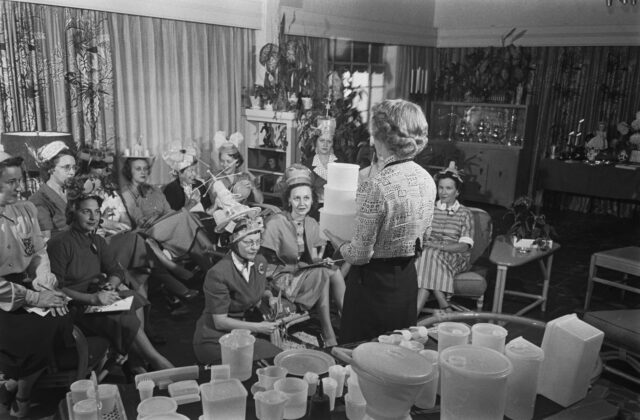
Tupperware and Anxiety: A Personal Story About Fear of Food Storage Containers


Not my mother, but the Tupperware and the fridge look about right. Ain’t AI fun!

It takes guts to admit to a phobia. I have more than one, but this one will do for now. I can’t stand to touch plastic ware, mainly Tupperware or any brand that resembles that sturdy piece of American culture from the 1950s.

My mother, rest her sainted soul and bless her heart, was a Tupperware lady. During those years, she hosted numerous parties in our and her friends’ homes.

It wasn’t until years later I learned the truth about these parties. They were a front for gossip and cocktails. In her old age, she admitted it was a sham, and the girls used it as a front to get away from us kids and husbands for a few hours and get sloshed on Manhattans and Gin and Tonics. It was the perfect set-up. She made a small amount of money, had some good hi-balls, and caught up on the neighborhood gossip. They were the forerunner to ” girls night out,” which started in the 90s. I sometimes wandered into the room hoping to find a little finger sandwich or a Vienna sausage on a toothpick. Instead, I found a pack of “big-haired” gals holding a cocktail glass in one hand and a cigarette in the other. My mother was a world champion smoker and would have a ciggie in hand and one perched in her ashtray. Mothers back then were tough gals.

Our kitchen was stuffed to the point of bursting with the plastic-ware. It filled every drawer and cabinet and was neatly stacked to the ceiling on top of the ice-box. We ate on paper plates and drank from aluminum glasses. There was no room for real dishes or glassware; It was all Tupperware everywhere. The ice box was neatly arranged, with meals sealed in Tupperware. We didn’t call them “leftovers” in our home; they were called “future pre-prepared dinners.” Some of those dinners were on-call for a year or more. That’s the beauty of Tupperware: if properly sealed per the manufacturer’s instructions, the food will last for years.

Now, the explanation of the phobia. It’s complex and involves many layers of childhood anxiety. My therapist said it started with an incident when I was five years old. I don’t remember what I did, but it was severe enough for a butt-whooping from my mother. While trying to escape, she grabbed one arm, a classic move that only mothers use, and wielded the nearest object she could find, which was an 8×10 Tupperware slimline cake storage container. I had no idea plastic ware could hurt so damn much. The impression of the insignia on the bottom of the container lingered on my butt for days. Of course, I showed it to all my buddies, and they were pretty impressed and worried because their mothers owned the same Tupperware containers.

After that incident, I couldn’t bring myself to touch plastic ware in any form. That brought more punishment because when helping with the dishes, I would retreat from the kitchen sink when a dirty piece of Tupperware was to be washed. There was nothing that could make me touch that vile object. That plastic dish scared me as much as the monster under my bed. My father realized that his only son was becoming a child neurotic and stepped in to help my mother with the dishes, thus allowing me to enjoy a somewhat normal childhood.

Not much has changed in 65 years; I can’t touch the stuff. My wife, Momo, loves her some Tupperware. She has a beautiful assortment of colored containers that, when soiled, she puts in the dishwasher. That is another layer of my anxiety. I cannot take them from the rack. I use a set of tongues to grab the cursed piece and then lay it on the counter for her to put away. I don’t care to know where she hides this stuff as long as I don’t come into contact with it.

My therapist is a cheeky fellow. He told me that being spanked with a Tupperware dish and all the problems it caused me could have been worse. My mother could have grabbed a PYREX dish.

Elvis Presley Meets the Afterlife: A Southern Tale


Two Kings In A Caddie

The high desert at night is solitude. The velvet blackness holds wondrous things.

The “57” Caddie pulled away from the gas station, spewing gravel. The old man who had filled it up a few minutes ago watched until the tail lights disappeared down the highway. Two twenty-dollar bills for ten dollars of gas, go figure. A two-dollar bill was mixed in the bills; TCB was printed on the front. What did that mean?

The most comfortable place in the world for the aged singer was sitting behind the wheel of his beloved white Cadillac.  

He was not the sleek crooner in size thirty-six sport coats anymore; he didn’t care to be. He was comfortable in his own skin.  After decades of dieting, he surrendered to the siren’s call of biscuits, gravy, and his beloved peanut butter and banana sandwiches. Everybody gets a little heavy as they age, he told himself, and after seeing an old girlfriend in a supermarket trash magazine, he felt better about his expanding looks. The once sleek red-headed dancer was now as portly as himself. It’s a shame he couldn’t call her up. But then again, she loved the man he used to be, and he loved the girl she once was.

The decision to disappear in the late 70s was his way of escaping the hell he had created for himself. Drugs, alcohol, guns, crazy-ass women, and an army of hangers-on. The whole scene was sucking what life he had left from him. Realizing that if he was going live incognito, Las Vegas, Nevada, was ground zero. Every casino on the strip had Elvis impersonators. He could hide in plain sight.

To stave off boredom, he worked at one of the cheesy late-night wedding chapels for a while, imitating himself. He loved the irony of it all: having the wedding party cry and gagging with laughter, telling stories only the real Elvis would know. The patrons appreciated his stories and one-man karaoke performance, and he could still make a few young brides swoon.

At times, he became bone-weary and yearned to go home, but he knew that could never happen except in dreams. These long rides in the desert calmed him and allowed sleep without prescription drugs. He was clean now and was damn – straight going to stay that way.

The Caddies headlights illuminated the figure of a man standing by the roadside, thumb in the air. Elvis never picked up a hitcher, but a tingling feeling in his scalp told him he should stop for this one. Pulling over, he waited for the stranger to approach the car. The door opened, and a figure slid into the seat beside him. He turned to introduce himself.

An old man sat in the glow of the dash lights. His long gray hair was tied into a ponytail, and a neatly trimmed gray beard filled his face. He wore a loose-fitting red running jacket with matching sweatpants. His gold lame running shoes shined like bars of gold.

Elvis studied him briefly and then asked the old man, “I know you, mister, I’ve seen you on TV, aren’t you, Willie Nelson? What are you doing out in this desert this time of night?”

The old man turned and said, “No, I’m not Willie Nelson, and that’s a fine compliment, to be sure. I’m not going far, and it’s nice to meet you, Elvis.”

Speaking his first name as if he had known him forever, and his voice made him squirm. He hadn’t introduced himself.

In a slightly scolding, fatherly tone, the old man addressed Elvis,

“Young man, I’m shocked that a Christian boy like yourself from a first-class Baptist church in Tunica, Mississippi, would not recognize me. Don’t you find it strange that I know who you are? In fact, my boy, I know everything about you from the day you were born. I’m a little hungry, can I have one of those peanut butter and banana sandwiches hiding in your glove box?”

Elvis told the old man he was welcome to one, and there’s an ice-cold Pepsi in the cooler sitting on the back seat.

The old man pulled a soda from the cooler and then pushed the caddie’s glove box button. The door dropped down with a clunk. From inside came an angelic light that illuminated his face in a soft glow.  Elvis stared into the most striking blue eyes he had ever seen. Endless in depth, filled with kindness and forgiving, but tinged with a bit of sadness. The old fellow looked as old as dirt, but in that light, his features were as soft as a pastel portrait.

The old man sighed and, in between bites, said, “I appreciate the snack. It seems like I’ve been working for an eternity and have missed a lot of meals. All I do is go from one place to another, convincing folks to follow Dad and granting miracles. I was out here last week waiting for you, but that case of heartburn brought on by that Red Baron pizza laid you up for the night. You really shouldn’t eat that junk. Look at me, trim and healthy, all because of the Mediterranean diet. Can you imagine all those gals shooting themselves up with that Ozempic stuff just to stay thin?”

The old man smiled, reached over, touched Elvis’s shoulder, and said,

“ I’ve got someplace to be, and I want you to go with me. We can have a little visit along the way, a counseling session of sorts, no charge, it’s on the house. And by the way, when I’m down here, in this realm, I prefer to be called just plain old Sonny; it’s less frightening…puts people at ease.”

After driving for a while, Sonny turned to Elvis and said, “You know son, I play in a band when I’m home, and your name comes up often, the guys are always asking me when you’re coming up to join them.”

Elvis said, “That’s nice, sir; who might your band members be?” and where, exactly, is home?”

“Well, home is where my Father is; Heaven. You know, the pearly gates and such, sitting on clouds, the weathers good all the time, all of that stuff you read about.”

“You mean streets of gold and everyone lives in their own temple type of Heaven?” asked Elvis.

Sonny replied, “Well not exactly, the streets of gold were a real maintenance nightmare, so we went back to Jordanian river – rock. The temples were a little small, so we made some major changes right after Frank Lloyd Wright came up. Everyone now has a nice little place with a view of the garden…everyone’s equal in Dad’s eyes you know. Your Mamma and Daddy’s place is an exact copy of Graceland. Bet you didn’t know that!”

Elvis swallowed hard and said, “You’ve seen my Mommy and Daddy?”

“Well of course I have you nimrod. Didn’t I just tell you who I am and where I live. Don’t you listen!” replied Sonny.

Sonny clapped his hands on his knees and said, “Now, back to my band for a minute. It’s made up of the best musicians that ever lived.  Your old buddies Carl Perkins and Johnny Cash just recently joined up, and I’ve got Jimi Hendrix, John Lennon, and George Harrison on guitars, and Gene Kruppa and Keith Moon on drums, and I’m looking forward to Ringo joining up pretty soon. There’s Count Basie and Mozart on keyboards, Roy Orbison, Bobby Darin, Buddy Holly, and Old Blue Eyes on vocals. Man, that Orbison can hit those high notes…really ticks Sinatra off. Frank has a bad attitude about everything, always wanting to get the Rat Pack up and running again. Dad always sends him “down below” for a few days to keep him in line.”

Elvis struggled to comprehend what he was hearing. He knew all those dudes when they were alive, and Bobby Darin was a running buddy back in the day.

On a bit of a roll, Sonny continued, “Myself, I play a little bass sometimes if Noel Redding is busy greeting the British arrivals down at the gate.  John Lennon still claims it wasn’t Yoko that broke up the band; he swears it was McCartney’s doings, and old Ed Sullivan already has a Beatles reunion show planned, just waiting for the other two to show up. I told him it wouldn’t be too much longer, but it wasn’t a deal if he had that stupid little mouse puppet Popo Gigio on the bill.  I just wanted to squeeze him until his little eyes popped out. Puppets make me uncomfortable.”

Looking at the road ahead, Elvis was sweating like a lawn sprinkler. His mouth was dry as cotton, and he couldn’t catch a good breath. This was too much for him to digest at one time. Here he is, giving a ride to the Son of God. “Is this the way it’s supposed to be?” he thought, “Aren’t you supposed to see a white light and your loved ones coming to meet you?” Not the Lord telling you he plays in a rock band full of dead musicians and hates mouse puppets. Maybe he was having an LSD flashback.

Sonny turned to Elvis and said, “No, Elvis, you’re not having a flashback, and you don’t always see the light…and yes, I can read your thoughts.  Really, this is pretty much the way it happens. I make special provisions for people as needed, and you are a special provision type of fellow, so enjoy the evening.  I’m not saying it’s your time to come home to “my place,” but who knows. Take the next right up here; you’re going to like where we are going.”

Elvis turned the caddie down the dirt road and, after a mile or so, came to a ramshackle tin building. The exterior looked like an old military barrack, and over the door was a cheesy neon sign that read “Sonny’s Place.” No cars parked in the lot or tire tracks in the sand. This joint was really out of the way.

Sonny escorted Elvis through the front door, greeted by a kindly lady sitting behind a counter. Elvis noticed her name tag read “Patsy C.” When she saw Sonny, she said, “My Savior, how good to see you again; everyone’s been asking if you were going to come by tonight, who’s your pal?”

Sonny replied, “This is the famous Elvis Presley darling, but he’s not here officially yet, he’s just visiting for a spell, slap one of those silver wrist bands on him please.”

Elvis interrupted, “Excuse me sir, what’s the silver band mean?”

Smiling, Sonny said, “Oh, it means you can’t have the top-shelf drinks, can’t use the nice restrooms, and most of all it means you’re not dead yet…dig.”

Elvis understood all right, and that was okay with him. As long as he had not assumed room temperature.

When they walked into the main room, thunderous applause greeted them. Sonny humbly waved and nodded, and Elvis, slack-jawed and gob-smacked, stared at all the dead musicians and singers he had known.

On stage, Bobby Darin was kicking off “Mack The Knife,” accompanied by an all-star band of Jimi Hendrix, George Harrison, Mozart, Charlie Bird, Gene Krupa, Glen Miller, Harry James, and an entire horn section. Bobby saw Elvis and gave him a big smile and a thumbs up.

When the song ended, Bobby directed a spotlight to the small table occupied by Sonny and Elvis, and in that “oh so cool voice,” he announced, “Ladies and Gents, in the crowd tonight we have the one and only, my good friend, Mr. Elvis Presley, stand up and take a bow, E.”

The crowd went wild. Everyone was on their feet, applauding, and from the back of the room, a chant was growing, “Elvis..Elvis..Elvis.” A shaking, teary-eyed Elvis stood as best he could and acknowledged his peers….his dead peers.

Sonny touched his arm and said, “Go on up there, my boy, give it all you got.”

When Elvis walked onstage, the band came over and gave him a hug. His old friend Bobby held him the longest. Elvis grabbed the microphone, turned to the band, and yelled, “Viva Las Vegas in the key of G.”

Strutting, gyrating, not missing a note, the crowd dancing in the aisles, and Elvis was putting on the show of his life. His heart was so full of joy that he felt it would burst, and then it did.

As he floated backward, he felt hands engulfing his body, lowering him to the stage. He was aware of people standing around him, and then he saw a beautiful bright light, and from that light emerged his parents, who were leading him through a heavenly garden to a lovely copy of his beloved Graceland.

The musicians formed a circle around his body, heads bowed, quietly praying.

They parted when Sonny came on stage, and he knelt next to Elvis’s body. With his hand on Elvis’s forehead, he said, “Wake up Elvis, you’re home now.”


Christmas Memories: Santa Claus and My Childhood Beliefs


Photo by: Head Elf No. 1

Keeping with the spirit of Christmas, I am posting a few tales of personal Holiday experiences growing up in the 1950s in Fort Worth, Texas.

The hundreds of hours I wasted thinking about Santa Claus, where he lived, and whether he was happy. Did Mrs. Claus make him hot cocoa and cookies? Does his reindeer live in a lovely barn? How do they fly? Is Rudolph the leader of the pack? Did he get my letters? Was I on the nice or naughty list? Is his spying Elves watching me? These were questions that required an answer. My parents were no help, they would smile and pat my little flat top haircut head.

Santa consumed my life from 4 years old until I turned 9. I was a true believer, a young pilgrim to the point of becoming a child Santa Evangelist. Anyone said something terrible about Santa; it was put up your dukes time or a come to Santa prayer meeting. My younger sister was also a firm believer, but then, she was brainwashed by me, and I was programmed by my parents, grandparents, and the rest of the family.

On Thanksgiving Day, the trickery commenced around our household. First, my mother, the master of deceit, would warn us about the naughty list and what would happen if we were on it. Then it was, ” The Elves are watching you through the windows to see if you’re good.” That’s the one that got to me the most. I had a plan to catch them.

After lights out, I slinked out of bed under the cover of my darkened room. Crawling on my belly like a soldier, I made my way to the nearest window. Back against the wall, I slid up and moved the blinds in a flash, hoping to catch the little guys. Failing to catch one spying on me didn’t deter my mission: I knew they were there and faster on the draw. Santa and his gang were tricky ones.

The annual Christmas visit to Leonard Brothers Department Store in downtown Fort Worth was the ultimate Santa experience. Toyland was akin to holiday Nirvana for us kids. A rocket ship monorail glided around the basement ceiling, kids packed in like sardines on a rocket train to nowhere. Parents rush to purchase presents while the kids are busy, hiding them under their coats or in bags and lying to their innocent children with straight faces.

Santa held his court in the middle of Toyland. His throne was 10 ft. off the ground, with stairs leading up and down. A majestic sight if there ever was one. Sitting in a velvet chair fit for a king while his Elfin helpers lifted the crumb crunchers on and off his lap, it was pure excellence. A line of snot-nosed kids snaked around the room, waiting for their chance to place their order, up the stairs, on the lap for 15 seconds, then off the lap, and down the stairs. The visit was over before you knew what had happened. It was the same routine for years, and I loved it. I could spit out my order in under 10 seconds. Santa and his helpers were impressed.

I asked Santa for a bicycle when I was 9 years old. A red and white machine with side mirrors, streamers, a headlight, and white-side-wall balloon tires. I also asked for a new BB Gun, a larger Cub Scout knife, and a Fanner 50 cap pistol with green stick-um caps. My sister asked him for a doll that was larger than she was and a dollhouse.

Christmas Eve arrived, bedtime rolled around, and we hit the sack. Hot Ovaltine and cookies put me out like a light. Then, sometime after midnight or later, I had to pee. I didn’t want to get up, but the Ovaltine was causing me some discomfort. Half asleep, shuffling down the hallway, I looked into the living room as I passed the doorway. With a Schlitz beer in his hand, my father sat by the tree, assembling a red bike like the one I expected from Santa. My mother was working on a cardboard dollhouse, and the giant doll my sister wanted was standing under the tree, looking creepy.

I convinced myself that Santa must have run out of time and had recruited my parents to complete his work. The reality of the sight escaped me.

My father looked up and saw me standing there; our eyes met, and he smiled like a raccoon caught in a trash can. The jig was up. The big lie was exposed, and my childhood imploded right there in the hallway. Daddy was Santa, and Mom was Mrs. Claus. I peed and made my way back to bed, not comprehending what I had witnessed.

I awakened at daybreak, our usual Christmas morning routine. I was thankful to be awake and away from the nightmare that had gripped me most of the night. I was relieved that it was all caused by the Ovaltine. The gifts were under the tree, and life was good. I loved the bike and the BB Gun, but my sister feared the enormous lifelike doll.

After breakfast, I was lying under the Christmas tree, building an army fort with my plastic soldiers. That’s when I found a Schlitz beer bottle, assembly instructions for a bike, and a few tools.

The Quirky Side of Christmas Shopping at Walmart


I was in Walmart a few days ago. The Christmas season is the best time to observe humanity at its finest and lowest and street-rat-crazy humans.

All the usual suspects were there. People dressed in bathrobes, onesie pajamas, and rabbit-eared bedroom slippers. One lady squeezed herself into an Elf costume four or five sizes too small. Her husband looked like Edger Alan Poe; all that was missing was the stuffed Raven on his shoulder. Another old lady had her grocery basket full of Mountain Dew and Pork Rinds, which is considered a food group in Appalachia and now in Granbury, Texas. Two little girls absconded bicycles from the toy department and were speeding down the isles terrorizing shoppers: their mother watched with an adoring smile as her little angels wreaked havoc: they likely received a small trophy when they got home. A crazed woman was ripping into the poor Pharmacist because he wouldn’t fill her prescription for Oxycodone; she clearly needed her medication; pulling her hair out in fistfuls didn’t help her cause.

One family, mom, pop, and the three kids pushed baskets with a flat-screen television for each member. What is the fascination with large televisions? Are we the only society that is addicted to electronics? The kids looked undernourished but had to have that TV instead of healthy food.

A lady and her young daughter, maybe five, passed by. They were both on their cell phones. Mama was engrossed in a personal conversation that should have been private, and the little girl was jabbering into her pink Barbie smartphone. I assumed the kid on the other end was about the same age since I couldn’t understand her words. Five-year-olds appear to have a unique language used to communicate with other children. When did giving a child barely out of diapers a smartphone become acceptable? As the song says, ” Only In America.”

Exiting the store, I looked for the Salvation Army and their red kettle. None to be found. The greeter lady said they should be showing up any day. I have childhood memories of my mother dropping change into that kettle as the kindly lady stood ringing her bell. In some years, it was a quarter; in better years, it might have been a dollar. She always had a change in her coin purse to help the less fortunate. I’ve continued that tradition every year of my adult life, stuffing a few dollars into that slot and hearing a “Merry Christmas and God bless you.” That’s when I knew it was Christmas time.