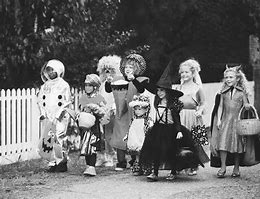
Growing Up With Mexican Food in 1950s Fort Worth,Texas..My First Visit To Trashy Juanita’s


Childhood memories are like teeth; we all have good and rotten ones. If you grew up in Texas in the 1950s, you will identify with some of mine, or maybe not.

I was nine years old before I dined in a Mexican restaurant. I knew they existed because my father and mother enjoyed them, bringing home little mints and matchbooks touting the restaurant’s name. I got the mints, and my parents put the matchbooks in a jar in the kitchen. I dreamed that one day, I might visit one.

In Texas, Mexican food is part of life. It’s one of the major food groups; a boy cannot grow into a man of substance without it. Not having real Mexican food at that young age affected my evolution into a healthy young specimen. I harbored a nervous tick, stuttered sometimes, and had one leg shorter than the other. All those maladies were cured once I ate the real stuff. The medicinal qualities of Mexican food are exceptional.

For many years, I had eaten tacos at my cousin’s house, believing them to be authentic Mexican food. Sadly, they were nowhere near the real deal. Several times over the summer, my cousin Jok’s mother, Berel, would cook tacos and invite the families for a feast. Cold Beer and tongue-scorching Tacos. Pure Texas.

Berel would stand at her massive gas range, a large pot of ground beef, and a cauldron of boiling Crisco, heating the room to cooking temperature. She would drop a tortilla stuffed with meat into the witch’s cauldron, pull it out, and toss it to the pack of wild African dogs sitting around her kitchen table. The dogs, of course, were my cousins and me. My poor mother would leave the room. She could not bear to see her son eat like a feral child: growling, biting, snarling as we consumed the tacos like they were a cooked Wildebeest. That is what I consider Mexican food and proper behavior when consuming it.

Driving Northwest of downtown Fort Worth on Jacksboro Highway, right before you come to the first honkey tonk, you would find “Trashy Juanita’s” Mexican restaurant. Legendary for its tacos, frijoles, and cold Pearl Beer. It was also legendary for things my father would not mention until I was older. Gambling, shooting dice, and generally questionable behavior were part of the after-hours entertainment. It wasn’t on Jacksboro Highway for the view.

The owner of Juanita Batista, Carlita Rosanna Esposito, was not a trashy woman but a middle-aged Latin beauty with a bawdy laugh and sharp wit. The restaurant’s front yard adornments earned the name. Offended at first, she finally accepted her crown and wore it proudly.

Two rust-eaten pick-up trucks, one painted blue and the other yellow, sat abandoned in the front yard behind a cyclone fence. Pots of flowers decorated the fenders while the beds overflowed with vines and small flowering trees. Fifty or more chickens strutted and pecked around the yard, giving the place a barnyard atmosphere. Some saw a work of art, while others called it a junkyard that happened to serve great food.
In an interview in the Fort Worth Star-Telegram, Juanita claimed to be related to General Santa Anna, Pancho Villa, and the Cisco Kid, making her royalty in Mexico. The people of Fort Worth loved her, and she was considered a local character of some importance. She often dined with Ben Hogan and the Leonard brothers at Colonial Country Club.

Trashy Juanita’s was my first introduction to authentic Mexican food and all that comes with it.

My father sold one of his many fiddles to a buddy, and with the profit, he took the whole family to dine at Trashy Juanita’s on the Fourth of July, 1958.

Juanita had gone “whole hog” on this holiday. American flags hung from the front porch and draped the cyclone fence. Two small children sat in the front yard shooting bottle rockets at the cars driving on Jacksboro Highway, and the chickens were wrapped in red-white-and-blue crepe paper streamers. Very patriotic and also very redneck Texas.

A jovial Juanita escorted us to a large table beside the kitchen doorway. A waiter delivered tortillas, chips, salsa, and two Pearl beers for my father and grandfather along with large, frosty glasses of sweet iced tea for the rest of us. There was no menu; it was Tacos or nothing at all.

The unfamiliar aroma of exotic food floated on a misty cloud from the kitchen, filling my young nostrils and activating my developing saliva glands. A torrent of spit dripped from my mouth onto the front of my new sear-sucker shirt. My mother cleaned me up and wrapped a napkin around my neck. I was ready: I had my eating clothes on.
We decided the family would dine on a medley of beef and chicken Tacos, frijoles and rice, and guacamole ala Juanita. The waiter rushed our order to the kitchen.

The evening was turning out great. My father was telling jokes, the cold beer flowed, and a waiter walked past our table into the kitchen. Under each arm was one of the patriotically wrapped chickens from the front yard. My grandfather must have forgotten that two young children were at the table and remarked, “There goes our Tacos, can’t get any fresher than that.”

His remark went unnoticed until I asked my father, ” Dad, are we going to eat the pet chickens from the front yard?” He didn’t offer an answer.
I got a big lump in my throat, and my eyes got misty. My sister whimpered and cried like a baby, and my grandmother, seeing her grandchildren in such distress, shed tears in support. Mother gave the two adult men the worst evil eye ever. The mood at the table went from happy to crappy in a minute or less. So much for a joyous family celebration. We might as well be eating Old Yeller for supper.

There was a ruckus in the kitchen, yelling, pots and pans clashing, and the two chickens, still wearing their streamers, half-flew, and half-ran through the dining room and out the front door. The cook was right behind them but tripped over a man’s foot, knocking himself out as he hit the floor.

Standing in the middle of the dining room, Juanita announced that there would only be beef Tacos tonight. The two doomed birds had escaped the pan, and my sister and I were happy again. My father breathed a sigh of relief that the night was saved, and my grandfather bent down and polished the new scuff on his size 10 wingtip.

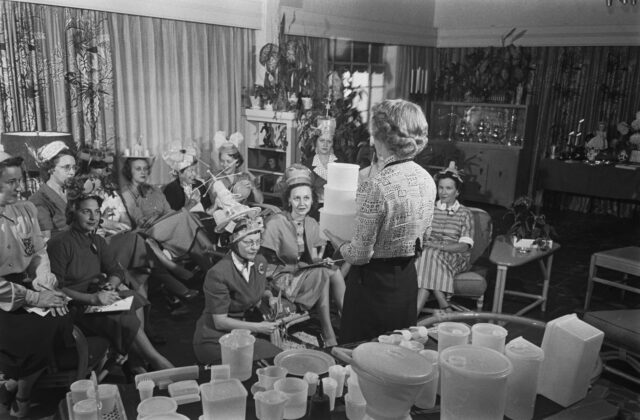
Tupperware and Anxiety: A Personal Story About Fear of Food Storage Containers


Not my mother, but the Tupperware and the fridge look about right. Ain’t AI fun!

It takes guts to admit to a phobia. I have more than one, but this one will do for now. I can’t stand to touch plastic ware, mainly Tupperware or any brand that resembles that sturdy piece of American culture from the 1950s.

My mother, rest her sainted soul and bless her heart, was a Tupperware lady. During those years, she hosted numerous parties in our and her friends’ homes.

It wasn’t until years later I learned the truth about these parties. They were a front for gossip and cocktails. In her old age, she admitted it was a sham, and the girls used it as a front to get away from us kids and husbands for a few hours and get sloshed on Manhattans and Gin and Tonics. It was the perfect set-up. She made a small amount of money, had some good hi-balls, and caught up on the neighborhood gossip. They were the forerunner to ” girls night out,” which started in the 90s. I sometimes wandered into the room hoping to find a little finger sandwich or a Vienna sausage on a toothpick. Instead, I found a pack of “big-haired” gals holding a cocktail glass in one hand and a cigarette in the other. My mother was a world champion smoker and would have a ciggie in hand and one perched in her ashtray. Mothers back then were tough gals.

Our kitchen was stuffed to the point of bursting with the plastic-ware. It filled every drawer and cabinet and was neatly stacked to the ceiling on top of the ice-box. We ate on paper plates and drank from aluminum glasses. There was no room for real dishes or glassware; It was all Tupperware everywhere. The ice box was neatly arranged, with meals sealed in Tupperware. We didn’t call them “leftovers” in our home; they were called “future pre-prepared dinners.” Some of those dinners were on-call for a year or more. That’s the beauty of Tupperware: if properly sealed per the manufacturer’s instructions, the food will last for years.

Now, the explanation of the phobia. It’s complex and involves many layers of childhood anxiety. My therapist said it started with an incident when I was five years old. I don’t remember what I did, but it was severe enough for a butt-whooping from my mother. While trying to escape, she grabbed one arm, a classic move that only mothers use, and wielded the nearest object she could find, which was an 8×10 Tupperware slimline cake storage container. I had no idea plastic ware could hurt so damn much. The impression of the insignia on the bottom of the container lingered on my butt for days. Of course, I showed it to all my buddies, and they were pretty impressed and worried because their mothers owned the same Tupperware containers.

After that incident, I couldn’t bring myself to touch plastic ware in any form. That brought more punishment because when helping with the dishes, I would retreat from the kitchen sink when a dirty piece of Tupperware was to be washed. There was nothing that could make me touch that vile object. That plastic dish scared me as much as the monster under my bed. My father realized that his only son was becoming a child neurotic and stepped in to help my mother with the dishes, thus allowing me to enjoy a somewhat normal childhood.

Not much has changed in 65 years; I can’t touch the stuff. My wife, Momo, loves her some Tupperware. She has a beautiful assortment of colored containers that, when soiled, she puts in the dishwasher. That is another layer of my anxiety. I cannot take them from the rack. I use a set of tongues to grab the cursed piece and then lay it on the counter for her to put away. I don’t care to know where she hides this stuff as long as I don’t come into contact with it.

My therapist is a cheeky fellow. He told me that being spanked with a Tupperware dish and all the problems it caused me could have been worse. My mother could have grabbed a PYREX dish.

Elvis Presley Meets the Afterlife: A Southern Tale


Two Kings In A Caddie

The high desert at night is solitude. The velvet blackness holds wondrous things.

The “57” Caddie pulled away from the gas station, spewing gravel. The old man who had filled it up a few minutes ago watched until the tail lights disappeared down the highway. Two twenty-dollar bills for ten dollars of gas, go figure. A two-dollar bill was mixed in the bills; TCB was printed on the front. What did that mean?

The most comfortable place in the world for the aged singer was sitting behind the wheel of his beloved white Cadillac.  

He was not the sleek crooner in size thirty-six sport coats anymore; he didn’t care to be. He was comfortable in his own skin.  After decades of dieting, he surrendered to the siren’s call of biscuits, gravy, and his beloved peanut butter and banana sandwiches. Everybody gets a little heavy as they age, he told himself, and after seeing an old girlfriend in a supermarket trash magazine, he felt better about his expanding looks. The once sleek red-headed dancer was now as portly as himself. It’s a shame he couldn’t call her up. But then again, she loved the man he used to be, and he loved the girl she once was.

The decision to disappear in the late 70s was his way of escaping the hell he had created for himself. Drugs, alcohol, guns, crazy-ass women, and an army of hangers-on. The whole scene was sucking what life he had left from him. Realizing that if he was going live incognito, Las Vegas, Nevada, was ground zero. Every casino on the strip had Elvis impersonators. He could hide in plain sight.

To stave off boredom, he worked at one of the cheesy late-night wedding chapels for a while, imitating himself. He loved the irony of it all: having the wedding party cry and gagging with laughter, telling stories only the real Elvis would know. The patrons appreciated his stories and one-man karaoke performance, and he could still make a few young brides swoon.

At times, he became bone-weary and yearned to go home, but he knew that could never happen except in dreams. These long rides in the desert calmed him and allowed sleep without prescription drugs. He was clean now and was damn – straight going to stay that way.

The Caddies headlights illuminated the figure of a man standing by the roadside, thumb in the air. Elvis never picked up a hitcher, but a tingling feeling in his scalp told him he should stop for this one. Pulling over, he waited for the stranger to approach the car. The door opened, and a figure slid into the seat beside him. He turned to introduce himself.

An old man sat in the glow of the dash lights. His long gray hair was tied into a ponytail, and a neatly trimmed gray beard filled his face. He wore a loose-fitting red running jacket with matching sweatpants. His gold lame running shoes shined like bars of gold.

Elvis studied him briefly and then asked the old man, “I know you, mister, I’ve seen you on TV, aren’t you, Willie Nelson? What are you doing out in this desert this time of night?”

The old man turned and said, “No, I’m not Willie Nelson, and that’s a fine compliment, to be sure. I’m not going far, and it’s nice to meet you, Elvis.”

Speaking his first name as if he had known him forever, and his voice made him squirm. He hadn’t introduced himself.

In a slightly scolding, fatherly tone, the old man addressed Elvis,

“Young man, I’m shocked that a Christian boy like yourself from a first-class Baptist church in Tunica, Mississippi, would not recognize me. Don’t you find it strange that I know who you are? In fact, my boy, I know everything about you from the day you were born. I’m a little hungry, can I have one of those peanut butter and banana sandwiches hiding in your glove box?”

Elvis told the old man he was welcome to one, and there’s an ice-cold Pepsi in the cooler sitting on the back seat.

The old man pulled a soda from the cooler and then pushed the caddie’s glove box button. The door dropped down with a clunk. From inside came an angelic light that illuminated his face in a soft glow.  Elvis stared into the most striking blue eyes he had ever seen. Endless in depth, filled with kindness and forgiving, but tinged with a bit of sadness. The old fellow looked as old as dirt, but in that light, his features were as soft as a pastel portrait.

The old man sighed and, in between bites, said, “I appreciate the snack. It seems like I’ve been working for an eternity and have missed a lot of meals. All I do is go from one place to another, convincing folks to follow Dad and granting miracles. I was out here last week waiting for you, but that case of heartburn brought on by that Red Baron pizza laid you up for the night. You really shouldn’t eat that junk. Look at me, trim and healthy, all because of the Mediterranean diet. Can you imagine all those gals shooting themselves up with that Ozempic stuff just to stay thin?”

The old man smiled, reached over, touched Elvis’s shoulder, and said,

“ I’ve got someplace to be, and I want you to go with me. We can have a little visit along the way, a counseling session of sorts, no charge, it’s on the house. And by the way, when I’m down here, in this realm, I prefer to be called just plain old Sonny; it’s less frightening…puts people at ease.”

After driving for a while, Sonny turned to Elvis and said, “You know son, I play in a band when I’m home, and your name comes up often, the guys are always asking me when you’re coming up to join them.”

Elvis said, “That’s nice, sir; who might your band members be?” and where, exactly, is home?”

“Well, home is where my Father is; Heaven. You know, the pearly gates and such, sitting on clouds, the weathers good all the time, all of that stuff you read about.”

“You mean streets of gold and everyone lives in their own temple type of Heaven?” asked Elvis.

Sonny replied, “Well not exactly, the streets of gold were a real maintenance nightmare, so we went back to Jordanian river – rock. The temples were a little small, so we made some major changes right after Frank Lloyd Wright came up. Everyone now has a nice little place with a view of the garden…everyone’s equal in Dad’s eyes you know. Your Mamma and Daddy’s place is an exact copy of Graceland. Bet you didn’t know that!”

Elvis swallowed hard and said, “You’ve seen my Mommy and Daddy?”

“Well of course I have you nimrod. Didn’t I just tell you who I am and where I live. Don’t you listen!” replied Sonny.

Sonny clapped his hands on his knees and said, “Now, back to my band for a minute. It’s made up of the best musicians that ever lived.  Your old buddies Carl Perkins and Johnny Cash just recently joined up, and I’ve got Jimi Hendrix, John Lennon, and George Harrison on guitars, and Gene Kruppa and Keith Moon on drums, and I’m looking forward to Ringo joining up pretty soon. There’s Count Basie and Mozart on keyboards, Roy Orbison, Bobby Darin, Buddy Holly, and Old Blue Eyes on vocals. Man, that Orbison can hit those high notes…really ticks Sinatra off. Frank has a bad attitude about everything, always wanting to get the Rat Pack up and running again. Dad always sends him “down below” for a few days to keep him in line.”

Elvis struggled to comprehend what he was hearing. He knew all those dudes when they were alive, and Bobby Darin was a running buddy back in the day.

On a bit of a roll, Sonny continued, “Myself, I play a little bass sometimes if Noel Redding is busy greeting the British arrivals down at the gate.  John Lennon still claims it wasn’t Yoko that broke up the band; he swears it was McCartney’s doings, and old Ed Sullivan already has a Beatles reunion show planned, just waiting for the other two to show up. I told him it wouldn’t be too much longer, but it wasn’t a deal if he had that stupid little mouse puppet Popo Gigio on the bill.  I just wanted to squeeze him until his little eyes popped out. Puppets make me uncomfortable.”

Looking at the road ahead, Elvis was sweating like a lawn sprinkler. His mouth was dry as cotton, and he couldn’t catch a good breath. This was too much for him to digest at one time. Here he is, giving a ride to the Son of God. “Is this the way it’s supposed to be?” he thought, “Aren’t you supposed to see a white light and your loved ones coming to meet you?” Not the Lord telling you he plays in a rock band full of dead musicians and hates mouse puppets. Maybe he was having an LSD flashback.

Sonny turned to Elvis and said, “No, Elvis, you’re not having a flashback, and you don’t always see the light…and yes, I can read your thoughts.  Really, this is pretty much the way it happens. I make special provisions for people as needed, and you are a special provision type of fellow, so enjoy the evening.  I’m not saying it’s your time to come home to “my place,” but who knows. Take the next right up here; you’re going to like where we are going.”

Elvis turned the caddie down the dirt road and, after a mile or so, came to a ramshackle tin building. The exterior looked like an old military barrack, and over the door was a cheesy neon sign that read “Sonny’s Place.” No cars parked in the lot or tire tracks in the sand. This joint was really out of the way.

Sonny escorted Elvis through the front door, greeted by a kindly lady sitting behind a counter. Elvis noticed her name tag read “Patsy C.” When she saw Sonny, she said, “My Savior, how good to see you again; everyone’s been asking if you were going to come by tonight, who’s your pal?”

Sonny replied, “This is the famous Elvis Presley darling, but he’s not here officially yet, he’s just visiting for a spell, slap one of those silver wrist bands on him please.”

Elvis interrupted, “Excuse me sir, what’s the silver band mean?”

Smiling, Sonny said, “Oh, it means you can’t have the top-shelf drinks, can’t use the nice restrooms, and most of all it means you’re not dead yet…dig.”

Elvis understood all right, and that was okay with him. As long as he had not assumed room temperature.

When they walked into the main room, thunderous applause greeted them. Sonny humbly waved and nodded, and Elvis, slack-jawed and gob-smacked, stared at all the dead musicians and singers he had known.

On stage, Bobby Darin was kicking off “Mack The Knife,” accompanied by an all-star band of Jimi Hendrix, George Harrison, Mozart, Charlie Bird, Gene Krupa, Glen Miller, Harry James, and an entire horn section. Bobby saw Elvis and gave him a big smile and a thumbs up.

When the song ended, Bobby directed a spotlight to the small table occupied by Sonny and Elvis, and in that “oh so cool voice,” he announced, “Ladies and Gents, in the crowd tonight we have the one and only, my good friend, Mr. Elvis Presley, stand up and take a bow, E.”

The crowd went wild. Everyone was on their feet, applauding, and from the back of the room, a chant was growing, “Elvis..Elvis..Elvis.” A shaking, teary-eyed Elvis stood as best he could and acknowledged his peers….his dead peers.

Sonny touched his arm and said, “Go on up there, my boy, give it all you got.”

When Elvis walked onstage, the band came over and gave him a hug. His old friend Bobby held him the longest. Elvis grabbed the microphone, turned to the band, and yelled, “Viva Las Vegas in the key of G.”

Strutting, gyrating, not missing a note, the crowd dancing in the aisles, and Elvis was putting on the show of his life. His heart was so full of joy that he felt it would burst, and then it did.

As he floated backward, he felt hands engulfing his body, lowering him to the stage. He was aware of people standing around him, and then he saw a beautiful bright light, and from that light emerged his parents, who were leading him through a heavenly garden to a lovely copy of his beloved Graceland.

The musicians formed a circle around his body, heads bowed, quietly praying.

They parted when Sonny came on stage, and he knelt next to Elvis’s body. With his hand on Elvis’s forehead, he said, “Wake up Elvis, you’re home now.”

Christmas Memories: Santa Claus and My Childhood Beliefs


Photo by: Head Elf No. 1

Keeping with the spirit of Christmas, I am posting a few tales of personal Holiday experiences growing up in the 1950s in Fort Worth, Texas.

The hundreds of hours I wasted thinking about Santa Claus, where he lived, and whether he was happy. Did Mrs. Claus make him hot cocoa and cookies? Does his reindeer live in a lovely barn? How do they fly? Is Rudolph the leader of the pack? Did he get my letters? Was I on the nice or naughty list? Is his spying Elves watching me? These were questions that required an answer. My parents were no help, they would smile and pat my little flat top haircut head.

Santa consumed my life from 4 years old until I turned 9. I was a true believer, a young pilgrim to the point of becoming a child Santa Evangelist. Anyone said something terrible about Santa; it was put up your dukes time or a come to Santa prayer meeting. My younger sister was also a firm believer, but then, she was brainwashed by me, and I was programmed by my parents, grandparents, and the rest of the family.

On Thanksgiving Day, the trickery commenced around our household. First, my mother, the master of deceit, would warn us about the naughty list and what would happen if we were on it. Then it was, ” The Elves are watching you through the windows to see if you’re good.” That’s the one that got to me the most. I had a plan to catch them.

After lights out, I slinked out of bed under the cover of my darkened room. Crawling on my belly like a soldier, I made my way to the nearest window. Back against the wall, I slid up and moved the blinds in a flash, hoping to catch the little guys. Failing to catch one spying on me didn’t deter my mission: I knew they were there and faster on the draw. Santa and his gang were tricky ones.

The annual Christmas visit to Leonard Brothers Department Store in downtown Fort Worth was the ultimate Santa experience. Toyland was akin to holiday Nirvana for us kids. A rocket ship monorail glided around the basement ceiling, kids packed in like sardines on a rocket train to nowhere. Parents rush to purchase presents while the kids are busy, hiding them under their coats or in bags and lying to their innocent children with straight faces.

Santa held his court in the middle of Toyland. His throne was 10 ft. off the ground, with stairs leading up and down. A majestic sight if there ever was one. Sitting in a velvet chair fit for a king while his Elfin helpers lifted the crumb crunchers on and off his lap, it was pure excellence. A line of snot-nosed kids snaked around the room, waiting for their chance to place their order, up the stairs, on the lap for 15 seconds, then off the lap, and down the stairs. The visit was over before you knew what had happened. It was the same routine for years, and I loved it. I could spit out my order in under 10 seconds. Santa and his helpers were impressed.

I asked Santa for a bicycle when I was 9 years old. A red and white machine with side mirrors, streamers, a headlight, and white-side-wall balloon tires. I also asked for a new BB Gun, a larger Cub Scout knife, and a Fanner 50 cap pistol with green stick-um caps. My sister asked him for a doll that was larger than she was and a dollhouse.

Christmas Eve arrived, bedtime rolled around, and we hit the sack. Hot Ovaltine and cookies put me out like a light. Then, sometime after midnight or later, I had to pee. I didn’t want to get up, but the Ovaltine was causing me some discomfort. Half asleep, shuffling down the hallway, I looked into the living room as I passed the doorway. With a Schlitz beer in his hand, my father sat by the tree, assembling a red bike like the one I expected from Santa. My mother was working on a cardboard dollhouse, and the giant doll my sister wanted was standing under the tree, looking creepy.

I convinced myself that Santa must have run out of time and had recruited my parents to complete his work. The reality of the sight escaped me.

My father looked up and saw me standing there; our eyes met, and he smiled like a raccoon caught in a trash can. The jig was up. The big lie was exposed, and my childhood imploded right there in the hallway. Daddy was Santa, and Mom was Mrs. Claus. I peed and made my way back to bed, not comprehending what I had witnessed.

I awakened at daybreak, our usual Christmas morning routine. I was thankful to be awake and away from the nightmare that had gripped me most of the night. I was relieved that it was all caused by the Ovaltine. The gifts were under the tree, and life was good. I loved the bike and the BB Gun, but my sister feared the enormous lifelike doll.

After breakfast, I was lying under the Christmas tree, building an army fort with my plastic soldiers. That’s when I found a Schlitz beer bottle, assembly instructions for a bike, and a few tools.

The Quirky Side of Christmas Shopping at Walmart


I was in Walmart a few days ago. The Christmas season is the best time to observe humanity at its finest and lowest and street-rat-crazy humans.

All the usual suspects were there. People dressed in bathrobes, onesie pajamas, and rabbit-eared bedroom slippers. One lady squeezed herself into an Elf costume four or five sizes too small. Her husband looked like Edger Alan Poe; all that was missing was the stuffed Raven on his shoulder. Another old lady had her grocery basket full of Mountain Dew and Pork Rinds, which is considered a food group in Appalachia and now in Granbury, Texas. Two little girls absconded bicycles from the toy department and were speeding down the isles terrorizing shoppers: their mother watched with an adoring smile as her little angels wreaked havoc: they likely received a small trophy when they got home. A crazed woman was ripping into the poor Pharmacist because he wouldn’t fill her prescription for Oxycodone; she clearly needed her medication; pulling her hair out in fistfuls didn’t help her cause.

One family, mom, pop, and the three kids pushed baskets with a flat-screen television for each member. What is the fascination with large televisions? Are we the only society that is addicted to electronics? The kids looked undernourished but had to have that TV instead of healthy food.

A lady and her young daughter, maybe five, passed by. They were both on their cell phones. Mama was engrossed in a personal conversation that should have been private, and the little girl was jabbering into her pink Barbie smartphone. I assumed the kid on the other end was about the same age since I couldn’t understand her words. Five-year-olds appear to have a unique language used to communicate with other children. When did giving a child barely out of diapers a smartphone become acceptable? As the song says, ” Only In America.”

Exiting the store, I looked for the Salvation Army and their red kettle. None to be found. The greeter lady said they should be showing up any day. I have childhood memories of my mother dropping change into that kettle as the kindly lady stood ringing her bell. In some years, it was a quarter; in better years, it might have been a dollar. She always had a change in her coin purse to help the less fortunate. I’ve continued that tradition every year of my adult life, stuffing a few dollars into that slot and hearing a “Merry Christmas and God bless you.” That’s when I knew it was Christmas time.

Unraveling the Vanishing Girl of Marfa


Marfa, Texas, is one leg of the infamous Texas Triangle. Alpine, Fort Davis, and Marfa make up the redneck Bermuda Triangle and all the oddities that spring from its lands.

Momo and I have visited the quirky town a few times and plan another trip, perhaps in December. On our last trip, sitting in Planet Marfa, sipping a Lone Star beer and listening to the locals spin yarns and tall tales about the goings-on around the Chihuahuan Desert. We learned of nuclear-crazed killer Chihuahua dogs, strange lights in the mountains, the ghosts of James Dean and Liz Taylor at the Piasano Hotel, and enchanted horned toads that grant wishes. The young’uns that have relocated from Austin only add to the weirdness of the place.

The one story that folks were reluctant to rattle about was the young girl who vanished from her family’s desert home in 1965. She strolled into the desert behind their home to collect grasshoppers and other insects for a science project and never returned, and not a smidgen of evidence was ever found. A few days later, the parents noticed her prized acoustic guitar was missing from her bedroom, and their pet Longhorn steer, Little Bill, was missing from his stall. The girl often led him out into the desert to graze on the clumps of tasty grasses and plants. Lawman worked to solve the case for two decades, but no leads or culprits were found. Word around town was that space aliens had abducted her and the steer for scientific purposes or worse. No one thought much about the theory since Marfa loved that nonsense.

Sagebrush Sonny Toluse, the Grand Pooh-Bah of all things Marfa, tells the best version of the story. He said to a group around the bar,

I was walking my old doggy for his nighttime constitution. I live just outside of town, nearly in the desert, and that’s how I like it. The moon was full, so Rufus and I walked a little farther than usual. I hear guitar music from somewhere. It’s not a loud electric guitar but a soft one, like a Mexican guitar. It’s getting closer, and now I hear singing, the floating voice of a young girl. I stop, turn around, and passing by me; no more than ten feet is this little girl riding a Longhorn steer, playing the guitar, and singing an odd song I didn’t know, something about a Kay Serra or something like that. Behind her, sitting on the steer, is a giant grasshopper about half the size of the girl. I know we have big bugs here in Texas, but this critter was massive, about the size of old Rufus, my dog. The trio rode past me into the fading desert, never paying any attention to us. I was troubled by the encounter, so I went and asked the older sister, who is now an old woman, about the young girl who vanished so long ago. I told her about the ghostly encounter in the desert. She said her sister often rode the Longhorn steer like a horse and would play her favorite tune while sitting atop the beast. It was a Doris Day song, and she sang a bit. “Que Sera Sera, whatever will be, the future’s not ours to see, Que Sera Sera. “

Born Without Politics


I came into this world in 1949, a mere flicker of life amidst the portal to the West, Fort Worth. The good nuns who ran the hospital, those stern guardians of order, chose an unconventional method to usher me into my first cries, with a 12-inch wooden ruler upon my fragile backside rather than the customary spank from a soft hand. From that day forward, I held a quiet disdain for nuns, a sentiment my mother echoed with an understanding heart. I emerged into stark confusion—bright lights glaring above, towering figures in black robes scuttling about. A tiny stranger in a bewildering land devoid of any plan, I only wanted to know what the hell just happened and where I was.

I was a happy kid, or so I’m told. My routine was breakfast, playing until lunch, eating a baloney sandwich, washing it down with Kool-Aid, playing some more, eating fresh-baked cookies from Mrs. Mister’s kitchen, watching afternoon cartoons, taking a bath after supper, and going lights out—pretty mundane stuff.

My family rallied behind Roosevelt in the 1930s, their hearts giddy with hope for a better tomorrow. They believed with every fiber of their being that Franklin Delano Roosevelt pulled this nation from the dark abyss of despair during the Great Depression, and perhaps he did in many ways. Pushing the buttons that led the country into World War Two with the Nazis and giving the checkered flag to spank the Japs. The Works Progress Administration sprang forth from his dream, and thousands of men and women found temporary refuge in constructing parks and carving streets in Fort Worth; each brick laid a testament to earning a paycheck. My father had a lovely singing voice, so he filled our home with a constant tempest of musical disdain aimed at Dwight Eisenhower from the first light of dawn until the sun sank low and I was fast under my covers. Eisenhower was a gentle figure, a soft old soul cradling a golf club like a weary king holding his lost crown tightly. Later in life, when I took to the sport, I learned he was a 3 handicapped and was a certified bad-ass who commanded our troops on D-Day.

I was too young to grasp the significance then, but amidst the familiar shouts and wailing, I began carving my political identity. To belong to this raucous, somewhat heathen brood, I learned to hurl adult insults at Eisenhower and shake my tiny fist in solidarity with my kin. It is a truth held dear — a family that goes full bore batshit crazy together stays together. We were a close-knit brood, vowing to all enter the mental hospital together if need be to prop up the sickest of the clan. My father was the first. Politics and his alcoholic mother got the better of his mind, and he was tied down and shocked like Ready Killowwat. He came out of the procedure a Republican, which caused his extended family to shrink back in disgust and horror. The doctors had taken a witty lunatic Democrat and turned him into a pipe-smoking, tweed-jacketed professor of Ryan Street. His demeanor hadn’t changed much, but the burn marks on his temples never faded. I viewed him as a now sophisticated Frankenfather.

Thanks to my electrically converted Pop, I eventually forgot about old Dwight. I learned to read and write and took to my Big Cheif Tablet, hoping to make a mark, or at least a permanent stain, on this planet. Politics went by the wayside, and I lost interest in gnashing, wailing, and blaming fault. I was becoming a writer thanks to my favorite aunt, Norma, who diligently taught me to read and write before entering first grade. I was a bored child prone to fidgeting while daydreaming about Mark Twain and Micky Spillane while sitting at my tiny desk. I had no interest in the little people around me, uneducated booger eating feral children with no purpose.

When John Kennedy was elected president in 1961, I began reading Life Magazine, my mother’s favorite slick-paged rag. He was a nice-looking fellow with an elegant wife. My mother and her friends went limp, noodle-wobbly-legged when discussing Mr. and Mrs. Camalot. I didn’t get it until the Cuban missile crisis came about. He was willing to risk the population of America just to give Castro and Krushev a butt-whooping and the middle finger; “here Jackie, Hold my 80-year-old Scotch and soda and watch this shit”. JFK had some big ones, as attested by Marylin Monroe. All of us school kids knew we were about to be ashes to ashes and dust to dust. Teachers stepped up the nuclear drills, and we spent the better part of each school day hiding under our desks. Why? If the bomb incinerated our school building, then our tiny desk wasn’t going to protect us. That’s when I realized teachers were as stupid as the rest of us Neanderthal knuckle-dragging children.

When the lovely gentleman with the perfect hair took a headshot in downtown Dallas, Texas, I was like most of my kin and friends. We all felt terrible and mourned for a few days, but then it was “back to the basics of life;Luckenbach, Texas, didn’t exist then, so we made do with Fort Worth.

My cousins and I were heavily into Brother Dave Gardner, the preacher turned comic. His albums were a bulging bag of witty, logical, and borderline racist comedy. America hadn’t learned quite yet to be so easily offended. Brother Dave’s favorite targets were Lyndon Baines Johnson and James Lewis, a fictional black character from the Deep South. LBJ was perhaps the most excellent Politicasterd crook in history, and by damn, he just had to be from the great state of Texas. We agreed; the lumbering goon from the hill country was as slimy as they come.

Around 1965, I began to form my own political beliefs. I was neither a lib nor a conservative, But a white flag on a long stick, wafting in the breeze. Heavily into surfing and playing rock music on my cheap Japanese guitar, I began to listen to the Beatles. I was told that some songs held mysterious political messages. When Sargent Pepper‘s Lonely Hearts Club Band debuted, My bandmates and I recorded the album on a Reel Reel tape machine and played it backward. After that, I was sure the four lads from Liverpool had been sent by Beelzebub to corrupt our nation’s youth. That’s around the same time our drummer, Little Spector, bought into the Hindu religion and found solace in Ravi Shankar and his melodious Sitar. It seemed I was the only one in the band with enough political knowledge to hold a riveting conversation with an adult.

The 1960s found me non-committal to a political party. The long hair and playing in a band were my disguise. Most of my friends and bandmates were in the bag for the liberal side of life; I was a relic, an uncommitted poof in the wind, although I dug Robert Kennedy and was just getting into his mantra when he followed his older brother to the Spirit In the Sky. Now, there was no choice, but “Little Richard” Nixon and his “Five O’clock World” beard shadow and sweaty upper lip creeped me out.

In 1976, I took a direct hit to the head from the mast while sailing my Hobie Cat 16-foot catamaran sailboat in the Gulf of Mexico off the island of Port Aransas. I was sailing by myself, which is not recommended, and was jibing downwind, which is also a no-no, when the mast caught the wind and reversed position, knocking me off the boat. I was wearing a diaper rig attached to the main mast, and that saved my life. What I do remember after the initial shock from that experience was that, like my father and his electrical conversion, I was now a Republican and have been ever since. I wonder if there is voting in Heaven?

The Great Pumpkin Made Me Do it, 2.0


I wrote this post some years back, but I want to share it again with my faithful blogging friends. Halloween is not just for kids.

I did something last night that surprised me, and that’s always good. I watched ” Its The Great Pumpkin Charlie Brown,” the proverbial 1960s Halloween show.

Seeing the old Peanuts gang looking so healthy and young was comforting. Pig Pen and Linus are still my favorites. Charlie Brown has a defeatist attitude, so I never got into him. While watching that program, I told my wife, Maureen, that it rejuvenated my interest in Halloween and trick-or-treating. Things are going to be different this year, I declared.

As a child, I fondly remember the anticipation of Halloween. When October 1st arrived, the kids in my neighborhood counted the days until Halloween. Back in the day (the 1950s), we celebrated Halloween on the actual date and did our begging on that evening, in the dark, even if it was a school night. We were tough kids back then, staying up late and going to school the next day. We didn’t need a weekend to recover and didn’t know what a safe room was. Trick-or-treating was damn serious stuff for us, and we were good at it.

In a fit of nostalgia, I announced to my wife that I would go trick-or-treating this year. She is going along with the idea as if I am joking. I tell her I am not, and she can hide and watch. As for a costume, I will wear a black t-shirt, a black jacket, jeans and sneakers, and possibly a Texas Rangers ball cap if the weather is inclement. I will not carry a glow stick or a flashlight; that’s for babies. If I can’t find a group of kids to walk with, I will trudge on by myself. I am determined to experience one last Halloween before that tall, robe-wearing dude with a sickle knock on my door. This has evolved into a bucket list thing, and I must see it through.

I have given this some thought and have worked out the perfect plan accepted in today’s society. When I ring the first doorbell, and a smiling man or woman answers, I will say trick-or-treat, holding their candy bowl. Their first reaction will be to say, “where’s your grandkid, or what the hell is this.” Either one, I’m ready. I will look them straight in their parental eye and say, ” I identify as a 6-year-old.” I will come home with a full bag of goodies or bond out of jail. It’s going to be a good Halloween this year.

Driving Lessons from Grandpa: A Childhood Memory


The dirt road was not much to speak of, so most folks didn’t. It was rutted, the kind of nasty ruts that could swallow a small child whole, never to be seen again.

No signs marked its path until my uncle Jay painted a small board with an arrow and the family name and attached it to a fence post with baling wire. People simply referred to it as the road to the Manley farm, the first right turn after crossing the bridge. It was a quiet, dirt path that meandered past Mrs. Ellis’s house and abruptly ended at a gargantuan cactus patch about a block past the railroad bridge.  

  My visits to the farm were during the summer, and I usually stayed for three weeks. I vividly remember the chickens, a noisy five hundred or so troupe circling the farmhouse, scratching the dirt, and being ever-busy. I also remember that almost everything on that farm wanted to kill me. The Mountain Boomers, Coyotes, and Rattlesnakes were my first worry, so I carried my completely ineffective Red Ryder BB Gun as protection.

     My grandfather Jasper decided it was time for me to drive a car, as most farm kids did out of necessity. At ten years old, I had mastered the tractor well enough to tear down parts of his barbed-wire fence without a second thought. He believed I was ready for his old stick shift V8 Ford. My grandmother fretted about his failing eyesight and knew better than to step into the driver’s seat herself: driving cars and deep water haunted her dreams, and she wouldn’t face either. My grandfather needed a chauffeur, skilled or not, for his trips to the domino parlor in the town’s only cafe, The Biscuit Ranch. I was his first and only choice.

     My first excursion behind the wheel was chilling, at least to me. What sort of adult would let a ten-year-old kid drive a car? If Grandfather was apprehensive, he hid it well.

  Turning out of the farm gate, hitting a hard left, clutching and shifting to second gear, working the accelerator, and attempting to steer the metal beast without running us into a ditch was all I could handle. By the grace of God, we made it to the railroad bridge where the hobos gathered, so we stopped so Grandfather could visit a spell. He enjoyed chawing with the hobos, swapping stories, chewing and sharing his Red Man tobacco, and telling dirty jokes: things that weren’t allowed at home. One of the hobo’s remarked that I drove exceptionally well for a little kid, and he and his buddy could hitch a ride into town. My grandfather was out of chewing tobacco, so he invited the hobos into the back seat for our first trip to the feed store in town.

  I was feeling optimistic and a bit cocky about my driving skills by the time we pulled up to the highway intersection. Grandfather checked for traffic and, finding none, told me to hit it, which I did: skidding out onto the pavement in front of the large truck he didn’t see coming; my small PF Flyer-covered foot floored the beast and hit second into third gear, squealing the tires like a stock car driver. The hobos in the back seat laughed and said I was the best kid driver they had ever known. The Ford made it to the feed store; then, we stopped at the Domino parlor, where I was introduced as the main chauffeur for the Manley family. When my mother came to collect me toward the end of July, I was car-driving Jessie. My grandmother marched me to the barn while my mother threw the grandest hissy fit ever after her father bragged about my good driving.

Needing Sleep, Not Finding The Right Reading Glasses And Where Did I Put My Surfboards?


Sleep is a sneaky little thing, often playing hide and seek; some nights, with the right concoction of pain medications, I drift off like a mighty oak, a tree that has finally decided to take a break from standing tall. Just the other night, however, the meds turned their backs on me, and there I was, half awake and befuddled, reaching for my trusty hot Ovaltine to lend a healing hand. With my vision askew from wearing the wrong pair of spectacles, I grabbed my Bible, thinking I’d find some solace in holy verses, only to stumble upon the most thrilling tales of storms, hurricanes, and the odd musings about planting under the October moons, eventually realizing that I’d accidentally opened the pages of the Farmers Almanac instead.

Many of my readers have been transfixed or shocked by the epic tale of the Strawn family, who, in a fit of brave lunacy, decided to traipse from Fort Worth, Texas, to Los Angeles, California, all during that notorious dust bowl of the 1930s. Now, as I wipe the dust from my fingers and finish this latest chapter, I find myself staring into the abyss of forgetfulness. Is my memory playing tricks—after all, reaching 75 isn’t exactly the golden age of recall—or did my father and aunt, long since departed, keep the family secrets tucked away like old socks full of silver coins? You see, I was but a wee lad, soaking up the stories like a dry sponge around the family campfire, spinning yarns until I waded into my twenties. I do recall reading the best of my grandmother’s missives to her siblings, which was the catalyst that started this literary campfire. So, onward, I go, armed with a mighty pen and a healthy dose of ancestral curiosity, ready to dig deeper into the sands of time! If I can locate my shovel.

Last week, Mrs. Momo and I set forth on a meandering journey to the sun-drenched sands of Padre Island, where we sought respite among the company of my son Wes, his wife Yolli, and my spirited grandson Jett, along with my oldest grandson, Johnathan, who had deftly forged a new life in Corpus after escaping the relentless grip of a desolate land rife with crime, situated just east of Fort Worth. Even after the passage of years, the name Dallas invokes within me the primal instinct to spit into the dirt or a sidewalk, a ritual harkening back to the deep-rooted traditions of Amon Carter’s Texas. My grandfather, a quintessential Texan in every sense, would erupt at the mere mention of that city, a sentiment that courses through the veins of my remaining kin. The few ventures I undertook into that sprawling metropolis during my youth were begrudgingly limited to solemn funerals or the obligatory excursions with my father, who charmed the patrons as part of the house band at The Big D Jamboree. But let us return to The Island, as the locals fondly refer to it. Our ambition was to embark on a fishing expedition in my son’s Gulf Coast fishing boat, cradled comfortably in the canal behind his home; yet, as fate would have it, life had scripted a different tale. The weather was hellishly hot, and now, knowing my limitations for physical abuse, the trip will happen another time. We did, however, find the opportunity to journey to Port Aransas, where we reveled in a banquet of seafood and marveled at the garish, towering temples—those three and four-story houses, not erected for the warmth of home but serving as mere rental coffins—sprouting up like unwanted weeds in a fishing village that had cradled myself and my sons childhood, now stripped of its charm and morphed into a pale imitation of Myrtle Beach. I remember driving every road in Port A during the late sixties with my surfboard secured atop my Korean War-era jeep, Captain America. That faithful jeep has since vanished, much like my surfboards, yet Wes has preserved a fine collection of vintage longboards. I will be embarking on these new wonder pharmaceutical supplements I catch glimpses of in commercials; perhaps I’ll summon the energy to paddle out and catch a wave, allowing me to once again sit atop the world. I can already hear the Beach Boys playing my tune.