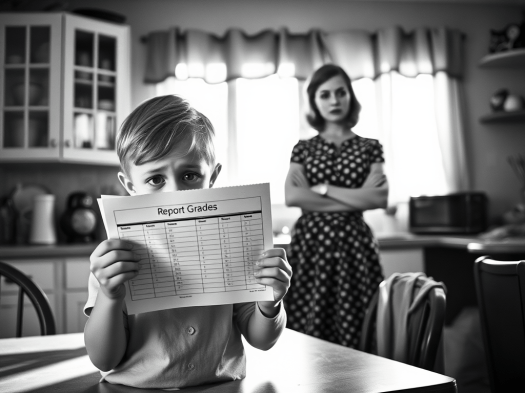
A Grandfather’s War Stories: Realities Beyond Hollywood


Honor And Duty In 1918

I wrote this back in 2020; hope you enjoy.

My grandfather, in 1917-18, served in the Army and the war to end all wars: World War 1. He fought in the mud and bacteria filled trenches in France: wounded twice and gassed once. He killed Germans in close hand to hand combat with a bayonet and a knife, never forgetting the look on the faces. He lost friends in vicious battles. There was no time to grieve or pay respects. That would come later in life.

Looking back through my childhood relationship with him, he likely suffered from what we now call PTSD. My Grandmother said he was a different man after that war, and at times, not a good one.

He refused to talk about the fighting and killing until I was around ten-years-old, and he was dying from Lymphoma cancer. His doctors at the VA Hospital said it was caused by the gassing he received in the war. He knew that I might someday go to war, so he wanted to let me know it was not like the movies.

We sat for a many hours one afternoon a few weeks before his passing. His descriptions of battle and the things he had done for his own survival was beyond anything I could imagine. I was young, and war to me was black and white movies. James Cagney in “The Fighting 69th,” or John Wayne and a host of others playing army, like my neighborhood friends and I did. No one really died, and when shot, there was no blood or screaming.

The last few days of his life were spent in and out of reality, reliving those battles as he lay in a veteran’s hospital in Dallas. My father, a veteran himself, was the recipient of my grandfathers last horrors. Those days my father sat by his bed, listening to the nightmare his father had carried for all those years, had a profound effect on him.

John Henry Strawn made sure I knew what real honor and duty were about. It followed him for a lifetime.

Chapter 18. Fort Worth Legends: A Young Musician’s Rise Under Bob Wills


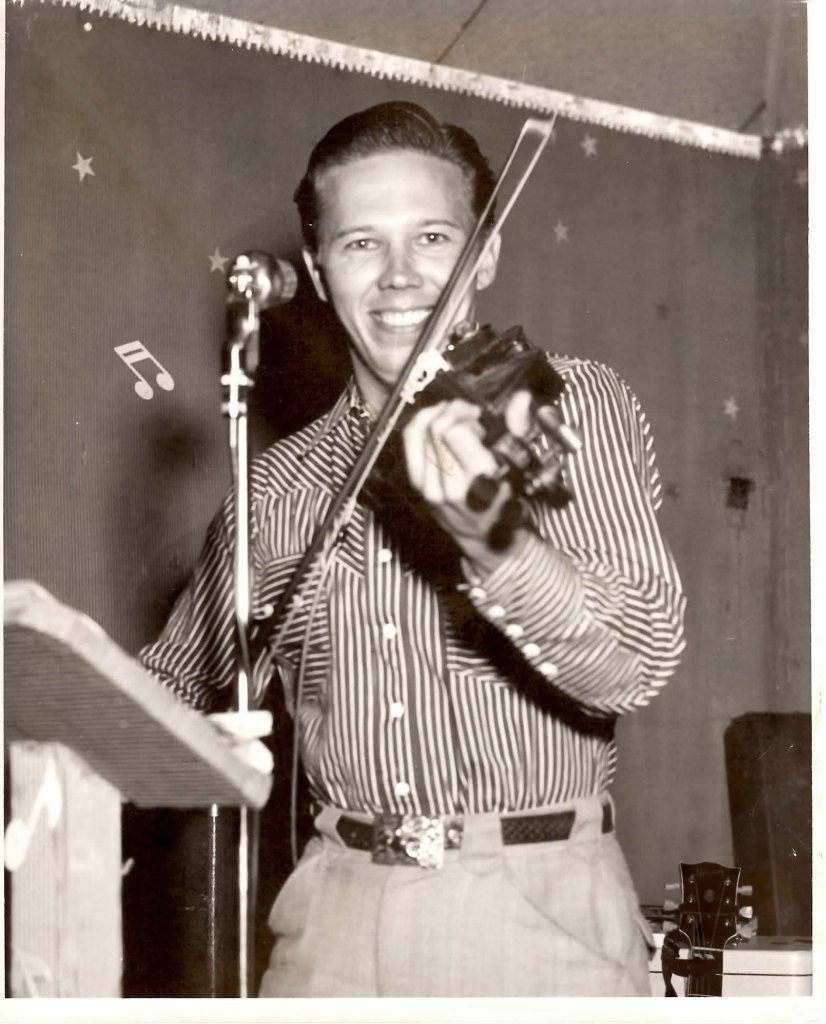
Johnny Strawn, around 1948, Fort Worth, Texas

My grandfather, John Henry, walked to his job at the furniture shop. Years ago, the same place had closed down, driven by the Depression, forcing him to move his family to California for work. Now, twelve years later, he has taken giant steps back, from a good job in Los Angeles to once more building furniture for an hour’s wage. Defeat weighs heavily in his heart. Middle age has come, and the future is murky. So, doing what men do, he keeps walking, counting his steps to nowhere. There are many to blame, but he alone bears the burden of his failures.

The iced ground crunches under his shoes. The cold goes to his bones. His jacket is no match for this weather. He favors the feel of the ground beneath his feet over the Ford sedan in the garage, which is idle most of the time and now a home for mice and other wandering critters.

After the upsetting homecoming with his father, Johnny walked a few blocks to the small neighborhood grocery store to call his best friend, Dick Hickman. His father remained firm in his decision about the telephone, vowing to never have one in the house. The old man viewed the contraption as a rattlesnake in a bag. Lousy news reached him in time enough; no reason to expedite misery.

Two sisters from Germany ran the store, always open, even when the ice storm howled outside. They preferred work to idleness; a dollar was worth more than knitting by the stove. They missed their homeland, but not the darkness that had settled under Hitler’s shadow. Johnny walked in and felt the warmth; they had known him since he was a boy. Following a few hearty hugs and cheek kisses, he was offered a mug of coffee, hot and strong with bourbon and a hint of cinnamon, a taste of what once was.

Dick and Johnny had forged a bond on the playground one morning; Dick was trapped by older boys, their intentions were dark, and Dick knew he was in for a ruckus. Johnny, a full head smaller than Dick, added his small fist for ammunition. A few busted lips and a bloody nose ended the altercation, and the boys would be bound for life by bloody noses and skint knuckles.

Dicks mother, a woman of stern Christian resolve, lived simply, her heart full of faith. Father Hickman was a ghost of a man, suddenly appearing from nowhere, then off again to somewhere. Mother Hickman, as she was called, gave what little extra money they had to Preacher J. Frank Norris, the charismatic leader of the First Baptist Church of Fort Worth.

Nice clothes were a luxury during the Depression, and most children at R. Vickery’s school wore hand-me-downs or worse. Dick wore the yellow welfare pants distributed by the Salvation Army, a sign that his folks were poor. Mother Hickman saw nice clothing as a sign of waste, except when it came to her Sunday fashions. Johnny had a pair of those detestable canvas pants but refused to wear them; the old dungarees with patches did just fine.

Both boys felt the weight of loss when the Strawn family left for the promised land. They exchanged a few postcards during the years in California. Nevertheless, they adhered to the unspoken rule that young men did not write to one another. This was a relic of manly notions of the time. A line or two every six months was enough. Both joined the Navy around the same time, meeting briefly in Pearl Harbor. Then came the seriousness of war. Young sailors, they carried on.

Dick arrived at the two sisters’ store to fetch Johnny. His transportation was a rattle-trap Cushman motor scooter. It refused to stop on the icy street. The scooter slid on its side into the curb and threw Dick off of the beast. The ride to Dick’s apartment was a jolt, far worse than the taxi. Johnny vowed to buy a car when the weather cleared, maybe one for his buddy, too. He held a tidy wad of cash from Hawaii.

A brotherly deal was struck. Johnny would share Dick’s large apartment on Galveston Street, splitting the rent and bills evenly. They were friends again, but now men, and they had different thoughts, dreams, and needs. Dick was courting a young woman from Oklahoma and doing a miserable job of it. Still, marriage lingered in the air, heavy like the rich aroma of brewing coffee, the kind they both drank too much of. Dick took his poison with cream and sugar; Johnny preferred his black and strong.

Johnny’s goal was to play music for a living, and this was the right city to make that happen. He joined the musicians’ union and sent a message to Bob Wills that he was back in Fort Worth.

Wills was now the celebrated band leader of the western swing band, The Texas Playboys. He remembered that meeting at the radio show in Bakersfield, California, long ago. The boy stood out. It was no small feat because Wills was the finest fiddle player in country music.

Bob Wills was not a man known for kindness. He could be brash and indifferent to fans and bandmates alike. Yet, for Johnny, he made an exception. Bob took the young man under his wing, becoming a mentor to my father. A few calls were made, and the boot was in the door. Johnny secured auditions at some of Fort Worth’s best clubs, and each went well. Bob invited him to rehearse with the Playboys. It was there he met men who would soon be legends in country music. A few years later, he would find himself in that circle.

The Legend of Little Audie Murphy: A Pig’s Heroic Journey


The farm. Santa Anna, Texas. July of 1955. My two uncles, Jay and Bill, need more to occupy their time. I need them away from me. I’m a six-year-old kid, and their influence is ruining my childhood. They told me Howdy Doody is not real, Santa Claus is dead, and Captain Kangaroo hates kids. I cried for days.


The chaw of Red Man chewing tobacco behind the smokehouse was the last straw. Seeing a kid puking for two hours seemed funny to them.


My grandfather told the two grown kids that a man in Coleman has a pig that won the ” Purple Paw” award. Every year, the governor of Texas bestows the prize on an animal that has performed a heroic act. Who knew there was a hero nearby?


Of course, my two uncles have to see this pig, so they head for Coleman with my cousin Jerry and me in tow. Arriving in Coleman, we stop at the feed store for directions and a Coke.
The owner tells my uncles to be very respectful of the pig since he saved the farmer and his family’s lives. In appreciation, the farmer named the pig “Little Audie Murphy,” after the famous World War 2 hero and movie star. I am more than impressed. This pig is the real deal.

Arriving at the farm, we are met at the gate by the proud farmer. My uncle Bill has a $10.00 bet with Jay that this is a load of bullcrap. They never stop.

Jay wants to hear the pig’s story, so the farmer is more than happy to recount.

The farmer takes a chaw of Red Man and begins, ” I was plowing one day, and my old tractor hits a stump and tips over, trapping me underneath. I’m yelling for help for an hour, and finally, my old pig shows up. The pig grabs a timber and scoots it underneath the tractor, then stands on it so’s the tractor tilts up, and I can scoot out. That porker saved my life.”
I can tell by the look on my uncle’s faces that they think this is B.S.
The farmer continues, ” about a week after that, I’m in town at the domino parlor, and my house catches on fire. My wife and kids are knocked out by the smoke, and the pig pulls them out of the burning house and revives them—a true porcine hero, that pig.”
Now my uncles are impressed. I see a tear trickle from Bill’s eye. I got a lump in my throat.

At this point, we want to see this pig for ourselves, so the farmer takes us to the barn. He stands outside the corral and yells, ” Little Audie, come on out.”


A huge Yorkshire pig wearing a ribbon and gold medal around its neck makes its way out of the barn. I’ve seen pigs before, and this wasn’t any normal pig. He was missing an ear and a front and back leg. Where the legs had been, the pig now sported a homemade wooden prosthesis. He seemed to walk fine and was friendly.

My uncle Jay was shocked and asked the farmer what the hell had happened to the poor pig.


The farmer took a minute to answer that question. Then he smiled and said, ” well, a pig this special, we can’t just eat him all at once.”

The Dreaded Report Card


by Phil Strawn, based on personal experience

There is a school system on the East Coast that is changing its grading system so every student can “feel better” about themselves. This smells suspicious, and is likely extracted from the same rotten education bag as  “everyone gets a trophy.” Every letter grade is now lowered by five points, promoting a grade of “C” to a “B” and so on. Who benefits from this PC madness?

From personal experience, I can tell you that bringing home a low grade on your report card does have negative consequences. The younger you are, the fewer repercussions from your Mother since you are still her baby. As you age, the fear factor increases.

There is nothing that scares a kid more than bringing home the dreaded “F” or even the slightly better “D.”

You slow-walk your way home, looking for every excuse to prolong the firestorm that the small piece of cardboard will create. You’re begging God to intervene and miraculously change that red “F” to an acceptable, blue “C.” Nothing changes, and you accept your fate. God is likely a teacher on the side. With the end nearing, I take a moment to notice the blue sky, the chill of autumn in the air, and the singing of the birds. Even the neighborhood dog that always gives chase sits with sad eyes as I pass. Little things that may be my last moments of life.

With a cheesy fake smile on my face, I hand the report card to my mother, hoping for leniency.

Everything is fine until she sees that miserable sixth letter of the alphabet. Her happy smile fades, and her squinty-eyed mom’s stare paralyzes me.

My young life flashes before my eyes; I’m a goner. In desperation, I blame everything except my own stupidity. I fall to my knees, crawling across the kitchen floor, squeezing out fake tears, begging for forgiveness. She has none of it. The mom court is adjourned. I await my sentence.

Short of having my butt whipped with a Tupperware cake holder, or being sent to the “Dope Farm,” my mother’s go-to threat, I get off well and alive. I cannot watch cartoons for two weeks, play outside for a week, have Hostess cupcakes and Ovaltine, or play Saturday baseball for a month, which is alright; it’s winter, and I am in hibernation mode.

My next report card showed a vast improvement—not one failing grade. The specter of personal failure and my mother’s watchful eyes loomed large, shaping my educational journey. It’s a curious thing, our human desire for high marks—some students hustle and toil beneath the weight of those lofty expectations. But if we lower those standards, those who might shine will find themselves unfairly penalized, while those who merely coast by will come to view diligence as a nuisance.

The Green Legacy of Mr. Greenjeans


If you were a kid in the 1950s, then you knew who Captain Kangaroo and his sidekick Mr. Greenjeans were. Their television show was broadcast five days a week in glorious black and white and viewed by millions of kids on tiny television screens. ” Don’t sit too close to that TV, you’ll go blind.” That was the stern warning from every mother, and here we are today, all wearing glasses or blind. How did you expect us to see the Captain and Greenjeans on an 8-inch screen?

The burning question we all had was, did Mr. Greenjeans wear “green jeans?” We were kids, with no color sets, it made us crazy. Was this man green?

A few months ago, I took a shortcut through a Fort Worth neighborhood to avoid road construction and noticed a weirdly dressed man using a hand pump sprayer to paint his yard a deep shade of Kelly green. I stopped and watched him walk from the curb to the house. Long, even strokes coat the brown grass to imitate spring’s favorite color. It was then I noticed his house was green, the cars in the driveway were green, his clothes and skin were green, and a small dog sitting on the porch was also green. What the hell? The man saw me staring and motioned me over.

I parked my car and walked up to the fellow, feeling a bit foolish for interrupting the work of a stranger. I introduced myself and complimented him on his handy work. He thanked me, extended his hand to shake, and said, “names Levi, Levi Greenjeans, nice to meet you.”

” That’s an unusual name, sir. The only time I’ve heard that last name was on Captain Kangaroo, and that was seventy years ago,” I said.

The green fellow laughed and said, ” That’s the family name. Mr. Greenjeans was my pop. My sister and I grew up in a green world, so this is pretty natural for us. Dad’s been fertilizer for a good many years now, so it’s up to me to carry on the family brand.” I agreed; he looked pretty good for an old green guy.

I didn’t want to pry or be too forward, but I asked, ” Sir, what might the family brand be?”

“Call me Levi,” he said. ” You know that song ” The Jolly Green Giant? I wrote it and collect mucho royalties. That Tom Jones song about the green-green grass of home wrote that one, too. The Green Giant food brand, that’s mine; also, copyright infringement made them pay up. Home Depot has a Green Jeans color named after Dad. I get change from that, and I get a shiny penny from YouTube for the Captain Kangaroo videos.” This dude has turned green into green cash.

I am impressed and honored to be in the presence of one of the famous Greenjeans family, but now is the chance to get the answers to my childhood questions. I am afraid of coming off like a six-year-old Duffus, but I asked, ” did your dad wear green jeans and did he have a green face, and was the captain a nice man, and why did he have a big mustache, and did your dad really have a farm? There, I spat it out, and I am an idiot.

Levi chuckled and said, “Dad wore green jeans, and his face was green from stage makeup. The captain, bless his dead heart, was not too friendly. He wore a mustache because, on the first live show, a little kid threw a Coke bottle at him and split his lip; the stash hid the scar, and that’s why he disliked kids. He carried a small cattle prod under his sleeve, and if the kids got too close, he would shock them. Pretty funny stuff to see them jump. And the final answer is yes, Dad had a farm and grew veggies and raised prize-winning Llamas. Recently, my sister Denim planted forty acres of butt-kicking pot that we will sell in our “Mr. Greenjeans Apothecary Co-op in Denver.”

I thanked Levi for his kindness and started to leave when he stopped me. Extracting a green Sharpie from his pocket, he signed his name on the front of my white Eddie Bauer Polo shirt. “Hang on to that shirt, brother. It’ll be worth some cash one day.”

Hey Kids, It’s Fun Being Sick!


How Kids Beat The Pandemic In The 1950s

Kids are an intelligent species. They know far more about human interaction and theatrical interpretation than their parents suspect. I can’t put a date on when this anomaly was discovered, but people with fancy degrees and a goatee first noticed this behavior in the early 1950s. My neighborhood may have been ground zero for their study.

As a bunch, the kids in my neighborhood were healthy. We ate mouthfuls of dirt, sucked on pebbles, and ingested every foodstuff imaginable without washing our grimy hands. This was perfectly acceptable to our mothers. Our young immune system was that of a caveman: we scoffed at germs, ” away with you foul vermin.” Like Superman on the TV, we were indestructible.

The only malady that affected us, was the dreaded Monday morning tummy-throat-aching body-virus. This malady usually broke-out in after a thirty or forty day incubation period. It spread like wildfire through our four-block coterie and most of the second and third grades, mostly affecting boys, but the girls were losing their immunity at an alarming rate.

The second week in November, close to Thanksgiving, most of our second-grade class was infected and missing in action. The symptoms were: headache, stomach ache, sore throat, and body aches, sometimes we developed a limp and had to crawl from the bathroom to our bed. When our mothers asked how we felt, we would point at the affected areas and groan, eliciting additional sympathy.

The first morning was the worst, then by noon we recovered enough to watch cartoons and eat some ice-cream, then after supper, the symptoms worsened, and mom made the call for us to stay home another day. Sleeping in was mandatory, and if we were recovered by lunchtime, we could go outside for some fresh air. This bug was known to not last more than three days, tops.

A seven year old can’t grasp the enormity of a situation the way their parents can. As a group, we were unaware that our symptoms matched those of the dreaded Polio Virus. Our kindly school nurse, fearing the worse, calls the health department for back-up.

Two blocks away at George C. Clark Elementary, our diligent principal cancels all classes and has the entire building sanitized by a nuclear cleanup team from Carswell Air Force Base. The newspapers are on this like a duck on a June Bug.

Lounging in bed eating Jell-O, and watching Bugs Bunny cartoons, my cohorts and I are unaware of our neighborhood pandemic.

Tuesday, mid-morning, a contingent of doctors and nurses from the Fort Worth health department, arrive to access the outbreak. They plan to visit every affected home around our school and test every sick child for the dreaded Polio Virus. Large syringes and foot-long throat swabs are required. A dozen ambulances stood by to transport the poor ill children to the hospital. The local newspaper was there, as well as the television news folks.

Skipper, my stalwart best buddy, and the elected grand Poo-Bah of our gang, was the first to break. With two syringes sucking blood from his skinny little kid arms, he sobbed and said he was faking it, we all were faking it. He gave us up like Benedict Arnold. Roger Glen ran screaming from his house when he saw the size of the needles, and the smartest girl in our class, Annie, gave a signed confession. The epidemic was over.

Most of us couldn’t comfortably sit for a few days, but we were all healthy until the next school year. That’s when the Asian bird, chicken, rat, and cat flue got us all.

Religion, Family, and a Baptism Gone Wrong


Swimming With Jesus In A Cement Pond

My first taste of religion came when I was six. A boy from Fort Worth, I was taken to the Polytechnic Baptist Church to witness the near-drowning of my young father. He was baptized by a man named Reverend Agustin Z Bergeron. The preacher was a legend, standing alongside only two others: Reverend J. Frank Norris and Billy Graham.

Someone in my family, an aunt or a cousin or all members thereof, thought that father’s soul needed saving to ensure his path to Heaven would be an honest one. I suspect it was his mother. She was a championship sinner with no way to redemption, so convincing her only son to Baptism might also gain her entry to God’s domain as a parental guest. I also suspect that the bottles of hooch and the 38 special in her traveling suitcase would also be overlooked as she accompanied him through the pearly gates. Looking back on my family history, I now realize that the entire bunch of my father’s family was street-Rat-crazy.

The Sunday of the Baptism was as hot as I can remember. The small church was surrounded by large shade trees, but there was not a whiff of a breeze inside the building. Religion and suffering are one and the same. July in Texas is considered a preview of the weather in Hell, and the good reverend used it well.

I sat beside my mother. My little sister was in her lap, not yet a year old. My clothes were soaked with sweat. I might have wet myself and not known it. The summer heat rose from the wooden floor beneath us. Hell lay just below, waiting for us to waver, to lose our faith. Satan would pull us down if we let go. It seemed so simple. I didn’t understand sin or what it meant to fall into Hell. Kids don’t think about such things.

Pacing the floor, Preacher Augustin moved from wall to wall. Behind him, the big-haired women added their Amen and Halleluiahs, their voices sharp and clear. The pulpit held the preacher’s Bible, unused, but not forgotten. He did not need its leather-bound wisdom. He knew all he needed to instill fear in the hearts of those gathered in that church. The stifling air was drenched in repentance.

The sermon concluded, and the Baptismal commenced. Father was the last on the list.

Mother had dressed him in a new white shirt and a black tie. With his new black horn-rim glasses, he looked like the television comedy star, Steve Allen. The shirt was stiff as cardboard, making it hard to move. One might expect that if someone were to be dunked in water, a swimsuit or at least a robe would be fitting. But no, Baptists preferred it genuine, fully dressed in their best clothes, shoes, watch, and wallet.

Father’s name was called. Entering the pulpit from behind a velvet curtain, he climbed into the Baptizing tank. I found it odd that a church would have a small swimming pool at the altar. A waist-deep concrete tub full of unpurified water. How would one know that the occupants hadn’t released a stream of urine into the sacred water in their moment of personal repentance and acceptance? It’s a natural response akin to peeing in a lake. Father stood in the holy waters awaiting his deliverance. He carried the look of a trapped man; no escape route was available, so his fate was sealed.

Preacher Augustin wasted no time. He asked Father if he was ready to accept Jesus and be bathed in the Holy waters. Father mumbled a few words, and the preacher pushed him back into the Holy water. Time passed, it seemed like minuets, and along with lovely words and passages, and still, Father was immersed under the Holy waters. A hand, then an arm reached up, flailing about. Finally, a leg broke the surface, and a shoe flew off. Still, Preacher Agustin continued the cleansing.

Looking back, it was common knowledge that father was a country musician and made his living playing in the beer joints along Jacksboro Highway. Preacher Augustin figured since my father was a fully certified sinner, an extra dose of saving was needed.

Father made it to the surface with seconds to spare. Sputtering and coughing, on the verge of death, he rolled over the side of the cement pond and lurched toward the side door of the church. Holding my baby sister, my mother grabbed me by my bony arm, and we made a hasty beeline to the car. Father was there waiting, dripping wet, looking like a bad meal on a china plate, but he was a saved man.

Traumatized By Puppets!


A Childhood Tragedy

The asphalt parking lot is so hot it’s melting the rubber soles of my PF Flyer “tinny” shoes to the pavement. It’s July of 1957, and there are at least one hundred kids, including our neighborhood coterie of twenty-five, standing on that lot, waiting to see our television idols, Mickey Mud Turtle and Amanda Opossum.

Piggly Wiggly Food hired the puppet duo from Channel 11 for the grand opening of their newest grocery store on Berry Street. With the show’s growing following, the folks at Piggly are betting on a full house because every kid in Fort Worth, Texas, wanted to meet Mickey and Amanda up close and in person.

Without an introduction, the puppets popped up onto the stage of their television theater and launched into their shtick. The jokes are age-appropriate and corny. Birthdays are shouted out, and then more jokes, but with no cartoons to kill time, the felt and cardboard critters are out of material and are bombing like the Hiroshima fat boy.

The Mud Turtle launched into a commercial for Piggly Wiggly, and the Opossum began her’s for Buster Brown Shoes, over-riding Mickey, which in turn made him mad, and he grabbed a small bat with his mouth and popped Amanda Opossum a good one. The kids loved it. Watching the two puppets fight is better than cartoons, any day, hands down.

I feel a tug on my shirt and realize my mother is dragging me into the grocery store. As we pass the back of the puppet theater, the side curtain is halfway open, and there, in living color, are two adults sitting on low stools with their hands stuffed up the butts of our beloved stars. Kids are good at fooling themselves into believing things that aren’t real. I know they are cheesy cardboard and fabric puppets, but destroying my imagination is serious stuff.

Mortified and traumatized from the scene I witnessed, my mother drags me through the air-conditioned store as she completes her shopping. There is no sympathy or coddling from this tough-as-nails woman. She mumbles something about puppets being stupid, and I feel tears forming on my cheeks. I may never recover from this destruction of my childhood.

Leaving the store, we pass the stage, and a man and woman are putting the puppets into their wooden boxes and autographing glossy postcards of the critters. I still have mine.

From Nehi Soda to Napping Camps: A Journey of Texan Creativity


I read an article in my local paper a few days back. It was about a youngster from Louisiana who fed his pet earthworms small amounts of nuclear waste. This made them glow in the dark and grow to the size of a state-fair Corndog. 

He is now raking in cash and hawking them on his own late-night infomercials and online. Every fisherman in the South wants a giant wiggling glowing worm. Every bass needs one. It seems the folks below the Mason-Dixon line will fall for anything.

My family tree in the “old country” was chock full of these sorts. Dreamers, schemers, and medicine show hucksters. All died poor except one.

Take my Great-Great-Great Uncle Nehi, a puny Scott with a sweet tooth. He spent his spare time in search of sugary delights. One night, while experimenting with various potions of colored water, fruit, and healthy doses of sugar, he invented “Nehi Soda.” It wouldn’t be summer without a grape Nehi and a Moon Pie, would it? His tinkering resulted in the all-American soda. Soda pop made him wealthy. He died young from a roaring case of Diabetes. Still, he died prosperous and happy. 

I always preferred Dr. Pepper, but my parents made us drink Nehi every year on the anniversary of his passing.

If it wasn’t for dreamers and hucksters, a beloved section of our economy would not exist. There would be no infomercials on television and no online pop-ups. Drug stores would have fewer aisles for valuable little as seen on TV products. People would wonder how to make fresh juice. They would also wonder how to cover that bald spot. How would they puff their hair out to look like a jelly roll? How do they do this while roaming around town in a snuggie blanket with armholes? Hanging upside-down tomatoes would not exist. How would the astronauts write upside down without that nice ballpoint pen? I get a little scared thinking about what life would be like without these gadgets.

This past summer, my wife and I enjoyed lunch on a Saturday. We dined at a quaint restaurant alongside the Guadalupe River in Gruene, Texas. It was hot—a real sizzler—100 degrees in the shade. We sat outside on their covered deck. We enjoyed the river’s tranquility and were cooled by the misters. 

My wife, Momo, full of food and a cold beer, drowsily commented,

“A nap would be nice right now.” I agreed, but there was nowhere to have a nappy except the hot car, so that idea was out.

I summoned our bill and sat staring at the beautiful river. I watched the tubers drift by and listened to the lull of bubbling water. Nature’s respite entranced and hypnotized me.

 When my bill arrived, the server placed an ice-cold Nehi Grape Soda on the plate, bound for another’s enjoyment. I hadn’t seen a Nehi soda in decades. 

This boy and the girls slapped me hard. The Nehi, the river, the need for a nap, and nature hit me simultaneously. I couldn’t speak and only croak out, “Nap camp…Nehi…nappy.” 

Momo thought I was having a stroke. She whipped out her cell phone and started to dial 911. She stopped when I finally said,

“Uncle Nehi’s Nap Camp.”

She knows that stupid look. It was something akin to holding my beer and watching this. She waited for the spiel, which I was overly anxious to deliver.

Grabbing her reluctant hand, I dragged her down to the river bank. She was scared, but I was excited—invigorated and drunk on the elixir of my vision.

“Why didn’t I think of this years ago” I yelled,

“It’s like the boy and his nuclear fishing worms. It’s not too late, seize the minute, mark your territory, piss into the wind for a change. People need to sleep, they need a good nap, it’s our right!”

I was so excited that I waved my arms and spun around like a tent revival preacher. I was on a roll. 

I yelled with the excitement of a five-year-old on a sugar high,

“Over there, we can build cedar posts and metal roof pole barns by those trees along the river. We can add ceiling fans and misters. Let’s put up some comfy hammocks. We’ll have an outside bar selling Nehi sodas, cold Lone Star beer and baloney, and rat cheese sandwiches. There is a small barn with little hanging beds for the kids and dogs. Also, there should be a separate napping barn for in-laws and people you don’t care for. Imagine napping in a hammock beside the calm river, life doesn’t get any better. Right?”

A grizzled old fisherman was sitting by a tree with his cane pole, listening to this opera of fools. He said,

“That’s not a bad idea, sonny boy. But Old Blind Mable tried that back in 1959. She lost her butt, You can’t put a business in a flood plain. This river flooded pretty well every year back then, just as it does now. Old Blind Mable had a mess of hammocks and people sleeping in them. The river floods and washes everyone down to New Braunfels. This happens whether they want to go there or not. If you got some money to piss away, go ahead. I’ll have a nap here until it rains. Then I’m heading to high ground.”

Momo looked at me and said,

“let’s go home and have a nap, Einstein.”

I was crushed, a broken man. My vision was a pile of raccoon crap. A crusty old river rat shot it down. My wife agreed with him. No Nehi sodas, ice-cold Lone Star in a hammock, or nap camp. Another lost vision.

As we returned to the car, a large dog came strutting down the street, pulling a kid on a skateboard. I watched them cruise by and thought, a big skateboard for two. Add seats and get some big dogs. Rent them to pull people around town. Now, that’s a moneymaker.

Reflecting on the Luanne Platter at Luby’s…It’s A Texas Thing, Ya’ll


Miss Luanne Platter

Maureen and I visited Luby’s Cafeteria last week for lunch. The smell of the food brought back memories from my childhood.

Back in the 1950s, in Fort Worth, there were Wyatt’s and Luby’s cafeterias. It was always a hard choice for the family. Luby’s had the best deserts, while Wyatt’s always served larger portions. My Dad usually chose Wyatt’s—more bang for the buck. It was the Eisenhower years, and things were tight. That’s back when he was still a Democrat. I was just a hungry kid.

We took our place in line, trays aligned on the metal rail. I scanned the extra-large menu board for my favorite dish but couldn’t find it. I panicked. The platter I came for and have always ordered for decades is “The Luanne Platter,” and they damn well better have it. My blood sugar was low, and I could feel a rant coming on. Maureen rubbed a few drops of “Peace of Mind” lotion under my nose to calm me. Then, in the lower corner of the board, I spotted it. ” The Luann Platter, half portions with a roll – $8.99.” What the hell! It used to be $4.99 with a roll, a drink, and a slice of pie? Retired folk can’t afford those prices.

I approached the smiling lady server and, using my best old man-controlled voice, said,

” I’m not paying $8.99 for a half portion that was $4.99 with a piece of pie the last time I ate at Luby’s,” and I slammed my fist on my tray for effect.

Still smiling, she replied,

” Well,, sir, then you can choose the children’s plate if you are over 65 and/or acting like a child, as of which you appear to be. You have a choice of chicken strips, a hot dog, or spaghetti with 2% milk and a fruit cup. That will set you back $4.99 plus tax. And by the way, The Luanne Platter has been $8.99 since 2001.”

Oh man, the little Pop-Tart was really messing with me now. Her smile had turned to a slight sneer, and her eyes got beady. I leaned over the glass barrier.

” Do you know who Luann Platter is, young lady?” I demanded.

” No, sir. Was she a famous cook or employee of the month or something?” she said. Good Lord, this girl is clueless.

By this point, two other line servers had flanked the young miss in case I went postal. I faced them and, with conviction, said,

” Luanne Platter is the most famous character on the television show, ” King of the Hill.” An animated series set in Garland, Texas, and this dish you serve is named for her. Don’t you know who Hank, Bobby, and Peggy Hill are?”

The three servers’ young faces showed social ignorance. It was useless to explain. I collected my platter, and we proceeded to the checkout.

We sat in our booth, eating our lunch in silence. The food wasn’t as good as it used to be. The good old days are gone for good. My turnip greens were Kale, the most evil weed ever cooked. Maureen’s chicken was rubber faux, and my corn muffin was doughy and awful. We can scratch this one off of our list.

Leaving the cafeteria, a fortyish blond woman in the Luby’s uniform held the door open for us. In a girlish voice, she said,

” Ya’ll come back now.” I noticed her name tag read “Luanne.”