Bonnie and Clyde: The Glamorous Outlaws’ Secrets


A Girl Has To Look Good When She Goes


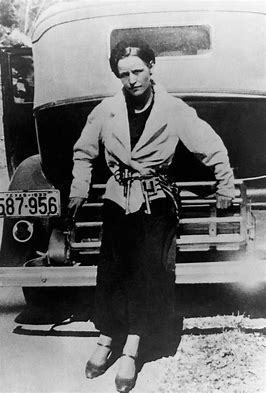
Thanks to the new Netflix movie “The Highwaymen,” the two most famous outlaws from Texas are captivating a generation that has never heard of them. I’m referring to those two crazy kids from West Dallas; Bonnie Parker and Clyde Barrow.

Their hijinx and daily run-ins with the law kept many a small-town newspaper in print and propelled the two young delinquents into living legends of their own time.

The car chases, robberies of banks, merchants, grocery stores, five and dimes, gas stations, gumball machines, lemonade stands, produce stands, and just ordinary citizens made spectacular fodder for the papers. They were the new folk heroes of the southwest, and as bad as these two were, their antics were pure journalistic gold. And, they didn’t mind killing a few lawmen and citizens if deemed necessary.

In the 1920s and early 1930s, my father’s Aunt, Katy Eberling, owned and operated a beauty salon on the corner of Rosedale and Hemphill Street in Fort Worth, Texas. For seven years, it was prosperous and allowed her to employ four beauticians and a manicurist. She was thriving and often turned away new clients or referred them to other shops. She wasn’t wealthy but made a darn good living for the times. Then, along comes that pesky old depression and she loses three beauticians and the manicurist because her clients now do their hair at home, or go to Leonard Brothers Department Store for two dollars less per set. Katy is weeks away from closing the doors when a visit from a new client changes her luck.

A cold December Friday afternoon finds Katy sweeping up the shop and preparing to close when a man and women enter through the back alley door.

The women, a frail, bony little thing is dressed in the best clothes that money can buy. A pale yellow cashmere sweater with a beige camel hair skirt. A string of pearls drapes her little neck. The man that accompanies her wears a three-piece pin-striped suit and a black fedora. These two are right out of Macy’s of New York. 

The woman is small, almost child size, no more than eighty pounds. She strides up to Katy, extends her tiny hand and says, “ My name is Bonnie and could you please give me a wash, cut and set. I know its late, but I will pay you nicely if it is not too much trouble.”

Katy, having made little money that day, agrees and escorts her to the shampoo sink. As Katy is shampooing Bonnie’s hair for the third time, she notices the man sitting by the back door holding a shotgun in his lap. It is then, reality sets in, and Katy realizes who this new client might be. She removes her hands from the woman’s wet hair and retreats a few steps.

 Bonnie, sensing her fright, assures her in a kind voice, “ Mam, I am here for a beauty appointment, we mean you no harm and will pay for the service.” Katy assured that she will not be gunned down, completes the shampoo and leads Bonnie to the beautician’s chair.

Once Bonnie Parker is seated, it’s as if she’s a lost Catholic girl returning to confession.

She recounts her childhood, being married young, wanting to be a poet and attend a good university and make her Mama proud. She then makes mention of that mongrel over there by the door and how he has ruined her life beyond repair.

 Once she begins the tales of their lives on the run, she cackles like a mad witch and has Katy laughing along with her. First-hand knowledge makes it all the crazier. Katy knows that Bonnie is leaving out the killing parts to spare her.

Two hours later, the appointment is finished. Bonnie Parker hands Katy six twenty-dollar bills and says she will be back next month around the same time of day if that is alright. Katy says that will be fine, and Bonnie departs with Clyde in tow.

Knowing she has to keep this to herself, she tells her husband Harvey, and no one else. Katy is full of remorse, knowing that the money she accepted is probably blood money or someone’s life savings, yet she took it because it will allow her to keep her shop open for another few months. If she is truthful with herself, she enjoyed the excitement it produced.

The next month, on a Friday, the two most wanted crooks in the land arrive at 4:30 PM. Bonnie receives a wash, trim and set and the confessions continue. Katy earns another six twenty-dollar bills. This time, she is less remorseful and less frightened.

Bonnie visits twice more. The last visit was un-nerving for Katy. Bonnie Parker is unwashed, and her clothes need to be cleaned. She is gaunt and hollow-eyed. There are no confessions or funny stories. Clyde remained in their car and Bonnie, upon being seated in Katy’s chair removes a 38 pistol from her purse and cradles it in her lap as if she was expecting trouble.

When the appointment is finished, Bonnie Parker checks her makeup in the mirror, straightens her skirt and says to Katy, “ My mama always says, a girl’s gotta look good when she goes. How do I look, Miss Katy?” Katy replies, “ You look lovely as ever.”

Bonnie hands Katy eight twenty-dollar bills and says she will see her next month.

A few weeks later, Katy reads in the newspaper that Bonnie and Clyde were killed in a shootout with the law in Louisiana. Katy hopes she looked good when it happened.

This story was told to myself and my cousins many times. When we were young, Aunt Katy left out much of the detail. As we grew older, into teenagers, the story became more graphic and colorful. I had no idea Aunt Katy was so famous.

Hey Kids, It’s Fun Being Sick!


How Kids Beat The Pandemic In The 1950s

Kids are an intelligent species. They know far more about human interaction and theatrical interpretation than their parents suspect. I can’t put a date on when this anomaly was discovered, but people with fancy degrees and a goatee first noticed this behavior in the early 1950s. My neighborhood may have been ground zero for their study.

As a bunch, the kids in my neighborhood were healthy. We ate mouthfuls of dirt, sucked on pebbles, and ingested every foodstuff imaginable without washing our grimy hands. This was perfectly acceptable to our mothers. Our young immune system was that of a caveman: we scoffed at germs, ” away with you foul vermin.” Like Superman on the TV, we were indestructible.

The only malady that affected us, was the dreaded Monday morning tummy-throat-aching body-virus. This malady usually broke-out in after a thirty or forty day incubation period. It spread like wildfire through our four-block coterie and most of the second and third grades, mostly affecting boys, but the girls were losing their immunity at an alarming rate.

The second week in November, close to Thanksgiving, most of our second-grade class was infected and missing in action. The symptoms were: headache, stomach ache, sore throat, and body aches, sometimes we developed a limp and had to crawl from the bathroom to our bed. When our mothers asked how we felt, we would point at the affected areas and groan, eliciting additional sympathy.

The first morning was the worst, then by noon we recovered enough to watch cartoons and eat some ice-cream, then after supper, the symptoms worsened, and mom made the call for us to stay home another day. Sleeping in was mandatory, and if we were recovered by lunchtime, we could go outside for some fresh air. This bug was known to not last more than three days, tops.

A seven year old can’t grasp the enormity of a situation the way their parents can. As a group, we were unaware that our symptoms matched those of the dreaded Polio Virus. Our kindly school nurse, fearing the worse, calls the health department for back-up.

Two blocks away at George C. Clark Elementary, our diligent principal cancels all classes and has the entire building sanitized by a nuclear cleanup team from Carswell Air Force Base. The newspapers are on this like a duck on a June Bug.

Lounging in bed eating Jell-O, and watching Bugs Bunny cartoons, my cohorts and I are unaware of our neighborhood pandemic.

Tuesday, mid-morning, a contingent of doctors and nurses from the Fort Worth health department, arrive to access the outbreak. They plan to visit every affected home around our school and test every sick child for the dreaded Polio Virus. Large syringes and foot-long throat swabs are required. A dozen ambulances stood by to transport the poor ill children to the hospital. The local newspaper was there, as well as the television news folks.

Skipper, my stalwart best buddy, and the elected grand Poo-Bah of our gang, was the first to break. With two syringes sucking blood from his skinny little kid arms, he sobbed and said he was faking it, we all were faking it. He gave us up like Benedict Arnold. Roger Glen ran screaming from his house when he saw the size of the needles, and the smartest girl in our class, Annie, gave a signed confession. The epidemic was over.

Most of us couldn’t comfortably sit for a few days, but we were all healthy until the next school year. That’s when the Asian bird, chicken, rat, and cat flue got us all.

When Petulance Replaces Decorum And Respect


Momo and I are getting on in age these days. I am 75 and she is 70ish, so we’ve done and seen a few things along the way. So, being as socially aware and self-educated as we are, it was a shock to our overly medicated systems to see the entire Democratic coterie of POD people stuck to their chairs during the Presidents address to Congress last night. Marjorie Taylor Green must have applied super glue to their leather chairs before their entrance, she did look a bit guilty.

The mother of the 12 year-old girl killed by illegals, the young brain cancer survivor being made an officer of the Secret Service, the young man being accepted to West Point and a few others. We were sobbing like a baby that lost it’s bippy. You have got to be a purely evil glob of flesh to not react to human kindness and respect. It’s not a political thing, it’s a human thing, a Christian thing. The camera kept showing closeups of Nancy Pelosi as if she might react to something. Momo is an RN and she thought the old hag had an IV going just to keep her breathing and alive. And then the idiot from Texas, Representative Green, shaking his walking stick and shouting the President down, like he was back in Austin attending an HOA meeting. Speaker Johnson had him hauled off the floor by the Sargent At Arms. That hasn’t happened in modern politics, a first for the news media to cover. I bet old Lester Holt will be jumping all over this one tonight. Get the popcorn and Dr Pepper’s ready folks, it’s going to be a fun four years.

The Mooch-O-Matic life Meter


Life Is A Percentage Game

A few weeks ago, my buddy Mooch and I were driving to Glenrose on a little road trip. We often take an adventure when we hear of something worth investigating. The stranger the better to occupy our precious time.

Mooch heard from someone at the feed store that a lady owns a pig that recently received the “Purple Paw,” the most prestigious civilian award an animal can receive for bravery. We have to see this pig for ourselves since Glenrose is right in our back yard.

Two hours of searching, we find the lady and her pig living in the RV Park by the river. This one is a wild goose chase. It seems her little boy didn’t win a prize in the stock show, so she took a purple TCU lanyard and tied a large gold-painted Mardi-Gras coin on the lanyard, making the pig a medal. This satisfied the whining child and turned the pig into a big shot. Now the kid and the pig think they are hot stuff and are raising hell in the RV Park. The expedition wasn’t a complete waste of time, we ate barbecue at the “Squealing Piglet” and topped it off with some pecan pie and Blue Bell ice cream.

Driving back to Granbury, the oil message light came on warning me I had ten percent oil life left on the old Honda. I bragged to Mooch about how smart my car is, and it seems to know everything. I mentioned, jokingly so, that it would be great if some pharmaceutical company could invent a device to tell us, humans, how much life we have left. Mooch, ever the tinkerer, has a small invention lab in his shed and is always coming up with strange things. He said he would look into that. I knew he would.

A week goes by, and Mooch shows up at my door with a white box under his arm. We sit at my kitchen table, and he pushes the box over my way, urging me to open it. Before I could get the lid off, he yells, ” I did it, its the invention we talked about, its a Mooch-O- Matic Life Meter, we are going to be wealthy.”

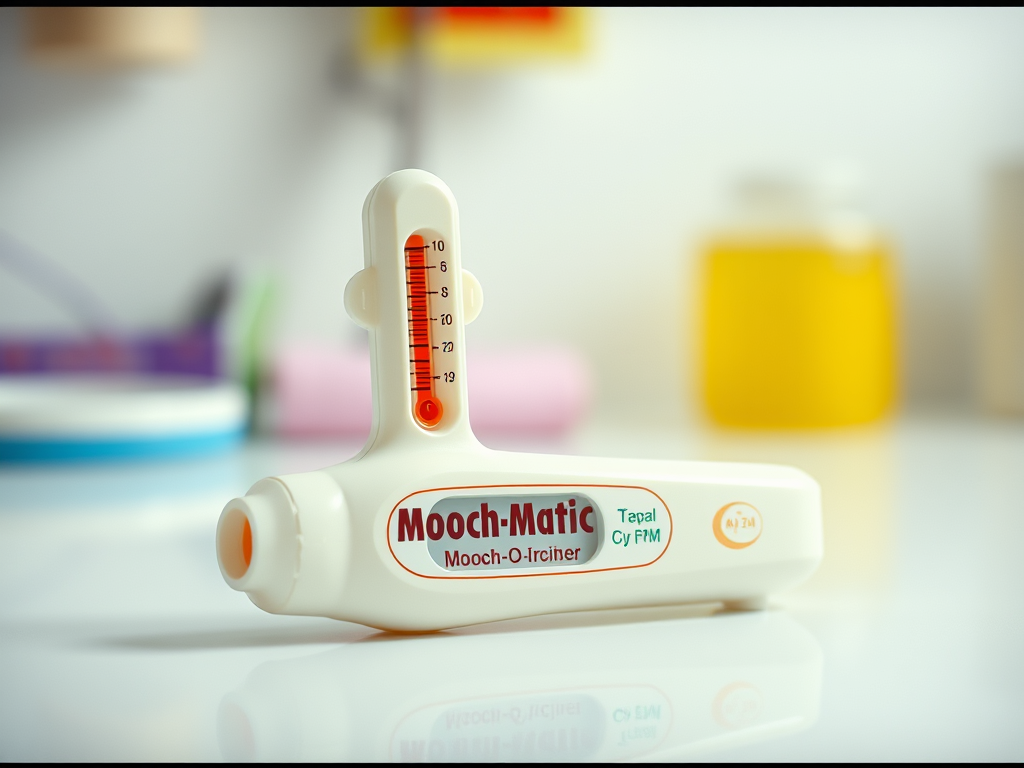
I open the box and pull out what appears to be a digital children’s thermometer. On the back are a crudely installed USB port and a sticker reading Mooch Matic. I’m impressed that he could invent something like this so quickly. In my book, his rating just increased by twenty points.

Knowing Mooch was about to explode with pride, I ask him,”What’s in this thing and how does it work?”

Mooch proudly exclaims, ” I took a “Tommy Bear In The Summer Sun” children’s digital rectal thermometer, added two chips from a Nokia flip phone, the activation strips from a “Ellen’s Own”digital pregnancy test, a chip from a Martha Stewart Meat Thermometer, a few innards from my old Amazon Firestick and a USB port so you can save the information. Now all that’s left is to test it on a human. I tried it out on my dog Rex, and damn if he doesn’t have 35% life left. The cat saw me testing Rex and is hiding, so now it’s down to you and me. How about you be the next participant?”

I reluctantly agreed to be the first human to test the Mooch-O-Matic. I entered the bathroom, inserted the device into the proper orifice, and waited until I heard the three beeps that signaled the reading was complete. After straightening myself up a bit I exited the bathroom and gave the device to Mooch. He scrolled through a menu and then blurted out, “holy crap, you have 25% life left, you lucky S.O.B.”

Well, there ya go buddy, I’m going to be watching many more Super Bowl’s. Mooch then took the device into the bathroom to test himself. After ten minutes, I’m getting worried so I knock on the door.

In my best-concerned tone, I said, ” Mooch, you okay, little buddy, you didn’t fall and break a hip, did you?” Mooch opened the door, and his face is the color of snow-whites butt. With a shaking hand, he handed me the device. I looked at the reading and was shocked. Mooch has 1.5% life left, which translates to, he could assume room temperature any minute or by morning at the latest. We are both speechless, and Mooch has tears in his old watery eyes.

Without saying a word, he leaves the house, and me holding the prototype of our disappearing wealth. Just for testing sake, I pulled a previously frozen whole chicken from the fridge and inserted the Mooch-O-Matic into the deceased bird’s butt. Three beeps later, the soon to be chicken dinner that has been dead for who knows how long, reads 35% life left.

I thought for a moment about calling poor Mooch to tell him his device is faulty, but he owes me $200.00, so I’ll let him sleep on this until he pays up.

Religion, Family, and a Baptism Gone Wrong


Swimming With Jesus In A Cement Pond

My first taste of religion came when I was six. A boy from Fort Worth, I was taken to the Polytechnic Baptist Church to witness the near-drowning of my young father. He was baptized by a man named Reverend Agustin Z Bergeron. The preacher was a legend, standing alongside only two others: Reverend J. Frank Norris and Billy Graham.

Someone in my family, an aunt or a cousin or all members thereof, thought that father’s soul needed saving to ensure his path to Heaven would be an honest one. I suspect it was his mother. She was a championship sinner with no way to redemption, so convincing her only son to Baptism might also gain her entry to God’s domain as a parental guest. I also suspect that the bottles of hooch and the 38 special in her traveling suitcase would also be overlooked as she accompanied him through the pearly gates. Looking back on my family history, I now realize that the entire bunch of my father’s family was street-Rat-crazy.

The Sunday of the Baptism was as hot as I can remember. The small church was surrounded by large shade trees, but there was not a whiff of a breeze inside the building. Religion and suffering are one and the same. July in Texas is considered a preview of the weather in Hell, and the good reverend used it well.

I sat beside my mother. My little sister was in her lap, not yet a year old. My clothes were soaked with sweat. I might have wet myself and not known it. The summer heat rose from the wooden floor beneath us. Hell lay just below, waiting for us to waver, to lose our faith. Satan would pull us down if we let go. It seemed so simple. I didn’t understand sin or what it meant to fall into Hell. Kids don’t think about such things.

Pacing the floor, Preacher Augustin moved from wall to wall. Behind him, the big-haired women added their Amen and Halleluiahs, their voices sharp and clear. The pulpit held the preacher’s Bible, unused, but not forgotten. He did not need its leather-bound wisdom. He knew all he needed to instill fear in the hearts of those gathered in that church. The stifling air was drenched in repentance.

The sermon concluded, and the Baptismal commenced. Father was the last on the list.

Mother had dressed him in a new white shirt and a black tie. With his new black horn-rim glasses, he looked like the television comedy star, Steve Allen. The shirt was stiff as cardboard, making it hard to move. One might expect that if someone were to be dunked in water, a swimsuit or at least a robe would be fitting. But no, Baptists preferred it genuine, fully dressed in their best clothes, shoes, watch, and wallet.

Father’s name was called. Entering the pulpit from behind a velvet curtain, he climbed into the Baptizing tank. I found it odd that a church would have a small swimming pool at the altar. A waist-deep concrete tub full of unpurified water. How would one know that the occupants hadn’t released a stream of urine into the sacred water in their moment of personal repentance and acceptance? It’s a natural response akin to peeing in a lake. Father stood in the holy waters awaiting his deliverance. He carried the look of a trapped man; no escape route was available, so his fate was sealed.

Preacher Augustin wasted no time. He asked Father if he was ready to accept Jesus and be bathed in the Holy waters. Father mumbled a few words, and the preacher pushed him back into the Holy water. Time passed, it seemed like minuets, and along with lovely words and passages, and still, Father was immersed under the Holy waters. A hand, then an arm reached up, flailing about. Finally, a leg broke the surface, and a shoe flew off. Still, Preacher Agustin continued the cleansing.

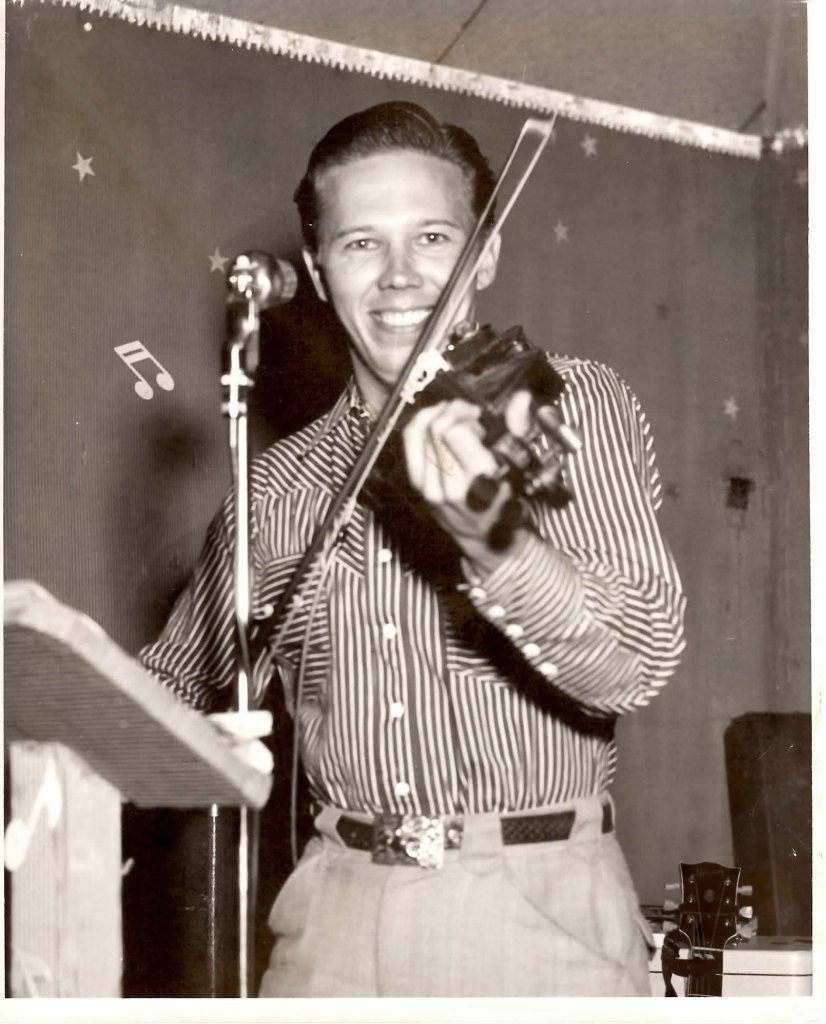
Looking back, it was common knowledge that father was a country musician and made his living playing in the beer joints along Jacksboro Highway. Preacher Augustin figured since my father was a fully certified sinner, an extra dose of saving was needed.

Father made it to the surface with seconds to spare. Sputtering and coughing, on the verge of death, he rolled over the side of the cement pond and lurched toward the side door of the church. Holding my baby sister, my mother grabbed me by my bony arm, and we made a hasty beeline to the car. Father was there waiting, dripping wet, looking like a bad meal on a china plate, but he was a saved man.

Coffee Culture: Encountering Hipster Baristas


Is It Hip To Be Square?

Photo courtesy of Mrs. Folgers, “Coffee Shop Hipsters”

My wife and I visited the new and improved Fort Worth landmark, Sundance Square, a while back. Beautiful place, well planned and functional architecture; good job, Bass boys.
After a few loops, we hankered for a cup of coffee and maybe a pastry.
We found a coffee house cafe with little sidewalk tables. Not our style to sit on a busy sidewalk, so we went inside.


Passing through the door, I caught the name on the storefront window, “The Door to Perception.” The famous beat author Aldous Huxley wrote that book. He and Jack Kerouac birthed the beat generation with their unconventional literature; this might be a cool place.


We queued in line at the counter. The young man in front of me smelled of Petiole oil, an odd scent for a man; it didn’t mix well with my Old Spice. Hippie chick perfume is what we called it back in the day.

My wife nudges me and whispers, “What kind of place is this? These kids all look alike.”


Her observation was spot on. Every male in the room had a similar symmetrical haircut, facial hair, garage-sale chic mismatched clothing, and skin-tight jeans. Birkenstock sandals and Doc Martens seemed to be the shoe of choice. The girls were ditto but without facial hair. Stepford children they were. I knew immediately that we had stumbled into a Hipster coffee house. I told my wife to please be calm. This is no more dangerous than wading into a gob of old hippies at a Steppenwolf reunion concert. She wasn’t amused.


The Petiole boy in front of me was ordering his coffee. I caught the conversation between him and the barista.
“I’ll have a Trenta in a recycled rain forest cup, free-range, green label, fair trade grown, Andean, but not from the higher region but the lower valley, harvested by virgins no older than 16, aged in a cave on the coast to a bold bean, roasted on a log fire made from non-endangered rain forest trees, lightly pressed, and kissed with a serious pour of steamed spotted Syrian goats milk, then ever so slowly, pour two Cuban sugars at the same time on opposite sides of the cup. Oh yeah, and Kale sprinklers. Don’t stir it, I need to experience the aura.”

“Ahhhh… that’s my favorite. An educated choice, sir,” cooed the barista.


We are stunned. What in the hell did that kid just say?

I stepped up to the counter. “Two coffees with two creams and sugars each, please,” I say.


“And what region will your coffee be from, sir,” says the young barista.


“How about from Columbia, you know Juan Valdez and his little burro,” asked I.

“Don’t know that one, sir, don’t know a Mr. Juan Valdez,” she replied.


“Got something from Mrs. Olsen or Mrs. Folgers ?” I asked.


“No, sir, don’t know them either,” she replied.


“Got anything that comes in a vacuum-packed can?” I say.


“No, sir, our beans come in hand-sewn organic burlap bags from India,” she smugly replies.


“Do you have any coffee grown in the United States?” asked I.


She perks up and replies, “Yes sir, grown in California, Big Sur area by the Wavy Gravy Mystical Coffee Co-op. I hear it’s harvested every third quarter when Jupiter aligns with Mars, and the moon is in the seventh house. You know, sir, this is the age of Aquarius.”


“Yes, I know the song,” I say.

“Is there a song, sir?” she replies.

At this point, my head was about to explode, and I needed to wrap it in duct tape to contain the splatter. My wife saved me by stepping up to the counter and addressing the barista.


“Look, Moonbeam, just give us two cups of that Gravy Wavey coffee, and you pick out the sugar and cream, deal?”


“Names, not Moonbeam’ mam, it’s Hillary,” says the barista.


“Of course it is, sweetheart; I should have guessed that. I suppose you have a brother named Bill too? “No, mam, just a little sister, Chelsea.”


My wife shot me her “get me out of here before someone dies” look.
The barista sensed where this was heading and promptly pushed the coffee across the counter. I paid, and we left.
We stood on the sidewalk, took a sip of the gruel, and poured it into the gutter.


On the way home, we went through the Mcdonald’s drive-through for a red, white, and blue cup of coffee. Can’t go wrong with good old Mickey D’s. None of that Hipster crap.


“I’ll have two coffees with cream and sugar, please,” I said to the voice.


“Sir, will that be a Latte, a breakfast blend, a dinner blend, a dessert blend, an anniversary blend, an I love you blend, a save the children blend in a reusable cup, or an expresso, chilled or topped with sprinkles,” the speaker’s voice asked?


I pulled out of line, and we headed home to our old and tragically un-hip, Mr. Coffee.

Writing Gibberish For The Masses..Blood On The Keyboard And God Slaps Me Up The Side Of My Head…


After fighting sleepless nights for years, I thought I had moved on from the condition. Nope. The wide-eyed wonder hours are back. I consume enough pain meds to take out the Hulk. So many, it’s a marvel that I’m still alive. I have these problems because of back surgery. It left me with an Elvis leg that twitches and gyrates without music. My right foot refuses to walk normally. My gait resembles Frankenstein after a few stiff cocktails. Now, I read an intriguing article about waking up at 3:00 AM, something I know about.

A biblical professional, not a Pastor or a Priest but a cleric psycho-babbler, has discovered something interesting. Folks waking at that hour are more susceptible to communing with God, and are at the height of creativity. Their brains are clicking on all cylinders instead of one or two. I agree with this discovery, even if it might be new-wave chatter or, in my case, a holy intervention.

Three AM arrives. My eyes pop open, no more sleep for me. I turn off the CPAP and make my way into the den. I heat up A2 milk for my hot Ovaltine. I grab my laptop and begin to write. Sometimes, I’m unsure of my story, so I tap away, paying no attention to where the words go. My brain is on fire, swirling with emotion. I can’t write fast enough. It must be..it will be divine intervention. God issues a stern smack up the side of my old head, showing me what to write. Sometimes it’s good, often it’s gibberish, not fit to read. His hand is guiding mine, so I soldier on, spewing out my brain, bleeding on the keyboard. We all have our bloody moments.

This is one of those times.

Chapter 17. Back Home In Texas: Looking For That Marble Angel


“A young man is so strong, so mad, so certain, and so lost. He has everything and he is able to use nothing.” Thomas Wolfe

There is no winter like one in Texas. The cold comes with a Blue Norther. It roars down from Canada into the panhandle, gathering tumbleweeds and dust as it goes. It marches south across the flat plains to the Gulf of Mexico. The wet cold cuts deep, biting like the sharp edges of a frozen North Pole. Eskimos would take the first train back home. It is a harsh welcome for a man with tropical-thinned blood.

Johnny’s train pulled into Fort Worth as an ice storm blanketed the city. He had intended to walk two miles from the station. But then he saw a man slip and fall on the ice, and he called for a cab. The ride was rough. It had been over a decade since he faced winter, and now he recalled why he had chosen warmer places to call home.

The house appeared forlorn in winter’s cold, pale light, smaller than he remembered. It was worn out, resembling a sharecropper’s shanty more than his childhood home. He scanned the front porch; no marble angel welcomed him home. Thomas Wolfe was right.

Johnny and his parents left Fort Worth twelve years ago. They set out for California in search of work, to rebuild their lives and forge a future for their children. He was a boy cast into the vast unknown, adrift on the winds of a long journey. This adventure would shape the man he would become. His parents were like ship’s captains, guiding their small crew. He and his dog were the sailors. Their Ford was a proud schooner, and California was the mythical land where treasures lay hidden. They never discovered the chest, yet the treasures came to them in ways they had not anticipated.

Standing on the ice-covered sidewalk, Johnny saw a light in the kitchen window. His father, John Henry, sat at the table. A mug of coffee in his hand. A cigarette slowly burned in an ashtray. His bowl of oatmeal was there too. His mother was absent. She never woke early. Johnny stepped onto the porch and knocked. His father opened the door, and warmth rushed out. After briefly embracing, Johnny settled at the worn table with a steaming mug. The table had seen much—his parents’ fights, their choices, celebrations of childhood, and now his reluctant return. His mother was not sleeping; she had gone to an aunt’s house months ago.

John Henry, sipping his coffee, gave Johnny a brief rundown. Norma, his elder sister, married a schoolmate and now lives in Albuquerque. A second baby was coming soon, or maybe it had already come. John Henry couldn’t remember. His words were hard, filled with the bitterness of a man worn down. Bertha fought with the drinks. The magical elixirs had returned. She wrote letters to their friends in California, a compulsion. Sister Aimee was the one she favored. Norma had taken as much as she could shoulder and left with her husband. Johnny did not expect a joyful reunion, but this was a sorry state of affairs.

From Nehi Soda to Napping Camps: A Journey of Texan Creativity


I read an article in my local paper a few days back. It was about a youngster from Louisiana who fed his pet earthworms small amounts of nuclear waste. This made them glow in the dark and grow to the size of a state-fair Corndog. 

He is now raking in cash and hawking them on his own late-night infomercials and online. Every fisherman in the South wants a giant wiggling glowing worm. Every bass needs one. It seems the folks below the Mason-Dixon line will fall for anything.

My family tree in the “old country” was chock full of these sorts. Dreamers, schemers, and medicine show hucksters. All died poor except one.

Take my Great-Great-Great Uncle Nehi, a puny Scott with a sweet tooth. He spent his spare time in search of sugary delights. One night, while experimenting with various potions of colored water, fruit, and healthy doses of sugar, he invented “Nehi Soda.” It wouldn’t be summer without a grape Nehi and a Moon Pie, would it? His tinkering resulted in the all-American soda. Soda pop made him wealthy. He died young from a roaring case of Diabetes. Still, he died prosperous and happy. 

I always preferred Dr. Pepper, but my parents made us drink Nehi every year on the anniversary of his passing.

If it wasn’t for dreamers and hucksters, a beloved section of our economy would not exist. There would be no infomercials on television and no online pop-ups. Drug stores would have fewer aisles for valuable little as seen on TV products. People would wonder how to make fresh juice. They would also wonder how to cover that bald spot. How would they puff their hair out to look like a jelly roll? How do they do this while roaming around town in a snuggie blanket with armholes? Hanging upside-down tomatoes would not exist. How would the astronauts write upside down without that nice ballpoint pen? I get a little scared thinking about what life would be like without these gadgets.

This past summer, my wife and I enjoyed lunch on a Saturday. We dined at a quaint restaurant alongside the Guadalupe River in Gruene, Texas. It was hot—a real sizzler—100 degrees in the shade. We sat outside on their covered deck. We enjoyed the river’s tranquility and were cooled by the misters. 

My wife, Momo, full of food and a cold beer, drowsily commented,

“A nap would be nice right now.” I agreed, but there was nowhere to have a nappy except the hot car, so that idea was out.

I summoned our bill and sat staring at the beautiful river. I watched the tubers drift by and listened to the lull of bubbling water. Nature’s respite entranced and hypnotized me.

 When my bill arrived, the server placed an ice-cold Nehi Grape Soda on the plate, bound for another’s enjoyment. I hadn’t seen a Nehi soda in decades. 

This boy and the girls slapped me hard. The Nehi, the river, the need for a nap, and nature hit me simultaneously. I couldn’t speak and only croak out, “Nap camp…Nehi…nappy.” 

Momo thought I was having a stroke. She whipped out her cell phone and started to dial 911. She stopped when I finally said,

“Uncle Nehi’s Nap Camp.”

She knows that stupid look. It was something akin to holding my beer and watching this. She waited for the spiel, which I was overly anxious to deliver.

Grabbing her reluctant hand, I dragged her down to the river bank. She was scared, but I was excited—invigorated and drunk on the elixir of my vision.

“Why didn’t I think of this years ago” I yelled,

“It’s like the boy and his nuclear fishing worms. It’s not too late, seize the minute, mark your territory, piss into the wind for a change. People need to sleep, they need a good nap, it’s our right!”

I was so excited that I waved my arms and spun around like a tent revival preacher. I was on a roll. 

I yelled with the excitement of a five-year-old on a sugar high,

“Over there, we can build cedar posts and metal roof pole barns by those trees along the river. We can add ceiling fans and misters. Let’s put up some comfy hammocks. We’ll have an outside bar selling Nehi sodas, cold Lone Star beer and baloney, and rat cheese sandwiches. There is a small barn with little hanging beds for the kids and dogs. Also, there should be a separate napping barn for in-laws and people you don’t care for. Imagine napping in a hammock beside the calm river, life doesn’t get any better. Right?”

A grizzled old fisherman was sitting by a tree with his cane pole, listening to this opera of fools. He said,

“That’s not a bad idea, sonny boy. But Old Blind Mable tried that back in 1959. She lost her butt, You can’t put a business in a flood plain. This river flooded pretty well every year back then, just as it does now. Old Blind Mable had a mess of hammocks and people sleeping in them. The river floods and washes everyone down to New Braunfels. This happens whether they want to go there or not. If you got some money to piss away, go ahead. I’ll have a nap here until it rains. Then I’m heading to high ground.”

Momo looked at me and said,

“let’s go home and have a nap, Einstein.”

I was crushed, a broken man. My vision was a pile of raccoon crap. A crusty old river rat shot it down. My wife agreed with him. No Nehi sodas, ice-cold Lone Star in a hammock, or nap camp. Another lost vision.

As we returned to the car, a large dog came strutting down the street, pulling a kid on a skateboard. I watched them cruise by and thought, a big skateboard for two. Add seats and get some big dogs. Rent them to pull people around town. Now, that’s a moneymaker.

Caught by a Girl Scout: A Cookie Sales Encounter At The Walmart


Walking into Walmart this morning to pick up my meds, I was accosted, not by a panhandler or some poor schmuck with a sob story, but by a cute eight-year-old girl selling Girl Scout cookies. She wouldn’t take no for an answer and “had” all the answers. This little waif, hands on her hips and a defiant gleam in her eye, actually blocked my entrance into the Walmart. Standing in front of me like a little David about to punch Goliath, she meant business. I couldn’t bump her out of the way, so I was forced to engage her. It was all a grand scheme. Standing behind a table stacked with boxes of cookies were four Mama Bears, arms crossed, foot tapping, just waiting for me to decline. They all had that ” Just try to get out of this one” look on their face.

” I don’t have any money,” I pleaded.

” We take credit and debit cards,” she chirps. When did this start? Does every kid have a credit card machine in their backpack?

” I’m diabetic and could have a seizure,” I add.

“No problem mister, we have sugar and gluten-free,” she sneers.

I’m trapped. Twenty adults are staring at me as if I am a criminal. I hand her my Visa card, and she rings up five boxes of cookies and a twenty percent tip to boot. I take my cookies and walk to my car, fearing they will grab me again on the way out. I’ll be having cookies for supper.